Interview with Al Arabiya Business on the weaponisation of the dollar, 19 Feb 2026


In this TV interview with Al Arabiya aired on 19th February 2026, Dr. Nasser Saidi discussed the weaponization of the US dollar, sanctions, and “economic statecraft” leading to a gradual shift away from dollar assets, including treasuries and the potential competition from the euro and the renminbi. 

Watch the interview here. The Arabic comments and English translation are copied below.


Dr. Nasser Saidi, Chairman of Nasser Saidi & Partners, confirmed that the shifts in global currency markets indicate the beginning of a long race between the euro and the yuan to reduce the dominance of the US dollar in international trade. He pointed out that this race will not be achieved quickly, but may extend over decades.

In an interview with Al Arabiya Business, Saidi stated that approximately 57% of global reserves are held in dollars, while the euro represents only about 20.3%. Furthermore, 80% of global trade financing is conducted in dollars, compared to 6.7% in euros, and international payments represent about 50% in dollars, making its replacement with another currency a lengthy and complex process.

He added that the euro, despite its current role, is not widely traded globally, with the European bond market limited to approximately one trillion euros compared to over 30 trillion dollars in the US markets. This necessitates the establishment of a large, unified market for euro-denominated treasury bonds to enhance its usability in international trade.

Al-Saidi pointed to China’s growing role, emphasizing that the country is striving to transform the yuan (renminbi) into a global currency by allowing capital inflows into the Chinese market and expanding the size of its domestic financial market. He considered the first step to be the use of the yuan in trade finance, particularly with oil-producing economies, before the euro gradually follows.

He explained that this shift reflects China’s increasing dominance in global trade, as it has become illogical to price payments in dollars when China is the largest importer of oil and gas from the Gulf states. This solidifies the position of the “petro-yuan” as a first step towards transforming global trade finance.


انخفاض حيازات الأجانب من سندات الخزانة الأميركية في ديسمبر
تراجع حيازات ا

وفي هذا السياق، أكد د. ناصر السعيدي، رئيس شركة “ناصر السعيدي وشركاه”، أن التحولات في أسواق العملات العالمية تشير إلى بداية سباق طويل بين اليورو واليوان لتقليص هيمنة الدولار الأميركي على التجارة الدولية، مشيراً إلى أن هذا السبق لن يتحقق بسرعة، بل قد يمتد لعقود.

وقال السعيدي في مقابلة مع “العربية Business”، إن حوالي 57% من الاحتياطات العالمية بالدولار، بينما يمثل اليورو نحو 20.3% فقط، كما أن 80% من تمويل التجارة العالمية يتم بالدولار مقابل 6.7% باليورو، فيما تمثل المدفوعات الدولية نحو 50% بالدولار، ما يجعل استبداله بعملة ثانية عملية طويلة ومعقدة.

وأضاف أن اليورو، رغم دوره الحالي، ليس متداولاً على نطاق عالمي واسع، حيث يقتصر حجم سوق السندات الأوروبية على نحو تريليون يورو مقابل أكثر من 30 تريليون دولار في الأسواق الأميركية، ما يفرض ضرورة إنشاء سوق موحد وكبير لسندات الخزانة باليورو لتعزيز قابليته للاستخدام في التجارة الدولية.

وأشار السعيدي إلى الدور المتنامي للصين، مؤكداً أن البلاد تسعى إلى تحويل اليوان الريمنيبي إلى عملة عالمية، عبر السماح بتدفقات رؤوس الأموال إلى السوق الصينية وتوسيع حجم السوق المالي المحلي، واعتبر أن الخطوة الأولى ستكون استخدام اليوان في تمويل التجارة، خاصة مع الاقتصادات النفطية، قبل أن يتبعها اليورو تدريجياً.

وأوضح أن هذا التحول يعكس الهيمنة المتزايدة للصين على التجارة العالمية، حيث أصبح من غير المنطقي تسعير المدفوعات بالدولار بينما أكبر مستورد للنفط والغاز من دول الخليج هي الصين، وهو ما يرسخ مكانة “البيترو يوان” كخطوة أولى نحو تحويل التمويل التجاري العالمي.


“Weaponisation of the dollar marks the end of an era”, Op-ed in Arabian Gulf Business Insight (AGBI), 17 Feb 2026

The opinion piece titled “Weaponisation of the dollar marks the end of an erawas published in Arabian Gulf Business Insight (AGBI) on 17th February 2025.


Weaponisation of the dollar marks the end of an era

Sanctions, quantitative instruments and the freezing of sovereign assets have destroyed the inherited order


For decades, the global financial system operated on a fundamental assumption: US debt assets are risk-free.

Central banks and sovereign wealth funds relied on US treasuries as the ultimate safe haven, supported by deep capital markets and the stability of the post-World War II international order.

That era is over. The weaponisation of the dollar, unsustainable US fiscal policy, and the dismantling of rules-based institutions have fundamentally altered the risk-return profile of holding the US dollar.

For a central bank governor in the GCC or Beijing, holding US treasuries is no longer about yield and liquidity – it’s a question of national security.

This poses significant challenges for the Gulf. Regional exchange rate policies are tied to the dollar, creating direct exposure to American monetary policy and geopolitical decisions.

Can they continue to anchor their currencies and park their wealth in a system where the rules no longer apply equally, where assets can be frozen on political grounds and where inflation may be used to erode debt obligations?

The unravelling of the rules-based order

The post-World War II order is being dismantled in a disorderly manner. The US has launched military intervention in Venezuela, imposed additional tariffs on countries “doing business” with Iran, threatened sanctions on EU nations that opposed its stance on Greenland (since walked back), and formed a “board of peace” in Gaza – all while issuing threats to Cuba, Colombia and Iran.

This undermines the multiple alliances and multilateral institutions that underpinned global economic growth and stability for decades. The foundation – symbolised by Bretton Woods (the system that required countries to guarantee their currencies’ convertibility to the US dollar), the United Nations and the World Trade Organization – is crumbling.

The growing militarisation of external relations has been especially evident in President Trump’s second term.

The expanding use of sanctions, quantitative instruments and the freezing of sovereign assets have destroyed the inherited order and accountability. If the US dollar can be weaponised, it ceases to be a risk-free store of value.

Ongoing threats to Federal Reserve independence further undermine the credibility of US monetary policy and regulated institutions. For the GCC, whose currencies move with the dollar, this creates a dangerous dependency on increasingly erratic American policy.

Simultaneously, the US fiscal trajectory is becoming unsustainable. The International Monetary Fund predicts its debt-to-GDP ratio will climb to 143 percent by 2030, a level historically associated with wartime and deep recessions. Debt service costs alone – more than $1 trillion annually – now rival the defence budget.

The government in Washington has four options: grow real GDP (difficult in a mature economy), undertake fiscal reform to raise revenue (politically toxic), repudiate debt (catastrophic) or inflate the debt away. Given the political gridlock in the US, the likelihood is higher inflation and fiscal dominance, with monetary policy geared to accommodate government borrowing requirements.

The structural shift has begun

The consequence is a structural shift out of the US dollar. The share of dollar holdings in total foreign exchange reserves slipped to 57 percent in the third quarter of 2025 (down from 70 percent at the start of the century).

Central bank gold purchases have surged, averaging 60 tonnes per month – more than triple the pre-2022 pace – with gold overtaking the euro as the second-largest reserve asset globally. Lower participation from domestic and foreign buyers of US treasuries has raised yields on 10-year+ bonds, reflecting a higher risk premium demanded by the market.

A multipolar international trade and financial infrastructure is emerging, reflecting a shifting centre of gravity towards Asia and a pivot to China. This transition will require deep, global structural shifts.

In Europe, the pressure for an EU fiscal union will intensify. Europe must create a unified, broad, deep and liquid eurobond market to create a safe asset rivalling the dollar. China is accelerating the development of the yuan market.

China’s Cross-Border Interbank Payment System (known as CIPS) is expanding as an alternative to Swift, enabling trade to bypass Western chokepoints. While the yuan is not yet fully convertible, it is being increasingly used in bilateral trade, especially for oil and commodities.

Nations are increasingly settling trade in national currencies – rupees, dirhams, riyals – bypassing the dollar as the vehicle. The fragmentation reduces efficiency but protects sovereignty.

Technology accelerates the transition 

Technological innovation is acting as an accelerant. E-finance, digital asset markets and central bank digital currencies (CBDCs) are creating new avenues independent of the US banking system.

A wholesale CBDC network such as the mBridge project – connecting central banks from Asia to the Middle East – allows instantaneous cross-border settlement without involving a US correspondent bank, neutralising America’s ability to sanction financial flows.

As US assets become riskier, non-US assets – particularly in emerging market economies, China, India, the Brics+ bloc and the GCC – become relatively more attractive. Sovereign wealth funds in the Middle East and Asia are already diversifying their portfolios.

For the GCC, this implies diversifying asset holdings and the underlying currencies used in trade and financial transactions. Regional currencies, such as the dirham and riyal, could eventually become reserve assets for their trade partners.


Nasser Saidi is the president of Nasser Saidi and Associates. He was formerly chief economist at the DIFC Authority, Lebanon’s economy minister and a vice governor of the Central Bank of Lebanon


Interview with Dubai TV (Arabic) on DIFC’s planned strategic expansion & findings of the Global EDI, 16 Feb 2026

Dr. Nasser Saidi appeared in an interview with Dubai TV, broadcast on 16th Feb 2025, discussing the strategic expansion of the DIFC that could propel it to become one of the top 4 Global International Financial centres from the current ranking of around 11th-12th globally (and top 4 for FinTech).
The focus on AI, digital tech and Web3 would allow it to compete in new financial verticals where legacy hubs may be slower to adapt. This could allow Dubai to potentially leapfrog London and other centres in specific verticals like virtual assets/ crypto and AI-finance, where London faces heavier legacy regulatory burdens and Brexit-related frictions.

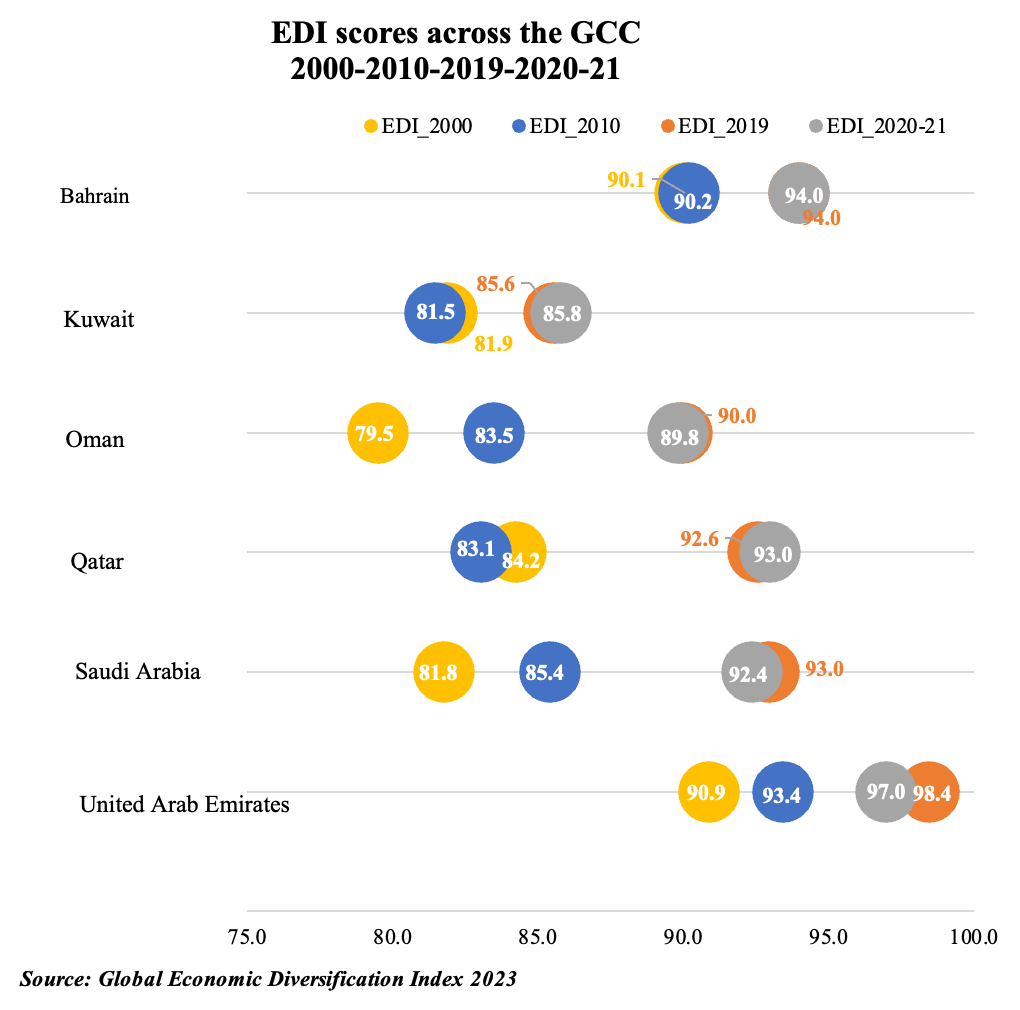
Also discussed is the findings of the Global Economic Diversification Index (EDI), that was released at the World Governments Summit 2026.

The video can be viewed below.


“Digital remittances will unlock financial inclusion in the Middle East”, Oped in The National, 21 Jan 2026

The article titled “Digital remittances will unlock financial inclusion in the Middle East” appeared in the print edition of The National on 21st January 2026 and is posted below.


Digital remittances will unlock financial inclusion in the Middle East

Nasser Saidi 

Financial inclusion remains a challenge for Arab countries in the Middle East. Only 50 per cent of adults in the region have a financial account, the lowest global score in financial account ownership, the World Bank says.

There are also wide gaps between the Gulf and the rest of the region, while women are disproportionately less likely than men to have accounts.

The gender gap in account ownership is most severe in the region, at 15 percentage points, more than double the average of other upper-middle-income countries.

Financial exclusion forces people into the informal cash economy, limiting their ability to save, invest and protect themselves from economic shocks. By contrast, globally, 78.7 per cent of people aged over 15 have an account with a bank, financial institution, or mobile money provider, up from 50.6 per cent in 2011.

Of the 1.3 billion adults that remained unbanked globally in 2024, the majority are located in the Arab region, Asia and Africa.

But digital technology is transforming the financial landscape. The Global Findex Digital Connectivity Tracker finds that 84 per cent of adults in developing economies own a mobile phone (in the Middle East and North Africa, it is a higher 89.3 per cent). Mobile phones and internet connectivity allow more people to access and use digital financial services. Mobile money accounts are gaining popularity as an alternative means of accessing financial services, with 2.1 billion registered mobile money accounts globally in 2024, according to the GSMA.

The Middle East is a global hub for migration, characterised by a unique demographic flow.

The Gulf Co-operation Council-South Asia (India, Pakistan, Bangladesh and Nepal) labour flow corridor is the single largest labour migration corridor into the Mena region.

Beyond South Asia, many migrants come from labour exporting Arab states such as Egypt, Jordan, Lebanon and Syria.

Remittance outflows from the Gulf clocked in at $131.5 billion in 2024, with $77 billion from Saudi Arabia and the UAE alone. For recipient countries such as Egypt, Jordan, Lebanon, India and Pakistan, these flows are not merely supplementary income; they are vital economic stabilisers that often outstrip foreign direct investment and official development assistance.

In Lebanon, remittances have become a critical lifeline amid economic collapse, representing 27.5 per cent of gross domestic product and more than 80 per cent of total external resource flows in 2023.

Money to send money

The traditional channels for remittances are costly and slow. High fees erode the value: when a migrant worker pays 7 per cent or more to send money home, it acts like a tax on development, with the reliance on cash agents an additional source of uncertainty and security risks.

The digital space offers a transformative opportunity. Digital remittances are not just about cost, efficiency and convenience; they are a gateway to broader financial inclusion.

The Mena region is already embracing this: in 2024, only 9.1 per cent of respondents to the Global Findex survey used a bank account for sending or receiving domestic remittances, compared to 26.3 per cent by all means including money transfers.

Empirical evidence finds a positive correlation between remittances and formal deposits/ credits, and using accounts for such transfers leads to remitters sending on average 30 per cent more than via informal channels.

By bypassing physical networks and leveraging mobile technology, the cost of sending money can drop to below the UN Sustainable Development Goals target of 3 per cent.

Digital transfers are near-instantaneous and secure, while also reducing the risks associated with carrying cash. Importantly, using digital channels creates a financial footprint.

For a migrant worker or displaced person who has never had a bank account, a digital remittance history can be the first step towards accessing credit, insurance and savings products. The success stories of M-Pesa in Kenya and Jazz Cash in Pakistan highlight mobile money services that have revolutionised financial inclusion by leveraging high mobile phone penetration – sporadic internet access is not a limiting factor in such cases. Both digital platforms have since expanded beyond simple transfers to offer loans, savings, insurance and merchant payments.

These models can be easily introduced in the Mena region, especially given the migration and expatriate labour patterns.

Users in Morocco are embracing digital payments, with various international money transfer operators present in the country (eg, Wise, Remitly, Xoom etc), and government and the central bank are working to streamline regulations for such operators.

In Jordan, “Digi#ances” (a CBJ-GIZ implemented project) aims to increase the use of digital financial services, including cross-border remittances via e-wallets, among unbanked Jordanians and refugees, with a specific focus on women.

Cross-border interoperability between payment systems is important, with the Arab Regional Payment System (Buna) aiming to streamline clearing and settlement across Arab currencies.

Blockchain technology holds the promise of offering transparent and immutable ledgers for cross-border transactions.

The use of central bank digital currency (CBDCs) also offers a transformational solution for financial inclusion. A retail CBDC can be stored in a digital wallet on a basic mobile phone (even without access to the internet), allowing unbanked populations in rural areas to receive funds directly and safely.

Superapps are imminent, with remittances just one feature within a broader set of lifestyle and financial services, embedding financial inclusion into users’ daily digital experience.


Nasser Saidi is the president of Nasser Saidi and Associates. He was formerly Lebanon’s economy minister and a vice-governor of the Central Bank of Lebanon. 


Interview with Al Arabiya on macroeconomic outlook & financial markets, 15 Jan 2026


In this TV interview with Al Arabiya aired on 15th January 2026, Dr. Nasser Saidi discussed his outlook for global macroeconomic performance, linking it to key risks and financial markets performance. Watch the interview here

زخم الأسواق مؤقت

وفي سياق متصل، قال رئيس شركة “ناصر السعيدي وشركاه”، ناصر السعيدي، إن أداء الأسواق المالية خلال الفترة الماضية جاء مدفوعاً بعدة عوامل رئيسية، في مقدمتها الرسوم الجمركية، والسياسات النقدية التيسيرية، والاستثمارات في الاقتصاد الرقمي، إضافة إلى تصاعد الإنفاق الحكومي والعسكري.

وأوضح السعيدي في مقابلة مع “العربية Business”، أن متوسط الرسوم الجمركية التي أعلنتها الولايات المتحدة جاء أقل من المتوقع، إذ بلغ نحو 12% مقارنة بتقديرات سابقة عند 18%، ما خفف الضغوط على التجارة.

وأشار إلى أن خفض أسعار الفائدة من قبل البنوك المركزية الكبرى، وعلى رأسها الاحتياطي الفيدرالي والبنك المركزي الأوروبي وبنك إنجلترا، ساهم في دعم النشاط الاقتصادي عبر تحفيز الإنفاق والاستثمار.

وأضاف أن الاستثمارات الضخمة في الاقتصاد الرقمي، لا سيما في مجالات الذكاء الاصطناعي ومراكز البيانات وأشباه الموصلات، لعبت دوراً مهماً في تعزيز الأسواق المالية وزيادة الاستثمار الكلي.

ولفت إلى أن تصاعد الإنفاق الحكومي والعسكري، خصوصاً في الولايات المتحدة وأوروبا، شكّل عاملاً إضافياً لدعم الطلب، مستشهداً بإعلان واشنطن نيتها رفع الإنفاق الدفاعي بنحو 50% خلال العامين المقبلين.

وحذّر من أن هذه العوامل قد لا تستمر بالزخم نفسه خلال العام المقبل، متوقعاً أن تكون دورة خفض الفائدة قد شارفت على نهايتها في ظل استمرار الضغوط التضخمية وتداعيات إعادة تشكيل سلاسل الإمداد.

وأشار إلى أن ارتفاع الدين العالمي إلى أكثر من 350 تريليون دولار، أي ما يعادل أكثر من 300% من الناتج العالمي، يمثل تحدياً كبيراً للاستقرار المالي.

وأوضح أن التوترات الجيوسياسية واحتمالات التدخل في استقلالية البنوك المركزية، ولا سيما الاحتياطي الفيدرالي الأميركي، قد تؤدي إلى اضطرابات في الأسواق وخروج رؤوس الأموال، مؤكداً أن أي مساس باستقلال السياسة النقدية يهدد الثقة بالدولار والنظام المالي العالمي بأسره.


Interview with Al Arabiya on the Fed’s rate cut in Dec ’25, 11 Dec 2025


In this TV interview with Al Arabiya aired on 11th December 2025, Dr. Nasser Saidi discussed the currently divided Fed, called the decision to return to buying bonds surprising and also warned about a potential loss of monetary policy independence. 

انقسام “الفيدرالي” وتدخل البيت الأبيض.. تحذير من فقدان استقلالية السياسة النقدية

ثلاثة أعضاء لم يصوتوا لصالح الخفض

قال رئيس شركة ناصر السعيدي وشركاه، الدكتور ناصر السعيدي، إن انقسام أعضاء مجلس الاحتياطي الفيدرالي الأميركي في التصويت الأخير على خفض سعر الفائدة بمقدار ربع نقطة مئوية يعد مؤشراً خطيراً للمستقبل، موضحًا أن ثلاثة أعضاء لم يصوتوا لصالح الخفض، وهو ما يعكس انقساماً داخل المجلس.

وأضاف السعيدي، في مقابلة مع “العربية Business”: “هذا الانقسام يثير القلق، خاصة مع نوايا الرئيس الأميركي دونالد ترامب المعلنة لتغيير تركيبة المجلس، وربما التدخل في السياسة النقدية بشكل أكبر. هناك إمكانية أن يبدأ ذلك من خلال إعادة تشكيل المجلس في فبراير المقبل، ما يعني فقدان استقلالية السياسة النقدية لصالح البيت الأبيض”.

وأشار السعيدي إلى أن هذا الوضع قد يقود إلى ما يُعرف بـ”هيمنة السياسة المالية”، حيث تصبح وزارة الخزانة والبيت الأبيض أكثر تأثيراً على قرارات الفيدرالي، في وقت تسجل فيه الولايات المتحدة مستويات قياسية من الدين العام، وهو ما يشكل خطراً على التضخم في المستقبل.

وبشأن موعد التغيير المحتمل لرئيس الفيدرالي جيروم باول، قال السعيدي إن هذا يفتح الباب أمام تدخلات سياسية في قرارات السياسة النقدية. والأخطر أن الفيدرالي بدأ العودة إلى التيسير الكمي عبر شراء سندات بقيمة 40 مليار دولار شهرياً، رغم عدم وجود مبررات اقتصادية قوية لذلك”.

وأوضح السعيدي أن هذه الخطوة تأتي بعد فترة من التشديد وتقليص الميزانية العمومية، مضيفًا: “قرار العودة إلى شراء السندات يثير الاستغراب، خاصة أن الأسواق الأميركية تظهر مؤشرات تعافٍ ولا تواجه ضغوطًا على أسعار الفائدة في الأجل القصير أو المتوسط. هذا يعزز القناعة بأن هناك تدخلاً سياسياً في قرارات الفيدرالي، وأن باول يفقد تدريجياً سلطته”.

وفيما يتعلق بتوقعات الفائدة، قال السعيدي: “المخطط النقطي يشير إلى خفض واحد للفائدة في العام المقبل، بينما الأسواق تسعّر خفضين. تصريحات باول الأخيرة عكست حالة من عدم اليقين، خاصة بعد توقف الحكومة عن إصدار البيانات الاقتصادية لمدة 43 يوماً، ما دفع الفيدرالي إلى التريث”.

وأضاف: “رغم ذلك، التضخم لا يزال مرتفعاً عند 2.8% وفق آخر بيانات سبتمبر، وهذا سيبقي الضغوط قائمة. ومع وصول الفائدة إلى مستويات محايدة، فإن التيسير الكمي يعني مزيداً من التيسير، وهو ما قد يؤثر سلباً على التضخم وأسعار الفائدة طويلة الأجل. لاحظنا بالفعل ارتفاع عوائد سندات الخزانة لأجل 30 عاماً، ما يعكس قلق الأسواق من هذه السياسات”.


“The 3S axis: Syria, Saudi Arabia and the SilkLink revolution”, Op-ed in Arabian Gulf Business Insight (AGBI), 2 Dec 2025

The opinion piece titled “The 3S axis: Syria, Saudi Arabia and the SilkLink revolution” was published in Arabian Gulf Business Insight (AGBI) on 2nd December 2025.


The 3S axis: Syria, Saudi Arabia and the SilkLink revolution

A crossborder fibre network could recast Syria’s role in Gulf technology


The criticality of Syria’s recently announced SilkLink should not be underestimated. It is the pivotal project spearheading the nation’s digital transformation: a $400-$500 million national fibre network designed to bring the country’s shattered infrastructure into the modern age.

Faster broadband, inclusive access and a modern data network are the minimum requirements for any digital economy – from digital payments to AI to elearning – and Syria sits near the bottom of every global index.

Since the Assad regime fell in late 2024, Syria has re-entered the global economyat remarkable speed, driven by major diplomatic and economic shifts from the transitional government.

The process began with rapid political re-engagement, including a historic White House meeting in November between presidents Donald Trump and Ahmed al-Sharaa, and renewed dialogue with the UN, the IMF and the World Bank.

Sanctions relief has been the key to Syria’s economic reintegration, enabling its return to the Swift banking system, its first World Bank loan in more than a decade and financial support from Saudi Arabia and Qatar to clear debts and pay public salaries.

This has paved the way for regional partners, particularly Turkey, Saudi Arabia and the UAE, to lead reconstruction efforts and for global corporations to begin exploring investment in energy, technology and infrastructure.

Digital economies are built on connectivity: broadband, speed, data generation, storage, analysis and accessibility. Accessibility, in particular, is the bridge between algorithms and users – delivered via land, sea, air and space.

The SilkLink project, a public-private partnership, is designed to position Syria as a strategic data connector within a high-speed, low-latency data corridor connecting Saudi Arabia via Syria to Turkey, Europe and Asia. Saudi Arabia, which has pledged over $40 billion in efforts to become a global AI hub, is a key bidder.

For Riyadh, SilkLink provides a vital alternative data route to vulnerable, congested Red Sea cables

SilkLink and the renewal of Saudi-Syrian relations carry multiple objectives: geopolitical stabilisation, reconstruction and the strategic reintegration of Syria into the Arab fold.

The IMF’s digital infrastructure score for Syria stood at 0.07 in 2023 – compared with 0.14 for Saudi Arabia and 0.15 for the UAE. SilkLink is the mechanism that allows Syria to leapfrog rather than slowly retrofit its way out of technological stagnation.

For Riyadh, SilkLink provides a vital alternative data route bypassing the vulnerable, congested Red Sea cables, enabling the massive data centres and computing capacity (supported by deals with companies such as Nvidia and AWS) required to fuel its AI strategy.

SilkLink positions Syria’s digital infrastructure as a direct connector of one of the world’s largest planned AI investments. Digital economies cannot develop within archaic telecommunications infrastructures and governance.

Saudi Arabia and other GCC countries are natural strategic partners for Syria in this new phase. The GCC has a comparative advantage in developing solar-powered, green data centres, creating an opportunity to develop and integrate the region’s economies into the emerging global digital space.

In enabling Syria’s digital transformation, lessons from China’s investment in AI and robotics are relevant. The China model is not about inventing the most advanced AI, but more about mass-scale, low-cost applications and state-driven inclusion.

A post-conflict nation such as Syria has no entrenched legacy systems to protect. Instead of slowly digitalising the old economy, Syria can implement low-cost automation, robotics and AI-driven logistics from day one.

A mobile-first digital inclusion strategy can be adapted, as seen in China with WeChat and digital payment systems such as Alipay.

A national digital ID and payment system would finally bring financial services to Syria’s unbanked, bypassing the country’s outdated, paper-based banking system.

China has used its digital platforms to deliver everything from government services to healthcare and education. For Syria, that model points to a single national portal for digital government, business services, health records and, crucially, AI-driven elearning to upskill a population whose education has been disrupted for years.

The bottom line: 3S-Saudi-Syria-SilkLink digital infrastructure will link the GCC’s $1 trillion AI investment into the emerging global digital economy while enabling Syria’s digital transformation.

Nasser Saidi is the president of Nasser Saidi and Associates. He was formerly chief economist at the DIFC Authority, Lebanon’s economy minister and a vice governor of the Central Bank of Lebanon


Interview with Al Arabiya on the Fed’s second rate cut in ’25, 29 Oct 2025


In this TV interview with Al Arabiya aired on 29th October 2025, Dr. Nasser Saidi discussed the below questions.

Why did members of the US Federal Reserve vote to hold interest rates steady at the October meeting? And does the Fed really lack justification for a rate cut amid the sharp division among its members?


Watch the TV interview via: https://x.com/i/status/1983599231106519266


Op-ed in CNN Business Arabic on the Fed’s monetary policy move & effect on the GCC, 28 Oct 2025

The below opinion piece was published in CNN Business Arabic on 28th October 2025.


إلى أين يتجه الاحتياطي الفيدرالي؟

تتفاءل الأسواق المالية بأن تباطؤ سوق العمل الأميركي سيدفع الاحتياطي الفيدرالي إلى خفض أسعار الفائدة بمقدار 25 نقطة أساس هذا الأسبوع. لكن التضخم الأميركي ارتفع إلى 3.0% في سبتمبر، مع تسجيل أسعار الغذاء والطاقة ارتفاعاً بنسبة 3.1% و2.8% على التوالي.

كان التأثير المباشر لزيادات التعريفات الجمركية الأميركية محدوداً (حتى الآن) بسبب الاستيراد والتخزين الاستباقي قبل فرض التعريفات.

لم يمرر تجار التجزئة الارتفاعات إلى المستهلك النهائي، ولم تنعكس أسعار المدخلات المستوردة الأعلى على أسعار السلع تامة الصنع. لكن توقعات ارتفاع التضخم آخذة في الازدياد، حيث ارتفعت توقعات التضخم لمدة 5 سنوات من جامعة ميشيغان إلى 3.9% في أكتوبر، من 3.7% في سبتمبر.

أهداف مزدوجة

يواجه الاحتياطي الفيدرالي الأميركي معضلة بين هدفيه المزدوجين المتمثلين في استقرار الأسعار وتحقيق أقصى قدر من التوظيف المستدام.

هناك تداخل متزايد بين السياسة والسياسة الاقتصادية في الولايات المتحدة -وشاهد على ذلك حروب التعريفات والتجارة، والتهديدات لاستقلال الاحتياطي الفيدرالي- ما يضغط على الاحتياطي الفيدرالي وهو يرسم مسار السياسة النقدية وسط تزايد حالة عدم اليقين في السياسة الاقتصادية.

ومع تجاوز الدين الوطني الأميركي 38 تريليون دولار (أسرع تراكم للديون خارج جائحة كوفيد-19)، إلى جانب عجز في الميزانية قدره 7.8 تريليون دولار في ظل التوظيف الكامل تقريباً، يزداد ضغط الهيمنة المالية، وإعادة تشكيل منحنيات العائد، وخفض أسعار الفائدة والتيسير الكمي لتسهيل إدارة الديون وخفض خدمة الديون. ستؤدي العجوزات المرتفعة الممولة نقدياً إلى زيادة الضغوط التضخمية.

هناك ضغط إضافي على الاحتياطي الفيدرالي. نما الدين الخاص الأميركي إلى أكثر من تريليوني دولار، بزيادة تسعة أضعاف منذ عام 2009، ويحتاج إلى إضافة الاستقرار المالي إلى تفويضه المزدوج في ظل تقديم شركة فيرست براندز طلب إفلاس، ونظراً للنمو غير المسبوق للمؤسسات المالية غير المصرفية غير الخاضعة للإشراف إلى حد كبير ومشكلات السيولة المتزايدة في البنوك الإقليمية (تذكر بنك سيليكون فالي وغيره).

تكلفة الائتمان والإنفاق والاستثمار

على الصعيد الإقليمي، يؤدي خفض الفائدة من قِبل الاحتياطي الفيدرالي عموماً إلى انخفاض أسعار الفائدة وتيسير الظروف النقدية والمالية في دول مجلس التعاون الخليجي بسبب ربط عملاتها بالدولار الأميركي (بدرجة أقل في الكويت، التي تستخدم سلة عملات).

من شأن انخفاض أسعار الفائدة المحلية أن يخفّض تكلفة الائتمان ويشجع الإنفاق والاستثمار، وبالتالي تحفيز الائتمان والنشاط الاقتصادي. تجعل الفائدة المنخفضة الأصول الخطرة مثل الأسهم والعقارات أكثر جاذبية مقارنة بالاحتفاظ بالنقد أو السندات، ما قد يعزّز أسعار الأصول.

تعني تكاليف الاقتراض المنخفضة انخفاض مدفوعات القروض ذات الفائدة المتغيرة وارتفاع دخول الأسر المتاحة وتشجّع الاقتراض للإنفاق، وكل ذلك يمكن أن يحفز الإنفاق في قطاعات مثل العقارات والسيارات والتجزئة. بالنسبة للحكومات في المنطقة، تدعم تكاليف الاقتراض المنخفضة تمويل المشاريع- سواء كان ذلك لمشاريع رؤية السعودية 2030، أو مشاريع البنية التحتية في الإمارات، أو المدن الصناعية في عُمان، مع تأثير غير مباشر في وظائف ونشاط القطاع غير النفطي.

التضخم المستورد في دول مجلس التعاون

يرتبط خفض الفائدة أيضاً بشكل عام بضعف الدولار. وفي حين أن هذا قد يؤدي إلى زيادة تدريجية في التضخم المستورد لدول مجلس التعاون الخليجي، فإنه يدعم أيضاً زيادة تدفقات الاستثمار الأجنبي المباشر والسياحة الوافدة. سيجعل الدولار الأضعف أيضاً النفط أرخص للدول المستوردة للنفط (مثل مصر والأردن)، وبالتالي زيادة الطلب، وهو أمر إيجابي آخر لدول مجلس التعاون الخليجي المصدرة للنفط.

يعود ضعف الدولار أيضاً إلى استخدامه كسلاح، مع التحول بعيداً عن الأصول الأميركية وتزايد عدم اليقين الجيوسياسي والاقتصادي الأمريكي. سيشجع التخلص التدريجي من الدولار على تطوير آليات دفع دولية وثنائية جديدة، تتحدى تدريجياً هيمنة الدولار.

الإفراط في تحفيز اقتصادات دول مجلس التعاون

يتمثل خطر التيسير النقدي في الإفراط في تحفيز اقتصادات دول مجلس التعاون الخليجي، التي تنمو بالفعل بنسبة 3.9% ومن المتوقع أن تصل إلى 4.3% عام 2026 (صندوق النقد الدولي)، ما يضيف سيولة إلى أسواق الأسهم والسندات المزدهرة بالفعل، مع أسعار عقارات وأسواق أصول مبالغ فيها. أساسيات البنوك الخليجية قوية هذا العام، مع احتياطيات رأسمالية قوية وجودة أصول إلى جانب مستويات منخفضة نسبياً من الأصول المتعثرة وميزانيات أكثر صحة. كانت المؤسسات المالية غير المصرفية، وصناديق التحوط، والائتمان الخاص، والتكنولوجيا المالية، وقطاع العملات المشفرة مزدهرة أيضاً. لكن في الأوقات الجيدة والتفاؤل تُرتكب الأخطاء، ويصبح المقترضون والمقرضون مفرطين في التوسع، إلى جانب تزايد الرافعة المالية، وتتراكم مخاطر الائتمان والمخاطر المالية، وتلوح الأزمة في الأفق. يجب أن يكون التنسيق الأكبر بين السياسة المالية والنقدية على رأس الأولويات، ويجب على الجهات التنظيمية في دول مجلس التعاون الخليجي أن تبدأ في تطوير وتنفيذ أدوات الاحتراز الكلي، بما في ذلك احتياطيات رأسمالية أعلى ورقابة أكثر صرامة على صناديق العقارات وأسواق الرهن العقاري والقطاع المالي غير المصرفي.


“Whoever controls digital currency will direct the future of money”, Op-ed in Arabian Gulf Business Insight (AGBI), 18 Sep 2025

The opinion piece titled “Whoever controls digital currency will direct the future of moneywas published in Arabian Gulf Business Insight (AGBI) on 18th September 2025.


Whoever controls digital currency will direct the future of money

CBDCs are tools of sovereignty in a world shifting eastward, edging away from dollar dominance


We are living in a rapidly transforming financial landscape.

In July the US passed the Genesis Act, the first formal federal framework for stablecoins. It mandates full reserve backing in US dollars or short-term treasuries – a bid to make America the “crypto capital of the world”, funding deficits while reviving the dollar’s long-cherished “exorbitant privilege”.

The prize is tempting. Global cryptocurrency value has rocketed from just $5 billion in 2015 to more than $3 trillion by mid-2025, fuelled by technology, institutional adoption, exchange-traded funds and speculative fever.

Yet crypto’s story is one of boom and bust. Volatile prices, thin reserves and fragile pegs have repeatedly triggered bank-run dynamics. Stablecoins, e-money and cryptocurrencies are “currencies” in name only: they lack the unit of account, the store of value and the state guarantee that underpin true money.

That’s why the next chapter won’t be written by private tokens but by central banks.

The digital economy already accounts for $16 trillion – 14 percent of global GDP – and it is being supercharged by artificial intelligence. Such a system demands infrastructure with security, trust and scale.

Enter central bank digital currencies (CBDCs).

CBDCs come in two forms. Retail CBDCs extend digital cash to the public. Wholesale CBDCs streamline interbank payments and settlements. Both can cut costs, enhance security and integrate seamlessly with tokenised assets.

More strategically, they are becoming tools of sovereignty in a world shifting eastward, fragmenting and edging away from dollar dominance.

For many states, CBDCs are no longer optional – they are defensive shields against US financial power and offensive tools for economic inclusion.

The UAE has grasped this early. Its planned digital dirham could be live by the end of 2025, supporting domestic payments, cross-border trade and e-commerce.

It builds on the UAE’s role as a crypto hub – home to Vara, the world’s first independent virtual asset regulator and to pioneering tokenisation projects in real estate. Fractional ownership platforms let investors buy into Dubai property for as little as AED2,000 ($550). Tokenised assets are moving from theory to practice.

A digital dirham will make the payment system more efficient, facilitating transactions between individuals, businesses and governments, securely and at a lower cost.

It will widen access. Millions of expatriate workers and small businesses in the Gulf remain excluded from formal finance.

A state-backed digital currency can bring them into the fold securely, lowering remittance costs and expanding economic participation. Smart contracts will add automation, creating new efficiencies in trade and finance.

Globally, the race is on. As of July, 137 countries are exploring CBDCs; 72 are in advanced development and three have already launched.

China leads with its e-CNY, piloted in 29 cities with transactions topping $986 billion. The UAE, meanwhile, has conducted joint CBDC trials with Saudi Arabia and China through the Bank for International Settlements-backed mBridge project, and with Riyadh through Project Aber.

These efforts hint at an alternative financial architecture – one not reliant on the dollar.

Today, the greenback still accounts for nearly half of all international payments and dominates trade finance with an 82 percent share. But 98 percent of stablecoins are also pegged to the dollar, reinforcing its grip.

The stakes are geopolitical as much as financial. Imagine a trade transaction flowing between China and the UAE, settled instantly in e-CNY and digital dirham without touching dollars or the Swift payments system. That is no longer hypothetical – it’s already been tested.

Such flows foreshadow a future in which cross-border transactions are faster, cheaper and less dollar-dependent.

The UAE is well placed. It is the third-largest crypto adopter in Mena and among the top 40 globally, handling more than $30 billion in transactions in the year to June 2024, according to Chainalysis.

Decentralised finance usage in the country has grown 74 percent year on year, and the Dubai Land Department predicts tokenised real estate could reach $16 billion by 2033.

But the opportunity is also a challenge. Unless the UAE and other forward-leaning economies scale CBDCs quickly, they risk ceding ground to dollar-denominated stablecoins.

Washington has made its intentions clear. Beijing has already built its alternative framework. The global financial system is being redesigned – and whoever controls it will shape trade, power and trust in the digital age.

Dr Nasser Saidi is the president of Nasser Saidi and Associates. He was formerly chief economist and head of external relations at the DIFC Authority, Lebanon’s economy minister and a vice governor of the Central Bank of Lebanon


Interview with Al Arabiya on the Fed rate cut, 17 Sep 2025


In this TV interview with Al Arabiya aired on 17th September 2025, Dr. Nasser Saidi spoke about the Fed’s rate cut and outlook till end of the year.

The Fed lowered interest rates for the first time this year, by 25 bps (as markets expected), also signalling two more cuts before end of the year.
The Fed appears to be navigating a difficult balance between price stability and growth/employment. This decision reflects a cautious and balanced approach, suggesting that the cooling labour market is currently viewed as a greater risk than the recent uptick in inflation. But note that the labor force participation rate is at a high of 84% and wage inflation at 4%, while unemployment rate at 4.3% is consistent with near full employment. The decision comes at a time when Fed independence is coming under intense attack, and fiscal dominance are also being discussed.
A clear overlap between politics and economics in the US has increased the difficulty of the Federal Reserve’s task in charting the path of monetary policy. As the US deficit widens further, the greater the pressure for fiscal dominance running monetary policy to manage the debt and debt service and a review of the Fed’s mandate and role, including QE.


Watch the TV interview via this link 


ناصر السعيدي: خفض “الفيدرالي” للفائدة يحمل أبعاداً سياسية تتجاوز الاعتبارات الاقتصادية

القرارات الحالية تحمل طابعاً أكثر توازناً وحذراً

قال رئيس شركة “ناصر السعيدي وشركائه” الدكتور ناصر السعيدي، الأربعاء، إن قرار مجلس الاحتياطي الفيدرالي الأميركي الأخير بخفض أسعار الفائدة لا يرتبط فقط بالعوامل الاقتصادية، بل تحكمه أيضاً اعتبارات سياسية بارزة.

وأوضح السعيدي لـ”العربيةBusiness”، أن الفيدرالي يجد نفسه اليوم في حالة ارتباك بين هدفين رئيسيين: الأول هو الحفاظ على استقرار معدلات التضخم، والثاني دعم سوق العمل الذي يشهد تباطؤاً في وتيرة التوظيف وارتفاعاً طفيفاً في البطالة.

وأشار إلى أن الوضع الراهن يختلف عن العام الماضي، حين قرر الفيدرالي خفض الفائدة بمقدار 50 نقطة أساس تحت ضغط سياسات الرئيس الأميركي دونالد ترامب، مؤكداً أن القرارات الحالية تحمل طابعاً أكثر توازناً وحذراً.

ويرى السعيدي أن المشهد الحالي يعكس تداخلاً واضحاً بين السياسة والاقتصاد في الولايات المتحدة، وهو ما يزيد من صعوبة مهمة الفيدرالي في رسم مسار السياسة النقدية للفترة المقبلة.

وافق مجلس الاحتياطي الفيدرالي الأميركي، اليوم الأربعاء، على خفض متوقع لسعر الفائدة بمقدار ربع نقطة مئوية، وأشار إلى أن خفضين إضافيين قادمان قبل نهاية العام، وسط تزايد المخاوف بشأن سوق العمل الأميركي.

في تصويت جاء بأغلبية 11 مقابل صوت واحد – وهو مستوى أقل من الانقسام الذي توقعته وول ستريت – خفّضت اللجنة الفيدرالية للسوق المفتوحة سعر الفائدة على الأموال الفيدرالية إلى نطاق يتراوح بين % 4 و4.25%، وكان الحاكم الجديد ستيفن ميران هو الوحيد الذي عارض القرار، مطالبًا بخفض بمقدار نصف نقطة.

أما الحاكمان ميشيل بومان وكريستوفر والر، اللذان كان يُتوقع احتمال اعتراضهما، فقد صوتا لصالح خفض الفائدة بربع نقطة. وجميع هؤلاء عيّنهم الرئيس دونالد ترامب، الذي ضغط مرارًا على الفيدرالي لتسريع وتيرة الخفض بخطوات أكبر وأكثر عدوانية.


Bloomberg’s Horizons Middle East & Africa Interview, 28 Aug 2025

Aathira Prasad joined Joumanna Bercetche on 28th August, 2025 as part of the Horizons Middle East & Africa show to discuss the Egypt central bank’s monetary easing cycle & outlook for the GCC economies in the global macroeconomic backdrop.


Main discussion points included the below:

Given that inflation has been easing (13.9% in Jul 2025. vs a peak of 38% in Sep 2023) and real interest rates remaining high, the CBE appears to have the leeway to go ahead with a gradual easing strategy.

The rates could go lower than 20% by end of the year, if the international financial environment becomes less volatile as a result of a reduction in the US Fed rate and the ECB maintains or reduces rates and geopolitical regional risks diminish resulting in a restoration of Suez Canal traffic and revenues.

A potential rate cut from the Fed could lower pressure on Egypt’s external financing costs, reduce debt servicing costs, and support investor confidence, particularly among holders of Egyptian debt.

Egypt has been in a relatively strong position so far this year (despite lower Red Sea traffic, regional conflicts and the Gaza war): the IMF-backed reform agenda  (it passed its fourth IMF review) is slowly being rolled out (including tax and subsidy reforms), supported by financing from IFIs (WB, EIB, EBRD and Chinese investment funds) and net FDI has picked up. Egypt’s current account deficit has improved sharply – surging remittances (record USD 36.5bn in 2024-25), higher tourism revenues, and a jump in non-oil exports.


Watch the interview below or via the direct link


Comments on Egypt’s interest rate cut in Reuters, 29 Aug 2025

Dr. Nasser Saidi’s comment (posted below) on Egypt’s interest rate cut and growth prospects appeared in the article titled “Egypt central bank slashes key interest rates by 200 bps” on Reuters dated 29th August 2025.

“Regional support, especially from the Gulf countries through joint ventures, sovereign wealth fund investments, and multi-billion-dollar strategic partnerships have helped the economy recover and improved growth prospects,” economist Nasser Saidi told Reuters.


Interview with Al Arabiya on the Fed, Powell’s speech & way forward, 24 Aug 2025


In this TV interview with Al Arabiya aired on 24th August 2025, Dr. Nasser Saidi spoke about Fed Chair Powell’s speech at Jackson Hole: while Powell hinted at a possible rate cut, few data releases such as the upcoming monthly jobs (Sep 5) and CPI (Sep 11) reports will be critical. Also touched upon was the topic of central bank independence and the greater use of USD as a weapon (encouraging de-dollarisation and a shift to the emerging markets).


Watch the TV interview via this link 


“ناصر السعيدي” للعربية: خفض الفائدة الأميركية ما زال رهناً ببيانات التضخم وسوق العمل

قال ناصر السعيدي، رئيس شركة “ناصر السعيدي وشركاه”، إن الأسواق متفائلة بإمكانية خفض الفائدة الأميركية بنحو 25 نقطة أساس، إلا أن هذه التوقعات قد تكون سابقة لأوانها، مشيرا إلى أن بيانات التضخم وسوق العمل المرتقبة في أوائل سبتمبر ستكون حاسمة في قرار الفيدرالي.

وأكد السعيدي في مقابلة مع “العربية Business”، على وجود تباين داخل المجلس الفيدرالي بشأن خفض الفائدة، وسط محاولات سياسية – خاصة من قبل الرئيس دونالد ترامب – للتأثير على استقلالية البنك المركزي قبل الانتخابات المقبلة.

وأضاف أن الأرقام المتعلقة بسوق العمل ليست دقيقة تماماً، خصوصاً بعد ترحيل أكثر من 1.6 مليون مهاجر غير قانوني لم يُحتسبوا في البيانات الرسمية.

كما حذر من مخاطر التضخم على المدى الطويل بسبب زيادة الإنفاق الحكومي، وعودة الرسوم الجمركية التي بدأ تأثيرها الفعلي يظهر الآن.

واختتم السعيدي حديثه قائلاً: “السياسة المالية بدأت تفرض هيمنتها على السياسة النقدية، وهذا يضع البنوك المركزية تحت ضغط مستمر للحفاظ على معدلات فائدة منخفضة”.


Comments on China-UAE relations & the Shanghai Cooperation Organisation, 11 Aug 2025

Click here to access the original article, published 11 Aug 2025; a version of this also appeared on MENAFN.

SCO offers opportunities to boost UAE-China trade: UAE economist

DUBAI, Aug. 11 (Xinhua) — The Shanghai Cooperation Organization (SCO) provides “strong building blocks” to deepen the trade and economic relations between the United Arab Emirates (UAE) and China, the head of a business consultancy said.

“The majority of the trade between the UAE and the Gulf Cooperation Council (GCC) is now with Asia and China. China is the biggest trade partner, and increasingly the biggest economic partner,” Nasser Saidi, founder and president of Nasser Saidi & Associates, told Xinhua in a recent virtual interview.

The comments came ahead of the SCO summit in Tianjin on Aug. 31-Sept. 1, with over 20 countries and 10 international organizations attending. The UAE became an SCO dialogue partner in May 2023.

Saidi called for a GCC-China free trade agreement (FTA), saying it would be “transformational,” with the UAE poised to lead. He urged more SCO-related events in the UAE and highlighted energy — both fossil fuels and renewables — as the foundation for cooperation. He also pointed to potential partnerships in artificial intelligence, fintech, and smart governance.

He said the UAE and China could pursue a Comprehensive Economic Partnership Agreement as a step toward an FTA, and pointed to the need for alternative institutions like the New Development Bank and the Asian Infrastructure Investment Bank to serve as additional avenues alongside the Bretton Woods bodies, which he said “have not been very effective.”

“The SCO has been crucial in supporting political stability and economic prosperity in the Global South,” Saidi noted, adding that a visible SCO presence in the UAE or GCC could boost cooperation in energy, technology, and climate innovation.

Since its inception in China’s Shanghai in 2001, the SCO has developed from a regional organization with six members into a trans-regional organization with 10 full members, two observer countries, and 14 dialogue partners, covering over 60 percent of the Eurasian landmass and nearly half of the world’s population.


Interview with Al Arabiya on US economic developments & trade negotiations, 29 Jul 2025


In this TV interview with Al Arabiya aired on 29th July 2025, Dr. Nasser Saidi discussed latest economic developments in the US (in the context of the latest IMF WEO update) & various ongoing trade negotiations.


Watch the TV interview via this link 

توقعات بتمديد الهدنة التجارية بين أميركا والصين لمدة 90 يوما

مع استمرار المفاوضات التجارية بين الوفدين في ستوكهولم

التقى مسؤولون صينيون وأميركيون اليوم الثلاثاء في ستوكهولم لليوم الثاني من المفاوضات حول الرسوم الجمركية المتبادلة، بهدف تمديد الهدنة التي اتفق عليها في هذا المجال في محادثات في جنيف في مايو/ أيار.

وفي محاولة لتمديد الهدنة التجارية بين البلدين وتفادي عودة الرسوم الجمركية المرتفعة التي تهدد سلاسل الإمداد العالمية، عقدت الولايات المتحدة والصين جولة مفاوضات أمس الاثنين في ستوكهولم استمرت أكثر من خمس ساعات.

وفي سياق متصل، قال ناصر السعيدي، رئيس شركة ناصر السعيدي وشركاه، إن التحسن الملحوظ في مؤشرات الاقتصاد الأميركي يعود إلى عدة عوامل مجتمعة، أبرزها ارتفاع الإنفاق والاستهلاك نتيجة “التحميل المسبق” (Front Loading)، وانخفاض سعر صرف الدولار بنسبة 10% منذ أبريل، مما عزز الصادرات الأميركية وجعلها أكثر تنافسية.

وأضاف السعيدي في مقابلة مع “العربية Business”، أن (Big Beautiful Act)، الذي أُعلن عنه قبل نحو 15 شهرًا، يشجع الاستثمار في أميركا بمنح إعفاءات وحوافز تصل إلى 100 مليار دولار.

وأوضح أن استمرار أسعار الفائدة دون رفع من قبل الاحتياطي الفيدرالي، رغم بقاء التضخم فوق 2.7%، ساهم في دعم الأسواق المالية.

وشدد على أن الاستثمار في التكنولوجيا الحديثة والذكاء الاصطناعي كان المحرك الأبرز لنمو السوق الأميركية.

وفي ما يتعلق بالسياسات التجارية، أكد أن التعريفات الجمركية الأميركية الفعلية وصلت إلى 17.3%، وتغطي أكثر من 40% من الواردات، ما يعزز الحماية الاقتصادية محليًا، لكنه يحذر من آثار سلبية متوقعة خلال الأشهر المقبلة، خصوصًا على قطاعات التصنيع والاستهلاك.

وحول تداعيات هذه السياسات على أوروبا، حذر السعيدي من تأثير سلبي كبير، خاصة مع فرض تعريفات أميركية جديدة تصل إلى 15% على الصادرات الأوروبية، بعد أن كانت 1.5% فقط.

وأشار إلى أن الاقتصاد الألماني – الذي يعتمد بشكل أساسي على صناعة السيارات – سيكون الأكثر تضررًا.


“Syria at the crossroads: From sanctions and collapse to redevelopment and reintegration”, Oped in The National, 18 July 2025

The article titled “Syria at the crossroads: From sanctions and collapse to redevelopment and reintegration” appeared in the print edition of The National on 18th July 2025 and is posted below.


Syria at the crossroads: From sanctions and collapse to redevelopment and reintegration

Nasser Saidi 

The pre-2011 Syrian economy, while facing structural challenges, was that of a lower-middle-income country with a functioning industrial base, a significant agricultural sector and nascent potential in tourism and services.

That reality was devastated by 14 years of war, violence and sanctions, emerging into a drug-based Captagon economy. Its gross domestic product contracted by more than 50 per cent from its pre-war peak (by 83 per cent if one uses night-time light estimates) between 2010 and 2024.

Half the pre-war population has been forcibly displaced, representing lost generations of economic output and potential. About two-thirds of the current population lives in poverty (earning less than $3.65 per capita a day), and more than half the population faces food insecurity.

The directly visible indicator of the devastation was the collapse of the local currency (from 47 Syrian pounds per US dollar in 2010 to 14,800 by the end of 2024), as growing budget deficits were financed by the monetary printing press and people shifted into foreign currencies to hedge against near-hyperinflation.

The removal of US sanctions and of Syria’s “designation as a state sponsor of terrorism” is strategically important. The decision was followed by the EU passing legislation to lift all sanctions, thereby enabling Syria’s reintegration into the international economic and financial community.

The Gulf and other Arab countries are steadily bringing Syria back into the fold, restoring long-disrupted economic and financial relations. Saudi Arabia and Qatar have settled Syria’s arrears to the World Bank, pledged to fund public sector restructuring and rebuild energy infrastructure, signed agreements for major infrastructure and power projects, and the resumption of airline services. Iraq has reopened a main border crossing, and DP World has signed an $800 million deal to develop Tartus Port.

Sanctions removal allowed for Syria’s renewed participation in the SWIFT payment system, reactivating formal channels for international trade, remittances and financial flows, delivering a powerful antidote to the scenario of hyperinflation and a dominant illicit sector.

The removal unlocks a multistage recovery process, sequentially addressing the critical deficits in liquidity, capital and strategic infrastructure investment that currently paralyse the country.

Transparent reforms urgent

However, the success of this pathway will be contingent on the implementation of credible and transparent, domestic, structural and institutional reforms.

Syria needs a comprehensive IMF programme and support from the Arab Monetary Fund and Gulf central banks (possibly through central bank swaps and trade financing lines).

The institutions of the central bank, banking supervision and AML/CFT need to be rebuilt. A new monetary and payment system has to be established.

The banking and financial sector has to be restructured, and banks recapitalised, while allowing for private banks (including foreign) to re-emerge. The Syrian pound should stay floating until macroeconomic stability has been restored, including through fiscal reform and access to international finance for trade.

Importantly, the government and central bank need to rebuild the statistical system for evidence-based policymaking; one cannot govern, reform, regulate and manage what one does not know.

Removal of sanctions will allow transfers and remittances through formal channels from the large Syrian expatriate community, a lifeline for returning families, as well as financing reconstruction of housing and businesses.

Restoring the banking system means less reliance on the use of cash – helping to revive the formal economy as compared to the dominant informal economy, and also combating money laundering and terrorist finance associated with the production and trade of drugs. Remittances and capital inflows would allow the Central Bank of Syria to rebuild its foreign currency reserves, stabilise the forex market and restore monetary stability to control inflation.

The removal of sanctions will also lower the prohibitive risk premium associated with Syria and open the country for the much-needed foreign direct investment to stabilise the economy, and for broader reconstruction funding.

The Damascus Securities Exchange, now operational again, could evolve from a symbolic entity into another channel of financing, allowing the government and Syrian businesses to tap into local and international capital for the first time since 2009.

Tapping energy potential

The country’s substantial, largely unexploited, onshore and offshore oil and gas reserves could become an important source of reconstruction finance and job creation. Strategically and importantly, the removal of sanctions would allow oil and gas pipelines to be reopened, and new ones built; pre-civil war, Syria produced up to 400,000 barrels a day of crude versus between 80,000-100,000 bpd this year.

Reactivating existing wells and oil export infrastructure could become a major source of revenue and foreign exchange, dramatically improving Syria’s fiscal position and its ability to reconstruct the devastated country, and bring in international funding.

New pipelines linking oil and gas from the Gulf (notably Qatar, Kuwait and Saudi) and Iraq to the Mediterranean would provide a strategic alternative to maritime routes through the Straits of Hormuz and Red Sea.

Azerbaijan and Syria signed a preliminary agreement on July 12, pledging co-operation in the energy sector – to enable export of gas from Azerbaijan to Syria, through Turkey – and help in rebuilding Syria’s energy infrastructure.

Over the medium and longer term, a new, transformative energy infrastructure and map linking the hydrocarbon-rich regions of the Gulf and Iraq to the Mediterranean coast can be developed: a major building block in stabilising and helping to redevelop Syria.

The lifting of sanctions is a critical initial step supporting Syria in emerging from a vicious cycle of destruction, economic collapse and illicit activity into a virtuous circle of reconstruction, redevelopment, regional and international reintegration.

The realisation of this road map requires a commitment from Syria to undertake essential reforms in governing, the rule of law and institutional transparency. Only then can the country hope to attract and retain the human and financial capital needed to rebuild its economy, regain investor trust, and reclaim its historic role at a vital geostrategic crossroads.


Nasser Saidi is the president of Nasser Saidi and Associates. He was formerly Lebanon’s economy minister and a vice-governor of the Central Bank of Lebanon. 


“Tariffs, Taco and Cepas: diverging trade paths in a fragmenting world”, Op-ed in Arabian Gulf Business Insight (AGBI), 17 July 2025

The opinion piece titled “Tariffs, Taco and Cepas: diverging trade paths in a fragmenting worldwas published in Arabian Gulf Business Insight (AGBI) on 17th July 2025.


“Tariffs, Taco and Cepas: diverging trade paths in a fragmenting world”

On July 9 the 90-day tariff pause imposed by the Trump administration came to an end, reigniting global trade tensions.

Several countries now face a fresh wave of levies scheduled to take effect on August 1.

These include a 25 percent tariff on nations such as Japan and South Korea, both currently in trade negotiations with the US; 30 percent on the European Union, Mexico and South Africa; 35 percent on Canada; 40 percent on Laos and Myanmar and a steep 50 percent rate on Brazil.

In a broader escalation, the administration also threatened an additional 10 percent tariff on Brics nations should they pursue what it describes as an “anti-American” policy stance.

For many small, developing, export-orientated countries, the loss of access to US markets represents a major economic shock.

Adding to the pressure, a 50 percent tariff was announced on copper – a critical material used in everything from wiring and plumbing to clean energy and AI infrastructure.

Other sectors under consideration for new imposts include pharmaceuticals, semiconductors and lumber, potentially broadening the impact across global supply chains.

Unlike the April announcement, which triggered a stock market sell-off, last week’s developments barely ruffled investor sentiment.

Wall Street remains at record highs, and Nvidia reached a $4 trillion market cap milestone – suggesting markets view the threats as negotiating theatrics, summed up by the acronym Taco: Trump Always Chickens Out.

But this calm may prove premature. Markets could be underestimating the risk that rhetoric hardens into policy.

US protectionism, aimed at shielding domestic industries under the guise of national security, has proven disruptive. It has fractured supply chains, distorted trade and investment flows and injected global economic uncertainty, affecting far more than direct trade partners.

Policy volatility has surged to levels not seen since the pandemic, heightening uncertainty over monetary policy, debt and interest rates, given tariffs’ impact on inflation and growth. Tariffs act as a tax on imports, raising prices for both intermediate goods and consumer products.

The Fed is left with a dilemma: keep policy tight to fight inflation and risk stifling weak growth, or accommodate price shocks and face Trump’s attacks on the Fed chair for not cutting rates.

GCC nations were initially hit with a blanket 10 percent US tariff, with sectors like aluminium and steel facing duties of up to 25 percent. The latest list now imposes a 30 percent rate on Algeria, Iraq and Libya, and 25 percent on Tunisia.

A major focus is the transshipment of goods from China, an issue raised in the US-Vietnam trade agreement, which introduces a 20 percent general tariff and a 40 percent rate on transshipped goods. Yet the definition of “transshipment” remains vague: does it mean rerouting and repackaging, or include Chinese inputs?

For Gulf countries like the UAE, Saudi Arabia and Qatar, global logistics and re-export hubs, with deep trade ties to China and extensive special economic zones, the implications are serious. These states could face further tariff pressure unless they increase local value addition to ensure goods meet domestic origin criteria.

The UAE’s agreements with China to develop EV and solar glass manufacturing facilities mark strategically important steps toward localisation. This shift is increasingly essential, particularly as rules of origin pose major hurdles in trade talks, as seen in the ongoing US-India negotiations.

In contrast to US protectionism, the UAE has pursued a radically different path. By negotiating around 27 comprehensive economic partnership agreements (Cepas), it has positioned itself as a global model of trade and investment liberalisation.

These Cepas go well beyond traditional free trade deals, covering goods, services, digital trade and investment. They also address non-tariff barriers and standards, creating a seamless framework for global commerce.

Such deep trade agreements also drive investment and innovation. The UAE is a case in point: its non-oil foreign trade surged 19 percent year-on-year in Q1 to AED835 billion, far outpacing the global average of just 2-3 percent.

At this pace, the UAE is set to reach its AED4 trillion trade goal within two years – ahead of its 2031 target.

It has also emerged as a major FDI destination. Inbound investment rose 49 percent to $46 billion in 2024, ranking second globally for greenfield projects, behind only the US.

Beyond trade and investment, the UAE is attracting entrepreneurs, skilled professionals, including tech talent, and high-net-worth individuals, a testament to a stable, business-friendly ecosystem.

Trade remains a critical engine of economic growth. Cepas support not just liberalisation, but also economic diversification and modern industrial strategy.

For the GCC, these deals are forging resilient new corridors linking the Gulf with fast-growing Asian markets and the demographic powerhouse of Africa.

Combined with the region’s rapid tech adoption, from AI to green data centres and clean energy exports, Cepas can place the GCC on a more sustainable growth path.

In a world where political and economic fragmentation threatens prosperity, the UAE offers a compelling countermodel: strategic openness remains the most viable path to a resilient, high-growth economy.

Dr Nasser Saidi is the president of Nasser Saidi and Associates. He was formerly chief economist and head of external relations at the DIFC Authority, Lebanon’s economy minister and a vice governor of the Central Bank of Lebanon


Interview with CNBC on geopolitical tensions in the Middle East (including Israel’s airstrikes on Syria), 17 Jul 2025

Dr. Nasser Saidi, president at Nasser Saidi & Associates, speaks to CNBC’s Dan Murphy about geopolitical tensions in the Middle East including Israel’s airstrikes on Syria, recent positive macroeconomic and financial developments in Syria, Banque du Liban banning banks & brokerages from dealing with Hezbollah-linked financial institution and also regarding Lebanon being on the FATF Grey list & steps the country needs to take to rectify this.
Direct link to the video: https://www.cnbc.com/video/2025/07/17/israels-strikes-on-syria-not-helpful-says-nasser-saidi.html


Interview with BBC’s World Business Report on World Bank’s $250mn funding to Lebanon, 26 Jun 2025

In an interview with BBC’s World Business Report, Dr. Nasser Saidi discussed Lebanon’s immense reconstruction and redevelopment needs following the war between Israel and Hizbollah and the devastation of infrastructure, housing, agriculture, businesses and mass population displacement, adding to more than a decade of an absence of investments in infrastructure and public utilities and services.

Key points from the discussion below:

The World Bank recently approved a USD 250mn loan to launch a broader USD 1bn recovery and reconstruction initiative called the Lebanon Emergency Assistance Project – while a positive step, the amount is a drop in the ocean compared to what is required for reconstruction & redevelopment in Lebanon. The World Bank satellite-based estimates of reconstruction requirements of about $11bn have to be complemented by in-depth field estimates. Israel’s use of bunker buster bombs can have an impact destructive radius of up to 200m in urban areas.

Well-aware of the problems needed to be sorted out domestically, from economic policy and structural reforms to combating endemic corruption & the need for accountability and transparency. Reconstructing and redevelopment investments need to go in tandem with the other reforms. But it is a bit like the chicken & egg problem. If we don’t have reconstruction, then poverty will grow & displacement and migration will continue, eventually leading to greater socio-economic and political instability.

I am an advocate of creating an international reconstruction fund (funding that comes mostly as grants rather than debt which cannot be sustained and serviced) to support LB with the strong backing and engagement of the GCC countries. A comprehensive package is required that includes a build up military, security assets and capability and political assistance to provide security and stability. This will be a massive support for the country that has seen a new boost in confidence with the new President Aoun, PM Salam & government – promising a strong willingness to reform, a break from the ineffective governments since the onset of crises in 2019.

Listen to the interview (Dr. Saidi joins from the 7:00 minute mark in the link below)

https://www.bbc.co.uk/sounds/play/w3ct75vh


Radio interview with Dubai Eye’s Business Breakfast on UAE’s Ministry of Foreign Trade & Economic Outlook, 23 Jun 2025


Dr. Nasser Saidi spoke with Dubai Eye’s Business Breakfast team on 23rd June 2025 about the UAE adding a Ministry of Foreign Trade, if there would be any competition with SaudiArabia for tourism & also the outlook for economic growth in the UAE.

Listen to the full radio interview at the link below (from 5:48 to 12:26):


Transcript below: 

Dr. Saidi, good morning.

Good morning to you.

Dr. Saidi, a quick word first of all on the evolving situation in the region. I don’t want to get drawn on political or security speculation, but a quick word on the economics, if you will.

You mentioned the energy sector, and oil prices have risen a little bit. What’s surprising actually is that they haven’t risen any more. So the anticipation and expectation in the markets is that most of it is already done and we can continue.

So probably the impact will be less tourism for a few weeks, but it will come back to normal. That’s what the markets seem to be saying.

Dr. Saidi, thank you very much indeed for that. Now, the reason we’ve asked you to come on was to talk about some significant changes here in the UAE announced over the past 72 hours or so. We have a new ministry here in the UAE, a Ministry of Trade for the first time.

“Not a new minister though, Dr. Thani El-Zayoudi has been heading up trade for the UAE for some time now. First of all, your reaction to the new Ministry of Trade.

I think the important thing is that it’s a strategic signalling and positioning. At a time where the rest of the world is talking about greater protectionism, tariffs, tromponomics and the rest, the UAE is saying, I’m creating this trade ministry, foreign trade ministry, and I want to open up to the rest of the world. So the strategic positioning is extremely important from that point of view.

The other thing that’s important is that we need to remember that trade policy is a major tool of economic diversification.

In terms of the work that Dr. Al-Zayidi has done already with the SEPA trade deals, now we get quite excited about them in the Business Breakfast Studio and we see the impact that things like the SEPA deal with India, for example, have had over the past three years. But what’s your objective assessment as an economist?

“The first point to note is that the UAE is now the most diversified economy in the GCC. Seventy-five percent of output is now non-trade. And if you look at India in particular, this was one of our biggest trade partners apart from China.

And opening up, and what Dr. Zayidi has done, is that you’re opening up not only to your existing trade partners, but you’re lowering barriers across the board. So amazing achievements over a short space of time. 24 SIPAs, you’re going to reach easily 1.1 trillion dollars worth of trade way before 2031.

So I think very much to the credit of the Minister.

The other change that we’ve had, not quite as significant, is the Ministry of Economy. Now that’s an existing ministry. It is now the Ministry of Economy and also Tourism.

Why the need to do that, do you think?

Well, because tourism, because first, services have become much more important for the UAE. Tourism, trade, commerce, all the rest, wholesale and retail trade are a major fraction of the economy. So focusing on tourism is also saying, I’m going to become a global hub for tourism.

“And UAE is well on its way. And importantly, I think transport and logistics, your airports, ports and facilities really make it much easier. It’s one of the easiest places to get into.

We do have, of course, emerging competition here in the UAE as a tourism hub for the Gulf region and that is in Saudi Arabia. Embryonic stages yet, but their ambitions are significant. How seriously should the UAE take Saudi Arabia as a tourism competitor?

I think they’re largely complimentary. UAE is way ahead in terms of being integrated into global tourism. Saudi has obvious strengths in terms of religious tourism, environmental tourism, et cetera.

But I think they will complement each other. What Saudi and the UAE have done over the past few years is grow their soft power. Look at their hosting of international events, World Cups, et cetera, exhibitions and all the rest.”

“And what you have is greater integration of transport services, air, road and rail. That will mean that you’ll open up the whole market of the GCC. So I’m very positive in terms of the complementarity of the two.

And why not? If there is competition, so be it. It will mean lower prices and more attractive to tourists from across the world.

We just had a message in. Someone’s correcting me, Dr. Saeedi. Aruba has written in saying, it’s not the first time there’s been a Ministry of Foreign Trade in the UAE.

Aruba’s memory is strong. Back in 2010, she said, Her Excellency Lubna Al Qasimi was Minister of Foreign Trade.

Yes, that’s true. That’s true.

Thank you, Aruba, for pointing that one out. That is a good memory. Finally, Dr. Saeedi, it’s almost time for the half-time report for the UAE economy in 2025, June the 23rd, almost at the end of the first half.

Most of the reports we’re reading, World Bank, IMF, points to 4 or 5% growth for the UAE economy this year. What’s your reading?

“I think the readings will be correct. We’ll have a slowdown probably in the second quarter. It’ll pick up rapidly in the third and fourth quarter.

I’m pointing to the fact that digital economy is rapidly growing, clean energy, clean technology are rapidly growing. So all the tech sectors are really going to be a major factor of growth. Take fintech, for example.

We’ve become a global hub of fintech. So all of that, and I really want to focus on the tech sector because I think it’s really going to be an engine of growth and job creation, but more important, attracting foreign direct investment and people to come and live here. Look at the influx of people coming in for the golden visas, professional visas and all the rest.

So forget the traditional sectors, focus on the tech sectors because I think that’s where we’re going, e-commerce, digital trade and the like.


Interview with Al Arabiya on Israel-Iran war, costs, global & regional implications, 16 Jun 2025


In this TV interview with Al Arabiya aired on 16th June 2025, Dr. Nasser Saidi discussed the ongoing IsraelIran war, its costs, destruction of infrastructure, economic consequences, impact on oil supply and prices, effects on inflation and GCC regional and global implications and fallout. We have entered the fog of war. He also emphasized that geopolitical tensions are doubling the cost of debt in the region.


Watch the TV interview via this link 

خبير للعربية: تصاعد الحرب الإسرائيلية الإيرانية يهدد الاقتصاد العالمي

أكد أن التوترات الجيوسياسية تضاعف كلفة الديون في المنطقة

وسط تصاعد التوترات الجيوسياسية بين إسرائيل وإيران، يدخل الاقتصاد العالمي مرحلة جديدة من الضبابية وعدم اليقين، في ظل حرب تجارية قائمة بالأساس وأزمات اقتصادية ممتدة على أسواق الطاقة والاقتصاد العالمي والإقليمي.

وفي هذا السياق، قال ناصر السعيدي، رئيس شركة ناصر السعيدي وشركاه، إن للحرب كلفة اقتصادية وعسكرية مباشرة، لافتًا إلى أن الكلفة اليومية لإسرائيل تصل إلى نحو 750 مليون دولار، بينما تظل الكلفة بالنسبة لإيران غير معلنة بشكل دقيق. وأكد أن الخسائر لا تقتصر على الجانب العسكري فحسب، بل تمتد إلى تدمير البنى التحتية في كلا البلدين.

وأوضح السعيدي في مقابلة مع “العربية Business”، أن التأثير الأكبر حاليًا يظهر في أسعار النفط التي شهدت ارتفاعًا تراوح بين 7% و10% خلال الأيام الماضية، وهو ما سينعكس تدريجيًا على معدلات التضخم في الدول المصدّرة والمستوردة للنفط على حد سواء. واستنادًا إلى تجارب سابقة، أوضح السعيدي أن كل زيادة بنسبة 10% في أسعار النفط ترفع التضخم العالمي بواقع 0.4%.

مرونة في الإمدادات لكن المخاطر قائمة

ورغم استقرار أسعار النفط نسبيًا مع بداية الأسبوع بعدما تبين أن الضرر محصور داخل إيران، إلا أن السعيدي حذّر من أن استمرار التصعيد قد يؤدي إلى تعطيل إمدادات إيران البالغة نحو 1.7 مليون برميل يوميًا، معظمها موجه للصين.

واعتبر أن وجود طاقة إنتاج احتياطية لدى دول الخليج، مثل السعودية والإمارات بقدرة إضافية تصل بين 3 و4 ملايين برميل يوميًا، قد يسهم في امتصاص جزء من الصدمة حاليًا.

وأشار إلى تأثيرات جانبية أخرى ظهرت بالفعل، مثل اضطرابات النقل والسياحة واللوجستيات، وتحويل مسارات الطيران والتجارة البحرية، وهو ما قد يؤدي إلى تعميق الأثر الاقتصادي حال اتساع رقعة الحرب.

دعوات للتهدئة وهروب للرساميل

وفيما ينعقد اجتماع مجموعة السبع في كندا، توقع السعيدي أن تخرج رسالة موحدة تركز على ضرورة التهدئة، في ظل إدراك القوى الكبرى لحجم التداعيات العالمية المحتملة حال اتساع نطاق التصعيد العسكري في المنطقة.

وعلى صعيد الأسواق الدولية، أشار السعيدي إلى أن التصعيد يرفع من تقلبات أسواق المال وسوق الصرف، ويدفع المستثمرين نحو الملاذات الآمنة مثل الذهب والفرنك السويسري. كما حذّر من احتمال خروج رؤوس الأموال من بعض أسواق المنطقة، في ظل حالة الغموض القائمة، وهو ما يعزز من حالة الحذر لدى المستثمرين الدوليين.

ورأى أن هذه التطورات تأتي في وقت يعاني فيه الاقتصاد العالمي بالفعل من صدمات متعددة، مثل الحرب التجارية بين الولايات المتحدة وشركائها التجاريين، واضطراب سلاسل التوريد. وتوقع أن تتراجع تقديرات نمو الاقتصاد العالمي من 3.5% إلى مستويات تقارب 2.5%، وهو ما سينعكس سلبًا على معدلات البطالة والنشاط الاقتصادي العالمي.

ضغوط على قرارات البنوك المركزية العالمية

وفيما يتعلق بتداعيات ارتفاع أسعار النفط الأخيرة، أوضح السعيدي أن استمرار صعود الأسعار قد يرفع التضخم العالمي بنحو 0.5%، ما سيزيد من تردد البنوك المركزية الكبرى، وعلى رأسها الاحتياطي الفيدرالي الأميركي والبنك المركزي الأوروبي، في خفض أسعار الفائدة خلال الفترة المقبلة.

وأوضح أن استمرار معدلات الفائدة المرتفعة سيضاعف الأعباء على الدول ذات المستويات المرتفعة من الديون الخارجية، مثل مصر والأردن في المنطقة، كما سيفرض ضغوطًا تمويلية على الشركات الراغبة في التوسع بالاقتراض.

مخاطر انخراط أميركا في الحرب والسيناريو النووي

وفيما يخص المخاطر الاستراتيجية، حذّر السعيدي من تداعيات انخراط الولايات المتحدة بشكل مباشر في الحرب، ما قد يوسّع من نطاق المواجهة ويزيد المخاطر المرتبطة بالمنشآت النووية، مثل مفاعل “فوردو” الإيراني، ما قد يدخل المنطقة في دوامة من التصعيد الخطير.

كما لفت إلى وجود مخاطر متزايدة مرتبطة بالحرب الإلكترونية والهجمات السيبرانية التي قد تستهدف البنى التحتية الحيوية وحقول النفط الإيرانية.

انعكاسات خطيرة على التنمية في دول الجوار

واختتم السعيدي بالإشارة إلى التأثيرات السلبية للحروب المتواصلة على اقتصادات الدول المجاورة، مشيرًا إلى أن الناتج الفردي الحقيقي في المنطقة تراجع تاريخيًا بنسبة 10% خلال فترات النزاعات المسلحة، مما يجعل استقطاب الاستثمارات وإعادة الإعمار أكثر صعوبة في ظل الأزمات الجيوسياسية المستمرة.

وذكّر بأن دولًا مثل سوريا لا تزال بحاجة إلى ما بين 400 و600 مليار دولار لعملية إعادة الإعمار، وهي استثمارات تظل معلقة طالما ظلت المنطقة في حالة عدم استقرار.


Interview with Al Arabiya on the EUR & CNY as potential alternatives to the dollar, 27 May 2025


In this TV interview with Al Arabiya aired on 27th May 2025, Dr. Nasser Saidi discussed whether the EUR & CNY could emerge as an alternative to the dollar in global trade. (Summary points are provided in English towards end of the page). 


Watch the TV interview via this link 

هل سيُصبح اليورو واليوان بديلا فعّالا للدولار في التجارة العالمية؟

قال رئيس شركة ناصر السعيدي وشركاه، الدكتور ناصر السعيدي، في مقابلة أجرتها معه “العربية Business”، إن اليورو يشكل نحو 20% من الاحتياطات العالمية. لكن دوره في تمويل التجارة الدولية لا يتجاوز 6%. وفي الوقت ذاته، هناك تصاعد في الاهتمام باليوان الصيني.

وتابع: “إذا استمرت السياسات التجارية للرئيس الأميركي دونالد ترامب أو تم تبني سياسات مشابهة، فقد يؤدي ذلك إلى تغييرات جيوسياسية وجيو-اقتصادية عميقة، ويُحتمل أن تتجه بقية دول العالم نحو استخدام عملات بديلة للدولار، واليورو قد يلعب الدور الأهم”.

في الوقت ذاته قال السعيدي، إنه يجب ألا نغفل أن الوزن الاقتصادي لأوروبا على الساحة العالمية المتراجع مقارنة بالماضي، لا سيما أمام اقتصادات آسيا والدول العربية. فمثلًا، باتت الدول الآسيوية وعلى رأسها الصين، الشريك التجاري الأهم للدول العربية ودول مجلس التعاون الخليجي.

الرنمينبي سيتفوق على اليورو

ولذلك توقع السعيدي أن يلعب اليوان الصيني أو الرنمينبي دورا متزايد الأهمية خلال السنوات الخمس إلى العشر القادمة، مقارنة باليورو.

وقال السعيدي، إن الوقت قد حان لتنويع سلة العملات التي تعتمد عليها الدول لما لذلك من دور في الحد من التقلبات، وخاصة تلك الناجمة عن ضعف الدولار الذي نشهده حاليا.

وتابع: “يجب ألا ننسى أن ضعف الدولار يؤدي إلى ارتفاع معدلات التضخم، كما أن أسعار الفائدة في الولايات المتحدة لا تزال مرتفعة في ظل اتجاه الاقتصاد نحو الركود التضخمي، وهذا الوضع يؤثر سلبا على أسواق النفط”.

وقال إنه طالما استمرت الإدارة الأميركية في اتباع سياسات تؤثر سلبا على التجارة العالمية وعلى الاقتصاد الأميركي نفسه، فإن الدولار سيظل تحت الضغط. كما أن الأسواق المالية الأميركية تشهد تقلبات حادة نتيجة حالة عدم اليقين السائدة.

Summary points. 

Dr. Nasser Saidi was on Al Arabiya News Channel discussing the changing currency landscape USD and its increasing weaponisation. As of Apr 2025, the USD accounted for 49.68% of global payment transactions vs EUR’s 22% and CNY’s 3.5%. USD dominance in the trade finance market is even greater, with an 82% share, versus just 6.15% for the yuan and 6.21% percent for the euro. (Source: SWIFT, May 2025). Similarly, the USD makes up 58% of international reserves currently, the lowest in decades, but still well above the euro’s 20% share. However, the future belongs to the Yuan and to digital currencies.

China is already the dominates global trade in goods. As global supply chains are reconfigured as a result of US trade wars, they will continue to pivot towards Asia and China. Over time (i.e. decades) the yuan – and particularly the digital yuan – are likely to form the basis of a growing share of non-dollar trade financing. As an example, there was a China-UAE gas deal completed in CNY in 2023 & an eCNY-Digital Dirham cross-border CBDC payment (using mBridge) in Sep 2024.

The international payments infrastructure is also transforming. The China Cross-Border Interbank Payment System (CIPS) has functionality that goes beyond SWIFT since it is a real time payment system, not just messaging. It is faster, cheaper and more secure. But for the CNY to truly become a global reserve currency (apart from financing trade), China must accelerate the development of broad, deep and liquid domestic debt and financial markets and gradually allow full convertibility of the yuan.


Interview with Al Arabiya (Arabic) on the Trump’s tariffs & US expectations of an industrial resurgence, 30 Apr 2025


In this TV interview with Al Arabiya aired on 30th April 2025, Dr. Nasser Saidi discussed Trump’s reciprocal tariffs and US expectations of an industrial resurgence. This provides a unique opportunity for Asia & GCC


Watch the TV interview via this link 

شكوك في استعادة الولايات المتحدة دورها الصناعي قبل 30 عاماً

قال رئيس شركة ناصر السعيدي وشركاه، الدكتور ناصر السعيدي، إن حالة عدم اليقين التي تكتنف السياسات التجارية والاقتصادية الأميركية تؤثر على الولايات المتحدة والعالم بأسره.

وأضاف أن هذا الغموض الاستراتيجي له أبعاد سياسية واضحة. فالدول التي تتفاوض حاليًا أو تفكر في التفاوض لا يمكنها أن تثق بأن المفاوضات تستند إلى أسس ثابتة. فمن الممكن أن يغير ترامب رأيه في أي لحظة.

وتابع: “لكن يجب أن نكون واقعيين، فمن المستحيل أن تستعيد أميركا دورها الصناعي الذي كانت تلعبه قبل 20-30 عامًا. فمعظم المصانع الأميركية قديمة، وتكاليف العمالة مرتفعة مقارنة بالصين وفيتنام والمكسيك. بالإضافة إلى ذلك، هناك تحديات تتعلق بالطاقة والبنية التحتية وتكاليف الكهرباء”.

وأضاف: “لذلك، من الصعب فهم الأساس الذي يستند إليه ترامب في مفاوضاته. هل يسعى إلى استعادة القدرة الصناعية لأميركا؟ أرى أن ذلك مستحيل”.


“Trumponomics, tariffs and the global flight from the US”, Op-ed in Arabian Gulf Business Insight (AGBI), 28 Apr 2025

The opinion piece titled “Trumponomics, tariffs and the global flight from the US” was published in Arabian Gulf Business Insight (AGBI) on 28th April 2025.


Trumponomics, tariffs and the global flight from the US

GCC and Asian economies are moving to de-risk from American dominance. Economic policy must focus on reconfiguring the global trade, financial and technology landscape


The rise of “Trumponomics” has sharply heightened global trade tensions, economic uncertainty and market volatility.

It’s no overstatement to say that the US administration’s erratic tariffs and policies risk the dissolution of the “rules-based order” established by the US and the West after the second world war, severely eroding America’s global credibility and geopolitical hegemony.

The concept of Trumponomics extends well beyond tariffs and trade wars to include chip and technology battles, as well as broader protectionist policies – subordinating economic interests to national security imperatives rather than to financial rationale, comparative advantage, or the functioning of free markets.

President Donald Trump’s approach harks back to a bygone era when manufacturing was the foundation of financial power.

In contrast, today’s US economic strength is anchored in tech-based services, with the country running a substantial $293 billion surplus in trade in services and revenues from intellectual property rights.

In a globalised economy physical location matters less than participation in supply chains and the ability to navigate growing product complexity.

However, US efforts to decouple from China – combined with rising tariff and non-tariff barriers with the EU, Canada, Mexico and others – already signal a restructuring of global supply chains.

Tariffs, retaliation and trade policy uncertainty have prompted the IMF to downgrade its growth forecasts sharply, revising global growth down by 0.5 percentage points to 2.8 percent for this year.

In the Mena region growth is now projected at only 2.6 percent – a downward revision of 0.9 percentage points – with Saudi Arabia and the UAE expected to expand by 3 percent (down from 3.3 percent) and 4 percent, respectively.

While the direct impact of the US tariff hikes on Mena will be limited, $22 billion in non-oil exports is at risk. Bahrain, Egypt, Jordan, Lebanon, Morocco and Tunisia are expected to be significantly affected by the new tariff hikes.

The indirect impact stems from several factors: weaker oil demand and Opec+ production hikes, which could push prices lower and hurt oil-exporting nations; pressure from a weakening dollar; a pause in the IPO pipeline amid heightened market volatility and increased financing costs, with rising interest payments posing challenges for highly indebted countries such as Bahrain, Morocco, Jordan, Tunisia and Egypt.

These pressures are also likely to weigh on trade-dependent sectors such as transport and logistics.

Buffering strategies

For Asian and Arab economies – particularly those led by the GCC – economic policy must increasingly focus on reconfiguring the global trade, financial and technology landscape to reflect the priorities of a more multipolar, non-US-centric order.

The first critical building block of this new order is the development of deep, reciprocal regional and bilateral trade agreements that extend beyond goods to encompass broader policy areas.

For the GCC, immediate strategic priorities include securing a trade agreement with the Asean Free Trade Area and finalising a long-negotiated free trade agreement with China.

The second task at hand is the development, deepening and interlinking of financial markets. As of the end of 2024, the US accounted for almost half of global equity market capitalisation, with the size of its financial markets reaching nearly 200 percent of GDP – compared to just 50 percent for China.

The dominance of US markets means that financial shocks originating there – as witnessed during the global financial crisis – reverberate worldwide. This highlights the urgent need for regions like the GCC to reduce their exposure and de-risk from US financial markets.

The capital-exporting GCC financial markets should be integrated. Their larger size allows them to link to Singapore, Hong Kong and Shanghai efficiently. Linking with Asian markets would transform the GCC into a global player in financing the energy transition, AI, robotics, biotech and automation.

The third step entails de-risking regional payment systems from the US dollar and its increasing weaponisation.

As of January 2025, according to global finance network SWIFT, the dollar accounted for 50 percent of global payment transactions – compared to the euro’s 22 percent and the Chinese yuan’s 4 percent. Its dominance in the trade finance market is even greater, with an 83 percent share, versus just 6 percent for the yuan and 5 percent for the euro.

However, the future belongs to digital currencies. As global supply chains continue to pivot towards Asia and China, the yuan – and particularly the digital yuan – are likely to form the basis of a growing share of non-dollar trade financing.

Yet for the yuan to truly become a global reserve currency, China must accelerate the development of broad, deep and liquid domestic debt and financial markets.

Full convertibility of the yuan remains a critical milestone if it is to stand as a viable, long-term alternative to the US dollar.

Meanwhile the ongoing Trumponomics-driven trade and technology wars are accelerating a pivot towards the East – and prompting the GCC and its linked economies to intensify efforts to de-risk from overexposure to the US.

Dr Nasser Saidi is the president of Nasser Saidi and Associates. He was formerly chief economist and head of external relations at the DIFC Authority, Lebanon’s economy minister and a vice governor of the Central Bank of Lebanon


“Lebanon at a crossroads: Reform or decay ahead?”, Oped in The National, 9 Apr 2025

The article titled “Lebanon at a crossroads: Reform or decay ahead?” appeared in the print edition of The National on 9th April 2025 and is posted below.


“Lebanon at a crossroads: Reform or decay ahead?”, Oped in The National

Nasser Saidi 

Lebanon is in its sixth year of a protracted financial and liquidity crisis, facing security challenges on its borders with Israel and Syria, but appears to be on the cusp of recovery.

The country is battling several economic challenges – a plunge in gross domestic product per capita by about 40 per cent, a zombie banking sector, a highly dollarised, increasingly informal, cash-based economy, high multidimensional poverty and unemployment levels, increased inequality, plunge in its currency’s value by 97 per cent, high inflationary pressures (an average of 127 per cent over the past five years) and a collapse of public finances.

The new pro-reform president and prime minister along with a cabinet that has parliament’s backing inspires confidence and appears committed to long-delayed economic reforms. Stability and recovery will require political and judicial reforms, along with institutional and structural reforms to ensure the rule of law and accountability, allowing the country to emerge from the heavy legacy of failed policies. Whether the incumbent parliament will enable the deep reforms given municipal and parliamentary elections in 2025 and 2026 respectively, adds uncertainty.

A new governor of the central bank has been appointed. Reforms are required to re-establish trust in the banking and financial sector and convince the world to risk investing in its recovery and reconstruction.

The first step should be to restructure the Banque du Liban (BDL) and its governance, appoint a new team of vice governors, restrict the powers of the governor to prevent past abuses, ensure public reporting, monitoring and accountability.

This is a unique opportunity to have a new reform-minded, effective BDL for the next six years. Given the severe monetary and real shocks Lebanon faces and the legacy of failed policies, the policy agenda should include:

    • Reset monetary policy to target inflation, with a unified, floating exchange rate, shifting away from the “financial engineering” that supported a disastrous fixed rate policy.
    • Institutional reform requires that the Banking Control Commission (BCC), Capital Market Authority and Special investigations Committee (SIC) be legally independent from the BDL, given their distinct mandates and responsibilities, along with the appointment of new boards.
    • The BDL should not provide any fiscal or quasi-fiscal (such as subsidies) financing. Public debt management should be the responsibility of an independent public debt management office to ensure transparency, disclosure of all public liabilities and debt sustainability.
    • The new governors must undertake a comprehensive forensic audit of the BDL, in an effort to underscore accountability for the banking collapse.
    • An independent Bank Resolution Authority (BRA) should be established – similar to what many countries set up following the 2008 global financial crisis – with a mandate to recapitalise and restructure the banking system. Bank restructuring should not reside with the BDL and BCC whose irresponsible governance led to the collapse of the banking system. The BRA should arrange for a forensic audit of the banks, while also imposing a recapitalisation – some $10 billion to $15 billion is required – a mergers and acquisitions (M&A) programme and a partial bail-in of large depositors, as part of the restructuring process. Banks have more than $86 billion in frozen deposits, largely inaccessible since 2019. Depositors with less than $200,000 represent 94 per cent of accounts and 30 per cent of the value of frozen deposits, while 70 per cent of deposits, valued at $65.5 billion, are concentrated in 87,000 accounts.
    • BDL assets, which include Middle East Airlines, Casino and Intra, should be audited and divested into a new, independent National Wealth Fund (NWF) – managed like Temsek in Singapore. The BDL could receive participation shares in the NWF. The NWF would restructure and manage public commercial assets for the national benefit and also manage any future oil and gas revenue.
    • Lebanon’s Parliament should vote to abolish its banking secrecy law or or adopt a Swiss-style system. This along with an effective SIC to enforce international anti-money laundering and counter-terrorism financing standards and an effective anti-corruption drive are critical to remove Lebanon from the Financial Action Task Force (FATF) grey list. This should be complemented by a Stolen Asset Recovery (STAR) programme to help address anti-corruption, money laundering and recover stolen assets.
    • Lebanon requires huge amounts – some $15 billion to $20 billion – for reconstruction and it does not have the resources. It should set up an independent reconstruction fund, with full transparency, disclosure, auditing and reporting, to ensure Lebanon is accountable for the funding of reconstruction. Donors and aid givers should be allowed to undertake reconstruction projects within an agreed plan.
    • Lebanon should rapidly negotiate and implement a new agreement with the International Monetary Fund based on comprehensive economic and financial reforms under five pillars – restructuring the financial sector; fiscal reforms; reforms of state-owned enterprises; strengthening governance; a credible, transparent monetary and exchange rate system. The IMF agreement and international support, mainly from the GCC, are imperative but will be conditional on undertaking a comprehensive set of deep governance, economic, monetary, fiscal and structural reforms.

This is a moment of opportunity to undertake multipronged reforms to revive confidence and economic activity, attract back human capital, improve long-term growth prospects, and strengthen and restore linkages with the GCC. Lebanon faces reform or continued decay.

Nasser Saidi is a former economy minister and deputy governor of Lebanon’s central bank


Interview with Al Arabiya (Arabic) on the Trump’s reciprocal tariffs announcement, 6 Apr 2025


In this TV interview with Al Arabiya aired on 6th April 2025, Dr. Nasser Saidi discussed the global impact from Trump’s reciprocal tariffs


Watch the TV interview via this link 

ناصر السعيدي للعربية: قرارات ترامب تمثل “زلزالاً” في نظام التجارة العالمية

قال ناصر السعيدي، رئيس شركة ناصر السعيدي وشركاه، إن قرارات الرئيس الأميركي دونالد ترامب الأخيرة حول رفع الرسوم الجمركية تعتبر “زلزالا حقيقيا” يهدد نظام التجارة العالمي، مشيراً إلى أن متوسط الرسوم المفروضة تجاوز 24%، وهو الأعلى منذ عام 1909.

وأوضح السعيدي في مقابلة مع “العربية Business”، أن التأثير لن يقتصر على شركاء أميركا التجاريين فقط، بل سيمتد إلى الاقتصاد الأميركي نفسه، الذي يواجه احتمال الدخول في مرحلة ركود تضخمي.

وأضاف أن رئيس الاحتياطي الفيدرالي، جيروم باول، بدا متردداً في خفض الفائدة بسبب حالة عدم اليقين الناتجة عن هذه الإجراءات.

وأشار السعيدي إلى أن الأسواق المالية العالمية تفاعلت بشكل سلبي، وتراجعت أسعار الذهب نتيجة تخارج صناديق التحوط، كما أن سلاسل التوريد الأميركية ستتأثر سلباً بسبب الضرائب على السلع الوسيطة.

كما حذر السعيدي من انعكاسات ذلك على أسعار النفط والاقتصاد الصيني، ما سيؤثر بدوره على دول الخليج.


Interview with Dubai TV (Arabic) on US reciprocal tariffs “Between Great Ambitions and Disappointing Results”, 5 Apr 2025

Dr. Nasser Saidi appeared in an interview with Dubai TV, broadcast on 5th Apr 2025, discussing the impact from Trump’s

The video can be viewed below


Interview with BBC’s World Business Report on IMF’s recent visit to Lebanon and need for comprehensive reforms, 14 Mar 2025

In an interview with BBC’s World Business Report, Dr. Nasser Saidi offered his insights and assessment on the IMF’s recent visit to Lebanon and need for comprehensive reforms.

Listen to the interview (Dr. Saidi joins from 4:30 to 10:30 in the link below)

https://www.bbc.co.uk/sounds/play/w3ct5zty


Interview with Al Arabiya (Arabic) on the Trump’s tariffs, 13 Mar 2025


In this TV interview with Al Arabiya aired on 13th March 2025, Dr. Nasser Saidi highlighted the following points on Trump trade wars: i) Trump will not back down, even at risk of recession: he is in his 2nd term with no possible 3rd term, effectively controls both Houses, dominates Republican party & nominees have majority in Supreme Court; ii) Rapidly rising Economic uncertainty with gold and VIX both up, volatile Equity & debt markets, Economic Policy Uncertainty Index is spiking policyuncertainty.com; iii) will lead to greater EU unification (higher defence, common debt), UKEU rapprochement; iii) Germany will go for debt funded infrastructure & defence spending; iv) Canada, Mexico, China will diversify trade & investment away from US; v) Fed, ECB will delay rate cuts given growing uncertainty on real economy and inflation paths; vi) US will have the highest tariff wall since 1943. vii) GCC steel & aluminum exports to US negatively affected. 


Watch the TV interview via this link 

خبير: ترامب لن يتراجع عن الحرب التجارية رغم مخاوف الركود

توقعات بتقارب تجاري بين أوروبا والصين

قال رئيس شركة ناصر السعيدي وشركاؤه، الدكتور ناصر السعيدي، إن العالم يشهد حربا تجارية واسعة بعد إعلان الاتحاد الأوروبي وكندا فرض رسوم جمركية مضادة على الواردات من الولايات المتحدة.

أضاف السعيدي، في مقابلة مع “العربية Business”، أن الحرب التجارية ستؤدي لتقلبات وإعادة هيكلة التجارة العالمية، خاصةً أن الرئيس الأميركي دونالد ترامب يرغب في إعادة النظر في النظام العالمي ككل وجزء منه التجارة العالمية.

وأوضح أن ترامب يسعى لفرض هيمنة أميركية جديدة على العالم والتجارة سوف تلعب دورًا بهذا المجال، خاصةً بعد الرد الأوروبي والكندي على الرسوم الأميركية.

وتوقع أن تؤدي الحرب التجارية إلى زيادة التقارب بين إنجلترا والاتحاد الأوروبي، بالإضافة إلى اتجاه كندا لتنويع تجارتها العالمية والبعد عن السوق الأميركية.

وقال السعيدي إن المؤشرات الاقتصادية تشير إلى تقلبات متوقعة بالاقتصاد الأميركي، حيث ارتفعت أسعار الذهب، كما ارتفع مؤشر عدم اليقين في السياسات الاقتصادية الأميركية، وتابع: “هذه هي الولاية الثانية والأخيرة لترامب وبالتالي سيسعى لاستكمال سياساته حتى لو أدى ذلك لركود اقتصادي”.

وأضاف أن الاتحاد الأوروبي يواجه ضغطًا كبيرًا بسبب الحرب التجارية، خاصةً مع تراجع معدلات النمو الاقتصادي في أوروبا وضعف الاقتصاد الألماني الذي يعتبر الأكبر في أوروبا، كما توجد توقعات بتوجه أوروبي نحو تعزيز التجارة مع جهات أخرى ومنها الصين.


“China’s Rapidly Rising Innovation Capacity – Interview with Nasser Saidi” in The People’s Daily, 5 Mar 2025

The interview with Dr. Nasser Saidi titled “China’s Rapidly Rising Innovation Capacity – Interview with Nasser Al-Saidi” was published in The People’s Daily (China’s biggest daily newspaper) on 5th March 2025. The original article in Chinese can be accessed via this link & its English translation is posted below.


China’s Rapidly Rising Innovation Capacity – Interview with Nasser Saidi

Nasser Al-Saidi, an economist, is a regular presence at many of Dubai’s seminars on the topic of China. With his snow-white hair and tough frame, he speaks methodically.


‘The topic of China is one of my greatest concerns.’ In a recent interview with People’s Daily Online, he said he has been paying attention to China’s development and Arab-China co-operation, believing that China’s economy will continue to grow steadily and create opportunities for pragmatic co-operation among the vast number of developing countries.


‘I believe that China will maintain a solid growth trend this year and inject momentum for long-term sustainable economic development by further deepening reform and opening up and launching more policy initiatives.’ Nasser Saidi said the results of China’s high-quality economic development can be seen in the changes in the structure of China’s foreign trade. According to the Economic Complexity Index published by Harvard University, China’s score has improved from 0.46 in 2000 to 1.4 in 2022 (note: a higher score represents an economy’s more productive capacity), and its ranking among the world’s major economies has improved from 41st in 2000 to 18th in 2022. ‘Looking at the significant growth in China’s exports of electric vehicles, lithium batteries and photovoltaic products, we can sense the trend of China’s economy climbing up the global value and industrial chain.’


Nasser Saidi pointed out that the high priority given to research and development is driving ‘China’s rapid rise in innovation capacity.’ Statistics show that by the end of 2024, China will have about 4.76 million valid domestic invention patents, a record high, making it the first country to have more than 4 million valid domestic invention patents. ‘This marks a remarkable progress in China’s intellectual property development.’


For Nasser Saidi, the success of AI company DeepSeek is a powerful example of Chinese-style innovation and efficiency. DeepSeek has achieved performance comparable to the world’s most advanced AI models, but at a much lower cost, which in turn reduces energy consumption. What’s more, Deep Seek provides an open architecture that allows for more application access and development. ‘Similarly, China is leading the world in innovation achievements in high-end manufacturing and new energy technologies.’


Nasser Saidi, who has served as Lebanon’s Minister of Economy, Deputy Governor of the Central Bank of Lebanon, and Chief Economist of Dubai International Financial Centre, has served as an economic advisor to the International Monetary Fund and the Organisation for Economic Co-operation and Development. He emphasised that ‘the joint “Belt and Road” initiative is crucial to enhancing global connectivity.’ Citing a World Bank report, he noted that the decade of building the Belt and Road had reduced global trade costs by 1.8 per cent through infrastructure development alone, increased trade among participating countries by between 2.8 per cent and 9.7 per cent, increased global trade by between 1.7 per cent and 6.2 per cent, and increased global income by between 0.7 per cent and 2.9 per cent. It is expected that by 2030, building the Belt and Road together could lift 7.6 million people out of extreme poverty and 32 million out of moderate poverty in the countries concerned. ‘Without China’s support, infrastructure construction in many countries would not have been possible.’
 

Nasser Saidi is a strong supporter of the China-GCC Free Trade Agreement. He has participated in many international forums to explain the significance of signing the China-GCC FTA: ‘Against the backdrop of increased uncertainty in the global economy, the significance of China’s solidarity and co-operation with the GCC countries has come to the fore. China should become a comprehensive strategic partner of the GCC countries in their efforts to diversify their economies. As an important GCC country, the UAE should strengthen financial market co-operation with China, stimulate synergies in the fields of artificial intelligence, climate technology, and aerospace, and explore deepening regional and multilateral co-operation.’


“AI, geopolitics and the Mena opportunity”, Op-ed in Arabian Gulf Business Insight (AGBI), 27 Feb 2025

The opinion piece titled “AI, geopolitics and the Mena opportunity” was published in Arabian Gulf Business Insight (AGBI) on 27th February 2025.


AI, geopolitics and the Mena opportunity

DeepSeek’s emergence has spotlighted the GCC’s role in hosting green AI infrastructure


The surprise arrival of Chinese LLM startup DeepSeek roiled global markets, wiping billions from US chipmaker Nvidia’s market cap and slashing global tech stocks.

DeepSeek’s breakthrough highlights China’s rapid innovation capabilities, as well as Washington’s struggle to contain Beijing’s rise, particularly in AI and quantum computing.

The Chinese tech firm’s emergence is attributable to its open source, cost-effective AI models, which operate with significantly lower costs and data requirements than existing models. Since DeepSeek entered into the market, global tech firms have announced even higher spending on AI infrastructure and accelerated deployment.

However, financial sustainability remains a question. There is also a long way to go to reach human-level intelligence levels or Artificial General Intelligence (AGI).

DeepSeek has challenged the belief that advanced chip hardware is necessary for better AI. This raises hope for less advanced countries to catch up in the AI race, particularly against the backdrop of greater geopolitical fragmentation and increased protectionism.

As it becomes easier and cheaper to adopt new technology this will increase the ubiquitousness of AI-based applications and services.

AI is a general-purpose technology that promises to be transformational. Its wide applicability will increase economic efficiency and reshape innovation and R&D processes, while complementing other innovations – such as in quantum computing, generative biology and robotics – leading to an upward shift in total factor productivity.

In the early 2020s, initial expectations assumed that AI tools would primarily benefit lower-skilled workers by enhancing efficiency (for example, assisting new customer support employees). However, research has since warned that AI could exacerbate socio-economic disparities.

The International Labour Organisation estimates that 75 million jobs worldwide (or 2.3 percent of global employment) are at risk of automation due to high exposure to generative AI (GenAI) technology, with the risk rising to 5.1 percent in high-income countries.

Nobel Laureates Daron Acemoglu and Simon Johnson caution that decisions regarding powerful automation tools should not be left solely to a small group of entrepreneurs and engineers, as this could deepen income and wealth inequality.

They advocate for AI policies that prioritise worker interests to prevent widespread job displacement and unemployment.

Where does the Middle East stand?

As GenAI technology becomes more mainstream, its growing adoption calls for more data centres, increased electricity consumption and higher carbon emissions.

AI is highly carbon-intensive, with ChatGPT alone generating over 260 tonnes of CO₂ emissions per month. This presents a significant sustainability challenge for tech firms and governments.

However, the GCC offers a solution: renewable energy powered data centres.

Moro Hub, a subsidiary of Digital Dewa, operates a data centre entirely powered by renewable energy (in partnership with Masdar and Acwa Power). With abundant and cost-effective renewable energy, the GCC has a strategic advantage in becoming a global hub for sustainable data centres.

Within the next five years, renewables could account for 30 percent of the region’s total energy capacity, supporting the expansion of “green” data centres.

The GCC had $3.1 billion worth of data centre projects in progress, as of November 2024, with the UAE and Saudi Arabia leading investments in this sector.

Recent partnerships with Europe, China, and the US to develop AI capacity have cemented the ambition of the region to become a prominent player in the sector.

For example the UAE plans to invest EUR 30-50 billion in building a mammoth AI data centre in France. The project is backed by a consortium of French and Emirati investors, including MGX, a major Abu Dhabi government-backed investor.

MGX is also a core stakeholder in OpenAI’s Stargate project, which aims to invest $500 billion in AI infrastructure over the next four years.

The successful adoption of AI and digital technologies requires both hard and soft infrastructure.

This includes electrification, digitalisation infrastructure, supportive policies, R&D investments, STEM education, workforce reskilling, an enabling regulatory environment, and adaptable legal frameworks.

There remains a wide technology divide between the GCC and other Mena countries, which face challenges such as a shortage of AI talent, digital illiteracy, underdeveloped infrastructure, and limited R&D investment.

While AI has the potential to be transformative, it also risks deepening inequalities due to the region’s disparities in digitalisation and AI preparedness.

As the GCC emerges as a leader in AI, it should prioritise technology sharing and capacity building across the region through investment, digital infrastructure integration, and inclusion in foreign aid programmes.

Dr Nasser Saidi is the president of Nasser Saidi and Associates. He was formerly chief economist and head of external relations at the DIFC Authority, Lebanon’s economy minister and a vice governor of the Central Bank of Lebanon


Interview with Al Arabiya (Arabic) on the Global Economic Diversification Index, 17 Feb 2025


In this TV interview with Al Arabiya aired on 17th February 2025, Dr. Nasser Saidi highlighted the findings from the Global Economic Diversification Index that was released at the World Governments Summit 2025. 


Watch the TV interview via this link 

ناصر السعيدي للعربية: السعودية والإمارات تحققان تقدماً كبيراً في التنويع الاقتصادي

أميركا والصين وألمانيا تحافظ على الصدارة في مؤشر التنويع الاقتصادي

قال ناصر السعيدي رئيس شركة ناصر السعيدي وشركاه، إن التنويع الاقتصادي يعد من أهم العوامل التي تؤثر في استقرار الاقتصادات الخليجية على المدى الطويل.

وأضاف السعيدي في مقابلة مع “العربية Business”، أن مؤشر التنويع الاقتصادي الذي يشمل 115 دولة على مدار ربع قرن من عام 2000 إلى 2023 يعتمد على ثلاثة مكونات رئيسية: تنويع النشاط الاقتصادي، وتنويع التجارة الخارجية، وتنويع واردات الدولة.

وأوضح السعيدي أن تنويع النشاط الاقتصادي لا يعني فقط تقليل الاعتماد على النفط والغاز، بل يشمل تعزيز القطاعات الأخرى مثل السياحة والخدمات. أما تنويع التجارة الخارجية فيتعلق بتقليل الاعتماد على النفط والغاز كمصدر رئيسي للتجارة، حيث يمكن للتقلبات في أسعار النفط أن تؤثر بشكل كبير على الميزان التجاري وميزان المدفوعات.

وذكر أن تنويع واردات الدولة عبر تطبيق الضرائب على الشركات والخدمات أداة مهمة لتقليل المخاطر الاقتصادية.

وأشار السعيدي إلى أن الفترة بين 2020 و2024 شهدت تحسنًا ملحوظًا في بعض دول الخليج في مجال التنويع الاقتصادي، حيث أظهرت الإمارات والسعودية تحسنًا كبيرًا في هذا المجال.

وأوضح أن السعودية حققت زيادة قدرها 30 نقطة في هذا المؤشر من عام 2000 إلى 2023، بينما ارتفعت الإمارات 24 نقطة.

واعتبر السعيدي أن هذه التحسينات تؤثر بشكل إيجابي على استقرار الاقتصادين في البلدين وعلى المنطقة بشكل عام.

وأضاف أن جائحة كورونا أثرت بشكل كبير على القطاعات التي كانت تعتمد عليها دول الخليج مثل السياحة والتجارة، مما دفع الدول إلى تبني سياسات جديدة لتحفيز التنويع الاقتصادي.

وأفاد السعيد بأن التجارة الرقمية أصبحت جزءًا لا يتجزأ من مستقبل الاقتصاد الخليجي، وأن الاستمرار في تعزيز هذه المجالات سيسهم بشكل كبير في تحقيق التنويع الاقتصادي المطلوب.

ويراقب مؤشر التنويع الاقتصادي العالمي “EDI” أداء 115 دولة، بما في ذلك كبار مصدّري السلع الأساسية، خلال الفترة 2000-2023.

ويستند EDI إلى 25 مؤشراً لقياس التنويع الاقتصادي، من بينها ثلاثة مؤشرات رقمية تعكس التطورات في الاقتصاد الرقمي.

وحافظت الولايات المتحدة والصين وألمانيا على المراكز الثلاثة الأولى في مؤشر التنويع الاقتصادي العالمي لعام 2023.

وعند تحليل الدول التي تحتل المراتب بين 48 و67 في المؤشر، برزت مولدوفا، الإمارات وفيتنام كأمثلة بارزة على تحسن التصنيف، حيث تقدمت هذه الدول بعد أن كانت ضمن أقل 30 دولة تصنيفاً سابقا.ً


“Lebanon’s journey to renewal starts now”, Op-ed in Arabian Gulf Business Insight (AGBI), 20 Jan 2025

The opinion piece titled “Lebanon’s journey to renewal starts now” was published in Arabian Gulf Business Insight (AGBI) on 20th January 2025.

A version of this article, titled “With a New Government in Charge, a New Era in Lebanon Beckons“, was published in Afkar (managed by the Middle East Council on Global Affairs).


Lebanon’s journey to renewal starts now

Hope and optimism follow the arrival of a new prime minister and president


The nomination of Nawaf Salam as Lebanon’s prime minister under President Joseph Aoun, following more than two years of political vacuum, marks a turning point for the country.

This moment has the potential to be as transformative as the 1989 Taif agreement, which ended the civil war and restored political stability.

A major factor behind the developments in Lebanon is the significant shift in regional dynamics. This has been driven by the war in Gaza, the collapse of the Assad regime in Syria, the severe degradation of Hezbollah’s capabilities and the apparent collapse of Iran’s “axis of resistance”.

Together, these events have created a powerful impetus for change.

For the leading powers in the GCC – Saudi Arabia and the UAE – this moment provides an opportunity to displace Iran from Lebanon, Iraq and Syria while reasserting their own influence. Both regional and international stakeholders share an interest in promoting stability.

Lebanon’s political landscape has been historically paralysed by internal fragmentation. Now, at last, the country’s political class, plagued by a lack of credibility, incompetence and failure to address Lebanon’s many crises or implement long-overdue reforms, is passing on the baton.

But Salam and Aoun inherit a heavy legacy.

Since the Arab Spring in 2011, Lebanon has battled stalled institutional reforms, unsustainable fiscal and monetary policies and overvalued exchange rates. These factors contributed to significant deficits in the government budget and current account, along with massive debt accumulation.

The country’s central bank, the Banque du Liban, allegedly ran a Ponzi scheme for many years during the tenure of Riad Salameh, who was its governor for three decades. He has denied all wrongdoing and the notion that the bank was operating a Ponzi scheme.

The bank’s activities contributed significantly to Lebanon’s economic collapse, depleting international reserves, sparking a 99 percent depreciation of the exchange rate, hyperinflation, a collapse of the banking system and one of the deepest financial crises in the country’s history.

Central bank losses exceeded 200 percent of GDP. Lebanon became a cash – and increasingly dollarised – economy. The polycrisis (economic, monetary and financial, institutional, security, political and governance), along with the Beirut Port explosion and the Israel-Hezbollah war, turned Lebanon from a fragile state into a failed one.

Despite the long road ahead for Aoun and Salam, we have reasons for optimism.

The president’s inaugural speech encapsulated much promise for a new Lebanon. There were strong messages on political reform, rebuilding the state and its institutions, focusing on judicial and administrative reform, the rule of law, accountability and fighting endemic corruption.

Institutional and judicial reform will be complemented by a national anti-corruption drive and transparency initiatives while demanding accountability for multiple crises and destruction.

President Aoun’s political vision mirrors that of former President Fouad Chehab (1958-1964), who introduced reforms and built state institutions. With extensive military and security experience, President Aoun is adept at establishing domestic and external national security.

A packed agenda starts with forming a reform-centric, cohesive, competent and effective cabinet. The critical portfolios are justice, foreign affairs, defence and internal affairs, as well as finance.

With the Israel-Lebanon ceasefire agreement set to expire on January 26, the immediate need is to negotiate a permanent ceasefire to restore internal security and stability and enable the return of the displaced to the south, Bekaa and other areas.

Macroeconomic stabilisation and growth require fiscal consolidation and tax reform, modernising and digitising all government functions, administrative reform (over half of director-level posts are vacant), downsizing the bloated public sector, restructuring and effecting good governance of the state-owned enterprises (SOEs) responsible for public services.

An independent National Wealth Fund should be established to professionally manage all SOEs, commercial public assets and future oil and gas revenues.

Credible monetary reform requires a strong, professional and politically independent central bank. Monetary policy should be directed at controlling inflation and accompanied by a flexible exchange rate regime.

Additionally, a comprehensive overhaul of Banque du Liban’s governance structure is necessary to implement meaningful change and restore confidence.

To make the BDL accountable, a new governor (and deputy governors by June 2025) and radical changes to governance are required. The Banking Control Commission of Lebanon, the Special Investigation Commission and the Capital Markets Authority should also be independently governed institutions.

Furthermore, an independent Bank Resolution Authority must restructure the banking system based on recapitalisation (starting with existing shareholders), mergers and acquisitions, and bail-ins of large depositors to maximise deposit recovery.

The implementation of political reforms, a comprehensive restructuring agenda, and institutional and structural changes will pave the way for a revised International Monetary Fund programme and renewed engagement with the GCC.

These efforts can support Lebanon’s reintegration into the Arab world, facilitate funding for redevelopment and address substantial reconstruction needs, estimated at approximately $25 billion.

In essence, this is a historic opportunity for Lebanon, the GCC and the wider region.

Dr Nasser Saidi is the president of Nasser Saidi and Associates. He was formerly chief economist and head of external relations at the DIFC Authority, Lebanon’s economy minister and a vice governor of the Central Bank of Lebanon


Interview with Al Arabiya (Arabic) on optimism in Lebanon’s following election of new leaders, 15 Jan 2025


In this TV interview with Al Arabiya aired on 15th January 2025, Dr. Nasser Saidi highlights the historic opportunity for Lebanon following the selection of Joseph Aoun as President & Nawaf Salam as Prime Minister. 


Watch the TV interview via this link 


هل يعود المستثمرون إلى لبنان بعد تولي الرئيس عون؟

قال رئيس شركة ناصر السعيدي وشركاؤه، الدكتور ناصر السعيدي، إن لبنان أمام فرصة تاريخية بعد انتخاب الرئيس جوزيف عون وتسمية نواف سلام رئيسا للحكومة، وهو ما يمثل انطلاقة جديدة للبنان، مشيراً إلى أهمية اتفاق الطائف التي أوقف سنوات من الحروب في لبنان.

وأضاف السعيدي، أن الظروف الإقليمية تغيرت وتسمح لتغير وتحول كبير في لبنان، مع العمل على إعادة بناء المؤسسات والدولة وإعادة القانون، ما سيمثل انطلاقة كبيرة تعطي ثقة للمجتمع الدولي مع تدخل ودعم من دول الخليج لا سيما من السعودية وهو ما يعطي تفاؤلا لعودة المستثمرين إلى لبنان.


“Economic Consequences of a Trump Presidency Redux”, Op-ed for CNN Business Arabic, 14 Jan 2025

The opinion piece is available in both English & Arabic.

The Arabic version titled “التداعيات الاقتصادية لعودة ترامب” was published in CNN Business Arabic on 14th January 2025 and can be accessed here & below.


The English version of the article:

Economic Consequences of a Trump Presidency Redux

The world is in a much different configuration compared to the previous Trump Presidency years, with multiple multi-year wars, growing trade and investment fragmentation [1], burgeoning global debt [2], an expanding BRICS+, an AI transformation unfolding , while 2024 is the first year above 1.5C of global warming [3]. Cold War II and a new world order are emerging.

Domestic policies to trigger inflation and lead to higher rates for longer. Trump second-term MAGAnomics- potentially a combination of tariffs, protectionism, tax cuts and a crackdown on immigration – with an already booming US economy, is inflationary in nature, leading to even higher US budget deficits [4] and debt [5]. A flareup in inflation would lead the US Fed to delay lowering interest rates and monetary easing, while other major central banks are easing rates (including the ECB and Bank of England). MAGAnomics policies would strengthen the dollar and increase US trade deficits. Higher-for-longer interest rates and a strong US dollar will negatively affect emerging markets and countries with high external debt-to-GDP, further exacerbating a growing global debt crisis and threatening socio-economic stability at a time when 48 developing countries spend more on interest payments than on either education or health [6].

Drill baby drill! The Trump administration would stimulate the fossil fuel industry, remove drilling restrictions from areas extending from Alaska to the Gulf and accelerate the building of oil and gas pipelines. The US is already a major oil and gas exporter (with Russia sanctioned and displaced from EU markets), maintaining its position as the top global exporter of LNG in 2024 [7]. Deregulation of US oil and gas would increase domestic production, lead to increased supplies and a downward impact on oil prices in addition to greater competition in export markets. This could adversely affect the GCC, with a consequent negative impact on their fiscal and current account balances.

Trade tariffs and protectionism. An intensification of US protectionist policies, justified on grounds of security or strategic interest, would exacerbate global trade tensions and lead to retaliatory actions. An increase in global trade and investment barriers would be anti-competitive, disrupt markets, and further distort global supply chains [8]. Higher and more encompassing tariffs on China, given ongoing tech wars and de-coupling measures, could slow growth, but China would likely counter with countervailing trade and investment measures, expanding markets in the global South, deepening BRICS+ economic integration. Strategically, US and EU decoupling from China can play in the GCC’s favour through bilateral trade diversion and investment and economic partnership [9] with China.

 Pause button on climate commitments. Even as LA tries desperately to contain blazing fires, the current Trump/ Republican narrative is one of climate denial, making it more likely that the Trump administration will repeal many of the Biden-era policies, and reverse US international climate commitments. Recall that the US exited the Paris Climate Agreement under Trump. Reduced US spending on climate risk mitigation and adaptation, as well as delays in combatting GHG pollution raises global climate risks. Climate change does not recognise any borders!

The coming decade will be hotter if the underinvestment in combatting climate change is not reversed. This necessitates massive investment in clean and renewable energy and climate tech. The shift in climate related policies in the US offers an opportunity for the GCC. The GCC can build on their comparative advantage by increasing their clean energy investments, with an aim to export renewable energy as well as related climate technology (such as solar power, hydrogen, desalination, district cooling, desert agriculture).

No more wars? Statements about the “acquisition” of Greenland or Canada as the 51st US State notwithstanding, it is widely expected that Trump will not support ongoing wars. Whether Trump will be supportive of a deal to rebuild Gaza / Lebanon / Syria [10] or how he will deal with the Russia-Ukraine war will have a direct impact on the infrastructure industry, and oil and food markets. Of more far-reaching consequence would be if there are plans for more active use of the US military [11] – the anti-China and anti-Iran stance could lead to confrontation and increased sanctions; Cold War II would become warmer. If so, higher geopolitical risk would lead to increased defence spending, higher CDS rates, reduced capital inflows and FDI and a global recession.

The bottom line is that a second Trump term will be disruptive and turbulent. Uncertainty is the name of the game as the world waits to see what policies will be implemented once the President is inaugurated come Jan 20th. A global recession is a less likely scenario unless the beggar -thy-neighbour trade measures spread through the global economy, dragging everyone down.


التداعيات الاقتصادية لعودة ترامب

اختلفت الصورة العالمية كثيراً مقارنة بفترة ترامب الرئاسية الأولى؛ حروب على جبهات متعددة مستمرة منذ سنوات، واختلافات وتوترات تجارية واستثمارية بين الدول مترافقة مع ارتفاع هائل في الدين العالمي وتوقعات بتخطيه 100 تريليون دولار هذا العام، وتوسع في مجموعة بريكس وتحول نحو الذكاء الاصطناعي، هذا بينما سجّل عام 2024 أول ارتفاع بـ1.5 درجة بحرارة الأرض.. الحرب الباردة الثانية والنظام العالمي الجديد على الأبواب.
سياسات ترامب الداخلية سترفع التضخم وتقود لفائدة أعلى لفترة أطول
الولاية الثانية من سياسات ترامب المعروفة بمصطلحMAGAnomics والتي هي عبارة عن مزيج من التعريفات الجمركية والحمائية التجارية وتخفيض في الضرائب مترافق مع تضييق على الهجرة غير الشرعية ستأتي في ظل اقتصاد أميركي ينمو بقوة، وبالتالي ستكون ذات طبيعة تضخمية وستقود إلى عجز أعلى في الميزانية الأميركية وارتفاع في الدين أيضاً، حيث إن تمديد سياسات الخفض الضريبي التي أقرها ترامب لمدة 10 سنوات أخرى ستُضيف 4.6 تريليون دولار إلى الدين الأميركي المتفاقم أصلاً.
إن أي إشارة إلى ارتفاع التضخم ستجعل الفيدرالي يتمهل في سياسة خفض الفائدة والتيسير النقدي، فيما بقية البنوك المركزية الكبرى كالأوروبي وبنك إنجلترا تخفّض الفائدة.
سياسة الـMAGAnomics ستقوّي الدولار وسترفع العجز التجاري الأميركي.
فائدة أعلى -لفترة أطول- ودولار قوي سيؤثّران سلباً في الأسواق الناشئة والدول التي لديها نسبة مرتفعة من الدين إلى الناتج المحلي الإجمالي، وبالتالي ستفاقم خطورة الوصول إلى أزمة دين عالمية، وتهدد الاستقرار الاقتصادي الاجتماعي في الوقت الذي تنفق فيه 48 دولة على مدفوعات فوائد الدين أكثر مما تنفق على التعليم والصحة.
الحفر ثم الحفر!
إدارة ترامب ستُنعش صناعة النفط الأحفوري، وستُزيل التقييدات كلها على مناطق التنقيب من آلاسكا إلى خليج المكسيك وستسرّع عملية بناء خطوط الأنابيب.
تعتبر الولايات المتحدة من أكبر مصدري النفط والغاز في العالم، لا سيما مع العقوبات على روسيا وإبعادها عن السوق الأوروبية، وقد حافظت على مركزها كأكبر مصدر في العالم للغاز المسال في 2024.
إعطاء الحرية لصناعة النفط والغاز سترفع الإنتاج المحلي وتزيد المعروض العالمي وبالتالي ستضغط على أسعار النفط وستُشعل المنافسة في سوق الصادرات العالمية.. هذا قد يحمل بعض التأثير السلبي في ميزانيات دول الخليج العربي التي تعتمد على النفط بشكلٍ كبير.
التعريفات الجمركية والحمائية التجارية
التركيز على سياسات الحمائية التجارية -المبررة بحماية الأمن القومي الاستراتيجي- سيزيد التوتر في التجارة العالمية ويقود إلى إجراءات مضادة انتقامية.
العوائق التجارية وارتفاع حدة الحمائية ستضر بالتنافسية وتعطل الأسواق وسلاسل الإمداد العالمية.
تعريفات جمركية أعلى وأشمل على الصين -مع الأخذ بعين الاعتبار الحرب التكنولوجية القائمة حالياً- ستضر بالنمو، لكن الصين ستتخذ إجراءات مضادة منها التجارية ومنها تقييد الاستثمارات والتوسع في أسواق “الجنوب” العالمي، بالإضافة إلى تعميق العلاقات مع مجموعة بريكس+ والتكامل معها.
استراتيجياً، إن فصل العلاقات أو فتورها بين أميركا والاتحاد الأوروبي مع الصين سيلعب دوراً في صالح دول الخليج العربي، التي ستستفيد من اتفاقيات تجارية ثنائية وشراكات اقتصادية مع الصين.
إيقاف الالتزامات المناخية!
حتى مع صراع لوس أنجلوس لاحتواء الحرائق الهائلة التي لم تحصل في تاريخها، لكن لهجة ترامب والجمهوريين لا تزال بإنكار كل ما يتعلق بالتغيّر المناخي، ما يجعل التوقعات تصب بأن يعكس ترامب القوانين البيئية كلّها التي صدرت في حقبة بايدن، ويعكس التزامات أميركا كافة في ما يتعلق بالمناخ.
وبالعودة إلى الوراء، لا ننسى أن الولايات المتحدة انسحبت من اتفاقية باريس للمناخ في ولاية ترامب الأولى، وقلصت الإنفاق على تبنّي إجراءات محاربة التغيّر المناخي وتقليص مخاطره، والتأخر في محاربة التلوث الناتج عن غازات الدفيئة، لكن لم يتم الأخذ بالاعتبار حينها أن التغيّر المناخي لا يقتصر على دولة بذاتها ولا يعرف حدوداً.
العقد المقبل سيكون أكثر حرارة خصوصاً إذا لم يتم تعويض النقص الهائل في الاستثمارات المخصصة لمحاربة التغيّر المناخي.. هذا يتطلب ضخ استثمارات هائلة في الطاقة النظيفة والمتجددة وتكنولوجيا المناخ.
التغيّر في السياسات المناخية الأميركية يشكّل فرصة لدول الخليج العربي.. دول الخليج تستطيع البناء على الميزات التي تمتلكها بزيادة استثماراتها في الطاقات النظيفة، مستهدفة تصدير هذه الطاقات الفائضة بالإضافة إلى تصدير منتجات متعلقة بها كالألواح الشمسية والهيدروجين الأخضر ومشاريع تحلية المياه وتبريد المناطق والزراعة الصحراوية.
لا مزيد من الحروب!
إعلانات ترامب المتكررة عن “الاستحواذ” على غرينلاند أو جعل كندا الولاية الحادية والخمسين غالباً ما يتم تجاهلها، لكن من المتوقع ألّا تدعم إدارة ترامب أي حروب قائمة.
مهما كان قرار ترامب بدعم إعادة الإعمار في غزة ولبنان وسوريا، وكيفية تعامله مع الحرب الروسية الأوكرانية سيكون له تأثير عظيم على قطاع البنية التحتية وعلى قطاع النفط والغذاء على حد سواء.
بالتأكيد ستكون هناك تبعات كبرى لو كانت هناك خطط قادمة لاستخدام القوة العسكرية الأميركية بشكل أكبر، اللهجة المعادية للصين والمعادية لإيران قد تفضي إلى المزيد من المواجهات أو على الأقل المزيد من العقوبات؛ الحرب الباردة الثانية ستزداد سخونة!
إذا حدث هذا، فبالتأكيد المخاطر الجيوسياسية ستؤدي إلى زيادة الإنفاق الدفاعي، وتكلفة أكبر للتأمين على وتعثر الديون أو الـCDS، وتقلص الاستثمارات الرأسمالية والاستثمارات العابرة للحدود، وبالتالي ركود عالمي.
خلاصة القول إن الفترة الرئاسية الثانية لترامب ستكون مليئة بالمطبات
عنوان المرحلة سيكون “عدم اليقين”، العالم سينتظر أي سياسات سيطبقها ترامب من لحظة دخوله إلى البيت الأبيض في الـ20 من يناير الحالي.. ركود عالمي هو السيناريو الأقل حدوثاً إلّا إذا بدأت الدول جميعها تطبيق سياسة “أنا أولا” في التجارة الدولية -وهي السياسة التي يسوّق لها ترامب في الولايات المتحدة- وبالتالي الجميع سيخسرون.


[1] Gopinath et al (2024) find significant declines in trade and FDI flows between countries in geopolitically distant blocs are 12% and 20% respectively lower relative to flows between countries in the same bloc since the onset of the war in Ukraine

[2] It is forecast to cross USD 100trn, with a USD 5trn increase since 2023.

[3] https://www.reuters.com/business/environment/2024-was-first-year-above-15c-global-warming-scientists-say-2025-01-10/  

[4] Trump’s 2017 Tax Cuts and Jobs Act’s reduction in corporate taxes was permanent, but much of the rest of the law, including cuts to personal income taxes, is set to expire at the end of 2025. If Trump extends these cuts for the next decade, a highly probable scenario, it could add approximately USD 4.6 trillion to the burgeoning national debt, according to a Congressional Budget Office report.

[5] Trump added USD 4.8 trillion in non-Covid debt, and Biden added another USD 2.2 trillion, according to the Committee for a Responsible Federal Budget.

[6] UNCTAD, June 2024.

[7] LNG exports hit 88.3 million metric tonnes (MT) in 2024, up from 84.5 MT in 2023, according to LSEG data.

[8] The Smoot-Hawley Tariff Act of 1930, which raised average tariffs on imports by around 20% and incited a tit-for-tat trade war, was devastatingly effective: global trade fell by two-thirds. Simon Evenett (2024) outlined various scenarios with retaliatory measures to US tariffs: in the case where the US imposes tariffs and countries retaliate against the US, the attractiveness of US as an export base declines; in a scenario where countries retaliate to US tariff hikes with tariffs on all its trading partners, there would be a tariff-drive contraction in global goods trade, eventually leading to a competitive devaluation spiral.

[9] https://nassersaidi.com/2024/12/11/uae-china-partnership-for-a-transforming-global-economic-geography-presentation-at-the-china-uae-investment-summit-abu-dhabi-finance-week-10-dec-2024/

[10] https://www.agbi.com/opinion/development/2024/11/trump-must-focus-on-rebuilding-a-war-torn-middle-east/

[11] The US already spends more on its military than the rest of the top 10 highest spending countries combined.


“A roadmap for a new Syria”, Op-ed in Arabian Gulf Business Insight (AGBI), 7 Jan 2025

The opinion piece titled “A roadmap for a new Syria” was published in Arabian Gulf Business Insight (AGBI) on 7th January 2025.

A version of this article, titled “Whither the new Syria?“, was published in Afkar (managed by the Middle East Council on Global Affairs).


A roadmap for a new Syria

The challenges are daunting and the stakes are high


History was made in Syria last month, and seismic shocks are reverberating across the region.

First, we are witnessing the final convulsion after almost 110 years of the Sykes-Picot treaty, the secret agreement between Great Britain and France in 1916 that divided the post-First World War Ottoman Empire into “spheres of influence”, the “peace to end all peace”, as the historian David Fromkin called it.

It is ironic that the modern representatives of those bygone treaty powers, Great Britain and France, have just attended a meeting with Turkey (itself the heir of the dismembered Ottoman Empire) along with the US, Germany and Arab countries to decide on the future of Syria and a new regional map.

Second, the “Axis of Resistance”, encompassing Iranian ambitions and attempted extension of power, which has resulted in an economic and financial disaster for all the countries involved, is waning.

Third, the collapse of the Bashar Al-Assad regime ends the last vestige of socialist, controlled-economy models in the Arab world. These have failed to generate economic growth and development and have created fragile, vulnerable countries.

Fourth, the Assads’ despotic regime violently suppressed political reform at the onset of the Arab Spring. Instead, a cycle of violence and destruction was unleashed, institutions were destroyed, corruption and extremism became pervasive, and another failed state on the Mediterranean was created.

Can a new Syria emerge from the ashes of collapse? The challenges are daunting.

Over the period 2010 to 2023, Syria’s real GDP contracted by an impoverishing 84 percent across all sectors, the World Bank’s Syria Economic Monitor shows.

This was caused by the destruction of infrastructure, drought, population displacement, macroeconomic instability, collapse of investment and trade – exports fell to $1 billion in 2023 from $8.8 billion in 2010 – and growing international isolation.

By 2023 the Syrian pound had collapsed 300-fold in 12 years, plunging from SYP47 to the dollar in 2011 to more than SYP14,000 per greenback.

The sharp contraction of GDP during the civil war accelerated after the imposition of the Caesar Act, through which the US imposed sanctions on the Assad regime in 2019. International sanctions and currency depreciation followed, causing inflation to surge to 115 percent in 2023.

With growing isolation and an absence of political and economic reform, Syria became increasingly dependent on Iran.

An expanding informal economy, driven by smuggling and the drug trade, primarily fenethylline, the amphetamine-like illegal stimulant better known as Captagon, generated an estimated $10 billion annually, mostly controlled by the security services and Assad allies.

How to build a new Syria

Where are the building blocks for a new Syria? An integrated transition is required.

First, a cessation of violence and restoration of security must ensure Syria’s territorial integrity and guarantee political pluralism including all ethnic and religious groups. These are critical elements in a transition to democratic governance, grounded in structural political, economic and social reform.

This requires a new constitution, elections and a new government to sweep away Baath Party institutions and heal the wounds of the nation through a “truth and reconciliation” body.

Second, humanitarian aid is a priority, along with the set-up of a fund to enable the return and resettlement of the 7.2 million internally-displaced people and the more than 6 million refugees.

Third, estimates of the cost of Syria’s reconstruction and redevelopment range from $400 billion to $600 billion. This is needed to rebuild infrastructure, given the destruction of much of Syria’s health, education, water, transport and energy systems.

Syria’s cities, including Aleppo, Homs, Hama, Daraya, and Deir El Zor, have been subject to systematic urbicide. An international reconstruction and redevelopment package of aid and grants will be required.

Debt accumulated by the Assad regime should be written off and international sanctions removed. Syria’s substantial natural resources in oil and gas, and phosphates, and the pipeline infrastructure linking Syria to the GCC can be harnessed to attract reconstruction finance.

Private sector

Fourth, building a modern Syria means dismantling the control economy along with corrupt, politically controlled, state-owned enterprises and government-related entities, allowing a resurgence of the private sector.

This will require a restructuring of institutions, with reform of economic and social policies to attract domestic and foreign – including expatriate – capital.

Fifth, reconstruction and redevelopment will require the reintegration of Syria into the GCC, the Arab world and the international economy.

A new Syria will have to be rebuilt from its foundations to undo 61 years of destruction, de-development, despotic rule, endemic corruption, and misgovernment.

Failure to ensure an integrated transition encompassing the political, security, social and economic dimensions of a new Syria has the potential to destabilise the whole region. The stakes go beyond Syria.


Interview with Al Arabiya (Arabic) on a potential looming debt crisis in 2025, 23 Dec 2024


In this TV interview with Al Arabiya aired on 23rd Dec 2024, Dr. Nasser Saidi discusses a potential looming debt crisis in 2025. Dr. Saidi believes that interest rates are likely to remain high while global public debt is high and rising towards $100trn. About 3.3bn people live in countries spending more on interest payments than education or health. 


Watch the TV interview via this link 


شبح أزمة مالية عالمية في 2025.. تفجرها الديون!

“ناصر السعيدي”: بقاء أسعار الفائدة مرتفعة يؤثر سلبا على عدد من بلدان المنطقة مثل مصر


قال ناصر السعيدي رئيس شركة ناصر السعيدي وشركاه، إن ارتفاع الديون العالمية قد يؤدي إلى أزمة مالية بحلول عام 2025، خاصة في الدول النامية التي تعاني من ارتفاع تكاليف الفائدة.

وأضاف في مقابلة مع “العربية Business”، أن هناك 45 دولة نامية تمثل الفوائد فيها أكثر من 10% من إيرادات الدولة، بينما هناك مجموعة الفوائد التي تدفعها 48 دولة هي أعلى من نفقاتها على الصحة والتعليم.

وأشار إلى ذلك يؤدي إلى مخاطر اجتماعية واقتصادية بهذه الدول، موضحا أن بقاء الفوائد مرتفعة قد يؤثر سلبا على بعض بلدان المنطقة منها مثل مصر التي تحاول التعافي تدريجيا.


Interview with CGTN Europe on the ceasefire in Lebanon, 27 Nov 2024

In this TV interview with CGTN Europe’s The World Today program, aired on 27th Nov 2024, Dr. Nasser Saidi spoke about the ceasefire in Lebanon. While there is a lot of euphoria at the announcement, more importantly, the 60 day ceasefire period is fraught with security and political risks and uncertainties. Focus has to turn to attracting aid commitments & start reconstruction. For that, need to urgently elect a new president & form a credible national emergency government able to garner regional and international support and confidence and undertake long-delayed structural reforms.


“Trump must focus on rebuilding a war-torn Middle East”, Op-ed in Arabian Gulf Business Insight (AGBI), 20 Nov 2024

The opinion piece titled “Trump must focus on rebuilding a war-torn Middle East” was published in Arabian Gulf Business Insight (AGBI) on 20th Nov 2024.

Trump must focus on rebuilding a war-torn Middle East

It is imperative that the US addresses reconstruction in the region


US President-elect Donald Trump has become the first Republican candidate in 20 years to win the popular vote.

His historic win hands him control of the Senate, Congress and the Republican party, along with a strongly conservative-leaning Supreme Court. How will this power be deployed?

If we take Trump’s election rhetoric literally, his “Maganomics” agenda will be top priority. Domestic policy will centre around protectionism, deregulation, deportation of irregular immigrants, tax cuts, a roll back of climate-related commitments, and a move to oil and gas enabled “energy dominance”.

Trump has said he will impose tariffs of 20 percent across the board and 60 percent on China, along with trade restrictions. Should these tariffs be realised, GCC oil and gas, aluminium and steel exports would suffer.

Maganomics policies are also likely to stoke inflation, suppressing the Fed’s ability to lower interest rates aggressively in 2025. Higher rates will negatively constrain new borrowing and financing plans for both households and businesses.

In a context of absent social safety nets or tax credits, higher inflation will disproportionately impact low-income households, further raising inequality.

Investors should also be concerned about fiscal costs. US public debt already exceeds 120 percent of GDP, and the Penn Wharton Budget Model estimates that Trump’s plans will raise US deficits by $5.8 trillion over the next decade – equivalent to wartime deficits in a full employment scenario. Beware, the US is overheating!

Trump has a unique opportunity to work towards ending the Israel-Gaza and Lebanon conflicts

The bottom line is that Trump’s America First policies set the stage for global supply-chain disruptions and trade tensions with China, Mexico, Canada, and the EU.

These policies will also put pressure on Nato members to boost defence spending. Without a shift away from these stances, the global economy is vulnerable to further geo-economic fragmentation.

A Trump Ukraine plan?

Three major geo-economic-strategic issues face the Trump administration post-election: the Russia-Ukraine and Israel-Palestine-Lebanon wars, as well as growing tensions with China.

Trump’s geostrategic “peace through strength” stance and unwillingness to engage the US in wars, implies striking a deal with Russia and a rapid end to the costly military confrontation through a neutral, non-Nato, Ukraine.

The next step is reconstruction. Post-war restoration will require massive funding, likely to be well in excess of $600 billion. How can this be financed?

In one scenario, a “Trump Ukraine plan” could be jointly EU-US financed, focused on rebuilding infrastructure and renewed integration of Ukraine’s export-oriented manufacturing and agriculture sectors into Europe. Such a strategy, supported by foreign aid, would act as a driver of economic growth.

New institutions for stability

With increased influence, Trump has a unique opportunity to work towards ending the Israel-Gaza and Lebanon conflicts as part of a broader Middle East peace agreement. This approach could champion the potential economic benefits that peace and stability would bring to the MENA region and the global economy.

The starting point would be the reconstruction and re-development of Gaza. The UN estimated in early-2024 that it would take Gaza 15 years just to remove war rubble and 70 years to restore the country to 2022 GDP levels.

The UN estimates the region will also require the largest post-war reconstruction effort since 1945, with rebuilding cost estimates ranging up to $80 billion.

In Lebanon, escalating destruction and displacement are pushing the country toward a Gaza-like crisis, worsening severe economic, banking and financial instability.

The 2006 war dealt Lebanon a heavy blow, with reconstruction costs surpassing $10 billion. This time, however, costs could exceed $25 billion, with GDP potentially shrinking by 20 to 25 percent.

Funding for reconstruction and redevelopment in Gaza and Lebanon will need to come from multilateral aid and grants.

Once a sustainable peace settlement is achieved, GCC countries can play a major role in redevelopment, not only in terms of state reconstruction funding but in the mobilisation of its private sectors to help rebuild war-torn nations.

It’s essential to learn from past reconstruction failures, like those of Iraq and Afghanistan, and apply lessons from previous post-war efforts. Transparency, accountability, anti-corruption measures, and the understanding that nation-building is a long-term commitment are all critical for success.

If Trump is to bring stability to the region, it is imperative that he address the rebuilding of nations that have been ravaged by war. The road ahead will not be easy.

Post the Lebanese civil war, it took 20 years for real GDP to recover to pre-war levels. It took Kuwait seven long years to recover following the Gulf War.

We need new institutions to address nation building. A Trump administration, in partnership with the GCC and multilateral banks, would do well to set up a Middle East development bank.

Such an institution can focus on financing post-conflict reconstruction, regional infrastructure projects, and promote the development and integration of economic and financial sectors across the region.


Interview with Al Arabiya (Arabic) on Trump’s election victory, potential policies & impact, 6 Nov 2024


In this TV interview with Al Arabiya aired on 6th Nov 2024, Dr. Nasser Saidi discusses Trump’s election victory, potential domestic policies (leading to wider deficits) and impact on GCC & wider Middle East. 


Watch the TV interview via this link 


هل يتمكن ترامب من تخفيض العجز؟

قال رئيس شركة ناصر السعيدي وشركاه الدكتور ناصر السعيدي، إن انتصار دونالد ترامب في انتخابات الرئاسة الأميركية “تاريخي”، كونه أول رئيس يسيطر على مجلس النواب ومجلس الشيوخ والمحكمة العليا وامتلاكه كل الإمكانيات لتحقيق كل سياساته.

وأضاف السعيدي في مقابلة مع “العربية Business”، أن تخفيض العجز تحت إدارة ترامب سيكون صعبا.


Interview with Al Arabiya (Arabic) on the economic impact of the conflict in Lebanon, 15 Oct 2024


In this TV interview with Al Arabiya aired on 15th Oct 2024, Dr. Nasser Saidi discusses the ongoing conflict in Lebanon and the financing for the reconstruction of Lebanon & Gaza. 


Watch the TV interview via this link 


“ناصر السعيدي” للعربية: 25 مليار دولار خسائر لبنان من الحرب حتى الآن

قال رئيس شركة ناصر السعيدي وشركاه د.ناصر السعيدي، إنه إلى الآن لم يتم بحث مصادر تمويل إعادة إعمار لبنان و غزة.

وأضاف السعيدي في مقابلة مع “العربية Business”، أن الأضرار في لبنان حتى الآن قدرت بـ 25 مليار دولار وهو ما يمثل 100% من الناتج القومي.


“A roadmap for Lebanon: how to prevent it from becoming another Gaza”, an extended version of the Op-ed in Arabian Gulf Business Insight (AGBI), 9 Oct 2024

The below opinion piece is an extended version of the opinion piece titled “Lebanon conflict will only exacerbate existing economic crisis” that was published in the Arabian Gulf Business Insight (AGBI) on 9th October 2024.

A roadmap for Lebanon: how to prevent it from becoming another Gaza

The country is battling core infrastructure damage, collapsed business activity and decimated tourism


A major humanitarian crisis is unfolding in Lebanon. Israel’s ongoing vast, destructive violence unleashed on Lebanon has exacted a heavy human toll with over 2,300 killed [1], 10,000 wounded, destroyed core infrastructure including public utilities, water, sanitation, power and roads and degraded the public health system. Much of Beirut’s Dahieh and South Lebanon stands in ruin. More than 1.2mn persons are forcibly displaced – roughly 20% of the population – in a country that is not equipped to handle a major humanitarian crisis; already bearing the burden of hosting the largest number of refugees per capita globally (including an estimated 200,000-250,000 Palestinian refugees). The humanitarian logistical and operational challenges are compounded by a near absence of financial resources. Massive scale of strikes (3,000 over two days) [2], the use of 2000-pound bombs, evacuation orders in the middle of the night, attacks on health facilities and hospitals – all indicate that Israel is following the same playbook of Gaza in the new killing fields of Lebanon.

In addition to the traditional weapons used like bombs and missiles, Israel has introduced a new type of warfare, adding a new layer of complexity and distrust. The detonation of handheld pagers and walkie-talkies in Lebanon ushers in a new class of warfare: the weaponisation of electronic communications. The deployment of AI-based tools creates a new class of warfare, including the use of Machine Learning to inform targeting decisions and an evacuation monitoring tool among others [3]. This opens a Pandora’s box threatening trust in digital tools and the digital world from telecommunications to electric vehicles, personal computers and digital networks. Already, international flights are banning pagers and walkie talkies, which could theoretically be extended to any electronic device (be it phones or laptops).

The deaths and destruction heave an additional burden to Lebanon’s existing misery and socio-economic-political-environmental polycrisis. October 2024 marks five years since the onset of Lebanon’s financial crisis, the deepest in global financial history. The absence of a head of state for two years, and effective functioning and unified government has led to inaction. The banking sector’s collapse wiped out lifetime savings for most Lebanese. and the epicentre of the problem; the failure to undertake structural reforms, restructure the banking system and the public sector, combined with the absence of a social safety net inflicted severe socio-economic costs with poverty levels exceeding 50% of the population [4]. The country was already reeling from a sharp and disorderly devaluation (98%) of the national currency, hyperinflationary conditions, a collapse in public finances, a massive brain drain, and a collapse of GDP from US$ 54.9bn in 2018 to US$ 17.9bn in 2023 and falling further in 2024.

The war will only exacerbate the existing crisis: we are witnessing increasing population displacement alongside lower consumption, a collapse of business activity and tourism in the country. War could result in an interruption of schooling adding to the long-term scarring effects and of remittances (increasingly in cash), a major source of income for the impoverished population (remittances represent some 30% of GDP). Should the war deepen and extend for longer, GDP could contract by up to 25%, with a sharp decline in foreign trade, wider budget deficits, along with massive emigration, while inflation would accelerate, and the already-battered pound would become unsustainable with an expansion of the US$ based cash economy.

In the 12 months of the war on Gaza, more than 80% of civilian infrastructure and more than 70% of civilian homes have been destroyed or severely damaged. Another Gaza scenario on Lebanese grounds, “Lebaza”, with massive destruction of civilian infrastructure would result in an immense reconstruction effort and cost for a country that has neither the resources nor the ability to reconstruct. The war in 2006, which had a devastating impact on Lebanon, saw reconstruction costs exceed US$ 10bn. Promised international funding under Paris II, was only partial: the pre-condition rollout of structural reforms was not undertaken.

What should be the priorities for Lebanon?

Firstly, mobilisation of humanitarian aid. The UN and the caretaker government launched a Flash Appeal for US$425. Mn. The GCC has affirmed support (with the UAE leading with US$100 Mn) and multilateral humanitarian aid has started flowing.

The needs of the displaced must be addressed, compounded by approaching winter. Food, shelter, medical, protection and schooling must be prioritised to avoid long-term scarring effects from a loss in school years even if a ceasefire were to be announced immediately.

Secondly, international access needs to be maintained through ports, airport and international roads to Syria and hinterland. In the 2006 war, Israel bombed Beirut airport’s runways, forcing a complete shutdown until the 33-day war ended. This should not be repeated – there have been reports of multiple explosions near the airport. Road access is critical to ensure trade and mobility (including movement of displaced persons to safer areas).

Thirdly, it is urgent to elect a new President and form a new, empowered national emergency government, capable of building unity and gaining domestic and international confidence to address Lebanon’s devastation, reach a ceasefire and plan reconstruction, the cost of which given the growing scale of destruction is likely to exceed US$25billion.

[1] Source: Lebanon’s Ministry of Public Health.

[2] The Israeli military carried out 3000 strikes in Lebanon on Sep 24-25, the deadliest since the 2006 war; to compare, US carried out less than 3000 strikes a year, excluding the first year of attack, in the 20-year US-Afghanistan war

[3] https://www.hrw.org/news/2024/09/10/gaza-israeli-militarys-digital-tools-risk-civilian-harm

[4] Lebanon poverty and equity assessment https://www.worldbank.org/en/country/lebanon/publication/lebanon-poverty-and-equity-assessment-2024


View this post on Instagram


A post shared by Nabil Ismail📸📸🇱🇧🇱🇧 (@nabilismail.photojournalist)


View this post on Instagram


A post shared by Nabil Ismail📸📸🇱🇧🇱🇧 (@nabilismail.photojournalist)


“Time to address Lebanon’s crippling banking crisis”, guest article for Arab Banker, Autumn 2024

The guest article titled “Time to address Lebanon’s crippling banking crisiswas published in the Arab Banker’s Autumn 2024 edition.

Lebanon has been mired in economic crisis for almost five years. A combination of acute negligence and mismanagement on the part of the government, the central bank and key institutions culminated in a series of economic and political crises that have left the banking sector on its knees and more than three-quarters of the population living in poverty.

In the guest article for Arab Banker, Dr. Nasser Saidi, founder and president of Nasser Saidi & Associates, and Alia Moubayed, emerging markets economist, analyse how the crisis unfolded and chart a proposed roadmap to recovery.


Interview with Al Arabiya (Arabic) on UAE’s banking sector performance, 17 Sep 2024

In this TV interview with Al Arabiya aired on 17th Sep 2024, Dr. Nasser Saidi discusses the performance of UAE banks due to underlying strong macroeconomic conditions: 3.5% real growth and 7.8% current account surplus creating liquidity, rise in foreign assets, and strong core financial soundness indicators. 


Watch the TV interview via this link 


“فيتش”: قطاع البنوك في الإمارات سيواصل الأداء القوي بالنصف الثاني

البنوك تستفيد من ظروف التشغيل القوية وتحسن أسعار النفط والسيطرة على معدلات التضخم


قال ناصر السعيدي رئيس شركة ناصر السعيدي وشركاه، إن الإمارات تسجل نموا يصل إلى 3.5% في العام الحالي، إلا أنه يجب النظر إلى فائض الميزان الجاري إذ يصل إلى 7.8% في 2024.

وأضاف السعيدي في مقابلة مع “العربية Business”، أن ارتفاع الفائض يعكس دخول أموال ضخمة للبلد، وهذا ما تم ملاحظته في ميزانية المصرف المركزي وارتفاع حجم الأصول الخارجية التي وصلت لأعلى مستوى قياسي.

وأشار إلى زيادة السيولة في السوق، في نفس الوقت شجع ارتفاع الفائدة على نمو الودائع بما فيها ودائع غير المقيمين.

وذكر السعيدي، أن الوضع الميكرو اقتصادي مهم حتى نتفهم أسباب ربحية المصارف الإماراتية خلال الفترة الحالية.


Interview with Al Arabiya (Arabic) on Bahrain’s new global minimum tax, 5 Sep 2024

In this interview with Al Arabiya aired on 5th September 2024, Dr. Nasser Saidi discusses Bahrain’s plan to introduce the global minimum tax from Jan 2025.

Watch the TV interview at this link and the related news article is posted below: 


خبير للعربية: “البحرين” تؤسس لنظام ضريبي جديد بدأته بفرض 15% على الشركات الأجنبية

توقع مضي دول مجلس التعاون الخليجي في نفس الاتجاه


قال رئيس شركة ناصر السعيدي وشركاه، د. ناصر السعيدي، قرار البحرين فرض ضريبة على الشركات الكبيرة متعددة الجنسيات العاملة في البلاد اعتبارا من الأول من يناير المقبل خطوة جيدة وإصلاح ضريبي مهم.

وتوقع في مقابلة مع “العربيةBusiness ” أن تمضي دول مجلس التعاون الخليجي في نفس المسار، والإمارات ستطبق ضريبة بواقع 9% على أرباح الشركات ستطبق بنهاية العام وباقي الدول متوقع أن تمضي في نفس الاتجاه.

أشار إلى أن البحرين تؤسس لنظام ضريبي جديد يحسن استدامة الموارد على فترة وينوع الإيرادات ويشجع الاستثمار في البحرين نظرا توفير بيئة اقتصادية مالية حاضنة شفافة وهو أمر مهم للشركات الكبرى.

وحددت البحرين الضريبة بحد أدنى 15% على أرباح الشركات المتعددة الجنسيات التي تتجاوز إيراداتها العالمية 750 مليون يورو.

وذكر الجهاز الوطني للإيرادات أن هذه الخطوة تأتي تماشياً مع انضمام مملكة البحرين في العام 2018 إلى الإطار الشامل لمنظمة التعاون الاقتصادي والتنمية، وذلك دعمًا لمشروع الإصلاح الضريبي إلى جانب أكثر من 140 دولة، بما في ذلك دول مجلس التعاون.

وقال إن البحرين حددت مستوى عادلا من الضريبة للشركات يجنبها الهروب من الضرائب أيضا.


“Home is where the heart is for GCC wealth funds”, Op-ed in Arabian Gulf Business Insight (AGBI), 5 Sep 2024

The below opinion piece titled “Home is where the heart is for GCC wealth fundswas published in the Arabian Gulf Business Insight (AGBI) on 5th September 2024.

An extended version of the published article is posted below. 


Home is where the heart is for GCC wealth funds

The Gulf’s SWFs are stepping up domestic investment


Globally, state-owned investors (SWFs, public pension funds and central banks) are a massive player in financial markets, managing USD 49.7trn in 2023, with SWFs posting a record high USD 11.2trn. GCC SWFs assets touched a peak of USD 4.1trn in 2023. Five GCC SWFs are among the top 10 most active dealmakers globally (Saudi PIF, Abu Dhabi’s ADIA, Mubadala and ADQ, and Qatar’s QIA), supported by the recovery of markets and higher oil prices post-Covid. They were active as well, representing 40% of all investments deployed by sovereign investors last year. But the asset allocation of portfolios is shifting. While GCC SWFs invested in overseas markets (e.g. PIF and ADQ preferred investments in emerging markets; ADIA had three-quarters of its investment value in North America and Europe), they are increasingly shifting to support domestic economic diversification, becoming more active in local and regional opportunities.  

Why are GCC SWF strategies changing?

They are three major drivers.

Firstly, Cold War II is unfolding with growing economic, trade and investment fragmentation and dislocation, threatening deglobalisation and the tectonic shift in global economic geography towards Emerging Asia over the past two decades. Global geo-economic-political risks are growing with historically high debt levels of USD 313trn in 2023, regional wars (Europe, Near East) along with volatile interest rates. Sovereigns also face the risk of the growing weaponisation of the US dollar along with potential sanctions, a freezing and confiscation of assets, (witness Russia) that undermine the rule of law, the operation and architecture of global financial markets. The GCC have to derisk Western financial markets and assets to protect their wealth. Given SWIFT payment system risks, expect the BRICS+ and GCC to develop an alternative multilateral payment system, use national currencies for bilateral payments and the PetroYuan for energy.  The era of free flowing GCC petrodollars is ending.

Secondly, national security considerations increasingly dominate economic policy making globally and regionally. It is imperative for the GCC to shift focus to domestic economic objectives and address domestic and regional opportunities and challenges (economic diversification, food security, AI and related tech, clean energy transition, climate risk mitigation and adaptation). Witness PIF’s investments in Saudi airlines and giga projects, ADQ’s investing $35 bn in Egypt’s Ras El-Hekma this year.  

PIF’s Annual Report 2023 highlights the realities of the changing investment objectives. While AUMs have grown massively (from SAR 563bn in 2015 to SAR 2.9trn in 2023,), the share of international investments share is down (from 29% in 2021 to 20% in 2023), a smaller share of a growing pie. The PIF’s domestic economic objectives are increasingly aligned with Saudi Arabia’s Vision 2030 and the broad goal of economic diversification, transformation and modernisation, necessitating an inward-focused agenda. Accordingly, the PIF aims to increase AUM to approximately SAR 4trn by 2025, raising the non-oil GDP and job creation contribution of PIF & subsidiaries to a cumulative SAR 1.2trn and to SAR 7.5trn by 2030.

 To support Saudi’s maturing economy, PIF has launched 95 companies since 2017, spanning 13 strategic sectors ranging from EVs to sports and tourism, injecting about SAR 150bn into the local economy annually. Complementing Saudi Arabia’s pro-private sector policies, the PIF has been supporting SMEs and innovative, growth companies in new and emerging sectors. PIF has also been instrumental in attracting firms in innovative sectors to locate in the Kingdom – for example Lucid’s advanced manufacturing plant in Saudi to produce EVs, a SAR 1bn tech fund to attract chip-design companies and Alat’s deals in semiconductors & next generation infrastructure among other.  

Thirdly, Saudi remains a developing economy and a vast country with massive investment opportunities for foreign investment and technologies. PIF’s engagement in supporting capital market development (e.g. listing of Saudi ETFs in Shanghai and Shenzhen, launch of a Riyadh-based multi-asset investment management platform with BlackRock), developing Saudi’s vast unexplored and unexploited mineral wealth (through PIF-backed Manara Minerals), supporting Saudi Industrial Policy (e.g. localising renewable energy components in collaboration with Envision Energy, support from Alat to manufacture robotic systems & heavy machinery) aim to attract FDI and PPP. The PIF is also supporting Saudi’s regional economic expansion and integration strategy, including involvement in developing the Red Sea Council and Western Saudi areas as a stepping stone into the African Continental Free Trade Area, along with the establishment of five companies for investment in Bahrain, Iraq, Jordan, Oman and Sudan.

Ahead of 2030 and as it builds capacity, reallocates its assets and investments, the PIF will increasingly become like Temasek, Singapore’s Public Wealth Fund, taking responsibility to improve the management, performance and productivity of Saudi’s vast public assets (e.g. public infrastructure and commercial assets). Saudi adoption and implementation of a robust Public Investment Management frameworks and moves towards a centralised model of the ownership and governance of public commercial assets held by various ministries/agencies– would not only increase financial returns and maximise the value of the public assets, but it would also increase productivity growth and support fiscal sustainability. Accountability is the other building bloc. PIF has taken a lead in promoting transparency: it is currently placed joint second globally and first in the Middle East for Governance, Sustainability & Transparency in a ranking of the top 100 SWFs by Global SWF.

The bottom line is that GCC SWFs (along with the BRICS+) are gradually redrawing the global financial architecture and landscape and supportive payment system, to becoming more regional and serving domestic economic objectives. This has also supported the creation and growth of an asset management industry in the financial centres of the region (working for the region) versus the prior experience of recycling petrodollars through global financial centres abroad.


“Trump redux could bring in the law of unintended consequences”, Op-ed in Arabian Gulf Business Insight (AGBI), 5 Aug 2024

The below opinion piece titled “Trump redux could bring in the law of unintended consequenceswas published in the Arabian Gulf Business Insight (AGBI) on 5th August 2024.

An Arabic version of this article was published by the Middle East Council: click to access the article.

Trump redux could bring in the law of unintended consequences

Gulf states need to expect the unexpected as an ‘America First’ agenda could fragment global trade

One hundred days ahead of elections in November, former US president Donald Trump is polling strongly despite the emergence of Kamala Harris as the Democrat candidate. What would the implications be for us in the Gulf and around the world of a Trump presidency redux?

From public statements and his record in the previous 2017 to 2021 term, we can identify the basic tenets of such a presidency as nationalism, isolationism, protectionism, populism, and a clampdown on migration. In other words: “Maganomics” (after Trump’s slogan, Make America Great Again).

Whether fully or partially adopted, Project 2025, a 900-page blueprint for office by a conservative think tank, offers further clues on the direction of a radical new Trump government.

The policies of such an administration would have an impact around the world, with direct and spillover effects on the Middle East.

In the first place, the trade, fiscal, energy and deregulation policies advocated by Trump, along with a crackdown on immigration, are inflationary in nature.

These could increase US nominal GDP but imply even higher US budget deficits – currently running at 6.7 percent of GDP – and Federal debt, which already exceeds 100 percent of GDP.

A resurgence of inflation would force the US Federal Reserve to keep interest rates higher for longer, delaying any monetary easing. This would boost the dollar at a time when other G7 central banks, including the ECB and the Bank of England, are easing rates.

Higher, longer lasting interest rates and a strong US dollar would affect emerging markets negatively via higher inflation and bigger budget and trade deficits.

Mena countries such as Egypt and Tunisia with high external debt to GDP could be particularly impacted. Higher US interest rates would exacerbate the growing crisis in which global public debt already exceeds $100 trillion, and implies higher servicing burdens.

Macroeconomic risks – sovereign defaults, market failure, unexpected shocks – would grow.

Secondly, Maganomics focuses on protectionism. An “America First” agenda means higher US tariffs. Trump has spoken of imposing higher import tariffs of 10 percent across the board and 60 percent on China, leading to greater fragmentation in global trade and investment.

Anti-dumping measures could affect GCC industrial exports to the US, including steel, aluminium and petrochemicals. 

Conflict with China over trade and tech and de-coupling measures – to say nothing of Taiwan – could slow growth in the former and lower oil and gas imports in the world’s second largest economy.

All these have negative implications for GCC exports and growth. This could be mitigated by China’s growing non-oil linkages with the GCC, which span clean energy, financial integration, tourism and tech.

A ramping up of US-China economic warfare could turn out to be a net positive for the GCC. In an illustration of the “law of unintended consequences”, China could divert trade and investment to the GCC and the Middle East.

Thirdly, energy is a major plank of Maganomics. Short of repealing the Inflation Reduction Act or the Infrastructure Investment and Jobs Act, a Trump administration would pursue aggressive federal deregulation. Its policies would ramp up investment in energy infrastructure and resources. It would also likely remove drilling restrictions in Alaska and the Gulf of Mexico and cut clean energy subsidies.

The objective would be to galvanise the US as a major oil and gas exporter, while Russia is sanctioned and displaced from EU markets. US crude oil exports reached a record in 2023, averaging 4.1 million barrels per day. The US was also the top exporter of LNG globally in 2023, averaging 11.9 billion cubic feet per day.

Deregulation of the oil and gas industry could boost US exports and lower oil prices, providing competition for Opec+ and the GCC.

Fourthly, a new Trump administration might reverse climate commitments – the US is the world’s second-top emitter of greenhouse gases – and reduce spending on climate risk mitigation and adaptation, and climate tech. This implies that temperatures would increase globally beyond 1.5C.

This year saw cities scorched by some of the hottest summers on record. The coming decade is likely to be even hotter. This could however offer an opportunity for GCC to increase its renewable, clean energy and climate tech exports.

The bottom line is that Maganomics means headwinds for the GCC. Regional geopolitical risks would grow, coupled with uncertainty on likely impacts.

To counter, the GCC states individually and collectively should maintain their strategic course. They should increase openness through trade and investment agreements, focus on greater economic diversification and regional integration, pursue green industrial policies and invest in renewable energies and climate tech.


Interview with Al Arabiya (Arabic) on Fed’s monetary policy decision, 30 Jul 2024

In this interview with Al Arabiya aired on 30th July 2024, Dr. Nasser Saidi discusses the Fed’s monetary policy. He expects the Fed to move slowly, and that reducing interest rates before the elections may have an impact. All data indicates the strength of the American economy and the real estate sector is affected. 

Watch the TV interview via this link on X (previously Twitter)


Interview with CNBC on Fitch Ratings’ decision to withdraw Lebanon ratings, 26 Jul 2024

Dr. Nasser Saidi, president at Nasser Saidi & Associates, speaks to CNBC’s Dan Murphy about what led to Fitch Ratings’ decision to stop rating Lebanon.  


Bloomberg’s Horizons Middle East & Africa Interview, 17 Jul 2024

Aathira Prasad joined Joumanna Bercetche on 22nd July, 2024 as part of the Horizons Middle East & Africa show. The discussion focused on the IMF’s lower Saudi growth forecast for 2024.

The IMF revised downward Saudi growth to 1.7% this year (down by 0.9 percentage point) in its latest WEO update. Key messages from the interview:
– IMF’s cut to Saudi growth forecast this year was expected, stemming from lower oil production
– But, remember that non-oil sector activity has been robust so far and will be a driving force as the many mega and giga projects are under development. Saudi PMI underscores the non-oil sector’s strong performance.
– There have been government spending cuts. But these need to be viewed as a positive: expenditure rationalisation & prioritising more strategic projects in the backdrop of lower oil revenues. Underlying strategies are job creation, increase private sector participation & eventually greater economic diversification.
– True that funding needs are high, but the Kingdom has been tapping alternative funding sources including the debt markets. Not just the government, but also state-owned entities.

Watch the interview (from 15:00 to 20:00): https://www.bloomberg.com/news/videos/2024-07-17/horizons-middle-east-africa-07-17-2024


“A GCC spaceport could bring galactic gains”, Op-ed in Arabian Gulf Business Insight (AGBI), 4 Jul 2024

The opinion piece titled “A GCC spaceport could bring galactic gainswas published in the Arabian Gulf Business Insight (AGBI) on 4th Jul 2024.


A slightly longer version of the article is posted below.

A GCC spaceport could bring galactic gains

It would support the development of the space economy in its multiple dimensions

The global commercial space economy is expected to grow, conservatively, to over $1.8 trillion by 2035 (from $630 bn in 2023) and become ubiquitous. As space technology costs rapidly decline, countries are developing space programs, investing in next generation launch vehicles (to land on the Moon and/ or Mars) and space exploration. Space transport and logistics systems, space-based production is becoming economical, and tourism more accessible [1]. Beyond spacecraft manufacturing (including launch vehicles), commercial space transportation and enabled industries [2], space technologies are integrated with day-to-day life. Such space-enabled activities are derived from three primary areas: Positioning, Navigation & Timing (PNT), Earth Observation (EO), and Satellite Communication & Connectivity (SatCom). In addition, worldwide government expenditures in space defence and security reached a historic high of over USD 58bn in 2023 and is accelerating in response to geopolitical fragmentation and Cold War II.

Space technologies support a growing proportion of earth-based activities ranging from day-to-day telecommunications or satellite-based internet connectivity in remote locations, GPS [3] for navigation (in cars or phones) to broadcasting (TV and radio via communications satellites). There are currently around 9,900 active satellites in various Earth orbits [4] – of these, 84% are located closer to earth (and are small satellites) and a large proportion are used to enable SatCom and EO.

The bottom line is that we are now increasingly space and satellite dependent. In 2001, only 14 nations operated satellites, but more than 90 now, driven by the reduction in the cost, size, weight, and power of satellites, with a larger number of smaller, distributed low-earth orbit satellites are being launched [5]. As the IoT becomes a reality, core earth-based infrastructure networks and systems – utilities, transportation, water, electricity, energy sources- will be increasing monitored, managed, integrated with and vulnerable to disruption from space (space wars are on the horizon!). Transport & logistics systems will become four-dimensional: land, water, air and space, and increasingly integrated.  For the GCC space transportation – the movement of objects, such as satellites and vehicles carrying cargo, scientific payloads, or passengers, to, from, or in space – will complement their massive investments in air and sea transport and logistics infrastructure.

The GCC Space Race: why the GCC should develop a Spaceport

While the first Arab satellite (Arabsat) was launched in 1985, the UAE is rapidly developing its space activities. UAE is one of the original eight signatories of the Artemis Accords (a set of principles for exploration and conduct in space; Saudi and Bahrain signed these in 2022), it launched the Hope probe in 2020, sent the Rashid Rover to the Moon in 2022, with the next big project being a mission to the main asteroid belt between Mars and Jupiter.

The GCC are increasing their investments in the satellite industry (UAE’s Yahsat [6] , Qatar’s Es’hailSat satellite company) and developing and implementing space policies. Kuwait and Bahrain launched their first satellites in 2021, while Oman hosts a satellite monitoring station. Bahrain, Qatar, Saudi Arabia and the UAE have focused National Space Agencies.  Oman announced its 10-year Policy and Executive Program in 2023 and a national space program. 

Given the growing strategic importance of the space economy, the GCC should build a GCC-Spaceport from which satellites and spacecraft can be launched as part of their space strategies. Indeed, Oman recently announced plans to develop such a spaceport to be operational by 2030 [7].

Developing the space economy should be part of GCC economic diversification strategies and investment in new technologies. A WEF-McKinsey report [8] revealed that investments touched all-times highs of more than USD 70bn in 2021 and 2022. The report forecasts five sectors will generate 60% of the global space economy by 2035: (a) supply chain and transport with increased efficiency and cost-effectiveness via fleet management and supply-chain visibility; (b) food and beverage: supported by efficient last-mile delivery; (c) state-sponsored defence for surveillance; (d) retail, consumer and lifestyle, for online e-commerce services; and (e) digital communications for better connectivity.

Space exploration, space-based production and supply chains are rapidly growing. From a sustainability and climate monitoring standpoint, space-derived data is increasingly used in environmental monitoring (tracking biodiversity, managing natural resources, assessing the impact of disasters) and mitigating climate change risks (e.g. monitoring crop development, map deforestation due to mining projects). As climate change accelerates space-based applications include climate modelling (using AI), storm forecasting, precision farming, autonomous driving, the ability to identify and quantify emissions sources as well as space-based solar power plants. In financial services space uses range from risk modelling to inform insurance policies, to using geolocation to track harvests, flows of goods and impact trading markets. Satellite data can also be used to monitor compliance with the growing ESG market and “green finance” investments.

The GCC’s geographic proximity to the equator provides a comparative advantage for locating a spaceport, providing low escape velocity from Earth. The GCC are also a geopolitically neutral location/hub, providing a reliable partner for the global space industry and countries wanting to access space, amid growing geopolitical tensions.

The GCC Space Port would support the development of the space economy in its multiple dimensions in the GCC, support commercial launch and space located activities, complement their land-sea-air transport infrastructure networks, as well as protect their space related assets. The focus on commercial space activities would also be complemented by commercial space economy financing: providing finance for satellites, space launches and space related activities.

Satellites and networks are increasingly becoming geostrategic assets, with infrastructure (both earth-based, sub-space and space based) becoming vulnerable to disruption or attack. A GCC Spaceport is integral to national security, providing the infrastructure for the launch of satellites, space vehicles as well as missiles.  


Footnotes:

[1] Virgin Galactic, Blue Origin, and SpaceX’s Crew Dragon spacecraft completed their first missions in 2021. Virgin Galactic and Blue Origin successfully completed seven revenue generating commercial flights (VG in early-Jun 2024). Tourism flights from SpaceX and Space Adventures, when launched, are expected to cost a fraction of the current amounts (a seat on a Virgin Galactic spacecraft is currently priced at about USD 450,000).

[2] Commercial space transportation and enabled industries include launch vehicle manufacturing and services industry, satellite manufacturing, ground equipment manufacturing, satellite services, satellite remote sensing, and distribution industries.

[3] GPS, or the Global Positioning Systems, were first designed by the US government as tools of war to guide missiles. Now, its public use is all around – we use it when exploring a new city or taking a car ride.

[4] https://orbit.ing-now.com

[5] On the downside, the large increase in space objects could become a risk to Earth’s orbit: in this regard, the Space Sustainability Rating initiative was launched to foster voluntary action by satellite operators to reduce the risk of space debris, on-orbit collisions, and unsustainable space operations.

[6] Recently signing an agreement for geostationary satellites with Musk’s SpaceX: https://www.agbi.com/tech/2024/07/yahsat-taps-musks-spacex-for-next-satellite-launches/

[7] https://www.thenationalnews.com/gulf-news/oman/2023/01/18/oman-is-building-the-middle-easts-first-spaceport/

[8] https://www.weforum.org/publications/space-the-1-8-trillion-opportunity-for-global-economic-growth/


“Central Bank Digital Currencies: Will they replace the cash in our wallets?”, Op-ed in The National, 30 Jun 2024

The article titled “Central Bank Digital Currencies: Will they replace the cash in our wallets?” appeared in the print edition of The National on 30th June 2024 and is posted below.

Central Bank Digital Currencies: Will they replace the cash in our wallets?

Central banks have been exploring the feasibility of establishing their own peer-to-peer payment systems

Nasser Saidi 

Digital economies require digital currencies. Technological developments and innovation have transformed the payment system landscape in the past decade, with an additional boost from the pandemic.

Personal, government and business payments shifted away from mainly cash to online and digital payments, embraced FinTech (eg, for financial market transactions, lending, wealth management), with tech companies such as Apple and Alibaba disintermediating banks.

Retail, wholesale, cross-border and financial payment systems now enable e-commerce and digital finance including digital assets and cryptocurrencies such as Bitcoin and Ethereum.

Data suggests there is substantial appetite for cryptocurrencies in the Middle East and North Africa: the region had the sixth largest crypto economy globally, with an estimated $389.8 billion in on-chain value received, in the year ending June 2023 (about 7.2 per cent of global transaction volumes).

Saudi Arabia reported the highest growth globally in the volume of cryptocurrency transactions during this period.

As the use of cash declines, central banks have been exploring the feasibility of establishing their own peer-to-peer payment systems through Central Bank Digital Currencies (CBDCs). Currently, about 134 countries and currency unions (representing 98 per cent of global gross domestic product) are exploring CBDCs, including 13 in the Arab world.

While many are in pilot stages, Bahrain, Saudi Arabia and the UAE have moved to the more advanced “proof-of-concept” stage.

Globally, three countries have launched a retail CBDC – the Bahamas, Jamaica and Nigeria – and a 2022 BIS survey forecasts there could be 15 retail and nine wholesale CBDCs publicly circulating in 2030.

A retail CBDC is used by the general public, while a wholesale CBDC is accessible only by financial and certain non-bank institutions.

In contrast to cryptocurrencies, which are mainly decentralised, CBDCs are digital cash, legal tender, issued by and a liability of the central bank. They are basic payment infrastructure for increasingly digital economies, enabling secure, efficient, monetary, financial and digital transactions.

The International Monetary Fund highlights the need to build trust in CBDCs through robust institutional, legal and technological safeguards to protect user privacy while ensuring compliance with anti-money laundering and combatting the financing of terrorism (AML/CFT) standards.

The successful implementation and adoption of CBDCs requires secure and inclusive public digital infrastructure to facilitate integration and competition between public and private payment providers.

The adoption requirements pose challenges for developing countries. There are large digital and financial divides across the Mena region, with only about two thirds of the population in the Arab states using the internet (in line with the global average). The wide disparities within the region reflect the economic and digitalisation divide between the oil-rich GCC and the non-oil countries.

Benefits for Mena region

The roll-out and use of CBDCs offer multiple macro and socio-economic benefits in the Mena region as the digital economy expands.

Firstly, for the developing nations subset, a retail CBDC could lead to greater financial inclusion. As per the Global Findex Database 2021, only 48 per cent of adults in the region (excluding high-income nations) have a financial account, about 23 percentage points lower compared to the developing economy average.

Secondly, CBDCs can be used for social transfers, for targeting subsidies as well as for payment of fees and taxes in an efficient and cost-effective manner.

Thirdly, for the more advanced nations such as the UAE and Saudi Arabia that aspire to be international financial centres, wholesale CBDCs would facilitate cross-border payments and settlement. Interoperability would enable greater adoption and usage of the CBDC, but this requires ongoing co-operation between central banks. This will ensure that differences in legislation and national standards for data handling or cyber security provisions can be aligned.

Fourthly, leveraging data derived from CBDC usage can be used to establish credit profiles to reduce lending gaps.

What needs to be done?

CBDCs need to be complemented by secure and inclusive digital public infrastructure, a cohesive, integrated digital network including digital ID, payments and data exchange.

This could be along the lines of a national digital ID (eg, India’s success with the Aadhar card), real time payment systems (eg, Thailand’s PromptPay, Brazil’s Pix or Egypt’s InstaPay) or integrated payment systems (eg, digital Yuan e-CNY pilot programme and integration with Hong Kong) among others.

Digital inclusion needs to be one of the pillars of a CBDC rollout, along with financial literacy and data protection integrated into the process. Effectively, CBDCs are public goods and require swifter action and implementation.

Will CBDCs accelerate de-dollarisation?

Following the visit of President Sheikh Mohamed to China, a joint statement by the Chinese and UAE central banks highlighted the role of CBDCs in enhancing cross-border trade and investment. The UAE had completed in late January its first cross-border payment using the digital dirham – a payment of Dh50 million to China using the BIS mBridge cross-border CBDC platform where both countries are participants.

Saudi Arabia joined the mBridge project on June 6.

These moves could result in an alternative to conducting cross-border transactions without depending on the dollar.

The UAE and Saudi Arabia’s successful Project Aber in 2020 to settle cross-border payments, and their co-operation under the mBridge project, can be seen as a stepping stone towards greater economic and financial integration in the wider GCC region.

Globally, the dollar’s dominance in transactions has been long-standing: according to SWIFT, it accounted for 47.37 per cent of total transaction value as of March. However, oil sales are also being transacted in non-dollar currencies including the Chinese yuan and the UAE dirham.

Weaponisation of the dollar (eg, via financial sanctions or freezing of assets and using the income on sanctioned assets) renders “risk-free” US assets risky, encouraging countries to reduce the share of dollar assets, including in international reserves.

The dollar in allocated reserves globally stood at 58.4 per cent as of end-2023, from around 70 per cent at the turn of the century, with central banks raising the share of non-traditional reserve currencies (including the yuan, Australian dollar, and the Nordic currencies among others) as opposed to euro, yen or pound.

There has also been a distinct shift to holding gold as a hedge instead, helping boost gold prices. A successful implementation of CBDCs could boost de-dollarisation – reduce the dependence on SWIFT and the use of dollars, thereby changing and challenging the current geopolitical financial topography.

Given the role of China as the world’s biggest trading nation, it is the yuan and the petro-yuan that will become the de facto Brics+ trade finance and payments currency.

Nasser Saidi is the president of Nasser Saidi and Associates. He was formerly Lebanon’s economy minister and a vice-governor of the Central Bank of Lebanon


Interview with Al Arabiya (Arabic) on GCC’s potential to become “Middle Powers”, 9 Jun 2024

In this interview with Al Arabiya aired on 9th June 2024, Dr. Nasser Saidi discusses his view that at a time of global fragmentation, decoupling from China and a New Cold War, the GCC countries can emerge as Middle Powers.


Watch the TV interview via this link.

السعيدي للعربية: دولة الخليج لديها فرصة كبيرة لتكون “قوة وسطى”

قال إن إدارة ترامب بدأت حربا تجارية باردة في 2017

قال رئيس شركة ناصر السعيدي وشركاه، الدكتور ناصر السعيدي، إن دولة الخليج لديها فرصة لتظهر كقوة وسطى بين أميركا وحلفائها من جهة والصين من جهة أخرى.

وتشهد التجارة العالمية حربا مستعرة بين كلا الجانبين. وزادت الإجراءات الحمائية عالميا بأكثر من 3 أضعاف منذ عام 2019 حتى 2023، مما أدى إلى انخفاض نمو التجارة العالمية.

وقد أثرت الحمائية والسياسات الاقتصادية سلبا أيضا على تدفقات رأس المال والاستثمار الأجنبي المباشر، ولم يعد نموه يتماشى مع النمو في التجارة والناتج المحلي الإجمالي.

وأضاف السعيدي في مقابلة مع قناة “العربية Business”: “منذ تولي ترامب رئاسة أميركا، بدأت الإدارة الأميركية حربا تجارية باردة في 2017”.

وأكد السعيدي أن الصين أهم مستثمر مباشر في المنطقة.

ولفت إلى أن الاستثمارات المباشرة في المنطقة تخطّت 250 مليار دولار في 2023.

يذكر أن نمو الاستثمار الأجنبي المباشر عالميا استقر عند ما يقرب من الصفر منذ عام 2010، مقابل نمو التجارة بنسبة 4.2% والناتج المحلي الإجمالي سنويا بمتوسط 3.4%.

وتظهر البيانات الصادرة عن “FDI intelligence” أن الاستثمار الأجنبي المباشر في المشاريع الجديدة، أو ما يعرف بالـ “greenfield” في منطقة الشرق الأوسط وإفريقيا، مقاسا بعدد المشاريع، نما بنسبة 19% على أساس سنوي. بينما انخفض الاستثمار الرأسمالي بنسبة 6% إلى 249.8 مليار دولار أميركي في عام 2023 بسبب الارتفاع الحاد في مشاريع الهيدروجين الأخضر في عام 2022.


“The GCC will benefit from a US-China chill”, Op-ed in Arabian Gulf Business Insight (AGBI), 4 Jun 2024

The opinion piece titled “The GCC will benefit from a US-China chillwas published in the Arabian Gulf Business Insight (AGBI) on 4th Jun 2024.


A slightly longer version of the article is posted below.

The GCC will benefit from a US-China chill

The Gulf’s expanding strategic links with Asia mean higher growth at home


The US-China tech and trade war has ramped up with President Biden imposing new tariffs on Chinese goods and quadrupling of tariffs on EVs from 25% to a staggering 100 percent! The economic war will intensify in this US election year. Spillover into Europe and Chinese retaliation mean greater global trade and investment fragmentation and dislocation. Trade restrictions have surged, tripling since 2019 to more than three thousand last year, depressing trade growth. Growing protectionism and economic policies increasingly dominated by national security considerations are also negatively affecting capital flows and FDI. The growth of FDI is no longer aligned with growth in trade and GDP. FDI growth has stagnated to near zero since 2010, versus trade and GDP growing annually by an average 4.2% and 3.4% respectively.[1]

In sharp contrast to the gloomy global landscape, President Sheikh Mohamed Bin Zayed is visiting Korea and China to deepen economic, tech, trade, and strategic ties. The growing strategic links of the GCC with Asia & China reinforce three external sector growth drivers acting in conjunction with domestic growth drivers: foreign direct investment (FDI), trade policy reforms and liberalisation, and attraction of human capital. These support non-oil diversification and growth including tech, digital economy & innovation, green economy, and services.

Data from fDi Intelligence shows that greenfield FDI in the Middle East & Africa region, measured by number of projects, bucked the global trend, and grew by 19% yoy to 2658 in 2023 (roughly 16% of global FDI projects). While capital investment fell by 6% to USD 249.8bn in 2023 (due to the spike in green hydrogen projects in 2022), the number of projects and investment were up by 46% and 111% respectively compared to pre-pandemic 2019. Two major takeaways from the data are the growing investments into the Middle East & Africa region from China and the increasing focus on investments into clean energy and renewables.

As the US & EU’s economic war with China widens, the GCC and its Middle East hinterland is becoming an increasingly strategic partner for China. Not only have state-owned investors in the GCC invested more than USD 2.3 billion into China in 2023 (versus USD 100 million in 2022), but recent official trips to China by both Saudi Arabia and the UAE herald further deepening existing economic ties.

China was the top source of FDI from outside the region: at USD 42.1 billion, the country’s share was around 16% of total inflows. The pattern is also changing: Saudi Arabia was the largest recipient of Chinese FDI in 2023 (USD 16.8 billion), with a 10% share of the country’s total outbound capital investment. FDI into Saudi Arabia surged by 111% yoy to USD 28.8 billion; one-fifth going to the EV sector. Such investments not only support asset prices in both regions, but also facilitate adoption of innovative technologies and knowledge transfer into the non-oil sectors.

Investments into renewable energy accounted for just over 40% of total FDI capital investment in the region. China-based Human Horizons EV research, development, manufacturing, and sales joint venture facility in Saudi Arabia is one of the examples, a USD 5.6 billion deal aimed at boosting EV production in the region.

Not only has the region been attracting investments, but more interestingly, firms from the region are growing their global FDI footprint in line with its “Middle Powers” status. UAE’s Dubai World was among the top ten foreign investors in 2023 by project, while Mubadala Investment Group was the top-ranked foreign investor in 2023 by capex and Saudi Aramco was fourth in this list.

Ranging from investments into infrastructure projects (e.g., BRI projects, Etihad Rail in the UAE) and energy transition (e.g., in UAE’s power plants, EVs factories in Saudi Arabia) to Asian investment and asset managers/ family offices setting up operations in the region’s financial centres, economic and financial ties are deepening and widening. In the near-term, cooperation could range from industrial policy partnerships (given institutional and governance similarities in the role of SEZs and SOEs) to linking Saudi & UAE financial markets to Shanghai and Hong Kong, facilitating financial flows. The latter can fund the expansion of partnership in BRI projects, energy, clean tech, and climate tech (given China’s global dominance in green tech), sustainable funding for long-term projects and PPPs. From a medium to longer-term perspective, linkages could involve the adoption of the yuan for trade (the PetroYuan can be used both for energy and non-oil trade, payments and settlement), in addition the extension of the Cross-Border Interbank Payment System (CIPS, an alternative to SWIFT) and arranging central bank digital currency  transfers (facilitating cross-border flows). Considering the ambitions of the GCC and China, the setup of a GCC space port, exploration of space including commercial space travel would be another major potential avenue for cooperation.

GCC will benefit from global fragmentation and China disconnect and decoupling. GCC’s investment deals with China (and more broadly Asia), especially inward FDI, will support a higher growth path in the region (including in the non-oil sector) supported by trade liberalisation.

[1] UNCTAD research.


Interview with Al Arabiya (Arabic) on major central banks’ monetary policy, 22 May 2024

In this interview with Al Arabiya aired on 22nd May 2024, Dr. Nasser Saidi discusses the Fed’s monetary policy. He expects only 1 Fed rate cut in Dec given the strong US growth, continued fiscal stimulus, very high Treasury debt issues, and election year politics. Fed moves’ will be preceded by the ECB and the Bank of England given lower & falling inflation rates & weaker economies.


Watch the TV interview via this link

ترجيحات بخفض الفائدة في أوروبا وبريطانيا قبل “الفيدرالي” الأميركي

قال رئيس شركة ناصر السعيدي وشركاه الدكتور ناصر السعيدي، إنه على الأرجح في ظل ضعف الاقتصادين الأوروبي والبريطاني أن يحدث تخفيض لسعر الفائدة في الاقتصادين خلال شهرين لا سيما في يونيو/حزيران قبل بنك الاحتياطي الفيدرالي الأميركي.

وأضاف السعيدي، في مقابلة مع “العربية Business”، أن نسب التضخم تراجعت سريعا لا سيما في بريطانيا وألمانيا الاقتصاد الأكبر في أوروبا.

وأشار إلى الفصل بين سياسات البنوك المركزية الأوروبية ونظيرتها الآسيوية، حيث حدث ارتفاع كبير بأسعار الفوائد في آسيا.

وأوضح أن “الفيدرالي” يجب أن يكون متحفظا لأن نسب التضخم لا تزال مرتفعة نسبيا وبعيدة عن المستهدف البالغ 2%.


Interview with Al Arabiya (Arabic) on Fed & monetary policy, 6 May 2024

In this interview with Al Arabiya aired on 6th May 2024, Dr. Nasser Saidi discusses the Fed’s latest monetary policy meeting and outlook for the rest of 2024.


Watch the TV interview via this link

إلى متى يستمر الفيدرالي الأميركي بسياسته النقدية الحالية؟


قال ناصر السعيدي رئيس شركة ناصر السعيدي وشركاه، إن تنبؤات الأسواق بداية العام كانت تقدر خفض الفائدة من 4 إلى 6 مرات بينما اختلفت هذه التوقعات الآن مع النمو الجيد للاقتصاد الأميركي الذي يعد الأفضل منذ 15 عاما.

وأضاف السعيدي في مقابلة مع “العربية Business”، أن السياسة المالية هي التي تلعب دورا هاما، في حين لا تلعب السياسة النقدية دورها.

إلا أن السعيدي توقع أن يكون هناك تخفيض بأسعار الفائدة مرة واحدة قبل نهاية العام الحالي.


“The Gulf superstorm is a climate change omen”, Op-ed in Arabian Gulf Business Insight (AGBI), 6 May 2024

The opinion piece titled “The Gulf superstorm is a climate change omenappeared in the Arabian Gulf Business Insight (AGBI) on 6th May 2024.


The article is posted below.

The Gulf superstorm is a climate change omen

As GCC nations diversify their economies, it is critical that new policies are green by design


Climate change is increasing the frequency of extreme weather events. That much is clear as superstorms wash over Oman, Saudi Arabia and the UAE, unleashing unprecedented levels of rainfall and high winds.

Dubai received more than 250mm of rain in one day last month, compared to its standard 140mm per year. The resulting floods overwhelmed infrastructure – roads, shopping malls and public spaces – severely disrupting local life and economic activity.

The floods also disrupted flights at Dubai International Airport, which fortunately proved resilient and was functioning two days after the rains. The government’s disaster recovery response, including Dubai Municipality deploying 2,500 workers to address emergencies, allowed the city to return to normality a few days later. Since then, the UAE has set AED 2 billion ($545 million) aside to pay for and rebuild flood-damaged homes, in addition to announcing an AED 80 billion drainage system as part of Dubai Economic Agenda D33.

So, what lessons can be learned from the storm?

The growing costs and risks of climate change require urgent action from both the public and private sectors.

In the Mena region, all countries aside from Libya and Yemen (given political issues) have submitted their nationally determined contributions reports, while only Kuwait and Palestine have submitted national adaptation plans to the UN’s Framework Convention on Climate Change.

Developing national frameworks means that both climate adaptation and climate risk mitigation policies must be implemented, along with supporting investments.

Extreme weather events and higher reinsurance costs lead to increased insurance premiums for consumers. Insured global losses from natural disasters totalled $95 billion in 2023. National adaptation plans lower the cost of insurance by increasing public awareness and providing accurate data on climate-related events and vulnerabilities.

In the Middle East and Central Asia region, the International Monetary Fund believes that climate adaptation and strengthening infrastructure resilience will require an annual investment of around 1.6 percent of GDP (roughly $80 billion in 2021).

Furthermore, the agency estimates the cost of enhancing private asset resilience at around 0.5 percent of GDP. These expenses are over and above the estimated annual $250 billion to $310 billion needed to mitigate climate change.

To add to these concerns, those nations with greater financing needs are also the ones least prepared, either due to fiscal limitations, high debt burdens or weak financial development.

Climate change requires businesses to redesign their risk management plans and tools. Are business continuity and business disaster recovery plans climate resilient? Extreme climate events can lead to a reduction in revenue or potential bankruptcy.

BloombergNEF, a research organisation, found that 65 percent of more than 2,000 companies failed to identify assets and operations that may be vulnerable to physical risks. Even fewer companies conduct financial assessments of climate-related risks.

Climate risk should be measured and priced. The physical risks are growing and could result in loan and balance sheet losses for banks

Businesses are also vulnerable to climate-related legal risks. Currently more than 2,500 climate lawsuits are recorded globally. About 55 percent of the 549 lawsuits outside the US have had a climate-positive ruling, according to the London School of Economics.

Climate risk, which encompasses physical and energy transition risks linked to climate change, should be measured and priced. The physical risks are growing and could result in loan and balance sheet losses for banks. Often, the damage is under-reported.

The Task Force on Climate-Related Financial Disclosures is pushing corporations to increase exposure reporting. Climate risk pricing should be required by central banks and financial regulators and translated into risk-based financing and loans.

The GCC countries are currently deploying industrial policies to support economic diversification. It is critical that these policies are green by design and imbued with climate adaptation and mitigation measures.

Climate risk mitigation includes energy transition investment and fossil fuel asset de-risking, focused on clean energy, electric mobility, carbon capture and storage and clean tech. These innovations can be private sector-driven.

There are many ways to build climate-resilient infrastructure: through public investment, public-private partnerships, or market-based private sector incentives (such as carbon pricing).

Examples include green hydrogen, solar-powered desalination and district cooling. The GCC already has a comparative advantage in these exportable technologies.

The Gulf states are also applying artificial intelligence to climate action. Abu Dhabi’s G42 developed Jais Climate, the world’s first bilingual large language model dedicated to climate and sustainability, “to inform, inspire and drive awareness about climate change and sustainability”.

AI and machine learning enable complex and multi-dimensional data to be handled more adeptly, which lends itself to climate economy modelling and the forecasting of effective action to help combat climate change.

Climate adaptation, energy transition and green economy policies will drive growth in renewable energy and clean technologies and trade. They can play a critical role in transforming the oil-producing economies and output structures.

Dr Nasser Saidi is the president of Nasser Saidi and Associates. He was formerly chief economist and head of external relations at the DIFC Authority, Lebanon’s economy minister and a vice-governor of the Central Bank of Lebanon


Interview with Al Arabiya (Arabic) on economic diversification, 17 Apr 2024

In this interview with Al Arabiya aired on 17th April 2024, Dr. Nasser Saidi discusses the Global Economic Diversification Index and Saudi’s rankings in the backdrop of recent economic and structural reforms aimed at increasing non-oil economic activity.


Watch the TV interview below:


“Economic diversification is the GCC’s top priority”, Op-ed in Arabian Gulf Business Insight (AGBI), 3 Apr 2024

The opinion piece titled “Economic diversification is the GCC’s top priorityappeared in the Arabian Gulf Business Insight (AGBI) on 3rd April 2024.


The article is posted below.

Economic diversification is the GCC’s top priority

Saudi Arabia has taken great steps to diversify its economy – Kuwait must follow suit


It is a paradoxical truth that nations highly dependent on natural resources tend to be poor economic performers.

Such countries are exposed to ongoing adverse shocks, including price jolts, volatile demand and supply, and natural disasters. These factors can stir up macroeconomic instability and higher economic risks – otherwise known as the “natural resource curse”.

The demand and supply shocks that occurred during the Covid-19 pandemic, as well as those caused by ongoing wars and the planned energy transition, increased the urgency for fossil fuel exporters to diversify their economies and mitigate risks.

Such strategies also avert the crisis of being left with lower-valued or stranded assets.

Robust and extensive economic diversification is a must-have policy for the commodity-producing nations of the GCC. It is essential for the region’s macroeconomic stability and job creation.

The Global Economic Diversification Index (EDI) measures diversification across three dimensions including output, trade and government revenue for 112 nations, over the period 2000 to 2022. Its underlying 25+ indicators are all quantitative (i.e., no survey or perception indicators) and publicly available, resulting in a quantitative benchmark that can be replicated.

The latest issue of the EDI, released at the World Governments Summit in February, finds that the top-ranked nations – the US, China and Germany – are well-diversified and tend to be resilient, even amid unexpected shocks like the Covid-19 pandemic.

The high commodity or natural resource-dependent nations, where the diversification process has been slow and stagnant, languish at the other end of the spectrum. Four nations – three from Sub-Saharan Africa and Kuwait from the Mena region – remain in the bottom 20 ranks of the EDI over the period 2000-2022.

However, the emergence of other countries from the bottom quartiles to become more diversified, such as Saudi Arabia, underscores the rewards of reforming.

Though commodity-dependent nations have made gains in output and trade diversification sub-indices over time, reforming, introducing broad-based taxation or instituting new tax regimes for fiscal sustainability is more problematic, and is holding back oil exporters from making gains in government revenue diversification.

For example, tax revenue as a percentage of GDP in Norway, which is highly ranked in the revenue sub-index, stands at around 30-plus percent versus single digit readings in Bahrain and Kuwait.

The effort necessary for lower ranked nations to catch up in the post-Covid era will be tougher, given not only the long-term scarring effects and output loss induced by the pandemic but also due to limited fiscal space and high debt burdens.

However, a pandemic silver lining effect can be seen in the accelerated adoption of digital technologies, resulting in societal gains such as higher labour force participation rates and productivity gains – especially in nations with existing basic IT infrastructure.

The EDI 2024 edition includes three digital-specific indicators in the trade sub-index, capturing growth of the digital economy.

One main finding is that if digital adoption is delayed existing divides can widen, leading to deteriorating outcomes and prospects in the absence of an acceleration of reforms.

Another is that digital economy investments tend to improve trade diversification, notably through the ability to export services.

It is noteworthy that the UAE and Saudi Arabia were the 8th and 24th largest exporters in world trade of commercial services (excluding intra-EU trade) in 2022, according to the World Trade Organisation.

The GCC region has achieved significant progress in economic diversification over the past two decades. The UAE and Bahrain have higher EDI scores compared to their peers, while Saudi Arabia and Oman have both substantially improved their scores relative to 2000.

The implementation of reforms at a much more aggressive pace after the pandemic has helped to improve GCC rankings across the board. Such initiatives include incentives to invest in new tech sectors, broadening tax bases, trade liberalisation through free trade agreements and improvements to regulatory and business environments, while facilitating rights of establishment and labour mobility. Gulf governments have also been diversifying their “national asset” portfolios, by investing in economic institutions. These reforms improve diversification across all three pillars (output, trade, government revenue) and will strengthen long-term economic resilience.

As countries adapt to and mitigate climate change risks, energy transition and green investments such as renewable energy can play a key role in transforming economies and output structures.

Fossil fuels are likely to remain in the global energy mix for decades, but a potential sustained decline in demand necessitates the roll-out of diversification policies at the earliest.

With many oil-exporting nations in the Middle East already diversifying energy sources, potential exports of clean energy – such as hydrogen – from these nations can widen their export base (both of products and trade partners).

Regional integration would support diversification efforts, as would increasing intra-regional trade in the Mena region.

Gulf-wide trade agreements would lower costs, thereby generating demand for specific goods and services outside traditional commodity exports.

The prospect of regional integration creates a massive opportunity to link domestic, regional and global value chains, supporting diversification efforts.

To paraphrase the late great author Lewis Carroll, in a resource-rich country “you have to run twice as fast to get anywhere”.

Dr Nasser Saidi is the president of Nasser Saidi & Associates. He was formerly chief economist and head of external relations at the DIFC Authority, Lebanon’s economy minister and a vice governor of the Central Bank of Lebanon

With additional contributions from Aathira Prasad, director, macroeconomics at Nasser Saidi & Associates


Interview with Al Arabiya (Arabic) on Fed interest rates, 20 Mar 2024

In this interview with Al Arabiya aired on 20th March 2024, Dr. Nasser Saidi discusses Fed dot plots, inflation, labour market growth and growing fiscal deficits in the US.


Watch the TV interview at this link as part of the related news article:


“السعيدي” للعربية: لا تغيير متوقعا من “الفيدرالي” لسعر الفائدة اليوم

قال: الاحتياطي يترقب بيانات سوق العمل


قال رئيس شركة ناصر السعيدي وشركاه، الدكتور ناصر السعيدي، إنه لا تغيير متوقعا لسعر الفائدة في اجتماع مجلس إدارة بنك الاحتياطي الفيدرالي اليوم الأربعاء، لأنه في موقع ترقب للسوق وأهم شيء ترقب لبيانات سوق العمل.

وأضاف السعيدي، في مقابلة مع “العربية Business”، أن “الفيدرالي” سينظر لتوقعات التضخم وأسعار الاستهلاك الشخصي.

وأشار إلى إجماع توقعات “الدوت بلوت” بأنه لا بد من حدوث تخفيض للفوائد مرتين أو ثلاث خلال 2024، وتتوقع السوق بدء التخفيض في يونيو والأفضل الانتظار لشهر سبتمبر لتجنب الخطأ الماضي من “الفيدرالي” بعدم رفع الفوائد مع زيادة التضخم.


Interview with Al Arabiya (Arabic) on Egypt’s interest rate hike, currency floatation & IMF deal, 7 Mar 2024

In this interview with Al Arabiya aired on 7th March 2024, Dr. Nasser Saidi discusses the 600bps hike in interest rates, removal of currency controls and the IMF deal.

Watch the TV interview below:


“Grey list removal is milestone for investor confidence”, Op-ed in Arabian Gulf Business Insight (AGBI), 1 Mar 2024

The opinion piece titled “Grey list removal is milestone for investor confidenceappeared in the Arabian Gulf Business Insight (AGBI) on 1st March 2024.


The article is published below.

Grey list removal is milestone for investor confidence

Coming off the FATF list is testament to UAE’s willingness to improve overall governance


A collective sigh of relief could be heard this week over the UAE’s removal from the Financial Action Task Force “grey list”.

Being on a grey list can damage a country’s reputation, and its sovereign credit rating, and adversely affect macroeconomic stability.

The FATF provides a framework of country measures to protect the integrity of global financial systems from illicit cash flows, money laundering and terrorist financing.

The grey list includes countries “that are actively working with the FATF to address strategic deficiencies in their regimes”, whereas the “black list” are high-risk jurisdictions (currently including North Korea, Iran and Myanmar) “that are not actively engaging with FATF to address these deficiencies”.

The International Monetary Fund finds that FATF grey-listing results in a large reduction in reported capital inflows, including foreign direct investment (FDI), portfolio flows, banking, payments and other flows.

Despite being on the list since 2022, the UAE has been resilient, has worked actively with FATF and continued attracting FDI and capital inflows.

The United Nations Conference on Trade and Development reports that the UAE (despite its much smaller economic size) ranked second after the US for greenfield FDI – in which a company creates a subsidiary in a different country from the ground up – in 2023, with project announcements rising by 28 percent.

In 2022, the UAE was ranked first in both the West Asia and Mena regions, receiving 47 percent and 32 percent respectively of total FDI inflows to the regions.

Both Abu Dhabi Exchange and Dubai Financial Market reported higher net foreign inflows in 2022-23, thanks to economic growth, a rising weighting in the MSCI Emerging Markets Index, and more initial public offering listings.

Dewa, Borouge, Salik and Empower are IPOs that gained high levels of foreign participation in 2022. In 2023, the UAE’s eight IPOs raised $6 billion. On the Abu Dhabi Exchange there was a 35 percent jump last year in the foreign ownership of shares in listed companies.

The UAE’s removal from the grey list is testament to the country’s willingness to improve the overall governance and transparency of its banking/financial sector and address weaknesses.

The removal also shows the country has increased its ability to deter illicit money flows, undertake financial investigations and extradite financial criminals.

The return to conventional status will confirm and strengthen investors’ trust and confidence in the UAE as a trade and financial centre, leading to an increase in capital, FDI, transfer of technology and portfolio flows.

The removal will support the development and expansion of the banking and financial sector (domestically and internationally) and financial markets, as well as the outward facing financial free zones. Another major beneficiary will be the asset and wealth management activities of UAE-based family offices.

The FATF de-listing reinforces the positive news for the UAE from the Organisation for Economic Co-operation and Development’s review of preferential tax regimes. This rated the UAE’s corporate tax regime for free zones and IFCs as “not harmful”.

It is important that the UAE continues on its journey in adopting and implementing international best practice and standards, and strengthens its financial regulatory regimes and systems.

However, an unintended consequence of FATF standards is an increase in compliance costs.

The costs of doing business for banks and financial service providers is often heightened by de-risking. The cost of providing formal financial services to micro- and small businesses, which are a major source of job creation and economic diversification, often rises.

Safeguards against money laundering and terrorist financing need to be designed and implemented to avoid negatively affecting financial inclusion and disincentivising the use of the formal financial system by ordinary individuals, businesses and micro- and small businesses in particular.

Simplified customer due diligence requirements can be introduced for low-risk financial inclusion products; processes for higher risk products can be enhanced using a risk-based approach to address concerns over money laundering and terrorist financing.

Similarly, digital ID systems can be used to support anti-fraud functions and to develop e-solutions that circumvent burdensome paper-based systems.

The UAE’s removal from the grey list is an important milestone and signals the growing integrity and maturity of the country’s banking and financial sector through the adoption of international standards.

This positive move further cements the UAE’s position as an international trading and financial hub.


Bloomberg Daybreak: Middle East & Africa Interview, 28 Feb 2024

Aathira Prasad joined Vonnie  Quinn on 28th of February, 2024 as part of the Bloomberg Daybreak: Middle East & Africa edition. The discussion focused on macroeconomic outlook in the UAE & Saudi Africa, in addition to our views on Egypt.

Watch the interview (from 27:19 to 33.40): https://www.bloomberg.com/news/videos/2024-02-28/daybreak-middle-east-africa-02-28-2024-video


Comments on WTO’s 13th Ministerial Conference held in Abu Dhabi (Arabic), Al Etihad, 26 Feb 2024

Dr. Nasser Saidi’s comments (in Arabic) focus on trade & investment barriers over the past few years as well as the future of global trade (given recent geo-political developments). This is included in the article titled

“مستقبل النظام التجاري العالمي متعدد الأطراف إلى أين؟”

published by Al Etihad on 26th Feb 2024. The full article can be viewed here and Dr. Saidi’s comments are extracted below.


ختبار صعب
يرى الخبير والمستشار الاقتصادي الدكتور ناصر السعيدي، عضو المجموعة الاستشارية الإقليمية لصندوق النقد الدولي لشؤون الشرق الأوسط، أن ما يشهده النظام التجاري العالمي من مؤشرات متزايدة على التفكك وتراجع عولمة التجارة الدولية، يضع منظمة التجارة العالمية أمام اختبار صعب، الأمر الذي يتطلب من المشاركين في المؤتمر الوزاري الـ13، ضرورة صياغة خريطة جديدة لمستقبل التجارة العالمية وإيجاد حلول للتحديات الجسام التي تعصف بها.
ويشير السعيدي إلى أن من بين هذه التحديات ضرورة معالجة ومنع الزيادة المستمرة والسريعة في القيود التجارية منذ عام 2016 نتيجة للحرب التقنية والتجارية بين أميركا والصين منذ إدارة الرئيس الأميركي السابق دونالد ترامب، فضلاً الضغوط التي تقوم بها الولايات المتحدة على حلفائها مثل الاتحاد الأوروبي لتبني سياسات مناهضة للصين، مما أدى إلى إعادة هيكلة سلاسل التوريد العالمية وانخفاض الإنتاجية وزيادة التكاليف وزيادة الضغوط التضخمية.
تزايد القيود
ويلفت السعيدي إلى عاملين آخرين وراء تزايد القيود والحواجز التجارية والاستثمارية، تمثلا في جائحة كوفيد-19 التي أدت إلى تفاقم المخاوف بشأن الطاقة والأمن الغذائي، قيام عدد كبير من الدول بالتوسع في اتخاذ تدابير حمائية غير مسبوقة، فيما تمثل العامل الثاني في الحرب الروسية الأوكرانية التي أدت إلى فرض عقوبات واسعة النطاق على التجارة والاستثمار مع روسيا وتعطيل سلاسل التوريد العالمية.
ويعتبر السعيدي أن غالبية هذه الحواجز والقيود التجارية والاستثمارية تشكل انتهاكاً صريحاً لقواعد واتفاقيات منظمة التجارة العالمية وتحتاج إلى معالجتها من خلال الاجتماع الوزاري، إلى جانب قضايا أخرى ذات أهمية كبيرة تتعلق بإصلاح المنظمة وتحديداً قضية إصلاح نظام تسوية المنازعات وإعادة تفعيل وإصلاح هيئة الاستئناف، إذ يوجد نحو 30 نزاعاً في منظمة التجارة العالمية في مأزق قانوني حالياً لأنه لا توجد وسيلة لتسويتها.
الحرب التجارية
ويلفت السعيدي، كبير الخبراء الاقتصاديين والاستراتيجيين الأسبق لدى مركز دبي المالي العالمي، إلى أن مصدر القلق الرئيسي حول مستقبل التجارة العالمية يتمثل تهديد العوامل الجيوسياسية وما يتصل بها من مخاوف «الأمن القومي» للفوائد الرئيسية للعولمة على مدى السنوات الثلاثين الماضية، لاسيما وأن هناك حرباً باردة جديدة تتكشف، وفي هذه المرة بين الولايات المتحدة والصين وقد تكون عواقبها وخيمة على التجارة وعلى الاقتصاد العالمي، حيث حذر صندوق النقد الدولي من أن هذا قد يؤدي إلى انخفاض يتراوح بين 2.5% و7% من الناتج المحلي الإجمالي العالمي.


“Markets face bumpy ride rather than soft landing”, Op-ed in Arabian Gulf Business Insight (AGBI), 29 Jan 2024

The opinion piece titled “Markets face bumpy ride rather than soft landingappeared in the Arabian Gulf Business Insight (AGBI) on 29th January 2024.


The article is published below.

Markets face bumpy ride rather than soft landing

Persistent inflation, high interest rates and slow growth will dog 2024


Inflation surged post-Covid, reaching multi-decade highs of 8.7 percent in 2022 globally, driven by pent-up consumer demand, supply disruptions, the Russia-Ukraine war and ultra-easy monetary policy.

But a less commented-on major cause of inflation has been fiscal profligacy.

Governments boosted spending, increased subsidies, provided business incentives and reduced taxes to revive consumption and maintain jobs, all financed by public borrowing encouraged by historically low interest rates and central banks’ quantitative easing.

The result was a surge in budget deficits and public debt rising to the highest levels since the end of the World War II.

The world also experienced its largest debt surge since World War II during 2020. Global debt rose to $226 trillion (or 256 percent of GDP) with public debt accounting for about 40 percent of the total.

The global public debt ratio soared to a record 99 percent of GDP in 2020. The IMF forecasts global government debt to touch $97.1 trillion in 2023 (a 40 percent increase since 2019), with the US accounting for over one-third of total public debt ($33.2 trillion, or 123.3 percent of GDP).

According to the Congressional Budget Office, net interest will total more than $13 trillion over the decade through 2033, exceeding defence spending by 2025 and the net cost of Medicare by 2026.

In the Middle East, Bahrain’s debt to GDP is running at 121 percent, while Egypt is expected to see around 40 percent of revenues going towards debt repayments. Lebanon has been in default since 2020.

Governments and central banks underestimated the inflationary impact of a doubled-barrelled bazooka of increased deficit spending, with low rates and quantitative easing. From 2009 until the end of 2022, net asset purchases by major central banks (the Fed, ECB, BoE and BoJ) totalled about $20 trillion.

Central banks have since reversed course and applied the monetary brakes, through high interest rates and quantitative tightening.

Inflation rates have eased, though core inflation rates declined more gradually and remain higher than central bank targets, with actual and expected price inflation feeding into cost-of-living wage and salary increases, further fuelling inflation.

Will monetary tightening result in lower inflationary pressures and usher in lower interest rates in 2024? Financial markets focused on data-driven central banks are over-optimistic, exhibiting soft-landing exuberance.

Short-termism disregards economic fundamentals and neglects growing geopolitical risks, which the markets have failed to price in.

First and foremost, 2024 is an election year in 64 countries, together representing over four billion people. Governments do not cut spending in election years, let alone with rising populism in advanced, and many emerging, markets.

The biggest overhanging risk is the US. Elections are taking place in a highly divided and divisive political landscape, with no parties willing to undertake spending cuts.

US budget deficits are running at 6 to 7 percent of GDP, which is unprecedented in a near-full employment economy. The Biden administration is also requesting additional spending of some $115 billion to finance Ukraine and Israel.

US Treasury funding in 2024 will be flooding markets with $4 trillion in issuance, and net issuance is set to increase to about $1.9 trillion. Investors are unlikely to absorb surging borrowing at lower interest rates.

What’s more, the growing calls from the US, EU and UK for further decoupling from China increase the risk of disrupting global supply chains, leading to lower global growth and higher inflation rates.

Defence spending has also been rapidly rising and is likely to increase further given growing geopolitical flashpoints, the New Cold War and the potential risks of military confrontation with China in a US election year.

World military spending had already reached a new record high of $877 billion in 2022 (39 percent higher compared to 2021), with the US not only the world’s largest military spender but also spending more on defence than the next 10 countries combined.

The ongoing conflict in Gaza could spill over to include other countries, engulfing the GCC and Iran and threatening global trade and energy supplies.

Marine war risk premiums have soared almost 50-fold since before the war, about 0.7 percent to 1 percent of the value of the ship; war risk rates for shipping in the Black Sea from Ukraine can range up to 3 percent.

The bottom line is that markets face a growing risk of debt crises, high interest rates, rising debt service burdens, high levels of inflation, weakening currencies and slower growth.

Rather than a goldilocks scenario, 2024 is likely to be a bumpy ride for economies and financial markets dominated by short-termism to the neglect of economic fundamentals and growing geopolitical and geostrategic risks.


Interview with Al Arabiya (Arabic) on the US Fed, interest rates & beyond, 9 Jan 2024

In this interview with Al Arabiya aired on 9th January 2024, Dr. Nasser Saidi discusses the Fed and interest rate moves this year,  in the backdrop of the widening fiscal deficit in the US.

Watch the TV interview at this link as part of the related news article:

السعيدي: استثمارات الطاقة المتجددة وصلت إلى تريليوني دولار

يراهن الخبراء والمستثمرون مجدداً على أن مجلس الاحتياطي الفيدرالي (البنك المركزي الأميركي) سيقوم بسلسلة من خفض أسعار الفائدة في 2024 بناء على الاعتقاد بأن التضخم في الولايات المتحدة يتباطأ بالقدر الكافي.

وقال مؤسس ورئيس شركة “ناصر السعيدي وشركاه”، ناصر السعيدي، إن المشكلة الجوهرية في الاقتصاد الأميركي تكمن في مستويات عجز الموزانة، والتي تقدر بنحو 7% هذا العام.

“هذه المستويات من العجز ستدفع الحكومة الأميركية إلى استدانة نحو 4 تريليونات دولار خلال العام الحالي”، وفقا للسعيدي.

وشكك في مقابلة مع “العربية Business”، بقدرة الأسواق على استيعاب هذا الكم المهول من السندات التي ستضخها واشنطن، مشيرا إلى أن السبب الرئيسي للتضخم هو سياسة الإنفاق التي تنتهجها الحكومة الأميركية.


“GCC can emerge as ‘Middle Powers’ in second Cold War”, Op-ed in Arabian Gulf Business Insight (AGBI), 9 Jan 2024

The opinion piece titled “GCC can emerge as ‘Middle Powers’ in second Cold Warappeared in the Arabian Gulf Business Insight (AGBI) on 9th January 2024.


The article is published below.

GCC can emerge as ‘Middle Powers’ in second Cold War

Three factors will enable the GCC to benefit from the fragmentation


We are living in a second Cold War. A multipolar world is evolving as governments adopt policies that are leading to increased economic and financial fragmentation.

Trade, foreign direct investment and financial flows are increasingly encumbered by regulatory and legal restrictions.

The number of global trade restrictions introduced each year has nearly tripled since the pre-pandemic period, reaching almost 3,000 last year, according to the International Monetary Fund.

The result is a restructuring of global supply chain networks. Political decisions dubbed “friend-shoring”, “near-shoring” or “on-shoring” imply increased geo-political fragmentation and de-globalisation.

While the speed of globalisation slowed after the 2008 financial crisis, a major trigger of de-globalisation was the Trump administration’s policy of “China decoupling”.

This was subsequently relabelled “China de-risking” and described in Washington as a policy that aimed to prevent Beijing from emerging as a global tech power.

This tech war, which started with restrictions on access to high-performance chips, has expanded. Now barriers have been imposed on trade, foreign direct investment and financial flows.

The Russia-Ukraine war, the conflict in Gaza and the spillover effects have widened the geo-economic-political fragmentation, resulting in the second Cold War.

Two blocs, but allies don’t always agree

Two major blocs are emerging: the US and its allies, and China-Russia and their allies. Other countries fall into a multi-faceted, multi-interest grouping.

Even within the blocs, there is increased political fragmentation and divergence of interests – notably between the US and the European Union. The upshot of geo-strategic confrontation is a ratcheting up of military spending, at the cost of addressing economic development and investment.

Strategic mistakes, miscalculation and events may lead to the Cold War becoming hot.

National security narratives are increasingly dominating economic policy decisions. Trade is weaponised, while investment (inward and outward), finance and payment systems are affected. National security interests imply a re-engineering and redesigning of food, energy and tech supply chains towards greater self-reliance.

National security logic has also led to the weaponisation of the US dollar, imposing restrictions on its use in international payments and the freezing of “unfriendly” or “enemy” foreign assets.

This threatens dollar-based international payments and the financial architecture built over the past decades of global financial liberalisation.

The same logic is leading to the weaponisation of access to and diffusion of modern tech and AI, widening the global tech divide and reducing productivity and general growth.

The new Cold War could result in a massive 7 percent loss of global GDP according to the IMF, as a result of global supply chains becoming less efficient, inward-looking self-sufficiency policies being disguised as re-shoring, and restrictions on access to tech and critical resources such as rare earths.

The GCC as emerging ‘Middle Powers’

For the GCC countries, this ominous scenario has a silver lining. It offers a geo-strategic opportunity, allowing them to emerge as Middle Powers between the two global blocs.

The GCC has built its soft power through successfully hosting international events and diplomatic mediation. Next up is the building of economic and financial power.

Three strategic factors represent the building blocks that will enable the Gulf states to benefit from the fragmentation.

First is the GCC’s geography between Africa and Asia and the nations’ promising demographics.

Second, the member states are unique in being old and new energy powerhouses.

Third, the economic diversification of the GCC – combined with investments in trade facilitating logistics, transport, and infrastructure – means the six countries are integrated in global supply chains.

The GCC nations need to enhance and develop economic and financial tools to enable them to become effective Middle Powers. A priority is to accelerate their economic and financial integration, starting with core infrastructure to achieve economies of scale and greater efficiency.

GCC economic and financial integration is a building block for overhauling and implementing the GCC common market, allowing the Gulf countries to negotiate as an empowered economic bloc.

Already, GCC members are participating in international blocs – Brics+ and the India-Middle East-Europe Economic Corridor – along with trade deals that include a likely GCC-China agreement in 2024 and various comprehensive economic partnership agreements.

Cop28 has highlighted that climate change will pose geo-strategic challenges in the coming decades.  The GCC states possess the technologies and financial resources to make regional and global investments in climate adaptation, and building and retrofitting infrastructure to make it climate resilient.

These tools underpin the evolving “regional globalisation” policies of the GCC, which will lead to the growing economic integration of the Mena region and African countries. This regional globalisation will reduce the risks of the new Cold War.


Interview with Al Arabiya (Arabic) on renewable energy investments & COP28, 3 Dec 2023

In this interview with Al Arabiya aired on 3rd December 2023, Dr. Nasser Saidi discusses the topic of rising renewable energy investments and the potential role for GCC nations in the backdrop of COP28.

Watch the TV interview at this link as part of the related news article:

السعيدي: استثمارات الطاقة المتجددة وصلت إلى تريليوني دولار

قال رئيس شركة ناصر السعيدي وشركاه، ناصر السعيدي، في مقابلة مع “العربية Business”، إن استثمارات الطاقة المتجددة وصلت إلى نحو تريليوني دولار وهذا أمر جيد.

وأضاف السعيدي أن دول الخليج تمتلك قدرة كبيرة على التمويل والاستثمار.

وأشار إلى أن التمويل سيأتي من القطاع الخاص لتجاوزه قدرة الدول على القيام بالدور وحدها.


“The Middle East needs a bank for climate adaptation”, Op-ed in Arabian Gulf Business Insight (AGBI), 22 Nov 2023

The opinion piece titled “The Middle East needs a bank for climate adaptationappeared in the Arabian Gulf Business Insight (AGBI) on 22nd November 2023.


The article is published below.

The Middle East needs a bank for climate adaptation

Given Mena’s high climate risk exposure, the GCC should seize the initiative


Our planet is sitting on a time bomb. Global heating is pushing the world closer to climate tipping points where change is irreversible.

Current climate action plans fall way short of engineering the 43 percent reduction in emissions required by 2030 to limit temperature increase to 1.5C.

It is unlikely that countries will meet their net-zero emission commitments and deploy sufficient resources to prevent, let alone reverse, climate change.

The Mena region has already crossed the 1.5C threshold, with visible and growing climate-induced stresses: heightened desertification, lower agricultural productivity, persistently higher temperatures, water stress, rising sea levels, and an increasing frequency and strength of Mediterranean hurricanes, so-called “Medicanes”.

All these grim factors are stoking migration, producing socioeconomic pressures and increased inequality across the region, with poorer countries unable to combat climate change.

Addressing adaptation

To address the challenges, we need to shift to climate adaptation. This means moving beyond policies and investment which focus on the “energy transition”, such as clean energy, electric vehicles, and energy efficiency.

Legacy infrastructure, such as power systems, ports, airports and transport systems, water and waste management, and housing have not been designed to deal with climate change and related extreme weather.

This is why when dams collapsed in Libya more than 11,000 died; this is why floods displaced 30 million in Pakistan.

New infrastructure must be planned, designed, built and maintained to be climate resilient and deliver climate resilient services.

In addition, existing infrastructure – including buildings and housing stock – must be urgently retrofitted for the better protection of life, habitats and assets.

Every $1 invested in climate adaptation can yield up to $10 in net economic benefits – as countries become resilient against natural disasters and benefit from new climate adaptation technologies that lift productivity and produce environmental benefits.

The four-pillar action plan from the UAE’s Cop28 president Sultan Al Jaber includes fast-tracking the energy transition by slashing emissions before 2030, transforming climate finance to make funding more affordable and accessible, and protecting nature, lives, and livelihoods with a focus on inclusivity.

It calls on donors to double adaptation finance by 2025, and emphasises the urgency of donor countries honouring their commitments by making good on the $100 billion pledge this year.

Climate risk mitigation and adaptation investments complement each other, but climate adaptation requires even higher investment levels, over longer horizons, with large upfront capital expenditure, and the retrofit of existing infrastructure.

Current proposals, which have featured an acrimonious debate around a blueprint for a “loss and damage” fund for climate justice, pale in comparison to what is needed.

The bottom line is that developing countries, excluding China, require some $2 trillion per year by 2030 in climate funding. Where will the finance come from?

Finding the finance

Given existing high levels of debt and interest rates, many governments do not have the fiscal and debt space to finance adaptation.

Relying on public spending to fund de-carbonisation and adaptation investment on this scale would cause a substantial run-up in debts, possibly to the tune of 45-50 percent of GDP for a large, high-emitting emerging market. This is an unsustainable option.

Poor and developing countries face a daunting challenge. They are unable to adapt, which leads to further climate disasters and a growing divide with advanced countries.

The scale and urgency of climate action requires new institutional arrangements and increased reliance on the private sector as a source of finance and technology.

A dedicated, independent and global climate bank is needed. Given the high climate risk exposure of the Mena region, and the GCC at its core, the GCC should seize the initiative.

It should set up an International Climate Bank to provide finance (including grants and concessional finance) for climate resilient infrastructure and climate tech, providing project finance and funding for public private partnerships.

The founders of the climate bank would include the GCC and partner countries, sovereign wealth funds, and development funds, along with multilateral partners (Asian Infrastructure Investment Bank, Islamic Development Bank and other development banks) and private stakeholders.

A major focus should be on the private sector.

This should be served by an International Climate Finance Corporation, which aims to increase research and development and funding of climate tech, to de-risk climate finance, and scale up by using innovative financial instruments such as green insurance and fintech.

The International Climate Bank could set up specialised funds and tap international capital markets through climate bonds and sukuk.

The new body could become a global financial powerhouse funding a new growth and development paradigm, based on investment and job creation in green and climate tech boosted by AI, aiming to be inclusive in addressing the needs of developing economies.


Bloomberg Daybreak: Middle East & Africa Interview, 6 Nov 2023

Aathira Prasad joined Yousef Gamal El-Din on 6th of November, 2023 as part of the Bloomberg Daybreak: Middle East & Africa edition. The discussion focused on Saudi Arabia’s PMI release, Egypt’s inflation and the regional implications of the Israel-Hamas conflict on markets, especially oil.

– Saudi PMI jumped in Oct: employment increased the most since October 2014 => demand for labour => demand for housing will rise while supply has remained relatively stable. Will continue driving up prices of housing & in turn have an impact on inflation.

– The underlying situation in Egypt has still not changed: curbing of imports has led to supply shortages & dollar shortages have led to a rise in dollar rate in the parallel market. Accumulation of govt debt is a worry and the geopolitical situation adds another layer of uncertainty.  There are some +ives: attractiveness to foreign investors (oil. & gas, renewable projects, start ups / e-commerce), tourism. But, this could be affected if the current turmoil in the region spills over and/or continues for longer.

– Re markets: focused on what seems to a halt in the rate-hiking cycle; for now, geopolitical risk premiums have eased & there seems to be no significant impact on demand for oil or a supply disruption.

Watch the interview below: https://www.bloomberg.com/news/videos/2023-11-13/prasad-saudi-oil-cuts-to-remain-until-year-end-video


Radio interview with Oryx Radio (in French) on the Korea-Middle East Forum and its importance, 6 Nov 2023


Dr. Nasser Saidi gave an interview to Oryx Radio (in French) on the Korea-Middle East Forum and its importance given the ongoing shift in economic relations towards Asia at a time of dislocation and fragmentation.
Listen to the interview:


Interview with Al Arabiya (Arabic) on the US Fed, fiscal deficits & debt, 2 Nov 2023

In this interview with Al Arabiya aired on 2nd November 2023, Dr. Nasser Saidi discusses the topic of growing fiscal deficit financing and debt build up in the US, risks and reasons underlying holding steady on rates & continuing to shrink its outsize balance sheet.

Watch the TV interview at this link as part of the related news article:

السعيدي: لا أتوقع خفض “الفيدرالي” الفائدة بالنصف الأول من 2024

قال رئيس شركة ناصر السعيدي وشركاه، ناصر السعيدي، في مقابلة مع قناة “العربية Business”، إن “الفيدرالي” الأميركي، بموقف صعب مع ارتفاع النمو وعدم الوصول لمستهدف التضخم عند 2%.

وأضاف أن عدم تراجع نسب التضخم بوتيرة سريعة وقوة سوق العمل يعقدان مشكلة مستقبل أسعار الفائدة.

ولا يتوقع السعيدي، خفض “الفيدرالي” للفائدة في النصف الأول من 2024.


“Arab world needs a regional development bank as it continues to tally the cost of war”, Op-ed in The National, 26 Oct 2023

The article titled “Arab world needs a regional development bank as it continues to tally the cost of war” appeared in the print edition of The National on 26th October 2023 and is posted below.

Arab world needs a regional development bank as it continues to tally the cost of war

Focus needed on post-war stabilisation, recovery and reconstruction and the pre-war economic legacy

Nasser Saidi 

We are in the third week of the Israel-Gaza war with a growing risk of it becoming yet another drawn-out battle that will leave severe economic scars.

This and previous wars mean horrendous loss of life and human capital, forced migration and displacement, destruction of infrastructure, housing, businesses and productive capacity, of cuts to public utilities, water, power, fuel – all threatening the survival of the remaining population. Overpopulated Gaza is already “de-developed” and deconstructed.

The International Monetary Fund’s September report on Gaza highlighted the calamitous situation in the enclave before the current war. Gaza’s real gross domestic product growth averaged just 0.4 per cent during 2007-22, with real GDP per capita declining at an annual average rate of 2.5 per cent.

By 2022, per capita income in the West Bank was four times higher than in Gaza, reflecting the blockade and recurrent wars resulting in little trade and investment. Unemployment was as high at 45 per cent in 2022 and 53 per cent of the population lived below the poverty line.

By contrast, Israel’s per capita income was eight times higher than in the West Bank and Gaza.

Reconstruction was one of the only “growth” sectors: in 2022, between $345 million and $485 million was required for immediate and short-term recovery and reconstruction needs in Gaza.

Israel’s policy of economic warfare against Gaza has been very costly.

Will the current war engulf Lebanon, Syria, Iran, Iraq and the Gulf? We don’t know yet.

Past wars have disfigured the Middle East. Beyond the human cost and war-related destruction of physical assets, war-affected countries witnessed a sharp contraction in economic activity, as well as fiscal, current account and balance of payments deficits, currency crises and high inflation.

They also faced sector-specific collapses – tourism, trade, manufacturing, weaker financial systems – along with a diversion of resources to the military and build-up of military assets at the expense of economic and social development.

Wars result in large-scale displacement of populations and forced migration, with the Mena region already hosting (end-2022) about 2.4 million refugees, in addition to about 12.6 million internally displaced persons, according to the UN refugee agency.

More displacement will put severe strain on the hosting nations’ budgets and finances as well as their socioeconomic-political stability.

A collapse in investor confidence in the conflict and neighbouring nations results in lower domestic and foreign direct investment flows. An estimate of the opportunity costs in financial, economic, social, political, military, environmental and diplomatic terms for the entire region for the period 1991-2015 is a staggering $15 trillion.

With the global economy tentatively recovering from the aftermath of the Covid-19 pandemic, the Russia-Ukraine war, high inflation and slow growth, the continuing war generates greater global geo-eco-political risk and uncertainty.

Global markets have already reacted. Safe-haven assets, including the dollar and gold, gained, while credit default swaps on Middle Eastern nations’ debt (including Saudi Arabia and Qatar) have spiked.

The current surge in oil prices could accelerate with a further escalation or broadening of the war, with the Middle East accounting for more than one third of the world’s seaborne oil trade and the Suez Canal about 15 per cent of world trade.

An oil and commodity shock resulting from the likely disruption in transport and logistics would cut growth and raise inflation rates. A scenario emerges of continued monetary policy tightening by central banks, slower credit growth (affecting both households and businesses alike), increased refinancing risks and, potentially, debt crises or defaults and a global recession.

The future is clouded by the fog of war. A priority is to address humanitarian concerns: amid the massive human toll, Gaza’s citizens run the risk of starvation and the spreading of diseases without access to water, food, health care and electricity.

We need to go beyond, to postwar stabilisation, recovery and reconstruction from the destruction wrought by the war and prewar economic legacy. It took 20 years after the Lebanese civil war for real GDP to recover to its prewar level, seven years in Kuwait after the Gulf War.

In the case of Gaza, there is still no consensus what a postwar Gaza would look like. With its economy intrinsically tied to Israel, and the lack of its own (or stand-alone) fiscal, financial or infrastructure resources begs the question of how postwar recovery would be undertaken.

This is a time to develop a new vision for the Mena region. In a multipolar world, the Arab world needs to take the initiative to set up an Arab Bank for Reconstruction and Development (ABRD), backed by the GCC.

Unlike other regions, Mena lacks a regional development bank. This is the historic moment to set up the ABRD given the need for reconstructing places already devastated by war and violence, such as Palestine, Iraq, Syria, Lebanon, Libya, Sudan and Yemen.

The ABRD would be set up by the region’s sovereign wealth funds and existing development funds.

Prior to the latest Israel-Gaza war, a rough estimate of the cost of development and reconstruction of the region’s countries destroyed by war and violence was upwards of $1.5 trillion, to which must be added the massive costs of reconstructing Gaza.


Bloomberg Daybreak Middle East Interview, 18 Oct 2023

Aathira Prasad joined Yousef Gamal El-Din on 18th of October, 2023 as part of the Bloomberg Daybreak: Middle East edition. The initial discussion focused on the Israel-Gaza conflict and its regional impact, followed by if that could lead to any impact on growth in GCC nations like the UAE. The interview also touched upon Egypt’s inflation levels and rumours of a state asset sale soon before ending with the outlook for oil prices (& OPEC+ decisions).

– The impact of the conflict will depend on how long-drawn-out the conflict is likely to be, whether there are spillovers & if other parties are drawn into the conflict. Growth will slow down.
– Negative impacts likely on tourism & hospitality, FDI flows, and commodity prices (especially if the conflict continues & there are disruptions to transport and logistics).
– Investor confidence will be affected.
– Middle East accounts for more than 1/3-rd of the world’s seaborne oil trade; IF conflict leads to disruption at any of the major oil transit chokepoints, it could impact supplies in an already tight market.
– As of end-2022, MENA was hosting about 2.4mn refugees + about 12.6mn internally displaced persons (Source: UNHCR). Any further addition to this would put severe strain on the hosting nations’ budget & finances.


Watch the interview below (from 29:40 onwards): https://www.bloomberg.com/news/videos/2023-10-18/bloomberg-daybreak-middle-east-africa-10-18-2023-video


“The Gulf is on track to lead global climate tech”, Op-ed in Arabian Gulf Business Insight (AGBI), 3 Oct 2023

The opinion piece titled “The Gulf is on track to lead global climate techappeared in theArabian Gulf Business Insight (AGBI) on 3rd October 2023.


An extended  version of the article is published below.

The Gulf is on track to lead global climate tech

We need to focus on mitigating the risks and adapting


The catastrophe in Libya’s Derna valley basin is a deadly reminder of how climate change is increasing the frequency and strength of Mediterranean hurricanes. 

Pakistan’s floods were the worst disaster in a decade, uprooting 33 million people. Both events overwhelmed ill-designed, badly maintained legacy infrastructure. Everywhere on the globe faces similar threats.

The Middle East and North Africa (MENA) is one of the regions most severely affected by what the UN recently called climate breakdown.

This will involve battling extreme weather events, rising temperatures, increased water stress, rising sea levels, falling rainfall, dwindling agricultural output and growing desertification.

MENA is already the ‘most water-stressed region in the world’, where 83% of the population is exposed to “extremely high” water stress [1], with an increasing frequency of climate disasters (such as droughts and floods) destroying habitats. The IMF estimates that a 1° Celsius increase in temperature in five of the region’s hottest countries [2] would lead to a massive decline in per capita economic growth of around 2 percentage points.  High population growth rates and rapid urbanization levels escalate the risks and challenges of climate change faced by the governments and populations of the region.

Despite global and regional energy transition commitments, it is delusional to believe that the human species will overcome divisive geopolitics and contradictory interests and undertake the radical strategies to limit warming to 1.5C by 2030, or 2.5C by 2050. 

We need to focus on mitigating the risks and adapting. This means moving beyond renewable energy, mobility and energy storage to massive, sustained investment in climate-resilient infrastructure and related technologies.

The global urban infrastructure investment gap alone is estimated to be over US$4.5 trillion per year, with a premium of 9-27% required to make infrastructure low carbon and climate resilient, according to the World Bank. Climate resilient infrastructure has to be planned, designed, built, operated, and maintained in a way that anticipates and adapts to changing climate conditions to provide cities and communities with climate resilient services.

Water management

Global water demand is projected to increase by 20-25 percent by 2050, and it is likely that 100 percent of the MENA region’s population will live with “extremely high” water stress by 2050. If not countered, this could lead to growing political instability and potential water wars.

Currently, annual per capita water use in the GCC is 560 litres per day, more than three-fold the global average of 180, with Saudi Arabia the third highest globally (following US and Canada). We must reduce wasteful water consumption.

The impact of water stress needs to be addressed through regional co-operation and management for common water resources, such as the Nile and Euphrates.

At the national level, policy tools are required. Rational, economic pricing of scarce water resources will underpin more efficient management of everyday use. The deployment of climate tech investments to increase scarce resources is imperative.

Desalination exports

Desalination is the main answer to avoid depleting non-renewable aquifer resources. The GCC has a comparative advantage: it accounts for more than 50 percent of global water desalination capacity. In addition, the GCC Secretariat anticipates that the Gulf will boost such capacity by 37 percent over the next five years, by investing $100 billion. 

Desalination is increasingly powered by solar energy, helping both energy and water security.

Saudi Arabia’s giga-project Neom is developing a reverse osmosis desalination facility entirely powered by renewables, while there are other solar-powered desalination plants in the UAE and Oman. 

Tried and tested in the GCC, this exportable technology can address the growing global water availability gap and water stress.

Increasing temperatures

Rising temperatures drive up demand for air conditioning, with cooling representing up to 70 percent of peak energy consumption. As a result, ownership will increase from 37 percent of the global population today to more than 45 percent in 2030. But this is a legacy technology.

District cooling (equivalent to district heating) delivers chilled water to buildings and provides sustainable cooling powered by renewable energies. It is up to 10  times more energy-efficient and cost-effective than traditional air conditioners.

District cooling can be deployed in new urban developments (e.g. “Smart Cities”), and existing buildings can be retrofitted and connected to district cooling plants. Strategy& estimates that increased adoption of district cooling globally could save USD 1trn in energy costs by 2035. 

The GCC states have pioneered and implemented district cooling as an integral part of their public utilities’ infrastructure, real estate and urban developments. The model and technology could be exported to the rest of Mena and to rapidly growing and urbanising Africa, South Asia and elsewhere. 

District cooling can be deployed in new urban developments and existing buildings can be retrofitted and connected to necessary plants. Increased global adoption could save $1 trillion in energy costs by 2035.

Furthermore, it is incorporating new technologies, including digitalisation and AI, along with integrating renewable energy sources into existing models, supporting the energy transition.

Tackling food security

The MENA region’s southern and eastern Mediterranean region has witnessed a decline in total precipitation, by around 8.3% per decade in the period 1980-2022, directly threatening agriculture-based communities and food security. The rest of the region is facing the existential threat of increased desertification.

To partially adapt and address food security issues, the highly food-importing dependent GCC nations have been massively investing in desert agriculture technologies and Agritech [3] to increase domestic production, with hydroponics and seawater farming rapidly expanding. Shifting to a climate-smart approach to agriculture will be key for the region, to achieve food security and adapt to warming climate conditions. Again, the GCC has developed the ability to export desertic agriculture and Agritech to the wider region.

Financial resources

All this will require substantial, sustained financing. The GCC sovereign wealth funds are among the largest global investors in renewable energy.

The region’s international financial centres are gradually developing instruments that can facilitate access to finance for indigenous climate tech companies.    

These vibrant, innovative private businesses should also be incentivised by reducing barriers to entry, streamlining and reducing regulations. They also need access to climate data.

With financial firepower exceeding $4 trillion, the Gulf can potentially become the location for global climate finance and tech, as well as the latter’s main exporter. To increase their “soft power” and as major capital exporters and aid providers, the GCC should integrate climate tech and finance into their foreign trade, aid and cooperation programmes.

As the UAE prepares to host COP28, it is anticipated that the GCC’s wealth funds, financial markets and active private sector will increasingly diversify their investments into resilient infrastructure and climate tech. 

Adapting in these ways to the risks the region faces is not only the right response; it will increase mobility and clean energy adoption within MENA and around the world.


Footnotes:

[1] According to the World Resources Institute, globally the five most water-stressed countries are Bahrain, Cyprus, Kuwait, Lebanon, Oman and Qatar.

[2] Bahrain, Djibouti, Mauritania, Qatar, and the UAE.

[3] According to a joint report by the Sharjah Research Technology and Innovation Park and Deep Knowledge Analytics (Nov 2022), UAE’s Agritech sector comprises 36% indoor farming, 15.9% precision agriculture, and 15% agri inputs. Around 65% of Agritech firms in the UAE are micro-sized (with less than 50 employees).


Interview with Al Arabiya (Arabic) on avoiding a temporary US shutdown, 1 Oct 2023

In this interview with Al Arabiya aired on 1st October 2023, Dr. Nasser Saidi discusses the topic of avoiding a “temporary” shutdown in the US, political challenges and beyond.

Watch the TV interview at this link as part of the related news article:

خبير للعربية: تجنب الإغلاق الحكومي “مؤقت” والجمهوريون سيضاعفون الضغط

قال: الانتخابات ستلقي بظلالها على إقرار ميزانيات الانفاق


أكد رئيس شركة “ناصر السعيدي” وشركاه، ناصر السعيدي، أن الخلاف حول إنفاق الحكومة الأميركية الذي هدد بغلق الحكومة الأميركية، هو خلاف سياسي، في الجوهر، لكن تداعياته كانت ستكلف الاقتصاد الأميركي ثمناً باهظاً.

وأضاف السعيدي أن الاتفاق في النهاية يعتبر حلاً مؤقتاً، وأن المشكلة ستظل قائمة، خاصة وأن قضية “تمويل حرب أوكرانيا” هي العقبة الرئيسية في الخلاف بين الجمهوريين والديموقراطيين، إضافة إلى ترشيد الاستهلاك.

وتابع: المتشددون الجمهوريون سيزيدون التشدد، خلال السنة المقبلة بوصفها سنة انتخابية لإحراج الديمقراطيين، سواء فيما يتعلق بالضغط على ميزانيات الإنفاق أو بعدم الموافقة على تمويل أوكراينا.

يشار إلى أن التهديد بإغلاق الحكومة الأميركية انتهى في ساعة متأخرة من مساء أمس السبت، بعد موافقة الكونغرس على مشروع قانون تمويل مؤقت يبقي الوكالات الفيدرالية مفتوحة حتى 17 نوفمبر/تشرين الثاني المقبل.

ومرر مشروع القانون قبل ساعات فقط من الموعد النهائي المحدد بحلول منتصف الليل، وسرعان ما وقع عليه الرئيس الأميركي جو بايدن.

ووصف بايدن الخطوة بأنها “أخبار جيدة للشعب الأميركي”.


Interview on CNN’s Connect The World with Becky Anderson on Huawei, US-China tensions & Middle East linkages, 25 Sep 2023

What Huawei’s latest fall line means for the tech giant?

Dr. Nasser Saidi was interviewed on CNN’s Connect the World with Becky Anderson on the 25th of Sep 2023 where he shared his views on Huawei’s latest technology, US-China tech (& trade) war and China’s increasing linkages with the Middle East.

Part of the interview was published on the CNN website: https://edition.cnn.com/videos/world/2023/09/25/exp-huawei-becky-anderson-nasser-saidi-live-09259aseg1-cnni-world.cnn

Watch the full interview below:


Bloomberg Daybreak Middle East Interview, 14 Sep 2023

Aathira Prasad joined Yousef Gamal El-Din on 14th of September, 2023 as part of the Bloomberg Daybreak: Middle East edition. Discussion ranged from the impact of the extension of oil production cuts by Saudi & Russia to growth outlook for Saudi Arabia; also discussed were the US-Bahrain security agreement and thoughts about inflation in Egypt.

Watch the interview below: https://www.bloomberg.com/news/videos/2023-09-14/nasser-saidi-assoc-s-prasad-on-oil-egypt-inflation-video


“A Mercantile Middle East”, article in the IMF’s Finance & Development magazine, 1 Sep 2023

The GCC must take leadership at a time of global fragmentation and successfully lead the MENA region into becoming an inter-linked trade and investment hub. This, while unfolding the GCC strategy of pursuing globalization as a regional group through new trade and investment agreements, foreign aid, and direct and portfolio investment. We envisage two complementary ways to move forward, away from political differences & correcting failures of past implementation: one, implement the GCC Common Market & two, GCC should develop new deep trade agreements – both much more extensive in scope than just trade & investment. 

Our article titled “A Mercantile Middle East” was published in the IMF’s Finance and Development’s Sep 2023 issue. 


A Mercantile Middle East

By Nasser Saidi and Aathira Prasad


The world has witnessed a tectonic shift in global economic geography and trade toward emerging Asia in the past two decades. However, the Middle East and North Africa (MENA) region has remained one of the least dominant, accounting for just 7.4 percent of total trade in 2022. The region’s trade is characterized by a relatively high concentration of exports in a narrow range of products or trading partners, limited economic complexity, and low participation in global value chains.

Even so, commodity-dependent nations in the MENA region have made substantial gains over time, specifically in trade diversification, as shown by the Global Economic Diversification Index, which tracks the extent of economic diversification from multiple dimensions, including economic activity, international trade, and government revenues.

The MENA region’s total trade in goods as a percent of GDP (an indicator of openness) was 65.5 percent in 2021, indicating a relatively open regional economy. Yet, as shown in Chart 1, intraregional trade is low, representing only 17.8 percent of total trade and 18.5 percent of total exports, despite a common language and culture as well as geographic proximity. The six oil-exporting Gulf Cooperation Council (GCC) nations—Saudi Arabia, Bahrain, Oman, Qatar, Kuwait, and the United Arab Emirates—account for the bulk of intraregional trade.

Trade

Their dominance of intraregional trade suggests that the Gulf nations could become a catalyst for regional trade integration, helping lower barriers to trade, improving trade infrastructure, and diversifying the region’s economies.Greater integration of non-GCC Middle East nations with the GCC will lead to more intraregional trade and greater global integration (via the GCC’s existing global linkages and participation in global value chains). With the growing global economic integration of the GCC nations and their concerted effort in supporting the region’s other nations (via increased trade and investment deals with Egypt and Iraq, for example), they can be a conduit for greater integration of the rest of the region into world trade.

Region’s laggards

Why have non-GCC countries lagged when it comes to intraregional trade? In part it is a failure of the MENA region’s multiple regional trade (and investment) agreements. The share of intragroup exports in the Arab region, excluding the GCC, has remained below 2 percent of their trade flows, partially a reflection of regional fragmentation, violence, and wars since the mid-1990s and following the Arab Spring in 2011. The region comprises a group of nations characterized by significant political differences, and this is reflected in trade patterns as well. For example, the orientation of the Maghreb nations of North Africa has been toward Europe, with the regional Euro-Med program and agreements supporting such linkages.

A contributing factor to the stagnation of intraregional trade is the lack of growth of trade in services. MENA services trade has ranged between 4 and 6 percent of global services trade in the past two decades. This pales in comparison with the Organisation for Economic Co-operation and Development countries, which account for more than two-thirds of global services trade. Within the MENA region, the GCC accounts for the bulk of services trade, with the largest shares in relatively low-value-added sectors like travel (and tourism) and transportation. The services trade is held back by restrictive policies that limit entry in sectors dominated by state-owned enterprises, such as telecommunications, or that impose high fees and license requirements, especially in professional and transportation services.

Such restrictive policies, along with structural deficiencies, encumber MENA nations’ trade both within the region and globally.

MENA nations apply more, and more restrictive, nontariff measures than in any other region. These almost doubled between 2000 and 2020. Lack of uniform standards and harmonization, pervasive red tape, and corruption compound the effects of these barriers. Business and investment barriers include cumbersome licensing processes, complex regulations, and opaque bidding and procurement procedures.

MENA as a region underperforms on trade facilitation measures to ease the movement of goods at the border and reduce overall trade costs, though there are wide disparities across the region. The quality of trade- and transportation-related infrastructure is significantly lower in the non-GCC MENA nations. Furthermore, delays at the port result in excessive “dwell times” (delays of more than 12 days) for imported goods in some MENA countries. Algeria and Tunisia delays average about 20 days versus less than five days in the United Arab Emirates (among the top three globally).

Knocking down barriers

Overcoming these impediments to wider trade for the region requires removing barriers to trade and investment, diversifying the region’s economies, and improving infrastructure.

A new generation of trade agreements, including more knowledge-intensive services, would not only support export diversification policies but would also help bridge gender gaps, improve women’s economic empowerment, and subsequently result in more inclusive economic growth and integration.

The pandemic has underscored the need for trade diversification (both of products and partners) and development of new supply chains. Although the GCC’s oil trade remains dominant, its members have embarked on various policies and structural reforms, such as increasing labor mobility and opening capital markets across borders, to diversify away from overdependence on fossil fuels and associated revenues. This has resulted in diversification of both the output mix (for example, increased focus on manufacturing) and the export product mix (for example, more services exports) alongside an evident shift in trade patterns toward Asia and away from the United States and Europe. More recently, the war in Ukraine further highlighted the plight of food-importing nations in the Middle East in the context of food security. (Ukraine and Russia accounted for a third of global wheat exports; Lebanon and Tunisia were importing close to 50 percent of their wheat from Ukraine.)

The Global Economic Diversification Index trade subindex shows that the commodity-dependent nations with the most improved scores over time have either reduced dependence on fuel exports, reduced export concentration, or witnessed a massive change in the composition of exports. An example of the latter is Saudi Arabia’s increased focus on medium- and high-tech exports, which rose as a share of overall manufacturing exports, to almost 60 percent right before COVID from less than 20 percent in 2000. The MENA region as a whole has already made some headway toward diversification, as shown in Chart 2.

Trade 2

The GCC nations have benefited from the recent rise in commodity prices, but the pandemic reinforced strategies, including the development of free zones and special economic zones, to diversify into new sectors. These policies range from attracting investment (including foreign direct investment) to higher-value-added, higher-tech manufacturing; investing in new sectors (renewable energy, fintech, artificial intelligence); and opening markets to new investors and investments (as is evident in the recent spate of initial public offerings in both the oil and non-oil sectors). These reforms help expand markets (within the MENA region and toward Africa, Europe, and South Asia), while up-and-coming sectors like renewable energy and agritech offer sustainable ways of expanding the extensive and intensive margins of trade and generating new job opportunities.

Engine for regional integration

Full achievement of the benefits of regional trade integration requires a reform of trade policies to break down barriers, including restrictive nontariff measures, complex regulation, corruption, and logistical roadblocks.

Integrating the MENA region’s trade infrastructure (ports, airports, logistics) with that of the GCC would lower costs and facilitate intraregional trade, leading to greater regional integration and generating gains from trade for all parties. The GCC can lead the economic integration and transformation of the region via investments in hard infrastructure and trade-related infrastructure and logistics, in addition to developing an integrated GCC power grid. A GCC renewable-energy-powered, integrated electricity grid could extend all the way to Europe, Pakistan, and India.

The GCC nations have an opportunity to benefit from global decoupling and fragmentation with their unfolding strategy of pursuing globalization as a regional group through new trade and investment agreements, foreign aid, and direct and portfolio investment. The ongoing disengagement from long-standing regional conflicts, in Israel, the West Bank and Gaza, Yemen, the Islamic Republic of Iran, Libya, and elsewhere, and the forging of new links (diplomatic opening such as the Abraham Accords) reduce the geopolitical risks of promoting regional trade and investment. The GCC can use this as an opportunity to shape the MENA region into an interlinked trade and investment hub. The GCC’s accelerated new free trade negotiations with key partners in the MENA region, including Egypt and Jordan, and in Asia, including China and South Korea, could become the cornerstone of this transformation. The United Arab Emirates have already signed comprehensive economic partnership agreements with India, Indonesia, and Türkiye covering services, investment, and regulatory aspects of trade.

There are two complementary ways to move forward. One is to implement the GCC Common Market, invest in digital trade, lower tariff and nontariff barriers, and reduce restrictions on trade in services, along with reforms to facilitate greater mobility of labor and enhance financial and capital market linkages. Second, the GCC should develop new deep trade agreements with the other MENA countries, going beyond international trade to encompass agreement on nontariff measures, direct investment, e-commerce and services, labor standards, taxation, competition, intellectual property rights, climate, the environment, and public procurement (including mega projects). The GCC nations, which have historically used foreign aid and humanitarian aid to support MENA nations, should opt for an “aid for trade” policy to support their partners in implementing trade-boosting reforms that lower business and investment barriers, improve logistics infrastructure, and facilitate the movement of goods.


“With Saudi on side, the Brics can change the world”, Op-ed in Arabian Gulf Business Insight (AGBI), 22 Aug 2023

The opinion piece titled “With Saudi on side, the Brics can change the world” appeared in theArabian Gulf Business Insight (AGBI) on 22nd August 2023.

With Saudi on side, the Brics can change the world

The 15th annual summit of the Brics economies begins today in South Africa.

The gathering reflects the massive shifts in economic geography since the term was coined more than two decades ago.

The Brics – Brazil, Russia, India, China and South Africa – represent about 26 percent of the world’s geographic area and about 42 percent of its population.

Their share of world GDP mushroomed from 18.2 percent in 2000 to 31.6 percent in 2022, surpassing the long-established G7.

A multipolar world has emerged. The fragmentation is being accelerated by the efforts of the US and its allies to resist this new reality by decoupling from China – which they term “de-risking”.

But the shift in economic power has not been reflected by a comparable shift in economic governance. The so-called Bretton Woods institutions – the International Monetary Fund, World Bank and World Trade Organisation, among others – are still dominated by the G7, which was born in the 1970s.

New institutions were needed. The Brics grouping was formed to give voice to major emerging economies on global developmental issues and enable multilateral co-operation outside the prevailing order.

The Brics group has the potential to be the architect and engineer of a different world order, if it can develop a shared vision.

Why should Saudi Arabia join the Brics?

There is a strong strategic case for Saudi Arabia to join the Brics group at this year’s summit – the first to be held in person since the pandemic – consistent with the kingdom’s Vision 2030 of modernisation, transformation and increased openness.

Saudi Arabia is already the largest trading partner of the Brics in the Middle East.

By joining the group, Riyadh can expand its trade with other emerging markets, support its diversification ambitions and deepen trade with the oil importers among its members. Greater economic integration will also attract foreign direct investment into Saudi Arabia.

Joining the Brics would give Riyadh a larger international presence and a louder voice in geo-economics and geopolitics, in addition to its G20 role.

A Brics+s would include two of the biggest energy producers in the world and the number one economy (China, when ranked by purchasing power parity). By 2050, if not by 2030, the Brics+s countries will dominate global economic activity.

What could an enlarged Brics group do?

To deepen its economic footprint, a Brics+s group should actively engage to develop intra-bloc trade, direct investment and financial flows. The establishment of the New Development Bank (NDB) in 2015 was a watershed.

Bangladesh, the UAE and Egypt are now NDB members, while Saudi Arabia is in talks to join.

As of July 2023, the “Brics bank” has only lent $33 billion to some 96 projects located in the five founder nations. Saudi membership would substantially strengthen the NDB’s financial footing.

Given the disproportionately greater impact of climate change on emerging nations, the NDB can aim to become a leader in sustainable finance – along with the Asian Infrastructure Investment Bank and the Islamic Development Bank.

To exercise their power, the Brics+s countries need a reformed international financial architecture and organisations (including the NDB), along with an efficient multi-currency payment system to facilitate trade and financial flows.

This multi-year effort will require broad, deep, liquid and linked financial markets, based on China – and eventually India – opening financial markets to international investors and removing exchange controls so the yuan can become a viable alternative to the US dollar.

In the meantime, bilateral trade finance can use national currencies. The petro-yuan can be used to finance trade between China and Saudi Arabia and other GCC countries.

Similarly, the Brics Pay system – for decentralised multi-currency digital international payments – will need to expand to include Saudi Arabia and other GCC countries. The Brics interbank cooperation mechanism will also have to link Saudi Arabia and GCC banks.

The Brics+s architecture will require a “Global Monetary Fund”, based in Beijing, which will be more representative of the new landscape.

Saudi Arabia joining Brics can transform the global economic and financial order.


“To restore the Lebanon central bank’s credibility, independence is key”, Op-ed in The National, 15 Aug 2023

The article titled “To restore the Lebanon central bank’s credibility, independence is key” appeared in the print edition of The National on 15th August 2023 and is posted below.

To restore the Lebanon central bank’s credibility, independence is key

Nasser Saidi 

Lebanon is now dealing with the greatest financial crisis in history, the heavy legacy of Riad Salameh, the former governor of Banque du Liban. The new governor, Wassim Mansouri, has pledged that the central bank “must completely stop financing the government outside of a legal framework”, calling for a state financing law to be passed by Parliament.

This is unnecessary and a dangerous precedent that previous governors like Edmond Naim rejected. The Money and Credit Code, or MCC – Lebanon’s banking law – provides a wide measure of independence to the BDL with specific and strict conditions on financing government. The MCC legal strictures were violated, including the operating principle that the central bank does not grant credits to government and the public sector (MCC Article 90). How was this done?

The BDL financed unsustainable budget deficits (averaging 8.4 per cent of gross domestic product between 2014 and 2019) and monetised public debt, attempting to reduce the growing burden of interest payments. Wasteful government spending includes subsidising electricity generation by Electricite du Liban, which touched $1.8 billion in 2018, or 3.1 per cent of GDP. This was the biggest drain on public finances, while the company provided about three hours of electricity a day. Public debt mushroomed from 139 per cent of GDP in 2014 to 172 per cent in 2019. This accelerated to 282.3 per cent in 2022, while current account deficits widened from 26.2 per cent to 28.5 per cent of GDP between 2014 and 2019.

The BDL expanded its public sector financing through providing preferential funding at subsidised rates for housing and real estate, education, tourism, innovation and SMEs. This amounted to quasi-fiscal spending: BDL financed activities that should have been government budget financed under parliamentary scrutiny. The BDL expanded quasi-fiscal spending without public disclosure or transparency as to amounts and beneficiaries. This resulted in an absence of accountability, growing clientelism and the financing of activities at the behest of politicians and their cronies, widening the web of corruption.

Marketed under the heading of “financial engineering”, the BDL bailed out the banking system in 2015 to the tune of $5.3 billion (about 12.5 per cent of GDP) without approval from the BDL’s governing council, government or Parliament. The BDL financing was a costly and vain attempt to offset the effects of its failing exchange rate policy and overvalued parity. But the BDL financing was convenient for successive governments since they did not have to foot the bill and raise taxes.

More generally, the increasingly higher interest rates that the BDL was paying to attract deposits from commercial banks and capital inflows to increase its foreign currency reserves and defend a highly overvalued fixed parity of the Lebanese pound led to a sharp contraction of credit to the private sector. The overvalued real exchange rate acted as a tax on exports and sucked in imports, leading to a growing current account deficit. Lebanon’s productive sectors were crowded out by the BDL’s fixed exchange rate policy, unable to get access to finance from the banking sector.

The stage for economic and financial collapse was set by the BDL’s financing of the twin current account and budget deficits. The BDL-Ponzi scheme burst, triggered by bank closures in October 2019, loss of confidence and a run on the banks. Eventually, the government defaulted on the March 2020 Eurobond. The government of Hassan Diab, the prime minister at the time, prepared a financial recovery plan that comprised fiscal, banking and structural reforms. This was sabotaged by the BDL and vested political and banking interests resisting reform and the required recapitalisation and restructuring of the banking sector.

Similarly, an IMF Staff Level Agreement from April 2022 remains stalled with no sign of willingness from Lebanon’s caretaker government and politicians to implement the required reforms agreed with the Fund. With government no longer able to tap domestic or foreign debt markets, increasing recourse was made to BDL financing by drawing down foreign currency assets (in effect, customer deposits that the banks had deposited at the BDL) and printing money. This led to a collapse of the exchange rate (98.5 per cent depreciation) and triple-digit inflation rates approaching hyperinflation (296 per cent in 2023), real GDP declining by 40 per cent and an increasingly informal (non-tax paying) cash-based economy, with a growing dollarisation of transactions. The net result of the BDL’s financing activities was accumulated losses exceeding $76 billion that were offset on the BDL’s balance sheet by creating fictitious “other assets”, as mentioned in the Alvarez & Marsal Forensic Audit report.

Mr Mansouri and the newly empowered governors of the BDL have the daunting task of resolving some of the institution’s legacy issues. They have proposed rebuilding trust via proposals including budget approval and enacting financial reforms (a capital control law by the end of August, as well as a financial capital restructuring law). The BDL needs to move to a floating exchange rate regime, shift away from distortion-creating and corruption-spreading multiple rates under the existing Sayrafa platform, to a single platform (for example Bloomberg or Reuters) and adopt a monetary policy targeting inflation.

To stop financing government, the MCC provides the power to the central bank, if it decides to do so, to lend to government under the conditionality it imposes. Such a conditional loan should be in Lebanese pounds to avoid further depletion of foreign currency “reserves” (now under $6.3 billion). This will force government to tap the local foreign exchange market if it needs to fund FX spending, thereby bearing the exchange rate depreciation effects of its FX borrowing. This would impose market discipline on the government, which has been absent under existing policy.

As part of the conditionality, the BDL should request that the government undertake a shock-therapy set of policies. Restoring confidence in the economy will stem from deep and comprehensive economic reforms. These should include restructuring the public debt and the banking system (including the BDL and its losses), governance reforms and the removal of subsidies by immediately phasing out transfers to non-performing, corruption-ridden national councils, state-owned enterprises and government-related entities.

There should also be a fiscal strategy to sustainably improve the state’s finances, by reducing the size of government and revenue mobilisation (for example, by broadening the tax base and improving the efficiency of tax administration) and rationalising spending by implementing public procurement reform. While credible financial restructuring tops the list of reforms needed, this must be supported by the institution of checks and balances, public accountability as well as transparency and disclosure.

Lebanon is paying the price of years of unsustainable, fixed exchange rate, fiscal and debt policies. Outrightly refusing to fund the government will instead force its hand to go to the IMF, with its funding (as well as any international aid and financing) dependent on implementing, not empty promises, but reforms. Otherwise, the BDL will lose any remaining credibility and, once again, revert to being a government financier, thereby risking a prolonged hyperinflationary period. Restoring credibility to the BDL requires its standing firm on its independence from government and Parliament, as well as forcing politicians to be held accountable for their inaction and irresponsible policies. Absent comprehensive reforms, Lebanon will continue its descent into its infernal abyss.


Bloomberg Daybreak Middle East Interview, 10 Aug 2023

Aathira Prasad joined Yousef Gamal El-Din on the Bloomberg Daybreak: Middle East show on the 10th of August 2023. Covered during the interview were the topics of Saudi-Israel normalisation efforts, its potential impact as well as oil price movements in the Saudi fiscal backdrop.

Watch the interview below from 33:30 to 38:40 and also via the original link: https://www.bloomberg.com/news/videos/2023-08-10/bloomberg-daybreak-middle-east-africa-08-10-2023


Interview with Al Arabiya (Arabic) on US credit rating downgrade by Fitch, 2 Aug 2023

In this interview with Al Arabiya aired on 2nd August 2023, Dr. Nasser Saidi discusses the timing of Fitch’s move to downgrade US govt credit rating to AA+, repurcus and his long-term views for the US, the dollar and potential fiscal challenges.

Watch the TV interview at this link as part of the related news article:

خبير للعربية: تراجع حصة الدولار من الاحتياطات العالمية إلى هذا المستوى في

خبير للعربية: قرار “فيتش” بخفض تصنيف أميركا “مفاجئ”

خفضت وكالة التصنيف “فيتش”، التصنيف الائتماني الأعلى للحكومة الأميركية، في خطوة أثارت استجابة غاضبة من البيت الأبيض وفاجأت المستثمرين على الرغم من حل أزمة سقف الديون قبل شهرين.

وجاء قرار “فيتش”، أمس الثلاثاء، بخفض تصنيف الولايات المتحدة إلى “AA+” من “AAA”، مستشهدة بالتدهور المالي على مدى السنوات الثلاث المقبلة ومفاوضات الحد الأقصى للديون المتكررة التي تهدد قدرة الحكومة على سداد فواتيرها.

وافتتحت المؤشرات الرئيسية في وول ستريت على انخفاض اليوم الأربعاء بعدما أثر قرار وكالة “فيتش” على الإقبال على الأصول المنطوية على مخاطرة.

وانخفض مؤشر داو جونز الصناعي 78.76 نقطة، أو 0.22%، إلى 35551.92 نقطة. وتراجع المؤشر ستاندرد اند بورز 500 بمقدار 25.80 نقطة، أو 0.56%، إلى 4550.93 نقطة. وهبط مؤشر ناسداك المجمع 151.19 نقطة، أو 1.06%، إلى 14132.73 نقطة.

وفي هذا الإطار قال رئيس شركة “ناصر السعيدي وشركاه” ناصر السعيدي، في مقابلة مع “العربية”، إن توقيت قرار وكالة “فيتش” يعتبر مفاجئ بعض الشيء، وبالتالي رأينا ردة فعل من قبل وزيرة الخزانة الأميركية جانيت يلين وأيضا البيت الأبيض.

وتابع السعيدي :”يعتبر القرار مفاجئا بسبب غياب أي مؤشرات جديدة قد تدل إلى وجود سبب معين لخفض التصنيف الائتماني للحكومة الأميركية. وبالتالي شهدت أسواق الأسهم بعضا من التراجع، بينما لم تتأثر سوق السندات بشكل كبير، وذلك لأنه لا يوجد سبب جوهري وراء قرار فيتش بتخفيض التصنيف الائتماني. أعتقد أن القرار كان متأخرا بعض الشيء.”

وقالت وكالة التصنيف في بيان: “من وجهة نظر فيتش، كان هناك تدهور مطرد في معايير الحوكمة على مدار العشرين عاماً الماضية، بما في ذلك المسائل المالية والديون، على الرغم من اتفاق يونيو لتعليق حد الدين حتى يناير 2025”.

واختلفت وزيرة الخزانة الأميركية جانيت يلين مع تخفيض تصنيف فيتش، في بيان وصفته بأنه “تعسفي ويستند إلى بيانات قديمة”.

وقال السعيدي إن القرار لن يكون له تداعيات كبيرة. “لا ننسى أن أميركا تتدين في عملتها، بينما أغلب الدول تتدين في الدولار الأميركي. الاحتياطي الفيدرالي والحكومة الأميركية لديهما القدرة على تمويل أي عجز موجود خاصة وأنها تصدر سندات بعملتها الوطنية.”

وكان للبيت الأبيض وجهة نظر مماثلة، حيث قال إنه “لا يتفق بشدة مع هذا القرار”.

أضاف أنه لا يجب على المستثمر القلق حيال تأثير القرار على السوق في المدى القصير. مشيرا إلى أنه هناك مشكلة على المدى الطويل أو المتوسط بسبب الانقسام السياسي في أميركا بين الأحزاب.


Interview with BBC on the departure of Lebanon’s discredited central bank governor, 31 Jul 2023

Dr. Nasser Saidi appeared on BBC World Business report on 31st Aug 2023 to discuss the departure of the discredited central bank governor, Riad Salameh, and the next steps for the Banque du Liban and the nation.

Lebanon’s economic and political paralysis entered a new phase at end-July with the departure of the discredited central bank governor, Riad Salameh. For most of his thirty-year tenure he was celebrated as a financial genius, but he is now widely blamed for Lebanon’s almost complete economic collapse since 2019.

Listen to the interview (from 5:50 to 12:11) at https://www.bbc.co.uk/sounds/play/w3ct4zdj


Interview with CNBC on the potential reform path for Lebanon’s Banque du Liban, 31 Jul 2023

Dr. Nasser Saidi, Lebanon’s Former Minister for Economy, speaks to CNBC’s Dan Murphy about the state of Lebanon’s central bank & potential path for the Banque du Liban after Riad Salameh’s 30-year term at the helm comes to an end (on 31st July 2023).  
Dr. Saidi says: “Losses to the tune of $76bn at the BDL. There has been zero accountability of the BDL for the biggest financial crisis in history that has destroyed Lebanon‘s economy. This needs to change!”


“GCC can take centre stage in global energy transition”, Op-ed in Arabian Gulf Business Insight (AGBI), 26 Jul 2023

The opinion piece titled “GCC can take centre stage in global energy transition” appeared in theArabian Gulf Business Insight (AGBI) on 26th July 2023.

An extended version of the article is posted below.

GCC will be at the Centre of a Transformed Global Energy Map

Nasser Saidi and Aathira Prasad


As nations navigate a post-Covid recovery path amid Russia-Ukraine war disruptions and sanctions, a New Global Energy map is emerging.

On the demand side, climate change and global warming -witness extreme temperatures- is forcing nations to accelerate their low-carbon energy transition plans, resulting in policy and consumer behavioural shifts away from fossil fuels. Global investment in low-carbon energy transition topped USD 1trn for the first time in 2022, up 31% year-on-year, and on par with fossil fuels investments[1]. The investments also spanned a vast spectrum: from renewable energy, the largest sector by investment (+17% yoy to USD 495bn) to hydrogen which received the least investment but was the fastest growing (USD 1.1bn, more than triple vs 2021). On the supply side, rapid technical change and innovation has resulted in a massive decline in the costs and thereby increasing the competitiveness of Renewable Energy, with the costs of solar, wind and battery declining by 90% over the past decade. Already, solar power is the cheapest form of electricity production.

Geopolitics is also driving a transformation of the global energy map. The Russia-Ukraine war along with US and the EU policies to decouple or “de-risk” from China are leading to energy supply chain disruptions and market fragmentation. Sanctions on Russia have heightened national energy security concerns, resulting in a restructuring of energy trade patterns: India and China accounted for almost 80% of Russian crude oil exports in May 2023, while nations shifting away from Russian Oil & Gas were looking towards alternative sources, including from the GCC.

Global energy consumption remains skewed towards fossil fuels, but with a rapidly rising share of renewables. The new economic and geopolitical energy market realities are accelerating the quest for long-term competitive, sustainable, clean, and secure energy. While dependence on oil and gas will persist into 2050, the GCC has a comparative advantage to reap the benefits of the paradigm shift to renewable energy.

Faced with the challenges of the global energy transition, the GCC are committing to massively increase the share of renewables in their energy supplies, the KSA to 50% by 2030 and Net Zero by 2060, the UAE to 30% by 2031 and Net Zero by 2050. The GCC is leading the Middle East’s massive investments in renewable energy which recorded its largest-ever increase in renewable energy capacity in 2022, commissioning 3.2 gigawatts of new capacity (+12.8% yoy)[2]. The UAE’s planned investments to the tune of US$165bn in clean and renewable energy initiatives over the next 30 years as part of its NZE goal underscores its commitment to furthering its clean energy agenda.

With these renewable energy investments and use of modern technologies, the GCC are achieving the lowest global cost of solar power. Masdar submitted (June 2023) the lowest bid for the 1,800MW Phase 6 of the Mohammed bin Rashid Al Maktoum Solar Park in Dubai: USD1.62154 cents per kilowatt hour (kWh) for the solar PV power project. Similarly, Hydrogen which could potentially reduce global emissions by 20% by 2050, at a price between $0.70 – $1.60 per kg- a price competitive with natural gas, has led to new alliances forming to develop megawatt projects, with some 31 projects in the region, including the world’s largest in NEOM Green Hydrogen Project and the DEWA & Siemens’ Green Hydrogen project using solar power.

The GCC, given its location at the heart of the global sunbelt, will become the lowest cost producer of solar power. Solar based, Green electric power can be exported from the GCC and North Africa to the rest of the Middle East, into Europe, East Africa, India, and Pakistan, through integrated power grids. This requires the development of an integrated electricity market allowing trading in energy.

The GCC’s experience with developing and using climate tech -including desalination, district cooling and desert agriculture- can result in these being export technologies. Take the example of desalination, where the GCC has 45% of global desalination capacity, with Saudi Arabia’s Saline Water Conversion Corp being the world’s largest producer of desalinated water.  Renewable energy powered desalination plants can be used as a solution to global water supply problems, where the UN estimates that about 1 in 10 persons lack access to clean water and 1 in 4 do not have access to safe drinking water. Similarly, district cooling is 5-10 times more energy efficient than conventional cooling, with the GCC being a pioneer in the development and deployment of district cooling, addressing the fastest growing source of demand for power from accelerating global urbanisation.

Being at the centre of the global energy map, with 30.5% of global oil reserves and 29.5% of exports (20.7% and 25.2% respectively for gas), the GCC have a long experience with energy finance. The GCC can become hubs for climate and renewable energy finance. The region’s financial centres -DIFC, ADGM, KAFD, QFC- have the resources and expertise to become the regional/ global centres for climate, green & blue finance, accelerate issuance of green & blue bonds and Sukuk, attract VC investment into climate tech in the region and support listings of clean energy firms. Already, the GCC are using their massive financial firepower to serve their climate agendas. GCC sovereign wealth funds are among the largest investors in renewable energy – Mubadala last year invested USD 20.2bn (about 27% of total investment globally) via its subsidiary Masdar (which has a mandate to double renewable capacity in 2-3 years) while ADIA and QIA invested USD 2.2bn and USD 1bn respectively. Clean energy finance is not only integral to fuel climate change policies, but also has the added advantage of generating jobs and attracting FDI into the renewable energy and climate tech sectors, thereby accelerating the region’s energy transition and economic diversification plans.

The four building blocks of massive investment in renewable energy, comparative advantage in producing and exporting hydrogen and solar power through integrated grids, experience in using climate tech, supported by vast financial resources being used for climate & renewable energy finance, result in the GCC being able to provide highly diversified energy supply ranging from solar power to hydrogen complementing its oil and gas to climate tech. The GCC will be at the centre of the emerging New Global Energy Map.


[1] https://about.bnef.com/energy-transition-investment/

[2] IRENA.


Interview with Al Arabiya (Arabic) on prospects for the US dollar, 18 Jul 2023

In this interview with Al Arabiya aired on 18th July 2023, Dr. Nasser Saidi discusses the future prospects of the US dollar, central banks’ appetitite for gold, potential for the renminbi and the petroyuan in the context of UAE’s agreement with India to settle trade in rupees instead of the dollar.

Watch the TV interview at this link as part of the related news article:

خبير للعربية: تراجع حصة الدولار من الاحتياطات العالمية إلى هذا المستوى في 2030

وصلت حاليا 58% من إجمالي الاحتياطيات

قال رئيس شركة ناصر السعيدي وشركاه الدكتور ناصر السعيدي، إن ضعف الدولار حاليا سببه تراجع التضخم بأميركا ولهذا السبب فإن الأسواق تتوقع أن الفيدرالي الأميركي لن يرفع الفائدة حتى نهاية العام وإذا حدث فسيكون بمعدل ربع أو نصف نقطة مئوية حتى نهاية العام بسبب ضعف الدولار.

وأضاف السعيدي في مقابلة مع “العربية” أن الأهم من ذلك هو تراجع دور الدولار على المستوى العالمي وإذا عقدت مقارنة بشأن حصة الدولار من الاحتياطيات النقدية لدى البنوك المركزية عالميا في أول القرن الحالي كان حصة الدولار أكثرمن 70% من الاحتياطيات، بينما تراجعت هذه النسبة حالية إلى 58%، وأتوقع أن تتراجع إلى 50% حتى عام 2030.

وذكر أنه رغم ارتفاع اليورو فإن دول أوروبا لا تلعب دورا على المستوى العالمي مثل الذي تلعبه الصين اليوم، وأتوقع أن تزيد حصة الرنمينبي الصيني من الاحتياطيات الدولية من نحو 3 أو 4 % حاليا إلى 8% حتى عام 2030.

وتوقع أن تفتح الصين أسواقها خلال 10 سنوات من الآن تدريجيا وهي دولة عندها أسواق ضخمة ووضعت قيودا على دخول الاستثمارات الأجنبية وأعتقد أنها ستفتح تدريجيا ليتم فتح الأسواق المالية الصينية بشكل أكبر خلال خطة خمسية ومن ثم ستوجد إمكانية للبنوك المركزية بأن يستثمروا في السندات الصينية دون قيود عليهم ومن ثم أتوقع وصول الرنيمنبي إلى ما بين 6 و8% من احتياطيات البنوك المركزية.

وأوضح السعيد أنه بسبب الحرب بين روسيا وأكرانيا حدثت قيود وضوابط على عدد كبير من الدول و30% من الدول عالميا تواجه عقوبات من أميركا وبريطانيا وأوروبا وغيرهم مما سبب خطرا فيما يخص التوظيف بالعملات الأجنبية وخاصة الدولار، ولهذا السبب اتجهت البنوك المركزية لشراء الذهب بكميات كبيرة خلال العامين الماضيين.

وقال إن الدولار يسيطر على نسبة 80% من تسوية العمليات التجارية بين الدول باستثناء دول أوروبا، إلا أنه بالنسبة لدول الخليج والدول العربية صارت الصين وآسيا أهم شريك تجاري وتوقعاتي أن يتم تدريجيا استخدام الرنيمنبي في تمويل وتسوية التجارة وهذا لمصلحة الدول العربية وبالتالي ستكون حصته أعلى.

وأشار إلى دور كبير ومهم لـ”البترويوان”، حيث يصدر الخليج لدول الصين أو غيرها باستخدام الدولار وهو ما يزيد التكلفة على الطرفين ومن الطبيعي لتخفيض التكاليف أن يتم استخدام عملات هذه الدول سواء كانت الهند أو الصين أو غيره.

وذكر أن التوجه في آسيا لاستخدام الدول عملاتها في تسوية العمليات التجارية بينها، موضحا أن الصين حاليا تعد أهم شريك تجاري لدول الخليج والدول العربية ومن الطبيعي تخفيض المخاطر والكلفة باستخدام العملة الصينية.

وأكد ضرورة فتح حسابات بالروبية في الإمارات لدعم اتفاقها مع الهند لتسوية التبادل التجاري بالروبية الهندية، حيث إن الهند ثالث شريك تجاري للإمارات حاليا ويمثل نحو 10% من الواردات العالمية للإمارات، وتمث ل صادرات الهند للإمارات 20% من إجمالي الصادرات الهندية ومن ثم توجد أهمية لاستخدام عملات البلدين لتسوية العمليات التجارية بينهما.


Bloomberg Daybreak Middle East Interview, 12 Jul 2023

Aathira Prasad joined Yousef Gamal El-Din and Manus Cranny on 12th of July, 2023 as part of the Bloomberg Daybreak: Middle East edition, speaking about Egypt’s asset sales (USD 1.9bn worth, of which USD 1.65bn was in foreign currency) and prospects for the nation in the backdrop of record-high inflation. Also discussed were Turkey’s inflation & growth prospects while also touching upon whether the Saudi cuts are going to affect the oil markets & also the country’s growth prospects.

Watch the interview below, which can also be accessed from the original link: https://www.bloomberg.com/news/videos/2023-07-12/nasser-saidi-egypt-nabs-1-9b-state-asset-sales-video


“The GCC should leverage its power to trade as a bloc”, Op-ed in Arabian Gulf Business Insight (AGBI), 28 Jun 2023

The opinion piece titled “The GCC should leverage its power to trade as a bloc” appeared in theArabian Gulf Business Insight (AGBI) on 28th Jun 2023 and is posted below.

The GCC should leverage its power to trade as a bloc

Nasser Saidi

The GCC faces multiple headwinds as it seeks to achieve growth at a time of increasing global fragmentation, the West’s decoupling from China, climate change risks and the ongoing energy transition away from fossil fuels. 

New policy tools are required to address these challenges and generate economic diversification. In particular, dynamic trade strategies will play a central role in realising regional success.

Total trade in goods as a percentage of GDP in the wider Mena region was 65.5 percent in 2021 (compared with 92.8 percent for the EU), indicating a relatively open regional economy.

Nonetheless, that number, ostensibly for the entire Mena area, is largely made up of the trade openness of the GCC bloc, high dependence on the trade of fossil fuels, and very low intra-regional commerce.  

To date, the GCC and wider Middle East have missed a trick by failing to leverage the full potential of free trade agreements (FTAs) – international economic policy instruments that facilitate lowering tariffs, remove non-tariff barriers, liberalise access to markets and ease investment flows.

The Middle East and the GCC respectively have 38 and five regional trade agreements in force. This compares with 161 for Europe and 102 for East Asia. 

More promisingly, earlier in June the UAE signed a bilateral comprehensive economic partnership agreement (Cepa) with Cambodia. This is its fifth Cepa, following those with India, Indonesia, Israel and Turkey. Another 10 or more are reportedly in the pipeline. 

Focus on FTAs

The GCC needs FTAs to promote economic liberalisation, diversify output and lower its high dependence on fossil fuel exports, as well as to attract foreign direct investment and new technologies. 

The capital-exporting GCC can use FTAs to protect its foreign investments and help forge new banking and financial links, notably with Asian markets.

In today’s turbulent geopolitical climate, diversifying investments and markets have become a strategic priority for the GCC, which holds more than $4 trillion in financial assets.

FTAs can provide a legal and regulatory framework as the GCC seeks to develop its international capital markets linkages, notably by facilitating the listing of foreign securities. 

Against the backdrop of the global energy transition, the UAE and Saudi Arabia can carve a path towards becoming a global hub for renewable and climate financing, complementing their traditional role in oil and gas trade and investment.

To do this, the GCC needs to move towards reducing the existing hurdles for services. This means lowering barriers to entry and easing restrictions on operations.

Services are a strong driver of economic diversification and an accelerated strategy will increase domestic firms’ ability to participate in global value chain-based production. 

In this regard, logistics are an important factor. The Mena region ranks just behind North America, Europe and Central Asia in the latest World Bank Logistics Performance Index, largely due to the high scores of the GCC region – the UAE is ranked 7th globally while Libya is 139th out of a total 150 nations. 

A breakdown by country and sub-indices, however, shows that nine out of the 16 Mena nations achieve low scores in the timeliness sub-index.  

To compete internationally, Mena countries must invest in facilitating trade, move towards digital trade facilitation – think e-commerce – and implement a cross-border paperless trading system.

This will result in more efficient supply chains, support regional trade integration, and increase participation in global value chains.

It will also require the dissemination of regular, timely, comparable and high-quality trade statistics to support evidence-based trade policy making.

Bloc power 

The GCC should negotiate as a bloc to maximise its potential. As a first step, the customs union should be revived, leading to the re-development of the GCC Common Market. 

Also, the bloc ought to move beyond goods trade agreements to negotiate comprehensive, wide-ranging, deep FTAs. It should modernise the old generation of double taxation agreements to take account of the importance of special economic zones and free zones. 

Given the shift of the global economy towards Asia, the GCC should pivot away from historical trade patterns based mainly on energy, to deepen trade and investment relations with major new trade and investment partners, such as India, China, Japan and South Korea. It would also do well to explore links with emerging markets in Africa. 

It is high time for the Gulf to negotiate FTAs with China, the African Continental Free Trade Area and the Association of Southeast Asian Nations.

Politically and strategically, a new generation of FTAs could signal a decision to engage on a wider diplomatic front, solidifying the region’s international standing and reputation. 

The GCC countries are looking to seal international trade and investment deals with a view to “regionalised globalisation”, at a time when the rest of the global economy is fragmenting and much of the West is decoupling from China. 

Such a strategy on the part of the GCC represents a building block to achieving greater geopolitical stability.

Dr Nasser Saidi is the president of Nasser Saidi and Associates. He was formerly chief economist and head of external relations at the DIFC Authority, Lebanon’s economy minister and a vice governor of the Central Bank of Lebanon    


Interview with Al Arabiya (Arabic) on the US debt ceiling bill, 31 May 2023

In this interview with Al Arabiya aired on 31st May 2023, Dr. Nasser Saidi discusses the US debt ceiling deal and next steps. US Debt Ceiling Bill saga is all but finalised. Issue becomes investor appetite to buy $750bn in TBs Treasury will issue in next 4 months while US has regional banking turmoil & drying liquidity, pursuing economic/tech war with China & after the freezing of Russian foreign assets.

Watch the TV interview at this link as part of the related news article:

من يمول عجز الموازنة الأميركية بعد الحرب الاقتصادية بين واشنطن والصين؟

خبير: الصين والدول العربية المصدرة للنفط كانت من أكبر الممولين

قال رئيس شركة ناصر السعيدي وشركاه، الدكتور ناصر السعيدي، إن الاتفاق على رفع سقف الدين الأميركي بات من الواضح أنه محسوم، رغم معارضة بعض المتطرفين من الحزب الجمهوري.

وأضاف في مقابلة مع “العربية” أنه منذ عام 1960، تم رفع سقف الدين الأميركي 78 مرة، وليس من المنتظر من الكونغرس الأميركي أن لا يقر الاتفاق، ولكن من ناحية التداعيات لما حدث خلال الأيام الماضية فإنه خلق نوعا من عدم اليقين بالنسبة لمستقبل سندات الخزانة الأميركية.

وأشار إلى وجود 3 مشكلات بعد الاتفاق هي سقف الدين والفائدة، حيث سيعود الفيدرالي الأميركي لرفع الفائدة مجددا، والوضع المصرفي الأميركي وهذه الأمور الثلاثة مهمة.

أهم نقطة فى الوقت الحالي تتركز حول هل سيستمر الفيدرالي في رفع الفائدة؟ من المتوقع أنه سيضطر لرفع الفائدة بنسبة 25 نقطة أساس، لسبب مرتبط بسقف الدين”، وفقا للسعيدي.

وأضاف أن الخزانة الأميركية تعاني من عجز وسوف تضطر للاستدانة من السوق بقيمة 750 مليار دولار خلال أشهر مقبلة، وبنحو 1.1 تريليون دولار حتى آخر العام، ما يزيد الطلب على السيولة بالسوق مع استمرار الفوائد المرتفعة وارتفاع العائد على السندات وربما تزيد الفائدة بالسوق.

استبعد وجود مخاطر تتعلق بعمليات توفير السيولة في الولايات المتحدة الأميركية لأن احتياجاتها التمويلية معروفة للسوق ولن تصل الأمور لأزمة مالية أو مصرفية، لكن ربما يؤثر الأمر على السيولة المتاحة للأسواق الأميركية.

وقال السعيدي إن السؤال الكبير هو من سيمول عجز الموازنة الأميركية؟، حيث كانت تعتمد على آسيا وخاصة الصين والدول العربية المصدرة للنفط.

وتساءل هل ستستمر الصين في إقراض الولايات المتحدة رغم الحرب الاقتصادية والتكنولوجية الدائرة بين البلدين؟.

ورأى أنه من الصعب على أميركا خفض نسبة الدين إلى الناتج المحلي التي وصلت 100%، لأن النسبة الأكبر من العجز تأتي من الإنفاق العسكري وحاليا توجد حرب بين روسيا وأوكرانيا، وهذا كلف الولايات المتحدة منذ أول هذا العام نحو 150 مليار دولار وسيستمر هذا الإنفاق، بجانب نفقات الضمان الاجتماعي والصحة وستزيد مع الوقت نظرا لزيادة متوسط أعمار الشعب الأميركي.


Bloomberg Daybreak Middle East Interview, 31 May 2023

Aathira Prasad joined Manus Cranny  on 31st of May, 2023 as part of the Bloomberg Daybreak: Middle East show, discussing the upcoming June 4th OPEC+ meeting in the backdrop of mixed messages from Saudi Arabia and Russia. Also discussed was the prospects for Turkey given President Erdogan’s election victory and how there has to be strong signals (such as pro-market cabinet appointees) to attract foreign investors.

Watch the interview below, which can also be accessed from the original link: https://www.bloomberg.com/news/videos/2023-05-31/-bloomberg-daybreak-middle-east-full-show-05-31-2023 (watch from 37:25 to 44:10)


Comments on UAE-Turkey CEPA in Zawya, 30 May 2023

Aathira Prasad’s comments (posted below) on the prospects for UAE-Turkey CEPA in the backdrop of President Erdogan’s election victory, appeared in the article titled “With Erdogan’s win, UAE looks to strengthen trade relations with Turkey” on Zawya dated 30th May 2023.

“Erdogan’s victory will ensure continuity in planned economic and trade cooperation,” said Aathira Prasad, Director, Macroeconomics, at the Dubai-based consultancy Nasser Saidi & Associates.
“For the UAE, the CEPA with Turkey will support its diversification efforts – both in terms of expanding into new emerging markets (i.e. trade partners) and an increased focus on the non-oil sector,” Prasad told Zawya.
“The UAE is likely to push for greater cooperation on newer, up-and-coming avenues such as clean energy and adoption of digital technologies, including AgriTech, alongside the usual suspects of real estate and construction,” Prasad added.
“There has to be a concerted effort from Turkey’s part to convince foreign investors: the lira has already dipped to a record low of 20 to the dollar and the central bank’s net foreign reserves are already in negative territory (first time since 2002). Unless the central bank raises interest rates, the currency will likely fall further – an unsustainable option for the medium-term and a worrisome prospect for investors,” said Prasad. 


“China-GCC FTA will be a game changer”, Op-ed in Arabian Gulf Business Insight (AGBI), 25 May 2023

The article titled “China-GCC FTA will be a game changer” appeared in theArabian Gulf Business Insight (AGBI) on 25th May 2023 and is posted below.

China-GCC FTA will be a game changer

Nasser Saidi & Aathira Prasad

Chinese President Xi Jinping’s historic visit to Saudi Arabia in December 2022 marked a transformation of the thus-far transactional relationship between the regions – leading to the long-awaited revival of negotiations of the China-GCC free trade agreement.

The meeting also spurred the signing of a comprehensive strategic partnership agreement and 34 investment agreements.

The visit birthed an active diplomatic role for China in the region, resulting in the reopening of relations between Saudi and Iran, while Saudi and the UAE assume observer status in the Shanghai Cooperation Organisation.

These developments herald détente and stabilisation in the Middle East, thereby favouring trade, investment and growth, and facilitating the potential reconstruction of countries destroyed by war and violence – starting with Yemen.

Economic diversification

China already accounts for one-fifth of the GCC’s total trade, a larger share than trade with the EU or US. China is the largest export market for the GCC – with energy at its core – as well as a major source of investment.

In 2022 the GCC accounted for around 8 percent of China’s total imports, according to the PRC General Administration of Customs. Oil accounted for 90 percent of the GCC’s exports to China last year. China is also the largest non-oil trading partner and second-largest trading partner of the Mena region.

A China-GCC FTA, potentially by 2024, is a game changer that would galvanise Middle Eastern economic transformation. An FTA that removes trade barriers – with tariffs expected to decline by 90 percent – would boost trade and investment linkages.

A China-GCC FTA is likely to be a deep trade agreement, going beyond international trade to encompass agreement on non-tariff barriers, direct investment, tech, e-commerce and services, labour standards, taxation, competition, intellectual property rights, climate, the environment, and public procurement (including mega-projects).

Laws and regulations would be modernised to accommodate the provisions of the FTA, thereby accelerating domestic economic reforms in the GCC.

These gains from trade, investment and technology transfer would generate higher incomes and growth rates for the GCC and, through spillover effects, raise growth rates in the wider Mena region.

Energy is essential

What are the main building blocks of an FTA? Energy will remain at the centre of a China-GCC FTA. However, the energy sector itself is transforming, driven by the global energy transition, with decarbonisation policies and net-zero targets leading to an acceleration of renewable energy investments, including by the GCC.

The Russia-Ukraine war created an energy crisis and put security at the forefront of energy policies. This, along with sanctions on Russian oil and gas, has increased dependence on Middle East resources.

China, as a world leader in renewable energy tech, will become the strategic partner for the GCC as it diversifies its energy mix through investment in renewables and climate tech.

A China-GCC FTA would also be a major building block for the economic diversification 2.0 strategies of the GCC and expansion of the non-oil sector.

Given the size and diversification of China’s economy, an FTA would lead to a rapid expansion of trade and investment in digital trade and financial services, hi-tech, renewable energies and climate tech, AI, automation and robotics.

Tourism growth

Tourism would boom as Chinese outbound travelling recovers post-Covid, as other GCC countries join the UAE on China’s “approved list”.

The FTA would strengthen linkages and integration in infrastructure, transport, logistics and even space travel.

What’s more, the GCC, as major capital exporters, would benefit from linking financial markets to Shanghai and Hong Kong, greatly facilitating financial flows, thereby multiplying and diversifying investment opportunities.

These could include expansion of China’s Belt & Road construction projects in the GCC, participation in the financing of GCC privatisations, mega-projects, public-private partnerships, and the transfer of technology.

GCC investors would have privileged access to Chinese opportunities, free of exchange and capital controls. A natural outcome of the FTA and financial market linkages would be the linking of payment systems, including the development and use of the Petro-Yuan to finance China-GCC trade and eventually for financial transactions and investments.

A China-GCC FTA would also deepen the symbiotic relationship between Chinese and GCC sovereign wealth funds, the largest in the world, controlling assets worth more than $6 trillion, enhancing their global financial market power.

And finally, the China-GCC FTA would result in positive spillover effects through increased trade and investment for the Mena trade partners of the GCC, with trade creation effects outweighing any potential diversion.

The GCC would negotiate as a bloc and start exercising its considerable economic power in signing other FTAs, potentially with Asean, the EU and the United States-Mexico-Canada Agreement.

The China-GCC FTA deal is expected to potentially lead to a more than doubling of non-oil trade in three to five years from implementation, with greater global and regional integration of the GCC and the Mena region.


Dr Nasser Saidi is the president of Nasser Saidi and Associates. He was formerly chief economist and head of external relations at the DIFC Authority, Lebanon’s economy minister and a vice governor of the Central Bank of Lebanon. This article was co-authored by Aathira Prasad, director of macroeconomics at Nasser Saidi and Associates


Comments on UAE trade deals in Reuters, 25 May 2023

Dr. Nasser Saidi’s comment (posted below) on UAE’s recent spate of trade deals appeared in the article titled “Analysis: UAE steps up pace of solo trade deals in regional economic race” on Zawya dated 25th May 2023.

Dubai-based economist Nasser Saidi said CEPAs could be a “stepping stone” into financial markets, facilitating company cross-listings, and cooperation in new sectors such as clean energy. “They signal a decision to engage on a wider diplomatic front.”


Interview with Al Arabiya (Arabic) on the Fed’s 25bps hike, 4 May 2023

In this interview with Al Arabiya aired on 4th May 2023, Dr. Nasser Saidi discusses the Fed’s 25bps hike to fight high core price inflation and with liquidity injections used to address financial stability objectives. Market conditions require a restructuring & consolidation of regional banks and repeal of Trump-era Dodd-Frank roll back.

Watch the TV interview at this link as part of the related news article:

هل حافظ “الفيدرالي” على مصداقيته برفع سعر الفائدة؟

جيروم باول: التلميح إلى انتهاء الرفع كان خطأ من قبل جيروم باول

قال رئيس شركة ناصر السعيدي وشركاه، الدكتور ناصر السعيدي، إن معدل التضخم الأساسي في الولايات المتحدة بلغ 4.9% بنهاية الربع الأول من العام الجاري، وكان لا بد من رفع بنك الاحتياطي الفيدرالي لسعر الفائدة.

وأضاف السعيدي، في مقابلة مع “العربية”، اليوم الخميس، إن “الفيدرالي” في حالة عدم رفعه الفائدة كان سيواجه خللاً في مصداقيته ولذلك لا بد من الاستمرار في السياسة الحالية لمكافحة التضخم.

وأوضح أن البنوك المركزية تحقق الاستقرار المصرفي والمالي عبر أداة ضخ السيولة، وأداة رفع الفائدة وتشديد السياسة النقدية لكبح التضخم، ولذلك لم يكن أمام محافظ الفيدرالي جيروم باول خياراً إلا الاستمرار في هذه السياسة ورفع أسعار الفائدة.

وأشار إلى أن التلميح إلى انتهاء الرفع كان خطأ من قبل جيروم باول.


Bloomberg Daybreak Middle East Interview, 26 Apr 2023

Aathira Prasad joined Yousef Gamal El-Din  on 26th of April, 2023 as part of the Bloomberg Daybreak: Middle East show, discussing Lebanon’s inflation numbers, and contrasting it with much lower GCC figures. Also discussed during the show was the outlook for oil prices in the context of production cuts and recovery in oil demand.

Watch the interview below, which can also be accessed from the original link: https://www.bloomberg.com/news/videos/2023-04-26/-bloomberg-daybreak-middle-east-full-show-04-26-2023 (listen from 29:30 to 35:30)


Interview with Asharq Business (Bloomberg) on should countries move away from reliance on the dollar, 11 Apr 2023

Dr. Nasser Saidi joined Asharq Business (Bloomberg) on 11th April 2023, to speak about the reliance on the US dollar, the rise of the renminbi and whether the GCC’s economic relations with China could take a new turn (free trade agreement, trading oil in the yuan)

Watch the interview (in Arabic) at this link.


Interview with Al Arabiya (Arabic) on the collapse of the Silicon Valley Bank & the UBS-Credit Suisse rescue deal, 21 Mar 2023

In this interview with Al Arabiya aired on 21st Mar 2023, Dr. Nasser Saidi discusses the collapse of the Silicon Valley Bank, the difference between the current banking crisis versus the 2008 one, also highlighted the importance of reconsidering accounting principles (with regard to unrecognised losses in the banking sector).

Watch the interview at this link as part of the related news article:

ناصر السعيدي: يجب إعادة النظر في رقابة القطاع المصرفي والمالي العالمي

وفي سياق متصل، وبشأن الاختلاف بين أزمة 2008 والحالية، قال رئيس شركة “ناصر السعيدي شركاه” الدكتور ناصر السعيدي، إن الأمر المختلف في الأزمة الحالية، مقارنة بأزمة 2008، أن الأزمة الحالية تتمثل في أزمة معينة تنتشر لتؤثر على النظام المصرفي المالي العالمي.

وأضاف السعيدي، في مقابلة مع “العربية”، أنه رغم إفلاس ومشكلات بنوك سيلفر بنك وسيغنتشر وفيرست ريبابلك بنك وسيليكون فالي، إلا أن الخسائر غير المعترف بها في القطاع المصرفي الأميركي تبلغ نحو تريليوني دولار وهو ما يتطلب إعادة النظر بالتشريع والقوانين ونظام الرقابة والإشراف.

وأوضح أنه في عهد الرئيس السابق دونالد ترمب، تم إعفاء البنوك الصغيرة والمتوسطة البالغ أصول أقل من 250 مليار دولار من عدة قيود وهو ما يجب إعادة النظر فيه، والعمل على الفصل بين بنوك الاستثمار والتجارية.

وأشار السعيدي، إلى أهمية إعادة النظر في أسس المحاسبة، لأن المصارف لا تقدر القيمة الفعلية للمحفظة بينما كان المطروح سابقاً تقديرها وفقاً لأسس القيمة العادلة للمحفظة، مؤكداً على ضرورة إعادة النظر في رقابة القطاع المصرفي والمالي العالمي.


Interview with BBC’s World Business Report on Lebanon’s banking sector, 15 Mar 2023

In an interview with BBC’s World Business Report, Dr. Nasser Saidi offered his insights and assessment on what’s happening in Lebanon as the Lebanese banks go on an indefinite strike.

Listen to the interview (Dr. Saidi joins from 12:41 onwards)

https://www.bbc.co.uk/sounds/play/w3ct3ggb


Interview with Al Arabiya (Arabic) on the collapse of the Silicon Valley Bank, 13 Mar 2023

In this interview with Al Arabiya aired on 13th Mar 2023, Dr. Nasser Saidi discusses the collapse of the Silicon Valley Bank and what is next for the banking and financial sector.

Watch the interview at this link as part of the related news article

لماذا تسارع انهيار بنك “سيليكون فالي”؟

ناصر السعيدي: سوء إدارة السيولة ورأس المال وراء الأزمة

قال رئيس شركة ناصر السعيدي وشركاه، الدكتور ناصر السعيدي، إن فترة الخمس سنوات الماضية شهدت ضخ سيولة ضخمة في القطاع المصرفي الأميركي، وكان بنك “سيليكون فالي- “إف بي إس” جزءا منها.

وأضاف السعيدي، في مقابلة مع “العربية”، اليوم الاثنين، أن البنك وظف تلك السيولة في سندات طويلة الأجل بداية عام 2019 بفائدة 1.6% وكانت أكبر من عائد توظيفها بالسوق في هذا الوقت، إلا أن عام 2022 شهد رفع “الفيدرالي” أسعار الفائدة بشدة ليسجل البنك خسارة كبيرة في السندات.

وأوضح أن معرفة المستثمرين وضع البنك أدى إلى حدوث أزمة ثقة، لأنه باع السندات بخسارة كبيرة، ولذلك قام المودعون وأغلبهم من شركات التكنولوجيا الصغيرة بسحب الودائع ليصل السحب في يوم واحد إلى 42 مليار دولار ما يمثل ربع ودائع البنك.

وأرجع السعيدي، الأزمة إلى سوء إدارة السيولة ورأس المال، لأنه لا توجد خسارة في محفظة القروض على سبيل المثال، “لكن المشكلة مشكلة إدارة”.


“Why nations must diversify their economies to avoid stagnation”, Op-ed in The National, 22 Feb 2023

The article titled “Why nations must diversify their economies to avoid stagnation” appeared in the print edition of The National on 22nd February 2023 and is posted below.

Why nations must diversify their economies to avoid stagnation

Nasser Saidi & Aathira Prasad

The Global Economic Diversification Index tracks, measures and compares progress in diversification based on 25 indicators

Economic growth in nations with an abundance of natural resources tends to be lower and more volatile.

Diversifying activity from an over-dependence on natural resources — such as oil, minerals or commodities — allows countries to harness resource rents as an engine of growth, rather than a barrier to economic development, avoiding the “resource curse”.

For fossil fuel-dependent countries, ambitious global decarbonisation commitments (UN Cop climate summits, net zero emissions) and energy transition plans to address climate change have added to the urgency of economic diversification, given that oil and gas accounted for 31.89 per cent and 21.34 per cent of global greenhouse gas emissions in 2021.

With economic diversification a policy imperative in the Middle East, nations can turn to the Global Economic Diversification Index (EDI) to track their performance over time, undertake peer comparisons and measure the gap with higher-ranked nations.

The EDI identifies and examines 25 economic indicators, analysing and combining three main dimensions of diversification — output, trade and government revenue — across 105 nations for the period 2000-2021.

The top-ranked nations have maintained their standing over time, with the US, China and Germany ranking highest in 2021.

What are the major lessons and outcomes? First, there is a positive correlation between EDI and gross domestic product per capita (but being a high-income country does not imply a high economic diversification score) and, secondly, the higher the share of resource rents in GDP, the lower the EDI score.

Third, countries do not need to take a traditional industrialisation route: services and financial services led Singapore and Switzerland to rank highly alongside industrialised nations such as Germany and the UK.

Fourth, innovation and adoption of new technology is an essential ingredient for greater diversification, with many top performers also in World Intellectual Property Organisation’s [WIPO’s] Global Innovation Index, and, finally, size need not be an impediment to economic diversification (“small” Ireland, the Netherlands and Singapore rank high).

GCC economic diversification

While the non-oil sector has grown in the GCC, the oil sector continues to dominate, accounting for more than 40 per cent of GDP in most countries.

In the past decade, there has been a concerted effort to diversify revenue and support fiscal sustainability, with the introduction of VAT and excises taxes (with the UAE introducing corporate tax this year and Oman studying a proposal for income tax).

However, consumption taxes remain a small share of total revenue in comparison to oil and gas in the nations that have introduced VAT, while Qatar and Kuwait have yet to introduce consumption tax.

At present, trade is also heavily reliant on exports of oil and gas and their derivatives such as petrochemicals.

The coronavirus was a game-changer. To shift from over-dependence on commodities, the GCC (and others) have diversified into services-based sectors such as tourism, trade, logistics and transport. But these were affected in the initial Covid-19 year, leading to a reassessment of diversification strategies.

The pandemic has galvanised policymakers into action to support FDI flows, labour mobility liberalisation, privatisation and structural reforms.

Economic diversification 2.0

On the output side, there is greater opportunity in moving towards knowledge-based and innovation-led activities, creating space for private sector activity (especially in the tradables sector), and developing industrial policies and clusters, with local procurement strategies fostering job-creation at small and medium enterprises.

Incentivising policies supporting the diffusion of new technology (such as electric transport systems or robotics), alongside a push for investment into new sectors, including digital economy, clean energy and climate technology, and increasingly general purpose tech such as artificial intelligence, will also support diversification.

The continuing privatisation of state-owned assets and enterprises allows for the opportunity to “de-risk” fossil fuel assets, with the added advantage of raising revenue, developing and diversifying financial markets, and attracting both domestic and foreign investment and technology.

The pandemic underscored the need for trade diversification — both in terms of products and trade partners — and of supply chains.

The GCC will also benefit from the enactment of new “deep trade agreements”, including the broad category of services, such as digital services (e-services, e-commerce and digital finance), beyond the limited scope of trade in goods.

With the shift in global economic geography towards Asia, a China-GCC free-trade agreement (under negotiation since 2004) is a strategic priority, given that China is the main trade and economic partner of the region and would integrate the GCC into Asian supply chains.

Trade reforms, when complemented by structural reform, including in the labour market, will lead to greater skill diversity in the workforce, enabling mobility and lower transition costs, job creation and raising productivity growth.

The pandemic has galvanised policymakers into action to support FDI flows, labour mobility liberalisation, privatisation and structural reforms

Additionally, policy reforms will encourage private sector activity by lowering the costs of conducting business, thereby encouraging private and foreign investment, and promoting competitiveness and capital market development (including the development of a yield curve, a domestic corporate bond market), with a focus on climate finance and funding the green economy as part of energy transition policies.

Economic diversification leads to more balanced and stable economies, and is key to inclusive economic development and sustainable job creation.

The EDI is a tool that enables evidence-based policymaking and informs the design of strategy and policy measures, allows for the evaluation of policies’ impact and effectiveness, and enables monitoring of policy outcomes, as well as helps to identify problem areas. It enables policy research aimed at identifying strategies and policies that foster and those that hinder diversification.

Resting on current diversification achievements is insufficient. Commodity dependent nations need to sustain economic/structural reforms and innovate to catch-up faster with the frontrunners.


The Global Economic Diversification Index 2023 was released last week by the Mohammed Bin Rashid School of Government (MBRSG) at the World Government Summit. The report was developed in cooperation with Salma Refass and Fadi Salem (MBRSG) and Ben Shepherd (Developing Trade Consultants).


Comments on Turkey’s economy in the aftermath of the earthquake, The National, 8 Feb 2023

Dr. Nasser Saidi’s comments (posted below) on Turkey’s economy in the aftermath of the earthquake, appeared in the article titled “Powerful earthquakes pile pressure on Turkey’s slowing economy” on The National dated 8th February 2023.


Turkey was already facing a “serious economic crunch” before the earthquake, says Nasser Saidi, president of Nasser Saidi & Associates and former chief economist of the Dubai International Financial Centre.

“The nation had already reported a 0.1 per cent quarter-on-quarter decline in [the third quarter of] 2022, given weak exports and demand, and the earthquake will only add to its economic woes.”

Overall, the country’s economy will take time to recover from the natural disaster.

“Once it begins, reconstruction of infrastructure, buildings and housing will add jobs, support consumer spending and contribute to growth,” says Mr Saidi. “But, in the meanwhile, there is much uncertainty, especially given the coming elections over the summer [likely in May, but could be delayed if rebuilding takes longer].”


Comments on China-GCC economic relations, The National, 3 Feb 2023

Dr. Nasser Saidi’s comments (posted below) on the potential for the GCC-China Free Trade Agreement and beyond, appeared in the article titled “Why a China-GCC free trade agreement might be a game changer” on The National dated 3rd February 2023.


Nasser Saidi, president of Nasser Saidi & Associates and former chief economist of the Dubai International Financial Centre, says an FTA could be signed as early as this year. 

“The China-GCC FTA negotiations have been ongoing since 2004. While it has taken a long time, agreements have been reached on most trade-related issues,” says Mr Saidi, who also previously served as Lebanon’s minister of economy and industry and deputy governor of the country’s central bank. 

“This is the last mile for negotiations, and considering [the] GCC’s plans to increase economic diversification, the agreement is likely to focus beyond just oil, [and] into trade [and] services (including digital), tech sectors and both portfolio and direct investments.”

Chinese President Xi Jingping’s historic visit to Saudi Arabia in December heralds a “major shift” in the strategic relationship between China and the GCC.

“President Xi’s visit will give a strong impetus and I anticipate an initial FTA could be signed in 2023,” says Mr Saidi.

Mr Saidi says trade between the GCC and China has been steadily rising and doubled between 2010 and 2021, with China accounting for about 16.7 per cent of the Gulf region’s total trade in 2021.

Mr Saidi says an FTA would open new sectors such as services, technology, artificial intelligence and robotics, and strengthen linkages in infrastructure, transport and logistics, leading to a “potential doubling of non-oil trade in three years”.

Opportunities also exist in construction, manufacturing, tourism and space exploration, as well as the linking of financial markets, he says.

While China is a big export market, Mr Saidi sees many opportunities beyond trade and investment. “First and foremost, there could be significant benefits from the adoption of the PetroYuan,” he says. “Oil could continue to be priced in USD, but payment and settlement would be in Yuan. The Yuan could be used for all bilateral trade with only the net balance settled in euro or USD.”

Deeper economic ties mean that China and the Gulf region can benefit from increased co-operation on numerous fronts such as the integration of banking and payment systems, the expansion of central bank swap agreements, collaboration between special economic zones and state-owned enterprises becoming an instrument of economic and industrial policy. “Sovereign wealth funds can also be used as an instrument for co-operation — for example GCC SWFs can focus more of their portfolios on Asian economies, especially China, and vice versa,” says Mr Saidi. “In parallel, China will emerge as a geostrategic partner of the GCC in defence and security, given alignment on most political issues.”


Interview with Al Arabiya (Arabic) on Fed & ECB policy decisions, 2 Feb 2023

In this interview with Al Arabiya aired on 2nd Feb 2023, Dr. Nasser Saidi discusses the Fed’s latest monetary policy decision and way forward.

Watch the interview at this link as part of the related news article

ناصر السعيدي للعربية: الأسواق تجاهلت بعض تصريحات رئيس “الفيدرالي”

جاء قرار زيادة أسعار الفائدة 25 نقطة أساس بالتوافق مع توقعات الأسواق


قال رئيس شركة ناصر السعيدي وشركاه، الدكتور ناصر السعيدي، إن تصريحات رئيس مجلس الاحتياطي الفيدرالي جيروم باول، لم تكن مفاجأة للأسواق، وجاء قرار البنك عند توقعاتها بزيادة أسعار الفائدة 25 نقطة أساس، ولذلك حدث تفاؤل في الأسواق نتيجة تصريحات جيروم باول.

فيما شدد باول على بقاء “الفيدرالي” حذراً بشأن “إعلان النصر” في معركته ضد التضخم، قال السعيدي، إن باول ذكر في خطابه تراجع نسب التضخم عالمياً نتيجة تراجع أسعار الطاقة وتحسن أسعار النقل، لكن معدل التضخم الأساسي يظل مرتفعاً مع ارتفاع استمرار أسعار الخدمات.

كان جيروم باول، قال إن التضخم في أميركا لا يزال مرتفعاً، وفوق المعدل المستهدف البالغ 2%.

وبحسب السعيدي، فإن الأسواق لم تركز مع حديث باول عن استمرار التشديد الكمي وتقليص محفظته من الأصول في ظل ارتفاع أسعار الفائدة.

وأشار إلى ارتياح “الفيدرالي” للأوضاع الحالية والتحسن في معدل التضخم خلال الشهرين الماضيين، ولذلك فمن الواضح استمرار سياسة “الفيدرالي” الحالية.

وتابع السعيدي: “الأسواق تتوقع وصول مستوى أسعار الفائدة إلى أقل من 5%، فإن المتوقع وصولها إلى 5% وقد تتجاوزها”.


Interview with Al Arabiya (Arabic) on threats to the global economy in 2023, 1 Jan 2023

In this interview with Al Arabiya aired on 1st Jan 2023, Dr. Nasser Saidi discusses potential threats to the global economy in 2023. He touches upon slowing global growth/ recessions and divergent growth rates in the back drop of inflation and role of the central banks amid a strong dollar. Also touched upon was growth prospects in China.

Watch the interview at this link as part of the related news article

ما هو الخطر الأكبر على الاقتصاد العالمي في 2023؟

ناصر السعيدي للعربية: نمو اقتصاد الصين سيتجاوز 5% في 2023

قال رئيس شركة ناصر السعيدي وشركاه، الدكتور ناصر السعيدي، إن هناك 4 عوامل تؤثر في نسب نمو الاقتصاد العالمي خلال 2023، منها العوامل الجيوسياسية المتمثلة في الحرب بين روسيا وأوكرانيا من جهة، والمواجهة والحرب الاقتصادية بين الصين وأميركا من جهة أخرى، وتداعيات حرب أوكرانيا على سوق الطاقة وارتفاع أسعار النفط بما يؤثر على الدول الناشئة والمستوردة للنفط، بالإضافة إلى حالة عدم اليقين بشأن نسب التضخم والسياسات النقدية.

وأضاف السعيدي، في مقابلة مع “العربية”، اليوم الأحد، أن عام 2023 سيشهد تبايناً بين نسب النمو والركود بين دول العالم، وسيحدث ركودا بداية من بريطانيا تلحقها أوروبا خلال الربع الأول من 2023.

وأوضح السعيدي، أن أميركا قد تتجنب الركود العميق مع إمكانية نجاح الفيدرالي الأميركي في رفع الفائدة ولجم التضخم.

وتوقع رئيس شركة ناصر السعيدي وشركاه، أن ترفع الصين نسب النمو لتتجاوز نسبة 5% في 2023 مع ضخ مساعدات لقطاع التكنولوجيا وزيادة الإنفاق على البنية التحتية، وبدعم من قطاع التجزئة الذي مر بفترة توقف بسبب كوفيد-19، ولذلك سترتفع نسب الاستهلاك.

وأوضح أن الصورة عالمياً ستشهد تبايناً كبيراً في النمو بين المناطق.

ورجح السعيدي، أن يستمر البنك المركزي الأميركي في رفع أسعار الفائدة إلى أكثر من 5% وأن تصل النسبة في أوروبا إلى ما بين 4 إلى 4.5% في 2023.

وكشف أن الركود الاقتصادي سينتشر في 2023، وقد يشهد الفصل الأخير من 2023 بداية عودة النمو، مع استمرار الركود في أوروبا لنحو 9 أشهر.

وعن أبرز خطر يهدد الاقتصاد العالمي في 2023، قال رئيس شركة ناصر السعيدي وشركاه، إن العامل المؤثر الأكبر في 2023، سيكون الحرب الاقتصادية بين أميركا والصين وإمكانية وصولها إلى مواجهة عسكرية، وأيضاً التضخم، بعد أن أصبحت مصداقية البنوك المركزية على المحك في لجمه للمستويات المستهدفة، والذي لم يعد خيارا بعد تأخر الفيدرالي الأميركي والمركزي الأوروبي وبنك إنجلترا في رفع الفائدة خلال 2022، وهو ما يستحيل التراجع عنه.

وقال “هذه البنوك المركزية أصبحت مضطرة للمضي في سياسة التشدد النقدي، وهو يضغط على دول لديها حجم ديون مرتفع مثل إيطاليا ومصر، حيث تبلغ نسبة الديون في إيطاليا بالنسبة للناتج القومي 750% ورفع الفوائد إلى 4% سيرفع كلفة الدين، ولذلك فمن أهم الأخطار حدوث أزمة سوق الدين لا سيما في الدول الناشئة”.

وتوقع السعيدي، أن يكون الدولار قوياً في 2023، بسبب ارتفاع الفائدة ولجوء الاستثمارات إلى الأسواق الأميركية، مع حدوث تراجع بسيط في أسعار النفط بنحو 5 إلى 10 دولارات ليصبح في حدود 70 إلى 75 دولارا للبرميل، مع التفاؤل بشأن اقتصادات دول الخليج بدعم من أسعار النفط المرتفعة نسبيا وهو ما يساعد ميزانيات دول الخليج، وكذلك يزيد احتياطي العملات الأجنبية لديها.


Bloomberg Daybreak Middle East Interview, 28 Nov 2022

Aathira Prasad joined Yousef Gamal El-Din  on 28th of November, 2022 as part of the Bloomberg Daybreak: Middle East edition, touching upon oil prices and views in the backdrop of China’s Covid policy and the price cap on Russian oil. On the economic outlook for the GCC, we remain optimistic, especially given that recovery is being boosted by both oil and non-oil sectors and that the relatively better fiscal stance of the GCC (with more savings and monies set aside for domestic and regional investments).

Watch the interview below, which can also be accessed from the original link: https://www.bloomberg.com/news/videos/2022-11-28/-bloomberg-daybreak-middle-east-full-show-11-28-2022 (listen from 28:33 to 37:00)


‘Economic Diversification 2.0’: Steering the Gulf through the global economic crisis, Op-ed in The National, 15 Nov 2022

The op-ed by Dr. Nasser Saidi and Aathira Prasad, titled “‘Economic Diversification 2.0′: Steering the Gulf through the global economic crisis, appeared in The National on 15th Nov 2022 and is reposted below.

‘Economic Diversification 2.0’: Steering the Gulf through the global economic crisis

The world is under strain, but the GCC is globalising – and ‘regionalising’ – to lay a more secure economic foundation for the future


The Mena region displays divergent recovery patterns in the post-Covid era, with oil exporters growing at a relatively faster pace. But a global economic downturn is looming. What are the priorities for the region’s financial community?

Medium and long-term risks in Mena (like climate change and regional conflicts) notwithstanding, the GCC, largely recovered from Covid-19, should shift on to an “Economic Diversification 2.0” path. While the so-called “Gulf falcons”, the UAE and Saudi Arabia, are the frontrunners with regard to actively diversifying away from oil, future growth prospects require a focus on the “new economy”, in addition to the “old” non-oil sectors (like tourism, infrastructure and logistics) that supported the “Economic Diversification 1.0” phase. But moving to a new diversification path necessitates new tools and investments.

There are multiple drivers of Economic Diversification 2.0. First, the new economy (including industry 5.0, the Internet of Things, AI, blockchain, FinTech and virtual assets) should be supported by an enabling set of investments and policies. This includes a broad-based embracing of the digital economy, in addition to increased investments (both domestic and regional) from the region’s financial markets and sovereign wealth funds (SWFs), which are able to deploy more than $3 trillion in liquid wealth.

This should go in tandem with developing and deploying countercyclical monetary and fiscal tools and policies. The International Monetary Fund estimates that the region’s oil producers could accumulate around $1tn in oil windfalls between 2022 and 2026. These funds should be used to secure fiscal sustainability, a move that has already been evident in the recent months with most GCC nations avoiding the temptation of increased spending. While reining in spending, policymakers could also use this opportunity to mobilise non-oil revenues and phase out costly generalised subsidies in favour of cash income transfers and targeted subsidies.

Liberalisation and structural reforms go hand in hand with the above-mentioned policy tools. This includes labour market reforms (like long-term residency and incentives to raise female labour force participation rates), alongside encouraging more private sector activity and accelerated capital market development. Last but not least, policies that support regional economic integration should be encouraged by accelerating the outward orientation of trade and investment policies towards Asia and Africa, other Arab countries, and the development of the Red Sea Basin, among others.

As the GCC embarks on Economic Diversification 2.0, financial markets need to be the handmaiden of growth and become an enabler of economic transformation. The low hanging fruit is the use of government debt markets to finance infrastructure and development projects as well as smooth volatile government finances. Government debt markets can become a growing source of funding to diversify away from reliance on bank financing, especially for long-term projects.

Structural change requires growing the role of the private sector. The UAE and Saudi Arabia are already undertaking a concerted push towards the privatisation of certain state-owned assets and enterprises to de-risk fossil fuel assets, with the advantages of raising revenues, diversifying financial markets, and attracting foreign investment. Recently enacted public-private partnership laws will also encourage privatisation, attract new tech and innovation and foster job creation. Financing mega projects and infrastructure via capital markets, and more efficient management of public assets will boost the development of broader, deeper and more liquid capital markets, also enabling the region’s SWFs to more efficiently manage their growing wealth and domestic assets, thereby increasing financial access and deepening. Indeed, the SWFs are recalibrating their asset allocation to focus on the region to drive growth. As a case in point, Saudi Arabia’s PIF plans to invest $24 billion in six Arab nations.

The ongoing global energy crisis, along with technological innovation lowering the cost of renewables, has created the conditions for a new global energy map. Alongside the GCC’s existing energy linkages with Asia, new links can now be forged with Europe for gas and green/ blue hydrogen. These structural changes should be supported by a multi-faceted energy transition strategy by the region’s oil producers that includes focusing on renewables, clean energy, clean technology, hydrogen and nuclear projects in light of their net-zero emissions commitments. The path to achieving the region’s ambitious renewable energy targets will require massive investments, which can be financed by the issuance of green bonds and Sukuks in the regional markets and by creating dedicated “green banks” and “green funds”.

For digitalisation to transform the region’s economies, investments will be required in disruptive technologies and digital payments, in addition to financing digital infrastructure to expand the reach of the digital economy. Many GCC governments are already on the forefront when it comes to adoption of digital technologies: be it e-government or embracing blockchain technology in the public sector or digital currencies (for instance, Project Aber, created by the central banks of the UAE and Saudi Arabia). The region’s financial regulators and capital markets led by the Gulf Falcons are embracing FinTech and crypto assets. Supporting mainstream digital solutions like MedTech, AgriTech and EduTech will increase the pace of digitalisation, assisting economic transformation.

The global political economy is under strain. The GCC has an opportunity to benefit from global decoupling and fragmentation by its unfolding “regionalised globalisation” strategy, driving and supporting regional economic integration. A growing number of free trade agreements are linking new economic partners and strengthening existing relations, while tools like foreign aid, finance of regional trade, building and sharing the services of infrastructure facilities as well as FDI and portfolio investments are transforming and improving the growth and development prospects of a broad GCC-connected region, including Mena, East Africa and Asia.


Dr Nasser Saidi is the president of Nasser Saidi and Associates. He was formerly Lebanon’s economy minister and a vice-governor of the Central Bank of Lebanon. Aathira Prasad is director of macroeconomics at Nasser Saidi and Associates.


Interview with Al Arabiya (Arabic) on the Fed’s 75bps hike & Powell’s comments, 3 Nov 2022

In this interview with Al Arabiya aired on 3rd Nov 2022, Dr. Nasser Saidi discusses the Fed’s 75 bps hike & Powell‘s comments. Markets should expect that hiking cycle will last abt 25 months & and stop when inflation peaks, an unknown. Effects of monetary policy have lags of 12-25 months: be prepared for more uncertainty ahead. 

Watch the interview at the link below as part of the related news article:

https://www.alarabiya.net/aswaq/videos/market-pulse/2022/11/03/كيف-تفاعلت-الأسواق-مع-تصريحات-جيروم-باول؟

قال رئيس شركة ناصر السعيدي وشركاه، الدكتور ناصر السعيدي، إن قرار الفيدرالي برفع الفائدة بواقع 75 نقطة أساس كان متوقعاً، وتفاءلت به الأسواق لكنها تفاجأت بتصريحات محافظ الفيدرالي جيروم باول، وهو ما أدى لهبوط أسواق الأسهم والسندات لأنه قال إن أسعار الفائدة ستستمر في الارتفاع ولم يحدد حداً أقصى لها.

وأضاف ناصر السعيدي، في مقابلة مع “العربية”، اليوم الخميس، أن أسعار الفائدة في مارس الماضي كانت صفرا، والآن يجري زيادة أسعار الفائدة بأسرع وتيرة منذ 2008 و2009، مع اضطرار الفيدرالي لذلك لأنه لم يأخذ في الاعتبار ارتفاع التضخم في 2021 و2021، وهو أخطأ في ذلك.

وأوضح السعيدي، أن البنوك المركزية كانت تقول إن ارتفاع التضخم مرحلي بسبب ارتفاع أسعار الغذاء ولن يستمر وللحفاظ على مصداقية تلك البنوك فإنها مستمرة في رفع أسعار الفائدة.

كان رئيس مجلس الاحتياطي الاتحادي (البنك المركزي الأميركي)، جيروم باول، قد حذر من أي توقع بأن يتوقف البنك قريبا عن رفع أسعار الفائدة.

وقال باول: “من السابق لأوانه للغاية التفكير في التوقف” بشأن جهود رفع سعر الفائدة الاتحادية المستهدف.

وكان باول يتحدث في مؤتمر صحفي، مساء يوم الأربعاء، عقب اجتماع لجنة السوق المفتوحة الاتحادية الذي رفع المسؤولون خلاله أسعار الفائدة 75 نقطة أساس، وأشاروا إلى احتمال أن يتسنى لهم قريبا إبطاء وتيرة رفع أسعار الفائدة مع تقييم تأثيرات قراراتها السابقة على الاقتصاد.

لكن رئيس الفيدرالي الأميركي، أشار إلى أن “المركزي” قد يقلص حجم زيادات أسعار الفائدة في اجتماع السياسة بنهاية العام.


Comments on the need to invest in Digital Human Capital in Independent Arabia, 24 Oct 2022

Dr. Nasser Saidi commented on the need to invest in Digital Human Capital in the Arab region: published in Independent Arabia on 24th October 2022

The article (in Arabic) is available at this link (& Dr. Saidi’s comments are copied below):


رهان دول الشرق الأوسط على الاقتصاد الرقمي يعزز مواردها

محللون: الأسس التقليدية للإنتاج والأنظمة التعليمية الحالية لا تخدم سوق العمل نحو التقدم التقني


في السياق، رأى المتخصص في الشؤون الاقتصادية الدولية ووزير الاقتصاد والتجارة اللبناني الأسبق ناصر السعيدي أن النقطة الأهم في هذا الملف تكمن في عدم تحديث رأس المال البشري وتحضيره للعب دور فعال في الاقتصاد الرقمي. وقال إن المشكلة تكمن في عدم تحديث المناهج التعليمية في المنطقة العربية وعدم إصلاح المناهج التربوية على أنواعها، واستشهد السعيدي بأحد نماذج التطوير في هذا المجال، وهي مبادرة “مليون مبرمج عربي”، والتي كان قد أطلقها الشيخ محمد بن راشد آل مكتوم نائب رئيس الدولة رئيس مجلس الوزراء حاكم دبي، كأكبر مشروع برمجة يسعى إلى تدريب مليون شاب عربي على البرمجة وتقنياتها ومواكبة التطور المتسارع في علوم الحاسوب وبرمجياته، من أجل تمكين الشباب العربي وتسليحهم بأدوات المستقبل التكنولوجية وبناء قدراتهم وتوفير فرص عمل تمكنهم من استغلال مهاراتهم وتوجيهها بما يخدم الحاجات المستقبلية والمساهمة في تطوير الاقتصاد الرقمي الذي سيشكل اقتصاد المستقبل.

وتابع السعيدي أن هناك إصلاحات حاصلة لتعزيز الاقتصاد الرقمي في دول في المنطقة، لكنه أشار إلى أن معظم الدول العربية باستثناء (منطقة الخليج)، قد تأخرت في إصلاح المناهج التعليمية والتدريبية على أنواعها لمواكبة التطور التكنولوجي والرقمي الذي يعيشه العالم اليوم. وأشار السعيدي إلى النقص في وجود معاهد التكنولوجيا المتقدمة، سائلاً عن عدد معاهد التكنولوجيا المتقدمة في المنطقة؟ وقال “لدينا نقص في وجود معاهد متخصصة مثل معهد العلوم، وغيرها من المعاهد المتقدمة، والتكنولوجيا، والهندسة والرياضيات”. أضاف المتخصص في الشؤون الاقتصادية الدولية ووزير الاقتصاد والتجارة اللبناني الأسبق “نحن بحاجة اليوم إلى تطوير المناهج التعليمية في المنطقة أكثر من أي وقت مضى، وبخاصة في ظل الثورة الرقمية التي يشهدها العالم اليوم”، مشدداً على ضرورة البدء من مرحلة مبكرة جداً من عمر الأطفال ربما من مرحلة رياض الأطفال. ولفت إلى أن “هناك دولاً في العالم، بما فيها الصين، شرعت في تدريب أجيال من فئات عمرية صغيرة لتهيئها للعب دور فعال وحيوي في الاقتصاد الرقمي”.


Bloomberg Daybreak Middle East Interview, 14 Oct 2022

Aathira Prasad joined Manus Cranny on 14th of October, 2022 as part of the Bloomberg Daybreak: Middle East edition, speaking about the latest red-hot US inflation readings and what it means for the MENA region. Also discussed in detail are Dubai inflation (especially housing), the 15-month high Saudi inflation and also oil prices in the backdrop of the US-Saudi comments.

Watch the interview below, which can also be accessed from the original link: https://www.bloomberg.com/news/videos/2022-10-14/prasad-inflation-relatively-muted-in-gcc-economies


Interview with BBC World Business report on Lebanon’s banking crisis, 7 Oct 2022

As part of the BBC World Business report aired on 7th Oct 2022, Dr. Nasser Saidi was interviewed on the continuing banking crisis in Lebanon where bank branches are to close indefinitely.

Listen to the interview via the weblink https://www.bbc.co.uk/programmes/w172yk3547rglyp


Interview on the UK’s monetary vs fiscal policy efforts in Independent Arabia, 4 Oct 2022

Dr. Nasser Saidi was interviewed by The Independent Arabia about the contradiction in the Bank of England’s monetary policy stance and the government’s fiscal policy.

The article (in Arabic) is available at this link (& is copied below):

https://www.independentarabia.com/node/377831/اقتصاد/أخبار-وتقارير-اقتصادية/هل-يمر-بنك-إنجلترا-بمرحلة-تخبط-وسط-اضطراب-الأسواق-والعملات


هل يمر بنك إنجلترا بمرحلة تخبط وسط اضطراب الأسواق والعملات؟

اقتصاديون: بريطانيا دخلت فعلياً في ركود اقتصادي وتحرك “المركزي” جاء متأخراً


حذر اقتصاديون من أن ضخ مليارات الجنيهات في الاقتصاد البريطاني قد يغذي التضخم. وأعربوا عن قلقهم في شأن كيفية تحرك وزير المالية كواسي كوارتنغ وبنك إنجلترا في اتجاهين متعاكسين، حيث تهدف التخفيضات الضريبية لكوارتنغ إلى تعزيز الطلب، ويهدف البنك المركزي من رفع أسعار الفائدة إلى الحد من التضخم.

كما أصبحت الأسواق قلقة بشكل متزايد في شأن آفاق الاقتصاد البريطاني منذ أن أعلنت الحكومة، عن خطط لخفض الضرائب بأكبر قدر منذ 50 عاماً، كما حذروا من تعاظم الديون البريطانية وأجمعوا على أن البلاد قد دخلت فعلياً في ركود اقتصادي مع تهاوي “الاسترليني”، وارتفاع معدلات التضخم بشكل غير مسبوق، في وقت تواجه فيه الشركات البريطانية أعلى تكاليف اقتراض على الإطلاق، حيث أكثر من 60 في المئة منها تنفق 40 في المئة من دخلها على مدفوعات الفائدة، فيما تواجه البلاد أزمة طاقة وغذاء غير مسبوقتين.

وكانت قد ارتفعت عوائد السندات الحكومية، الكلفة التي تدفعها الحكومة مقابل اقتراضها، إلى أعلى مستوى لها في 12 عاماً. واستقرت أسعار الفائدة على الدين الحكومي لمدة 10 سنوات عند 4.2 في المئة، ارتفاعاً من 3.5 في المئة قبل بيان وزير المالية البريطاني الجديد كواسي كوارتنغ الأسبوع الماضي.

وكان بنك إنجلترا قد اتخذ منذ أيام إجراءً طارئاً لتجنب الانهيار في قطاع المعاشات التقاعدية في المملكة المتحدة، وأطلق العنان لبرنامج شراء سندات بقيمة 65 مليار جنيه استرليني (70 مليار دولار) لوقف أزمة في أسواق الديون الحكومية، كما حذر البنك المركزي من الاضطرابات في سوق السندات الائتمانية التي أشعلتها التخفيضات الضريبية وخطة الاقتراض التي وضعها كوارتنغ.

بريطانيا وركود اقتصادي

يرى المتخصص في الشؤون الاقتصادية الدولية، وزير الاقتصاد والتجارة اللبناني الأسبق ناصر السعيدي، أن بريطانيا دخلت بالفعل في ركود اقتصادي إلى جانب التضخم الحاصل.

وقال السعيدي لـ”اندبندنت عربية” إن هناك تناقضاً كبيراً حاصلاً اليوم في السياسة المالية لبريطانيا، وبخاصة في ما يتعلق بدعم الطاقة ومساعدة المواطنين على تجاوز أسعارها المرتفعة، وغيرها من السياسات التوسعية الأخرى كالحوافز المالية من جانب وسياسة بنك إنجلترا المتشددة في ما يخص السياسة النقدية من جانب آخر.

وقال إن بنك إنجلترا اتجه إلى رفع أسعار الفائدة مرات عدة آخرها في سبتمبر (أيلول)، إذ رفع أسعار الفائدة الرئيسة بمقدار 50 نقطة أساس، وكان متجهاً إلى التشدد في السياسة النقدية وسحب السيولة، لكن نظراً إلى خطورة الوضع أخيراً في ما يخص الأسواق المالية والخطر الذي يحدق ببعض صناديق الاستثمار وصناديق التقاعد، اضطر معها البنك إلى التدخل في السوق ليمدها بالسيولة مع بداية حصول أزمة.

ويرى السعيدي أن المشكلة الأساسية تكمن في التناقض بين السياستين، مشيراً إلى أن معضلة التناقض لم تحل حتى الآن، بالتالي الاضطراب في الأسواق المالية مستمر.

ديون متعاظمة

سألنا السعيدي إن كان إعلان حكومة تراس عن أكبر تخفيضات ضريبية منذ 50 عاماً بعد أن أعلن وزير المالية البريطاني كواسي كوارتنغ عن تخفيضات في أعلى معدل (45 في المئة) لضريبة الدخل والتأمين الوطني ورسوم الدمغة بقيمة 45 مليار جنيه إسترليني (49.7 مليار دولار) سيضيف إلى الاضطراب الذي تحدث عنه، وبخاصة أن الخفض في الضرائب من شأنه تعظيم ديون البلاد.

السعيدي رد بالقول “في واقع الأمر هذا ما تسبب في الاضطراب بأسواق المال بالدرجة الأولى، لأن هذه السياسة التوسعية ستزيد من التضخم، كما ستزيد من ديون البلاد”. وحذر من أنه في حال استمرت الحكومة البريطانية في سياساتها التوسعية تلك فإن حجم الديون بالنسبة إلى الناتج القومي للبلاد سيرتفع من 80 في المئة حالياً إلى 96 في المئة خلال عام 2026.

بنك إنجلترا يتخبط

من جانبه، قال المدير العام الإقليمي السابق للبنك العربي الأفريقي الدولي هيمنت جيتواني إن بنك إنجلترا يعيش اليوم مرحلة تخبط، واستشهد بأكبر تراجع في قيمة الجنيه الاسترليني منذ عقود. وأضاف أن “الوضع سيئ مع التراجع الكبير لعملة البلاد، كان عليهم أن يعوا ذلك، لقد انخفض الجنيه الاسترليني في وقت مبكر الأسبوع الماضي  إلى أدنى مستوى له على الإطلاق عند 1.03 دولار.

وكان هناك حديث عن إمكانية أن ينخفض الجنيه الاسترليني إلى ما دون التكافؤ مقابل الدولار . ومن ثم تدخل بنك إنجلترا في سوق السندات البريطانية لوقف هزيمة السوق، وتعهد بشراء نحو 65 مليار جنيه استرليني (69 مليار دولار) من السندات الطويلة الأجل، بعد أن تسببت خطط الحكومة الجديدة لخفض الضرائب في أكبر عمليات بيع منذ عقود، ومن ثم رأينا ارتفاعاً طفيفاً للجنيه، بالتالي كان على بنك إنجلترا أن يتدخل لوقف نزيف عملة البلاد وهو ما فعله”.

الديون تضعف العملة المحلية

وأضاف جيتواني “لقد أعلنت الحكومة أيضاً عن خفض كبير في الضرائب لتعزيز اقتصاد البلاد، ولكن تحرك من هذا النوع سيزيد من ديون بريطانيا بشكل كبير وهذا سيضعف الجنيه الإسترليني، بالتالي هناك معضلة كبيرة يواجهونها اليوم”. وتابع قائلاً “هناك أيضاً جدل حول مدى تأثير وزير المالية البريطاني الجديد كواسي كوارتنغ، حتى إن هناك حديثاً قائماً عن إمكانية استبداله”.

سألت جيتواني عن أضرار تعاظم الديون بمستقبل الاقتصاد البريطاني، فرد بالقول “بالتأكيد لا يمكن للحكومة الاستمرار في مراكمة الديون بهذا الشكل بخاصة في ظل الركود الاقتصادي للبلاد”. ويرى أن الخطأ الأكبر الذي قام به بنك إنجلترا هو رفعه أسعار الفائدة الرئيسة بمقدار 50 نقطة أساس في سبتمبر، إذ كان عليه أن ينظر إلى الحقائق على الأرض ويرفع الفائدة إلى 0.75 نقطة أساس.

سألته مجدداً إن كانت رئيسة الوزراء الجديدة “تقامر” بالاقتصاد البريطاني، فأجاب جيتواني “هناك حكومة جديدة في بريطانيا تريد أن تفرد أجنحتها وتعزز نفوذها بطبيعة الحال. برأيي الخاص كانت توليفة كبيرة تظهر من كان سيكون أفضل مرشح لمنصب رئاسة الوزراء، ولكن أحياناً اعتماد المرشح ليس كافياً… هناك أمور أخرى”.

وعن الانتقاد الكبير الذي وجهه صندوق النقد إلى حكومة تراس في شأن إعلانها خفضاً كبيراً للضرائب وعن تراجع توقعات النمو للاقتصاد البريطاني من مؤسسات عديدة مثل “غولدمان ساكس” وإن كان يتوقع تراجع أرقام النمو للبلاد، قال جيتواني “صندوق النقد قال إن خفض الضرائب بشكل كبير ليس بالفكرة السديدة، وكما قلت هناك حكومة جديدة في بريطانيا وبرأيي بأنه بدلاً من قيامها بتحرك راديكالي كان عليها أن تتحرك خطوة خطوة، وفهم كل خطوة وتبعاتها على اقتصاد البلاد وعلى العملة، ومن ثم اتخاذ القرار المناسب في الخطوة التالية تبعاً لنتائج الخطوة الأولى.

بنك إنجلترا مستقل

يتفق الرئيس التنفيذي لمجلس الأعمال الإنجليزي في الإمارات ديفيد بيرنز مع السعيدي في القول إن بريطانيا دخلت فعلياً في ركود. ويضيف “المشكلة أن الحكومة لن تريد إعلان ذلك للشعب، لأن هذا لن يخدم مصالحها”. وفي ما يتعلق بأسعار الفائدة يدعم بيرنز قرارات بنك إنجلترا في شأن الفائدة ويقول “بنك إنجلترا أكثر فهماً للوضع المالي للبلاد من السياسيين، ولطالما اقتنعت بذلك، فأنا لا أثق بالسياسيين في بريطانيا ولكنني على ثقة كبيرة ببنك إنجلترا”. مضيفاً بلهجة متفائلة “أنا على ثقة كبيرة بأن الأمور ستتحسن للأفضل كالمعتاد وستستعيد توازنها مجدداً”.

وقال رئيس مجلس الأعمال الإنجليزي في الإمارات إن بنك إنجلترا مؤسسة مالية تحظى باحترام كبير على مستوى العالم، وهي من يحدد أسعار الفائدة للأعمال في المملكة المتحدة، وقادة الصناعة يريدون خفض الفائدة كي يدفعوا أقل.

ويرى بيرنز أن الحكومة البريطانية تريد السيطرة على بنك إنجلترا وهم لا يستطيعون فعل ذلك كونه منظمة مستقلة، لذلك سيكون هناك دائماً نزاع ما بين الخزانة البريطانية والبنك. وأضاف “نحن محظوظون في استمرارية بقاء بنك إنجلترا مستقلاً، وإلا لكان السياسيون هم من يتحكمون في سعر الفائدة والاسترليني وهو أمر ليس بالجيد على الإطلاق”.

ولا يتفق بيرنز مع القول إن بنك إنجلترا “يتخبط”، إذ يعتقد أنه ينتظر الوقت المناسب لاتخاذ القرار المناسب. ويعترف بأن بريطانيا تعيش اليوم أوقاتاً مضطربة، ولكنه يؤمن بأن من سيقود الاستقرار هو بنك إنجلترا، “من يسيرون أعمال البنك نخبة من المحترفين من مصرفيين واستراتيجيين ومحاسبين، بالتالي أفضل شخصياً أن أضع ثقتي في بنك إنجلترا عوضاً عن السياسيين”.

خسائر البنك

إلى ذلك يواجه دافعو الضرائب فاتورة تقدر بنحو 34 مليار جنيه استرليني (37.9 مليار دولار) لتعويض بنك إنجلترا عن الخسائر التي تكبدها في شراء مليارات الجنيهات الاسترلينية من السندات الحكومية منذ الأزمة المالية، إذ من المتوقع أن تضطر وزارة الخزانة إلى أن تدفع للبنك المركزي مقابل تلك الخسائر عندما يبدأ البنك في إنهاء برنامج شراء السندات أو التيسير الكمي (QE).

ومن المفترض أن يبدأ عكس التيسير الكمي هذا الأسبوع، ولكنه تأخر بسبب اضطراب السوق، الأسبوع الماضي، مما أدى إلى تدخل البنك في سوق السندات لوقف عمليات البيع بعد أن أعلن البنك، الأربعاء الماضي، أنه لن يبدأ في بيع سنداته حتى تاريخ 31 أكتوبر (تشرين الأول)، بسبب تدخله المفاجئ في سوق السندات الحكومية طويلة الأجل(gilts) خلال الأسبوعين المقبلين للمساعدة في تجنب أزمة في صناعة صناديق المعاشات التقاعدية.

 برنامج التيسير

وبمجرد أن يبدأ بيع هذه السندات رسمياً، فهذا يعني أن الخسائر في حيازة البنك البالغة 840 مليار جنيه استرليني (938.1 مليار دولار) من السندات الحكومية طويلة الأجل، والتي تبلغ حالياً 200 مليار جنيه استرليني (223.3 مليار دولار) على الورق، ستبدأ في التبلور، وستكون هذه هي المرة الأولى التي تقوم فيها الخزانة بتسديد مدفوعات للبنك عبر برنامج التيسير الكمي.

وقدر المحللون في “بنك أوف أميركا” أنه خلال 12 شهراً قد يصل الرقم إلى 34 مليار جنيه استرليني (37.9 مليار دولار)، ويستند هذا إلى انخفاض قيمة السندات الحكومية مقارنة بالكلفة الإجمالية منذ بدء التيسير الكمي – نحو 10 مليارات جنيه استرليني (11.1 مليار دولار) – والباقي ناتج من ارتفاع سعر الفائدة، المعروف باسم القسيمة، على السندات.


Interview with Al Arabiya (Arabic) on the UK mini budget & GBP, 26 Sep 2022

In this interview with Al Arabiya aired on 26th Sep 2022, Dr. Nasser Saidi discusses the tumbling British Pound, in the backdrop of the mini-budget and highlights the need for the government’s fiscal policy to be aligned with central bank’s monetary policy.

Watch the interview below


Interview with BBC World Business report on IMF’s discussions in Lebanon, 21 Sep 2022

As part of the BBC World Business report aired on 21st Sep 2022, Dr. Nasser Saidi was interviewed about IMF officials’ crisis bailout talks in Lebanon and how Lebanese people continue to be affected by the ongoing economic/ social/ political turmoil in Lebanon.

Listen to the interview (Dr. Saidi joins from 16:42 onwards) via the weblink https://www.bbc.co.uk/sounds/play/w172yk9pyjy6yc4


Dr. Nasser Saidi’s views on capital controls in Lebanon, Al Joumhouria (Arabic), 10 Sep 2022

Dr. Nasser Saidi’s view on capital controls in Lebanon was published as an article titled “الكابيتال كونترول سيقضي على الإقتصاد الليبرالي في لبنان” in Al Joumhouria (Arabic) on 10 Sep 2022.

The original article is shared below & can be accessed directly via: https://www.aljoumhouria.com/ar/news/662035


السعيدي: الكابيتال كونترول سيقضي على الإقتصاد الليبرالي في لبنان

لا يزال مشروع قانون الكابيتال كونترول موضع جدل ويتعرض لانتقادات كثيرة نظراً للثغرات التي يتضمنها وتأثيرها السلبي على المودعين وعلى الاقتصاد بشكل عام، وانه يأتي متأخراً 3 أعوام عن موعده الطبيعي مع بدء الأزمة المالية المصرفية في لبنان، في اواخر العام 2019.

يبدو في الافق ان مشروع قانون الكابيتال كونترول طار فلا توافق حول اقراره بعد، وخطيئة تأخر البت به 3 سنوات جعلت المسودة الاخيرة من القانون مجحفة في حق المودعين وفي حق الاقتصاد الوطني، وبكيفية تعاطي القانون مع اموال ما قبل 17 تشرين، والتي تتخذ خصوصاً طابع «عفا الله عما مضى».

وفي السياق، اعتبر وزير الاقتصاد السابق ونائب حاكم مصرف لبنان السابق ناصر السعيدي انه كان ينبغي تمرير قانون مراقبة رأس المال او ما يعرف بقانون الكابيتال كونترول لحظة إغلاق البنوك غير المبرّر في تشرين الاول من العام 2019، والذي أدّى إلى وقف التحويلات الخارجية وتجميد الودائع والأزمة المصرفية والمالية. لكن بدلاً من ذلك، فرض مصرف لبنان والبنوك ضوابط غير رسمية وبطريقة استنسابية على رأس المال ما سمح لقلة مميزة، بما في ذلك معظم السياسيين والمصرفيين ومساهمي البنوك والمطلعين والمحظيين بنقل أموالهم إلى خارج البلاد. ويشير السعيدي الى انه ليس هناك أرقام دقيقة لحجم التحويلات الى الخارج لكن وفق التقديرات فقد تجاوزت الـ 14 مليار دولار في الأشهر الأخيرة من عام 2019.

تابع: استمر تهريب الأموال الى الخارج خلال الفترة الممتدة بين 2020-2021 وحتى عام 2022، ما أدّى الى تسريع الأزمة المصرفية والمالية وتعميقها. واعتبر السعيدي ان عدم تمرير قانون الكابيتال كونترول يمثّل فشلاً ذريعاً من قبل مصرف لبنان والحكومة في إدارة بداية الأزمة. إن مسودة مشروع القانون المطروحة تأتي بعد ان أصبح القسم الاكبر من الاموال خارج لبنان أما المتبقي فهو قليل جدا وقد فات الأوان! فالوضع يشبه اغلاق باب الحظيرة بعد أن خرج الحصان!

ويرى السعيدي انه يجب أن يسبق أي إجراء لضوابط رأس المال إعادة هيكلة للنظام المصرفي وتطوير للخطة المالية للاقتصاد. يجب ان تكون الأولوية لإعادة هيكلة النظام المصرفي، بما في ذلك إعادة الرسملة من قبل المساهمين والموارد الخاصة للبنوك. بدلاً من ذلك، يهدف قانون الكابيتال كونترول الحالي إلى إضفاء الشرعية على التجميد غير القانوني للودائع، لجعل المودعين يدفعون مقابل الخسائر الفادحة لمصرف لبنان (أكثر من 73 مليار دولار) والبنوك من خلال «ليلرة» الودائع، اضف الى ذلك ان التعددية في سعر الصرف فرضت خسائر على المودعين، ومن خلال ضريبة التضخم. ان أي قانون للكابيتال كونترول يجب ان يكون جزءًا من الاقتصاد الكلي الشامل، سعر الصرف النقدي وخطة إعادة هيكلة الدين العام.

الا ان القانون المطروح حاليا لا يأخذ بالاعتبار كل هذه النقاط، مثله مثل قانون السرية المصرفية، فهو يهدف بنسخته الحالية إلى حماية البنوك من التقاضي داخل وخارج الدولة. هذا القانون كما هو مقترح يقود الى تعقيد الوساطات المالية، ويثبّت وضعية المصارف اللبنانية كمصارف «زومبي».

تابع: سيؤدي قانون ضوابط رأس المال الى ترسيخ وتنمية النقد والاقتصاد غير الرسمي والسوق السوداء. لقد فقد المودعون بالفعل كل الثقة في مصرف لبنان والبنوك، واقرار القانون الحالي سيثبّت ذلك وسيزداد التداول بالنقد (بالليرة اللبنانية والدولار الأميركي) لدى الدفع أو اجراء التحويلات المالية والابتعاد أكثر فأكثر عن النظام المصرفي، ما سينعكس نموا في السوق السوداء للعملات الأجنبية على حساب التحويلات الرسمية.

كذلك سيزداد الفساد والتشوهات في أسعار الصرف المتعددة، تماما كما حدث على مدى السنوات الثلاث الماضية، بحيث سيتمكن الأشخاص الذين «لديهم وصول» إلى الدولار الأميركي، مثل السياسيين، والأثرياء، من الحصول على عملات أجنبية نادرة بشكل متزايد. وهذا يعني المزيد من الفساد وزيادة في تعدد أسعار الصرف.

تماماً كما حصل في بلدان أخرى كانت لديها ضوابط على الصرف وتعددية في أسعار الصرف، سيعمل المستوردون على رفع فاتورة الاستيراد (للحصول على المزيد من الدولارات الأميركية) كذلك سيزيد المصدرون من حجم صادراتهم انما بأقل من الفاتورة المعلنة وذلك للاحتفاظ بالدولار الأميركي خارج الدولة. وهذا بالتأكيد سيؤدي إلى مزيد من الانخفاض في احتياطيات النقد الأجنبي في النظام المصرفي.

وتابع السعيدي: سيقلل قانون الكابيتال كونترول المقترح بشكل كبير من تدفق التحويلات عبر البنوك والقنوات الرسمية. سيتجنّب المغتربون اللبنانيون وغيرهم إرسال التحويلات عبر النظام المصرفي وشركات تحويل الأموال بسبب زيادة تكاليف المعاملات وخطر تجميد التحويلات أو فرض سعر صرف تعسفي. مرة جديدة، سيعني هذا ارتفاع كمية النقد المتداول بالدولار الأميركي وإخفائه من قبل الأسر والشركات خارج النظام المصرفي.

ولفت السعيدي الى ان قانون الكابيتال كونترول المطروح سيزيد من تكاليف ومخاطر التحاويل المالية الى أطراف خارجية مثل البنوك الأجنبية، وتجنب التحويلات المالية الى لبنان ومصارفه، كذلك سيعمل على تشجيع التهريب من أجل التهرّب من الضوابط وعليه سيصبح التهريب أكثر ربحية وانتشارا.

وبالنهاية، سيؤدي مشروع القانون المطروح إلى خلق بيروقراطية فاسدة – في مصرف لبنان والبنوك والحكومة – من أجل إدارة الضوابط والإشراف عليها.

وختم: ان مشروع قانون الكابيتال كونترول بالصيغة التي طرح فيها سيؤدي إلى تحويل لبنان إلى اقتصاد تحكم مثل سوريا والعراق وإيران وغيرها مع ضوابط الصرف الأجنبي. وهذا سيعني نهاية لبنان كاقتصاد ليبرالي مبني على المشاريع الخاصة. وأكد ان هذا القانون كما هو مطروح لن يحقق الأهداف المرجوة منه. واعتبر انه خطأ سياسي كبير من قبل صندوق النقد الدولي والجهة المفاوضة اللبنانية المكونة من حكومة ميقاتي ومصرف لبنان. وأكد ان صندوق النقد لا يعتبر اقرار الكابيتال كونترول أولوية، بينما حكومة ميقاتي ومصرف لبنان يطالبان بالقانون لحماية المصالح الخاصة للبنوك على حساب المودعين والجمهور.


Interview with Al Arabiya (Arabic) on interest rate hikes – ECB, Fed, BoE, 9 Sep 2022

In this interview with Al Arabiya aired on 9th Sep 2022, Dr. Nasser Saidi discusses the 75bps hike at the latest ECB meeting and upcoming Fed and Bank of England policy meetings, inflation, exchange rates, energy prices and contradiction between the stance of fiscal & monetary policies in UK.

Watch the interview below


Bloomberg Daybreak Middle East Interview, 9 Sep 2022

Aathira Prasad joined Manus Cranny on 9th of September, 2022 as part of the Bloomberg Daybreak: Middle East edition, speaking about the latest inflation readings in both Egypt and Turkey.

Watch the interview below, which can also be accessed from the original link: https://www.bloomberg.com/news/videos/2022-09-09/prasad-we-expect-inflation-numbers-to-rise-video


Bloomberg Daybreak Middle East Interview, 22 Jul 2022

Aathira Prasad joined Yousef Gamal El-Din on 22nd of July, 2022 as part of the Bloomberg Daybreak: Middle East edition, speaking about the latest Dubai inflation numbers, expectations for oil price movements as well the latest developments in Turkey (& impact on the lira.

Watch the interview from 32:40 to 41:00 in the video below, which can also be accessed from the original link: https://www.bloomberg.com/news/videos/2022-07-22/-bloomberg-daybreak-middle-east-full-show-07-22-2022


Interview with Al Arabiya (Arabic) on US inflation, Fed moves & impact on emerging markets, 14 Jul 2022

In this interview with Al Arabiya aired on 14th July 2022, Dr. Nasser Saidi discusses the jump in US inflation to a new 40-year high of 9.1%. Interest rates will remain high until next year or 2024, so that the Fed can control inflation, while unemployment will rise. Emerging markets will see spillover effects from high interest rates and the rise of the dollar, which increases the price of imported goods, and will also face problems due to the rise in food prices.

Watch the interview here.

ناصر السعيدي للعربية: من الصعب على الفيدرالي إعادة التضخم إلى 2% خلال أشهر

أكد أن الأسواق الناشئة ستعاني من ارتفاع أسعار الفوائد

قال رئيس شركة ناصر السعيدي وشركاه، الدكتور ناصر السعيدي، إن نسب التضخم المرتفعة في الولايات المتحدة، والتي أُعلن عنها أمس الأربعاء، ستدفع الفيدرالي الأميركي إلى رفع أسعار الفائدة بسرعة، متوقعا زيادتها بمقدار 100 نقطة أساس في آخر هذا الشهر، كما توقع رفعها بين 75 و100 نقطة أو أكثر حتى آخر العام الحالي.

وأضاف السعيدي في مقابلة مع “العربية”، أن الفيدرالي يستطيع التحكم في العوامل داخل أميركا، لكن لا يمكنه التأثير بعوامل خارجية عالمية، مثل أسعار النفط، وبالتالي فإن من الصعب على الفيدرالي الأميركي الوصول إلى هدفه بخفض التضخم إلى 2% خلال فترة 3 إلى 6 أشهر.

وأوضح أن ذلك يعني بقاء الفوائد مرتفعة حتى العام المقبل أو العام 2024، ليستطيع الفيدرالي السيطرة على التضخم، مشيرا إلى أن البطالة سترتفع، الأمر الذي على الفيدرالي تقبله خلال الفترة المقبلة.

وتوقع السعيدي ارتفاع نسب البطالة في أميركا إلى ما بين 4% و 4.5%، معتبرا أن هذا الأمر طبيعي، لكنه قال إنه من غير المقبول استمرار ارتفاع التضخم الأساسي، الذي سيؤثر سياسيا أيضا.

كما توقع حدوث ركود اقتصادي في أوروبا أولا، خلال الفصل الثالث أو الرابع من 2022، وثانيا في أميركا مع بداية العام المقبل أو قبل ذلك، لافتا إلى أن الأسواق العالمية أخذت ذلك بالحسبان.

وقال السعيدي إن الأسواق الناشئة ستعاني من ارتفاع أسعار الفوائد وصعود الدولار الذي يزيد سعر السلع المستوردة، كما ستواجه مشاكل جراء ارتفاع أسعار السلع الغذائية.


Radio interview with Dubai Eye’s Business Breakfast on Biden’s visit to the Middle East, 13 July 2022


Dr. Nasser Saidi spoke with Dubai Eye’s Business Breakfast team on 13th July 2022 regarding US President Biden’s visit to the Middle East, with a focus on meeting with the Saudi Crown Price

Listen to the full radio interview at the link below (from 10:21 to 17:10):

https://omny.fm/shows/thebusinessbreakfastpodcast/less-passengers-will-be-able-to-fly-out-of-heathro


Comments in The Banker article “Lebanese Financial Crisis Drags On”, Jul 2022

Dr. Nasser Saidi comments on the ongoing economic and financial crisis in Lebanon appeared in the July 2022 edition of The Banker, in an article, titled “Lebanese Financial Crisis Drags On”.

The comments are posted below and the article can be directly accessed on The Banker’s website (subscription only).


“The roots of [the crisis] can be traced to years of large fiscal deficits (current wasteful spending without any build-up of infrastructure or real public assets), leading to a growing debt burden, [and] an increasingly overvalued Lebanese pound generating persistent current account deficits,” Nasser Saidi, Lebanon’s former minister of economy and trade and a former BdL vice-governor, told The Banker.

“Malgovernance, endemic corruption, incompetence, failed policies and dysfunctional politics have tipped Lebanon from being a fragile state into a failed state.”

While political paralysis prevented the passage of capital control laws at the beginning of the crisis, banks applied sporadic controls from early to late 2019, tightening them further as time went on. Yet the patchwork system of the initial restrictions “allowed politicians and cronies, bank shareholders and bankers, the ‘privileged and connected’ to transfer over $10bn at the expense of continued depletion of international reserves and destruction of confidence in the banking system,” Mr Saidi told The Banker.


“A new global economic diversification index”, post in OECD’s Development Matters blog, 1 July 2022

The below article was published as a post in the OECD’s Development Matters blog on 1st July 2022. The original post can be accessed directly at: https://oecd-development-matters.org/2022/07/01/a-new-global-economic-diversification-index/


A new global economic diversification index

By Aathira Prasad, Director, Macroeconomics and Nasser Saidi, President, Nasser Saidi & Associates


“My dear, here we must run as fast as we can, just to stay in place. And if you wish to go anywhere you must run twice as fast as that.” 

Lewis Carroll, Alice in Wonderland


The well-known “natural resource curse” comes from the observation that economic growth in nations with an abundance of natural resources tends to be lower and more volatile. A number of empirical regularities characterise these countries: (a) resource-abundant countries tend to underperform their resource-poor counterparts, with evidence of a negative relationship between real GDP growth per capita and resource exports; (b) resource-based economies’ exposure to adverse external shocks leads to macroeconomic instability and higher economic risks; (c) non-resource based activities get crowded out; and (d) institutions tend to be weak and anarchic.

Economic diversification – a key to addressing economic risks, macroeconomic stability, volatile economic growth and sustainable development issues – has become an everyday term in the policy lexicon of natural resource dependent countries. Although many diversification policies have been implemented over the past several decades, there has been little effort to assess if they have been successful. The majority of existing research focuses on trade diversification.

The Global Economic Diversification Index (EDI) aims to fill this gap. The EDI examines economic diversification from a multi-dimensional angle, exploring activity, trade and government revenue diversification. Some of the main findings from the inaugural edition of the EDI are as follows.

  • For the least diversified nations, overdependence on commodity production and exports has meant growth volatility and a long path to catch up with top performers.
  • Seven nations have consistently ranked among the top ten countries in the EDI from 2000 to 2019, with China joining this cohort from 2008 onwards. Service-led nations stand out among the top-ranked (UK, Ireland, Singapore and Switzerland), highlighting the growing importance of the services sector (and adoption of new technologies) and its pivotal role in enabling a “catch-up” with highly industrialised nations.
  • At the other extreme, seven nations have remained in the bottom ten, including four oil-producing nations (two from the Gulf Co-operation Council – GCC) and two low-income and agriculture-dependent countries.
  • Between 2000 and 2019, the nations that have improved their EDI scores the most include China, the US, Saudi Arabia, Germany and Oman. The GCC nations (except Bahrain) are among the top 20 nations to have improved EDI scores over that period.
  • Low and lower-middle income nations among the commodity producing nations have the lowest EDI scores overtime. Oman and Kuwait (part of the GCC) rank poorly, but the former has embarked on a diversification path, while the latter, due to ongoing political gridlock, has not undertaken economic reforms.
  • In regional terms, North America is the best performer and the Sub-Saharan Africa region is the worst performer on a comparative basis (even though their average scores have improved over time) across overall EDI. The fastest pace of improvement in the EDI has been within the MENA region.

Figure 1. Regional disparities in EDI scores (2000 vs 2019)

  • There is a positive correlation between the EDI and GDP per capita. UAE and Norway are examples of nations in the process of diversification that are inching closer to the mean EDI score in 2019. By 2019, almost all countries’ resource rents readings had declined (versus the level in 2000), and many had improved on their EDI scores. This only shows correlation and not causation.

Figures 2. EDI across commodity producers, by region

The MENA region has lagged behind its regional peers with respect to diversification yet it has caught up relatively fast. This has been supported by diversification strategies introduced by many oil-producing nations in recent years, including the introduction of non-oil taxes (excise, customs and value added taxes to name a few), alongside various liberalisation measures ranging from rights to establishment to trade facilitation measures, and improvements to hard and soft infrastructure.For resource-dependent countries, economic diversification (activity, trade and government revenue) is a strategic imperative given their demographics and job creation requirements, as well as their need to achieve sustainable development and to mitigate the macroeconomic risks of volatile commodity prices and markets. The Global EDI aims to provide guidance for countries, policy makers and analysts to design successful diversification strategies and policies, turning resource rents into an engine of growth rather than a barrier to economic development and thereby avoiding the “resource curse”.


Bloomberg Daybreak Middle East Interview, 30 Jun 2022

Aathira Prasad joined Yousef Gamal El-Din and Manus Cranny on 30th of June, 2022 as part of the Bloomberg Daybreak: Middle East edition, discussing the signs of inflation in the GCC region.

Watch the interview below, which can also be accessed from the original link: https://www.bloomberg.com/news/videos/2022-06-30/prasad-signs-of-inflation-easing-video


Comments on Lebanon’s risk of spiralling into runaway inflation in Reuters, 30 Jun 2022

Dr. Nasser Saidi’s comments appeared in the Reuters article titled “Analysis: Political and banking deadlock may plunge Lebanon deeper into crisis“, published 30th June 2022.

Comments are posted below:

If that policy carries on and the government tries to appease the population by increasing benefits and salaries for the relatively large public sector, Lebanon could spiral into runaway inflation.

“With no new revenues, increasing salaries and benefits such as transport allowance will take the country into hyperinflation,” Nasser Saidi, an economist and former vice-governor at Lebanon’s central bank, told Reuters.


Interview with Al Arabiya (Arabic) on US inflation & upcoming Fed hike, 12 Jun 2022

In this interview with Al Arabiya aired on 12th June 2022, Dr. Nasser Saidi discusses the jump in US inflation and predicts a 75bps hike from the Fed later in the week.

Watch the interview here.

ناصر السعيدي: رفع أسعار الفائدة في دول الخليج سيؤثر على النشاط الاقتصادي

توقع أن يزيد الفيدرالي الفائدة 75 نقطة في الاجتماع المقبل

توقع الدكتور ناصر السعيدي رئيس شركة ناصر السعيدي وشركاه، أن نشهد زيادات كبيرة في مستويات التضخم بأميركا تصل إلى ما بين 9 و10%.

وقال “بالإضافة لتضخم أسعار الطاقة والغذاء، أيضا يقفز المؤشر الأساسي للتضخم في أميركا، وهذا يؤدي لزيادة في الأجور، والخطر الأكبر هو الدخول في دوامة الأجور والتضخم، ما معناه أن التضخم سيرتفع بطريقة مستدامة وندخل في توقعات التضخم في المستقبل، وسيتم احتساب ذلك في أي توقع مستقبلي”.

وتعتبر أرقام التضخم هي الشغل الشاغل للبنوك المركزية حول العالم، والتي ستجتمع هذا الأسبوع.

ولفت السعيدي إلى أن استجابة الفيدرالي الأميركي لارتفاعات معدلات التضخم كانت بطيئة.

وقال “توقعاتي أن يزيد الفيدرالي أسعار الفائدة 75 نقطة في الاجتماع المقبل”.

كما توقع السعيدي أن تستمر زيادات الفائدة في أميركا حتى عام 2023، وذلك للحيلولة دون الدخول في ركود تضخمي.

وفي أوروبا يرى السعيدي أن الموقف مختلف، حيث تواجه القارة مشاكل مختلفة بسبب الحرب في أوكرانيا، وبالتالي ستكون وتيرة رفع الفوائد أقل من أميركا واليورو سيتدنى مقابل الدولار.

وفيما يتعلق بدول الخليج قال السعيدي “أسعار الفوائد مرتبطة بأميركا، وسترتفع معدلات الفائدة، وهذا سيؤثر على النشاط الاقتصادي”.

ويجتمع الأربعاء الفيدرالي الأميركي وسط توقعات برفع الفائدة 50 نقطة أساس، كما يجتمع بنك إنجلترا الخميس، وتوقعات برفع الفائدة للمرة الخامسة منذ ديسمبر.

وتتباين التوقعات فيما يتعلق بقيام بنك إنجلترا برفع الفائدة ما بين 25 إلى 50 نقطة أساس.

ويوم الخميس القادم يجتمع البنك المركزي السويسري في ظل توقعات بإبقاء أسعار الفائدة عند سالب 0.75%.

أما بنك اليابان فيعقد اجتماعه يوم الجمعة المقبل وسط توقعات بالتزام البنك بسياسته التحفيزية دون تغيير.


Bloomberg Daybreak Middle East Interview, 3 Jun 2022

Aathira Prasad joined Yousef Gamal El-Din and Manus Cranny on 3rd of June, 2022 as part of the Bloomberg Daybreak: Middle East edition, discussing the OPEC+ decision to increase oil production, views on Turkey (growth, surging inflation & lira’s vulnerability) as well as touching upon the surge in inflation & prospects for food importers

Watch the interview below, which can also be accessed from the original link: https://www.bloomberg.com/news/videos/2022-06-03/prasad-inflation-causing-spillover-effects-video


Comments on UAE’s industrial partnership with Egypt & Jordan, The National, 2 Jun 2022

Dr. Nasser Saidi’s comments (posted below) on UAE’s industrial partnership with Egypt & Jordan appeared in the article titled “How the UAE, Egypt and Jordan industrial partnership will lift vital sectors” on The National dated 2nd June 2022.


“Not only would such investments increase value-add and productivity, it will also help these nations to integrate into the global supply chain — resulting in better trade prospects with an increase in exports, reduced costs and maximising firms’ profits,” Nasser Saidi, founder and president of Nasser Saidi & Associates, said.

“Furthermore, being a capital exporter, the UAE can deploy capital and existing technical know-how in the lower-wage cost nations, thereby supporting job creation (and reducing migration), which is imperative for post-Covid recovery.”

“The industrial partnership also underscores the need for improved food security in the future: given climate change, and potential water wars in the future, it would be a win-win for all three nations to support the development of agriculture and food production, especially by tapping technological advancements such as AgriTech and vertical farming,” Mr Saidi said.


Comments on IMF’s MENA economic recovery, The National, 24 May 2022

Dr. Nasser Saidi’s comments (posted below) on the MENA region’s economic growth prospects, discussed during the IMF panel discussion, appeared in the article titled “GCC economies set to reap $1.4tn in additional oil windfall in 5 years, IMF says” on The National dated 24th May 2022.


Lebanon’s economy collapsed after it defaulted on about $31 billion of eurobonds in March 2020, with its currency sinking more than 90 per cent against the dollar on the black market. Political bickering and indecision by the previous parliament forced the economy into a tailspin.

Inflation in the country has continued to surge and reached 206 per cent in April as the country elected a new parliament, which will have to put in place reforms to secure $3bn from the IMF.

“You have to restructure the banking and financial sector. You have to restructure the debt, you have to look at issues such as social protection given the large increase in the degree of poverty,” Nasser Saidi, former Lebanese economy minister and founder of consultancy Nasser Saidi & Associates, said.

“A middle income country has been reduced to a third world, or even, fourth world country in the short space of two years.”

While there is “some optimism in that there is change in the political landscape”, the likelihood of the new government forcing unpopular reforms is low, he added.


Panelist at the IMF’s MENA Conference”Divergent Recoveries in Turbulent Times in the Middle East & North Africa”, 24 May 2022

Dr. Nasser Saidi participated as a panelist at the IMF’s event related to the Regional Economic Outlook report for the Middle East and North Africa region held on 24th May, 2022. The panel discussion was titled “Divergent Recoveries in Turbulent Times in the Middle East & North Africa” and discussed in addition the impact of US elections on the Middle East.

Dr. Nasser Saidi touched upon the potential risks of a global recession / stagflation, its impact on MENA nations, drivers of inflation, rising food prices and on Lebanon’s recovery prospects (post elections).

Watch the video of the webinar below:


Comments on Middle East’s electric vehicle market, The National, 23 May 2022

Dr. Nasser Saidi’s comments (posted below) on the Middle East’s electric vehicle market, made during a panel discussion at the inaugural Electric Vehicle Innovation Summit (EVIS) in Abu Dhabi, appeared in the article titled “Middle East EV market ‘needs more infrastructure to support electric shift” on The National dated 23rd May 2022.


While government subsidies do play a role in encouraging consumers to shift from traditional vehicles, investments in infrastructure have been more effective and are responsible for about 40 per cent of EV sales globally, Nasser Saidi, chairman of the Clean Energy Business Council, said during a panel discussion at the inaugural Electric Vehicle Innovation Summit (EVIS) in Abu Dhabi on Monday. Aside from the core infrastructure, “we also look at charging points, the speeds and quality of EVs and if they are able to compete with internal combustion vehicles”, he said. Consumers also require options that are cheaper.

Oil prices can also be an influencing factor in consumer decisions. Prices have surged in the past several weeks, mainly because of supply concerns linked to the Russia-Ukraine conflict. “If we look at the tremendous increase in oil prices, that would encourage more [buyers of EVs],” Mr Saidi said.


Radio interview with Dubai Eye’s Business Breakfast on Lebanon’s elections, 17 May 2022


Lebanon has voted in the first parliamentary election since the country’s economic collapse, with many saying they hoped to deal a blow to ruling politicians they blame for the crisis even if the odds of major change appear slim. Dr. Nasser Saidi spoke with Dubai Eye’s Business Breakfast team on 17th May 2022.

Listen to the full radio interview at the link below (from 11:45 to 18:45):

https://omny.fm/shows/thebusinessbreakfastpodcast/the-uae-gears-up-for-a-new-era-of-growth-and-prosp


Interview with Sky News Arabia on Lebanon, 16 May 2022

Dr. Nasser Saidi was interviewed on Lebanon’s elections, and potential recovery subject to implementation of reforms

The Sky News Arabia TV interview can be viewed via this Twitter link


Interview with Al Arabiya (Arabic) on US Fed’s 50bps hike, risks and impact on MENA/GCC, 5 May 2022

In this interview with Al Arabiya aired on 5th May 2022, Dr. Nasser Saidi discusses the US Fed’s 50bps hike, additional risks to account for and the rate hike’s impact on MENA/GCC.

Watch the interview here.

ناصر السعيدي للعربية: تصريحات باول طمأنت الأسواق.. لكن يجب الانتباه إلى هذه المخاطر

أكد أن تأثير رفع أسعار الفائدة الأميركية سيكون واضحاً في المنطقة

قال رئيس شركة ناصر السعيدي وشركاه، الدكتور ناصر السعيدي، إن تصريحات رئيس مجلس الاحتياطي الاتحادي الأميركي جيروم باول، بخصوص الفائدة أمس الأربعاء، طمأنت الأسواق بأنه لن يكون هناك تشدد سريع، لكن سيتم تدريجيا رفع الفائدة وتخفيض محفظة السندات سواء سندات الخزينة أو السندات العقارية.

وأضاف السعيدي في مقابلة مع “العربية”، أن باول ذكر مجموعة من المخاطر التي لاتزال موجودة، حيث يجب الانتباه والوعي إليها، مثل مخاطر “كوفيد-19” على الصين والتي تؤثر بدورها على سلاسل التوريد عالميا، فضلا عن الحرب الروسية على أوكرانيا وتداعياتها على الاقتصاد الأوروبي، إضافة إلى معدلات التضخم المرتفعة.

وذكر أن الاقتصاديين وصلوا إلى قناعة بأن البنوك المركزية، خصوصا الفيدرالي الأميركي، قد أخفق بمعالجة مشكلة التضخم مع وصول معدلاتها إلى %8.

ولفت السعيدي إلى أنه مع تداعيات الحرب الأوكرانية، والوضع في الصين وغيرها، فإنه من الصعب أن يصل الاقتصاد الأميركي إلى “الهبوط الناعم”.

وقال إن تأثير رفع أسعار الفائدة الأميركية سيكون واضحا في المنطقة العربية، موضحا أن هناك فرقا كبيرا بين الدول التي تربط عملتها بالدولار مثل دول الخليج، وتلك التي لا تربطها بالعملة الأميركية.


Bloomberg Daybreak Middle East Interview, 21 Apr 2022

Aathira Prasad joined Yousef Gamal El-Din and Manus Cranny on 21st of April, 2022 as part of the Bloomberg Daybreak: Middle East edition, discussing the growing risks of prolonged rise in food prices globally and its impact on the MENA region as well as the UAE’s plans to issue local currency bonds.

Watch the interview below, which can also be accessed from the original link: https://www.bloomberg.com/news/videos/2022-04-21/prassad-food-prices-likely-to-rise-further-video


Interview with Al Arabiya (Arabic) on US inflation & Fed policy, 12 Apr 2022

In this interview with Al Arabiya aired on 12th April 2022, Dr. Nasser Saidi discusses the latest inflation figures in the US,  Fed policy and whether it could lead to an economic stagnation.

Watch the interview here.

قبل إصدارها رسمياً.. البيت الأبيض يفجّر مفاجأة بخصوص أرقام التضخم

توقع معدل تضخم “مرتفعاً بشكل غير عادي” خلال مارس


يتوقع البيت الأبيض أن يكون معدل التضخم لشهر مارس في الولايات المتحدة والذي سيُكشف عنه اليوم الثلاثاء “مرتفعاً بشكل غير عادي”، مرجعاً ذلك إلى ارتفاع الأسعار بسبب الحرب في أوكرانيا.

وقالت المتحدثة باسم الرئاسة الأميركية، جين ساكي، خلال مؤتمر صحافي: “نتوقع أن يكون تضخم مؤشر أسعار المستهلكين في مارس مرتفعاً بشكل غير عادي بسبب غلاء الأسعار الذي تسبب فيه الرئيس الروسي، فلاديمير بوتين”.

وأضافت أن البيت الأبيض يتوقع “اختلافاً كبيراً” بين معدل التضخم العام ومعدل التضخم “الأساسي” الذي يستثني أسعار الطاقة والنفط التي ارتفعت منذ بدء الغزو الروسي لأوكرانيا.

ويعتزم الرئيس الأميركي جو بايدن، الحديث حول هذا الأمر اليوم، خلال زيارة إلى ولاية إيوا ستركز على هذه المسألة بشكل خاص، وفقاً لما ذكرته “فرانس برس”، واطلعت عليه “العربية.نت”.

وكان معدل التضخم مرتفعاً أصلاً في الولايات المتحدة قبل أن يتفاقم في فبراير مع بدء الحرب في أوكرانيا.

وارتفعت أسعار المستهلكين بنسبة 7.9% على أساس سنوي في فبراير، وهو مستوى غير مسبوق منذ عام 1982، وفق مؤشر أسعار المستهلكين الذي تعدل على أساسه الرواتب التقاعدية.

ومن المنتظر أن يتسارع معدل التضخم في مارس الذي سيكون أول شهر يعطي صورة كاملة لتداعيات الحرب في أوكرانيا على الأسعار في الولايات المتحدة.

ومن المتوقع أن يبلغ معدل التضخم على أساس شهري 1.2%، مقارنة بـ0.8% في فبراير.

أما معدل التضخم “الأساسي”، فمتوقع أن يستمر عند المعدل الحالي البالغ 0.5%، ما يؤكد أن ارتفاع الأسعار يتركز في قطاعي الطاقة والغذاء.

فيما يحذر الاقتصاديون من أن التضخم لن يتباطأ قبل أشهر عدة.

ولمواجهة ذلك، بدأ الاحتياطي الفيدرالي رفع أسعار الفائدة الرئيسية في منتصف مارس ما يرفع من تكلفة الاقتراض، وهو ما من شأنه أن يبطئ الاستهلاك والاستثمار لتخفيف الضغط على الأسعار.

وفي غضون ذلك، أكد المركزي الأميركي أنه سيواصل تشديد سياسته النقدية في الأشهر المقبلة.

وقال رئيس شركة ناصر السعيدي وشركاه، ناصر السعيدي، في مقابلة مع “العربية”، إن البنك المركزي الأميركي تأخر في وقف السيولة التي يضخها في الأسواق.

وأضاف السعيدي أن الفيدرالي أراد التأكد من تعافي الاقتصاد الأميركي قبل سحب السيولة أو رفع الفوائد.

وأشار إلى أن بيانات الربع الأخير من 2021 تظهر تعافي الاقتصاد الأميركي مع تراجع نسبة البطالة لأدنى مستويات في 5 سنوات، ولكن تفاقمت أسعار التضخم التي كانت تتطلب تدخلا فوريا من الفيدرالي.


Bloomberg Daybreak Middle East Interview, 18 Mar 2022

Aathira Prasad joined Manus Cranny on 18th of March, 2022 as part of the Bloomberg Daybreak: Middle East edition, discussing the the soaring food prices in Egypt, higher oil prices and the country getting support from the IMF while also touching upon the inflationary situation in Turkey.

Watch the interview below, which can also be accessed from the original link: https://www.bloomberg.com/news/videos/2022-03-18/egypt-in-talks-with-imf-on-possible-funding-sources-video


Radio interview with Dubai Eye’s Business Breakfast on DEWA’s upcoming IPO, 16 Mar 2022


Aathira Prasad spoke with Dubai Eye’s Business Breakfast team on 16th March 2022, sharing her thoughts on the upcoming DEWA IPO, its impact on the Dubai economy and what it would mean for investors.

Listen to the full radio interview here (from 15:00 to 21:30):


Interview with Al Arabiya (Arabic) on US inflation & Fed amid war in Ukraine, 1 Mar 2022

In this interview with Al Arabiya aired on 1st Mar 2022, Dr. Nasser Saidi discusses rising inflationary pressures amid the war in Ukraine, how it could affect the Fed’s rate decision and whether it could lead to an economic stagnation.

Watch the interview here.


لهذا السبب سيتأخر الفيدرالي الأميركي برفع الفائدة

توقع ركوداً اقتصادياً يصاحبه مستويات تضخم مرتفعة


توقع رئيس شركة ناصر السعيدي وشركاه، الدكتور ناصر السعيدي، أن يكون هناك أثر سلبي على السيولة العالمية، نتيجة الأزمة الروسية الأوكرانية الحالية، موضحاً أنه لهذا السبب سيتأخر الفيدرالي الأميركي برفع الفائدة، أو حتى إذا رفعها ستكون أقل من 50 نقطة بين 20 إلى 25 نقطة.

وأشار السعيدي في مقابلة مع “العربية” إلى أن نسب التضخم في أميركا، زادت إلى أعلى المستويات، حيث وصلت إلى 7% والتي تعد الأعلى منذ 40 سنة.

وأضاف أن الأوضاع في الأسواق المالية ترجح أن عدم توفر السيولة يمكن أن يؤثر سلبا، ولهذا لن يرفع البنك الأوروبي أو الفيدرالي الفوائد بسرعة.

وذكر السعيدي أن سيناريو (حالة الركود الاقتصادي الذي يصاحبه مستويات تضخم مرتفعة)، بات أكثر واقعية حاليا مع ارتفاع أسعار المواد الأولية، لاسيما النفط والقمح وغيرهما من السلع، لافتا إلى أنه مع كون أوكرانيا من أكبر المصدرين للقمح في العالم، فإن ذلك سيؤثر على معظم المواد العذائية.

وقال إن التحالف النفطي مع روسيا سيستمر، مشيرا إلى أن “أوبك بلس” لن تهتز من هذه الناحية، كما رجح ألا يكون هناك زياد في إنتاج النفط وتصديره.

وتوقع السعيدي أن تقوم الولايات المتحدة وبعض الدول باستخدام المخزون النفطي الذي لديها (الاحتياطيات الاستراتيجية)، خصوصا في أميركا وأوروبا.


Comments on Lebanon’s “rescue plan” in Reuters, 2 Feb 2022

Dr. Nasser Saidi’s comments appeared in the Reuters article titled “Analysis: Lebanon’s savers to bear burden under new rescue plan“, published 2nd February 2022.

Comments are posted below:

Lebanon’s pound has lost more than 90% of its value since the crisis erupted in 2019. Of those deposits, $16 billion will lose 75% of their value and $35 billion will lose 40%.

“It is an effective nationalisation of deposits,” said Nasser Saidi, a former economy minister and central bank vice governor, blaming the central bank for racking up “massive balance sheet losses” to defend an over-valued currency.

“If accepted by parliament, it would be the kiss of death for a near-zombie banking system and will doom Lebanon, its economy and people to prolonged misery and lost decades,” he said of the latest plan.


Interview with Al Arabiya (Arabic) on US Fed decisions & beyond, 27 Jan 2022

In this interview with Al Arabiya aired on 27th Jan 2022, Dr. Nasser Saidi discusses the Fed’s rate decision and what this means for growth in light of the rising inflation. How this transition would affect emerging markets is also important.

Watch the interview here.


Interview with Asharq Business (Bloomberg) on economic growth prospects in MENA/ GCC region, 25 Jan 2022

Dr. Nasser Saidi joined Asharq Business (Bloomberg) on 25th January 2022, following the release of the Jan 2022 update of the IMF’s World Economic Outlook, to touch upon the growth prospects in the GCC and wider Middle East and North Africa region.

Watch the interview (in Arabic) at this link.


Bloomberg Daybreak Middle East Interview, 20 Jan 2022

Aathira Prasad joined Yousef Gamal El-Din and Manus Cranny on 20th of January, 2022 as part of the Bloomberg Daybreak: Middle East edition, discussing the advantages for Turkey on the news that the country signed a $4.9 billion currency swap agreement with the UAE, in addition to views on Qatar (ahead of the World Cup this year) and the energy market (with a focus on oil).

Watch the interview below, which can also be accessed from the original link: https://www.bloomberg.com/news/videos/2022-01-20/turkish-reserves-get-5b-boost-from-uae-swap-pact-video


Interview with CNBC Arabia on Lebanon’s recent banking, exchange rate developments & negotiations with IMF, 17 Jan 2022

Dr. Nasser Saidi was interviewed on the recent banking and exchange rate developments in Lebanon as well as the negotiations with IMF. The  CNBC Arabia TV interview, aired on 17th of January 2022, was titled “في لبنان الأزمات تلد أزمات.. تبدأ بجفاف الدولار ولا تنتهي عند الظلام! ” can be viewed directly here.


لبنان.. وكأن هذا البلد على موعد مع الأزمات والرهان .. ومن كل شكل ولون!

فما أن يحتوي أزمة إلا وتظهر أخرى اكثر تعقيدا وظنون، حتى أصبح التفريق بينها صعباً وعسيراً مع تضاؤل الآمال في العثورعلى تأمين.

تتقاطع السياسة والاقتصاد وتتعثر الدروب والمعطيات، دولار غائب عن الحضور وكهرباء متقطعة ولا نور.

ديون متراكمة تنتظر الدور ومصارف لا تكفي المودعين والحضور، وليرة تتوارى وتراجع منظور.

وسلع في الأرفف إلا لمن استطاع، عصية على الوصول، وبلد غارق في أزماته ينتظر الفرج وتقديم حلول!


Comments on the UAE’s new regulations, The National, 16 Jan 2022

Aathira Prasad’s comments (posted below) on the UAE’s latest regulations governing labour relations to patent registrations appeared in the article titled “New UAE regulations will support non-oil economy and boost FDI, analysts say” on The National dated 16th January 2022.

The latest regulations are “a step in the right direction”, according to Aathira Prasad, director of macroeconomics at consultancy Nasser Saidi & Associates, said.

“It is imperative that the ‘soft infrastructure’ of laws and regulations should complement the ‘hard infrastructure’ in the UAE,” she said.

“The latest approval of the labour relations and industrial property rights laws, by providing greater clarity on the regulatory side, will offer investors greater confidence and help attract more FDI into strategic projects. It will further ease of doing business as well as strengthen and support the non-oil economy in the UAE.”


Interview with Al Arabiya (Arabic) on risks facing financial markets in 2022, 21 Dec 2021

In this interview with Al Arabiya, Dr. Nasser Saidi discusses risks facing financial markets in 2022: continuing COVID19 effects, geopolitical, monetary tightening, higher interest rates, inflation uncertainty & volatility & their impact on corporate earnings

Watch the interview and read the article (in Arabic) that was published on 21st December 2021, and is posted below.

هذه العوامل ستحدد وجهة الأسواق العالمية والنفط في 2022

قال الدكتور ناصر السعيدي، رئيس شركة ناصر السعيدي وشركاه، إن الأسواق ستتأثر خلال عام 2022، بمتحور أوميكرون خاصة في أوروبا وأميركا، إضافة إلى مخاطر التغير في السياسات النقدية، والتي تعتبر أهم بكثير من متحور أوميكرون.

وأضاف “خلال الـ20 شهر الماضية، ضخت البنوك المركزية 23 تريليون دولار، ما يمثل ضخ 800 مليون دولار كل ساعة، وهي أرقام ضخمة وقد أدت إلى ارتفاع الأسواق والقيم، وعدم ضخ سيولة سيكون أهم العوامل التي ستؤثر في حركة الأسواق خلال 2022”.

ويرى السعيدي أن الأسواق لم تعد تعتمد على الحكومات والبنوك المركزية لضخ سيولة، ونتيجة هذا سيكون هناك تشدد نقدي داخل الأسواق المالية، إضافة إلى تأثر الأسواق بمجموعة من المخاطر الجيوسياسية مثل تلك التي بين الصين وتايوان من جهة أو بين روسيا وأوكرانيا من جهة أخرى.

السعيدي أضاف “تعتبر سياسات البنوك المركزية بعد وصول التضخم إلى مستويات قياسية هامة جدا لحركة الأسواق، ففي أميركا وصل التضخم إلى 7%، عند أعلى مستوى منذ 1982، والفيدرالي سيشدد السياسة النقدية وباقي البنوك المركزية عالميا ستتبع هذه السياسة”.

وحول ارتفاع التضخم قال السعيدي إنه سيؤثر على عائد أرباح الشركات، وبالتالي ستتأثر الأسواق.

بشأن توقعات أداء الأسواق الأميركية في 2022، قال السعيدي “يوجد فرق كبير في توقعات الأسواق للعام القادم بسبب حالة الضبابية وعدم اليقين، حيث توقع غولدمان ساكس ارتفاعها بنسبة 9% في 2022، فيما توقع مورغان ستانلي هبوطا بنسبة 5%، فيما جاءت توقعات ميريل لينش بحدوث هبوط بنسبة 3%”.

وعاد السعيد ليؤكد على المخاطر الجيوسياسية وقال إن أسعار السندات والأسهم على أنواعها المختلفة ستواجه مخاطر جيوسياسية كبيرة، خاصة أن التوترات بين روسيا وأوكرانيا تعتبر أول تجربة لإدارة بايدن، والتي هي غير مستعدة بما في ذلك حلف الناتو، إلى المواجهة، فيما تعتبر روسيا تحت إدارة بوتين مستعدة في حال حدوث مواجهة”.

وحول توقعاته لأسعار النفط قال السعيدي، إنها لن تصل إلى 100 دولار في 2022، بسبب انخفاض آفاق النمو الاقتصادي في الصين وعالميا العام القادم، مشيراً إلى أنها ستكون في حدود 65 أو 70 دولارا للبرميل


Bloomberg Daybreak Middle East Interview, 19 Dec 2021

Aathira Prasad joined Yousef Gamal El-Din on 19th of December, 2021 as part of the Bloomberg Daybreak: Middle East edition, sharing her views on UAE’s extension of central bank support, risks to the oil market from the Omicron variant and the consequences of the Lira’s demise on Turkey’s economy.

Watch the interview below, which can also be accessed from the original link: https://www.bloomberg.com/news/videos/2021-12-19/lira-hits-new-low-despite-end-of-cycle-video


Bloomberg Daybreak Middle East Interview, 12 Dec 2021

Dr. Nasser Saidi joined Manus Cranny on 12th of December, 2021 as part of the Bloomberg Daybreak: Middle East edition, sharing his views on the British Pound & Bank of England as well as the divergence in monetary policy between China and the major central banks (including the Fed).

Watch the interview below from 1:02:00 to 1:06:17, and can also be accessed from the original link: https://www.bloomberg.com/news/videos/2021-12-12/-bloomberg-daybreak-middle-east-full-show-12-12-2021


Comments on the UAE’s weekend change & economic impact, The National, 8 Dec 2021

Dr. Nasser Saidi’s comments (posted below) on the UAE shifting its weekend to Sat-Sun appeared in the article titled “UAE’s weekend change to boost economic competitiveness” on The National dated 8th December 2021.

For companies, particularly those dealing with global markets, the move will lead to a greater economic integration, according to Nasser Saidi, founder and president of Nasser Saidi & Associates

“The reform will mean that the UAE’s banking and financial markets will gain a full working day in common with international financial markets, leading to greater efficiency and increased productivity, since the banking and financial sector will likely open all of Friday,” Mr Saidi said.

“This supports banking and financial deals/transactions and flows, with banks and equity markets being able to undertake operations/transactions on the same days as most of the world, increasing the UAE’s financial integration with global markets and reducing the current overnight risk of deals and operations, including for the all-important oil markets.”

“The move to a Saturday-Sunday weekend for the federal government needs to be mirrored in the private sector, building on the cohesive strategy of attracting businesses and investments into the region through a variety of legal and regulatory reforms and ease of establishment [visas and residency liberalisation] and related measures that were introduced during 2020 and 2021,” Mr Saidi said.


Bloomberg Daybreak Middle East Interview, 6 Dec 2021

Aathira Prasad joined Manus Cranny on 6th of December, 2021 as part of the Bloomberg Daybreak: Middle East edition, discussing the UAE’s resilient recovery, recent strong PMI readings in the GCC and thoughts on the oil market given the spread of the Omicron variant.

Watch the interview below; this can also be accessed at: https://www.bloomberg.com/news/videos/2021-12-06/prasad-on-dubai-s-emergence-from-virus-challenges-video


Interview with Al Arabiya (Arabic) on inflation, monetary policy & latest US macroeconomic data, 25 Nov 2021

In this interview with Al Arabiya, Dr. Nasser Saidi discusses global inflation, Fed and central bank policies as well as quantitative easing (QE) and interest rates.

Watch the interview and read the article (in Arabic) that was published on 25th November 2021, and is posted below.

هل أخطأت بنوك الاستثمار في توقعاتها للتضخم بأميركا؟

قال ناصر السعيدي رئيس شركة ناصر السعيدي وشركاه، إنه أصبح من الواضح حاليا أن التضخم في الولايات المتحدة الأميركية دائم وليس مؤقتا كما كان يعتقده المحللون بداية العام.

وأشار إلى أن إعادة تعيين جيروم باول كرئيس للاحتياطي الفيدرالي الأميركي يعني استمرار الخطط الحالية لتخفيض التيسير النقدي والذي سيبدأ بتخفيض المشتريات بقيمة شهرية تصل إلى 25 مليار دولار وفقا لتوقعات السعيدي.

واستبعد السعيدي رفع أسعار الفائدة في الولايات المتحدة الفترة المقبلة، متوقعا أن يتخذ الفيدرالي هذا الاتجاه في منتصف العام المقبل.


Bloomberg Daybreak Middle East Interview, 14 Nov 2021

Dr. Nasser Saidi joined Yousef Gamal El-Din on 14th of October, 2021 as part of the Bloomberg Daybreak: Middle East edition, sharing his views on both the COP26 Glasgow Climate Pact and whether the ongoing inflationary spike is transitory or not.

Watch the interview below from 04:30 to 18:38, and can also be accessed from the original link: https://www.bloomberg.com/news/videos/2021-11-14/-bloomberg-daybreak-middle-east-full-show-11-14-2021


How should GCC economies manage public finances, Opinion Piece in Gulf Business, Nov 2021

This article appeared in Gulf Business online on 1st Nov 2021, and can be accessed online.


How should GCC economies manage public finances

Governments can use sovereign asset liability management as a financial tool to manage public sector balance sheet risks

The Cop26 climate talks in November 2021 will confirm global commitments to counter climate change and move to a sustainable future.

At the core of the response is the energy transition away from hydrocarbons, the main source of wealth for GCC countries. While there is much focus on the energy system transition, part of the challenge for GCC countries is how they will manage their wealth and public sectors, assets and liabilities — much of which depend on hydrocarbons. That will require efficient public fiscal and financial management to ensure sustainability through a tool known as Sovereign Asset Liability Management (SALM).

At present, GCC governments run large non-hydrocarbon fiscal deficits despite major initiatives in recent decades to diversify their economies.

Governments have set up economic zones, infrastructure investments, state-owned enterprises (SOEs) and government-related entities (GREs). They have moved some public finances away from hydrocarbons through reforms to subsidies, public utilities pricing, and expenditures, along with the introduction of value-added tax. Despite these changes, the non-hydrocarbon primary balance as percent of non-oil GDP remains negative for all GCC countries.

Along with the fiscal dependence on hydrocarbons, GCC governments have future liabilities.

On the positive side of the ledger, decades of rapid economic growth have resulted in the accumulation of large international reserves and financial investments, a build-up of real assets and companies.

At the same time there has also been an increase in debt, contingent liabilities, and generous social programmes that governments have to finance. Adding to that burden is the size and extensive role of state-owned entities (SOEs) and government-related entities (GREs) in GCC economies.

In some cases, the liabilities of SOEs and GREs are estimated to constitute over 30 per cent of GDP, which has an effect the overall soundness of public sector balance sheets.

Financing these liabilities could be difficult during the energy transition as it implies lower prices in real terms for oil and gas.

GCC countries run the risk of an earlier than expected depletion of their net financial wealth. Their hydrocarbons and associated industries could become stranded assets.

These countries could also find it difficult to draw upon their sovereign wealth funds, which have stabilised government accounts during times of volatile commodity prices. Asset accumulation in these funds flattened following the drop in oil prices end of 2014, leading to a drawdown in reserves.

Over the long-term, as the IMF has warned, the net financial wealth of GCC countries could turn negative by 2034, turning the region into a net borrower.

To manage these financial risks, GCC governments should adopt SALM to handle the financial aspects of the energy transition. This system integrates multiple public assets, future revenues, and cash reserves, along with public debt and contingent liabilities into one sovereign balance sheet. That allows governments to manage liquidity, risks, savings, and commitments, to ensure macro-fiscal stability and long-term sustainable public finances.

They will be able to manage resources more adroitly, leading to a smoother transition away from hydrocarbons.

Denmark and New Zealand, for example, have implemented a comprehensive SALM framework successfully. They have improved their risk, fiscal and debt management significantly. They have also ensured intergenerational equity so that future generations do not pay for today’s spending. Their finances are now more resilient to shocks, and there is greater efficiency in the use of government assets, quality in the provision of government services, and wealth management.

To implement SALM, GCC governments will need an effective governance framework. They should institute clear mandates for the different public sector entities so that their data is transparent and should encourage cooperation, centralisation of risk management, and market-oriented valuations of assets and liabilities.

They should start their SALM journey by identifying the assets and liabilities of the public sector. That means creating a full register of public assets, followed by the collection of data and the construction of a comprehensive balance sheet. Then, they should develop dynamic tools that connect to each other, allowing a complete overview. That means policy making decisions that are evidence-based, impactful, equitable, and those that minimise risk.

The result will be an effective policy making and leadership decision engine.

In essence, the public sector would emulate the sound financial management tools used by modern private corporations in managing their balance sheets and risks.

As GCC countries move away from hydrocarbons, they will need SALM as a macro-economic and financial tool. SALM will allow them to manage risks in the public sector balance sheet and decide on policy tradeoffs during the move toward a sustainable future, ensuring that future generations inherit sound public finances.


The article is written by Nasser Saidi & Talal F Salman

Nasser Saidi is an economist and former minister and Central Bank vice governor in Lebanon, and Talal F. Salman is a principal with Strategy&


Comments on Lebanon’s economic & political crisis in The Telegraph, Oct 9 2021

Dr. Nasser Saidi’s comments appeared in an article in The Telegraph titled “Lebanon on life support” on 9th October 2021.

The comment is posted below.

Former economy minister Nasser Saidi has said that “Lebanon is that rare combination of an experienced Kleptocracy and a Kakistocracy” – ruled by an elite that is both corrupt and incompetent – that pulled off the “greatest Ponzi scheme in history”.


Dr. Nasser Saidi’s interview with CNN on Lebanon’s economic turmoil, 15 Sep 2021

Dr. Nasser Saidi’s interview with CNN’s on Lebanon’s ongoing economic crisis (in Arabic) was published on the 15th of Sep 2021. The article is posted below:

ناصر السعيدي لـCNN: ندائي للسياسيين اللبنانيين أن يضعوا الاقتصاد أولًا

دبي، الإمارات العربية المتحدة (CNN)– أكد المحلل الاقتصادي ناصر السعيدي أنّ على الساسة اللبنانيين في الحكومة الجديدة التركيز على الإصلاحات الاقتصادية، وأن يضعوا خلافاتهم السياسية جانباً لمعالجة ما وصفه بـ “الانهيار الاقتصادي والمالي الأكبر في تاريخ لبنان”.

وفي مقابلة مع CNN بالعربية، قال السعيدي: “من الواضح أن ما حصل في لبنان على مدى 18 شهراً هو على الأرجح الانهيار الاقتصادي والمالي الأكبر، بعيداً عن الحوادث الطبيعية والحروب، فما حصل في لبنان لم يشهده أي بلد آخر”.

محتوى إعلاني

ويعاني لبنان أزمة اقتصادية حادة أدت إلى تدهور عملته الوطنية بنسبة 90%، وإلى ارتفاع معدل التضخم، ما استدعى طلب لبنان المساعدة الدولية. وبالفعل بدأت الحكومة السابقة المفاوضات مع صندوق النقد الدولي للتوصل إلى حزمة مساعدات مالية لم تبصر النور حتى الآن بسبب خلافات داخلية على خطة التعافي الاقتصادية.

وأضاف السعيدي أن المؤشرات الاقتصادية في لبنان سجلت تراجعات حادة، إذ انخفض الناتج المحلي الحقيقي بحوالى 45% منذ العام 2018، أما التضخم فيفوق 150%، في حين وصل التضخم في أسعار المواد الغذائية إلى قرابة 450% وفاق معدل البطالة 45%.

وفي 3 سبتمبر/ أيلول نشرت الأمم المتحدة تقريرًا أشارت فيه إلى أن 77% من السكان في لبنان يعانون من الفقر المتعدد الأبعاد. ومع تفاقم الأزمة اضطر آلاف اللبنانيين إلى الهجرة بحثا عن حياة أفضل خارج البلاد.

وبعد أكثر من عام على استقالة الحكومة بعد انفجار مرفأ بيروت، تشكلت الحكومة اللبنانية برئاسة رجل الأعمال نجيب ميقاتي.

وأضاف السعيدي: “آمل أن تركز حكومة ميقاتي على الاقتصاد، وتترك السياسة جانباً إن كان ذلك ممكناً، أعلم أن ذلك قد يكون حلماً، ولكن علينا أن نفكر في الشباب اللبناني، وأن نوقف هجرة الآلاف … (أوجه) نداءً وهو وضع الاقتصاد أولاً”.

وتابع السعيدي بالقول: “الانهيار الاقتصادي حصل بالفعل، نحن لا نتحدث عن تجنب الانهيار، بل عن منع المزيد من التدهور، وفي رأيي ما يجب التحدث عنه هو علاج صادم وليس تثبيت الوضع”.

وإلى جانب كل ذلك، طالت الأزمة المصارف اللبنانية التي وضعت قيودًا على سحب المودعين ودائعهم بالدولار والعملة الوطنية. كما انتقلت الأزمة إلى الخبز والأدوية والوقود إذ يسعى المصرف المركزي إلى رفع الدعم عنها بالكامل. وستطلق الحكومة برنامج البطاقة التموينية التي تحدد مبالغ نقدية للأشخاص الأكثر فقرًا.

وقال السعيدي إن “هذا النوع من الدعم أن ينتهي. سيكون ذلك موجعًا للجميع لكنها الوسيلة الوحيدة لإيقاف التضخم المتسارع وهو ما ستفعله الحكومة عبر البطاقة التموينية”. وأضاف “أتمنى ألا تصبح ما يسمونه بالبطاقة التموينية بطاقة تساعد على إعادة انتخاب السياسيين في (الانتخابات النيابية) في مايو/أيار 2022”.

ويعاني اللبنانيون من أزمة كهرباء خانقة لا تزال مستمرة منذ أعوام. وتعليقاً على ذلك قال السعيدي إن الغاز المصري والكهرباء الأردنية سيساعدان لبنان كثيراً، ولكن الحل هو في توليد الكهرباء من الطاقة المتجددة التي يجب أن تندرج ضمن استراتيجية الطاقة وبإعادة تشغيل خط الأنابيب الذي يصل الى مدينتي صيدا وطرابلس.

وشكك السعيدي في أن يمنح البرلمان صلاحيات استثنائية لحكومة ميقاتي، لتحقيق الإصلاحات خصوصاً أن المهلة المتبقية قبل موعد إجراء الانتخابات التشريعية في أيار 2022 لن تكون كافية.

وعن الإصلاحات الهيكلية، أشار السعيدي إلى أنها منوطة بأي مساعدة يحصل عليها لبنان وتشمل إعادة هيكلة الدين العام ومحاربة الفساد وحوكمة أفضل في مؤسسات الدولة، ككهرباء لبنان مثلاً، إضافة إلى برنامج الحماية الاجتماعية. وقال: “نظامنا مهترئ ويحتاج إلى التغيير”.

وتوقع السعيدي أن تقوم الحكومة الحالية بالحصول على المساعدات الإنسانية وتعديل بعض الرواتب، مشككاً بأن تقوم بإصلاحات كبيرة نظرا للتركيبة السياسية الحالية.

وعن القطاعات التي يتوقع أن تحقق نموًا وتساعد لبنان في تخطي محنته، أشار السعيدي إلى تقنية المعلومات والصناعة الثقافية التي من خلالها يستطيع اللبنانيون نشر ثقافتهم كالأطعمة والمجوهرات، والإعلام، فضلاً عن الزراعة ذات المستقبل الواعد مشيراً إلى حاجة لبنان لمراجعة الاتفاقيات التجارية لتسهيل عمليات التصدير، فلبنان هو ضمن 4 بلدان في العالم ليست عضوًا في منظمة التجارة العالمية.


Comments on the Expo 2020 in Arab News, Sep 29 2021

Dr. Nasser Saidi’s comments appeared in an Arab News article titled “How investment in Expo 2020 will pay off for UAE economy, burnish Dubai brand” on 29th September 2021.

The comments are posted below.

Independent economists are taking a rather more cautious view of the long-term economic legacy.

“The 25 million expo visits may be a tad too optimistic during an ongoing pandemic,” Nasser Saidi, a regional economics expert and Lebanon’s former economy and industry minister, told Arab News.

But he recognizes the achievement of staging the event at all after such an unprecedented slowdown in travel, trade, and tourism during 2020.

“Little did anyone envisage the scenario within which the expo would eventually take place,” he said. “Expo 2020 will be the first global mega-event to be held permitting physical entry of visitors, after the Tokyo Olympics went ahead without spectators.

“A successfully run event will boost Dubai’s and the UAE’s image as a global frontrunner in safely hosting large-scale events during the pandemic era. The expo will act as a stepping-stone for potential investors to buy into Brand Dubai and move businesses and families into the country.”

Staging such a huge event is a costly and demanding exercise, although no detailed up-to-date figures on the actual cost are available from the organizers.

“Hosting such mega-events is usually found to be a strain on country or city budgets,” Saidi said.

“The economic case for hosting such events is based on the increase in economic activity, the rise in tourists and spending, building the intangible Dubai brand, as well as other qualitative and social impacts, like strengthening trade and business with global counterparts.

“Plus the feel-good factor, which is more important during a pandemic when trying to return to normal.”


“Lebanon’s path back from the brink of collapse”, post in OECD’s Development Matters blog, 15 Sep 2021

The below article was published as a post in the OECD’s Development Matters blog on 15th Sep 2021. The original post can be accessed directly at: https://oecd-development-matters.org/2021/09/15/lebanons-path-back-from-the-brink-of-collapse/


Lebanon’s path back from the brink of collapse

Since October 2019, Lebanon has been in the throes of a historically unprecedented economic and financial meltdown, simultaneously facing a humanitarian crisis, a debt crisis, a banking crisis, a currency crisis, and a balance of payments crisis. The numbers are staggering. Real GDP has declined for the fourth consecutive year by a cumulative 45% since 2018 making it the second most severe financial crisis in history. The Lira has lost 90% of its value, annual inflation is running at 150% and an 80% de facto haircut has been imposed on deposits.

These multiple crises impose terrible human costs. Unemployment exceeds 45% of the population, with 77% in poverty and 40% in extreme poverty. There are basic commodity shortages and long queues for fuel, bread and medicine. Government-provided electricity is rationed at about three hours per day; the majority of the population relies on expensive private generators. The monthly minimum wage is now the equivalent to $40 (below Bangladesh), a soldier’s salary is $76 while a judge earns $247. People seeking to escape have fuelled an unprecedented wave of emigration of professionals (doctors, consultants, engineers and teachers), other skilled workers and youth. Lebanon’s human capital is leaving.  The four main pillars of the economy, trade and tourism, health, education, and banking and finance, are being destroyed.

At present, Lebanon, after a thirteen-month deadlock, has formed a new government under Prime Minister Najib Mikati. The priority today is to restore trust and confidence in government and the banking sector.

But first, why and how did Lebanon descend into economic collapse?

Unsustainable monetary and fiscal policies and a highly overvalued fixed exchange rate led to persistent fiscal and current account deficits over two decades. The twin deficits led to a rapid build-up of debt to finance current spending, with negligible build-up of infrastructure or public assets. The Banque du Liban (BDL) paid double-digit interest rates along with massive borrowing to defend the pegged rate. In turn, high interest rates compounded fiscal deficits and debt growth, eventually leading to a financial meltdown, a sovereign debt default, multiple exchange rates, the institution of ineffective informal capital controls, and freezing of deposits, along with restrictions on payments that prompted an evaporation of liquidity.

Combined, these crises have created a vicious cycle. Deep depression and inflation led to a sharp reduction in government revenues, and a rapid increase in the budget deficit financed by the BDL, with monetisation of deficits and debt by the central bank accelerating inflation and depreciation of the black-market rate. The inflation tax reduced real incomes and destroyed the financial wealth of several generations. Layoffs, bankruptcies, and insolvencies, as well as unemployment and poverty rates are spiking. The coronavirus pandemic and lockdowns only exacerbated the crises. The 4 August 2020 Beirut Port explosion – likely the third biggest non-nuclear explosion in history – led to loss of life, mass destruction of infrastructure, housing and businesses, and homelessness.

To address its multiple crises, Lebanon needs a financial package of about US$75bn over the near and medium term: some $20bn for restructuring of the banking sector, in addition to $10bn for restructuring the BDL, $15bn for infrastructure, $10bn for fiscal transition and social protection, $5bn for Balance of Payment support and $15bn for private sector financing. International support from the IMF, the World Bank, the Gulf Co-operation Council, the European Union, the United States, China and Japan are imperative, but will be conditional on Lebanon undertaking a comprehensive set of deep governance, economic, monetary, fiscal and structural reforms, built on four pillars:

  • Sustainable public finances. Deep fiscal reforms are needed to ensure fiscal sustainability by immediately adjusting taxes and fees for inflation; addressing tax evasion; dealing with absentee ‘ghost workers’ (some 20% of  public sector employees); and reducing the bloated size of the public sector (including the military and security forces). The new government procurement law needs to be implemented to combat corruption and bribery and the inefficient and generalised subsidies regime (only 20 percent goes to the poor), benefiting traders and large-scale smuggling into sanctions-ridden Syria and other countries, should be radically reformed. The second part of public finance reform is the restructuring of public (including BDL), domestic and foreign debt, to reach a sustainable ratio of debt to GDP. Given the massive exposure of the banking system to government and BDL debt, debt restructuring implies a restructuring of the banking sector.
  • With 77% of its population now experiencing multi-dimensional poverty, Lebanon needs to start developing a modern social protection system in line with the UN’s SDG 10, including reform of its antiquated social insurance regime (health and retirement, and introduction of unemployment insurance) and social assistance, establishing a modern social safety net for the poor and vulnerable (smart, targeted, cash subsidies or direct transfers to households).
  • Structural reforms. Lebanon’s state-owned-enterprises (SOEs) starting with Électricité du Liban, water authorities, Ogero telecoms, public ports and airports, Middle East Airlines, the Casino du Liban, the state-run tobacco monopoly and others, are inefficiently governed and managed. A national wealth fund – a professional holding company – that would independently manage SOEs and public commercial real estate, including potential future oil and gas revenues, should be established.
  • Monetary and banking sector reform. Monetary policy reform should start by unifying the country’s multiple exchange rates, with a shift to exchange rate flexibility and inflation targeting, replacing the failed peg. Multiple rates create market distortions, rent seeking and incentivise corruption. The BDL should stop all quasi-fiscal operations and financing of government deficits. Credible reform requires a strong and politically independent BDL and banking regulator. The banking system is illiquid and insolvent. It must be recapitalised through a bail-in of the banks and their shareholders (through a cash injection and the sale of assets and foreign subsidiaries), to reduce the haircut on deposits. A private sector financed bank resolution fund should be created to facilitate the recapitalisation process, including through M&A of smaller and insolvent banks.

The Mikati government may be willing, but will it be able to implement the required reforms? With the forthcoming elections, the Mikati government will at best be able to implement minimal reforms in order to garner international humanitarian aid, ensure energy supplies, obtain commitments for infrastructure, initiate negotiations with the IMF and participate in an international conference for Lebanon, to partially alleviate the humanitarian crisis and pass populist measures for electoral purposes. The international community needs to act on two fronts. On one hand, to prevent Lebanon from becoming a failed state by providing humanitarian aid, supporting investment in core infrastructure and enabling a revival of the private sector. On the other, by intervening to ensure fair and free parliamentary elections, enabling voting by the Lebanese diaspora and imposing personal sanctions on politicians opposing and repressing democratic change and revival.


Comments on Lebanon in various Reuters articles, Sep 2021

Below is a compilation of comments given by Dr. Saidi on the ongoing economic/ financial/ social/ political situation in Lebanon (published in Sep 2021).

As part of the Reuters article titled “Inflationary pressures force Lebanese to make tough choices“, published 10th Sep 2021:

Some economists argue this will only add to the inflationary cycle and eventually lead to hyperinflation if sustainable reforms are not implemented.

“As soon as you get into that cycle whereby you have cost of living adjustments … but you don’t have any more revenue to fund them, you’re just printing money, then that creates a vicious cycle,” Nasser Saidi, a leading economist and former minister, said.

In the Reuters article titled “Explainer: Lebanon’s Mikati faces tricky path to safe economic ground“, published 14th Sep, the below comment appeared:

[The IMF] has also recommended recognising upfront losses at private banks and the central bank in a way that protects smaller depositors, and establishing a credible monetary and exchange rate system including the unification of multiple exchange rates, and accompanied by formal capital controls.

“The size of Banque Du Liban’s (BDL) losses is a critical matter: you cannot do any financial programming or plan any financial package for Lebanon without knowing the size of the BDL’s losses. These issues were brought up last year but were not resolved,” Nasser Saidi, a leading economist and former minister, said. “They are the elephant in the room.”


Comments on the ADNOC IPO in Arab News, Sep 6 2021

Dr. Nasser Saidi’s comments appeared in an Arab News article titled “ADNOC IPO could raise $750m as one of UAE’s largest ever offerings” on 6th September 2021.

The comments are posted below.

Nasser Saidi, a regional economics and markets expert, told Arab News: “The plans to float part of the drilling unit is just part of the current trend of privatizing some of their fossil fuel assets. “Listing like these and future privatization of fossil fuel assets using the capital markets could massively increase the size and transform the UAE’s markets into a global centre for energy and its financing.”


Interview on Lebanon, hyperinflation & the way forward, TRENDS magazine, 5 Sep 2021

An interview with Dr. Nasser Saidi was published in the article titled “Hyperinflation imminent in Lebanon”, in TRENDS magazine dated 5th Sep 2021.

Excerpts from the conversation are posted below; the entire article can be accessed here.

In an exclusive interview with TRENDS, Dr Nasser H. Saidi — former Minister of Economy and Trade and Minister of Industry of Lebanon between 1998 and 2000 and the first Vice-Governor of the Central Bank of Lebanon for two successive mandates, 1993-1998 and 1998-2003 — describes the present Lebanon’s economic crisis as “one of the most massive depressions in Lebanese history”.

Dr Saidi, who is also Founder and President of Nasser Saidi & Associates and Former Chief Economist and Head of External Relations at the DIFC Authority, said that Lebanon got here because of multiple crises occurring at the same moment.  However, the primary issue was non-sustainable indebtedness, both government and central bank debt, as well as an increasingly unsustainable balance of payments and an inflated value of the Lebanese pounds. These factors have contributed to the current crisis in Lebanon.

He claimed that the government’s borrowing was not used to fund the construction of real assets or infrastructure. The Central Bank, on the other hand, was borrowing to defend an overvalued Lebanese pound, so it had to pay high interest; this was referred to as financial engineering, but it was a like “Ponzi scheme.”

How far will Lebanon’s inflation fly?

The Lebanese economy, according to Saidi, is heavily dollarized, which means Lebanon imports a lot of commodities and the currency rate plays a big role in goods and services. As a result of the collapse of the financial exchange rate system, prices began to rise. Furthermore, the Lebanese Central Bank continued to fund the government’s deficit, which means infusing more money into the system, resulting in higher inflation rates.

“As a result, we are on the edge of hyperinflation unless the government implements significant deep reforms, such as fundamental, monetary, fiscal, and structural reforms,” he said.

Saidi felt that the Lebanese government and Central Bank should issue a new currency, a new lira, and cancel the old currency. “This is because we are on the verge of hyperinflation, with monthly price increases of 25 percent, because of cost adjustments that the government is willing to take,” he pointed out.

Recovery takes time

According to Saidi, predicting when Lebanon would emerge again is difficult since it depends on whether changes are implemented, whether a credible government is in place to implement these reforms, and whether Parliament passes the necessary legislation.

He believes that if the Lebanese government started a program right now, it would take Lebanon 5-7 years to re-emerge. However, poverty and unemployment will persist, and it will take a long time to return to Lebanon’s productive levels.

Saidi went on to say that Lebanon needed to confront the humanitarian issue and begin the reform process. As a result, it might require around US$1.5bn, which we could raise through humanitarian aid meetings, the World Bank, Gulf countries, the EU, and other well-donors.

Reasons for banking crisis

The banking sector is illiquid and insolvent, but, according to Saidi, the reason for its insolvency is that the banks lent money to the Central Bank, which then used those deposits to finance the government and defend the Lebanese lira. As a result, the central bank suffered massive losses of more than US$60bn.

By the end of 2019, the banking sector had invested over 75 percent of its assets in the Central Bank, government treasury bills, and Eurobonds. The Lebanese Eurobond is now being sold for 12 cents on the dollar, meaning it has lost 88 percent of its value.

This means that the banks’ holdings, including their holdings of Central Bank, secured certificates of deposits, and bonds, have also been reduced, resulting in massive losses.

Saidi believes that Lebanon’s banking sector, before the crisis, was too big for the size of the economy. Hence the government must reduce the size by at least 50 percent, if not more, which means a total restructuring of the banking sector.

He also added that the Lebanese banks now require an equity injection and must sell some of their assets abroad, which some banks have started so.

The banking system has failed, and there is no longer trust in the financial sector. The Central Bank had a significant role in the failure because of the fixed exchange policy and the government’s continuous financing, he said.

Regaining the customers’ trust

To regain the customer’s trust, the banks should recapitalize, which requires a large injection of around US$20bn from the bank’s shareholders.

According to Saidi, bank bailouts are necessary. Still, they must be followed by a plan to stabilize the economy, such as fiscal and structural changes companies with international aid and financing from the IMF, World Bank, EU, and of course, the GCC countries.


Interview with Al Arabiya (Arabic) on UAE’s new projects & Expo2020 Dubai, 5 Sep 2021

In this interview with Al Arabiya, Dr. Nasser Saidi discusses the UAE’s rollout of 50 initiatives to boost economic diversification and propel UAE into its next phase of growth as well as the upcoming Expo2020 Dubai (and beyond).

Watch the interview and read the article (in Arabic) that was published on 5th September 2021, and is posted below.


السعيدي: هذه القطاعات الأكثر استفادة من “إكسبو 2020”

السياحة والتجارة والاستثمار ستستفيد بجانب قطاع النقل والاقتصاد الرقمي

أكد رئيس شركة ناصر السعيدي وشركاه، الدكتور ناصر السعيدي، أن من أهم انعكاسات استضافة الإمارات لإكسبو 2020 التوسع بالبنى التحتية، مثل شبكة النقل، والاقتصاد الجديد والرقمي سيكون بارزا ليفتح مجالات جديدة في التجارة العالمية.

وأضاف السعيدي في مقابلة مع “العربية” أن التركيز على علامة دبي في هذه الـ 6 أشهر بدءا من أكتوبر المقبل، بما يعكس انتعاش اقتصاد الإمارات، ودبي تحديدا عن طريق السياحة والنشاط التجاري والاستثماري.

وأشار السعيدي إلى إنفاق حوالي 7 أو 8 مليارات دولار وفق أرقام أولية وصولاً إلى 10 مليارات دولار على هذه الاستضافة، وقد ساهم بها القطاع الخاص، وسيعطي دفعة للاقتصاد، تعود بشكل إيجابي على إيرادات الدولة.

واعتبر أن الحزمة الاقتصادية المطلقة في دولة الإمارات، ستضاف إلى الأثر الاقتصادي المتوقع من إكسبو 2020 الذي سيبدأ خلال أقل من شهر، حيث تتوقع دبي استقطاب 25 مليون زائر خلال فترة المعرض وذلك رغم تحديات كورونا.

وتوقع السعيدي أن الوصول إلى 20 مليار دولار من إيرادات إكسبو 2020 والذي سيكون الأول الذي يقام في المنطقة العربية، ليستقطب الكثير من الزوار من الصين، لأنها استضافت آخر نسخة منه في شنغهاي.


Bloomberg Daybreak Middle East Interview, 5 Sep 2021

Dr. Nasser Saidi joined Manus Cranny on 5th of September, 2021 as part of the Bloomberg Daybreak: Middle East edition, discussing the latest jobs data in the US where figures showed hiring slowed sharply amid Delta variant concerns .

Watch the interview below; this can also be accessed at: https://www.bloomberg.com/news/videos/2021-09-05/saidi-underweight-u-s-stocks-video


Comments on Lebanon & use of SDR’s in L’Orient Today, 27 Aug 2021

Dr. Nasser Saidi’s comments were published as part of the article titled “What are SDRs and how might Lebanon use them?” in the L’Orient Today, published on 27th Aug 2021; these are copied below.

“To use SDRs, you have to find someone else willing to give you cash … The question is whether there is a member willing to buy Lebanon’s SDRs,” said Nasser Saidi, a former economy and industry minister and former vice-governor of Lebanon’s central bank for two successive mandates.

“To be realistic, I doubt any major industrial countries would be willing,” Saidi said.

Saidi and others warned that even if Lebanon managed to find another member country to enter a voluntary trading arrangement, the foreign currency obtained via the SDRs might be squandered.

Saidi questioned whether Lebanon would use the SDRs effectively at all.

“The very important question to ask is, how should this money be used? We should use this as part of an overall reform package for Lebanon. We should not waste it,” Saidi stressed.

“We should say we now have increased our reserve assets, this now improves our general position, so let’s initiate negotiations with the IMF and negotiate a full package. Not another piecemeal measure.”

“There have been suggestions to use [the SDR proceeds] for electricity or to buy fuel. These would be mistakes. The idea that you would want to use reserves for buying fuel is a very big policy mistake,” Saidi said. “The trouble is right now that politicians are only focused on elections next year so they’re trying to get any type of funding from anywhere for electoral purposes,” he added, also questioning the effectiveness of the current caretaker government.

Saidi warned that “Because there are no conditions and it’s a voluntary trading arrangement, it’s very possible Lebanon could waste the opportunity.”


Comments on Afghanistan’s uphill economic battle in Arab News, Aug 23 2021

Dr. Nasser Saidi’s comments appeared in an Arab News article titled “Deprived of foreign aid, Afghanistan’s new Taliban rulers face an uphill economic battle” on 23rd August 2021.

The comments are posted below.

“Macro-economic stability cannot be maintained in the short term. But in the medium to long term, if there is a political settlement and relations are re-established with the US, Europe and the Gulf states, they can begin to stabilize it,” Nasser Saidi, the Middle East economic expert, told Arab News.

Saidi, who has served as economics minister of Lebanon and vice governor of the Lebanese central bank for several terms, highlighted the likelihood that China and other non-Western countries would see economic and strategic advantages in Afghanistan under Taliban rule — if stability can be achieved.

On economic administration experience:

“They have controlled the trade routes to other countries for some time, which allowed them to finance the Taliban movement. But that will not be enough on its own to finance the entire government,” Saidi said.

“I anticipate agreements with China to exploit Afghanistan’s natural resources. In that case, China will benefit from the debacle of the US withdrawal,” Saidi said.

“It will not come in the form of aid, but in investment in infrastructure and exploitation of natural resources. If Afghanistan is linked to the Belt and Road Initiative, the economic situation could improve dramatically,” he added.

Arabian Gulf countries might also be persuaded to take part in the rebuilding of the country. “The Gulf countries don’t want to see a destabilized Afghanistan, and might be interested in the natural resources, too,” said Saidi, pointing to the prominent role already being played by Qatar in Afghanistan’s affairs.


Comments on Lebanon’s “slippery slope to mayhem” in Reuters, 23 Aug 2021

Dr. Nasser Saidi’s comments appeared in the Reuters article titled “Analysis: Leaderless Lebanon on slippery slope to mayhem“, published 23rd August 2021.

Comments are posted below, on the upcoming elections in spring:

“Will there be the courage to undertake these reforms? I doubt it. The policymakers seem to be interested in tiding things over and kicking the can down the road until elections next year,” said Nasser Saidi, a former economy minister and central bank vice governor.

“You need immediate reforms. You need shock therapy to restore confidence,” he said.


Interview with BBC, an assessment a year after the Beirut blast, 4 Aug 2021

In an interview with BBC’s Fergus Nicoll, Dr. Nasser Saidi offered his insights and assessment a year after the Beirut blast on the current economic/ social/ political situation in Lebanon. This was aired as part of the BBC World Business report on 4th Aug 2021.

Listen to the interview (Dr. Saidi joins from 03:32 onwards)


Bloomberg Daybreak Middle East Interview, 4 Aug 2021

Aathira Prasad joined Manus Cranny and Yousef Gamal El-Din on 4th of August, 2021 as part of the Bloomberg Daybreak: Middle East edition, discussing escalating tensions in the Gulf region as Iran’s President Ebrahim Raisi is sworn in. She also shared her views on Egypt’s rising food prices and the UAE’s easing of restrictions for fully-vaccinated travellers from South Asia and Africa.

Watch the interview below; this can also be accessed at: https://www.bloomberg.com/news/videos/2021-08-04/iran-s-new-president-sworn-in-as-new-crisis-grips-gulf-video


Comments on Saudi equity market performance in Arab News, Jul 26 2021

Dr. Nasser Saidi’s comments appeared in an Arab News article titled “Saudi Arabia tops emerging markets league table” on 26th July 2021.

The comments are posted below.

“Saudi Arabia’s market outperformance and strong corporate valuations reflect its sustained course of economic transformation, along with liquidity boosting by the central bank,” financial expert Nasser Saidi told Arab News.

“Economic and structural reforms, along with social liberalization policies, including opening up foreign markets to foreign investors, allowing for 100 percent foreign ownership in certain sectors, resulted in massive investment inflows.”

He highlighted the effect of the “policy-shattering” initial public offering of Saudi Aramco, and the steady stream of market flotations continuing this year, as a key feature of the Kingdom’s progress since the pandemic began.


Bloomberg Daybreak Middle East Interview, 25 July 2021

Dr. Nasser Saidi joined Yousef Gamal El-Din on the 25th of July, 2021 as part of the Bloomberg Daybreak: Middle East edition, discussing the impact the Delta variant is having on global markets and inflation concerns. Dr. Saidi also spoke about Lebanon and the potential way forward (in terms of sanctions, failed state etc) as part of the interview

Watch the interview segment below and can also be accessed at https://www.bloomberg.com/news/videos/2021-07-25/fed-to-grapple-with-delta-risks-video


Comments on hyperinflation in Lebanon in L’Orient Today, 21 Jul 2021

Dr. Nasser Saidi’s comments were published as part of the article titled “With Lebanon edging closer to hyperinflation, a family of five now pays five times the minimum wage for food each month” in L’Orient Today; these are copied below.

Nasser Saidi, a former economy and industry minister, warned that although the country has not yet crossed the hyperinflation threshold, salary stagnation, especially in the public sector, is likely to push it there. Workers in several sectors, including transportation, education and banking, have already held multiple strikes to protest worsening living conditions.

As the security forces and other public sector employees up their demands for a so-called cost-of-living adjustment, Saidi told L’Orient Today, “politicians and parliamentarians will want to placate pressure in the streets [and] vote for a [cost-of-living] adjustment, leading to an increase in government spending financed by printing money, which will then lead to hyperinflation. That is the looming, likely scenario.”


Interview with CNN on Lebanon’s economic turmoil, 19 Jul 2021

Dr. Nasser Saidi’s interview with CNN’s Eleni Giokos on the program First Move focused on the real decline in income in Lebanon and the ongoing economic crisis. It was aired on the 19th of July 2021.


Comments on Saudi tariffs & impact on the UAE, FT, 14 Jul 2021

Dr. Nasser Saidi commented on the latest move from Saudi Arabia – changes in import rules and preferential tariffs – in the FT article titled “Trade emerges as latest flashpoint in deepening Saudi-UAE rivalry” published on 14th Jul 2021.

The full article can be accessed at: https://www.ft.com/content/0cb64e0b-fcad-4992-beed-191261caa406

The comments are posted below:

Economists say co-operation under the auspices of the GCC, rather than competition between members, would be a better route to a prosperous and diverse regional economy. “This is a moment of opportunity to rewrite the rules and come up with a new customs union agreement and look forward to the future,” said Nasser Saidi, a Dubai-based economist.

Building a comprehensive agreement to include services as well as goods would turn the Gulf’s Arab states into a global bloc that could negotiate more effectively with other power centres, he said.

“It’s in the interest of everyone to move to a proper common market, leaving out the politics,” he said. “It took the EU years to get it right, and there were disputes along the way — so it could take some time.”


Bloomberg Daybreak Middle East Interview, 11 Jul 2021

Aathira Prasad joined Manus Cranny and Yousef Gamal El-Din on 11th of July, 2021 as part of the Bloomberg Daybreak: Middle East edition, discussing Saudi Arabia’s cap on gasoline prices, the country’s long-term plans of fiscal consolidation, GCC inflationary pressures and also the ongoing OPEC+ deadlock and impact on oil prices.

Watch the interview below; this can also be accessed at: https://www.bloomberg.com/news/videos/2021-07-11/imf-urges-ksa-to-boost-welfare-and-tackle-wage-bill-video


Interview with Al Arabiya (Arabic) on Oman’s economy, 8 Jul 2021

In this interview with Al Arabiya, Dr. Nasser Saidi discusses the macroeconomic outlook for Oman, in the backdrop of the latest IMF Article IV consultation and news that Oman had requested for technical assistance from the IMF .

Watch the interview and read the article (in Arabic) that was published on 8th July 2021, and is posted below.


هل يتطور اتفاق الدعم الفني من صندوق النقد لعمان إلى برنامج تمويلي؟

قال رئيس شركة ناصر السعيدي وشركاه، ناصر السعيدي، إن سلطنة عُمان تسير على طريق إصلاحي جيد وطلب المساعدة الفنية من صندوق النقد الدولي سيساعد في وضع برنامج متوسط الأجل لمالية الدولة وإدارة الديون.

وأضاف السعيدي في مقابلة مع “العربية” أن نسب الديون مرتفعة وتصل لنحو 85% من الناتج المحلي الإجمالي وهذا عبء على المالية العامة.

وذكر أن الخطوات الإصلاحية الأخيرة شملت إقرار ضريبة القيمة المضافة بنسبة 5%، إضافة لإدخال بعض التعديلات والإصلاحات الهيكلية على الشركات الحكومية.

وأشار إلى أن جهاز الاستثمار العماني الآن يراقب كل الشركات التابعة للدولة، وتوجد شركة مسؤولة عن تطوير الطاقة في عمان.

وحول إذا كان من الممكن أن يؤدي الاتفاق الفني إلى تقدم السلطنة للحصول على تمويل من الصندوق، قال السعيدي: “هذا ممكن ولكن المهم أن يتم تنفيذ عدة خطوات إصلاحية”.

ولفت إلى أن السوق المالي في عمان رحب بالاتفاق مع صندوق النقد الدولي، وشهدنا ارتفاع قيمة السندات العمانية.

توقع السعيدي، ألا يحدث تغيير في ربط العملة بالدولار الأميركي، ولكن يمكن أن يكون هناك اقترح بربط العملة بسلة عملات مثل الكويت خاصة أن الاقتصادي الأهم لعمان هو اليابان وليس الولايات المتحدة الأميركية.

وتابع: “أي برنامج لصندوق النقد الدولي قد يشهد مساعدات مالية خلال فترة وضع التوازن المالي الذي سيستغرق من 4 إلى 5 سنوات وهذا سيكون محدوداً بالوقت وليست بالضرورة أن تكون مبالغ ضخمة”.

وتحدث السعيدي، أن عجز الميزانية خلال العام الماضي سجل 19% كنسبة للناتج المحلي الإجمالي بسبب كوفيد-19، إلا أن التوقعات تشير إلى تحسن أداء المالية العامة للسلطنة خلال عامي 2021 و2022 بفضل ارتفاع الإيرادات النفطية وغير النفطية مع عودة تدريجية للسياحة وانتعاش أسعار النفط.


Radio interview with Dubai Eye’s Business Breakfast on Lebanon economic crisis and currency plunge, 8 Jul 2021


Dr. Nasser Saidi spoke with Dubai Eye’s Business Breakfast team on 8th July 2021, sharing his thoughts on the economic, social and political turmoil in Lebanon, plunging currency rates, low purchasing power and poverty.

Listen to the full radio interview here:


Comments on Saudi Arabia’s amended import rules in Reuters, 5 Jul 2021

Dr. Nasser Saidi’s comments appeared in the Reuters article titled “Saudi Arabia amends import rules from Gulf in challenge to UAE“, published 5th July 2021.

Comments are posted below:

“The original customs union agreement, established Jan 2003, no longer serves the needs of the GCC countries … including Saudi and the UAE and in light of the increased competition between the two countries pursuing similar non-oil diversification activities,” said Nasser Saidi, a Dubai-based economist.

“The current dispute, while disruptive in the short-term, can open the door to a more efficient, modern, trade and investment framework and agreement that would boost growth prospects and allow for greater diversification, higher value-added regional trade,” he said.


Comments on the IMF’s concluding statement of Article IV Mission to Saudi Arabia in Arab News, May 9 2021

Dr. Nasser Saidi’s comments appeared in an Arab News article titled “Positive IMF assessment seen as vote of confidence in Saudi reform strategy” on 9th May 2021.
The comments are posted below.
Independent economists were not surprised by the IMF’s positivity. Nasser Saidi, former chief economist at the Dubai International Financial Centre (DIFC), told Arab News: “The country has been proactive in rolling out a spate of reforms despite the pandemic and lower oil prices. The public health system has proven to be resilient.”
Saidi, the former DIFC chief economist, said: “Saudi Arabia’s fiscal prudence has to be complimented, in addition to the efficient tapping of debt markets and structuring of key energy infra structuring to finance deficits.”
According to Saidi, the pace of continued growth depends on global oil markets and the future pattern of the virus, but the signs are as good as the IMF’s conclusions.
“Saudi Arabia’s growth prospects with continued macroeconomic stability and prudent fiscal stance will encourage increased domestic and foreign investment in addition to housing investment and consumption by households,” he said.


Interview with Al Arabiya TV (Arabic) on the impact of VAT rollout in Oman, 19 Apr 2021

Dr. Nasser Saidi spoke to Al Arabiya’s Lara Habib on 19th Apr 2021 about Oman’s VAT rollout and its impact on the economy.
Oman is starting long overdue fiscal adjustment and reform aiming to diversify sources of government & diminish the high dependence on oil & gas revenue, with the introduction of VAT with a 5% rate (but many exemptions). If effectively & efficiently implemented, the VAT should generate about $1 billion (OMR 400mn) in revenue, about 1.5% of GDP and helping to raise Non-Oil Revenue from 11.4% in 2020 to about 17.2% of Non-Oil GDP in 2021. The onset of fiscal reform will lead to an improvement of Oman’s sovereign credit rating, lower the cost of credit and help attract more FDI and portfolio investment as a result of the ensuing reduction in macroeconomic risks.
Watch the full interview (in Arabic) here.


Bloomberg Daybreak Middle East Interview, 18 Apr 2021

Dr. Nasser Saidi joined Manus Cranny on the 18th of April, 2021 as part of the Bloomberg Daybreak: Middle East edition, discussing the state of the US economy bond markets brushing off strong US data, inflationary pressures, views on cryptocurrencies/ Bitcoin/ SPACs as well as Chinese Q1 GDP and emerging market valuations.
Watch the interview below – Dr. Nasser Saidi joins from 05:30 till 19:10. The original link to the full episode: https://www.bloomberg.com/news/videos/2021-04-18/-bloomberg-daybreak-middle-east-full-show-04-18-2021-video
A quote from the interview also appeared in a news article:
“At the global level, you have both China and the U.S. growing fast. That’s driving markets across the globe,” Nasser Saidi & Associates president and founder Nasser Al-Saidi told Bloomberg.
“The simultaneous rally in stocks and bonds is temporary, but it suggests confidence in continued central bank support and “no fear of rapid inflation ramping up,” he added.


Interview with Al Arabiya Al Hadath (Arabic) on subsidies and reserves in Lebanon, 2 Apr 2021

Dr. Nasser Saidi spoke to Al Arabiya Al Hadath on 2nd April 2021 about Lebanon’s subsidies and international reserves.
Watch the interview (in Arabic) below from 1:31:40 onwards:


Comments on Saudi Arabia’s Shareek investment package in Arab News, Mar 31 2021

Dr. Nasser Saidi’s comments appeared in an Arab News article titled “Markets jump on Shareek investment package” on 31st March 2021.
The comments are posted below.
Nasser Saidi, a Middle East economics expert, said the intention was to “jump start” the Saudi economy in the wake of the recession caused by the COVID-19 pandemic.
“This would be a massive increase in investment that will likely modernize and upscale infrastructure, including digital. As proposed, it should be strongly supportive of non-oil growth, increase overall productivity and lead to job creation for Saudi’s young population,” he added.
Saidi added that the move from dividends to investment could be a positive one: “This switch is likely to increase the efficiency of investment since SABIC, Aramco and other entities would aim to earn a market return on their investment. This would cut waste and inefficiencies, an overall gain to the economy.”
He also highlighted the impact the Shakeel strategy could have on persuading Saudi citizens to invest directly at home. “This revival of investment and successful program would attract back a fraction of the Saudi private wealth held offshore.”


Bloomberg Daybreak Middle East Interview, 28 Mar 2021

Dr. Nasser Saidi joined Manus Cranny and Yousef Gamal El-Din on the 28th of March, 2021 as part of the Bloomberg Daybreak: Middle East edition, discussing the blockage of traffic in the Suez Canal and the fragility of global supply chains, how the US should focus on getting the economy going again and Covid19 risks rather than focusing on inflation, and how the China-US confrontation is affecting market sentiment.
Watch the interview below. The original link to the full episode: https://www.bloomberg.com/news/videos/2021-03-28/-bloomberg-daybreak-middle-east-full-show-03-28-2021-video


Comments on Lebanon’s low exchange rate in Gulf News, 22 Mar 2021

Dr. Nasser Saidi’s comments appeared in the Gulf News article titled “How things went from bad to unbearable in Lebanon“, published 22nd March 2021.
Comments are posted below:

Citing security concerns, banks shut down and the minute they re-opened, were unable to accommodate depositors frantically trying to withdraw their savings. There were no more dollars in the country, and the state could not come up with logical answers as to where the money had vanished.
The lion’s share had been consumed by the Central Bank of Lebanon, which insisted on an overvalued pegged exchange rate, says Nasser Saidi, an economist, former economy minister, and ex-deputy governor of the Central Bank.

Speaking to Gulf News, he explained: “To protect an overvalued Lebanese pound, the Central Bank started borrowing at high interest rates to pay maturing debt and debt service.” The result, he added was “confidence evaporated, reserves [were] exhausted, with the Central Bank unable to honour its foreign currency obligations and Lebanon defaulting on its March 2019 Eurobond.”
But that was not the only reason, he added. Another was the steady economic collapse in neighbouring Syria, to where Lebanese dollars were smuggled daily since mid-2019, also at highly inflated prices. Last April, Prime Minister Hassan Diab gave an additional reason for the downward trajectory, saying that $5.7 billion in deposits had been smuggled out of the country during the first two months of the year, further adding to the liquidity crunch.


Interview with Al Arabiya Al Hadath (Arabic) on the rapid depreciation of the Lebanese Pound, 17 Mar 2021

Dr. Nasser Saidi spoke to Al Arabiya Al Hadath’s Lara Nabhan on 17th Mar 2021 about the rapid depreciation of the Lebanese Pound.
In the interview, Dr. Saidi touches upon on the collapse of the LBP due to a deliberate Inflation Tax imposed by the Diab government and the Banque du Liban, failed peg to the dollar, burst Ponzi scheme & “financial engineering” with an ill-designed subsidy policy, 80% of which benefited traders and smugglers – not the poor and needy.
Watch the full interview (in Arabic) below:


Comments on Lebanon’s subsidies & historic low exchange rate in Reuters, 17 Mar 2021

Dr. Nasser Saidi’s comments appeared in the Reuters article titled “Brawls in shops as Lebanon’s financial meltdown hits supply of food“, published 17th March 2021.
Comments are posted below:

The looming removal of subsidies has triggered fears of shortages, said Nasser Saidi, an economist and former cabinet minister.

“As soon as you announce that subsidies might be lifted or reduced…automatically consumers hoard goods,” he said.


Comments on Lebanon's ongoing economic turmoil in Arab News, Mar 13 2021

Dr. Nasser Saidi’s comments appeared in an Arab News article titled “Prolonged crisis of governance leaves Lebanon adrift and isolated” on 13th March 2021.
The comments are posted below.
…the latest lockdown has all the trappings of the final straw.
“None of this is surprising,” Nasser Saidi, Lebanon’s former economy and trade minister, told Arab News.
“Income is down. GDP is down by at least 25 percent. We’re having inflation in excess of 130 percent; general poverty is over 50 percent of the population; food poverty is over 25 percent of the population; unemployment is rapidly increasing; and thousands of businesses are being shut down.
“All of this is coming to the fore and at the same time we have a lockdown. It was a very stupid decision the way it was done, to lock Lebanon down, because it prohibits people from even being able to go and get their groceries, their food and necessities. And then it meant also shutting down factories and manufacturing.
“If you get sick, you can’t even get to a hospital or afford a hospital. Hospitals are full now due to COVID-19. You have had a series of very bad decision-making and policies, and Lebanon is paying the price for it. This is going to continue. It is not going to go away. In my opinion, we are seeing just the tip of the iceberg.”


"Climate goals: a priority for business growth", article for DWTC, Mar 2021

The article titled “Climate goals: a priority for business growth” was written for the Dubai World Trade Centre, and published on 7th March 2021.

Climate goals: a priority for business growth

Reducing carbon emissions presents significant commercial opportunities for businesses across the Middle East. Dr Nasser H Saidi, chair of the MENA Clean Energy Business Council explores the future wins for companies ready to go green
Last year, atmospheric carbon dioxide hit record levels, according to data from the National Oceanic and Atmospheric Administration (NOAA) and Scripps Institution of Oceanography in the US. Even with a global lockdown and drop in emissions, 2020 was still the second-hottest year on record, just 0.02°C behind record 2016 temperatures and 0.98°C above the 20th-century average. The World Meteorological Organization (WMO) also revealed 2011-2020 to be the warmest decade on record.
It is clear that we are heading towards further temperature increases. As a result, the amount of methane is rising rapidly, exacerbated by melting polar ice caps, with Arctic sea ice alone declining at a rate of almost 13 per cent per decade, as estimated by the World Wildlife Fund. A consequence of this is rising sea levels, and in the MENA region this presents a challenge for many coastal cities.
Almost 90 per cent of our water is imported and, according to NASA, the region has been subject to an almost continuous drought since 1998. Here, in the GCC, we’ve also been rapidly depleting aquifer water which was historically used to establish agricultural self-sufficiency. Saudi Arabia, for example, has exhausted 40 per cent of aquifer water that had been accumulated over millennia, in just 15 years.

Challenges offset by opportunity
There are several positives, however, as green economies and green technology also bring significant opportunity, especially for the region’s business community. The impact of Covid-19 caused many companies to pause sustainability efforts, but with global policymakers pushing for a more sustainable post-pandemic economic recovery, it’s time to get back on track.
In essence, we need to move away from 50 years of highly energy intensive and fossil fuel-dependent activity and transition to renewable energy and associated technologies, led by the private sector in partnership with the public sector and local communities.
There are numerous ways that MENA-based companies can achieve this and increase profitability through emission reduction initiatives, beginning with greater energy efficiency. By analysing energy use, companies can determine how best to reduce energy consumption, which in turn means a reduction in operating costs.
The next step is to invest in renewable energy, whether it’s solar, wind or another geothermal solution, with the longer-term benefit being lower maintenance costs throughout the equipment lifecycle. There’s also a third benefit: lower health costs, with the replacement of fossil fuels reducing pollution.
From a technology perspective, over time the adoption of new technologies presents an opportunity to enter the green economy and gain a foothold through the development of new products and business streams. If we consider water shortages and regional reliance on desalination, for example, renewable energy has a vital role to play. An electricity-generating solar plant can also be used for desalination, so the MENA countries are well placed to become global leaders in desalination technology, which could then be exported globally.

Driving profitability through local production
Another regional advantage – and opportunity – is in the monetisation of our high levels of solar irradiation. Solar-generated electricity could be line exported through Egypt, or other countries, to Europe; and you could also establish power lines into India and Pakistan. As well as a commercial opportunity, this would also have a positive impact on pollution levels and companies would actively reduce their carbon footprint. Companies that develop a comparative advantage in renewable energy could take it a step further, by establishing a global export business for locally produced solar technologies.
The UAE and Saudi Arabia are at the forefront of renewable technology, with a number of companies already developing and installing solar technology, and the establishment of solar plants including Noor Abu Dhabi and the Mohammad bin Rashid Al Maktoum Solar Park, which give us access to the cheapest solar power in the world.
There is a need to accelerate investment and, in addition to the removal of fossil fuel subsidies to put prices on a global par, in my opinion the best way to do this would be to impose a carbon tax. If the carbon tax was set somewhere between US$50-70 per ton1, this would effectively raise more funds than currently yielded from VAT in Saudi and the UAE. If we then channelled carbon tax income and fossil fuel subsidies savings into renewable energy investment in the green economy, this could also help the private sector to make the switch, adopt clean technologies and transform transportation, the built environment and many other areas.
In time, this will also become part of foreign policy. The UAE, for example, is recognised for its foreign aid contribution; and part of that contribution could be renewable energy and technology based, targeted at poorer countries. So, instead of financial support, aid would be in the form of UAE-produced renewable energy and clean technology installations.
Unlocking capital through climate goal commitment
Sustainable finance is one area to watch as central banks, financial institutions and capital markets increasingly look to move away from financing and investing in fossil fuel assets. Norway’s sovereign wealth fund is divesting away from fossil fuel assets and is an excellent example of this developing trend. The trend will only accelerate as central banks, followed by financial institutions and capital markets, also introduce climate risk in asset and loan pricing. The upshot is that the cost of finance and capital will become more expensive for heavily energy or fossil fuel intensive companies.
Companies already pursuing sustainable operations will have a lower cost of credit plus easier and less costly access to capital markets. This means that the cost of credit and cost of capital through equity markets, or bond and sukuk markets, will decrease over time and encourage sustainable investment and climate risk mitigation technologies.
The green sukuk market is set to grow rapidly in the next few years with a recent S&P Global Ratings report noting that US$65 billion in sukuk bonds are set to mature this year, part of which is expected to be refinanced on the sukuk market. S&P estimates that total sukuk issuance will tally between US$140-155 billion in 2021, up from US$139.8 billion in 2020. In January 2021, First Abu Dhabi Bank, which is the country’s largest lender, raised just over US$292 million through its sixth green bond issuance. The Saudi Electricity Company (SEC) similarly raised US$1.3 billion in the region’s first dual-tranche green sukuk in 2020.
It’s here that governments are key. As they start to issue more green bonds and sukuk they set a benchmark for the private sector to do the same. So, to tie all the financing elements together, first, governments issue the bonds and, second, the capital markets set standards for green debt and equity, with the added responsibility (along with regulatory authorities) of monitoring potential green washing.

Plan of action
The opportunities are clearly there, but companies need a focused plan of action to take the sustainability agenda forward. First, they need to make sustainability part of company culture. They need to evaluate their operations, review their energy efficiency, analyse their carbon footprint and consider their role in pollution and environmental management. Then, they can integrate it into company culture.
In addition to sustainability awareness, this approach can also impact sustainable product development. For example, a company producing hugely polluting air conditioners could look into how it can reduce the amount of electricity its products require per unit of output.
Second, companies should consider R&D investments. What are they investing in to improve their products and business? And, third, companies should look at their engagement with the public sector. What does a particular country have in place in terms of a climate action plan? What role does a company’s industry sector play? What is the company’s role in that? For example, if a company is in the transport sector, it has a major part to play in the transition to electric vehicles and developing the transportation infrastructure for e-mobility.
Actions can hit roadblocks around the issue of incentives. A major short-term disincentive is a company’s quarterly or annual profitability goals, when the benefits of addressing climate change comes with a medium to long-term outlook and risk profile.
We have to remember that when I, as an individual or a company, pollute, I don’t pay the cost, everybody pays the cost. There is an externality to my actions which I do not pay for. So, the question is, how do you internalise those costs? This is where the issue of carbon pricing and the carbon tax is so important, because until we have these actions in place, businesses have zero incentive to address their own climate risk profile.
This goes hand in hand with the need to achieve greater energy efficiency across the board. The GCC countries use twice as much energy per unit of GDP, on average, as the OECD countries. Thankfully, Dubai Electricity & Water Authority and Abu Dhabi Water & Electricity Authority now provide detailed individual usage reports. We can use this type of digital information to increase awareness and price accordingly.
For the business community to meet strategic or mandated climate change goals it all starts with regional government and a national climate action plan with a clear strategy and rollout. Once this is in place then you know where you fit in as a business or individual and what you can do to drive profitability and support climate change goals. The bottom line is that we must act collectively and in a concerted manner to address and mitigate the existential threat of climate change.
1 A carbon tax of $40 per ton would add about 36 cents to the price of a gallon of gasoline for example.


Comments on Lebanon's bank recapitalisation efforts in Al Joumhouria (Arabic), 27 Feb 2021

Dr. Nasser Saidi’s comments on bank recpaitalisation efforts in Lebanon can be accessed in the Al Joumhouria article published on 27th Feb, 2021.
The comments are copied below:
وفي هذا الاطار، أوضح الوزير السابق ونائب حاكم مصرف لبنان سابقاً ناصر السعيدي انّ زيادة رأس المال المطلوبة لا تمثّل سوى 15 في المئة فقط من المطلوب لأنّ المصارف خسرت كامل رأسمالها، معتبراً انّ زيادة رأس المال هي جزء بسيط من حلّ شامل مطلوب هو اعادة هيكلة القطاع المصرفي في اسرع وقت ممكن ضمن خطة متكاملة، ومن خلال اعادة هيكلة ديون الدولة وديون مصرف لبنان والديون المتعثرة للقطاع الخاص.
واعتبر انّ رأس مال المصارف بحاجة لزيادة بمقدار 20 الى 25 مليار دولار، وبالتالي فإنّ الزيادة الحالية البالغة 3 مليارات دولار غير كافية على الإطلاق لتغطية الخسائر في الديون الحكومية وفي التوظيفات لدى مصرف لبنان، ناهيك عن القروض المتعثرة المتزايدة للقطاع الخاص بسبب حالات الإفلاس والتعثر.
وأشار السعيدي لـ»الجمهورية» الى انّ المصارف لم تقم بزيادة رأسمالها من خلال زيادة فعلية لأموالها الخاصة عن طريق المساهمين، بل لجأت الى زيادة رأس مالها عبر شراء دولارات من السوق المحلي ما أدّى الى تقليص حجم السيولة بالدولار في السوق وأعادها الى المصارف، علماً انها لن تستخدمها لتمويل القطاع الخاص بل لتغطية جزء من خسائرها.
كما شرح السعيدي انّ نسبة السيولة الخارجية المطلوب تأمينها من قبل المصارف (3 %) ضئيلة ولن ترضي المصارف المراسلة التي بدورها لن تعاود فتح خطوط اعتماد للمصارف اللبنانية، بل ستواصل تأمين التحويلات المالية التي تتوفر اموالها نقداً فقط، مما سيُبقي على التأثير السلبي على التجارة الخارجية للبنان وعلى تجارة المغتربين اللبنانيين الذين أودعوا اموالهم في المصارف اللبنانية وتم تجميدها ممّا أدّى الى تعطّل كافة اعمالهم التجارية وبلغوا حدّ الافلاس.


Comments on GCC's citizenship reforms in Arab News, Feb 24 2021

Dr. Nasser Saidi’s comments appeared in an Arab News article titled “Could citizenship for talented foreigners and investors be the GCC’s game changer?” on 24th Feb 2021.
The comments are posted below.
“The UAE is very much en route to becoming a multi-ethnic, multi-religious, multicultural country and it is certainly taking all the steps to make that happen,” Nasser Saidi, a Lebanese politician and economist who previously served as minister of economy and industry, told Arab News.
“The new citizenship law goes very much in this same direction. Previously, you were just a visitor here in one form or another. You were employed, you invested, but you didn’t have a long-term stake in the country. UAE citizenship for foreigners means you now have a long-term stake in the country.”
One particularly enticing aspect of the policy is that it allows new UAE passport applicants to also keep their existing citizenship.
“You can retain your own home country citizenship, which is very important for many people,” said Saidi. “There’s a big advantage from that point of view. Importantly, what this is really saying in terms of the economic aspect is that it allows you to be a leader in the country. It will attract and maintain human capital.”
….
“The first advantage is that you are creating a much more diverse multi-skilled labor force by reaching new people from other nationalities,” said Saidi, referring to the liberalized UAE residency rules.
“The second, the idea is to move away from the past economic model of the UAE, which is a ‘build it and they will come’ type of model to one based more on knowledge and tech-oriented development of industries. Fourth, you retain talent, and fifth, you increase foreign direct investment into the country.”
Experts see many of the changes in the UAE’s visa policies as a response to sluggish economic growth, low oil prices and financial blows delivered by the COVID-19 pandemic.
“Since 2015, you have had ups and downs in oil prices which has meant that continuing with the model where you are non-diversified becomes an increasingly risky proposition, particularly at a time of climate change when countries across the world are moving to reduce their carbon footprint,” said Saidi.
“The market for oil over time has become smaller as countries shift towards greater energy efficiency and greater renewable energy. When you think of de-risking your fossil fuel assets, you do what Saudi Arabia did with Aramco. Everyone wants to de-risk now, which means greater diversification and moving away from high energy-intense activities. And this has been taking place over the last three to four years.”


"Will the UAE’s accelerated vaccine campaign help fuel economic growth?", Oped in The National, 16 Feb 2021

The article titled “Will the UAE’s accelerated vaccine campaign help fuel economic growth?” appeared in the print edition of The National on 16th February 2021 and is posted below.


Will the UAE’s accelerated vaccine campaign help fuel economic growth?

Nasser Saidi & Aathira Prasad

The drive could help improve herd immunity and gradually return business activity to pre-pandemic levels
 
Countries around the world, including in the Gulf region, have registered a sharp increase in Covid-19 cases amid a rise in new virus strains.
As the number cases grows, the UAE has reintroduced more stringent restrictions and penalties for non-compliance to ensure the safety of residents and stem the pandemic’s spread.
In tandem with safety measures, the country has also hastened its vaccination drive since December and is currently a global leader, having administered 51.11 vaccine doses for every 100 people as of Sunday, making it second only to Israel.
With four vaccines being expended currently – Sinopharm, Pfizer-BioNTech, AstraZeneca and Sputnik V – the government is on track to vaccinate more than half the population by the end of the first quarter of this year.

Is this sufficient to support economic recovery?

Given the paucity of monthly indicators or data from official sources, we use purchasing managers’ index numbers released by IHS Markit to gauge the level of business activity in the UAE and Dubai.
Both PMIs have stayed quite close to the neutral 50-mark from December to January after having spent two consecutive months in contractionary territory. Job prospects seem to be improving in Dubai and across the country.
However, Dubai’s tourism sector, which recorded a sharp increase in activity in December, returned to sub-50 levels as tourists returned after the New Year holidays and travel restrictions were tightened.
With the vaccination drive, it is evident that as the nation inches closer to achieving herd immunity, domestic activity and business and consumer levels will gradually build up to pre-pandemic levels.
Investor and business-friendly reforms to convince skilled professionals to take up residence in the country will help spur economic activity. While the success of these structural reforms will not be immediate, their steady and effective application is expected to support economic growth in the medium and long term.

How can the UAE step up its recovery?

It is in the best interests of the UAE and Dubai, which is hosting the Expo later this year, for the wider region and the rest of the world to achieve high vaccination levels.
The longer countries remain unvaccinated, the greater the risk of newer strains emerging that could potentially result in another cycle of infections and subsequent movement restrictions.
There are two potential ways to support this.
First, it is crucial to increase the production of vaccines. A recent paper by the University of Chicago said “increasing the total supply of vaccine capacity available in January 2021 from two to three billion courses per year generated $1.75 trillion in social value, while additional firm revenue was closer to $30bn”, far outweighing the investment required to do so.
Vaccination is a public social good that has several private benefits while the coronavirus remains a global threat. So, the UAE’s plans to manufacture the Sinopharm Covid-19 vaccine later this year would be a win-win situation that would cater to both domestic and global demand – especially if the vaccine is to be administered on an annual basis – and boost growth.
Secondly, the manufactured vaccines need to be distributed faster to reach those in need. To this end, the UAE is well-positioned as a global logistics and transport hub – both for delivering vaccines to smaller nations in the region and using its vast cargo network to transport Covid-19 shots around the world.
Abu Dhabi’s Hope Consortium was set up for vaccine storage and distribution while Dubai’s Vaccine Logistics Alliance will support the World Health Organisation’s effort to deliver two billion doses of vaccines this year.
This could be supported by vaccine aid – either in its contribution to global alliances such as Covax, which plans to deliver 2.3 billion doses this year, or through the free delivery of vaccines to smaller and poor nations, for example, India’s campaign to distribute free vaccines in Nepal, Bhutan and Bangladesh.
A global recovery is essential to the UAE’s overall growth prospects. As a country that relies on trade and tourism, which accounted for about 15 per cent of national gross domestic product and about 30 per cent of Dubai’s GDP in 2019, the impact of Covid-19 has been significant.
Despite Opec+ production cuts and a subdued demand for crude, signs of a recovery in oil demand (declining oil inventories in China and India) and higher oil prices (about $60 now) will be beneficial to trade and growth.
The UAE’s oil and related product exports are about 40 per cent of total exports and the main export destinations include India, China and Japan, which together account for more than 25 per cent of overall exports and are recovering faster than European markets and the US – to the UAE’s benefit.
Lastly, no outlook is complete without risks. Long-term diversification away from oil is an overarching imperative, as is decarbonisation and debt sustainability, especially in the context of another potential taper tantrum or a faster-than-expected increase in interest rates that leads to tighter financing conditions.
The UAE should continue to press forward with its clean energy initiatives and energy efficiency policies. As the success of the Mars Hope probe has demonstrated, the country has the will, leadership and access to technology and resources to turn the challenge posed by the pandemic into a lever that can help its economy and activities become green, clean, innovative and resilient to climate change.


"Lebanon awaits deep and immediate reforms", Oped in AnNahar, 14 Feb 2021

The Arabic version of the article titled “Lebanon awaits deep and immediate reforms” can be accessed on the website. Scroll down for the English translation.

هرباً من Libazuela… لبنان ينتظر إصلاحات عميقة وفوريّة

لبنان دولة فاشلة. إذ تغيب سيادة القانون، ويستشري الهدر والفساد، ويتزايد الاستقطاب السياسي. وحيث الافتقار للمساءلة (لنتذكر انفجار مرفأ بيروت الكارثي والاغتيالات)، وتصاعد القمع الحكومي العنيف للاحتجاجات. لبنان غارق في أزمات متداخلة في المالية العامّة والديون والمصارف والعملة وميزان المدفوعات، ما أدّى إلى #كساد اقتصادي وأزمة إنسانية تجلّت في فقر يعيشه نحو 50% من السكّان، وفقر في الغذاء لدى 25% منهم. وقد دُمّرت الركائز الأساسية للاقتصاد اللبناني القائم على التجارة والسياحة، والخدمات المصرفية والمالية، والخدمات الصحّية والتعليمية، ربما بشكل لا يمكن إصلاحه. ويحلّ الانهيار الاقتصادي والنقدي، الذي أدّى لانخفاض قيمة الليرة اللبنانية بنسبة 80% وإلى ضريبة تضخّم بنسبة 130%، نتيجة لانهيار مخطط بونزي وعمليات الهندسة المالية لمصرف لبنان، إلى جانب أخطاء سياسية متعددة. والأهمّ، أنه كان من الممكن تجنّب الأحداث الدرامية التي وقعت خلال 2019-2020.
برغم ذلك لا يزال الأمل موجوداً، إن اعتُمدت إصلاحات أقترح منها التالي:
–  حكومة قويّة من خبراء السياسة العامّة المستقلّين بصلاحيات استثنائية لفترة محدودة.
 –  تنفيذ تدابير إصلاح بناء الثقة، لخفض عجز الميزانية بشكل مستدام، بما فيها إزالة الوقود والكهرباء والإعانات الأخرى (20% فقط منها تذهب إلى الفقراء والمحتاجين) والاستعاضة عنها بالتحويلات النقدية المباشرة، كجزء من صافي الأمان الاجتماعي المستهدف.
–  التخلّص من نظام سعر الصرف المتعدد المشوّه، والانتقال تدريجياً إلى أسعار الصرف المرنة.
–  إعادة هيكلة الجهاز المصرفي و#إصلاح مصرف لبنان.
 – إعادة هيكلة الديون العامّة وديون مصرف لبنان.
–  التفاوض بشأن برنامج صندوق النقد الدولي وخطة “مارشال”، بتمويل متعدد الأطراف من المؤسسات المالية الدولية والمشاركين في “سيدر”، بمن فيهم الاتحاد الأوروبي ومجلس التعاون الخليجي. وهذا من شأنه أن يُترجَم تمويلاً للبنية التحتية، وإعادة الإعمار، والوصول إلى السيولة، وتحقيق الاستقرار وإنعاش النشاط الاقتصادي للقطاع الخاص.
  – العمل مع المجتمع الدولي (بما في ذلك الولايات المتحدة والاتحاد الأوروبي وبريطانيا وسويسرا وغيرها) لفرض عقوبات شخصية، وتجميد أصول السياسيين وصانعي السياسات والمنظمين الرئيسيين في لبنان، كجزء من برنامج استرداد الأصول المسروقة.
بدون مثل هذه الإصلاحات السياسية العميقة والفورية، سنتّجه نحو عقد ضائع، وسط هجرة جماعية واضطرابات اجتماعية وسياسية وعنف، وسيتحوّل لبنان إلى “Libazuela”.
English translation

Lebanon is a failed state, with an absence of the rule of law, endemic waste and corruption, growing political polarization, lack of accountability (witness the cataclysmic Port of Beirut explosion, assassinations), and mounting government violent repression of protests. Lebanon is engulfed in overlapping fiscal, debt, banking, currency and balance of payments crises, resulting in an economic depression and humanitarian crisis with general and food poverty affecting some 50% and 25%, respectively, of the population. The main pillars of Lebanon’s economy -trade and tourism, banking & finance, health and educational services- have been destroyed, if not irremediably. The economic and monetary meltdown, resulting in an 80% depreciation of the Lebanese Pound and a 130% inflation tax, is the result of the collapse of the Ponzi scheme and ‘financial engineering’ operations of the BDL along with multiple policy errors. Importantly, the dramatic events of 2019-2020 were avoidable.
There is hope through:
1. A strong government of independent, public policy experts, with extraordinary powers for a limited period;
2. Implement confidence building reform measures to sustainably cut the budget deficit, including by removing fuel, electricity and other subsidies (only 20% of which go to the poor and needy) and replacing with direct cash transfers, as part of a targeted social safety net.
3. Scrap the distortionary multiple exchange rate system and gradually move to flexible exchange rates.
4. Restructure the banking system and reform the BDL.
5. Restructure the public and BDL debts.
6. Negotiate an IMF programme and a ‘Marshall plan’ with multilateral funding from international financial institutions and Cedre conference participants, including the EU and the Gulf Cooperation Council. This would translate into financing for infrastructure, reconstruction, access to liquidity, and stabilise and revive private sector economic activity.
7. Act with the international community (including US, EU, UK, Switzerland and others) to impose personal sanctions and freezing of the assets of Lebanon’s main politicians and policy makers and regulators, as part of a Stolen Asset Recovery programme.
Without such deep and immediate policy reforms, Lebanon is heading for a lost decade, with mass migration, social and political unrest and violence. Lebanon will become “Libazuela”.


Interview with Al Arabiya TV (Arabic) on US stimulus package & inflationary pressures, 9 Feb 2021

Dr. Nasser Saidi spoke to Al Arabiya’s Nadine Hani on 9th Feb 2021 about the $1.9trn stimulus plans in the US and whether this would lead to inflationary pressures. Will this support a stock market bubble, leading to an eventual crash?
Watch the full interview (in Arabic) here.


Bloomberg Daybreak Middle East Interview, 7 Feb 2021

Dr. Nasser Saidi joined Manus Cranny on the 7th of February, 2021 as part of the Bloomberg Daybreak: Middle East edition, discussing the state of the US economy, the $1.9trn economic rescue package (including composition of spending), inflationary pressures (?), taper tantrums & financial fragility, as well as Italy & its prospects under Mario Draghi.
Watch the interview below – Dr. Nasser Saidi joins from 06:52 till 18:30. The original link to the full episode: https://www.bloomberg.com/news/videos/2021-02-07/-bloomberg-daybreak-middle-east-full-show-02-07-2021-video


Comments on Saudi Arabia PIF’s strategy in Arab News, Jan 27 2021

Dr. Nasser Saidi’s comments appeared in an Arab News article titled “Saudi Arabia puts foot on the gas with accelerated strategy for sovereign wealth fund PIF” on 27th Jan 2021.
The comments are posted below.
Regional economics expert Nasser Saidi says the announcement was a quantum leap in the Kingdom’s plans. “Saudi Arabia has put its foot on the gas of the Vision 2030 strategy with the announcement of the economic plan for the next five years, under the auspices of the PIF,” he told Arab News.
“There can now be no doubting the seriousness of its intentions to push through the plan to deeply transform and diversify the economy, and society, of the Kingdom, in super-fast time.”


"Lebanon Must Enact Drastic Reforms to Survive", Comments in VOANews, 25 Jan 2021

Dr. Nasser Saidi’s comments from a Malcolm H. Kerr Carnegie Middle East Center event appeared in VOA News in an article titled “Lebanon Must Enact Drastic Reforms to Survive, Economists Say” published on 25th Jan 2021.
Dr. Saidi’s quotes are posted below.
Lebanon has the third-highest debt-to-gross-domestic-product ratio in the world and is in need of extensive economic restructuring, Nasser Saidi, former minister of economy and trade in Lebanon, recently told the Malcolm H. Kerr Carnegie Middle East Center.
“If you look at other countries that have been in crisis — Greece, Argentina, Iceland — this goes well beyond that,” he said. “We are seeing real GDP declining in 2020 by about 20 percent. It had already declined by 7 percent in 2019. So, this is a massive depression, even greater than that in the 1930s, in the Great Depression.”
Saidi says billions of dollars of Lebanon’s stolen assets need to be recovered. Sanctions, such as those under the Magnitsky Act, can help, particularly if the U.S. and European Union coordinate their efforts to get Lebanon back on track. Saidi says Lebanon’s corrupt politicians and business elite “need to be held accountable for what they’ve done” to bring the country into such a dire situation.
“They’ve effectively destroyed Lebanon,” he said. “They’re now holding Lebanon hostage. The politicians in Lebanon will feel the bite, and particularly as you start getting perhaps the beginning of a dialogue with Iran and telling Iran: ‘You’ve got to hold Hezbollah back and let’s get the reform agenda moving in Lebanon.'”


Bloomberg Daybreak Middle East Interview, 17 Jan 2021

Dr. Nasser Saidi joined Manus Cranny on the 17th of January, 2021 as part of the Bloomberg Daybreak: Middle East edition, discussing Biden’s $1.9trn economic rescue package in the US, strength of the euro & the ECB narrative.
Watch the interview below – Dr. Nasser Saidi joins from 07:30 till 17:15. The original link to the full episode: https://www.bloomberg.com/news/videos/2021-01-17/-bloomberg-daybreak-middle-east-full-show-01-17-2021-video


"Accelerating decarbonisation and digitisation can build upon UAE’s game-changing reforms", Op-ed in The National, 27 Dec 2020

The op-ed by Dr. Nasser Saidi, titled “Accelerating decarbonisation and digitisation can build upon UAE’s game-changing reforms“, appeared in The National on 27th Dec 2020 and is reposted below.
 

Accelerating decarbonisation and digitisation can build upon UAE’s game-changing reforms

The Emirates’ monetary, fiscal and health stimulus packages cushioned the economy from the impact of the Covid-19 pandemic

 
Adjusting to Covid-19 has defined this year – from partial or full lockdowns to remote working and stalling global trade, investment and tourism, with cleaner air the rare bright spot.
Hopes of a V-shaped recovery diminished with the emergence of new Covid strain and subsequent lockdowns. Yet, despite the “Great Lockdown” resulting in a deep recession, markets are exuberant amid expectations that the production and distribution of several vaccines will create a path to normality in 2021.
Unlike the global financial crisis from 2008 to 2009, which began as a housing bubble and a demand shock, the current health crisis began as a supply shock that disrupted global supply chains and caused a spillover to the demand side, where it hit trade, tourism and consumption.
Given the widespread impact of the pandemic and despite concerted monetary and fiscal stimulus equal to 12 per cent of global gross domestic product, not only will the road to recovery be longer but the cumulative output loss will be much larger than during the 2008 financial crisis, with long-term scarring of labour markets and economies expected.
The UAE’s combined monetary, fiscal and health stimulus package – equal to 18 per cent of its GDP – cushioned the economy after a demand-induced oil price shock and the effects of a global lockdown.
After several weeks of movement restrictions and stringent health measures, the UAE’s public health system proved effective and resilient, allowing the economy to reopen earlier than regional peers.
While maintaining social distancing and applying Covid-19 protocols to keep the community safe, the UAE reopened offices, businesses, allowed tourists to enter and successfully held events and conferences – both online and on site. This bodes well for the delayed Expo 2020 Dubai and the resumption of tourism.
With the reverberations of Covid-19, the UAE’s policy reforms were spot on – from the game-changing 100 per cent foreign ownership of businesses to the remote working initiative to the retirement and 10-year residency visas for skilled professionals – amid the country’s intentions to become a knowledge-based, innovative economy.
Liberalisation and market access reforms are set to attract foreign investment, boost capital flows to the property market, enhance workforce skills and support innovation and productivity growth.
With energy market volatility and lingering coronavirus-induced uncertainty, what activities can drive an economic recovery next year and support medium-term growth prospects?
For GCC oil producers, de-risking fossil fuel assets by following a strategy of part-privatisions and public-private partnerships in energy reserves, upstream and downstream operations and related infrastructure such as pipelines is important. This has started with Adnoc and Aramco.
With the oil price required to balance budgets higher than current prices, deficit financing instruments should be developed by governments. We can expect new government bonds to be issued next year that will encourage more corporate bond issuances and private debt placements.
The UAE is accelerating its decarbonisation efforts, focusing on energy efficiency, transitioning to renewable energy and building on its leadership in renewable energy projects and investment in climate risk mitigation and adaptation.
Greater investment in agriculture technology for food security, which includes sustainable vertical farming and desert agriculture, should take place in tandem with the sustainability and energy efficiency drive.
Decarbonisation and the diversification of the energy mix will support the growth of the UAE’s capital markets through the issuance of green bonds and sukuk, as well as the financing of PPP and privatisation deals for renewable energy and clean technology.
Indeed, the UAE can become a regional, if not a global, centre for renewable energy finance.
Covid-19 has led to a strong impetus to digitise as working and learning from home became more popular. The UAE should build on its strong e-commerce and e-services base by massively investing in 5G to support the Internet of Things and building smart cities and infrastructure.
This is critical for the retail sector to move online from brick-and-mortar shops. Liberalising the telecoms sector and lowering the costs of broadband services will help the country become a fully digitised economy and a regional hub for digital services.
The UAE has world-class core infrastructure in transport and logistics, power and telecoms. These assets can serve infrastructure-poor countries in the region, East and Central Africa, India, Pakistan and Central Asia. Electricity from solar power can be exported through cross-country, integrated grids.
Finally, the UAE’s normalisation of relations with Israel heralds a new regional economic geography: new trade and investment opportunities, as well as the reduction of geopolitical tensions.
 

Dr Nasser H Saidi is a former Lebanese economy minister and founder of the economic advisory and business consultancy Nasser Saidi & Associates


Comment on Favourite Book for 2020 in An-Nahar, 24 Dec 2020

Dr. Nasser Saidi was asked to choose his favourite book for 2020 and his comments were published in An Nahar on the 24th of Dec 2020. The English translation is posted below.
 
Favourite book: “The Uninhabitable Earth” by David Wallace-Wells
Covid19 is a sharp wake up call to humanity that, despite rapid advances in technology, it is not immune to physical risks. An infinitesimally small virus has brought human activity to a standstill. However, pandemic risks are trivial compared to climate risks which pose an existential risk to humanity. We have entered the ‘Anthropocene age’ where humans are systematically destroying their environment, their livelihood, their home and their planet. Past geological epochs were the result of external forces of nature or cosmic events. This time it is human action that is leading to calamitous climate change. In this Anthropocene age, we are rapidly destroying our global ecosystem, invading animal habitats, committing ecocide. The result is pandemics and a breakdown of barriers between human and other animals, threatening our inbuilt immune systems and built-up health systems and infrastructure. David Wallace-Wells book warns us about “The Uninhabitable Earth”, and that future is upon us if we do not immediately act. Decarbonisation, ‘green deals’ and ‘blue deals’ are imperative if we and other animals are to survive. There is no planet B!


Bloomberg Daybreak Middle East Interview, 20 Dec 2020

Dr. Nasser Saidi joined Yousef Gamal El-din on the 20th of December, 2020 as part of the Bloomberg Daybreak: Middle East edition, to discuss impact of Covid19 on economic activity, in addition to the US stimulus and unemployment, speculative frenzy in the markets, US-China tech “war” and Brexit negotiations.
Watch the interview below – Dr. Nasser Saidi joins from 05:30 till 15:00. The original link to the full episode:  https://www.bloomberg.com/news/videos/2020-12-20/-bloomberg-daybreak-middle-east-full-show-12-20-2020-video


Comments on Saudi Arabia’s Aramco in Arab News, Dec 16 2020

Dr. Nasser Saidi’s comments appeared in an Arab News article titled “How Saudi Aramco IPO proved a game changer in a tumultuous year for oil” on 16th Dec 2020.
The comments are posted below.
“The first year was tumultuous for Aramco and oil producers,” economics expert Nasser Saidi told Arab News.
“Aramco has opened the path for the privatization of GCC national oil companies and of the energy infrastructure across the region,” Saidi said.
“The IPO was a game changer, part of a long-term strategy of reducing dependence on oil and gas wealth and using the proceeds to diversify the Saudi economy. Aramco is a global player, is resilient, with a clear strategy of diversifying its activities and sources of revenue, and with improved corporate governance as a result of its public listing.”


Comments on Lebanon's economic situation in Gulf Today, Dec 6 2020

Dr. Nasser Saidi’s comments appeared in an article titled “Lebanon’s politicians show lack of seriousness” on Gulf Today on 6th Dec 2020.
The comment is posted below.
Former deputy governor of the central bank, Nasser Saidi, told Al Jazeera, “The bank’s reliance on banking secrecy laws to withhold information was ‘a pretence’ and that neither the central bank nor the finance ministry had ‘any willingness to undertake the forensic audit.”


Interview with Asharq Business (Bloomberg) on Lebanon, 3 Dec 2020

Dr. Nasser Saidi joined Asharq Business (Bloomberg) on 3rd Dec 2020, to speak about the Lebanon, its need for reforms and the latest aid conference.
Watch the interview (in Arabic) at this link.


"How knowledge-based human capital can drive UAE’s diversification efforts", Oped in The National, 27 Nov 2020

The article titled How knowledge-based human capital can drive UAE’s diversification efforts” appeared in the print edition of The National on 27th November 2020 and is posted below.


How knowledge-based human capital can drive UAE’s diversification efforts

Nasser Saidi & Aathira Prasad

Recent structural reforms related to labour will help remove distortions in the market, attracting high-skilled professionals and investment
 
The UAE recently announced an expansion of its current 10-year golden visa to include medical doctors, scientists and data experts as well as PhD holders, in a bid to attract professionals to the country. The liberalisation comes on the heels of visas for retirees and options for remote working in Dubai: these provide added incentives for expatriates to remain, invest and contribute further to the country’s development.
Currently, an expat’s UAE residential status is linked to an employer, and in the event of job loss, the person has 30 days to either find a new job or secure a new visa. With Covid-19 changing the outlook for jobs globally, these steps come at an opportune time for the country to retain the best talent.
Traditionally, construction and services were the largest sectors offering employment within the UAE’s private sector, according to the UAE central bank’s quarterly report. This data, however, excludes free zone activities. For example, the DIFC is home to 2,584 firms and over 25,000 employees while the DMCC last reported 17,500 member companies in its free zone.
The UAE has also made great strides in increasing the private sector’s participation in the economy as it set sights on greater economic diversification. According to the 2019 Labour Force Survey by the UAE’s Federal Competitiveness and Statistics Authority, the share of the private sector in the UAE has increased to 70 per cent in 2019 from 58 per cent in 2009 – a positive move that underscores diversification efforts.
By economic activity, a few sectors have seen an increase in their share: manufacturing (9.2 per cent in 2019 vs 7.7 per cent in 2009), construction (17.5 per cent vs 12.3 per cent), hotels and restaurants (5.4 per cent vs 4 per cent). The real estate sector has seen a significant drop during the decade, which is not surprising given the boom prior to 2010.

Another interesting insight from the Labour Force Survey offers a morale booster for women – women are relatively are more educated than their male counterparts (about 50 per cent of employed Emirati women have a bachelor’s degree while 10 per cent have a bachelor’s and above). The comparable numbers for expat women are at 42.8 per cent and 33 per cent, respectively. A high proportion of women work as professionals and managers as well. This shows that though women are transforming the labour force they still face a glass ceiling. It is time that we have more women on boards and at top management levels in the private sector.
The survey also showed that the public sector, with better salaries and benefits, continued to outweigh the private sector in terms of appeal. Though wages by sector breakdown is not available (publicly), it is safe to assume the government sector has relatively higher salaries where close to three-quarters of citizens work. According to the UAE’s Labour Force Survey, more than one-third of Emirati respondents disclosed receiving monthly wages between Dh20,000 to 35,000 (versus just 5 per cent of expats in the same income bracket).
But for long-term growth and to further increase the private sector’s contribution to GDP, it is important to increase the proportion of UAE nationals in privately-held firms.
While attracting foreign talent to take up such jobs in the near-to-medium term is necessary, it is also critical to reform the education sector and invest in building a knowledge economy.
There is a persistent skill mismatch in the country compared to market requirements. Though spending per capita is high and student-teacher ratios are comparable to OECD levels, the outcomes are not strong: the PISA 2018 scores, for example, reveal that UAE students are placed 50th in maths, 49th in science and 46th in reading. It is time to invest in curricula that support job readiness, ‘Digital Education-for-Digital Employment’, early exposure to the workplace (summer internships and labour policies that facilitate such changes, for example), vocational and on-the-job training. Increasingly, emphasis should be to invest in and promote STEM (Science, Technology, Engineering and Mathematics) – especially given the official policy focus on innovation and a shift to the digital economy in the UAE and the region.
The recent structural reform related to labour will help remove distortions in the market, attract high-skilled professionals and help the UAE diversify further while also supporting domestic investment (including in the real estate sector). This will happen in tandem with a reduction in outflow of remittances, which in turn will boost the balance of payments. Last year, outward remittance flows from the UAE reached $44.9bn.
Long-term residents will be keen to invest in medium- and long-term financial instruments, secure mortgages and invest in start-ups and growth companies.


"Economic boost tipped after UAE company ‘game-changer’", comments in Arab News, 26 Nov 2020

Dr. Nasser Saidi’s comments appeared in the Arab News article titled “Economic boost tipped after UAE company ‘game-changer’” and can be accessed directly here.
Comments are highlighted below.
Economics expert Nasser Saidi said: “The liberalization of foreign ownership laws breaks down major barriers to the right of establishment. The reform is a game-changer.”
“It will encourage foreign direct investment, but also lead to a recapitalization of jointly owned companies and encourage entrepreneurs to invest in businesses and new ventures. Importantly, it will encourage the retention of savings in the UAE,” Saidi added.
“Along with the change in visa regulations, the new reforms will boost the UAE’s growth prospects,” Saidi said.


Saudi Arabia’s Many Transformations, op-ed in Arab News French, Nov 2020

The article titled “Saudi Arabia’s Many Transformations” appeared in a special G20 edition prepared by Arab News French. The oped piece (in French) can be accessed directly on AFN with the title Les nombreuses transformations de l’Arabie saoudite”.
The English version is posted below.

Saudi Arabia’s Many Transformations

Saudi Arabia’s membership, presiding and hosting the G20 is a first for any Arab country. This recognises and signals the global economic importance of Saudi Arabia, as well as its prominence as the biggest economy in the Arab world. Saudi is systemically important for the world’s oil markets: not only is it home to 17.2% of the world’s proven petroleum reserves, it is also the largest exporter of oil and plays a leading role in OPEC. It is a major international investor through its sovereign wealth funds, as well as a sustained source of remittances. Accordingly, the economic developments and prospects of Saudi reverberate across the Arab region due to its size, trade, investment and remittances links to other GCC countries and to labour and/or non-oil exporters. Saudi is systemic for the region.
Saudi Arabia has embarked on a transformation path, following the sharp oil price shock in the summer of 2014, aimed at gradually diversifying away from its high level of dependence on oil. This resulted in the launch of the Vision 2030 and National Transformation Plans about 4 years ago. The country undertook major initiatives including fiscal and structural reforms (energy price reforms, spending rationalisation, introduction of VAT and excise taxes), capital market reforms (ranging from opening up of Tadawul, launch of Nomu parallel market for growth companies, deepening the domestic Sukuk market) as well as social reforms (greater opportunities for women), opening up new sectors – entertainment, hospitality, tourism beyond- and strategically, undergoing a transition to moderate Islam. Reforms are being gradually implemented, but the Covid19 pandemic, the Great Lockdown and fallouts from the decline in oil prices have underscored key new challenges.
A “New Oil Normal” has emerged. Even prior to Covid19, weakening global energy demand, an energy transition was underway. Technological innovation has increased the competitiveness of shale oil and renewable energy, increased supply and constrained OPEC+’s ability to control prices. On the demand side, growing energy efficiency, COP 21 commitments have brought about significant behavioural and policy changes, implying a downward trend in oil demand relative to activity. The prospect of plentiful fossil fuel (including shale), with increasingly ubiquitous, cheap renewable energy, along with energy transition policy and regulatory measures, portends permanently lower real oil prices and threatens Saudi’s medium and long-term growth prospects.
Decarbonisation policies aiming at mitigating the risks of climate change will reinforce the drivers of the New Oil Normal by systemically lowering demand for fossil fuels. In addition, climate change has deep implications for Saudi Arabia and the MENA region. Desertification and extreme heat conditions are increasing, along with growing water scarcity. According to the World Bank, climate-related water scarcity is estimated to cost the region 6 to 14% of its GDP by 2050, if not earlier, and widespread droughts could potentially lead to “water wars”. Rising sea levels is expected to put about 24 port cities at risk in the MENA region.
Despite the growing evidence of climate change, financial markets have not fully priced in climate risk.  This is likely to change. A shift in market sentiment will lead to a Minsky Moment resulting in a sharp drop in the price of fossil fuel assets. This poses an existential threat and risk for Saudi Arabia (though it is of the world’s lowest cost producers), that its fossil fuel reserves, its prime source of wealth, become stranded assets, investments which are no longer able to earn an economic return due to low oil prices.
Two other deep forces are transforming the global economic landscape. New technologies (digital, 4th industrial revolution, AI, robotics) are leading to structural economic and social changes, transforming consumer and producer markets, agriculture, manufacturing and services. Digitalisation is becoming ubiquitous. By contrast, globalisation, the handmaiden of the growth of international trade, foreign investment, portfolio flows and the movement of people, arrested by the Global Financial Crisis, is being reversed by the forces of populism, nationalism and the Covid pandemic.  How should Saudi react to these multiple challenges? A new growth lifting and diversification strategy is required.
Saudi’s next growth phase: Digitalisation, Decarbonisation, Green Deal, Regionalisation
First, Saudi Arabia needs to accelerate its diversification path away from oil through decarbonisation and de-risking fossil fuel assets. Decarbonisation requires a ‘Green Deal’, a low-carbon energy transition plan, the phasing out of energy subsidies and the introduction of carbon taxes to reduce consumption, and including a major drive to accelerate investment in and adoption of renewable energy and Clean Tech policies by both government and private sectors. Already Saudi is planning to invest some US$ 20 billion to develop 30GW of renewable energy by 2025. Aramco’s part-privatisation and opening upstream and downstream fossil fuel assets to PPP should be accelerated. These investments & divestments can fuel the development of Saudi’s capital markets to become a regional, if not a global centre, for green bonds and Sukuk, for green and climate finance.
Saudi’s comparative advantage in solar energy can be the basis for a new energy infrastructure and new exports, enabling Saudi to shift to selling renewable-energy-based electricity to Europe (via an interconnected power grid), to East Africa, but also to Pakistan and India. Technology can also be used in climate risk mitigation, ranging from AgriTech (e.g. desert agriculture, vertical farming) to smart water management (in cities, households, industry and agriculture) to green/ sustainable construction and buildings. Through their linkages, building clean and smart cities will accelerate Saudi Arabia’s move to embrace innovation and technological progress. Importantly, these investments are job-creating: each million dollars invested in renewables or energy flexibility is estimated to create at least 25 jobs, while each million invested in efficiency creates about 10 jobs[1]. A green deal, investment in renewable energy, climate resilient infrastructure and cities and using instruments to transfer climate risks to markets (carbon taxes and carbon trading) can be transformative for the Saudi economy.
The other building block is digitalisation, the national deployment of broadband and 5G to support a digitalised economy & society with investments in smart grids, smart city technologies and the deployment of new digital technologies, low-cost cloud computing, the IoT, AI and big data analytics. Digitalisation would raise efficiency and galvanise growth in government, services and industry, augment the domestic and international connectivity of the Saudi economy, create new jobs and activities, raise overall productivity and economic growth. Digitalisation of the banking & financial sector would enable FinTech to widen access to finance within Saudi and Islamic finance to the global Islamic community.
To counter the forces of deglobalisation, Saudi needs to be the driving force for greater regional economic integration with a focus on removing the ‘soft barriers’ to trade & investment and integrating infrastructure and logistics: energy, water, transport & logistics, digital highways in the GCC, but also MENA countries with infrastructures gaps (Egypt, Iraq, Jordan, Lebanon) and East Africa.  Saudi should formalise it’s shifting trade and investment patterns towards Asia and China through new trade and investment agreements with China, Japan, Korea, and the newly formed RCEP area. Greater regional and international integration would enable Saudi Arabia achieve its Vision 2030 targets and propel the nation to new heights within a transforming global economic landscape. Saudi has many transformations ahead.
[1] IRENA, Global RE outlook, Apr 2020


"The case for new green deals in the Gulf", article in Aspenia Issue No.89-90, Oct 2020

Dr. Nasser Saidi’s article titled “The case for new green deals in the Gulf” appeared in Aspenia Issue No 89-90, issued in Oct 2020, and is posted below. A PDF file of the article can be downloaded here.
 
The case for new green deals in the Gulf
The world is in a “new oil normal”, with permanently lower prices. The oil rich countries of the Gulf need to diversify and focus on clean energy alternatives. Europe has a significant role to play here, too, as the EU and the GCC should develop a strategic techno-energy partnership.
 
The Gulf Cooperation Council (GCC) is weaving its way through two major shocks. Covid-19 and the Great Lockdown resulted in a collapse of oil prices, against a background of climate change and global energy transition. The imf projects an estimated 4.9% decline in global growth this year, with cumulative output losses to the tune of over 12 trillion dollars for the 2020-21 period. Within the GCC, growth is forecast to shrink by 7.1% in 2020, before, optimistically, rebounding by 2.1% next year.
One unintended consequence of the current health crisis has been a record decline in global oil demand, along with emissions reduction and cleaner air as lockdowns were imposed across the globe. I would venture that we are currently in a “new oil normal”, with permanently lower oil prices. It is imperative, therefore, that the GCC’s recovery model include a strong clean energy policy component and structural reforms, alongside a recasting of its economic diversification model and social contracts. The current GCC economic model – over-dependence on fossil fuels, pro-cyclical fiscal policies and generous government subsidies – are unsustainable in the medium to long term.
 
THE PATH LESS TRAVELLED. As countries enter the second phase of the Covid pandemic of easing restrictions along with social distancing norms, there are two divergent paths for economic activity. One track is that government stimuli, together with lower fossil fuel prices, result in diminished incentives to invest in clean energy and clean tech. This will lead to a business-as-usual mode, to a pre-Covid-19 path. Crises and disasters (sars, 9/11, the 2008 Great Financial Crisis) have been associated with temporary dips in carbon emissions, with a 1.5% decline in output associated with a 1.2% drop in co2. Emissions pick up again, typically with a vengeance, once activity recovers. Recent history provides evidence: it is estimated that following the global financial crisis in 2008-09, carbon emissions increased by 5.9% as a result of policy stimuli.
The second path is a green one wherein countries implement cop21 commitments and energy transition policies, moving to “Green Deals”. This could take multiple forms: we could accelerate the decarbonization of power and road transport, place greater emphasis on energy efficiency investments, phase out subsidies, launch policy incentives to reduce carbon emissions and make a concerted effort to provide no bailouts for industries or business models that are not viable in a low-carbon world. Proactive fiscal policies can help nations become more climate-resilient through investment in climate resilient infrastructure and cities, along with instruments to transfer climate risks to markets (carbon taxes and carbon trading).
According to IRENA’s 2020 “Global Renewables Outlook: Energy Transformation 2050”, decarbonization of the global energy system – away from fossil fuels to renewables – could generate 98 trillion dollars in cumulative growth, adding an extra 2.4% to global gross domestic product. This is a conservative estimate that does not even take into account the negative growth effects of climate change and rising temperatures.[1]
 
CLEAN ENERGY AND CLEAN TECH INVESTMENTS. Governments in the GCC have been vocal supporters of renewable energy projects despite their vast fossil fuel reserves. The Covid-19 crisis has temporarily slowed deal-making in renewable energies in recent months, and this will likely affect investment levels in 2020. In comparison, renewable energy investments in the wider Middle East and Africa slipped 8% to $15.2 billion in 2019, from a record total of 16.5 billion in 2018.[2] The uae was the biggest investor in renewables in the region last year, with the massive 4.3bn Al Maktoum iv solar project, while Saudi Arabia is accelerating investments, with a total 502 million dollars invested (including a windfarm project). Record-breaking bids in renewable energy auctions in Saudi Arabia and the uae have made solar power cost-competitive with conventional energy technologies. The United Arab Emirates is already ahead of the curve in terms of deployed energy storage to support its grid during high demand hours with two NaS battery storage projects in Abu Dhabi and Dubai.
Figure 1 . Investment: Global vs. Middle East

During the pandemic, governments have reiterated their commitment to support renewable energy policies. Recent announcements – Oman’s financial closure of its Ibri ii plant, uae’s upcoming plans to develop the world’s largest solar power plant (2 gigawatt) in Abu Dhabi’s Al Dhafra region (at a historically low price of 1.35 us cents per kWh), came just hours after Dubai awarded a contract for a project (part of a solar park designed to produce 5 gigawatts by 2030) to generate power at a tariff of 1.7 us cents per kWh, confirm the region’s commitment to the sector.
New renewable energy projects in the region are becoming increasingly reliant on private funding (versus government support previously). Private power developers, who can borrow internationally at historically low interest rates, are helping to lower financing costs thereby leading to even cheaper power. The bottom line is that growing private sector participation in energy projects along with technological innovation that is rapidly lowering the cost of renewable energy production and storage, will accelerate the energy transition in the Arabian Peninsula.
Figure 2 . Electricity generation and capacity in the GCC

Source: IRENA Statistics.
NEW GROWTH MODELS. The new oil normal presages permanently lower real oil prices and the prospect that plentiful fossil fuel (including shale), with increasingly ubiquitous, cheap renewable energy, along with energy transition policy and regulatory measures, will lead to an increasing proportion of fossil fuel reserves becoming stranded assets. This poses an existential threat to the GCC countries, though they are among the world’s low-cost producers. The imf estimates that the GCC’s net financial wealth (estimated at 2 trillion dollars at present) could be depleted by 2034, with non-oil wealth depleting within another decade.[3] The policy imperative for the GCC goes beyond recasting economic diversification strategies that are vulnerable to pandemics, to new development and growth models, with a focus on developing “green deals” as well as “blue deals” (given the vulnerability of GCC coastal areas to climate change). All this, while supporting increased economic digitization too. The current combined crises are a wake-up call for GCC governments to design economic recovery programs to accelerate decarbonization and encourage investment in cost-competitive sustainable technologies. Pre-Covid, there were an estimated 6,722 active infrastructure projects with a combined value of more than 3.1 trillion dollars planned or under way in the GCC. These plans should be radically revised to invest in climate resilient infrastructure covering energy, water, transport and cities. Such a well-planned recovery would cut pollution, reduce the outsized carbon footprint of the GCC and also lead to job creation: each million dollars invested in renewables or energy flexibility is estimated to create at least 25 jobs, while each million invested in efficiency creates about 10 jobs.[4] The added macroeconomic benefit is that the GCC would release oil supply for export rather than subsidize wasteful domestic energy-intensive consumption and production activities.
Figure 3 . Energy transition in the Middle East OPEC nations, 2050

  Thousand jobs Increment from current plans
Renewables 816 169%
 Solar 365 223%
 Bioenergy 139 156%
 Wind 236 259%
Energy sector 3317 12%
 Renewables 816 169%
 Energy efficiency 1059 11%
 Energy flexibility & grid 433 17%
 Fossil fuels 975 -24%
 Nuclear 35 -35%

Source: IRENA, “Measuring the socioeconomics of transition: focus on jobs”, February 2020.
 
BUILDING BLOCKS OF A RECOVERY PROGRAM. I see four major steps to be taken in order to launch a successful recovery in the Middle East.

  1. Structural reforms. The lowest hanging fruit is the phased elimination of fuel and utilities subsidies that are a drain on government finances. Removing subsidies frees up fiscal resources to provide financial incentives for the ubiquitous use of clean energy and clean technology within the broader framework of a “zero net emissions policy”. Regional cooperation is required to support renewable energy growth across the region through a GCC integrated grid, unification of environmental standards along with a removal of barriers to trade and investment, to benefit from large economies of scale and avoid costly and wasteful duplication. A regional GCC grid could change global power infrastructure by creating an energy corridor to East Africa, to Europe through Egypt and to India and Pakistan through a sea cable. Power exports would compensate the GCC for the gradual secular decline of fossil fuel exports through the export of higher value-added solar power.
  2. De-risk fossil fuel assets. Across the GCC, state-owned enterprises (soes) and government-related enterprises (gres) are majority owners and operators of upstream and downstream oil & gas (the power sector), while also investing heavily in renewables (even increasing their market share of new capacity relative to private firms in recent years). Given the growing risk of oil & gas reserves becoming stranded assets, the GCC states need to repurpose their soes and gres to support and survive a low-carbon energy transition plan. Saudi Arabia has recently shown the way through the partial privatization of Aramco. The privatization of oil & gas assets should be part of an overall strategy of sharing the risk of potentially stranded assets with investors. Proceeds of the privatization of fossil fuel assets need to be invested in a transformation of the economies of the GCC, sustainable diversification based on partnership with the private sector, with a strategy focused on investing in human capital and sectors capable of competing in increasingly digitized economies.
  3. Green financing is integral to fuel climate change policies, for a low-carbon transition. Introducing carbon taxes should be the main plank: such taxes would not only raise revenue and increase energy efficiency, they would provide part of the funding for decarbonization strategies. The imf finds that large emitting countries need to introduce a carbon tax that rises quickly to 75 dollars per ton by 2030, consistent with limiting global warming to 2°C or below. For a country like Saudi Arabia, revenues from a carbon tax (35 to 70 dollars per ton of emissions) could raise some 1.9% to 2.7% of gdp in revenue[5] in addition to reducing pollution, and being the most effective tool for meeting domestic emissions mitigation commitments. The other plank for the capital rich GCC is “green finance”. The financial centers of the region could become regional and global centers for new energy financing, for the issuance of “green bonds” and Sukuk, as well as for facilitating the listing of Clean Energy and Clean Tech companies and funds. Ideally, this should be complemented with the creation of Green Banks to finance the private sector. Such institutions would support energy efficiency policies, retrofit where necessary, make climate risk mitigation investments and so on. The imf has estimated an annual financing gap of 2.5 trillion dollars through 2030 to attain the global targets set through the Paris Agreement and the broader un sdgs. Climate finance reached record levels of $360bn in 2019 – but this remains a tiny fraction of the required amount.
  4. The Covid pandemic has accelerated the digitization process as people, governments and businesses have shifted online. The digitization of the energy sector is next through investments in smart grids, smart city technologies and the deployment of new digital technologies, low-cost cloud computing, the IoT, big data analytics, artificial intelligence and blockchain. This is an unprecedented strategic opportunity for the GCC countries to participate in the Fourth Industrial Revolution through the digitization of their dominant energy sectors, with massive “soft” (including training and building digital human capital) and “hard” investments by industry, prosumers, and governments to increase transform their economies and increase overall productivity growth.

 
GEOECONOMIC CONSEQUENCES. The year 2020 will likely witness the largest decline in energy investment on record, mostly due to Covid. A reduction of one-fifth – or almost $400 billion – is expected in capital spending compared with 2019.[6] Fossil fuel supply investments (e.g. exploration) have been the hardest hit while utility-scale renewable power has been more resilient, but this crisis has touched every part of the energy sector. As the energy transition progresses in the European Union and the United States becomes a net energy exporter, it implies less energy dependence on GCC. This lessens the region’s geopolitical and geoeconomic importance. How should the GCC react? First of all, greater regional economic integration is required, with a focus on infrastructure and logistics: energy, water, transportation, digital highways. As noted above, a new energy infrastructure would enable the GCC to shift to selling renewable-energy-based electricity to Europe (via an interconnected power grid), to East Africa, but also to Pakistan, India and East Asia. Secondly, the GCC needs to formalize their shifting trade and investment patterns towards Asia and China through new trade and investment agreements with China, Japan, Korea, and the Asean countries. Thirdly, a new extended Gulf security arrangement needs to be negotiated to reduce arms expenditure and focus on economic development. Finally, the EU and the GCC should develop a strategic techno-energy partnership: the Gulf countries could supply solar-generated electricity, while Europe contributes as a renewable energy and climate change technology partner.
Figure 4 . China-GCC trade and investment

 
[1] Matthew Kahn et al, in their 2019 paper “Long-term macroeconomic effects of climate change: a cross-country analysis”, found that a persistent increase in average global temperature by 0.04 degrees Celsius per year, in the absence of mitigation policies, reduces world real gdp per capita by more than 7% by 2100; abiding by the Paris Agreement limits the temperature increase to 0.01°C per annum, which reduces the loss substantially to about 1%. According to a nasa study, 2010-2019 was the hottest decade ever recorded. A goal of the Paris climate accord was that global temperatures need to be kept from rising more than 1.5°C, but a United Nations report in Nov 2019 found that the world’s emissions would need to shrink by 7.6% each year to meet the most ambitious aims of the Paris climate agreement.
[2] See “Global trends in renewable energy investment 2020”, Frankfurt School-unep Centre, BNEF report, June 2020.
[3] “The future of oil & fiscal sustainability in the GCC region, imf Working Paper, January 2020.
[4] IRENA, “Global renewables outlook: energy transformation 2050, April 2020.
[5] IMF, “Putting a price on pollution”, December 2019.
[6] IEA, “World energy investment 2020”.


Podcast on what Biden’s win means for the Middle East with The National, 12 Nov 2020

Beyond the Headlines: How will Joe Biden change US policy in the Middle East?

For nearly four years, US President Donald Trump has torn up America’s foreign policy handbook – for better and for worse. The implications, both at home and abroad, have been staggering. Most recently, the Trump administration was lauded for facilitating the Abraham Accords, the normalisation of relations with Israel by the UAE and Bahrain. In exchange, Israel’s government agreed to halt its plan to annexe Palestinian territories. But Mr Trump’s days in the White House are now numbered. By the end of January 2021, a new administration will take the reins of American foreign policy.
This week on Beyond the Headlines, we hear from Sanam Vakil, deputy director of Chatham House’s Middle East and North Africa Programme, and Nasser Saidi, Lebanon’s former minister of economy and former vice governor of the Lebanese central bank, about what will change for the Middle East and what will remain the same when Joe Biden takes his seat in the Oval Office.

Listen to the podcast on: https://audioboom.com/posts/7728822-the-changes-in-the-middle-east-after-joe-biden-takes-office
OR on The National’s page: https://www.thenationalnews.com/podcasts/beyond-the-headlines/beyond-the-headlines-how-will-joe-biden-change-us-policy-in-the-middle-east-1.1110861

 
https://audioboom.com/posts/7486040-tear-gas-fireworks-and-politics-in-lebanon-s-revolution


"The Middle East after the Pandemic: Surviving the economic shockwave": Panel session, FT Global Boardroom, 12 Nov 2020

Dr. Nasser Saidi joined the FT Global Boardroom event on 12th Nov 2020, in the panel session titled “The Middle East after the Pandemic: Surviving the economic shockwave” to discuss a few questions:

How deep and long will the recession be in the Middle East? How has the pandemic affected the region’s diversification away from oil? What support is there for businesses in the consumer-facing sectors, and how can they plan for recovery? What will the US elections mean for regional geopolitics, and how will that impact on investment? What is the role of the region’s sovereign wealth funds in buying distressed European assets?
A summary of the session is available here: http://brochure.live.ft.com/the-global-boardroom-report/day-two-summary/#d2-9
Excerpts from the session/ Dr. Saidi’s comments are highlighted below:
The coronavirus pandemic has damaged the economy of the Middle East and it will take time to recover.
NS: If you look at the size of the impact of the great lockdown, you are talking about a 6.7 per cent GDP decline for the GCC. This is unprecedented. We haven’t had a recession of this scale in the region since the second world war.
The hydro-carbon producing countries of the Middle East have been diversifying away from oil and gas into other industries and this is accelerating.
NS: Diversification creates employment opportunities. Sixty per cent of our population is under 30 years of age, so we need to invest in activities that create jobs for them. Where will the new jobs be created? Previously we created them in government in most countries of the region. That is not where we will create them in the future. They have to be in the private sector.
The election of Joe Biden as the new US president will have a positive impact on the region
NS: Biden is very much a multilateralist, as opposed to the unilateralism that Trump advanced. The Biden approach to the region will be to discuss policy with the region. It will not be Twitter-based.


Bloomberg Daybreak Middle East Interview, 8 Nov 2020

Dr. Nasser Saidi joined Manus Cranny and Yousef Gamal El-din on the 8th of November, 2020 as part of the Bloomberg Daybreak: Middle East edition, to discuss policy priorities for the Biden administration domestically. Also discussed were potential changes in markets (currency, oil) and signs of foreign policy shift.
Watch the interview below – Dr. Nasser Saidi joins from 54:00 till 1:06:20. The original link to the full episode: https://www.bloomberg.com/news/videos/2020-11-08/-bloomberg-daybreak-middle-east-full-show-11-08-2020-video


"How the US elections matter for the Middle East", Op-ed in The National, 2 Nov 2020


The op-ed by Dr. Nasser Saidi, titled “How the US elections matter for the Middle East“, appeared in The National on 2nd Nov 2020 and is reposted below.
 

How the US elections matter for the Middle East

The bottom line is that the outcome of the US elections will directly impact a host of global issues
 
The opinion polls largely predict a win for Joe Biden on Tuesday.
FiveThirtyEight, a political analysis website, in its extensive analysis and simulations too favours Mr Biden, barring a major polling error. But a contested election is probably on the cards, given the likelihood that more than 90 million postal ballots – mostly Democrats – are likely to be systematically challenged by Republicans.
With a day left for the US Presidential elections, what would a potential change of guard at the White House mean for the Middle East? What is at stake?
First, a potential return to multilateralism and international co-operation from the current unilateral policies of withdrawal from the Paris climate accord, the Trans-Pacific Partnership or the World Health Organisation or the Iran nuclear deal.
International co-operation – such as the Global Access Facility – will be critical when the vaccine for Covid-19 is ready and needs to be distributed globally.
A widespread availability of vaccines is a global public good. A discriminatory or preferential national treatment would be detrimental to the global economy and hamper recovery from the pandemic.
More broadly, a US reversion to multilateralism would be welcomed internationally. This would mean less confrontation on trade, tariffs and investment policies with China, the EU, Canada-Mexico and others. This would lead to a win globally and – by encouraging non-US trade and investment – result in a cheaper dollar.
Significantly, under a Biden administration, global policy uncertainty, which has been peaking, would diminish. This would, in turn, encourage trade, investment flow and global economic recovery.
Lower, volatile oil prices and a strong dollar along with US tariffs on aluminium and steel, have cost a number of Arab countries over the past four years.
Currently, GCC members are pegged to the dollar. Oil is priced in dollars, trade is dollar denominated – a strong dollar penalises sectors like trade, tourism, transport and logistics that these countries have relied on for economic diversification.
Given the Covid-19 lockdown and the global energy transition away from fossil fuels, it is unlikely – given weaker demand – that oil prices will revert to levels seen a few years ago: the IMF’s latest World Economic Outlook puts oil prices, based on futures markets at $41.69 in 2020 and $46.70 in 2021 versus an average price of $61.39 last year.
But a likely cheaper dollar under Mr Biden would support an economic recovery in the region, driven by the non-oil sector, tourism and services exports – and as countries reopen in phases – also in foreign investment in real estate.
The impact on the oil market will be more important.

A re-elected Trump administration would continue its policies: supporting US shale oil, encouraging drilling, rolling back climate-related regulations, supporting US oil and gas exports, thereby weakening oil prices.
By contrast, a Biden administration would be climate and environment policy friendly, would revert to the Paris Agreement and support renewable energy.
In a scenario where fossil fuel demand is already weak, an additional push towards renewables would reduce US supply but also demand.
The affect on oil prices would depend on the balance between demand and supply effects, and not necessarily downwards. Oil exporters in the region are still highly dependent on oil. Lower oil revenue implies limited fiscal room and higher fiscal deficits.
As real oil prices trend downward, fiscal sustainability becomes increasingly vulnerable. The risk of being left with stranded assets then becomes the elephant in the room.
According to the International Energy Agency, stranded assets refer to “those investments which have already been made but which, at some time prior to the end of their economic life, are no longer able to earn an economic return”.
The strategy imperative is the need to re-emphasise diversification policies, along with a policy to de-risk fuel assets.
National oil companies and state-owned enterprises, that are majority owners or operators of oil and gas assets, would need to pursue a plan of low-carbon energy transition – in addition to the unlocking of greater immediate value from fossil fuel assets.
Examples are the Aramco IPO and Adnoc’s pipeline network deals. This could be complemented by a major drive to accelerate investment in and an adoption of green energy policies, by both government entities and the private sector.
The bottom line is that the outcome of the US elections will directly impact a host of global issues – from dealing with Covid-19 and climate change, de-escalating confrontation and preventing a cold war with China, restoring confidence in multilateral agreements and institutions like the WHO, the WTO, the UN and geopolitics, along with repercussions on regional power struggles involving Israel, Iran, Turkey and a number of Arab states.
Important as these issues are, the other bottom line is the need for a renewed focus of the regions’ oil producers, on economic diversification strategies and de-risking fossil fuel assets within a well-designed, time-consistent energy transition strategy.
Dr Nasser H Saidi is a former Lebanese economy minister and founder of the economic advisory and business consultancy Nasser Saidi & Associates


Comments on the need for diversification in MENA, The National, 27 Oct 2020

Gita Gopinath, the IMF’s chief economist, Reza Moghadam, vice chairman of global capital markets at Morgan Stanley and Nasser Saidi, former Lebanon economy minister took part in the IMF panel debating Covid-19 challenges and policy priorities for the Mena region along with Jihad Azour, director of the IMF’s Middle East and Central Asia Department.
Dr. Nasser Saidi’s comments (posted below) appeared in the article titled “Covid-19 underpins need for economic diversification and structural reforms in Mena, IMF says” on The National’s online edition dated 27th October 2020; these statements were taken from a panel discussion mentioned above.
 
Governments in the region, especially those in the hydrocarbon-rich six-member economic bloc of the GCC, had been diversifying their economies before the virus outbreak. However, the focus on greener economies and a drop in oil demand in the face of lower consumption and climate change concerns is underlining the need to accelerate the reform process.
“This is a moment of opportunity of a lifetime that we got hit by Covid. We should go back to the drawing board and ask ourselves not only how we should diversify, [but also] what sort of fiscal policy rules we should be imposing, how we develop monetary policy … how we develop counter-cyclical policies,” Mr Saidi said.
“Most importantly, structural change, what do we do about labour markets,” he said, adding that these issues have come to the fore and will become increasingly important for the region’s economies.


Panelist at the IMF’s MENA Conference "Coping With Covid19", 27 Oct 2020

Dr. Nasser Saidi participated as a panelist at the IMF’s event related to the Regional Economic Outlook report for the Middle East and North Africa region held on 27th October, 2020.
The panel discussion was titled “Coping with Covid19: Challenges & Policy Priorities for the MENA region and the Global Economy” and discussed in addition the impact of US elections on the Middle East.
The IMF report can be accessed at https://www.imf.org/en/Publications/REO/MECA/Issues/2020/10/14/regional-economic-outlook-menap-cca
Watch the video of the webinar below:


"Eight steps to pull the Lebanese economy back from the brink", Op-ed in The National, 28 Oct 2020

The article titled “Eight steps to pull the Lebanese economy back from the brink” appeared in The National on 28th Oct 2020 and is reposted below.
 

Eight steps to pull the Lebanese economy back from the brink

Without the immediate implementation of these comprehensive reforms, Lebanon is heading for a lost decade
 
Lebanon is engulfed in a long list of overlapping and connected problems –fiscal, debt, banking, currency and balance of payments crises – that together have created an economic depression and a humanitarian crisis. People are going hungry: food poverty has affected some 25 per cent of Lebanon’s own population. But the fiscal and monetary instability has caused more than just a shortage of bread.
Confidence in the banking system has collapsed. The Lebanese pound has depreciated by 80 per cent over the past year.
Inflation is at 120 per cent and hyperinflation – a runaway increase in prices – is on the horizon.
Unemployment has risen to 50 per cent, leading to mass emigration and depleting Lebanon of its main asset: its human capital.
The explosion at the Port of Beirut, combined with the Covid-19 lockdown, created an apocalyptic landscape.
It aggravated the country’s economic crises. The cost of rebuilding alone exceeds $10 billion – more than 35 per cent of the this year’s GDP – which Lebanon is incapable of financing.
Prospects for an economic recovery in Lebanon are dismal. The new government must recognise the economy’s large fiscal and monetary gaps and implement a comprehensive, credible and consistent reform programme.
The immediate priorities are economic stabilisation and rebuilding trust in the banking and financial system.
Lebanon desperately needs a recovery programme – akin to the Marshall Plan that helped rebuild Europe after the Second World War – of about $30-35bn, in addition to the funds to rebuild Beirut’s port and city centre.
To achieve this, the new government will have to implement rapidly an agreement with the International Monetary Fund, based on a national consensus. The confidence-building policy reform measures over the next six months must include:
A credible capital controls act to protect deposits, restore confidence and encourage the return of remittances and capital back into the country. Credit, liquidity and access to foreign exchange are critical for private sector activity, which is the main engine of growth and employment.
The restructuring of public, domestic and foreign debt to reach a sustainable ratio of debt to GDP. Given the exposure of the banking system to the debt of the government and central bank (known by its French acronym, BDL), public debt restructuring would involve a restructuring of the banking sector, too.
A bank recapitalisation process that includes a process of merging smaller banks into larger banks. Bank recapitalisation requires a bail-in of the banks and their shareholders (through a cash injection and the sale of foreign subsidiaries and assets) of some $25bn, to minimise a haircut on deposits. This will require passage of a modern insolvency law.
Monetary policy reform is needed to unify the country’s multiple exchange rates, move to inflation targeting – that is, price stability – and shift to greater exchange rate flexibility. Multiple rates create market distortions and incentivise more corruption. The BDL will have to stop all quasi-fiscal operations and government lending. Credible reform requires a strong and politically independent banking regulator and monetary policymaker.
Reform the Electricite du Liban (EDL), the country’s largest utility, and appoint a new board to improve governance and efficiency.
Reform the inefficient subsidies regime that covers electricity, fuel, wheat and medication. These generalised subsidies do not fulfil their purpose – only 20 per cent goes to the poor.
All that the subsidies do is benefit rich traders and middlemen and they are the basis of large-scale smuggling into sanctions-ridden Syria. Subsidies reform should be part of a social safety net to provide support for the elderly and vulnerable.
Pass a modern government procurement act. This would help prevent corruption, nepotism and cronyism.
Restructure and downsize the public sector. Start by removing the 20 per cent of public sector “ghost workers” – people on payrolls who don’t actually work for the government – and establish a National Wealth Fund, a professional holding company that would independently manage public assets. These include basic public utilities like water, electricity, public ports and airports, Lebanon’s carrier Middle East Airlines, the telecom company Ogero, the Casino du Liban, the state-run tobacco monopoly and others, in addition to public commercial lands.
These assets are non-performing, over-staffed by political cronies and suffer from nepotism. In most cases, they are a drain on the treasury.
A comprehensive IMF programme that includes structural reforms is necessary. It is the way to restore trust in the economy and win back the trust of the private sector, the Lebanese diaspora, foreign investors and aid providers. This would then attract funding from international financial institutions and Cedre Conference participants, including the EU and the GCC.
Such measures, if properly executed, would translate into financing for reconstruction and access to liquidity. They would also stabilise and revive private sector economic activity. Without the immediate implementation of these comprehensive reforms, Lebanon is heading for a lost decade.
Nasser Saidi is a former Lebanese economy minister and first vice-governor of the Central Bank of Lebanon


Bloomberg Daybreak Middle East Interview, 25 Oct 2020

Dr. Nasser Saidi joined Manus Cranny on the 25th of October, 2020 as part of the Bloomberg Daybreak: Middle East edition,to discuss the US presidential elections and impact on markets, in addition to economic recovery prospects amid the Covid19 pandemic’s resurgence and discussing the much-needed steps to recovery under the newly appointed PM in Lebanon.
Watch the interview below – Dr. Nasser Saidi joins via phone (from 1:01:00 till 35:42). The original link to the full episode:  https://www.bloomberg.com/news/videos/2020-10-25/-bloomberg-daybreak-middle-east-full-show-10-25-2020-video


"Overcoming Lebanon’s economic crisis", viewpoint in The Banker, Oct 2020

This article, titled “Overcoming Lebanon’s economic crisis”, appeared as a viewpoint in the Oct 2020 edition of The Banker. The article, posted below, can be directly accessed on The Banker’s website.

Overcoming Lebanon’s economic crisis

Lebanon’s financial and economic crises can only be solved with meaningful reform, without which it faces a lost decade of mass migration, social and political unrest and violence.
Violence and crises have shattered Lebanon’s pre-1975 Civil War standing as the banking and financial centre of the Middle East. Lebanon is engulfed in overlapping fiscal, debt, banking, currency and balance of payments crises, resulting in an economic depression and humanitarian crisis with poverty and food poverty affecting some 50% and 25% respectively of the population. The Lebanese Pound has depreciated by some 80% over the past year, with inflation running at 120% and heading to hyperinflation.  A Covid-19 lockdown and the Port of Beirut horrendous explosion on August 4th created an apocalyptic landscape, aggravating the economic and unprecedented humanitarian crises. The cost of rebuilding is estimated to exceed $10 billion, more than 25% of current GDP, which Lebanon is incapable of financing.
The economic and financial meltdown is a culmination of unsustainable fiscal and monetary policies, combined with an overvalued fixed exchange rate. Persistently large budget deficits (averaging 8.6% of GDP over the past 10 years), structural budget rigidities, an eroding revenue base, wasteful subsidies, government procurement riddled with endemic corruption, all exacerbated fiscal imbalances.
Meanwhile, a monetary policy geared to protecting an increasingly overvalued exchange rate, led to growing trade and current account imbalances and increasingly higher interest rates to attract deposits and capital inflows to shore up dwindling international reserves. Deficits financed current spending, with limited real investment or buildup of real assets, while high real interest rates stifled investment and growth.
The unsustainable twin (current account and fiscal) deficits led to a rapid build-up of public debt. Public debt in 2020 is running at $111 bn, including $20 bn of debt at Banque du Liban (BdL), the country’s central bank. This figure represents more than 184% of GDP– the second highest ratio in the world behind Japan, according to the the IMF, Most of this debt is held by domestic banks and BdL, with 13% held by foreigners.
Financing government spend
The BdL’s financing of government budget deficits, debt monetisation, large quasi-fiscal operations (such as subsidising real estate investment) and bank bailouts, created an organic link between the balance sheets of the government, the BdL and banks. In effect, depositors’ monies were used by the banks and the BdL to finance budget deficits, contravening Basel III rules and prudent risk management.
BdL policies led to a crowding-out of both the private and public sectors, and to disintermediation: the government could no longer tap markets, so BdL acted as financial intermediary i.e. paying high rates to the banking system, while allowing the government to borrow at lower rates. The higher rates increased the cost of servicing the public debt, with debt service representing some 50% of government revenue in 2019 and over one third of spending. Credit worthiness rapidly deteriorated, leading to a ‘sudden stop’ in 2019, with expatriate remittances and capital inflows moving into reverse.
The crisis Lebanon is now experiencing is the dramatic collapse of what economists describe as a Ponzi-like scheme engineered by the BdL, starting in 2016 with a massive bailout of the banks equivalent to about 12.6% of GDP. Ina  bid to protect an overvalued LBP and finance the workings of government, the BdL started borrowing at ever higher interest rates, through so-called “financial engineering” schemes, which evolved into a vicious cycle of additional borrowing to pay maturing debt and debt service, until confidence evaporated and reserves were exhausted.
With the BdL unable to honour its foreign currency obligations, Lebanon defaulted on its March 2020 Eurobond and is seeking to restructure its domestic and foreign debt. The resulting losses of the BDL exceed $50 bn, equivalent to 2019 GDP, a historically unprecedented loss by any central bank.
With the core of the banking system, the BDL, unable to repay banks’ deposits, the banks froze payments to depositors. The banking and financial system imploded. The bubble burst in the last quarter of 2019, with a rapid depreciation of the LBP during 2020. The BDL’s costly attempt to defy the “impossible trinity” by simultaneously pursuing an independent monetary policy, with fixed exchange rates and free capital mobility resulted in growing imbalances, a collapse of the exchange rate and an unprecedented financial meltdown.
Economic disaster
A series of policy errors triggered the banking and financial crisis, starting with the closure of banks in October 2019, ostensibly because of anti-government protests decrying government endemic corruption, incompetence and lack of reforms. A predictable run on banks ensued, followed by informal capital controls, foreign exchange licensing, freezing of deposits, inconvertibility of the LBP and payment restrictions to protect the dwindling reserves of the BDL. These errors precipitated the financial crisis, generating a sharp liquidity and credit squeeze, the sudden stop of remittances and the emergence of a system of multiple exchange rates.
The squeeze severely curtailed domestic and international trade and resulted in a loss of confidence in the monetary system and the Lebanese pound. With the outbreak of Covid19 and lockdown measures came a severe drop in tax receipts, resulting in the printing of currency to cover the fiscal deficit, generating a vicious cycle of exchange rate depreciation and inflation. The black market exchange rate touched a high of LBP 9800 in early July, before steadying to around LBP 7400 in early September (versus the official peg at 1507). In turn these policy measures led to a severe economic depression, with GDP forecast to decline by 25% in 2020, with unemployment rising to 50%.
In response to the crisis, the government of Hassan Diab prepared a financial recovery plan that comprised fiscal, banking, and structural reforms as a basis for negotiations with the IMF. In effect, the Diab government and Riad Salameh, governor of the BDL deliberately implemented an inflation tax and an illegal ‘lirafication’ – a forced conversion, a spoliation, of foreign currency deposits into LBP to achieve internal real deflation. The objective is to impose a ‘domestic solution’ and preclude an IMF programme and associated reforms.
The apocalyptic Port of Beirut explosion on August 4, compounded by official inertia in responding to the calamity, has led to the resignation of the Diab government and appointment of a new PM, Mustafa Adib. Economic activity, consumption and investment are plummeting, unemployment rates are surging, while inflation is accelerating. Confidence in the banking system and in macroeconomic and monetary stability has collapsed.
Rebuilding the economy
Prospects for an economic recovery are dismal unless there is official recognition of the large fiscal and monetary gaps, and a comprehensive, credible and sustainable reform programme is immediately implemented by a new Adib government. Such a programme needs to include immediate confidence building measures with an appropriate sequencing of reforms. The government must immediately passing a credible capital controls act to help restore confidence and encourage a return flow of remittances and capital inflows. Immediate measures need to be taken to cut the budget deficit, including by removing fuel subsidies and all electricity subsidies (which account for one-third of budget deficits). The removal of these subsidies is necessary to stop smuggling into neighbouring Syria, which has been a major drain on international reserves.
Monetary policy reform is needed to unify the country’s multiple exchange rates, moving to inflation targeting and a flexible exchange rate regime. Multiple rates create market distortions and incentivise more corruption. In addition, the BdL will have to repair and strengthen its balance sheet, stop all quasi-fiscal operations and government lending. Credible reform requires a strong and politically independent regulator and policy-maker.
There is a need to restructure the public domestic and foreign debt (including BdL debt) to reach a sustainable debt to GDP in the range of 80 to 90% over the medium term; this implies a write down of some 60 to 70% of the debt.  Given the exposure of the banking system to government and BDL debt, a debt restructuring implies a restructuring of the banking sector whose equity has been wiped out.
A bank recapitalization and restructuring process should top the list of reforms, including a combination of resolving some banks and merging smaller banks into larger banks. Bank recapitalisation requires a bail-in of the banks and their shareholders (through a cash injection, sale of foreign subsidiaries and assets) of some $25 bn to minimise a haircut on deposits. As part of such far-reaching reforms, Lebanon needs a well-targeted social safety net to provide support for the elderly and vulnerable segments of the population
Crucially, the new government needs to rapidly implement an agreement with the IMF. Lebanon desperately needs the equivalent of a Marshall Plan, a “Reconstruction, Stabilisation and Liquidity Fund’ of about $30 to 35bn, along with policy reform conditionality.
A comprehensive IMF macroeconomic-fiscal-financial reform programme that includes structural reforms, debt, and banking sector restructuring would help restore faith in the economy in the eyes of the Lebanese diaspora, foreign investors/aid providers and help attract multilateral funding from international financial institutions and Cedre conference participants, including the EU and the Gulf Cooperation Council. This would translate into financing for reconstruction, access to liquidity, stabilise and revive private sector economic activity.
Without such deep and immediate policy reforms, Lebanon is heading for a lost decade, with mass migration, social and political unrest and violence. If the new government fails to act, Lebanon may turn into “Libazuela”!


Comments on a year after protests in Lebanon in Reuters, 16 Oct 2020

Dr. Nasser Saidi’s comments appeared in the Reuters article titled “A year on, Lebanon’s protests have faded and life has got worse“, published 16th October 2020.
Comments are posted below:
“I think young people are trying to survive, that’s why they’re not going to the streets. I think they’ve been frightened because they’ve been threatened,” said Nasser Saidi, a leading economist and former minister.
“We’ve never had anything this bad.”


Interview with CNBC on Lebanon’s economic crisis, 15 Oct 2020

Dr. Nasser Saidi, Lebanon’s Former Minister for Economy, weighs in on the country’s current economic and political peril in his interview with Hadley Gamble on CNBC’s “Capital Connections” program, aired on 15th Oct 2020.


Comments on Lebanon's subsidies in Reuters, 9 Oct 2020

Dr. Nasser Saidi’s comments appeared in the Reuters article titled “‘We’re scared’: Lebanon on edge as time and money run out“, published 9th October 2020.
Comments are posted below:
“Everything that happened since last October could have been avoidable,” Nasser Saidi, a former vice central bank governor, told Reuters.
He said targeted aid to the poorest Lebanese would be more effective than subsidies across the board, which had benefited smugglers taking goods into Syria.
“It’s all kicking the can down the road. What should have been done is a full economic and financial plan,” Saidi said.


Radio interview with Dubai Eye’s Business Breakfast on Lebanon’s economic & political turmoil, 28 Sep 2020

Dr. Nasser Saidi spoke with Dubai Eye’s Business Breakfast team on 28th Sep 2020, sharing his thoughts on the political turmoil given PM designate Adib’s resignation, surging inflation rates and poverty as well as the exchange rates on the black market.

Listen to the full radio interview here.


"Lebanon needs a digital revolution", Oped in AnNahar, 27 Sep 2020

The Arabic version of the article titled “لبنان يحتاج إلى ثورة رقمية” can be accessed on the website directly (paywall) or read below.  The English version of the same article, titled “Lebanon needs a digital revolution” can be downloaded here.


Comments on Dubai’s Indebtedness in Bloomberg, 17 Sep 2020

Dr. Nasser Saidi’s comments appeared in the Bloomberg article titled “Dubai May Be as Indebted as South Africa If S&P Proves Right“, published 17th September 2020.

Comments are posted below:
By drawing the line around what Dubai considers its direct liabilities, the government is sending a message that it won’t be held responsible for other debt, said Nasser Saidi, who worked as chief economist of the Dubai International Financial Centre during the city’s debt crisis. By contrast, rating companies have to adopt the view of an external investor, which means taking all liabilities into account.

“Creditors will always try to claim the sovereign guarantee,” he said. “Claiming under a sovereign guarantee is less costly and potentially less protracted than trying to claim against companies.”
When it comes to borrowings from commercial banks, Saidi said some of the money may be offset by government deposits, since there is usually a working relationship between authorities and lenders. Dubai’s biggest bank, Emirates NBD PJSC, reported its aggregated sovereign loan exposure at almost 162 billion dirhams as of June 30.

The lesson of Dubai’s brush with default in 2009 is that creditors failed to show the government’s guarantee, but the risk of spillover and damage to the creditworthiness of the UAE as a whole prompted Abu Dhabi to intervene, Saidi said. Dubai has since set up a public debt office to monitor the borrowings of the GREs, especially their foreign-currency liabilities.


"Lebanon: a multi-pronged tragedy with unforeseeable consequences", CJBS Perspectives Interview with Dr. Jenny Chu, Sep 2020

How has the Beirut explosion disaster been exacerbated by the global pandemic, economic crisis and the failures in government leadership? What is needed to rebuild Lebanon? Dr. Nasser Saidi shared his thoughts when interviewed by Dr. Jenny Chu as part of the University of Cambridge Judge Business School (CBJS) Perspectives series.
Watch the interview below:


Comments on UAE’s standing as an international financial centre (Arabic), Al Etihad, 31 Aug 2020

Dr. Nasser Saidi’s comments (in Arabic), discussing the forces and factors underlying UAE’s importance as a financial centre within the global financial architecture, were included in the article published by Al Etihad on 31st Aug 2020. A snapshot of the article can be viewed here.


Interview with Vice News on the Beirut blast & the real estate sector, Aug 2020

The Vice News segment focuses on the Beirut blast and how real estate developers are exploiting displaced residents in Beirut. Dr. Nasser Saidi comments on Solidere – watch the video below:


Comments on Lebanon's economy in Arab News, 25 Aug 2020

Dr. Nasser Saidi’s comments appeared in the Arab News article titled “Can Lebanon avoid the Venezuela meltdown scenario?”, published 25th August 2020.
Comments are posted below:
A former economy minister of Lebanon has coined a word for it: “Libazeula.” Nasser Saidi, who ran the economy at the turn of the century and was also No. 2 in the Banque du Liban, the country’s central bank, says Lebanon faces a scenario that could see it reduced to the chaotic impoverishment of Venezuela, once the richest state in Latin America but now a byword for political, economic and humanitarian failure.
“Lebanon is on the brink of the abyss of depression, with gross domestic product (GDP) declining by 25 percent this year, growing unemployment, hyperinflation, humanitarian disaster with poverty exceeding half of the population,” Saidi told Arab News.
“Throw in food poverty that could grow to famine conditions, and a continuing meltdown in the banking and financial sectors, and the collapse of the currency, all leading to mass migration. This is the ‘Libazuela’ scenario.”“With Lebanon being the fulcrum of a geopolitical confrontation between the US and Iran, local actors will play strategic games at the expense of an expendable Lebanese population,” Saidi said.
Saidi is not optimistic this [genuine commitment by Lebanese leaders to reform] will come to pass. “The reform scenario requires concerted pressure by the international community, including the imposition of personal penalties and sanctions, on Lebanese bankers and politicians and policymakers for the implementation of reforms,” he said. “The entrenched kleptocracy, a corrupt political class, banking and financial sector cronies are unwilling to make reforms that would uncover the extent of their corruption, criminal negligence and incompetence. Currently, the Libazuela scenario is more likely.”


Bloomberg Daybreak Europe Interview, 25 Aug 2020

In the August 25th, 2020 edition of Bloomberg Daybreak: Europe, Dr. Nasser Saidi speaks to Manus Cranny and Annmarie Hordern on US presidential elections, China’s economic recovery amid Covid19, clashes with the US administration, the euro & ECB,  Brexit & the UK economy.
Watch the interview below – Dr. Nasser Saidi joins via phone (from 07:05 till 35:42). The original link to the full episode: https://www.bloomberg.com/news/videos/2020-08-25/-bloomberg-daybreak-europe-full-show-08-25-2020-video


Comments on the Beirut blast & Lebanon’s crisis, Bloomberg, 13 Aug 2020

Dr. Nasser Saidi’s comments appeared in the Bloomberg article titled “Lebanon’s Deepening Economic Crisis Laid Bare by Beirut Blast“, published 13th August 2020.
Comments are posted below:
With talks at an impasse and the nation locked out of international debt markets, Lebanon’s central bank began printing money with abandon, causing the value of the currency to plunge further and igniting inflation, which neared an annualized 90% in June. “We are heading the way of Venezuela,” says Nasser Saidi, a former economy minister.
Prices in the import-dependent nation—including those for food staples, which had soared 250% in the 12 months to June—are no doubt headed higher as a result of the blast, which damaged the country’s main grain silo and other infrastructure vital to commerce. Saidi estimates the country’s imports will drop by more than 70% this year.
The ruling class “has to be removed. They have to resign and go away. If they don’t go, we will get increasing violence in the street,” says Saidi, the former economy minister. “To do this we need sustained international pressure, from Macron, from others, and if necessary sanctions—international sanctions at the personal level that hit these people where it hurts.”
Saidi’s comparison to Venezuela is apt. There, the divided opposition has been unable to unseat a government that’s driven the economy of the petroleum-rich nation into the ground. In Lebanon, opposition forces have yet to conceive a viable alternative to the sectarian quota system.


Comments on Lebanon's financial sector post-Beirut blast, S&P Global Market Intelligence, 12 Aug 2020

Dr. Nasser Saidi’s comments appeared in the article titled “After blast, Lebanon’s ‘uninvestable’ banks face sector rebuild, depositor pain“, published by S&P Global Market Intelligence on 12th August 2020.
Comments are posted below:
“Lebanon doesn’t have the fiscal space to fund the reconstruction of the public sector infrastructure destroyed in the explosion, and has no ability to borrow either because no one will lend to the country,” former vice-governor of the Lebanese central bank Nasser Saidi told S&P Global Market Intelligence. He said the banks will need to restructure, sell assets and consolidate.
“The bankers and the central bank are trying to resist that and push the burden of adjustment on to the government and depositors,” said Saidi, who has also held the positions of Lebanon’s minister of economy and trade, and of industry, and is president of consultancy Nasser Saidi & Associates.
“The banking system will have to be restructured,” said Saidi. “Banks will have to downsize, sell the assets they hold abroad and repatriate the proceeds, sell their real estate holdings, and rebuild their balance sheets if they want to stay in business … there will be M&A.”
Saidi estimates that about 60% of Lebanon’s debts are due to interest rate increases designed to protect the pound, and criticized the central bank for failing to officially devalue the currency.
Saidi said Lebanon could solve the crisis by enacting capital controls, unifying the pound-to-dollar exchange rate, restructuring state-related debts and removing general subsidies. Up to $30 billion is needed to restructure the public sector, and a further $25 billion to restructure and recapitalize the banking sector, he said.


Interview with BBC on the Beirut blast & way forward, 10 Aug 2020

Dr. Nasser Saidi appeared on BBC World Business report on 10th Aug 2020 to discuss the Beirut port explosion and how Lebanon can get of this crisis.
Dr. Saidi mentions during the interview that pledges from the Paris donor conference is presumably for humanitarian aid & will be largely insufficient for any infrastructure rebuilding efforts. A concerted macroeconomic stabilisation plan is needed, alongside an agreement with the IMF.
Talks with the IMF have been sabotaged so far: there is a resistance to reform by the political class & the banking sector. There has been no political courage in the Diab government and the time is right to bring in independent ‘technocrats’ to stand up to the political class & form a new government.
Need a clear message from the international community that the political class will be personally subject to sanctions should they not support a new govt willing to undertake reforms
 
Listen to the interview (from 4:30 to 8:45) at https://www.bbc.co.uk/sounds/play/w172x57q96njsxt


Comments on Lebanon, FT, 8 Aug 2020

Dr. Nasser Saidi commented on the economic and financial meltdown in Lebanon in the FT article titled “Currency collapse fuels mass protests in Lebanon” published on 8th Aug 2020.
The full article can be accessed at: https://www.ft.com/content/0e8aff25-629c-4737-a1dc-8ed4ee32447e
 
The comment is posted below:
“A corrupt political class, subservient policymakers and cronies have generated an unprecedented misery, an economic, banking, and financial meltdown,” says Nasser Saidi, a former economy minister and vice-governor of the central bank after the war. “Their endemic corruption, criminal negligence and incompetence have now delivered the Horses of the Apocalypse disaster on Lebanon and the Lebanese.”


Comments on the blast in Lebanon's Beirut in Arab News, 6 Aug 2020

Dr. Nasser Saidi’s comments appeared in the Arab News article titled “Doctors on emergency duty describe horror of Beirut explosions“, published 6th August 2020.
Comments are posted below:
“The scale of the destruction is unprecedented, even by Beirut’s sad history of explosions,” Nasser Saidi, a former economy and trade minister and founder of Nasser Saidi & Associates, told Arab News from Beirut.
“On a global scale, this was the most powerful explosion after Hiroshima and Nagasaki, and more devastating than Halifax (1917) and Texas City (1947) where 2,300 tons of ammonium nitrate exploded,” he said. “The resulting loss of life and injuries to residents has generated deep anger. The ammonium nitrate had been in storage at Beirut port since 2014, posing a clear danger. It was a disaster waiting to happen.”
“This is a case of criminal neglect by the authorities and management in charge of the port, customs, the security and judicial authorities and governments. Warnings were given, but they went unheeded. There must be justice and accountability.”
Saidi warned the explosions will deepen the economic, banking and financial meltdown, currency depreciation and soaring inflation. The destruction of the port will hit Lebanon’s imports of food, medicines and essential goods.
“International aid is required not only to address humanitarian needs but to push for political reform,” he said. “The Diab government cannot continue blaming the accumulations of past bad governance.”


Radio interview with Dubai Eye's Business Breakfast on the Beirut port explosion & the way forward, 6 Aug 2020

 
Dr. Nasser Saidi spoke with Dubai Eye’s Business Breakfast team, sharing his reaction to the blast in Beirut on Aug 4th and the economic challenge facing Lebanon.
Listen to the full radio interview:


Interview on CNN's Quest Means Business on the Beirut blast & accelerating financial collapse, 5 Aug 2020

Dr. Nasser Saidi was on CNN International’s Quest Means Business programme on 5th of Aug 2020. Following the blast in Lebanon’s capital city Beirut, Dr. Saidi said the “political message” to Lebanon has to come from the rest of the world, “and it is urgent. We don’t want another failed state on the Mediterranean coast…the rest of the world really cannot afford that.”
Watch the interview below:


Are mergers the way ahead for the GCC’s airline industry post pandemic? Opinion Piece in Gulf Business, Aug 2020

This article appeared in the print edition of Gulf Business, August 2020, which can be accessed online.

Flying together: Are mergers the way ahead for the GCC’s airline industry post pandemic?
Cost cutting measures by airlines will not suffice to stem the hemorrhage
Covid-19 has devastated the global aviation industry along with the tourism and hospitality industry. Even though domestic travel resumed in many nations (in Saudi Arabia, US and China among others) and flying restrictions eased (e.g. intra-Europe flights, UAE’s Etihad and Emirates are each flying to over 50 destinations), 42 per cent of all global commercial airlines fleet are still grounded, according to research by Cirium [at the time of going to press]. It is little wonder that the International Air Transport Association (IATA) forecast a 55 per cent decline in traffic levels this year. According to IATA, airline passenger revenues are expected to drop to $241bn in 2020, a 50 per cent decline compared to 2019. This is likely to be an underestimate. Covid-19 has generated the deepest recession in advanced economies since the great depression. Its deadly waves are still unfolding in Africa and Latin America, destroying demand for travel, with a second wave likely, according to epidemiologists.

Markets have reacted accordingly, with the Refinitiv global airlines price return index down by almost half (as of July 13). By end-June, Zoom’s market capitalisation of $72.44bn was worth more than the combined $62bn value of AA, Southwest, Delta, United, IAG (BA), Air France-KLM and Lufthansa. In May, Singapore Airlines reported its first loss in its 48-year history, while many airlines are under severe financial stress or have filed for bankruptcy (Latam, Avianca, South African and others), Chapter 11 protection, or are being restructured (Thai). The US provided a massive $58bn to rescue its airline industry.

To survive the post-Covid-19 world, the aviation sector – including airlines, airports and aircraft manufacturers – will have to be restructured. Despite chatter about “travel bubbles” and “immunity passports”, experts question whether recovered patients are fully immune. About 33 per cent of respondents to an IATA survey (conducted in the first week of June 2020) suggested that they would avoid travel in future as a continued measure to reduce the risk of catching the virus. For now, one of the major deterrents to travel is the quarantine period: only 17 per cent of the survey respondents were willing to stay in quarantine. If no vaccine is discovered, people will refrain from travelling abroad, with local destinations and road trips preferred. Social distancing will become the norm on flights, reducing available seat capacity by 33-50 per cent, reducing passenger load factors and raising questions about economic efficiency and financial viability.

The triple whammy of lockdowns, low oil prices and financial market turbulence has dealt a severe blow to the Middle East. The lockdown has directly impacted the UAE’s trade, tourism, transport and logistics sectors, which lie at the core of its diversification strategy and its role as a global business hub. Similarly, Saudi Arabia may need to review its development plans that include tourism as a key diversification option. The travel and tourism sectors have been critical to the GCC with the sector contributing $245bn to GDP (roughly 8.6 per cent) in 2019, while supporting nearly seven million jobs, according to the World Travel and Tourism Council. With more than half of the total GCC population consisting of internationally networked and mobile expatriates, the spillover and multiplier effects to the overall economy from the post-Covid-19 world requires structural adjustment and revision of diversification policies.

The GCC countries – with five airlines each in Saudi Arabia and the UAE, alongside Oman and Kuwait with two airlines each – have rapidly expanded their international networks in recent years. With small domestic markets and populations, the strategy has ended up subsidising foreign travellers. As international and regional travel remains highly restricted, the airlines’ revenue streams have all but evaporated. According to the latest estimates from IATA, wider Middle East and North Africa (MENA) traffic is estimated to fall by 56.1 per cent year-on-year in 2020, resulting in a $37bn loss in net post-tax profit. This will risk over 1.2 million jobs (half of the region’s 2.4 million aviation-related employment) and cause a $66bn shortfall in contribution to the region’s GDP. Saudi Arabia, Qatar and the UAE are the most exposed.

How should GCC airlines adjust to the massive loss of revenue? Like other airlines globally, Emirates, which expects at least 18-months for a recovery of travel, has grounded much of its fleet, placed employees on unpaid leave, cut the salaries of its workforce by up to a half, and initiated job cuts to reduce its operating costs of some $23bn. The CEO of Qatar Airways disclosed an estimated 55 per cent drop in revenues from last year, and stated that about 20 per cent of its workforce would be cut.  Job losses in Saudia are also estimated to be very steep, with the Saudi government providing support by suspending airport slot use rules for the summer season and extending licences and certifications for crew, trainers and examiners. However, the cost cutting measures by the airlines will not be sufficient to stem the hemorrhage.

The majority of GCC airlines are fully government owned. How can they support their airlines? Should the governments consider a bailout? Already, in a bid to tackle the crisis, large stimulus packages amounting to some 18 per cent of GDP are being rolled out across the GCC, including a combination of fiscal measures along with central banks’ monetary and credit packages. But with oil revenues accounting for more than 55 per cent of total government revenues in the UAE and over 70 per cent in Saudi Arabia and Bahrain – according to the IMF – the drop in crude prices is being felt strongly. And with the decline in other revenues (including VAT, taxes and fees), a bailout for the airlines – while supportive of the sector – would imply a massive increase in budget deficits. The GCC cannot afford a bailout of their airlines, given the impact of Covid-19 and oil prices on budgets, with the IMF forecasting 2020 average deficits of 10.5 per cent for the region.

The case for mergers
The alternative and better policy for adjustment is through a combination of consolidation, downsizing and mergers. The UAE, Saudi and other countries should consider merging their airlines, which would achieve large cost savings and optimise revenue streams. Given that the governments fully-own or control the airlines, mergers and consolidation allows for a smoother and less costly adjustment process: no anti-trust considerations, labour disputes or having to realign cultural differences.

The economic rationale behind mergers is multi-faceted: it allows for (a) economies of scale: given that the airlines’ functions and operations (including back office functions, maintenance and support services etc) are largely identical, as are their Airbus and Boeing fleets; (b) cost reductions from the rationalisation of networks – Etihad and Emirates fly to more than 100 destinations in common, leading to cannibalisation and costly competition. A merger would reduce redundant flights and increase passenger load factors while optimising route planning and reducing competition for other passenger and cargo services; (c) more effective and intensive utilisation of existing fleets and airports; (d) scaling down to increase productivity; (e) phasing out airport expansion plans by avoiding duplication of services.

The bottom line is that a restructuring and merger of the flagship carriers within the GCC nations and their low-cost airlines would achieve substantial overall cost savings, strengthen the combined groups, make the merged airlines regionally and internationally more competitive and avoid duplication of costly bailouts at a time when the region lacks the fiscal space.

The aviation industry, with its massive investments in airports, airlines, transport and logistics, has been at the core of the efforts of the GCC countries to diversify their economies through tourism, hospitality, trade and infrastructure services. Covid-19, low oil prices and the global recession are threatening the viability of these diversification strategies. Structural reforms (such as airline mergers and consolidation) and economic policy readjustment will be required for a sustainable post-coronavirus future. The current crisis poses an unprecedented opportunity for consolidation and rationalising of government spending, while also reviewing the structure of state-owned enterprises and government-related entities.


How to save Lebanon from looming hyperinflation, Article in The National, 31 Jul 2020

The article titled “How to save Lebanon from looming hyperinflation” was published in The National on 31st Jul 2020. The original article can be accessed here & is also posted below.
 

How to save Lebanon from looming hyperinflation

To bring the country’s economic chaos to an end, it is important to examine how it all began
In June 2020, Lebanon’s inflation rate was 20 per cent, month-on-month. In other words, prices in the country were, on average, 20 per cent more than they were a month before. Compared to a year earlier, in June 2019, they had nearly doubled.
Lebanon is well on its way to hyperinflation – when prices of goods and services change daily, and rise by more than 50 per cent in a month.
Hyperinflation is most commonly associated with countries like Venezuela and Zimbabwe, which this year have seen annual inflation rates of 15,000 per cent and 319 per cent, respectively. Lebanon is set to join their league; food inflation surged by 108.9 per cent during the first half of 2020.
When hyperinflation takes hold, consumers start to behave in very unusual ways. Goods are stockpiled, leading to increased shortages. As the money in someone’s pocket loses its worth, people start to barter for goods.
What characterises countries with high inflation and hyperinflation? They have a sharp acceleration in growth of the money supply in order to finance unsustainable overspending; high levels of government debt; political instability; restrictions on payments and other transactions and a rapid breakdown in socio-economic conditions and the rule of law. Usually, these traits are associated with endemic corruption.
Lebanon fulfils all of the conditions. Absent immediate economic and financial reforms, the country is heading to hyperinflation and a further collapse of its currency.
How and why did this happen?
Lebanon is in the throes of an accelerating meltdown. Unsustainable economic policies and an overvalued exchange rate pegged to the US dollar have led to persistent deficits. Consequently, public debt in 2020 is more than 184 per cent of GDP – the third highest ratio in the world.
The trigger to the banking and financial crisis was a series of policy errors starting with an unwarranted closure of banks in October 2019, supposedly in connection with political protests against government ineffectiveness and corruption. Never before – whether in the darkest hours of Lebanon’s civil war (1975-1990), during Israeli invasions or other political turmoil – have banks been closed or payments suspended.
The bank closures led to an immediate loss of trust in the entire banking system. They were accompanied by informal controls on foreign currency transactions, foreign exchange licensing, the freezing of deposits and other payment restrictions to protect the dwindling reserves of Lebanon’s central bank. All of this generated a sharp liquidity and credit squeeze and the emergence of a system of multiple exchange rates, resulting in a further loss of confidence in the monetary system and the Lebanese pound.
Multiple exchange rates are particularly nefarious. They create distortions in markets, encourage rent seeking (when someone gains wealth without producing real value) and create new opportunities for cronyism and corruption. Compounded by the Covid-19 lockdown, the result has been a sharp 20 per cent contraction in economic activity, consumption and investment and surging bankruptcies. Lebanon is experiencing rapidly rising unemployment (over 35 per cent) and poverty rates exceeding 50 per cent of the population.
With government revenues declining, growing budget deficits are increasingly financed by the Lebanese central bank (BDL), leading to the accelerating inflation. The next phase will be a cost-of-living adjustment for the public sector, more monetary financing and inflation: an impoverishing vicious circle!
We are witnessing the bursting of a Ponzi scheme engineered by the BDL, starting in 2016 with a massive bailout of the banks, equivalent to about 12.6 per cent of GDP. To protect an overvalued pound and finance the government, the BDL started borrowing at ever-higher interest rates, through so-called “financial engineering” schemes. These evolved into a cycle of additional borrowing to pay maturing debt and debt service, until confidence evaporated and reserves were exhausted.
By 2020, the BDL was unable to honour its foreign currency obligations and Lebanon defaulted on its March 2020 Eurobond, seeking to restructure its domestic and foreign debt. The resulting losses of the BDL exceeded $50 billion, equivalent to the entire country’s GDP that year. It was a historically unprecedented loss by any central bank in the world.
With the core of the banking system, the BDL, unable to repay banks’ deposits, the banks froze payments to depositors. The banking and financial system imploded.
As part of Lebanon’s negotiations with the IMF to resolve the situation, the government of Prime Minister Hassan Diab prepared a financial recovery plan that comprises fiscal, banking and structural reforms. However, despite the deep and multiple crises, there has been no attempt at fiscal or monetary reform.
In effect, Mr Diab’s government and Riad Salameh, the head of the central bank, are deliberately implementing a policy of imposing an inflation tax and an illegal “Lirafication”: a forced conversion of foreign currency deposits into Lebanese pounds in order to achieve internal real deflation.
The objective is to impose a ‘domestic solution’ and preclude an IMF programme and associated reforms. The inflation tax and Lirafication reduce real incomes and financial wealth. The sharp reduction in real income and the sharp depreciation of the pound are leading to a massive contraction of imports, reducing the current account deficit to protect the remaining international reserves. Lebanon is being sacrificed to a failed exchange rate and incompetent monetary and government policies.
What policy measures can be implemented to rescue Lebanon? Taming inflation and exchange rate collapse requires a credible, sustainable macroeconomic policy anchor to reduce the prevailing extreme policy uncertainty.
Here are four measures that would help:
First, a “Capital Control Act” should be passed immediately, replacing the informal controls in place since October 2019 with more transparent and effective controls to stem the continuing outflow of capital and help stabilise the exchange rate. This would restore a modicum of confidence in the monetary systems and the rule of law, as well as the flow of capital and remittances.
Second is fiscal reform. It is time to bite the bullet and eliminate wasteful public spending. Start by reform of the power sector and raising the prices of subsidised commodities and services, like fuel and electricity. This would also stop smuggling of fuel and other goods into sanctions-laden Syria, which is draining Lebanon’s reserves. Subsidies should be cut in conjunction with the establishment of a social safety net and targeted aid.
These immediate reforms should be followed by broader measures including improving revenue collection, reforming public procurement (a major source of corruption), creating a “National Wealth Fund” to incorporate and reform state commercial assets, reducing the bloated size of the public sector, reforming public pension schemes and introducing a credible fiscal rule.
Third, unify exchange rates and move a to flexible exchange rate regime. The failed exchange rate regime has contributed to large current account deficits, hurt export-oriented sectors, and forced the central bank to maintain high interest rates leading to a crowding-out of the private sector. Monetary policy stability also requires that the BDL should be restructured and stop financing government deficits and wasteful and expensive quasi-fiscal operations, such as subsidising real estate investment.
Fourth, accelerate negotiations with the IMF and agree to a programme that sets wide-ranging conditions on policy reform. Absent an IMF programme, the international community, the GCC, EU and other countries that have assisted Lebanon previously will not come to its rescue.
Lebanon is at the edge of the abyss. Absent deep and immediate policy reforms, it is heading for a lost decade, with mass migration, social and political unrest and violence. If nothing is done, it will become “Libazuela”.
Nasser Saidi is a former Lebanese economy minister and first vice-governor of the Central Bank of Lebanon


"Lebanon faces the abyss as political elites dither", Arab News article, 28 Jul 2020

Dr. Nasser Saidi’s interview comments appeared as part of the Arab News article titled “Lebanon faces the abyss as political elites dither” dated 28th July 2020.
The comments are posted below; access the complete news article (including sound bites from Dr. Saidi) here.

“The view of the Hirak (Lebanon’s protest movement) is that we probably need a total breakdown before we can change things,” said Nasser Saidi, Lebanon’s former economy and trade minister and founder of Nasser Saidi & Associates. “I love this quote from Giuseppe Tomasi Di Lampedusa: ‘We have to change everything if nothing is to change.’

“It’s only when it becomes practically unliveable that you are going to get change. But if you look at the experience of other countries in similar situations, two things are comparatively different. The first is that, politicians always shift the discourse to a pro-communitarian versus pro-sectarian, pro-Syrian versus anti-Syrian, pro-Iranian versus anti-Iranian, pro-8th of March versus pro-14th of March, pro-Hariri versus anti-Hariri thing,” he said.

“Once the country’s ruling elites frame the current crisis in sectarian and confessional terms, all the other initiatives concerning reform will go out the window.

“The second thing is to change the narrative. As protests amplify, the ruling elite will say that this is now a matter of national security.”

All of this may be already happening. On June 25, President Michel Aoun delivered a speech on Lebanon’s stability, in which he referred darkly to an “atmosphere of civil war” and portrayed the anti-government protests as an attempt to stir up sectarian discord.

“Ever since we have come to life in this country or in most of the Arab world, we have been told that security and stability is paramount to our survival,” said Saidi. “Any challenge to the existing order is framed as a challenge to security and stability. But once you use that argument, then you can start using the repressive forces of the state, and this is precisely what is happening today in Lebanon.

“The army and security services are quelling rising protests. Internal security services are now checking on the exchange rate prices at foreign exchange dealers.”

The breaking point, said Saidi, will come in early September. “Give it a maximum of 90 days and we will see an explosion in the streets. Hospitals will start closing, schools and universities will not be able to open. People cannot afford to send people to school. You will most likely no longer have electricity and once you no longer have electricity, everything else will break down, including communications.”

Saidi believes Lebanon’s ruling elites will try to divert attention from the increasing misery in the country.

“The misery index, which is the sum of the unemployment rate and the inflation rate, in Lebanon now is over 100 percent,” he said.

Pointing to central bank losses of $50 billion and reports of unorthodox accounting practices by the bank’s governor, Saidi said: “They are refusing to admit that they made mistakes, that there are embedded losses in the system, that there was a Ponzi scheme by the central bank — the banks benefited from this, and the shareholders of the banks and big depositors benefited from it.

“What’s most significant is that they got their money out with the connivance of the central bank. Individuals who have their deposits or income in Lebanese pounds have seen their wealth and income go down by around 70 percent. The only other cases I have seen like this are following hyperinflation after the two world wars in Europe and the end of the Soviet Union. There is now a destruction of the middle class in Lebanon, as happened in the 1980s.”

Lebanon’s only hope lies with reform, Saidi said. “There will be no help from outside, from other Arab states or Europe, or the IMF and the international community, until reforms are made internally.”


Forbes Middle East Leaders' Insights: Breaking Down The Lebanese Situation With Dr. Nasser Al Saidi, Jul 2020

Dr. Nasser Saidi was interviewed by the Managing Editor of Forbes Middle East, as part of their Leaders’ Insight series, to breakdown the factors leading up to the economic uncertainty in Lebanon and to understand the way forward.
Watch the interview below:


"Can Lebanon be rescued?", Instagram Live session with D Does Business, 16 Jul 2020

Can Lebanon be rescued?
In an Instagram session with D Does Business, Dr. Nasser Saidi touched upon possible solutions. But, remember that all is conditional upon political will. His 10-points rescue plan also underscores the need to establish an economic stabilization & liquidity fund.
Watch the session in 2 parts, on YouTube:


Lebanon's Hidden Gold Mine, Article in Carnegie Middle East Centre, 16 Jul 2020

This article originally appeared in the Carnegie Middle East Centre on 16th Jul 2020. Click to download a PDF of the article.
Click to read the Arabic version of this article.

Lebanon’s Hidden Gold Mine
by Dag Detter & Nasser Saidi

Treating Lebanon’s macro, fiscal & financial ailments alone will not resolve its multiple crises. Better management of the public sector, particularly the handling of public assets, is a critical prerequisite. Establishing a credible National Wealth Fund would help to alleviate the country’s multiple crises.

“One of the tragic illusions that many countries . . . entertain is the notion that politicians and civil servants can successfully perform entrepreneurial functions. It is curious that, in the face of overwhelming evidence to the contrary, the belief persists.” —Goh Keng Swee, former deputy prime minister of Singapore

Since October 2019, Lebanon has been in the throes of an economic and financial meltdown. Unsustainable monetary and fiscal policies and an overvalued fixed exchange rate have led to persistent fiscal and current account deficits. These twin deficits have led to a rapid buildup of debt to finance current spending, with limited public or private real investment.

Public debt is projected to reach 184 percent of GDP in 2020—the third-highest ratio in the world. And informal capital controls and payment restrictions to protect the dwindling reserves of Lebanon’s central bank, the Banque du Liban (BDL), are generating a liquidity and credit squeeze and severely curtailing domestic and international trade. This situation has resulted in a loss of confidence in the banking system and the Lebanese pound, as well as a sharp, double-digit contraction in economic growth. Of course, the coronavirus pandemic has only exacerbated these problems.

Lebanon is simultaneously facing a public health crisis, a debt crisis, a banking crisis, and an exchange rate and balance of payments crisis. Together, these crises have created a vicious cycle. The deep recession has led to a steep reduction in government revenues and a rapid increase in the budget deficit financed by the BDL. In turn, the enduring and unsustainable monetization of deficits and debt by the central bank has accelerated inflation, depreciated the pound’s value on the black market, and reduced real income—thereby further depressing consumption, investment, and growth. Layoffs, bankruptcies, and insolvencies, as well as unemployment and poverty rates, are spiking.

Given the economic and monetary dynamics, Lebanon’s prospects are dismal unless a comprehensive reform package is implemented. It must comprise a macroeconomic, fiscal, financial, banking, and structural reform plan that includes restructuring the public debt and fundamentally reforming the public sector. The policy imperative should be credible and sustainable structural reforms with an immediate focus on combating the root causes of Lebanon’s dire predicament—endemic corruption and bad governance.

The government of Prime Minister Hassan Diab has so far prepared a Financial Recovery Plan that comprises fiscal, banking, and growth-enhancing structural reforms. Passed on April 30, 2020, the plan has been presented to the International Monetary Fund (IMF), as part of negotiations for an IMF-funded reform program. But treating the country’s macrofiscal and financial problems without addressing the structural components will not work. Public sector restructuring should be an integral part of the reform process. Fiscal and debt sustainability will not be possible in the absence of a fundamental, systemic overhaul of the government procurement process (a major facilitator of corruption), reform of the pension system and of salaries and benefits for civil and military personnel, and management of the ghost worker problem. The other pressing need is reforming the handling of public assets, an often overlooked part of the public sector balance sheet.

Policymakers and markets characteristically focus on public debt but largely ignore public assets. In most countries, public wealth is larger than public debt. Better management could help resolve debt problems while providing resources for future economic growth. This should be part of any solution for Lebanon.

The Economic Importance of Public Assets

How public wealth is managed is a crucial difference between well-run countries and failed states. Public wealth can be a curse when it tempts political overseers to engage in illicit activities and clientelism. This is exemplified in countries that are endowed with natural resources such as oil and gas but are financially vulnerable because of corruption and bad governance. Public assets in Lebanon are vast, as they are in virtually all countries. In fact, they are a hidden gold mine.

Public assets worldwide are larger than public debt and worth at least twice the global GDP. But unlike listed equity assets, public wealth is unaudited, unsupervised, and often unregulated. Even worse, it is almost entirely unaccounted for. When developing budgets, most governments largely ignore their assets and the value they could generate. Professionally managed public assets could, on average, add another 3 percent of GDP in additional revenues to a government’s budget.

Public assets can be divided into two main types: operational and real estate. In most countries, the value of real estate is often several times that of all other assets combined, with government-owned commercial real estate assets accounting for a significant portion of land. But governments often know about only a fraction of these properties, most of which are not visible in their accounts. This wealth is hidden mainly because public sectors around the world have not adopted modern accounting standards similar to those used by private companies. These standards should be based on accrual accounting, as recommended by the International Public Sector Accounting Standards Board.

Typically, it requires a crisis to bring the issue of public assets to the surface. The political will to address this arises from a recognition that every dollar generated with an increase in yield from public commercial assets is a dollar less gained from budgetary cuts or taxation increases. That is the case today in Lebanon, where a public debate over the management and value of public assets is growing.

Operational assets—airports, ports, utilities, banks, and certain listed corporations—are sometimes called state-owned enterprises (SOEs) when owned by the national government. Although less valuable than real estate assets, these enterprises play a fundamental role in many economies by often operating in sectors on which the economy depends—electricity, water, transportation, and telecommunications. For these reasons, the importance of well-governed SOEs cannot be overstated.

The IMF finds that SOEs tend to underperform. They are on average less productive than private firms by one-third. In Lebanon, poorly performing operational assets are a major factor behind the country’s dismal rankings in the cost of doing business (143 among 190 nations), corruption (137 among 180), and overall infrastructure (89 out of 141).

When properly designed, measures to improve public wealth management can help win a war against corruption. Efficient management of public assets can generate revenues to pay for public services, fund infrastructure investments, and boost government revenues without raising taxes. Such outcomes would simultaneously address two of Lebanon’s greatest problems: the shortage of infrastructure investment due to the public debt overhang and the undermining of democracy through bad governance and through the capture of public assets by politicians and their cronies.

Reforming Lebanon’s Management of Public Assets

The key to unlocking public wealth lies in separating the management of public commercial assets from policymaking and of ownership from regulatory functions. This ensures a level playing field with the private sector and provides a healthy environment for competition. A century of experimenting with public asset management in Asia and Europe has shown that the only effective way of managing public commercial assets is through an independent corporate holding company that is kept at arm’s length from political influence.

Implementing proper governance reforms should aim not only to improve the performance of operational and real estate assets but also to increase the value of the portfolio of assets as a whole. Without generating a relevant balance sheet as part of the budget process, a state’s financial status is unclear—governments focus mainly on debt and cash, without recognizing the existing and potential value of their assets. A financial and fiscal focus on debt and cash alone can lead to bad decisions, such as privatizing an airport to finance infrastructure investment rather than arranging financing against the asset. Recognizing that even a government has a balance sheet consisting of assets and liabilities makes it possible to use net worth (assets minus liabilities) as a fiscal indicator instead of debt to GDP. With a focus on net worth, an increase in debt to finance an investment is matched with an increase in assets. This creates an incentive to invest in government-owned assets rather than to privatize, which is often carried out for the wrong reasons, at the wrong time, and at the wrong price.

A public financial management system that provides better information based on audited accrual data plays a crucial role in facilitating fiscal decision making. Without this information, any level of privatization offers tempting opportunities for quick enrichment through crony capitalism, corruption, or dysfunctional regulation. Privatization should not be undertaken without first also establishing a regulatory framework that includes politically independent competition and the oversight of regulatory authorities. Regulators should be recruited through a competitive, merit-based, and transparent system. Proper regulatory analysis must outline how best to structure market participants and the value chain in order to ensure maximum benefit to consumers, taxpayers, and society.

Empirical evidence internationally shows that waste and corruption can be reduced considerably by improving fiscal transparency and disclosure as well as by ensuring quality procurement systems, expanding digitalization, and reducing the administrative burden. Efficient use of public assets will result in increased overall productivity growth and innovation by encouraging investment and raising private sector productivity growth, thereby contributing to fiscal recovery and stability. Once they are well managed and subject to competition, public assets are ideal for lowering the degree of government ownership—provided that former monopolies are restructured, unbundled, and broken up to help create a fully transparent and competitive environment.

Lebanon’s portfolio of public commercial assets comprises a wide range of operational assets. These include telecoms infrastructure, such as the Ogero fixed network and the Alfa and Touch mobile networks; Electricité du Liban, which is responsible for electricity production and transmission; and four water utilities. The government also owns Middle East Airlines; the Rafiq al-Hariri and Rene Mouawad airports; the Beirut, Sidon, Tripoli, and Tyre ports; the Casino du Liban; the Régie Libanaise des Tabacs et Tombacs; the Intra Investment Company; the Finance Bank; and two refineries in Tripoli and Zahrani (see figure 1).
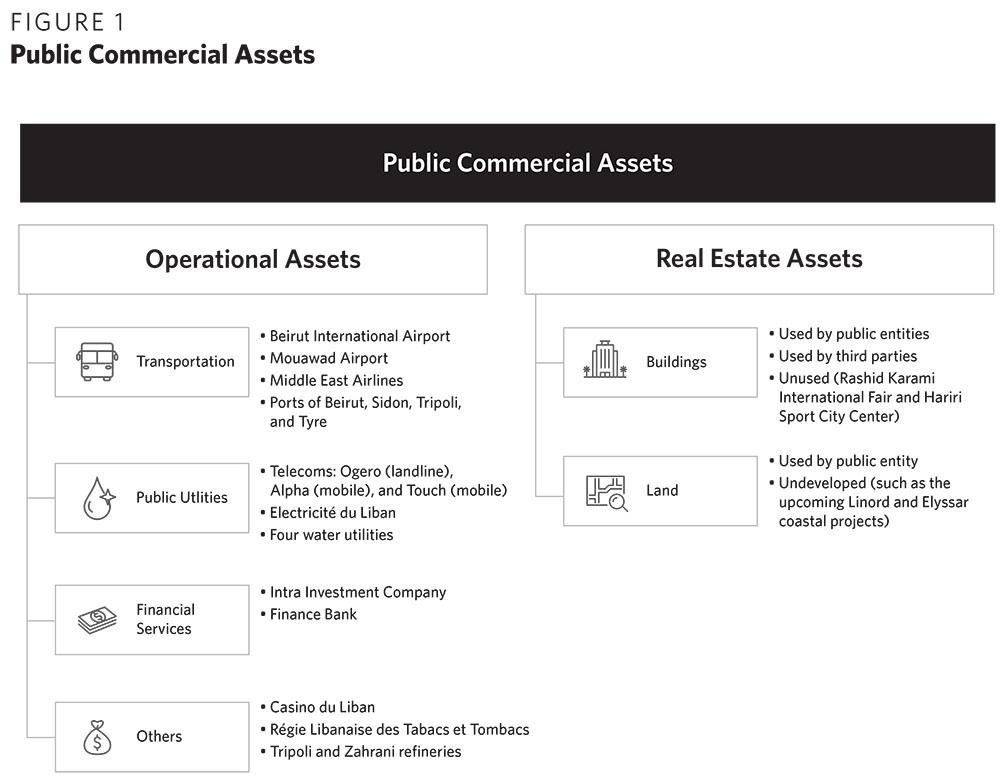
The real estate side of the portfolio is less well understood, due mainly to the absence of an accurate land registry and an official information system identifying relevant data on all geographical objects, including boundaries and ownership. Nevertheless, the government claims ownership of some 60,000 land plots with a total area of more than 860 million square meters (the exact sizes of 30,000 of the total plots are unknown). The land is distributed across Lebanon’s eight governorates, with the highest number of plots and surface areas in Baalbek-Hermel (see figure 2). The majority of plots are less than 1,000 square meters. Due to the lack of proper accounting, there are no valuations of land or buildings—not even of valuable seaside properties captured by politicians, their cronies, and political clients. However, more details are available for property developments such as the Rashid Karami International Fair, the Hariri Sports City Center, and the Linord and Elyssar real estate projects.
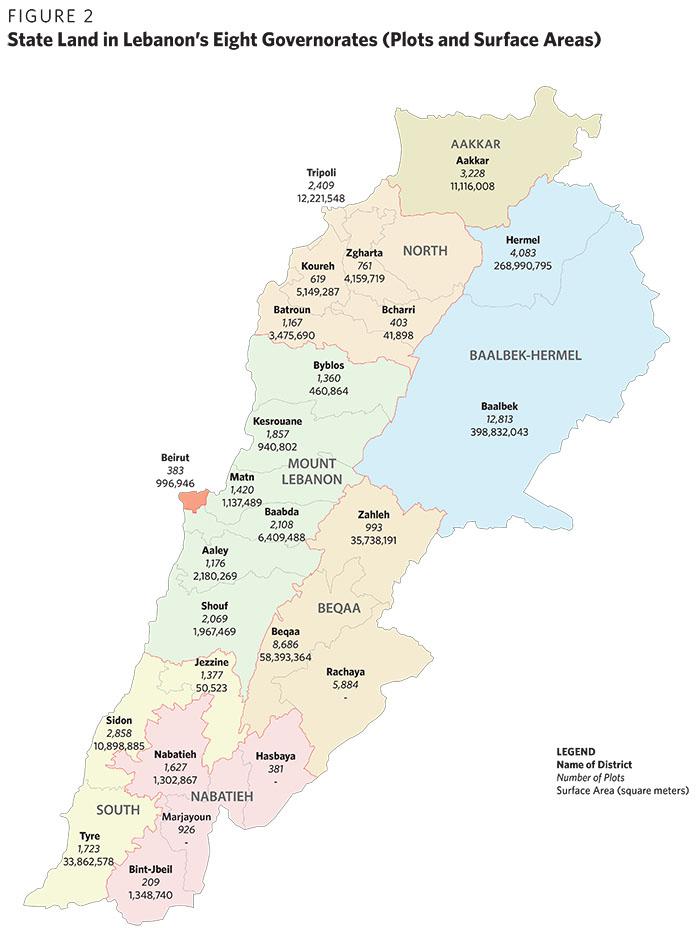
Historically, public assets have benefited only a small group of elites, largely due to the influence of politicians. Public assets, ultimately owned by the taxpayers, should benefit the consumers and serve the welfare of all citizens. Without proper transparency, SOEs are allowed to be unproductive and unsustainable, while receiving sizeable government support through budget transfers, subsidized inputs, and cheaper public funding, including loans at below-market rates. Their policies and activities are open to political interference, and as a result, nepotism, cronyism, and clientelism are rife. In addition, weak or nonexistent governance standards, with boards and management dominated by political appointees, have led to corrupt practices, high costs, and inefficiency through overstaffing and unproductive investment.

Political interference and the absence of strong regulatory authorities have resulted in a lack of accountability. In the case of the electricity, telecommunications, and oil and gas sectors, such authorities were established by law but were emasculated by their respective ministries. The lack of transparency and disclosure—with few publicly available, audited, or published accounts—has led to extremely low or negative returns on assets, with operational losses adding to budget deficits. The most visible case is Electricité du Liban, where annual deficits exceed $1–1.5 billion, representing some 30 percent of Lebanon’s budget deficit and 14 percent of overall noninterest spending.

Lebanon’s SOEs are, in fact, nonperforming assets and an integral part of the organized structure of corruption. Problems with inefficiency, low productivity, and lack of innovation have increased costs, lowered private sector productivity, and negatively impacted households more generally. These outcomes have had multiplier effects in the economy by crowding out the private sector and diverting capital and labor to inefficient public assets. Infrastructure quality is a major factor in determining investment and attracting foreign direct investment. The mediocrity of government-provided infrastructure services has reduced domestic and foreign investment, further dampening national productivity and economic growth.

Setting up Lebanon’s National Wealth Fund

The Diab government’s financial recovery plan aims to set up a Public Asset Management Company “tasked with the restructuring of public companies in its portfolio.” However, it does not offer a clear strategy, objectives, or governance mechanism. Is this a prelude to privatization? Will a consolidation of assets without proper governance and regulation enable further abuse by politicians? Meanwhile, the Association of Banks in Lebanon and other analysts have proposed creating a fund that includes public assets. It would serve to repay the central bank’s debts to commercial banks. But this implies giving preferential access to public assets to one set of creditors, namely banks, to the detriment of taxpayers and the public.

That is why Lebanon must establish an independent corporate holding company, such as a National Wealth Fund (NWF), that would own and manage public commercial assets for society’s benefit. The law establishing it would therefore include a fiscal rule stating that any dividend transferred to the government must be used to pay for public services that help alleviate human suffering and rebuild the economy. Monies generated from the better management of the assets, as well as the occasional divestiture or privatization, should first be used to further develop the portfolio so that basic services such as water, electricity, and transportation become more efficient. This to the benefit of the end users, the people, and the economy. In addition, with a commercial capital structure and dividend policy in place, the NWF would be able to produce a yearly dividend to the government—as a complement to revenues from taxes and other measures—to help fund other government requirements.

Professionalizing the management of public assets is a simple two-step process. The first step is to create a central public registry of all commercial public assets (both operational and real estate assets) and assign an indicative value to them. This should be done swiftly to help inform a feasibility study demonstrating what kind of yield and additional revenues could be expected from the NWF. The second step is to transfer these assets into the NWF. The responsibility and accountability of developing the NWF portfolio should be delegated to a professional, experienced, and politically independent board and management team.

With the institutional structure in place, the portfolio should be governed according to the same requirements as any privately owned company and thereby aim for similar returns based on three core principles: transparency, a clear objective, and political insulation. Transparency and disclosure are prerequisites for holding the fund’s board and management team broadly accountable. The NWF should operate according to the highest international norms, as if it is a listed company. Ultimately owned by the taxpayers, it is a truly public company.

Given that the assets in the portfolio are commercial in nature and would be subjected to competition, the NWF’s sole objective should be to maximize the value of the assets by being as financially focused and nimble as a private equity fund. Always aiming to achieve the best possible return would help avoid crowding out private sector initiatives.

Finally, political insulation will be critical for combating corruption and for managing the NWF in a truly commercial manner. That means delegating responsibility and holding the board of directors fully accountable for the day-to-day management of the assets, thereby enhancing the board’s professionalism. Creating an unambiguous separation between the government’s regulatory function and the fund’s ownership of public assets will also improve the likelihood of increased private sector investment and foreign direct investment—as additional ways to enhance and develop the assets in the portfolio.

Furthermore, there is no reason why the board and managers should not be subject to the same legal framework and requirements as private sector owners. In many countries, the functions and responsibilities of boards are clearly defined by law, with government-owned companies having the same accountability as boards in private joint-stock companies. Establishing a level playing field for private and publicly owned companies ensures that they operate under a single legal framework and that managers of public assets can use all the tools of the private sector.

An important advantage of consolidating all state assets under a common corporate structure is the ability to develop an asset to its full potential using the strength of the entire balance sheet of the holding company, instead of being tempted to privatize assets in a fire sale as part of the yearly struggle to close the budget deficit in a political budget process. The timely disposal of assets is instead part of the broader business plan for maximizing yield across the entire portfolio, until the asset has reached a fair value.

The efficient management of assets contributes to higher rates of real GDP growth, generates dividends for the government budget, and lowers operating costs. By making the value of the assets visible to the capital markets and debt holders, the government would improve key financial soundness metrics that the three global rating agencies use in their sovereign rating models. All together, these outcomes help to bolster a country’s governance and institutional strength and, in turn, can improve its sovereign credit rating and lower the cost of borrowing.

Properly managed, the NWF would be able to generate an annual dividend that could help fund socially important functions, ranging from healthcare to infrastructure. This would also ensure that the fund enjoys public support to fight the endemic corruption currently characterizing the management of public assets. Eventually, the NWF would also help reduce the public sector debt load, strengthening the government’s net worth as a buffer against future economic challenges.

Conclusion

Lebanon’s economic and financial meltdown cries for a revolution in policy reform, including the creation of an NWF as part of comprehensive macroeconomic and structural reform. The objectives would be to restructure public assets to combat corruption and inefficiencies, help achieve fiscal sustainability, revive economic growth, and create additional revenues for the benefit of Lebanese society as a whole. Of course, setting up an independent NWF would be a leap of faith and break with the past. The government and the public would need to act together, as a nation, to dismantle the long-standing fragmented political kleptocracy.

About the Authors

Dag Detter is an investment adviser on public assets and the former president of the Swedish government holding company.

Nasser Saidi is a Lebanese economist, former minister of economy and trade and industry, and former vice governor of Lebanon’s central bank.


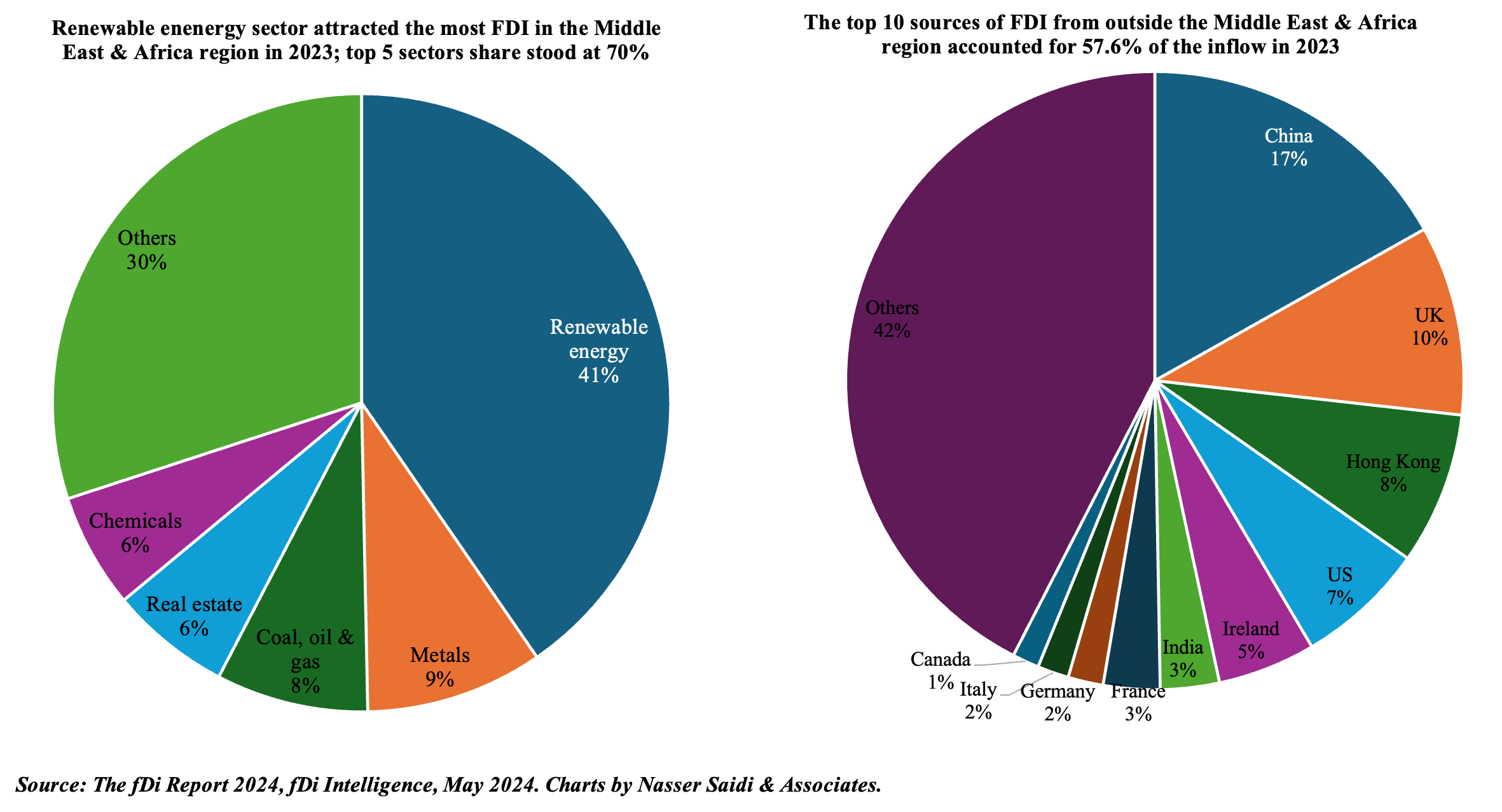

Comments on Lebanon's links to Syria's economy in Gulf News, 16 Jul 2020

Dr. Nasser Saidi’s comments appeared in the Gulf News article titled “Syria’s collapse compounded by COVID-19“, published 16th July 2020.
Comments are posted below:
“Economic collapse in Lebanon lowers the demand for imports from Syria and leads to the firing and rising unemployment of Syrian workers in Lebanon,” said Nasser Saidi, a Lebanese economist and former minister. Speaking to Gulf News, he added: “This results in a decreased flow of remittances to Syria. The freezing of the deposits of Syrians (individuals and businesses) in Lebanese banks results in an inability to finance Syrian imports and trade through Lebanon.”
He added: “The financial, banking and fiscal crisis in Lebanon means increasing pressure in supplying/smuggling of fuel, wheat and other subsidised commodities into Syria.”


Interview with CNBC on Lebanon's exchange rate movements & IMF negotiations, 10 Jul 2020

Dr. Nasser Saidi was interviewed on CNBC’s “Capital Connections” by Hadley Gamble on the country’s exchange rate movements, negotiations with the IMF and the reforms required to rescue the economy.
Some comments highlighted below:

The Lebanese pound, which has been pegged to the U.S. Dollar since 1997, has lost 80% of its value on the black market since October.
“There is no longer any policy anchor for the pound,” Nasser Saidi, the country’s former economy minister and vice governor of the central bank, told CNBC’s Hadley Gamble on Friday.
“There is no appetite for reform, no political courage to address Lebanon’s problems,” he added. Saidi compared Lebanon’s political and economic woes to crisis-stricken Venezuela, coining his home country “Libazuela.”

Watch the CNBC interview below:


Comments on China's Belt and Road Initiative & the Middle East in Al Monitor, 6 Jul 2020

Dr. Nasser Saidi’s comments on China’s Belt and Road Initiative & the Middle East appeared in the article titled “China’s ‘Belt and Road’ push brings risks, rewards to Mideast” in Al Monitor’s 6th July 2020 edition. The comments are posted below.

As UAE economist Nasser Saidi observed in his talk at the Harvard Kennedy School in 2018, the digital corridor project or a space station would complement the UAE’s national space program and help lift economic sectors to the next level. Collaboration in such innovative technological fields has also been described in detail in the “1+2+3” cooperation pattern laid out in the Arab Policy Paper of 2016.


To halt Lebanon's meltdown it is imperative to reform now, Article in The National, 4 Jul 2020

The article titled “To halt Lebanon’s meltdown it is imperative to reform now” was published in The National on 4th Jul 2020. The original article can be accessed here & is also posted below.
 

To halt Lebanon’s meltdown it is imperative to reform now

The country’s currency has lost about 80% of its value against the US dollar and poverty and unemployment are on the rise
 
Lebanon is in the throes of an accelerating economic and financial meltdown. Unsustainable monetary and fiscal policies and an overvalued pegged exchange rate led to persistent fiscal and current account deficits.
Public debt which reached more than 155 per cent of gross domestic product in 2019, is projected rise to 161.8 per cent in 2020 and 167 per cent in 2021, according to International Monetary Fund estimates. That is the third highest ratio in the world after Japan and Greece.
Informal capital controls, foreign exchange licensing, freezing of deposits and payment restrictions to protect the dwindling reserves of Lebanon’s central bank, precipitated the financial crisis, generated a sharp liquidity and credit squeeze and the emergence of a system of multiple exchange rates.
The squeeze is severely curtailing domestic and international trade and resulted in a loss of confidence in the monetary system and the Lebanese pound. Multiple exchange rates created distortions in markets and new opportunities for corruption. The result is a sharp, double-digit contraction in economic activity, consumption and investment, surging bankruptcies, and rapidly rising unemployment rates estimated at above 30 per cent.
A dangerous inflationary spiral has gripped the country with the currency’s value against the dollar nosediving as much as 80 per cent. Inflation is on the rise and reached an annual 56 per cent in May, according to Lebanon’s Central Administration of Statistics. A Bloomberg survey of economists conducted in June, projects inflation will average 22 per cent in 2020 compared with a forecast of 7.7 per cent from a previous survey.


The minimum wage has shrunk from the equivalent of $450 per month while food prices have surged. Since the end of a 15-year civil war in 1990, extreme poverty has hovered at between 7.5 to 10 per cent, while about 28 per cent of the population is poor, according to the World Bank. In November, the World Bank warned if the economic situation in the country worsened, those living below the poverty line could rise to 50 per cent.
Given the collapse of the long-maintained peg, there is no anchor for expectations of the future value of the Lebanese pound.
The Central Bank of Lebanon does not have the reserves to support the pound. There is great uncertainty concerning the macroeconomic outlook, fiscal and monetary policies, exchange controls and structural reforms.
The government approved a rescue plan, the basis for negotiations with the IMF, but failed to set a credible roadmap for structural reforms and none of the promised reforms have been undertaken. There is a loss of confidence in the banking system and in macroeconomic and monetary stability. As a result, people want foreign currency to protect themselves, as a hedge against inflation and further depreciation of the pound.
Transfer restrictions have led to a sudden stop of capital inflows and remittances from Lebanese expatriates, who fear their transfers will be frozen. Remittances accounted for 12.9 per cent of GDP in 2019.
With capital and payment controls and lack of intervention by the central bank, the foreign exchange market became a cash market with little liquidity, therefore highly volatile and subject to large fluctuations, rumours and panic.
Two short-term factors have compounded the currency crisis. The Covid-19 lockdown meant a loss of remittances that would have come in as cash. Media reports cite an accelerated smuggling of imported, subsidised commodities like fuel and wheat into neighbouring Syria these past months due to the increasing bite of international sanctions and a failing wheat harvest.
Panic prevails because of new US sanctions targeting Syria under the Caesar Syria Civilian Protection Act (the Caesar Act) that came into effect last month. Syrians are trying to hedge against inflation and the depreciating Syrian pound by tapping Lebanon’s forex market. In effect it is one market.
More fundamentally, Lebanon’s rising inflation rates are feeding expectations of ever higher inflation rates, which along with the sharp decline in real income because of the deep recession, means a fall in the demand for money and lower demand for the Lebanese pound. As people try to shift out of the Lebanese pound, inflation rises, and the currency depreciates against the US dollar.
The vicious cycle is being fed by the monetary financing of budget deficits. Lebanon’s fiscal deficit increased 26.90 per cent in the first four months of the year to $1.75B from the year-earlier period. With the government unable to borrow from the markets, the central bank is financing the growing budget deficit and, increasingly, a growing proportion of government spending. The printing press is running, with a growing supply of Lebanese pounds on the market chasing a dwindling supply of US dollars. Hyperinflation looms.

The deepening crisis requires urgent, decisive, credible, policy action. A capital control act should be passed immediately. That will help rebuild confidence in the monetary system and restore the flow of capital and remittances.
The prices of subsidised commodities and services (fuel, electricity) should be raised to combat smuggling and stem the budget deficit. Smart and targeted subsidies are more effective. The impact of removing general subsidies is less painful than financing budget deficits that accelerate overall inflation and exchange depreciation. Exchange rates need to be unified within a central bank and bank organised market.
Most important, is rapidly agreeing and implementing a financial rescue package with the IMF. That should be based on a comprehensive macroeconomic-fiscal-financial reform programme that includes structural reforms, debt, and banking sector restructuring, which would provide access to liquidity, stabilise and revive private sector economic activity.
Nasser Saidi previously served as Lebanon’s minister of economy and industry and a vice governor of the Central Bank of Lebanon. He is president of the economic advisory and business consultancy Nasser Saidi & Associates.


Comments on Lebanon’s IMF negotiations, 1-3 Jul 2020

Dr. Nasser Saidi’s comments on Lebanon’s IMF negotiations appeared in multiple articles, as posted below.
 
In the New York Times article titled “Rescue Talks With the IMF ‘Hit the Rocks’ as Lebanese Suffer” which was published on Jul 1st
Several current and former Lebanese officials, diplomats, international officials, economists and analysts agreed that talks with the IMF to rescue Lebanon from an economic crisis are going nowhere. Meanwhile, time is running out.
“This (IMF talks) is hitting the rocks” says Nasser Saidi, a former economy minister and central banker.

“It is incredible that a bunch of parliamentarians in a failed state are trying to question the expertise of the IMF,” Saidi, the ex-minister, said. “There is no way the IMF is going to accept it.”

 
In the VOA News article titled “As IMF Talks Drag, Lebanon’s Economy Spirals” which was published on Jul 2nd
Critical bailout talks between Lebanon and the International Monetary Fund may be ‘hitting the rocks,’ according to a former economy minister and central banker, Nasser Saidi.
 
In The National’s article titled “Lebanon-IMF talks hit ‘rock bottom’ as France fears violence” which was published on Jul 2nd
“This [IMF talks] is hitting the rocks,” says Nasser Saidi, a former economy minister and central banker.


How public assets can help revive Lebanon, Oped in FT Alphaville, 30 Jun 2020

The article titled “How public assets can help revive Lebanon” appeared in FT Alphaville on June 30th, 2020.
 

How public assets can help revive Lebanon

This is a guest post by Dag Detter, an investment adviser and former president of Stattum, the Swedish government holding company and Nasser Saidi an economist and former Minister and Central Bank Vice Governor in Lebanon, arguing that Lebanon should create a national wealth fund to help it maximise the value of public assets and thus better address its debt imbalances.
Lebanon is in the throes of a fiscal, banking, currency and debt crisis. It is negotiating a rescue package with the IMF and a restructuring of its public debt which stands at 175 per cent of GDP with an estimated budget deficit of 15 per cent.
Across the globe and in Lebanon, policymakers have focused on managing the debt to get the country back in balance. But they have largely ignored the question of how public assets and real estate can help to alleviate the problem. Governments around the world, including Lebanon, have trillions of dollars of public assets. These are potentially a hidden gold mine in the fight against debt crises, or more pertinently an iceberg because so little of the wealth is visible to sovereign bond investors. Globally, the IMF estimates public assets are worth at least worth twice that of global GDP. Yet the assets are often badly managed and frequently not even accounted for at all. Given that in most countries public wealth is larger than public debt, managing it better could help to solve many debt issues while also providing material for future economic growth.
The idea of public asset wealth may not ring true to anyone familiar with the operational part of the government portfolio in Lebanon. Yet the portfolio plays a fundamental role in the economy because it operates in important sectors on which the broader economy depends. This is why the importance of well-governed SOEs cannot be overstated.
………
……….
An efficiently managed National Wealth Fund would cut the drain on the government’s budget and resources, increase the value of public commercial assets, provide revenues and would be a major contributor to fiscal sustainability. More efficiently managed assets would contribute to a higher rate of real GDP growth, and lower private sector operating costs.
If properly administered, the move would then bolster faith in Lebanon’s credit rating assessment, lowering the cost of borrowing on the international market, thus benefiting society as a whole.
The complete article can accessed directly (paywall) or download the article here.


Comments on the Caesar Act in The National, 27 Jun 2020

Dr. Nasser Saidi’s comments on the Caesar Act appeared in the article titled “Lebanon braces for ‘pain’ of Caesar Act amid financial meltdown” in The National’s 27th June 2020 edition. The comments are posted below.
 
Because of the close historical ties between Lebanon and Syria, the law will make business between the two countries “more problematic and expensive” and “hurt Lebanon”, said Nasser Saidi, a former vice-governor of Lebanon’s central bank.
The Caesar Act provides for secondary sanctions, which significantly widens its scope, he said.
“In other words, they are imposing sanctions on Syrian entities and business people and also on the people who deal with them,” Mr Saidi told The National.
Should the US decide to impose sanctions against the Syrian central bank, transactions inside the country “would be highly complicated”, said Mr Saidi.


Comments on the Lebanese Pound in Washington Post, 26 Jun 2020

Dr. Nasser Saidi’s comments on Lebanon’s currency appeared in the article titled “Lebanon’s currency takes a new dive, and there is no end in sight” in Washington Post’s 26th June 2020 edition. The comments are posted below.
 

In the absence of a clear policy path ahead, there is no bottom to the value of the Lebanese pound, said Nasser Saidi, a former Lebanese finance minister who is now a financial consultant based in Dubai.
Citizens have lost trust in the banking system and the country is shifting to a cash-only economy. Some retail outlets have started accepting only dollars, which are hard to find. U.S. and European sanctions against neighboring Syria have deprived that country of dollars, too, making Lebanon the chief destination for Syrians seeking to fund imports there, increasing the demand for dollars, Saidi said.
Government revenue, meanwhile, has skidded to a halt because of the shutdowns and economic retraction, forcing the Central Bank to print Lebanese pounds to fund government expenditures, including salaries for the bloated civil service.
“Those go into the market and they are chasing fewer and fewer dollars,” Saidi said. “There is no longer any anchor for the value of the Lebanese pound and we are going into the unknown.”


How GCC countries can adapt policies for a post Covid-19 world, Article in The National, 23 Jun 2020

This article titled “How GCC countries can adapt policies for a post Covid-19 world” appeared in The National on 23rd June, 2020. The original article can be accessed here.


How GCC countries can adapt policies for a post Covid-19 world

by Dr. Nasser Saidi and Aathira Prasad

As countries emerge from three-months of Covid-19 containment, policy makers need to plan for a transformed post-pandemic world and create a new development model

Covid19 continues to be part of life as we know it. The GCC nations are gradually emerging from lockdown. There are nodes of optimism as the number of recoveries outpace the confirmed cases, including in the UAE.
Stimulus packages across the GCC included a number of common policy actions – rate cuts, liquidity enhancing measures, deferment of loans and credit card payments. Also noteworthy is the support extended to small and medium sizes enterprises (SMEs) and affected sectors impacted by the pandemic-induced lockdowns which include tourism, hospitality and aviation.
After almost 3 months of lockdowns, countries are phasing their recovery plans. As we gradually emerge from Covid-19 containment, policy makers need to plan for a transformed post-pandemic world, which underscores the need to create a new development model.
For the GCC countries, this means reviewing three broad policy measures related to monetary and fiscal policies as well as structural reforms.
Most GCC nations are pegged to the dollar except for Kuwait which pegs its dinar to a basket including the greenback. Hence, the countries follow the Fed’s interest rate moves, which may limit the use of other instruments of monetary policy and might restrict other policy moves from the central banks other than stimulus packages to increase liquidity.
So what can the central banks do to support their economies, while maintaining a peg or moving to a currency basket? Two innovative ways of providing support would be the establishment of GCC central bank swap lines and monetising new government debt issued for deficit financing.
The establishment of GCC central bank swap lines, with an option for the larger central banks (SAMA, UAE) to tap the Fed or People’s Bank of China (PBoC) would enable regional central banks to tap additional liquidity during times of market stress, support financial stability and provide a liquidity backstop.
Monetising new government debt issued for deficit financing can help avoid the crowding out of the private sector and inject liquidity, given the lack of developed local currency debt markets and central banks’ limited ability to conduct open market operations.
On the fiscal policy front as part of their pivot towards diversifying their economies and becoming less reliant on oil revenues, a move towards deficit financing along with the institution of fiscal rules for long-term fiscal sustainability can help accelerate the development of local currency debt and mortgage markets to finance housing and long-term infrastructure projects.
Rationalising government spending either by reducing the size of government, shifting activities to the private sector, and moving to targeted subsidies is another element of fiscal reform. In conjunction governments can issue long term debt that can be bought by central banks during a crisis period which is happening in the US and Europe today.
Diversify government revenues by improving the management of public commercial assets and increasing the efficiency of tax collection is an important element of fiscal reform. Consolidating the large number of fees and charges on consumers and businesses into fewer broad-based taxes, can help lower business and living costs.
The Covid pandemic is also an incentive for “Green New Deals” through investment in public health, domestic AgriTech for food security, renewable energy, clean cities and technologies, that will support job creation and economic diversification. Governments can take the first step to ensure a project pipeline, focusing on public-private partnerships, with targeted incentives for SME participation.
Accelerating the digitisation drive will also lower the cost of broadband internet and accessibility while speeding up the implementation of 5G.
The establishment of social safety nets and protection programs and pension schemes will also help reduce financial burdens that can come around in periods of crisis. For employees, a contribution towards a pension fund would ensure sufficient savings in the event of job losses or retirement and for employers, this provides them with an investment fund and support end-of-service or gratuity payments.
Structural reforms including the acceleration of privatisation, working closer with private sector participation is key. Developing insolvency frameworks to support out-of-court settlement, corporate restructuring and adequately protect creditors’ rights is another important element. Enhancing the environment that continues to attract and retain human capital through a permanent residency programme could help generate significant economic gains.
A positive side-effect of Covid-19 is the realisation that working from home is a feasible option. Companies can offer flexible work options, reduce office space and rents, while employees can stay at cheaper home locations, save on rents, and telecommute. To realise these benefits, requires removing barriers by amending labour laws and liberalising voice over Internet Protocol (VoIP).
The Covid-19 perfect storm is an unprecedented opportunity for the GCC countries for a policy reset, to steer toward a new development model for a post-pandemic world and move away from business as usual.


Interview with Dubai TV (Arabic) on Adnoc's USD 20.7bn deal, 23 Jun 2020

Dr. Nasser Saidi appeared in an interview with Dubai TV, broadcast on 23rd June 2020, discussing an agreement to invest in Abu Dhabi’s natural gas pipelines infrastructure.
The agreement worth USD 20.7bn is the largest single global energy infrastructure deal in 2020 – and the region’s biggest. This is significant at time of global recession & capital outflows from Emerging Markets.
The Adnoc deal will attract more than $10bn in FDI into the #UAE; part-privatisation signals openness to PPP & greater private sector involvement in energy development. Adnoc has also taken advantage of investor appetite by monetising its gas pipeline network. Is privatisation further upstream next?
The video can be viewed below from 42:14 onwards.


Comments on the Lebanese Pound in the Independent Arabia, 21 Jun 2020

Dr. Saidi’s comments on Lebanon’s exchange rate appeared in an article in The Independent Arabia on 21st June 2020.
The comments are posted below:

برأي وزير الاقتصاد والتجارة السابق، النائب الأول لحاكم مصرف لبنان السابق ناصر السعيدي، فإن “القيود على الأموال المنقولة بما فيها الودائع بالعملات الأجنبية في المصارف، تؤدي إلى فارق بين قيمة الموجودات في الدولة وخارج الدولة، فما يُسمى بالـ “لولار”، أو “الدولار اللبناني”، هو نتيجة طبيعية لتلك القيود”، مشيراً إلى أن “هذا الأمر يحصل في لبنان بشكل غير قانوني يؤدي إلى عشوائية في النظام المالي، والمصرفي ويؤدي إلى التشوهات التي نراها في سعر صرف الليرة في الأسواق”.

وقال السعيدي إن “لبنان بات على أبواب انهيار تام لسعر الصرف العام، في حال عدم حصول اتفاق مع صندوق النقد الدولي على الإصلاحات المطلوبة”، معتبراً أن “تدخل مصرف لبنان نقدياً في السوق لن ينفع لأن قدرته باتت محدودة”، مضيفاً أن “الحقيقة المُرّة هي أن مدخرات اللبنانيين وجنى عمرهم في طور التبخر إذا لم تحصل الإصلاحات المطلوبة في أسرع وقت”.

وفي معرض رده على أوجه التشابه بين الأزمة الاقتصادية في لبنان، ونماذج الأزمات العالمية الأخرى، قال إنه “لا تجوز مقارنة ما يحصل في لبنان بنموذجي قبرص، أو اليونان، إنما هناك بعض أوجه الشبه بما حصل في الأرجنتين، وفنزويلا، وغيرها من الدول ذات الاقتصادات المدولرة”.


Interview with Dubai TV (Arabic) on Lebanon, its dim prospects & Saudi Arabia, 21 Jun 2020

Dr. Nasser Saidi appeared in an interview with Zeina Soufan on Dubai TV, broadcast on 21st June 2020, discussing two segments – one, on Saudi Arabia (from 7:00 onwards) and the other on Lebanon and its dim prospects (from 17:00 onwards).
Both sections are part of the video below:


Interview with AnNahar (Arabic) on Lebanon, 20 Jun 2020

In this interview with An Nahar, Dr. Nasser Saidi gives his views on current developments in Lebanon, while also touching upon the IMF negotiations, LBP depreciation, prospects and the much needed policy reforms.
Watch the interview below:

This interview was also detailed in the article (copied below):

ناصر السعيدي لـ”النهار”: لا “خطة باء” غير صندوق النقد راهناً… وهذا ما ينتظر لبنان (فيديو)

ليس صندوق النقد الدولي وصفة سحرية لحلّ مشاكل لبنان الكارثية. الاتفاق معه حاجة راهنة ونقطة عبور لإمكانية الحصول على تمويل دول مانحة تطلب بدورها ثقةً من بوابة إصلاحات يريدها الصندوق ويحتاجها لبنان بشكل مزمن بمعزل عن حديث الشروط السياسي غير الواقعي. نقطة يؤكد عليها الدكتور ناصر السعيدي في مقابلة عبر “يوتيوب” وفايسبوك “النهار”.
في رأي وزير الاقتصاد والتجارة الأسبق، والنائب الأول لحاكم مصرف لبنان الأسبق، “نحن على أبواب انهيار تام لسعر الصرف العام المقبل على أبعد تقدير في حال عدم حصول الاتفاق”. أما ترياق تدخل مصرف لبنان فـ”لن ينفع لأن قدرته على التدخل في السوق باتت محدودة”. الحقيقة المُرّة أن مدخرات اللبنانيين وجنى عمرهم في طور التبخر إذا لم تحصل الإصلاحات المطلوبة في أسرع وقت. غير ذلك لا ضمانات ولا تطمينات ممن يصدقون الناس القول ولا يبيعونهم أوهاماً. أما حاملو السندات فيترقبون نجاح المفاوضات. صبرهم لن يطول. “حدوده آخر شهر آب المقبل، وإن لم تكن مؤشرات التفاوض إيجابية لناحية إعادة هيكلة الديون، فهم يتجهون حكماً إلى مقاضاة لبنان للحصول على أموالهم”.
وإن كان الهدف من قانون قيصر الأميركي “خنق النظام السوري سياسياً عِبر إقفال الطريق أمام الطامحين في المشاركة بإعادة الإعمار، فإن طرح توجه لبنان شرقاً كبديل عن وجهة الغرب يفتقد دقة علمية مطلوبة. ويرى السعيدي أن “الوجهة يجب أن تكون شرقاً وجنوباً وإلى أوروبا، ومن قال إن الصين كانت في الماضي والحاضر خارج الطموح للاستثمار والتمويل في مشاريع بنى تحتية؟”.
ويشاركنا السعيدي معلومات استقاها من أطراف خليجية تفيد بالاستعداد لمساعدة لبنان في مشاريع الطاقة والفيول، كما أنه يرى مصلحة في ضرورة ربط اقتصادنا مستقبلاً باقتصاد الخليج، مع دبي والإمارات، “ذلك أن أكثرية صادراتنا هي من الفواكه والخضر، ويُعتبر الخليج أفضل الأسواق لنا”.
في المحصلة، لا “خطة باء” راهناً غير إنجاز اتفاق مع صندوق النقد وما يتطلبه من إصلاحات. وفي رأيه، “قانونان يجب أن يمرّا في القريب: الكابيتال كونترول ومشتريات الدولة”.
تفاصيل الحوار:
ردّاً على سؤال حول تقييم المفاوضات مع صندوق النقد إلى الآن، يقول السعيدي إن “المفاوضات انطلقت مبنية على خطة الحكومة التي تفترض أن يكون هناك إصلاح بنيوي في الكهرباء، وإعادة هيكلة الديون، والتوجه إلى سعر صرف مرن، وإلى خطة واضحة للأمان الاجتماعي، ومواجهة الهدر والنزيف الحاصل بسبب فشل الطبقة السياسية، أضِف إلى عامل الاتكّال على المعونة الخارجية في الخطة”. وفي رأيه، أن “صندوق النقد لا تعوزه الخبرة في معرفة الوضع المالي والنقدي في لبنان، وهو يقدّم تقريراً سنوياً متصلاً بالأرقام، كما أن لديه الخبرة الكبيرة مع بلدان وقعت في أزمات مصرفية ونقدية”. ويعتقد أن “الاختلاف حول الأرقام والخسائر وإعادة النظر فيها في مجلس النواب ليس واقعياً، فالأرقام ليست وجهة نظر أو معطًى تدخل فيه السياسة”. كما أن الصندوق يجد مشكلة في عدم اتفاق آراء الأفرقاء في الداخل، أضِف إلى عدم حصول التعيينات المطلوبة وغياب الاصلاحات في الكهرباء، وعدم وضع ضوابط على حركة رؤوس الأموال (الكابيتال كونترول)، واستمرار الحاجة إلى استقلالية القضاء… وكل تلك إصلاحات كان يجب أن تحصل قبل التفاوض أو تزامناً معه”.
نظرة الصندوق تكمن في أن “لبنان ليس جاهزاً للتفاوض، لذا ليس هناك حديث عن برنامج بعد”.
*ماذا عن تقديرات المساعدة المالية للصندوق في حال نجاح المفاوضات؟
يقدّر السعيدي حجم مساعدات الصندوق في حال نجاح التفاوض بـ 8.9 مليارات دولار. وفي رأيه، أن “الأهمية ليست فقط في المبالغ والتسهيلات، وإنما في الاتفاق الأساسي لإعادة هيكلة الديون الخارجية. ذلك أن حاملي السندات يترقبون النتائج وكذلك الدول المانحة التي لن تساعد لبنان من دون عبور الاتفاق مع الصندوق. ويقول “إننا في حاجة إلى 11 مليار دولار لسدّ ميزان المدفوعات والاستثمار في البنى التحتية”، مقدّراً حاجة لبنان في السنوات الخمس المقبلة بـ25 الى 30 مليار دولار، لا تأتي دفعة واحدة بل على مراحل، وبطبيعة الحال من ضمن شروط إصلاحية”. ويتندّر إزاء من يقول بأن شروطاً سياسية ستفرض علينا، فـ”هذا كلام غير منطقي ونحن الطرف الذي يحتاج إصلاحات… الكلام عن شروط سياسية ليس واقعياً”.
ويتوقع السعيدي أن ينتظر حاملو السندات نتائج التفاوض مع الصندوق حتى نهاية شهر آب المقبل، “قبل أن يبادروا إلى خطوات تصعيدية من قبيل الدعاوى القضائية، وتزامناً يتوقع حصول قيود على القطاع المصرفي في حال فشل المفاوضات”.
البديل عن صندوق النقد
لا يرى السعيدي خطة باء في الوقت الراهن، فـ”الاتفاق مع الصندوق مهم لإعادة الدخول إلى الأسواق، ودون ذلك نحن ذاهبون إلى انهيار مالي واقتصادي، ومن الممكن أن نشهد تضخّماً مفرطاً سبق أن عشناه في الثمانينات، تزامناً مع تدنّي الناتج القومي وزيادة نسبة الفقراء ومنهم 25 في المئة لن يكون في مقدورهم تأمين الغذاء، أضِف إلى تصاعد الأزمات في قطاعات حيوية كالصحة والتعليم”. في اختصار، “إنه سيناريو الدولة الفاشلة”. ويستدرك: “صحيح أن كثيرين يرون أننا وصلنا إلى مرحلة الدولة الفاشلة، لكن في رأيي هناك بصيص أمل علينا التقاطه”.
التوجه شرقاً
يعتقد السعيدي أن “الاتجاه يجب أن يكون شرقاً وجنوباً… ولا بدّ من الربط مع دول الخليج وأوروبا والصين التي لم تكن بعيدة في السنوات الماضية عن الاهتمام بالتمويل والاستثمار في مشاريع البنى التحتية”.
ويكشف السعيدي أنه أجرى اتصالات مع دول خليجية “مستعدة للمساعدة في قطاع الطاقة وإنشاء معامل، ويمكن أيضاً تأمين الفيول عبرها، كما حصل في مصر، مع تسهيلات في الدفع، ما يوّفر علينا ملياراً إلى مليارَي دولار سنوياً”.
ويرى ضرورة “ربط اقتصادنا مستقبلاً باقتصاد الخليج، مع دبي والإمارات، فأكثرية صادراتنا هي من الفواكه والخضر، ويُعتبر الخليج أفضل الأسواق لنا”.
أما التعويل على قدرة روسيا وإيران في أن تكونا بديلين، فهو “غير واقعي لا سيماً ربطاً بتدهور أسعار النفط”.
ولكن ماذا عن المعضلة السياسية؟ يجيب: “نعم، تملك الدول العربية والولايات المتحدة والغرب عموماً نظرة بأن لبنان يتجّه ليصبح امتداداً لإيران، لكن مصلحتَنا في أن نكون متوازنين في علاقاتنا الخارجية، ونحن بحاجة كذلك إلى الدول الأوروبية… هذا واقع اقتصادي ومالي، والدخول في نظرية الاقتصاد الموجه خطر”، متسائلاً: “هل نريد أن نكون مثل سوريا والعراق؟”.
سياسة المصرف المركزي
“لم يعد لدى مصرف لبنان القدرة على تثبيت سعر صرف الليرة، لذلك لا مرتكز للتوقع المستقبلي”. لذا في رأي السعيدي، “يجب أن يكون المرتكز سياسة مصرفية واضحة للمستقبل، وهنا عودةٌ إلى الاتفاق مع صندوق النقد، فالدولة خلال هذه الفترة فقدت 60 إلى 70 في المئة من إيراداتها، ويقوم مصرف لبنان بتمويل الدولة وعجزها، أي ضخّ الليرة بصورة متزايدة في الأسواق، ما يزيد عرض الليرة أمام كمية دولارات محدودة، ما يرفع الطلب، أضف إلى واقع “كوفيد 19″ الذي زاد المشكل، وإلى ارتدادات قانون قيصر وحال الهلع في سوريا حيث بات السوري يطلب الدولار في سوق بيروت…”. لكل تلك الأسباب وغيرها، تبدو الإجراءات التي اتُخذت “موقتة ومن شأنها أن تهدّئ السوق لفترة بسيطة لكنها ليست حلّاً”.
مصير الودائع
تتدهور الودائع ومدخرات اللبنانيين الذين “عليهم مساءلة المسؤولين ومحاسبتهم والضغط عليهم للقيام بالإصلاحات المطلوبة… وبدون الضغط ستتبخّر المدّخرات”. ويرى السعيدي ضرورة إقرار قانونَي “الكابيتول كونترول” ومشتريات الدولة في القريب العاجل، وكذلك تعيين هيئة رقابية ومجلس إدارة لكهرباء لبنان، بعيداً من التبعية السياسية.
بالنسبة للرجل العارف في خبايا الإدارة اللبنانية والاقتصاد، لا تزال هناك فرصة ضئيلة. الإصلاح الآن الآن… وإلا!


Interview with CNN Arabia on Lebanon, 18 Jun 2020

Dr. Nasser Saidi’s interview on the immediate need for reforms in Lebanon appeared on CNN on 18th June 2020. A link to the video is posted here.
قال السياسي والاقتصادي اللبناني، الدكتور ناصر سعيدي، إن لبنان سيتجه إلى الهاوية إذا لم يتحرك السياسيون في البلاد لإجراء إصلاحات خلال 90 يوماً، مشيراً إلى لبنان يضر نفسه بنفسه، ومضيفاً بأنه يجب التفاوض مع صندوق النقد الدولي للتوصل إلى خطة شاملة لإنقاذ الاقتصاد اللبناني.


Interview with Forbes Middle East (Arabic) on Lebanon, 12 Jun 2020

Dr. Nasser Saidi appeared in an interview with Forbes Middle East, broadcast on 12th June 2020, discussing Lebanon & import of essential materials into Syria.
The video can be viewed below; an article based on the interview can be accessed here.


Interview with BBC on Lebanon's outlook, 12 Jun 2020

Dr. Nasser Saidi appeared on BBC World Business report on 12th Jun 2020 to discuss why the outlook seems so bleak for Lebanon, and whether it is likely to receive a bailout from the International Monetary Fund.
Listen to the interview (from 2:48 to 6:46) at https://www.bbc.co.uk/programmes/w172xlt0yngxy54


Comments on Lebanon’s currency collapse and protests, FT, 12 Jun 2020

Dr. Nasser Saidi commented on the currency fluctuations and associated protests in Lebanon in the FT article titled “Currency collapse fuels mass protests in Lebanon” published on 12th June 2020.
The full article can be accessed at: https://www.ft.com/content/a1c5f2aa-79a6-48ec-aa8e-6b5d60bda1f7
 
The comment is posted below:
Nasser Saidi, a former central bank vice-governor, said there was little the government could do at this point to stop the slide. “This is a cash market, not your usual forex market. The central bank is no longer able to intervene.”
Mr Saidi, the former central banker, said the volatile price swings were driven by four main factors: uncertainty among currency traders about government policy; the printing of currency to cover a fiscal deficit left by falling tax receipts; the economic impact of coronavirus; and panic in the exchange market in neighbouring Syria, where business people are anticipating the impact of new US sanctions next week.


Interview in Nidaa Al Watan (Arabic) on Lebanon’s recent BDL appointments, 11 Jun 2020

Dr. Nasser Saidi’s interview (Arabic) in Nidaa Al Watan on why Lebanon’s credibility will be questioned with the recent appointments in BDL.


سعيدي لـ”نداء الوطن”: أطاحوا بمصداقية لبنان

“سمك، لبن، تمر هندي”…هذه كانت خلطة تعيينات الأمس الماليّة التي لم تكتفِ بعدم التناسق والعشوائية، بل تخطت ذلك بأشواط لتقضي على آخر باب لاستعادة الثقة دولياً، خصوصاً وقد ترافق ذلك مع “تطيير” ملف التشكيلات القضائية في سابقة جديدة على مستوى الرئاسة الأولى. حطمّت تعيينات الأمس لنواب حاكم البنك المركزي الأربعة، ومفوض الحكومة لدى مصرف لبنان، كما وهيئتَي الأسواق المالية والتحقيق الخاصة بالإضافة الى لجنة الرقابة على المصارف، الأمل بأي مساعدة من صندوق النقد الدولي الذي كان واضحاً بطلبه من الحكومة أن تأخذ برأي الثوار والمجتمع المدني والمنتفضين ضد طبقة الفساد في البلد.
مرة جديدة، أثبت رئيس مجلس الوزراء حسان دياب ومعه وزراء حكومته مجتمعين عدم جديتهم في قيادة الإنقاذ المزمع. أثبتوا ولاءهم للطبقة السياسية التي أنتجتهم فرضخوا للمحاصصة.
وبحسب أوساط متابعة، بات من شبه المستحيل توقع أي مساعدة من صندوق النقد الدوليّ بعد فشل لبنان في البتّ في الملفات الإصلاحية العالقة وعلى رأسها التشكيلات القضائية وعدم مراعاة الشفافية المطلوبة في التعيينات المالية. وعن الموضوع، يشدد نائب حاكم مصرف لبنان السابق د. ناصر سعيدي على أنّ “ما حصل يؤكد أن السلطة السياسية تواصل عملها كالمعتاد رغم الاحتجاجات التي بدأت في تشرين الماضي. فلا نية صادقة أو رغبة في الإصلاح، وهو ما يشكل إهانة بحق الحراك ومطالبه وبحق الشعب اللبناني ومعه جميع الاصلاحيين”، مؤكداً أنّ ذلك “سيؤدي إلى تدمير أي مصداقية متبقية لحكومة حسان دياب دولياً فهي أثبتت افتقارها إلى الشجاعة لإجراء الإصلاحات المطلوبة”. وأضاف: “في الحقيقة، يطالب صندوق النقد الدولي وغيره من الجهات المعنية بالمفاوضات مع الجانب اللبناني بفريق عمل مستقلّ يكون بعيداً عن نظام مسايرة السياسيين وصَون مصالحهم الخاصة، وبعيداً من الدخول بالأسماء، أطاحت الآليّة التقليديّة التي اتّبعت في اختيار من سيشغل هذه المراكز بمصداقيّة لبنان دولياً، علماً أنّ حساسية الظروف الراهنة كانت تتطلب أشخاصاً مؤتمنين وكفوئين للقيام بالإصلاحات المالية المنتظرة أكان من صندوق النقد أم سيدر أم غيرهما من الجهات المانحة للبنان”.
ويلفت سعيدي إلى أنّ “إعادة هيكلة الدين العام ومعه ديون مصرف لبنان إلى جانب إصلاح القطاع المصرفي، تتطلب سلطة نقدية وتنظيمية مستقلة متحرّرة من براعم السياسة ومتخصّصة ذات خبرة وتقنية عالية في قضايا البنك المركزي”، ويتابع: “أضاع لبنان بالأمس فرصة تاريخية لإجراء إصلاحات في السياسة النقدية وتحديداً في سياسة تثبيت سعر الصرف التي أدت إلى انهيار اقتصادي ومالي ومصرفي وانهيار للعملة الوطنية وتضخم وركود خطيرَين، وكل ذلك في ظلّ الحاجة الملحة الى الانتقال لاعتماد أسعار صرف مرنة، ووقف هندسات مصرف لبنان المالية، والاتجاه نحو سياسة نقدية تهدف إلى محاصرة التضخم بدلاً من ربط سعر الصرف بشكل غير مستدام ومصطنع بتكاليف هائلة على الاقتصاد اللبناني”.
إذاً، شكّلت التعيينات المالية بالأمس إهانة لجيل من اللبنانيين المتخصصين والذين كان بمقدورهم تنفيذ اصلاحات عميقة لإنقاذ لبنان من التضخم وانهيارالعملة والسقوط المصرفي والمالي وصولاً إلى الفقر… والمجاعة. أكثر من 100 يوم انتظرها الشعب المنتفض حتى يشهد “انقلاب” رئيس الحكومة حسان دياب على نظام الفساد والمحاصصة (كما وعد في بيانه الوزاري)، بيد أنّّ محصّلة هذا الانتظار لم تُثمر سوى مزيد من اليقين بأنّ حالة “الفصام” مستحكمة بالأداء الحكومي بين الوعود والتطبيقات، وبين أرقام متخبطة قيل إنها تضرّ بالقطاع المالي، وبين من اختيروا لقيادة الإصلاحات المالية واختيارهم جاء بغالبيته وفق معيار المحسوبية لا الكفاءة.


Comments on Lebanon’s currency fluctuations in Reuters, Jun 11 2020

Dr. Nasser Saidi’s comments on the Lebanese pound and fluctuations appeared as part of the Reuters article titled “Lebanese pound changes hands near 5,000 per dollar, market sources say” published on 11th June 2020. Comments are posted below.
Nasser Saidi, a former economy minister, said the pound’s decline had accelerated because of increased demand for dollars in neighbouring Syria, where the local currency has also hit record lows as new U.S. sanctions are set to come into effect. “There is the beginning of panic in Syria over the availability of dollars. This has transferred itself into increased demand in the Beirut market,” he said.


Comments on Lebanon’s recent BDL appointments in Reuters, Jun 10 2020

Dr. Nasser Saidi’s comments on recent appointments in Lebanon’s central bank appeared in the Reuters article titled “Lebanese government picks central bank vice governors, fills top state jobs“, published on 10th June 2020.
Comments are posted below.
Nasser Saidi, a former economy minister, said the government lost credibility by approving the proposed nominations for the central bank, the banking control commission and the capital markets authority.
“We missed a historical opportunity…The banking sector is at the heart of any rescue plan for Lebanon,” he said. “You need a restructuring of the debt, of the financial sector, and you need people who are not political appointees to oversee that.”


Interview with CNBC on Lebanon's negotiations with the IMF, 3 Jun 2020

Dr. Nasser Saidi was interviewed on CNBC’s “Capital Connection” by Hadley Gamble on the country’s negotiations with the IMF and the reforms required to rescue the economy.
Some comments highlighted below:

A former minister of economy and trade said it was not realistic to expect the [IMF loan negotiation] process to be completed so soon, noting that a number of laws need to be passed. “And parliament, in the middle of this crisis, is going into recess until October,” said Nasser Saidi, president of Nasser Saidi & Associates. “What you need is Lebanon to be in crisis mode. Both government and parliament need to be in crisis mode.”
Saidi told CNBC on Wednesday that he doesn’t think approval will be granted very quickly. “It will be a hard path to convince the IMF and the international community that Lebanon’s politicians and government are able to implement reform.”

Watch the CNBC interview here: https://twitter.com/i/status/1268086096392527874


Interview with Sky News Arabia Lebanon’s electricity sector & reforms, 29 May 2020

Dr. Nasser Saidi was interviewed on Lebanon’s electricity sector & reforms.

For many years, the electricity crisis in Lebanon has been at the forefront as one of the most difficult crises that burdened Lebanese citizens and drained billions of dollars from the country’s economy, in light of the almost complete absence of reforms and solutions. Dr. Nasser Saidi shares his thoughts below.

The Sky News Arabia TV interview can be viewed directly at this original link.


Comments on Lebanon's IMF Assistance Request, various, May 2020

Dr. Nasser Saidi’s comments on Lebanon’s request for IMF Assistance appeared as part of various newspaper articles. A collection of comments and original links are provided below.
1. The Reuters article titled “Lebanon’s IMF rescue plan fails to set reform roadmap” was published on 18th May 2020. This was later reprinted as a Brinkwire article was published on 30th May 2020.
The political elite will shy away from real reform as with four previous aid and soft-loan packages since Lebanon’s civil war – and that they are underestimating how hard the IMF will push for deep changes before agreeing to help.
“They are trying to present a plan that the IMF will buy into, and that the international community and creditors will buy into, without really addressing the deeper problems in the country: reforms”, said Nasser Saidi, a former economy minister and vice-governor of the central bank.
2. The Daily Star article titled “IMF assistance a ‘bitter pill’ to swallow” was published on 26th May 2020.
Enhancing tax compliance will be another challenge. Former Lebanese Economy Minister Nasser Saidi, believes removing banking secrecy is the sort of robust reforms needed. “Many professional do not pay tax or underreport their taxes. Lawyers, doctors, MPs. If you try to find out their wealth or income you come up against banking secrecy.”
Another issue is smuggling. Customs and tariffs are likely to go up, Saidi predicts, “but if there is still smuggling you destroy your ability to collect them.”
IMF-support would – to begin with – allow for a desperately needed debt restructuring to restore confidence. This would mean the nominal sum of debt would be reduced, the maturities extended and interest payable cut.
“If the IMF is on board, the holders of debt will be willing to accept the restructuring. That is why the IMF matters,” Saidi explains. Yet IMF-backing for such a restructuring would come with three to five years of austerity, according to Saidi.
“We need to be cognizant of the fact that real income is going to go down. People are going to be poorer. That is not going to improve, indeed it may get worse. It is a bitter pill.”


Comments on Saudi Arabia's austerity drive in Reuters, 12 May 2020

Dr. Nasser Saidi’s comments on Saudi Arabia’s austerity drive & tripling of VAT were part of the Reuters article titled “Promise of future prosperity fades as austerity hits Saudis’ pockets”, which was published on 12th May 2020.
Comments are posted below.
Dubai-based economist Nasser Saidi said any additional revenues from the VAT hike would be negligible and the move will likely sharpen the recession. “It would add an unnecessary shock to the system at a time when businesses are struggling to stay afloat, households are experiencing lower incomes and expatriates without jobs are returning home,” he said.


Interview with CNBC Arabia on restructuring of Lebanon’s banks, 4 May 2020

Dr. Nasser Saidi was interviewed on the restructuring of Lebanese banks under the government’s reform plan. The  CNBC Arabia TV interview can be viewed via this tweet or directly at https://www.pscp.tv/w/1vAxRBrjOzPxl?t=34


Comments on Lebanon's rescue plan and IMF request in Reuters, 1 May 2020

Dr. Nasser Saidi’s comments on Lebanon’s economic rescue plan and request for IMF assistance were part of the Reuters article titled “Lebanon banks reject rescue plan as government asks IMF for help“, which was published on 1st May 2020.
Comments are posted below.
“This means the onset of serious negotiations with the IMF so this is very important and good news because it removes a lot of uncertainty. Having said that, the issue in Lebanon has always been one of execution,” former economy minister Nasser Saidi said of the 53-page plan.


“Economic and Political War in Lebanon”: Interview with the Independent Arabia, 26 Apr 2020

An interview on the Economic and Political War in Lebanon appeared in The Independent Arabia on 26th Apr 2020.
The text is posted below:

“حرب سياسية – اقتصادية” في لبنان ذات أبعاد إقليمية ودولية

ليس في الأفق ما يؤشر إلى الهدوء في لبنان، في ظل الانقسام السياسي الحاد والعجز الرسمي عن إرساء أي حلّ وسط للانقسام العمودي بين جبهة المصارف وعلى رأسها حاكم المصرف المركزي رياض سلامة ومن خلفه الأحزاب المعارضة، في مقابل “جبهة الممانعة” التي يقودها رسمياً رئيس الحكومة حسان دياب.

تقاذف المسؤولية

ويشير مصدر مصرفي رسمي إلى أنه نتيجة هذه الحرب “السياسية – الاقتصادية” التي تتّخذ أبعاداً إقليمية ودولية، قد يكون الشارع موقع الانفجار بعدما بلغ الوضع المعيشي ذروة تأزّمه والحركات الاحتجاجية لا تأبه لقرار التعبئة العامة ولا لأي قرار حكومي آخر بالتزامن مع انهيار سعر صرف الليرة أمام الدولار إلى مستويات قياسية قد لا تتوقف عند العتبة الحالية المقدرة بـ 4000 ليرة مقابل الدولار. ويضيف المصدر ذاته أن “حزب الله وحلفاءه يريدون تحميل مسؤولية سياسات الحكومات المتعاقبة خلال السنوات العشر الأخيرة، لحاكم مصرف لبنان، في حين أنه كان لديهم حضور واسع في تلك الحكومات لا سيما منذ أربع سنوات مع بداية عهد الرئيس ميشال عون، إذ كان معظم مفاصل السلطة بيدهم”، مفنداً بالأرقام سبب خسارة حوالى 84 مليار دولار، ويقول إن “سلاح حزب الله وانخراطه في الحروب الإقليمية تسبّبا بخسارة حوالى 36 مليار نتيجة لانقطاع السياح العرب عن المجيء إلى لبنان وانخفاض ثقة المغتربين في بلدهم وتراجع الثقة الاستثمارية”، مضيفاً أن “مرحلة تعطيل انتخاب رئيس جمهورية للبنان التي دامت حوالى سنتين ونصف السنة كبّدت الاقتصاد خسائر تُقدر بـ13 مليار دولار، إضافةً إلى سوء الإدارة والهدر والفساد في قطاع الكهرباء والجباية الجمركية والتهرب الضريبي التي تتجاوز قيمتها الـ 33 مليار دولار”.
في المقابل، يردّ معسكر “الممانعة” على تحميله مسؤولية تكبيد الاقتصاد اللبناني خسائر بالمليارات عبر النائب ميشال ضاهر، بالقول إن الهندسات المالية للمصرف المركزي بفائدة 31 في المئة سنوياً هي أكبر فضيحة، وكلفت وحدها مصرف لبنان مبلغ 5.6 مليار دولار، في حين أنه كان يمكن طرحها بفائدة لا تزيد على 7 في المئة لأن كلفة التأمين في السوق الدولية للبنان حينها لم يكن يتجاوز الـ 3.5 في المئة، سائلاً “إذا كانت هذه الهندسات المالية شكلاً من أشكال الرشاوى للطبقة السياسية”.

الدولار إلى 6 آلاف

وبين حرب المعسكرَيْن وتقاذف المسؤوليات، ارتفعت أسعار السلع الاستهلاكية بما يتراوح ما بين الـ 30 والـ 50 في المئة، وخسر المواطن من راتبه الشهري أكثر من 62 في المئة من قيمته الشرائية، إذ بات راتب الموظف الحكومي يوازي 400 دولار والأستاذ حوالى 500 دولار والعسكريين 300 دولار، في حين كان الحد الأدنى للرواتب في لبنان يعادل 500 دولار أميركي وهي بالكاد تكفي لتأمين أساسيات المعيشة في هذا البلد.
وتعليقاً على ذلك، يرى وزير الاقتصاد اللبناني السابق الدكتور ناصر السعيدي، أن نسبة التضخم باتت حوالى 40 في المئة وهي مرشحة للارتفاع مع انهيار سعر الصرف، قائلاً إن “أرقام البنك الدولي تشير إلى أن نسبة الفقر تجاوزت الـ 50 في المئة وبلغت نسبة الفقر المدقع 25 في المئة من الشعب اللبناني، وهذه الأرقام تؤشر إلى كارثة إنسانية آتية في الأشهر الثلاث المقبلة وهي تشبه المجاعة التي حصلت بعد الحرب العالمية الأولى”. ويضيف أنه “لا سقف لانهيار الليرة أمام الدولار، الذي يمكن أن يصل سعره بسهولة إلى ما بين 5 و6 آلاف ليرة وارتفاع البطالة لحدود الـ 40 في المئة في ظل غياب خطة اقتصادية فورية”، داعياً الحكومة اللبنانية إلى التفاوض مع صندوق النقد الدولي حول خطة شاملة تتضمن إعادة هيكلة دين الدولة والمصرف المركزي والقطاع المصرفي وإصلاح المالية العامة من أجل ضخ ما بين 25 إلى 30 مليار دولار في الاقتصاد اللبناني خلال ثلاث سنوات.
ويعتبر السعيدي أنه “على الحكومة اللجوء إلى الصندوق النقد العربي للاستفادة من برنامج تمويل التجارة الخارجية والاستفادة من خدمات استيراد النفط والغذاء والدواء، وعدم التذرّع بوجود شروط سياسية كون المطلوب من المجتمع الدولي إصلاحات اقتصادية ونقدية وخطة إنقاذية شاملة”.

احتياطي المركزي ينفذ

ويشير إلى أن “الأسباب المباشرة التي أوصلت الانهيار إلى هذه المستويات الخطيرة بدأت مع إقفال المصارف لمدة ثلاثة أسابيع في أكتوبر (تشرين الأول) 2019 وفرض القيود على الودائع، ما زاد الطلب على الدولار، بخاصة أن لبنان يستورد حوالى 85 في المئة من سلعه الاستهلاكية والصناعية، ما أدى إلى ثلاثة أسعار لصرف الدولار، الأول رسمي بـ 1520 ليرة والثاني المعتمد في المصارف وفق تعميم حديث للمصرف المركزي بـ 2600 ليرة، وثالث في السوق الموازية، وصل إلى 4000 ليرة مقابل الدولار”. ويوضح أنه “في المقابل، زاد عجز الموازنة الأوضاع سوءاً، فتراجعت مداخيل الضرائب والجمارك بنسبة 60 إلى 70 في المئة. بالتالي، لم تعد الدولة قادرة على تمويل العجز من خلال بيع سندات، فأُلقي الضغط على مصرف لبنان الذي بات عاجزاً عن التدخل في السوق، حيث الاحتياطي بالعملات الأجنبية بالكاد يكفي لتلبية حاجات الغذاء والأدوية والنفط للأشهر المقبلة والمقدرة ما بين 3 إلى 5 مليارات دولار”.

القطاع الخاص أيضاً

في المقابل، يرى المحلل الاقتصادي جهاد الحكيِّم أن “هناك غياباً تاماً للتدفقات المالية من الخارج، وفقدان الثقة في النظام المالي اللبناني في ظل تقاذف المسؤوليات بين مكوّنات السلطة والمصارف وحاكم مصرف لبنان، ما يزيد الطين بلّة ويضاعف الضغوط على سعر صرف الليرة الذي بات من دون أي سقوف. ويشير إلى أن “الانخفاض في قيمة الرواتب لا يطال العسكريين والموظفين في القطاع العام فقط، إنما أيضأ القطاع الخاص لا سيما أن كثيرين صُرفوا من وظائفهم، كما هناك مياومون وغيرهم من أصحاب المصالح لا يتقاضون حالياً أي مدخول”. ويضيف أن “السعر الرسمي المعتمد لدى المصرف المركزي بـ بـ1520 ليرة يقتصر فقط على الدواء والمحروقات والقمح، وفي حال لم يعد بالإمكان سداد القروض السابقة بالدولار على سعر الصرف الثابت (1520) فسيتخلّف تقريباً الجميع عن السداد للمصارف، ما سيفاقم خسارتها”. ويعتبر في المقابل أن “انهيار أسعار النفط وتقلّص حجم الاقتصاد بشكل دراماتيكي، سيحدّان من خروج الدولارات، ممّا يساعد مصرف لبنان على دعم هذه المواد لفترة أطول ممّا كان متوقعاً”.

دولة منكوبة

ويلفت الحكيّم إلى التداعيات الاجتماعية الخطيرة الناتجة من الانهيار الاقتصادي “إذ تكمن المشكلة الحقيقية، بعد ما تعرض له الشعب اللبناني من عملية هدر، لم تقتصر على تبديد الإيرادات الضريبية وأموال القروض الدولية، إنما طاولت مدّخراته وودائعه في المصارف، وصولاً إلى سرقة حاضر ومستقبل الشعب وبالأخص الشباب”، معتبراً أنه “لم يعد سهلاً على الشاب اللبناني متابعة دراسته في الخارج، كما أن السفر بات أمراً صعباً، إذ سيتحمل المواطن أكلاف باهظة في مقابل تحويل أمواله إلى العملات الأجنبية بما أن مدخوله بالليرة اللبنانية”. ويضيف أن “لبنان شبه المعزول عن محيطه، بعدما تكشّفت أزمته المالية الاقتصادية غير المسبوقة، أصبحت الشروط التفاوضية لمواطنيه الباحثين عن عمل في الخارج ضعيفة جداً، مثل الدول المنكوبة اقتصادياً، ما ينعكس على كبرياء اللبناني الذي لطالما كان ناجحاً ولامعاً أينما حلّ في العالم”.


Panelist at the launch of IMF's MENA Regional Economic Outlook, 27 Apr 2020

Dr. Nasser Saidi participated as a panelist at the IMF’s launch of the Regional Economic Outlook report for the Middle East and North Africa region on 27th April, 2020.
The panel discussion covered the macro outlook for the region given the inter-twined effects of Covid19, fall in oil prices and financial shocks.
The IMF report can be accessed at https://www.imf.org/en/Publications/REO/MECA/Issues/2020/04/15/regional-economic-outlook-middle-east-central-asia-report
Watch the video of the webinar below (link to the IMF: https://www.imf.org/external/mmedia/view.aspx?vid=6152433693001)


Bloomberg Daybreak Middle East Interview, 26 Apr 2020

In the April 26th, 2020 edition of Bloomberg Daybreak: Middle East, Dr. Nasser Saidi spoke to Yousef Gamal el-din and Manus Cranny on the impact of Covid19 on economic growth (what shaped recovery?), the changing global narrative and Central Bank responses.

Watch the interview below.

The original link to the full episode (from 03:30 onwards): https://www.bloomberg.com/news/videos/2020-04-26/-bloomberg-daybreak-middle-east-full-show-04-26-2020-video


Comments on cannabis legalization in Lebanon in Arab News, 24 Apr 2020

The article titled “Can cannabis legalization rescue Lebanon’s ailing economy?“, published by Arab News on 24th April 2020 carried the below comments from Dr. Nasser Saidi.
Among those expressing guarded optimism is Dr. Nasser Saidi, a former chief economist at the Dubai International Financial Center who was Lebanon’s minister of economy between 1998 and 2000.
The move to legalize marijuana for medical use makes a great deal of sense for Lebanon, he said, noting that the country has long been a producer of hashish.
“In particular, the crop has helped the poorer areas of Lebanon, mainly the Bekaa Valley, and allowed agriculturalists to survive because many of their other crops aren’t necessarily exportable,” Saidi told Arab News.
“For the more traditional crops like potatoes, beetroot, olives and others, there is a lot of competition, whereas for hashish there is much less competition.
“Lebanon can build its reputation as a source of quality hemp. Medicinal marijuana in particular can be an important high-value export product.”
Saidi draws a parallel between Lebanon’s decision to decriminalize cannabis production, manufacturing and its use with the policies of some advanced industrial countries.
Pointing out that the US and Canada have legalized use of marijuana, hemp and hashish without any negative fallout, he said: “There is no reason why Lebanon should not be able to successfully and securely decriminalize hashish.”
Similarly, Saidi, who served as vice governor of the Central Bank of Lebanon for two terms, said the new law should not amount to control of the business by Lebanese politicians.
“Hashish growers are afraid that legalization means the industry will come under the control of a government-licensing administration or body, which could then be open to abuse, corruption and clientelism,” he told Arab News.
“They will tell you they fear that licensing will be monopolized by politicians and their cronies, enabling the latter to control the production, distribution and export of hashish — to the detriment of the growers.”
Said said legalization should mean decriminalization with a light regulatory structure but not a strict licensing system.
“You cannot, in a country with Lebanon’s corruption levels, institute a system for the farming, manufacturing and distribution of hashish that can be monopolized by the state or captured by a corrupt political class and its cronies,” he said.
“The government can play a role in terms of ensuring the quality of medicinal hashish, particularly for export purposes, and monitoring for statistical, public-health and taxation purposes. But I would not favor a strict physical licensing system.”
Saidi sees a lot of hype surrounding the economic dividend of cannabis legalization.
But Saidi does not see income from the crop as something that can put Lebanon’s public finances on a sustainable footing.
“We should allow producers to switch crops away — from low value-added crops like potatoes and sugar beet — to go into hashish, (as) it would help some of the poorest of the poor in Lebanon who eke out a subsistence income from agriculture,” he told Arab News.
“But it’s not a problem solver for the Lebanese government.”
Said added: “You can impose a tax, which is fine. Hashish consumption could be subject to VAT for local consumption to generate revenue for government, or to a production tax at a low rate.
“But again, I am not in favor of a licensing system to raise revenue because of the potential of corruption and bribery.
“Effectively, a licensing system would mean a highly inefficient regime for the benefit of politicians at the expense of growers. Licensing would become another form of political clientelism”.


Comments on Lebanon's currency in Reuters, 21 Apr 2020

The article titled “Lebanese depositors to get ‘market rate’ dollars in LBP -central bank“, published by Reuters on 21st April 2020 carried the below comments from Dr. Nasser Saidi.
 
Nasser Saidi, a former economy minister and ex-vice central bank governor, said the move was an effective formal devaluation in excess of 50% and represented the “lirasation” of deposits.
The step would lead to runaway inflation and impoverishment, he added. “Time for accountability for failed monetary & exchange rate policies,” he wrote on Twitter.


Interview in Nidaa Al Watan on Lebanon’s reforms, 21 Apr 2020

Dr. Nasser Saidi’s interview (Arabic) in Nidaa Al Watan on the need to reform and restructure Lebanon’s banking & financial system, monetary and exchange rate policy and BDL governance.

 
“إعادة هيكلة مصرف لبنان رهن السياسة النقدية المستقبليّة”

سعيدي لـ”نداء الوطن”: تدخُّل “المركزي” المُزمن… قَطَع طريق الإصلاح

إعترف صنّاع السياسات بمدى خطورة الوضع على المستويات كافة. إلا أنهم لا يزالون يفتقرون إلى الشجاعة الضرورية لإبلاغ الشعب اللبناني بأن الاوقات العصيبة لم تبدأ في الحقيقة بعد، ما يضع لبنان أمام خيار واحد أوحد ليس له بديل: مساعدات من صندوق النقد الدولي والبنك الدولي بالاضافة الى الدول الصديقة ومجلس التعاون الخليجي. الحكومات المتعاقبة منذ التسعينات كانت هوجاء مالياً، أما المرحلة الراهنة فتتطلب العمل بنصائح من يُدرك تماماً بواطن الامور… قيل الكثير عن خطة الانقاذ الحكومية المسرّبة، وتمّ تناول أدقّ تفاصيلها في الشكل كما وفي المضمون، لكن من دون التطرق الى سُبل المعالجة العلمية منها والعمليّة، وهو ما يُفنّده وزير الاقتصاد الاسبق، ونائب حاكم مصرف لبنان سابقاً د.ناصر سعيدي في هذه المقابلة مع “نداء الوطن”.

ما رأيك بخطة الانقاذ الحكوميّة، وهل تُعتبر كافية للخروج من دوّامة الأزمات؟

لا تزال خطة الحكومة مسودّة، وهي لا تتضمن قرارات نهائية للمقترحات. لكن يمكن القول إنّ الخطة الحالية ليست شاملة، ومن المفترض أن تُعاد تجزئتها فالمطلوب أمور ثلاثة: أولاً برنامج اقتصادي شامل للاقتصاد ومعه القطاع المصرفي كما والقطاع الخاص. ثانياً، إعادة هيكلة النظام المالي والقيام باصلاحات مالية الدولة. ثالثاً، إعادة هيكلة القطاع المصرفي. لا تعتمد الخطة المسرّبة على موارد لبنان الذاتية، وعليه لا مفرّ من الالتجاء الى صندوق النقد الدولي فهو يوفّر الموارد الماليّة الضرورية. يحتاج لبنان الى ما بين 25 و30 مليار دولار تكون من ضمن خطة استقرار اقتصادي وتأمين السيولة، فإذا أمّن صندوق النقد 7 مليارات، يمكن طلب الباقي من “سيدر” كما ومن الصناديق والمصارف التمويلية الكبرى التي اعتادت مساعدة لبنان وأبرزها مجلس التعاون الخليجي.
تذكر الخطة المسرّبة إعادة هيكلة النظام المصرفي لكن من دون الغوص بأي تفصيل حول كيفية تحقيق ذلك، فما الطرق الواجب اتباعها؟

إقتصرت الحلول المقدّمة في ما خصّ إعادة هيكلة القطاع المصرفي على الـ Haircut والـ Bail In فيما المطلوب إعادة رسملة القطاع عن طريق ضخّ رأسمال جديد من قبل مساهمي المصارف الحاليين. يمكن لإعادة رسملة القطاع أن تتمّ من خلال رسملة الاحتياطات الموجودة لدى المصارف، وبيع الموجودات العقارية المدرجة ضمن ميزانياتها، وإقفال فروعها في الاسواق الخارجية وبيع موجوادتها، وبيع العقارات التي تملكها كبدل استيفاء لديون غير محصّلة. ولا بدّ أيضاً من إعادة تقييم الموجودات العقارية أي الفروع المصرفية والتي كانت غالبيتها بأرقام تاريخية، وإعادة تخمينها بأسعارها الحقيقية، ويمكن بعدها، بالاتفاق مع وزارة المال، إعفاؤها من ضريبة التحسين العقاري لفترة معيّنة، شرط أن يتم استثمار أموال نقدية للرسملة مقابل قيمتها الفعلية.
لا يتحمل المودعون مسؤولية سياسات المصارف، ولا نتيجة انخراطها بتوظيف اموالهم لدى مصرف لبنان أو لتمويل الدين العام. لذا لا بدّ أن ترتبط إعادة هيكلة القطاع المصرفي بخطة شاملة أي رؤية واضحة للاقتصاد المستقبلي ولاتجاهه. يتطلّب إنقاذ القطاع المصرفي ضخّ ما لا يقل عن 25 مليار دولار، وان نجح لبنان بتأمين مساعدات بـ25 ملياراً، عندها يمكن مواجهة الخسائر الفادحة، حتى أن أسعار اليوروبوندز ممكن أن تعود وتتحسّن.
لقد سجّل مصرف لبنان خسائر كبيرة، حددت الخطة الحكومية حجمها بـ43 مليار دولار، الا أنّ الرقم المتوقع أكبر من ذلك بكثير، وذلك بسبب الهندسات المالية منذ الـ2016 والفوائد المرتفعة التي وهبها المركزي الى المصارف ليتحمّل وحده الخسائر. رفع مصرف لبنان معدلات الفائدة على الدولار الأميركي لاجتذاب الودائع عبر القطاع المصرفي من الجاليات اللبنانية في الخارج ومن مستثمرين أجانب، للمساعدة على تمويل العجز المزدوج، أي عجوزات الحسابات الجارية المتواصلة وعجوزات الميزانية. وعمد الى شراء سندات الخزينة الداخلية كما والخارجية، فتكبّد نسب فوائد أعلى من تلك التي حددتها السوق. من هذا المنطلق، لا بدّ لاعادة الهيكلة أن تبدأ مع اعادة النظر بالسياسات النقدية، وتحرير سعر الصرف كما وحوكمة مصرف لبنان.
هل يؤمن قانون النقد والتسليف الأسس المطلوبة لحَوكَمَة مصرف لبنان؟

يعود قانون النقد والتسليف الى العام 1963. تتطلب المرحلتان الراهنة والمقبلة اعادة صياغة قانون جديد في ما يتعلق بحَوكَمة البنك المركزي خصوصاً في ما خصّ إنشاء مجلس للاشراف(supervisory board) للفصل بين الادارة التنفيذية وتلك التي تشرف عليها، وهيئة تدقيق حسابات داخلية-مستقلّة، والاتفاق مع مؤسسة تدقيق دولية، على أن تنشر الموازنة السنوية بعد تقديمها لمجلسي النواب والوزراء. بهذه الطريقة، توضع الضوابط، وتُمنع التجاوزات التي شهدناها خلال الفترة الماضية. للبنوك المركزية في غالبية دول العالم، سلطة تنفيذية وأيضاً سلطة إشرافية، وهو ما يفتقر اليه المركزي اللبناني الذي لا يفصل بين الادارة التنفيذية وتلك التي تصوغ السياسات النقدية. ففي سويسرا على سبيل المثال، البنك المركزي هو شركة مساهمة ذات أسهم مطروحة في السوق ما يمكّن أي شخص من حمل هذه الأسهم وبأعلى معايير الشفافية. وتوضع السياسة النقدية من قبل مجلس ادارة من دون أي تدخل من المساهمين، والامر سيان بالنسبة الى بنك انكلترا.
المادة 88 من قانون النقد والتسليف واضحة كالشمس، وهي تنصّ على أن: يجاز للمصرف ان يمنح الخزينة بطلب من وزير المال تسهيلات صندوق لا يمكن ان تتعدى قيمتها عشرة بالمئة، من متوسط واردات موازنة الدولة العادية في السنوات الثلاث الاخيرة المقطوعة حساباتها، ولا يمكن ان تتجاوز مدة هذه التسهيلات الاربعة اشهر.
ذلك يعني أن القانون لم يُجزْ للمركزي إقراض الدولة ولا حتى تمويلها. الا أن القانون لم يُحترم ولا تُراعى أيّ من موادّه، لذا لا بدّ أن يُصاغ قانون جديد يكون أكثر صرامة في حال مخالفة أحكامه على رأسها تلك المتعلقة بتمويل الدولة.
باختصار، لم يضخّ المركزي السيولة عبر شراء السندات بطريقة سليمة للتعاطي مع الاسواق المالية، فاتخذ قرار تحديد الفوائد على هواه. ولو لم يقم بذلك لكنا تجنّبنا الكثير ولكانت قيمة السندات السوقيّة تدنّت ولكانت نسب الفوائد قد ارتفعت، وعليه لكانت الحكومات المتعاقبة اختنقت لتجد نفسها أمام عجوزات متفاقمة ولكانت بالتالي أُرغمت على القيام بالاصلاحات اللازمة. لقد منع المركزي آليّة السوق، فيما تتطلب اعادة الهيكلة العودة الى مبادئ السوق.
سمعنا الكثير من الاقتراحات خلال الاسابيع القليلة الماضية التي تتناول طرق التعويض على المودعين. فكيف يمكن أن يتحقق ذلك برأيك؟

برأيي يجب حماية الودائع بدلاً من التفكير في سبل التعويض على أصحابها. يتحقق ذلك من خلال تمويل خارجيّ واعادة رسملة المصارف وهيكلتها، فإن تحسّنت ميزانياتها، عندها تتحسن قيمة محفظة ديونها ما يشكّل أفضل حماية للمودع، الى جانب قضيّة استرداد الاموال المنهوبة. تقسم مسألة استعادة هذه الاموال الى جزءين داخليّ وخارجيّ. دولياً، يتحتّم على لبنان الانضمام الى مبادرة البنك الدولي والامم المتحدة (UNODC). يهتم البنك الدولي بالتعاون مع الامم المتحدة من خلال مبادرتها لاسترداد الاموال المنهوبة بمساعدة الدول، وقد نجحت دول عديدة في استعادة الاموال المهرّبة نتيجة الفساد. يمكن أن يكون لبنان جزءاً من المبادرة وهو قرار فوري يمكن أن تتخذه الحكومة. داخلياً يتطلب الامر، إن وُجدت النيّة، تحديد ماهيّة الاموال المنهوبة ومصدرها. ويمكن تعيين مدع عام يُعطى صلاحيات استثنائية، يترافق ذلك مع الغاء قانون السرية المصرفية مع تفعيل لجنة مكافحة الفساد، على أن تضم من يزخر بالجرأة والنزاهة. خرجت من لبنان بين عامي 2018 و2019 مبالغ تُقدّر بـ20 مليار دولار. إذا استعاد لبنان جزءاً من هذه الاموال، يمكنه أن يتعافى أسرع من المتوقّع، لا سيما وأن استعادة هذه الاموال لا تتطلب وقتاً ولا سنوات طويلة كما يُشاع. حتى أن الحكومة بوسعها أن تتبع خطى دول عديدة وأن تكلّف شركة دولية لتتبع اموال السياسيين المشكوك بمصادرها، لا سيما أن أوروبا والولايات المتحدة مستعدّتان لمساندة لبنان في هذا المجال.
تختلف إعادة هيكلة المركزي عن المصارف التجارية ماذا تعني إعادة هيكلة مصرف لبنان؟

للغوص في آليّة إعادة تنظيم البنك المركزي، يجب البدء من أهمية التعيينات في حاكميّة مصرف لبنان من دون أي تدخّل سياسي وهو ما لم يحصل. تتزايد أهميّة هذه التعيينات في وقت تراقب فيه الجهات الخارجية الادارة اللبنانية ومدى جدّيتها، في تنفيذ الاصلاحات المطلوبة عن كثب على مختلف الاصعدة وتحديداً النظام المصرفي، خصوصاً وأنّ اي خطة انقاذية للبنان لا يمكن ان تتحقق من دون استقرار على المستويين النقدي والمالي. ذلك يعني أنّ أيّ تدخّل سياسي سيؤدي حُكماً الى التشكيك في النيّة الاصلاحيّة وبالتالي الى المزيد من قلّة الثقة.
يختلف مصرف لبنان عن البنوك التجارية لناحية رأس المال. بين الاعوام 1948 و1993 كانت السوق الماليّة مرنة؛ آنذاك لم يكن من الضروريّ لمصرف لبنان تخزين احتياطات كبيرة بالعملات الاجنبية، على عكس سياسة تثبيت سعر الصرف. من هنا اعادة الهيكلة مرتبطة بالسياسة النقدية المستقبليّة وعما ان كان سعر الصرف سيُحرّر رسمياً أم لا.
في هذا السياق أنا أقترح ربط سعر الصرف بسلة من العملات ليس فقط الدولار بل وأيضاً اليورو والين وعملات دول الخليج، خصوصاً في وقت يتحسّن فيه الدولار الاميركي بالنسبة الى باقي العملات الاخرى ما من شأنه أن يزيد الضغوطات على لبنان.


COVID-19: Good can also come out of a global scourge, Article in Gulf News, 16 Apr 2020

Dr. Nasser Saidi’s op-ed titled “COVID-19: Good can also come out of a global scourge” was published in Gulf News on 16th April 2020, and is posted below.
Link to the original article is here. An edited version was also published in Al Khaleej Today.

COVID-19: Good can also come out of a global scourge

If we take in right lessons from COVID-19, everyone can benefit from its outcomes

As we speak, COVID-19, the grim reaper, is rampaging through the US (home to the largest number of confirmed cases) and Europe (with Italy and Spain leading the pack), with some sharp increases in the Middle East (Iran accounts for the substantial number of cases).
COVID-19 is still unfolding: many countries in Africa and Latin America with poor public health systems and nutrition are major risk areas with limited capability to counter the pandemic. The contagion and fatality rate does not spare any socio-demographic group, country or community.
It is a Global Health Crisis (GHC).
Increasingly, a strategy of suppression (slowly being embraced by many nations) that includes social distancing, closure of public venues, educational institutions, closure of nonessential businesses, was extended to a public shutdown, lockup and quarantine of entire towns, cities, regions and countries.
The “stay at home” effect has resulted in a deep contraction of economic and social activity, a concomitant sharp increase in unemployment (the US has seen an exponential increase in unemployment benefits claimants), a cratering of oil prices, and a collapse of financial markets as investors flee to the safety of investment-grade government bonds.
The forecasts are for a deep recession, if not a depression on the scale of the 1930s.

Beyond the doom

As we pore over the COVID-19 map first thing in the morning for the latest updates, there seems little we can do other than “stay home and stay safe”. Is there any silver lining to this doom-and gloom outlook?
The shining one has been on the environment with cleaner air and water and lower pollution levels. The stay-at-home effect has led to a sharp drop in road and air travel and in overall economic activity leading to lower pollution levels. Lower levels of airborne micro-pollutants result not only in lower pollution levels, but help fight COVID-19, especially for people with pulmonary vulnerabilities.

Back to old polluting ways

Could the COVID-19 induced reduction in pollution offer hope to climate change activists? There are two paths. In the short-run, the stay-at-home effect is likely to be temporary.
Crises and disasters (SARS, 9/11, the 2008 Great Financial Crisis) are associated with dips in carbon emissions, with a 1.5 per cent decline in output associated with a 1.2 per cent drop in CO2. Emissions pick up again, typically with a vengeance, once activity recovers.
The unprecedented stimulus packages and bailouts will aggravate emissions, as they target polluting activities, including heavy industry, construction, energy, the automotive sector and airlines. It is estimated that following the global financial crisis in 2008-09, carbon emissions increased by 5.9 per cent as a result of policy stimulus.
Additionally, on the road to recovery, governments will favour reviving economies by lowering pollution standards; the US is weakening auto emission standards and China is considering relaxing car-pollution rules.
Once businesses open post-lockdown, renewable energy or energy efficiency targets are unlikely to be their top priority. The ongoing plunge in oil prices isn’t likely to help either: lower oil prices will encourage greater consumption of fossil fuels and lower investment in renewable energy.
Cheaper energy reduces the appeal of cleaner, more efficient cars, homes, offices and factories. Moreover, the shutdown in China may also stall production of clean energy technologies, such as solar panels and wind turbines.

The alternates

Beyond the short-run, the other path points to a different post-COVID-19 world. COVID-19 has been traumatic; it changes our Weltanschauung. It will induce a permanent, behavioural shift in economic and social choices and politics.
People, consumers and businesses will increasingly adopt telecommuting, remote learning, online shopping and e-commerce, practice social distancing and reduce travel. Businesses will re-engineer their processes, discover that remote working can be as cost-efficient, reduce their demand for workspace and business travel and transform themselves through investment in digital technologies.
These shifts will be transformational, changing the economic and social fabric. Climate change and pandemics have burst the illusion of humans living in a virtual, globalized world, oblivious of their habitat. So what lies on the near horizon post-GHC?
* The GHC is a “Global Public Bad” that should be countered by investing in “Global Public Good” – investment in global public health systems and aid to vulnerable developing countries. National public health systems will be scrutinised. Are healthcare professionals, hospitals and supporting infrastructure prepared for epidemics and pandemics?
* COVID-19 will confirm the global geo-economic and geopolitical shift to China and East Asia and a questioning of Western governance frameworks and their ability to confront crises. Will this herald a shift to more authoritarian regimes?
* Food security will become a priority: global pandemics disrupt supply chains. Food import-dependent countries will shift to greater domestic food supply.
* Digital utilities and rise of AI, Alphabet, Facebook, Google, Zoom, Alibaba, TaoBao and other platforms have become essential utilities in everyday life. What regulatory regimes should be established? Will we trade-off loss of privacy for greater safety?
The pandemic is proof of our vulnerability to our environment, and will lead to a reconfirmation of COP commitments to combat climate change by investing in non-polluting renewable energy and clean technology. A cleaner environment helps mitigate the risks of epidemics and pandemics.
There is a silver lining to COVID-19.


Roundtable on Potential IMF Involvement in Lebanon, Lebanese Center for Policy Studies & Jadaliyya, 16 Apr 2020

Reflective of Lebanon’s shortage of foreign capital, the Lebanese government recently announced it will stop payment on all future maturing eurobonds. In parallel, government and financial circles have increasingly discussed the potential need for a package by the International Monetary Fund (IMF) to supply the majority of the needed capital. In this roundtable, co-produced by the Lebanese Center for Policy Studies (LCPS) and Jadaliyya, Dr. Nasser Saidi & two other analysts share their views of the amount of capital needed, the potential implications of IMF involvement, and what might need to be different this time around vis-à-vis international borrowing. Dr. Nasser Saidi’s comments are pasted below.
 
The complete article can be accessed here:
LCPS and Jadaliyya (LCPS&J): How much foreign capital does Lebanon need and for what purpose? 
Nasser Saidi: The amount of foreign financing needs to be viewed within a comprehensive, multi-year adjustment and reform program that tackles macroeconomic, fiscal, banking, financial, monetary, and currency sectors of the economy. There are four components to such a program: Macroeconomic and structural reform; banking sector restructuring; public debt restructuring (including central bank debt); and social welfare.
According to government estimates (revealed at a recent presentation to investors) public debt was 178% of GDP at end-2019. The cost of servicing the debt would be just over $10 billion, which is equivalent to approximately 22% of GDP and more than 65% of government revenue. This was an unsustainable position even before the country fell prey to the COVID-19 outbreak. Separately, the central bank (BdL) owes $120 billion to the local banks. BdL foreign exchange holdings have come under high pressure, dropping to about $29 billion in January 2020, of which 22 billion are liquid (18 billion of which is BdL-held mandatory banking sector reserves). It is evident that the banking system needs a comprehensive restructuring.
Given public debt and fiscal unsustainability, the prices of sovereign debt have plummeted by an average of about 50% since the end of 2019. With about 70% of total bank assets invested in sovereign and BdL debt, the write down of debt means that banks’ equity has been wiped out. Bank recapitalization and restructuring will require some $25-$30 billion, of which I estimate some 10 billion would be foreign financing. In addition, a foreign aid package of $25-$30 billion will be needed for macroeconomic and fiscal reform, structural adjustment, central bank restructuring, and balance of payments support, along with the establishment of necessary social safety nets.
This will necessitate an IMF program and multilateral financing. For it, there should be a completely redesigned CEDRE II program. I call it a “Lebanon Stabilization and Liquidity” fund. It is important to note that the overall cost of adjustment and required financing is rising due to unwarranted delay in approaching the IMF for assistance and designing the financing.
Furthermore, the ongoing COVID-19 outbreak is adding more fuel to the fire: We can expect a GDP contraction of 20%, following a 7% dip last year. The government has promised financial aid of 400,000 Lebanese liras (approximately $140, at the parallel market rate of 2,900 liras/dollar) to the most vulnerable families (roughly estimated at 185,000 families combining those registered with the National Poverty Targeting Program, those drivers forced off the job by the lockdown, and frontline healthcare workers). But that will not be sufficient. The sharp drop in economic activity has led to growing layoffs and unemployment, business closures and bankruptcies, and overall falling incomes—all pushing more people into poverty. Social and economic conditions are rapidly deteriorating: Almost half of the population now lives below the poverty line; non-performing loans are likely to increase and many banks could become insolvent; the value of the Lebanese lira is now some 40-50% less on parallel markets fueling inflation; and Human Rights Watch finds evidence of discretionary measures against refugees. The recipe for political and social unrest is boiling.
 
LCPS&J: What are some of the political and economic implications of securing such capital from the IMF? Could you identify other possible streams of foreign capital that could substitute for an IMF bailout program?
Nasser Saidi: The political and economic implications of an IMF program are all positive, as this would include the development and implementation of a social safety net to shield the more vulnerable segments of the population. IMF program conditionality will force an irresponsible and corrupt political class and its subservient policymakers—who are responsible for Lebanon’s catastrophic demise—to undertake needed reforms (e.g., electricity, fiscal, monetary, and exchange sectors) that should have been undertaken years ago. The policy conditionality would be based on the national program the government should prepare beforehand. An IMF program will add credibility to the reforms included in the proposed Lebanon Stabilization and Liquidity fund.
It is bitter medicine, but the alternative would be lost decades, growing misery and poverty, and the destruction of Lebanon’s economic base. The IMF itself would only be providing part of the funding (some $4-$5 billion) with the balance coming from other international financial institutions (IFIs), the European Bank for Reconstruction and Development, and the European Investment Bank, and CEDRE participants, including the EU, the Gulf Cooperation Council (GCC) countries, Japan, and China. It is important to note that non-IMF funding will only be available if there is an agreed IMF program. None of the countries and IFIs, including the GCC and EU will provide aid and funding without it. The same is true for private sector investment and finance (e.g., for public-private partnerships), restoration of Lebanon’s access to capital market, or for a sustainable restructuring of Lebanon’s debt. There are no substitutes to an IMF bail-out program and conditionality. Lebanon desperately needs external funding. It cannot rely on purely domestic funding for the restructuring of its public debt and its banking sector (including BdL), investing in infrastructure, reforming public finances and rekindling and supporting the private sector, as well as provide balance of payments support.
 
LCPS&J: Given the Lebanese government’s poor track record in effectively managing foreign aid, what measures should it take to ensure that such funds are put to meaningful financial recovery?
Nasser Saidi: The government must introduce an anti-corruption and stolen asset recovery program. Transparency International ranks Lebanon 43rd-most corrupt out of total of 180 countries. Protestors have, justifiably, focused on rampant high-level corruption, bribery, and rife nepotism.
The current government must prioritize combating corruption at all levels. This should include: (1) Appointing and empowering a special anti-corruption prosecutor and unit; (2) implementing an anti-corruption program with respect to taxation and revenue collection; (3) reforming government procurement law and procedures; (d) establishing strong and independent regulators in sectors such as banking, financial, telecoms, oil and gas, electricity, among others. And the posts should be filled making sure that the process is completely transparent and that appointees are shielded from political and sectarian influence.
Last, but not least, the state must recover assets that politicians, policymakers, and their associates illicitly and criminally appropriated. Recovering stolen assets can be a wealth-regenerating strategy if implemented properly with complete transparency. Lebanon should immediately participate in The Stolen Asset Recovery Initiative (StAR), a partnership between the World Bank Group and the United Nations Office on Drugs and Crime (UNODC). StAR works with “developing countries and financial centers to prevent the laundering of the proceeds of corruption and to facilitate more systematic and timely return of stolen assets.”


Comments on the NMC saga & recommendations, FT, 17 Apr 2020

Dr. Nasser Saidi commented on the ongoing NMC Health saga, with recommendations for the regulator in the FT article titled “NMC scandal proves a boon for global advisers” published on 17th April 2020.
The full article can be accessed at: https://www.ft.com/content/edf10938-7500-11ea-90ce-5fb6c07a27f2
 
The comment is posted below:
To bolster local ability to handle such crises, Nasser Saidi, a governance consultant, says the financial regulator’s powers could be expanded into a supervisory body to screen regional companies seeking to list abroad. He also believes that a UAE version of the UK’s Companies House — providing information on corporate ownership and financials to the public — would benefit transparency.


Interview with Al Arabiya TV (Arabic) on G20's temporary debt relief plans, 15 Apr 2020

Dr. Nasser Saidi spoke to Al Arabiya’s Lara Habib on 15th Apr 2020 about the G20’s agreement to provide temporary debt relief to poorer nations. The full interview can be viewed here.
Dr. Saidi said: “I believe this is too little. We need at least 1-year debt moratorium to free up $1 trillion. IMF estimates EMEs funding needs are $2.5 trillion.”


Interview with CNBC Arabia on central bank responses to Covid19, 6 Apr 2020

Dr. Nasser Saidi’s CNBC Arabia interview focused on the role of central banks in the ongoing Covid19 pandemic, growing levels of debt, limits to role of monetary policy as well as Universal Basic Income. This interview was aired on 6th April 2020.


Interview with Dubai TV (Arabic) on GCC's Covid19 stimulus packages, 3 Apr 2020

Will the GCC nations require a second round of stimulus packages, asked Zeina Soufan from Dubai TV to Dr. Nasser Saidi on the show which was broadcast on 3rd Apr 2020. The interview can be viewed here.


Bloomberg Daybreak Middle East Interview, 29 Mar 2020

In the March 29th, 2020 edition of Bloomberg Daybreak: Middle East, Dr. Nasser Saidi speaks to Yousef Gamal el-din and Manus Cranny on why Covid19 will rampage through the US, deep recession ahead, weak US dollar, vulnerability of some emerging markets with high debt and Central Bank responses.
Comments from the interview were published in LA Times
“Emerging-market currencies, particularly those with high levels of debt and very low growth prospects, like South Africa, will be pressured, but also other countries like Taiwan and others that have seen large outflows. All of those currencies are going to be exposed, the Aussie dollar as well.”

Watch the interview below.

The original link to the full episode (Dr. Nasser Saidi joins from 03:06): https://www.bloomberg.com/news/videos/2020-03-29/-bloomberg-daybreak-middle-east-full-show-03-29-2020-video


Comments on GCC's Covid-19 stimulus measures & oil prices in S&P Global Platts, 26 Mar 2020

Dr. Nasser Saidi’s comments appeared an article titled “UAE seen as GCC nation best able to weather oil crash, coronavirus” that appeared in S&P Global Platts on 26th Mar 2020.
Comments from the article are posted below. The full article can be accessed here.
With all GCC countries set to post fiscal deficits, they may have few options in plugging the shortfall.
“Given the ongoing financial crisis, the debt overhang of around $500bn in the GCC will make it increasingly difficult for sovereigns and corporates to finance their deficits through borrowing as access to banking and financial markets will become more difficult and expensive,” Nasser Saidi, president of Dubai-based consultancy Nasser Saidi & Associates, said.


Comments on Surviving the Covid-19 economic crisis in MEED, 24 Mar 2020

Dr. Nasser Saidi’s comments appeared an article titled “Surviving the Covid-19 economic crisis” that appeared in MEED on 24th Mar 2020.
Comments from the article are posted below. The full article can be accessed here.
“It looks like the oil price war that is now launched is a strategic move by Saudi Arabia to weaken or destroy shale oil,” says economist Nasser Saidi, founder and president of Nasser Saidi & Associates.
“It was bound to happen. There are two factors negatively effecting oil – renewables and shale. Shale was eating into the Opec plus share. They either wait and continue to lose market share or they act. They could choose now or later. They chose now.”
“I estimate that because of the losses, the GCC needs to raise $160bn-180bn in 2020 to maintain current spending deficits and provide financial support to some industries such as aviation,” says Saidi.
No significant announcements have been made about projects being delayed or cancelled in the region, but the projects sector will be significantly affected by cuts to capital spending. “The likelihood is that many will be delayed or postponed,” says Saidi. “And the net result is that structural adjustment, in terms of diversification, will be more difficult unless they bite the bullet and open up privatisation and public-private partnerships (PPPs). To me, this is the time to provide incentives.”


The Arab World’s Perfect COVID-19 Storm, Project Syndicate Article, Mar 2020

The article titled “The Arab World’s Perfect COVID-19 Storm”, was first published on Project Syndicate on 24 March 2020, and can be directly accessed here.


In the face of the COVID-19 pandemic, policymakers in the Gulf Cooperation Council states are rolling out stimulus measures to support businesses and the economy. But the camel in the room remains oil, especially the immediate impact on demand of the Chinese and global economic slowdown.

Middle Eastern and Gulf Cooperation Council (GCC) economies are heading toward a recession in 2020 as a result of the COVID-19 pandemic, collapsing oil prices, and the unfolding global financial crisis.

The fast-spreading global pandemic – with Europe its new epicenter – is generating both supply and demand shocks. The supply shock results from output cuts, factory closures, disruptions to supply chains, trade, and transport, and higher prices for material supplies, along with a tightening of credit. And the aggregate-demand shock stems from lower consumer spending – owing to quarantines, “social distancing,” and the reduction in incomes caused by workplace disruptions and closures – and delayed investment spending.

The two largest Arab economies, Saudi Arabia and the United Arab Emirates, are proactively fighting the spread of COVID-19, for example by closing schools and universities and postponing large events such as the Art Dubai fair and the Dubai World Cup horse race. Likewise, Bahrain has postponed its Formula One Grand Prix.Saudi Arabia has even announced a temporary ban on non-compulsory umrah pilgrimages to Mecca, and has closed mosques. Because religious tourism is one of the Kingdom’s main sources of non-oil revenue, the umrah ban and likely severe restrictions on the obligatory (for all Muslims) hajj pilgrimage will have a large negative impact on economic growth.

True, policymakers across the GCC are rolling out stimulus measures to support businesses and the economy. Central banks have focused on assisting small and medium-size enterprises by deferring loan repayments, extending concessional loans, and reducing point-of-sale and e-commerce fees. And GCC authorities have unveiled stimulus packages to support companies in the hard-hit tourism, retail, and trade sectors. The UAE has a consolidated package valued at AED126 billion ($34.3 billion), while Saudi Arabia’s is worth $32 billion and Qatar’s totals $23.3 billion. Moreover, policymakers are supporting money markets: Bahrain, for example, recently slashed its overnight lending rate from 4% to 2.45%.

But the camel in the room remains oil, especially the immediate impact on demand of the Chinese and global economic slowdown. The International Energy Agency optimistically estimates that global oil demand will fall to 99.9 million barrels per day (bpd) in 2020, about 90,000 bpd lower than in 2019 (in the IEA’s pessimistic scenario, demand could plunge by 730,000 bpd). Indeed, successive production cuts had already led to OPEC’s global market share falling from 40% in 2014 to about 34% in January 2020, to the benefit of US shale producers.

The weakening outlook for oil demand has been exacerbated by the Saudi Arabia-Russia oil-price war, with the Saudis not only deciding to ramp up production, but also announcing discounts of up to $8 per barrel for Northwest Europe and other large consumers of Russian oil. Although the Kingdom’s strategic aim is to weaken shale-oil producers and regain market share, the price war will also hit weaker oil-dependent economies (such as Algeria, Angola, Bahrain, Iraq, Nigeria, and Oman), and put other major oil producers and companies under severe pressure. Indeed, in the two years after oil prices’ last sharp fall, in 2014, OPEC member states lost a collective $450 billion in revenues.

That episode prompted GCC governments to pursue fiscal consolidation by phasing out fuel subsidies, implementing a 5% value-added tax (in the UAE, Saudi Arabia, and Bahrain), and rationalizing public spending. Nonetheless, GCC countries continue to rely on oil for government revenues, and their average fiscal break-even price of $64 per barrel is more than double the current Brent oil price of about $30 per barrel. The UAE and Saudi Arabia have estimated break-even prices of $70 and $83.60, respectively, while Oman ($88), Bahrain ($92), and Iran ($195) are even more vulnerable in this regard. More diversified Russia, by contrast, can balance its budget with oil at $42 per barrel.

The near-halving of oil prices since the start of 2020, the sharp fall in global growth, and the effects of the COVID-19 pandemic will put severe strains on both oil and non-oil revenue. As a result, GCC governments’ budget deficits are likely to soar to 10-12% of GDP in 2020, more than double earlier forecasts, while lower oil prices will also result in substantial current-account deficits.

Governments will respond by cutting (mostly capital) spending, magnifying the negative effect on the non-oil sector. Some countries (Kuwait, Qatar, and the UAE) can tap fiscal and international reserves, while others (Oman, Bahrain, and Saudi Arabia) will have to turn to international financial markets.

But will GCC governments be able to borrow their way out of this phase of lower oil prices? Global equity and debt markets currently are close to meltdown; with investors fleeing to safe government bonds, liquidity is drying up.

The GCC countries will suffer a negative wealth effect, owing to losses on their sovereign wealth funds’ portfolios and net foreign assets. And, given bulging deficits and the prospect of continued low oil prices, sovereign and corporate borrowers will find it harder and more expensive to access markets. The ongoing financial crisis will therefore exacerbate the effects of the oil-price shock and the pandemic.

The pandemic itself is still unfolding, and its eventual global impact will depend on its geographical spread, duration, and intensity. But it is already clear that in the coming weeks, there will be heightened uncertainty about global growth prospects, oil prices, and financial-market volatility. And as the pandemic continues its deadly march, the GCC economies – like many others – will be unable to avoid recession.


[Updated 21/6/2020] GCC responses to tackle the Covid19 outbreak

As the GCC nations roll out various economic, financial, health and travel-related initiatives, the latest country-by-country measures is compiled below. Scroll down to see a map of the confirmed Covid-19 cases in the Middle East & North Africa region.
The list is update as of 3:00pm on 21st June, 2020.
 
Table: GCC responses to tackle the Covid19 outbreak

Bahrain

Economic & Financial Health & travel-related

Will slash spending by ministries and government agencies by 30%

BHD 4.3bn stimulus package: Doubling the Liquidity Fund to BHD 200mn + Waiver on utilities bills for 3 months + Delay in loans installments for 6 months + Supporting wages of citizens in pvt sector

BHD 5m allocated to Bahraini families in need & individuals affected by Covid-19

BHD 177mn (USD 470mn) will be added to this year’s budget to tackle emergency expenses related to the Covid19 outbreak

Central bank moves:

–  Banned lenders from freezing customers’ accounts in case of lost jobs or retirement

–  Cut overnight lending rate to 2.45% from 4% to ensure “smooth functioning of the money markets” (before Fed moves)

Parliament:

–  Approved measures like reduction of commercial registration fees as well as labour & utility charges for 6 months

Cabinet authorised the finance minister to directly withdraw funds with a 5% ceiling from the public account

Bahrain will not collect rents and allowance from all tenants of municipal properties for three months starting from Apr

All non-essential medical services resume operations

Shops and industrial enterprises opened on May 7; restaurants remain closed still for dine-in customers

Plans to resume Friday prayers postponed

Schools scheduled to reopen in Sep

Bans public gatherings of more than 5 individuals

Bahrain will allow passengers to transit through the international airport; entry into the country will be limited to only citizens; mandatory 14-day self-isolation


Kuwait

Economic & Financial Health & travel-related

Central bank:

–  Reduced the discount rate to 1.5% (from 2.5%) a record-low

Reduced liquidity and capital adequacy requirements for banks & cut risk weighting for SMEs (estimated to raise bank lending by USD 16bn)

Domestic banks will defer payment of consumer & SME loans and financing, credit card instalments for six months

Set up a KWD 10mn (USD 33mn) fund, to be financed by Kuwaiti banks

Government authorized additional funding of KWD 500mn (USD 1.5bn) to ministries and state agencies for fight against Covid19

Suspended fees on point of sales devices and ATM withdrawals + increased the limit for contactless payments to KWD 25 from KWD 10

The Kuwait Fund for Arab Economic Development pledged almost USD 95mn to support government efforts

–  Kuwait eases “total curfew” to between 7pm to 5am; lockdown on Hawally area has been lifted

Parliament suspended for 2 weeks (from Jun 18); public sector employees not be allowed to return to offices from this week (starting Jun 21)

Expiring residence permits/ visas expiring in Jun extended for 3 months

–  Closed schools, shopping centres, cinemas, wedding halls & children’s entertainment

       – Halted ALL commercial passenger flights

– All educational institutions in Kuwait will reopen on 4th Aug

Oman

Economic & Financial Health & travel-related

CB announces a $20bn incentive package

–  Repo rate cut by 75bps to 0.5%;

–  Reduce Capital Conservation Buffers for banks to 1.25% from 2.5%;

–  Lending Ratio / Financing Ratio for lenders increased to 92.5% up from 87.5%

–  banks and financial institutions to freeze repayments of personal and housing loans for three months, effective from May

–  Reduce existing fees related to banking services + avoid introducing new fees

Finance ministry slashed approved budgets of civil, military and security agencies by 5%

All government companies have to reduce approved expenditures for 2020 by 10% + no execution of new projects or capital expenditures for the year; all exceptional bonuses for state employees would be halted

Other measures include tourism & municipality tax breaks, free government storage facilities and postponement of credit instalment payments

–  Lockdown in Muscat ended; Dhofar Governorate in Oman closed from 12 noon of June 13 until July 3 for tourism

– At least 50% of employees in government entities will work from the offices starting May 31

– Oman has closed its borders; all domestic and international flights to and from airports suspended from 12 noon of Mar 29

Covid-19 tests and treatments will be done for free for all communities

–  Suspend issuance of tourist visas; will not allow cruise ships to dock at its ports during this period

–  Schools closed; all public parks closed, public gathering prohibited, Friday prayers at mosques suspended; limited staffing at estate entities

–  Few shops in Oman (consulting, law, audit firms, flower shops, boutiques etc) to reopen

Restrictions are still in place on gatherings (of more than 5 individuals) on beaches and other public places

Qatar

Economic & Financial Health & travel-related

A $23.3bn stimulus package

–  QAR 75bn ($20.6bn) to provide financial + economic incentives for private sector

–  CB to put in place an appropriate mechanism to encourage banks to postpone loan installments and obligations of the private sector with a grace period of 6 months

–  Qatar Development Bank to postpone installments for all borrowers for 6 months

Qatar’s government entities directed to reduce costs for non-Qatari employees by 30% as of Jun 1 (either pay cuts or layoffs)

–  Directing govt funds to increase investments in the stock exchange by QAR 10bn ($2.75bn)

–  Exempting food & medical goods from customs duties for 6 months

–  Utilities bill exemption for SMEs, affected sectors; rent exemption for 6 months

Four-phased recovery programme planned: Mosques to reopen Jun 15th, restaurants to partially reopen (Jul 1)

–  All international flights suspended from Mar 18; cargo aircraft, transit flights exempt; travel ban on all travelers except Qatari nationals

–  Qatar Airways grounds its A380 fleet; to temporarily reduce 40% of staff (in food and beverage, retail & ground staff) at Hamad Airport

–  Educational institutions closed; parks and public beaches closed

–  Bans social gatherings; introduces enforcement measures: checkpoints and mobile police patrols

–  Private sector companies instructed to have 80% of their staff work from home, effective Thurs (Apr 2) for an initial 2 weeks

–  Public transport modes have been stopped

–  6 tonnes of aid sent to Iran (medical equipment & supplies); donating $150mn in aid to Gaza

Saudi Arabia

Economic & Financial Health & travel-related

–  SAR 120bn worth measures to support the pvt sector including postponement of VAT/ excise/ income tax/ Zakat payments, exemptions of govt dues etc

–  SAMA’s SAR 50bn stimulus package: financing support for SMEs (including deferred loan payments, concessional loans) and coverage of points of sale & e-commerce fees

SAMA’s measures for supporting & financing the private sector: adjusting or restructuring the current funds without any additional costs or fees + reviewing reassessment of interest rates and other fees on credit cards + refunding travel-related forex transfer fees

SAR 7bn allocated to Health Ministry in addition to the SAR 8bn package earlier + SAR 32bn approved for healthcare facilities

Government will cover 60% of private sector salaries (of Saudi citizens) hit by Covid-19; first payment to be send on May 3.

– Will allow private businesses (affected by Covid19) to reduce working hours and permit wages to be reduced by not more than 40%

– Additional set of measures announced: SAR 50bn to accelerate payment of private sector dues & provide liquidity to several sectors while a further SAR 47bn was set aside for the health sector

– Saudi Industrial Development Fund revealed a SAR 3.7bn (USD 3.62bn) stimulus package for industrial sector companies

–  Initiatives to reduce private sector’s burdens related to manpower: e.g. lifting halts on non-payment of fines, fines related to workers recruitment etc.

–  Saudi Arabia will cut SAR 50bn (USD 13.32bn or less than 5%) of the 2020 budget; cost of living allowance scrapped

– VAT to be tripled to 15% starting 1st Jul

–  Land borders with UAE, KW, Bahrain closed except for commercial trucks; shipping services suspended from 50 countries; cargo traffic not affected

Restrictions eased across the nation: Saudi Arabia initiates the 3rd phase of its recovery plan by opening most commercial activities from Jun 20. Mosques in Makkah are also set to reopen with social distancing measures in place.

Domestic flights resume; intl passenger flights still suspended + workplace attendance in both public and private sectors

–  Malls reopen with multiple safety measures

–  Mosques reopened with restrictions; Umrah pilgrimages to Mecca & Medina under a temporary ban

–  Capital Markets Authority urged shareholders & invested in listed companies to vote electronically in upcoming meetings; Tadawul reduces trading hours

United Arab Emirates

Economic & Financial Health & travel-related

UAE announces a 2-phase recovery plan: short-term gradual re-opening (includ the AED 282.5bn stimulus) + focus on sectors “with high potential” in the long-term (AI, 5G, IoT, Blockchain, RE, EVs, 3D printing, robotics…)

Central bank:

–  AED100bn stimulus to facilitate temporary relief on private sector loans & promote SME lending; support also the real estate sector

– 50% reduction in reserve requirements for demand deposits to 7% (releasing ~ USD 16.6bn in liquidity)

–  Banks to reschedule loans contracts + grant deferrals on monthly loan payments (till end-2020) + reduce fees and commissions

UAE Cabinet: additional AED 16bn stimulus to reduce cost of doing business, support small business, accelerate implementation of govt infrastructure projects

Ministry of Economy reduced fees of 94 services

Dubai: AED 1.5bn stimulus package to support businesses affected by Covid19 including 10% reduction in utilities bills

Abu Dhabi: AED 5bn in utilities subsidies; free road tolls till end-2020, 20% rebate on rental values for restaurants + tourism & entertainment sectors (+ faster implementation of Ghadan-21 initiatives)

Dubai Freezones launch stimulus package: rents postponed for six months; cancellation of fines; free movement of labour with temporary contracts

Federal Tax Authority extends the Excise Tax return submission deadline for March and April 2020 to May 17, 2020

Varied restriction across emirates: Abu Dhabi imposes movement ban from/to the emirate till Jun 23rd;

– Easing of restrictions: mall capacity increased; restaurants, gyms, beaches, museums reopen.

– Dubai permits shopping malls and private businesses to operate at full capacity

Metro services re-open; buses and taxis are operational

– 30% of federal employees return to work from May 31; full capacity in Dubai’s govt offices & 30% in Sharjah’s govt offices from Jun 14

Curfews reduced to between 10pm-6am; in Dubai from 11pm to 6am

– Entry for residents overseas to start from Jun 1; temporary ban to issue new visas

– All inbound, outbound and transit flights suspended from Mar 25; Emirates bookings are open from Jul 1 for 12 Arab nations; UAE airports welcome transit passengers.

Schools to be closed till end-Jun; distance learning extended. Schools will reopen in Sep, though discussions ongoing regarding the method of learning in the 2020-21 academic year.

  Mosques, churches and other places of worship remain closed

Opened, with social distancing measures: public parks, beaches, cinemas, gyms

–  Supporting others: Sends 2 batches critical medical aid to Iran in Mar + flew 215 people from different countries out of Wuhan to Abu Dhabi’s Emirates Humanitarian City

Map: Number of Confirmed Covid19 cases by country (Source: Johns Hopkins University)
google.charts.load('current', { 'packages':['geochart'], // Note: you will need to get a mapsApiKey for your project. // See: https://developers.google.com/chart/interactive/docs/basic_load_libs#load-settings 'mapsApiKey': 'AIzaSyA4Q3e-hV2dI5w-sv8d4jG0V2jS1dXidTM' }); google.charts.setOnLoadCallback(drawRegionsMap); function drawRegionsMap() { var data = google.visualization.arrayToDataTable([ ['Country', 'Confirmed cases'], ['Bahrain', 21331], ['Kuwait', 39145], ['Oman', 29471], ['Qatar', 86488], ['Saudi Arabia', 154233], ['Lebanon', 1536], ['Iraq', 29222], ['Jordan', 1015], ['United Arab Emirates', 44533], ['Syria', 204], ['Iran', 202584], ['West Bank & Gaza', 448] ]); var options = { region: '145', // Middle East colorAxis: {colors: ['#00853f', 'black', '#e31b23']}, }; var chart = new google.visualization.GeoChart(document.getElementById('regions_div')); chart.draw(data, options); } google.charts.load('current', { 'packages':['geochart'], // Note: you will need to get a mapsApiKey for your project. // See: https://developers.google.com/chart/interactive/docs/basic_load_libs#load-settings 'mapsApiKey': 'AIzaSyA4Q3e-hV2dI5w-sv8d4jG0V2jS1dXidTM' }); google.charts.setOnLoadCallback(drawRegionsMap); function drawRegionsMap() { var data = google.visualization.arrayToDataTable([ ['Country', 'Confirmed cases'], ['Algeria', 11631], ['Morocco', 9957], ['Tunisia', 1156], ['Djibouti', 4565], ['Libya', 544], ['Sudan', 7007], ['South Sudan', 1882], ['Iran', 202584], ['Egypt', 53758], ['Syria', 204], ['Yemen', 922] ]); var options = { region: '015', // North Africa colorAxis: {colors: ['#00853f', 'black', '#e31b23']}, }; var chart = new google.visualization.GeoChart(document.getElementById('regions_div2')); chart.draw(data, options); } google.charts.load('current', { 'packages':['geochart'], // Note: you will need to get a mapsApiKey for your project. // See: https://developers.google.com/chart/interactive/docs/basic_load_libs#load-settings 'mapsApiKey': 'AIzaSyA4Q3e-hV2dI5w-sv8d4jG0V2jS1dXidTM' }); google.charts.setOnLoadCallback(drawRegionsMap); function drawRegionsMap() { var data = google.visualization.arrayToDataTable([ ['Country', 'Confirmed cases'], ['Iran', 202584], ['Syria', 204], ['Afghanistan', 28833] ]); var options = { region: '034', // SAsia colorAxis: {colors: ['#00853f', 'black', '#e31b23']}, }; var chart = new google.visualization.GeoChart(document.getElementById('regions_div3')); chart.draw(data, options); }
Middle East

North Africa

Iran & Afghanistan


Interview with Al Arabiya (Arabic) on GCC's response to Covid19, 17 Mar 2020

Dr. Nasser Saidi discusses the GCC’s responses to the ongoing Covid19 outbreak, in an interview that aired on Al Arabiya on 17th March 2020. In the interview, he reiterates the need for fiscal policy stimulus (given its effectiveness) vs monetary policy action; also highlights the sectors and countries that would be most adversely affected.
The video can be viewed below; the write-up can be accessed at https://ara.tv/4rmup


Comments on the economic impact from Covid19 in Washington Post, 16 Mar 2020

Dr. Nasser Saidi’s comments appeared an article titled “The Middle East is already wracked by war. Now it must confront the coronavirus, too” that appeared in the Washington Post on 16th Mar 2020.
Comments from the article are posted below. The full article can be accessed here.
Oil producers in the Persian Gulf countries will be forced to cut back spending, and countries elsewhere that depend on remittances from expatriates in the gulf region will also suffer, said Nasser Saidi, a Dubai-based economist and former Lebanese finance minister.
Lebanon is in the throes of a financial crisis that has seen its currency collapse amid widespread street protests. Iraq, which depends on oil for almost all its income, will be badly hit at a time when political protests there have rocked the country.
The region will almost certainly slide into recession, Saidi said.
“It means unemployment will get worse. It means socioeconomic conditions will deteriorate. There will be more distress, more social problems and more political protests,” he said. “It’s not a pretty picture for the Middle East.”


"Saving the Lebanese Financial Sector: Issues and Recommendations", by A Citizens’ Initiative for Lebanon, 15 Mar 2020

The article titled “Saving the Lebanese Financial Sector: Issues and Recommendations”, written by A Citizens’ Initiative for Lebanon was published on 15th March, 2020 in An Nahar and is also posted below.

Saving the Lebanese Financial Sector: Issues and Recommendations

In order to restore confidence in the banking sector, the government and the Banque du Liban (BDL) need a comprehensive stabilisation plan for the economy as a whole including substantial fiscal consolidation measures, external liquidity injection from multi-national donors, debt restructuring and a banking sector recapitalisation plan. Specifically, the Lebanese banking sector which will be heavily impaired will have to be restructured in order to re-establish unencumbered access to deposits and restart the essential flow of credit. A task force consisting of central bank officials, banking experts and international institutions should be granted extraordinary powers by the BDL and the government to come up with a detailed plan which assesses the scale and process for bank recapitalisation and any required bail-in; identifies which banks need to be supported, liquidated, resolved, restructured or merged; establish a framework for loss absorption by bank shareholders; consider the merits of establishing one or several ‘bad banks’; revise banking laws; and eventually attract foreign investors to the banking sector. In the meantime, we would recommend the imposition of formal and legislated capital controls in order to ensure that depositors are treated fairly and also ensure that essential imports are prioritised.
How deep is Lebanon’s financial crisis?
The financial crisis stems from a combination of a chronic balance of payments deficits, a liquidity crisis and an unsustainable government debt load which have impaired banks’ balance sheets, leaving many banks functionally insolvent.
Even before the government announced a moratorium on its Eurobond debt on March 7th, public debt restructuring was inevitable, as borrowing further in order to service the foreign currency debt was no longer possible and, dipping into the remaining foreign currency reserves to pay foreign creditors was deemed to be ill-advised given the priority to cover the import bill for essential goods such as food, fuel and medicine. Moreover, with more than 50 percent of fiscal revenue dedicated to debt service in 2019, debt had clearly reached an unsustainable level.
At the end of December 2019, banks had total assets of USD 216.8 billion (see Table 1). Of these, USD 28.6 billion were placed in government debt, and USD 117.7 billion were deposits (of various types) at BDL, which is itself a major lender of the government (see Figure 1 for the inter-relations between the balance sheets of the banks, the central bank, and the government). Banks also hold more than USD 43.9 billion in private loans. Already, the banking association is assuming that approximately 10 percent of private sector loans, such as mortgages and car loans, have been impaired due to the economic crisis. Other countries facing similar financial and economic crises have experienced much higher non-performing loan rates. For instance, the rate rose to above 35 percent in Argentina in 1995 and neared 50 percent in Cyprus in 2011.
Well before the decision to default however, Lebanon’s banks have had limited liquidity in foreign currency and have been rationing it since last November, as the central bank was not releasing sufficient liquidity back into the banking system. Even banks that have current accounts with the Banque du Liban do not have unfettered access to their foreign currency deposits. The BDL has had to balance a trade-off between defending the Lebanese pound peg, releasing liquidity or continuing to finance government fiscal deficits and has chosen to prioritise maintaining the peg and covering the country’s import bill.
Table 1: Consolidated commercial bank balance sheet (USD million)


Source: Banque du Liban. (2019). Consolidated Balance Sheet of Commercial Banks. Retrieved from https://www.bdl.gov.lb.
Note: In December 2019, commercial banks have netted the results of the swap operations with BDL, thus explaining the large swing in Reserves (asset side) and Unclassified liabilities.
Reducing public debt to a sustainable level will require deep cuts in government and central bank debts. This in turn will have a significant impact on bank balance sheets and regulatory capital. For most banks, a full mark-to-market would leave them insolvent. To avoid falling short of required capital standards, BDL has temporarily suspended banks’ requirements to adhere to international financial reporting standards. But suspending IFRS cannot continue for a long period, as it effectively disconnects the Lebanese banking system from the rest of the world.
What will be the impact of the sovereign default on the banking sector?
Today, Lebanese banks are not able to play the traditional role of capital intermediation by channelling deposits towards credit facilitation. In most financial crises, public authorities are able to intervene to recapitalise the banks and central banks are able to intervene to provide liquidity. Unfortunately, in Lebanon, the state has no fiscal ammunition and the central bank is itself facing dwindling foreign exchange reserves. This leaves the banks in a highly precarious situation.
In a sovereign restructuring scenario where we assume a return to a sustainable debt level of 60% debt to GDP ratio and a path to a primary budget surplus, depending on the required size of banking sector in a future economic vision for the country, we estimate the need for a bank recapitalisation plan to amount to $20 to $25 billion to be funded by multi-lateral agencies and donor countries, existing and new shareholders, and a possible deposit bail-in. Under all circumstances, we strongly advocate the protection of smaller deposits. In addition, special care has to be taken during any bail-in process to (i) provide full transparency on new ownership; (ii) avoid concentrated ownership; and (iii) shield the new ownership from political intervention either directly or indirectly. It is also worth noting that additional amounts of capital will be required to jumpstart the economy and provide short term liquidity.
Leaving the banking sector to restructure and recapitalise itself without a government plan would take too long and Lebanon would turn even more into a cash economy, with little access to credit, little saving, low investment, and low or negative economic growth for years to come. Economic decay would ultimately lead to enormous losses for depositors, and serious hardship to the average Lebanese citizen.
What should be the goal of financial sector reforms?
The primary goal of financial sector interventions must be to restore confidence in the banking sector and restart the flow of credit and unrestricted access to deposits. In addition to rebuilding capital buffers and addressing the disastrous state of government finances, we would advocate reforming the financial sector in order to avoid banks’ over-exposure to the public sector in the future, incentivising them to lend instead to the real economy. This must include a prohibition of opaque and unorthodox financial engineering and improving banks’ capacity to assess local and global markets.
Confidence in the financial sector will also require a strong and independent regulator. Lebanon has a unique opportunity in that regard as there are 13 vacancies in the regulatory space that need to be filled by end of March: four vice governors of the Banque du Liban, five members of the Commission of Supervision of the Bank (current members due to leave by end of March), three Executive Board members of the Capital Markets Authority, and the State Commissioner to BDL. These nominations should be completed following a transparent process shielded from political and sectarian influence ensuring candidates possess the requisite competencies.
In addition to these nominations, a revamp of the governance of the regulatory institutions has to be undertaken following a thorough review. In order to enhance risk management and avoid a repeat of concentrated lending in the future, the monetary and credit law should be amended to prohibit excessive risk taking related to the government, which will have the double benefits of forcing a more disciplined sovereign borrowing program and encourage a more diversified use of bank balance sheets directed at more productive areas of the real economy. Providing a framework to curtail so-called “financial engineering” transactions should also be addressed in order to discourage moral hazard and enhance the transparency and arms-length nature of any such operations in the future.
Finally, any future model will also require a migration towards a floating currency, and revised tax and financial sector laws and regulations, encouraging greater competition including from foreign banks. It is worth noting that while a devaluation of the LBP would have a positive direct effect on the balance sheet of banks, it would hurt their private sector borrowers, as most of these loans are dollar denominated, and thus, would lead to higher level of NPLs, hurting banks through second order effects.
Figure 1: Net obligations of Lebanese government, central bank, commercial banks and social security fund (as of September 2019 due to lack of some data as of December 2019).


How do we restructure the financial sector?
Saving the financial sector will require empowering a task force consisting of BDL officials, BCCL officials, independent financial sector experts, and Lebanon’s international partners, including multilateral-agencies.
Bank equity should be written down to reflect the reality of asset impairment with existing shareholders being allowed to exercise their pre-emptive rights to recapitalize banks with their own resources or by finding new investors, thus reducing the burden on the public sector, multilateral agencies, donors or depositors. Certain banks could be wound down or resolved by the government. Banks that are liquidated or placed into resolution would transfer control to the government, though current bank administrators can remain in place so that regular business transactions can continue. Some banks may be too small to consider “saving’ and should go into liquidation.
The purpose of this process would be to restructure (or wind down) insolvent institutions without causing significant disruption to depositors, lenders and borrowers. The first step in the resolution process is for shareholders and creditors to bear the losses in that order. If the bank has negative equity after this stage, it can begin by selling key assets, such as real estate or foreign subsidiaries before resorting to a capital injection.
One potentially useful tool to support asset sales and re-establish normal banking activities quickly would be to create a ‘bad bank’ consisting of the bank’s non-performing loans or toxic assets. A ‘bad bank’ makes the financial health of a bank more transparent and allows for the critical parts of the institution to continue operating while these assets can be sold. Bad banks have been used in France, Germany, Spain, Sweden, the United Kingdom and the United States, among others, to address banking crises similar to the current Lebanese situation. ‘Bad banks’ can be established on a bank-by-bank basis, managed by the bank itself (under government stewardship) or by the government on a pooling basis. The challenge in Lebanon is neither the BDL nor the largest banks have sufficient capital buffers to fund the equity of such a bad bank.
If the bank equity remains in the red once key assets have been sold (or transferred to a ‘bad bank’), absent sufficient recapitalisation funds, a bail-in may be considered. A bail-in refers to shrinking of the bank’s liabilities, consisting mainly of deposits, by converting a portion into bank equity.
Nationalization is impractical in the Lebanese context. While transferring control of operations away from bank management teams that have lost credibility will be necessary, nationalization is impractical in the Lebanese context since the government is effectively insolvent. Also, state-owned banks may be used to further serve political interests and can be easily misdirected and mismanaged by becoming platforms for politically motivated lending, hiring and pricing.
Does Lebanon need fewer banks?
We believe that a market like Lebanon requires fewer banking institutions and a round of consolidation is imperative to make the system more robust and competitive as well as more diversified business models in order to serve a broader spectrum of economic activity. Mergers will require first full clarity on banks’ financials. As such, this crisis could be seized upon to achieve this outcome. Academic research in this area confirms that while bank consolidation can lead to higher fees and potentially higher loan rates, it also provides greater financial stability and less risk taking. Larger banks can also attract investors more easily, especially high-quality long-term shareholders.
In most countries experiencing a financial crisis, those banks that are overexposed to troubled assets have been absorbed into large healthy banks. However, in Lebanon, as most large banks are heavily exposed to central bank and government debt and non-performing loans they are unable to play the consolidator role. We therefore believe that a consolidation can be best achieved by a combination of unwinding smaller banks, resolving some banks and merging larger banks which would facilitate new equity fundraising, and cost cutting with fewer branches required in an increasingly digital world. Larger banks will also be able to afford to invest in newer IT systems and risk management systems over time and be viewed as better credits by foreign correspondents.
Conclusion. The solutions exist, the time to act is now!
Signatories (in their personal capacity)
Amer Bisat, Henri Chaoul, Ishac Diwan, Saeb El Zein, Sami Nader, Jean Riachi, Nasser Saidi, Nisrine Salti, Kamal Shehadi, Maha Yahya, Gérard Zouein
 
Institutional Endorsements
LIFE
Kulluna Irada


Interview on Bloomberg Radio about the oil price wars, 10 Mar 2020

Dr. Nasser Saidi was interviewed on Bloomberg Radio on the 10th of Mar 2020: he spoke extensively about the ongoing oil price war, relations between Saudi Arabia and Russia and the role of shale oil in this ongoing saga.
The Russians were worried about the growing proportion of U.S. shale oil in the global market says Nasser Saidi, president and founder of Nasser Saidi and Associates, and the argument with the Saudis was about how to contain it. Saidi tells Daybreak Europe’s Caroline Hepker and Roger Hearing some U.S. producers will now be flushed out, but the more efficient ones could still be competitive at a price of $35-40 a barrel.
Running time 09:05
Listen to the interview: https://www.bloomberg.com/news/audio/2020-03-10/saidi-saudi-russia-oil-dispute-is-about-u-s-shale


Bloomberg Daybreak Europe Interview, 10 Mar 2020

In the March 10th, 2020 edition of Bloomberg Daybreak: Europe, Dr. Nasser Saidi speaks to Manus Cranny on discusses how the coronavirus outbreak is affecting the global economy, policies and markets.

Watch a section of the interview below and full episode (further below).

The original link to the full episode (from 07:20 onwards): https://www.bloomberg.com/news/videos/2020-03-10/-bloomberg-daybreak-europe-full-show-03-10-2020-video


Comments on the NMC saga & Gulf firms IPO plans, Bloomberg, 9 Mar 2020

Dr. Nasser Saidi commented on the ongoing NMC Health saga & Gulf firms IPO plans is part of the article titled “Oil price war, coronavirus see Gulf firms reconsider IPO plans” published by Bloomberg on 9th March 2020.
The full article can be accessed at: https://www.bloomberg.com/news/articles/2020-03-09/want-to-make-a-gulf-dealmaker-laugh-ask-when-is-the-next-ipo
 
The comment is posted below:
“When big prominent firms like NMC falter where standards were not respected, maintained and monitored, they generate reputational problems for not just the UAE but the whole of the Middle East region,” said Nasser Saidi, the former chief economist of Dubai’s financial centre.


Interview on CNN's Connect The World with Becky Anderson on Covid19, low oil prices and Lebanon, 9 Mar 2020

Dr. Nasser Saidi was interviewed on CNN’s Connect the World with Becky Anderson on the 9th of Mar 2020.
Watch the interview videos below:
Just how bad are things with Lebanon’s economy? What will a combination of COVID19 & the collapse in oil prices bring about in the MENA region? With global stocks falling fast, oil plummeting and COVID19 fears spreading, how should policymakers respond to the crises?


Comments on Lebanon's foreign currency reserves in FT, 8 Mar 2020

Dr. Nasser Saidi’s comments on Lebanon’s foreign currency reserves appeared in the article titled “Lebanon set to default for first time as foreign currency reserves dive” published in the FT on 8th March 2020.
The full article can be accessed at: https://www.ft.com/content/bda10536-6145-11ea-a6cd-df28cc3c6a68
 
Comments are posted below:
Nasser Saidi, a former central bank vice-governor, estimated that usable reserves had fallen to “about $3bn to $4bn”. He said this was because the gross reserves included $18bn to $19bn set against deposits for commercial banks that the BdL could not spend because of reserve requirements. In addition, the BdL has lent local institutions about $6bn to $7bn to help them cover their commitments to correspondent banks, Mr Saidi said.
“It is now urgent that the government opens up negotiations with the IMF,” Mr Saidi said, “because you’re going to need help with balance of payments, even to fund your imports”.


Comments from the Middle East Energy 2020 conference in Gulf Today, 3 Mar 2020

The below comments were published in Gulf Today, in an article titled “Global energy platform spotlights latest breakthroughs, challenges“, on the basis of the discussion at the Middle East Energy 2020 conference, held in Dubai on 3rd March 2020. Dr. Nasser Saidi’s comments are posted below.
 
Nasser Saidi, Chairman, Clean Energy Business Council Mena, said, “Currently, there are seven gigawatts of renewable energy projects in the region and this is very encouraging for the transformation of the energy mix in GCC countries. If you look at prices, we are currently at $0.14 per kilowatt for renewable energy and heading towards $0.01. This means the region is not only at the forefront in adopting renewable sources such as solar power, it means fossil fuel power generation is now being outcompeted by renewables.”
He added, “If you’re going to invest in the regional energy sector, it has to be in renewables. They are much more efficient, cleaner for the environment and can be achieved at much less cost.”
Saidi also added that ending regional energy subsidies, which have historically kept energy prices lower, will benefit both public and private sectors, consumers and the planet, with money previously set aside for subsides instead being utilised in renewables-based research and development, job creation and a greater understanding of how much energy is being consumed versus how much is actually needed.
The clean energy advocate also stressed the region is primed to take the lead in energy grid integration, stressing his desire for “everyone across the GCC to have their own power plant” is unnecessary.
“Let’s integrate the grids across the UAE, across the GCC. Integrated cooperation across the GCC will make for greater efficiency. It means that if there is a surge in energy demand in one location, it can be satisfied by other countries on the grid.” Saidi told Middle East Energy delegates that while clean energy targets are a start, they mostly form part of a wider framework centred around climate policy and decarbonising economies for the future, insisting Mena governments and energy companies are already in the driving seat to chart a decarbonised future.
“There is an enormous opportunity for the region to invest in the industry and create jobs. We’ve long been energy consumers; now we should become exporters of renewable energy. There’s no reason why we cannot be at the forefront, as producers of solar technology, to link Europe and North Africa,” added Saidi.
“If there’s one place where we should be doing research and development in solar it is here, not in Europe. We have approximately 355 days of sunshine. Let’s take the lead, build homegrown technology and become exporters of that technology. We can partner with countries such as China who are at the forefront of solar technology. I think this is the answer.”


Female work force participation is key to the Middle East's economic development, Article in The National, 3 Mar 2020

This article titled “Female work force participation is key to the Middle East’s economic development” appeared in The National on 3rd March, 2020. The original article can be accessed here.


Female work force participation is key to the Middle East’s economic development

by Aathira Prasad and Dr. Nasser Saidi

Removing legal and regulatory barriers is necessary but not sufficient condition to reduce the yawning gender gap

A young, fast-growing population should have been the cornerstone of growth in the Middle East and North Africa. It is the world’s second youngest region behind Sub-Saharan Africa with close to 60 per cent of the population under 30.
Young, fast growing populations provide a booming labour force and consumption market, fuelling economic growth. Instead, there is low growth and job creation is weak. This has led to rising levels of unemployment underlying the youth disenfranchisement, social and political unrest in 2011 and ongoing anti-government protests from Algeria to Sudan, and from Lebanon to Iraq.
The “demographic dividend” has been a curse instead of a boon. The prospects are daunting: the World Bank estimates the Mena region needs to create more than 300 million jobs by 2050, as the world is preparing for the so-called Fourth Industrial Revolution that harnesses technology and the use of AI. That is likely to impact medium and low skill jobs in the region. So what then are the implications for women and their economic integration?
While the role of women as a mainstay of economic development is not subject to dispute, women in the Mena region have been shackled by a plethora of socio-economic and legal barriers. Though there has been significant progress on legal and regulatory barriers – the World Bank’s Women Business and the Law 2020 edition noted despite enacting the maximum number of reforms, it remains the region with the lowest average score of 49.6 compared with the previous edition’s 44.9.

Removing legal and regulatory barriers is a necessary, but not sufficient, condition for reducing the yawning gender gap. According to the World Economic Forum’s Global Gender Gap 2020 report, gender parity will not be attained in the region for another 140 years.
While formal market labour force participation rates in the Mena region have increased over time, women have largely remained on the sidelines, despite their higher educational attainment and outperformance of men in standardised tests. The female labour force participation rate (FLFPR) has been rising, but still remains around 21.7 per cent for the region, one of the lowest in the world, and when women do participate, they experience higher unemployment rates at an average of around 19.8 per cent and closer to 40 per cent for young women. On average, women earn 70 per cent of men’s wages.
Given the barriers, women’s preference for public sector jobs is not surprising. There is a wide gender gap in self-employment and entrepreneurial activity in the region. On average, self-employed females (sole or micro enterprises) account for 30 per cent of female employment in the region, rising to as high as 63 per cent in Morocco, compared with 12.4 per cent in OECD countries.
However, only one in ten self-employed women are employers, compared to one in four self-employed men and even lower in larger firms. Similarly, women’s representation is lacking even in pre-seeded start-ups, with women accounting for just a quarter of founders, according to findings by venture capital firm Wamda and the STEP conference. A shift in ownership would help women. Female-owned businesses tend to hire more women (25 per cent) than their male counterparts do (22 per cent).
Still, some countries are leading on gender equality. The UAE – despite being ranked only 120th globally – continues to be one of the region’s best-performing countries, having closed 65.5 per cent of their overall gender gap, according to the Global Gender Gap 2020.
Digging deeper into the components, the UAE shines in the educational attainment and health sub-components, where the Emirates is close to parity, but gaps remain. The UAE government has been supportive in raising the profile of women within the government/ public sector. Women comprise 66 per cent of public sector workers. Along with nine women ministers in the UAE Cabinet, women already occupy 44 per cent of leadership roles in federal government entities and Emirati women represent 30 per cent of the UAE’s diplomatic corps.
While public policies supporting female labour force participation are to be applauded, this mindset needs to be embraced by the private sector as well to benefit the economy as a whole.

How can the region progress?

Economic growth and development do not necessarily lead to gender equality and empowerment of women.
What the region needs is affirmative action programmes that actively promote women and reverse marginalisation and discrimination.
Alongside legal and regulatory changes, and reducing the costs of doing business, the region needs to accelerate its economic diversification towards services and a more digitised economy that both tend to favour the employment of women and their economic integration.
Legal reforms allowing for part-time and flexible work arrangements help youth and women. Digital economy participation requires a public-private partnership in strengthening vocational and digital-related training for women, promoting quantitative skills training along with a massive push towards STEM.
Governments should support with public policies like more generous parental leave, greater availability of affordable childcare/childcare subsidies, promotion of work-life balance as well as gender budgeting to promote equality through fiscal policy.
Last but not least, availability of timely data on factors that facilitate and discourage the entry of women into the workforce is necessary to support policymaking at the national level, while also facilitating the private sector in its decision-making.
The bottom line is that investing in institutions and soft and hard infrastructure for greater inclusiveness will gradually lead to a change in ingrained cultural attitudes and to greater empowerment and economic integration of women.


Radio interview with Dubai Eye's Business Breakfast on UK's new finance minsiter & Lebanon's economy, 18 Feb 2019

Dr. Nasser Saidi spoke with Dubai Eye’s Business Breakfast team on various topics ranging from the UK’s new finance minister to Lebanon’s ongoing economic worries and also corporate governance issues given recent UAE equity-related news.
Listen to the full radio interview at https://omny.fm/shows/businessbreakfast/nasser-saidi-associates-18-02-2020


Bloomberg Daybreak Middle East Interview, 16 Feb 2020

In the February 16th, 2020 edition of Bloomberg Daybreak: Middle East, Dr. Nasser Saidi speaks to Yousef Gamal el-din on a wide range of topics including the coronavirus, global economy and markets as well as the US elections and economy.

Watch the interview below.

The original link to the full episode (Dr. Nasser Saidi joins from 05:00): https://www.bloomberg.com/news/videos/2020-02-16/-bloomberg-daybreak-middle-east-full-show-02-16-2020-video


Comments on UAE’s gas discovery in The National, 7 Feb 2020

Dr. Nasser Saidi’s comments on the UAE’s discovery of 80 trillion cubic feet of gas reserves in Jebel Ali is part of the article titled “Jebel Ali gas discovery could end Dubai’s LNG imports by 2025” published by The National on 7th February 2020.
The full article can be accessed at: https://www.thenational.ae/business/energy/jebel-ali-gas-discovery-could-end-dubai-s-lng-imports-by-2025-1.974897
 
The comments are posted below:
The gas finds increase “the need for integration of energy infrastructure in the UAE when you have got Sharjah, Dubai and Abu Dhabi making these discoveries”, said Nasser Saidi of economic advisory company, Nasser Saidi & Associates.
With possible room for exports from abundant reserves, there is also a greater impetus towards developing onshore liquefaction facilities if the country looks to become a gas exporter, he said.
“It opens the potential to enter into the LNG market which requires onshore LNG liquefaction,” he said.


"Capital Controls and the Stabilization of the Lebanese Economy", by A Citizens’ Initiative for Lebanon, 5 Feb 2020

The article titled “Capital Controls and the Stabilization of the Lebanese Economy”, written by A Citizens’ Initiative for Lebanon was published on 5th January, 2020 in An Nahar and is also posted below.

This note is the latest in a series of analysis by an independent group of citizens who met in their personal capacity in December 2019 to discuss the broad contours of Lebanon’s financial crisis and ways forward.
 

Capital Controls [1] and the Stabilization of the Lebanese Economy

 
Summary:
In mid-October 2019, Lebanese banks shut down their branches, imposed informal capital controls and blocked depositors’ access to their deposits. These informal capital controls are unprecedented in Lebanese banking history and are not based on legal grounds. To make matters worse, they have been applied without any transparency and in an arbitrary manner. In line with our 10-point action plan to avoid a lost decade, Lebanon urgently needs to replace these informal controls with formal (i.e., based on laws and regulations), focused and effective capital controls that are an integral part of a macroeconomic comprehensive program for monetary and financial stabilization and economic recovery. Well-designed capital controls are essential in slowing down the outflow of capital and stabilizing Lebanon’s external finances until confidence is restored in the Lebanese banking system and economy.
What are capital controls?
Formal Capital controls are lawful restrictions placed by government authorities on the flow of capital, i.e. on foreign currency transactions. These restrictions are designed by governments, implemented by banks and financial institutions and are typically enforced by a central bank.
Capital controls can take many forms outright prohibition of any international transaction or, alternatively, any international transaction above a certain threshold; restriction depending on the type of the transaction debt vs equity investments, short term vs long term, or capital account versus current account. Iceland, for example, restricted capital account transactions in 2008 but allowed current account transactions in other words, no restrictions were placed on imports taxation of international transactions and, finally, requiring licenses or approvals for certain international transactions such as payments for imports of inputs to industries and other economic activity.
The type of capital controls that will be required in Lebanon will vary depending on the program for monetary and financial stabilization and economic recovery, and more specifically, the foreign exchange regime.
Why are capital controls required in Lebanon?
Capital controls are needed to slow down the outflow of capital from Lebanon. The key reasons for imposing capital controls are:

  • the large net negative foreign currency position (net reserves) of the Central Bank of Lebanon [2]. BDL is not in a position to meet the banks’ foreign exchange requirements.
  • the need to limit the rapid decline in foreign exchange reserves and, therefore, the loss of confidence in the ability of BDL in maintaining the exchange rate peg and the depreciation of the LL in the parallel market.

Given the large exposure of Lebanese banks to BDL, it will be very difficult to restore confidence in the banking system and stem the outflow of deposits without capital controls.
There are currently over $170 billion in deposits in the Lebanese banking industry. Given the lack of confidence in Lebanon’s economy and financial system and given the lack of trust in the ability of the political establishment to lead the country out of the financial crisis, most deposits will likely be transferred out of the Lebanese Lira (out of the banking system, and out of Lebanon at the earliest opportunity. A panic run on the banks will put many banks at risk of failure and depositors will lose their deposits. Furthermore, the LL is likely to depreciate even further below the current unofficial market rate which is itself more than 40% lower than the LL 1505-1515/US$ official BDL rate.
The informal capital controls that were introduced in October 2019 are unfair to depositors. Well-designed capital controls can 1) limit rapid currency fluctuations in Lebanon’s case, to slow down the rapid depreciation of the LL, and 2) contain panic runs on banks until confidence is restored if they are part of a credible and comprehensive macroeconomic fiscal financial stabilization program.
What do capital controls mean in the Lebanese context?
Lebanese banks have put in place informal capital controls since mid-October 2019. The alleged rationale is to avoid a panic run on the banks which could result in banks seeing all their deposits withdrawn at the same time. Despite the informal capital controls, about US$1.6 billion were transferred between October 17, 2019, and the end of 2019 It has been reported that these transfers were carried out when banks were closed to the public. This has fueled widespread anger and in some cases, violence against the banks.
The informal capital controls have been implemented in an arbitrary manner, with each bank and in some cases, each bank manager deciding how much foreign currency to allow each depositor to withdraw on a weekly or monthly basis or which transactions to honour. To date, there have been no less than three court rulings in favor of depositors who challenged the legality of the banks’ sequestration of their deposits.
Formal capital controls should 1) replace the informal controls with legally sound, transparent, fairly and uniformly applied controls; 2) give time for a credible and comprehensive stabilization program to restore trust in the financial and economic system; and 3) lead to the phasing out of the multi-tier exchange rate system in line with the stabilization program.
How can capital controls be introduced in Lebanon?
Capital controls (قيود على رأس المال) in Lebanon can only be imposed by law and even then, for a finite period of time. Capital controls require either an act of Parliament or, if a government is so empowered, by legislative decree (مراسيم ت رشيعية). The legislation needs to identify the types of controls that should be introduced for how long, and how these controls are to be enforced by the monetary and banking authorities and regulators. Legislation should define the principles and the broad parameters for banking and capital controls ensure transparency and good governance and provide adequate checks and balances to avoid abuse and additional market distortions.
The specifics of capital controls should be set by government policy and BDL regulations. Capital controls should be embedded in the government’s comprehensive program for macroeconomic and monetary reforms, financial stabilization and economic recovery. They should not be a substitute for stabilization nor a cause for delaying fiscal, structural, and financial reforms.
Capital controls are too important to be left to BDL and the banking system to decide. They are an instrument, albeit temporary, of economic policy and they have a material impact on depositors. To be effective, they must have a solid legal basis including constitutional legitimacy and have the necessary political backing for the monetary and banking authorities to enforce these controls.
There are those who have made the case that existing legislation the 1963 Money and Credit Code and its amendments, gives the Governor of BDL wide powers that could be used to introduce capital controls. There are three problems with this argument. First, even by the admission of its proponents, there is no clear mandate for BDL to impose capital controls and, were it to do so, these will be easy targets for legal challenges. Second, such an expansive view of the powers of BDL will set a bad precedent including raising issues of accountability and, therefore, undermine confidence in the banking industry for decades to come. Third, introducing capital controls through BDL circulars does not relieve the government and the political parties that are represented in it from the responsibility of backing formal capital controls.
There is no substitute for legislation whether through Parliament or by legislative decree to ensure that capital controls adhere to the following principles:

  • Appropriate: The controls should be bound by legislation to deliver the appropriate level of restrictions on capital account transactions. Controls are more effective when they are simple, wide reaching, and do not leave room for arbitrary decision making:
  • Controls should not affect foreign exchange accounts that are below a certain threshold which would not materially affect the country’s overall external balances. Account holders should be allowed to transfer a maximum amount every year from LL to US$ or from a resident account to a non-resident account.
  • Controls should not affect capital that reaches Lebanese banks after a certain date (what is commonly referred to as “fresh money”).
  • The financing of current account transactions should be allowed while imbalances in the current account should be addressed via other measures (e. import duties).
  • Fair: Controls should be applied fairly to all citizens and all depositors should have access to their deposits on the same terms and conditions. Decisions r elated to the implementation of controls should be subject to review (by the enforcing authority) and appeal (through the judicial system).
  • Limited: Legislation should place a time limit a sunset clause on all controls. Previous experience shows that countries have kept controls in place for a few years. How long the controls will be needed in Lebanon will depend on the government’s stabilization program.
  • Transparent: BDL and the Minister of Finance should present joint report s to the Council of Ministers every six months justifying and providing evidence of the effectiveness and the need for the continuation of controls. Parliament, too, should review these reports make them public and keep the pressure on the Council of Ministers to hasten the lifting of controls.

Are capital controls “bad”?
Capital controls lead to inefficient capital deployment, market distortions, slow growth, slow investment in socially desirable sectors such as education and healthcare, and, most importantly, scare away non-resident capital including FDI which is essential for productive investment and job creation. Capital controls can also cause a lot of damage to the perception of risk associated with that country. Once capital controls are used, it can take years for a country to outlive the perception that it is likely to use these controls again. Without countervailing measures, the country risk rating will be negatively affected for years to come.
Capital controls create incentives for evading enforcement and, therefore, present opportunities for abuse and corruption. The more latitude government and BDL officials have in determining when and how to apply the controls, the weaker the oversight functions and, hence, the easier it will be to evade the controls. The experience of countries in licensing access to FX which is not recommended for Lebanon, shows how pervasive corruption can become. Any application of controls should be accompanied by appropriate measures for the accountability of BDL and regulators for their implementation of the controls.
Despite all this, capital controls are urgently required. Introducing capital controls in Lebanon is not to be taken lightly. Some objections have been raised to capital controls on the ground that they would irreparably damage the reputation of Lebanon’s banking industry. Others would argue that the damage has already been done by the unjustified bank closures, informal controls and payment restrictions and that these should urgently be revised to be fit for purpose and regularized. We are squarely in the latter camp.
Capital controls are needed in Lebanon as a tool of last resort and not an instrument of industrial policy:

  • They are necessary to stabilize the economy and manage, to the extent possible, the LL/US$ exchange rate in order to avoid a crash landing of the LL which will have devastating effects on the vast majority of the Lebanese population, over and above the 40% effective depreciation of the LL on the parallel market. It is, indeed, a stopgap measure and not a silver bullet, nor an alternative to genuine economic reforms;
  • They are necessary to buy time to provide for an orderly restructuring of the financial sector;
  • They allow for the reduction of interest rates which can help kick start investments and start generating growth.

In 1998, Paul Krugman wrote a letter to the Malaysian Prime Minister, in which he encouraged him to introduce capital controls. In it, Krugman wrote: “Currency controls are a risky, stopgap measure, but some gaps desperately need to be stopped.” [3] Malaysia introduced capital controls as part of a comprehensive stabilization program which resulted in a shallower and shorter recession, and a faster recovery than other East Asian economies.
Are International Financial Institutions opposed to capital controls?
The short answer is “No”. The IMF has, in recent years, been more flexible about capital controls as long as these are not meant to delay financial reforms. [4] IMF programs have been accompanied by capital controls in many countries, most notably in Iceland. The IMF Articles of Agreement rule out capital controls, but they carve out an exception.[5]
The IMF recognizes that formal capital controls may be needed in some very specific circumstances, such as the risk of drastic and rapid depreciation of the currency, the risk of depletion of foreign reserves and the onset of a crisis in the banking industry. However, IMF requires, as most Lebanese would, that capital controls be accompanied by a comprehensive program for economic, fiscal, structural and financial sector reforms.
In summary, Lebanon urgently needs to replace the informal and haphazard capital controls with formal capital controls to ensure fair, transparent, and regulated flows of capital and depositors’ access to their bank deposits. Capital controls, if introduced for a limited period of time and as part of a broader program for financial stabilization and economic recovery, do not mean the end of the liberal economic order n or the demise of the Lebanese banking and financial industry. Quite the contrary, they could be an integral part of a much needed program of economic, fiscal structural, and financial sector reforms that put s the economy back on the path to recovery.
 
Signatories (in their personal capacity)
Firas Abi-Nassif, Amer Bisat, Henri Chaoul, Ishac Diwan, Saeb El Zein, Nabil Fahed, Philippe Jabre, Sami Nader, May Nasrallah, Paul Raphael, Nasser Saidi, Kamal Shehadi, and Maha Yahya
 
Institutional Endorsements
LIFE
Kulluna Irada


[1] We will use the term capital controls to refer to formal capital and banking controls in the rest of this paper
[2] Hereafter referred to as BDL, the acronym for Banque du Liban
[3] Paul Krugman, “Free Advice: A Letter to Malaysia’s Prime Minister,” Fortune September 28, 1998.
[4] IMF, The Liberalization and Management of Capital Flows: An Institutional View November 14, 2012
[5] Article XIV, Section 2, of the IMF Articles of Agreement makes an exception for transitional arrangements: “A member that has notified the Fund that it intends to avail itself of transitional arrangements under this provision may, notwithstanding the provisions of any other articles of this Agreement, maintain and adapt to changing circumstances the restrictions on payments and transfers for current international transactions that were in effect on the date on which it became a member (…) In particular, members shall withdraw restrictions maintained under this Section as soon as they are satisfied that they will be able, in the absence of such restrictions, to settle their balance of payments in a manner which will not unduly encumber their access to the general resources of the Fund.”


Interview with Arab News on Lebanon's economy, 5 Feb 2020

Dr. Nasser Saidi was interviewed by Arab News on the state of the Lebanese economy: he provided his views on addressing the debt burden as well as financial support for the country. He states that a rescue package is needed ‘to restore confidence’ and kick-start major banking reforms.
The article, titled “Former Lebanon economy chief in plea for $25bn bailout plan“, was published in Arab News on 5th Feb 2020 and is posted below.
 

Former Lebanon economy chief in plea for $25bn bailout plan

A former Lebanese economy and trade minister has called for a second Paris summit to bail out the debt-ridden nation with financial support of up to $25 billion.
Nasser Saidi, who is also a former deputy governor of Lebanon’s central bank, told Arab News that restructuring of the country’s banking system is needed urgently and that “depositors should not have to pay for banks’ mismanagement.”
Financial support of between $20 billion and $25 billion is needed “to restore confidence,” he said.
The former minister’s comments come almost two years after a Paris conference rallied international support for an $11 billion investment program in Lebanon. More than 50 countries, including Saudi Arabia, the US and Russia, took part in the summit alongside the World Bank, the IMF and major finance institutions.
Saidi told Arab News: “We need to address Lebanon’s debt burden as part of a comprehensive macro-economic fiscal, financial, banking and currency reform program. The debt problem cannot be viewed in isolation.”
The country’s sovereign debt is now running at $90 billion, or 160 percent of gross domestic product (GDP), he said. The cost of servicing the debt is around $10 billion, which is 22 percent of GDP and more than 65 percent of government revenue — “a debt burden that is totally unsustainable.”
Lebanon’s central bank also owes $120 billion to the country’s banks that it is unable to repay. “So when we talk about the problem, it means addressing the sovereign debt problem and the central bank debt problem,” Saidi said.
He said the $11 billion in infrastructure spending promised at the 2018 Paris meeting “is no longer relevant because Lebanon’s financial circumstances have changed radically.”
“Lebanon is in a recession that will become a depression, meaning that GDP might decline by 8 to 10 percent this year,” the former minister warned. “An economic stabilization fund of around $20 to $25 billion is required for balance of payments problems, dealing with liquidity at the banks and, at the same time, it would need to be accompanied by a restructuring of the banking system.
Saidi urged major shareholders to help Lebanon’s struggling banks recapitalize with cash injections drawn from past profits.
“Recently Bank Audi sold its subsidiary in Egypt. Other banks should sell their subsidiaries outside and bring their money home. They may have other investments they can liquidate, such as real estate, in order to increase capital.”
The former minister claimed that “with the $25 billion Lebanon requires, confidence will be restored, and you can start attracting capital back into the country.”
Commenting on recent government reforms in the energy sector, including electricity, Saidi said: “It is totally unrealistic; power plants can be built in six months. We need to stop corruption and waste. GE, Siemens and the Chinese can build plants in six months. The fuel bought now is priced above international prices, so the government should approach Gulf countries and ask them to supply us with fuel at international prices or even lower, in line with what they did for Egypt in the past.
“That would reduce our fuel and electricity bill by $3 billion. This package needs to be completed with a social safety net since, according to World Bank figures, one-third of the Lebanese population is living below the poverty line,” he said.


"What Are the Top Three Priorities for Lebanon's New Government in the Coming Weeks?", Comment in Inquiring Minds, Diwan (Middle East Insights from Carnegie), 30 Jan 2020

Dr. Nasser Saidi was asked to provide his responses to the question “What Are the Top Three Priorities for Lebanon’s New Government in the Coming Weeks?” as part of a comment in Inquiring Minds, published by Diwan (Middle East Insights from Carnegie) on 30th Jan 2020. The comment is posted below and link to the original article is here.


What Are the Top Three Priorities for Lebanon’s New Government in the Coming Weeks?

Nasser al-Saidi | President of Nasser Saidi & Associates, former Lebanese economy minister

The Lebanese government must focus, first, on a macro-fiscal-financial-banking program. Lebanon’s key macroeconomic indicators point to a severe economic, financial, banking, currency, and current account crisis: a fiscal deficit of 15 percent of GDP and climbing; a sovereign debt equivalent to 160 percent or more of GDP; inflation nearing 30 percent; a depreciation of the Lebanese pound in the parallel market of around 40 percent; and officially declared international reserves of $31.5 billion, while Morgan Stanley estimated net reserves at $11.5 billion at the end of 2019.

The immediate step required is for a ministerial crisis task force (not another “committee”) tasked to prepare a macro-fiscal-financial-banking reform plan, in coordination with the International Monetary Fund (IMF) and the World Bank to include sovereign and central bank debt restructuring. The aim is to rapidly, within the next four weeks, establish an Economic Stabilization and Liquidity Fund for Lebanon, multilaterally funded by the IMF and World Bank, along with the Paris IV participants amounting to some $25 billion in order to stabilize the economy, support growth promoting infrastructure investment (in partnership with the private sector), fiscal reform, balance of payments support, banking sector (including the central bank) restructuring and debt restructuring, by providing guarantees of principal of restructured, longer maturity debt.

Second, the government must provide a social safety net. The sharp drop in economic activity (given the lack of government, business, and consumer confidence amid growing protests) has led to growing layoffs and unemployment, business closures and bankruptcies, falling incomes, a severe decline in household consumption, thereby pushing more people into poverty. The World Bank estimates the extreme poverty rate, that is people below the food poverty level, at 20 percent of the population (760,000)*, while 41 percent of the population (1,500,000) is below the poverty line. The government needs to set-up a targeted social safety net (via cash transfers mainly) to provide support for the elderly and most vulnerable segments during the painful reform process, with the aim of lowering inequality and reducing poverty in the medium term.

Third, the government must introduce an anti-corruption and stolen asset recovery program. Endemic corruption, bribery, nepotism are a cancer eating and destroying Lebanon’s economy and its social and political fabric. Lebanon is the 37th most corrupt nation out of total 180 countries. Protestors have, justifiably, focused on high-level corruption. The new government must prioritize combating corruption at all levels by appointing and empowering a special anti-corruption prosecutor and unit and implementing an anti-corruption program with respect to taxation and revenue collection as well as reforming government procurement law and procedures. In addition, the state must recover assets that have illicitly and criminally appropriated by politicians and their associates.

Recovering stolen assets can be a wealth-generating strategy if implemented properly with complete transparency. Lebanon will require international cooperation and building appropriate capacity to support asset recovery. It must abolish the Banking Secrecy Law of 1956, lifting the veil on the misappropriated monies and assets of politicians, their cronies, and civil servants.


"The Trouble with the Creeping Expropriation of Depositors", by A Citizens’ Initiative for Lebanon, 24 Jan 2020

The article titled “The Trouble with the Creeping Expropriation of Depositors”, written by A Citizens’ Initiative for Lebanon was published on 24th January, 2020 and is posted below. Click here to access the original article.
This note is the second in a series of analysis by an independent group of citizens who met in their personal capacity in December 2019 to discuss the broad contours of Lebanon’s financial crisis and ways forward.
 

While appearing to do nothing, policymakers are in fact tacitly responding to the crisis. They are doing so by allowing a maxi-devaluation of the LBP, while simultaneously weakening the rights of depositors without imposing pain on bank shareholders, as is legally required. In line with our recently released Ten Point Plan to Avoid a Lost Decade, we call for an immediate stop to these policies, which we argue are socially inequitable and economically inefficient.

A Toxic Policy-Mix

The first element of this mix is the steep depreciation of the LBP. The LBP market rate is in free fall, now heading to nearly twice the official rate. While depreciation is necessary to reduce the current account deficit, it has been made much larger than necessary by inaction on the fiscal front. Deteriorating tax collection (down by 40 percent percent already) is generating an additional deficit in the primary balance of about $4 billion. With no other choices available, this will be increasingly financed by the Banque du Liban (BdL) injecting LBP liquidity, thus accelerating inflation and depreciation in the future.

While runaway inflation and devaluation constitute in effect a tax on people’s real incomes, the creeping expropriation of deposits extends this effect further to their hard earned savings, even when they had sought protection by saving in dollar accounts, which represent close to 75 percent of deposits.

This started when the BdL left banks to self-manage a soft system of capital controls, which allowed them to sequester small depositors, while some large depositors were able to escape. The BdL also allowed banks to pay for deposit withdrawals from dollar accounts at official LBP rates. The BdL later capped interest on deposits, but not on banks’ loans. It also required banks to pay half of the interest on dollar deposits in LBP, again at the official exchange rate.

Given these precedents one would expect “Lirasation” at a discounted exchange rate to continue to expand in the future, first to all the interest, and later to the principal. Indeed, in a recent publicly televised broadcast the Governor of the BdL declared that banks are only obligated to pay depositors in LBP at the official rate, a statement that is not supported by the Code of Commerce or case law.

Why this Policy?

A rampant “Lirasation” of deposits offers a magic solution to the public debt and banking sector problems. While the value of dollar deposits in banks would be reduced by as much as the LBP, bank assets would be much less affected, because they are largely denominated in dollars (loans to private firms, Eurobonds, and deposits at the BdL). If all deposits are “Lirasised” and the LBP stabilizes at its current rate of 2000LBP/$, we calculate that banks would gain about $50 billion, a massive wealth transfer from depositors to banks’ owners.

Devaluation would also wipe out LL denominated sovereign debt, but it would increase the cost of servicing the remaining public debt dominated in dollars (Eurobonds and BDL deposits). However, it will be possible to finance the costs of a necessary restructuring of the remaining debt, held mainly by banks, by using up only part of the massive gain of the banks. At the end, the main burden of debt reduction and banking sector restructuring will be borne by depositors.

Costs of this Policy

The current approach to the debt problem comes at unacceptably high costs:

  • It is unfair and discriminatory. Lebanon’s lower and middle classes will be decimated not only by lower real wages and pensions, but also by a liquidation of the wealth and lifetime savings accumulated by generations of expatriate and resident Lebanese. It is completely unprecedented to put the burden of loss on the depositors while shielding banks’ shareholders from such pain.
  • It is inefficient. It will lead to a sharper contraction of the economy than necessary and a reduction in its growth prospects, for four reasons. Wealth destruction will push down demand. Many private firms will go bankrupt because their borrowings are mainly in foreign currency while their income is in LBP. Confidence in banks will collapse leading to severe financial disintermediation. And inflation will accelerate further because of “too much” Liras in the system.

In the second half of 2001, Argentina went through a similar experience. A sudden stop of inflows led to a bank run. Soon after, deposit withdrawals were sharply curtailed (the “corralito”) and the ARS1/1$ currency peg was abandoned. A law was passed to convert all dollar deposits (which were predominant, as in Lebanon) into pesos at ARS1.4 for $1. The market rate collapsed however to ARS3.9 for $1, reducing the value of dollar deposits by 64 percent. A deep recession followed, with GDP collapsing by 12 percent. But there were two major differences with Lebanon: the banks held little public debt, and the exports improved rapidly. The resulting recession in Lebanon can be expected to be far more destructive, especially that Lebanon’s exports are unlikely to rebound as fast as in Argentina.

Creeping Lirasation is also illegal. The Money & Credit Code of 1963 and its various amendments which is the legal framework for money and payments, does not provide a mandate or authority for the Central Bank to force the payment of interest in a different currency than in the deposit contract, let alone to force deposit conversion into LBP at below market rates. Such actions would require the passage of a ‘nationalisation law’ by Parliament and possibly, an amendment of the constitution.

To stop Lirasation, we recommend adopting the market rate as the legal reference for foreign currency deposit repayments. This calls for a mechanism to establish a market rate at all times, similar to the flexible exchange rate regime which characterized Lebanon’s experience from 1949 till 1996 and which allowed it to weather domestic and external shocks.

The 10-point comprehensive plan that we have proposed calls for a quick adjustment in the fiscal accounts to reduce inflationary pressures, especially by curbing corrupt practices. It also calls for an immediate moratorium of debt repayment, and for an orderly reduction of public debt. This would be place the burden on bank equity, and by limiting haircuts to the 0.1 percent of depositors who account for more than 35 percent of all deposits. A well-devised policy package along the lines we recommend will be not only be socially fairer, but it will also lead to a faster recovery.

Signatories

Firas Abi-Nassif, Amer Bisat, Henri Chaoul, Ishac Diwan, Nabil Fahed, Philippe Jabre, Sami Nader, May Nasrallah, Paul Raphael, Jean Riachi, Nasser Saidi, Kamal Shehadi, Maha Yahya.


Lebanon at a Turning Point, Article in Al Arabiya, 23 Jan 2020

The article titled “Lebanon at a Turning Point” appeared in Al Arabiya on 23rd January, 2020 and is posted below. Click here to access the original article. 
 

Lebanon at a Turning Point

Endemic and persistent corruption, mismanagement, gross mal-governance, and failure to address Lebanon’s economic, social, and environmental challenges have driven protestors to throng the streets amidst bank closures, payment restrictions, and foreign exchange controls. Protesters had called for a cabinet of professionals, “technocrats,” politically independent, experienced persons, divorced from sectarian politics. The new government formed under duress is a mix of professionals and politically affiliated members. Significantly, it is comprised of 20 non-parliamentarians promising better accountability and has six female members (including the Middle East’s first female defense minister). However, the stark reality, as Prime Minister Hassan Diab clearly identified, is that the country is at a “financial, economic, and social dead end.” Indeed, Lebanon has become a failed state. Will the new government have the political courage to undertake deep and unpopular reforms? Will it be willing to commit political suicide?

The new government has a gargantuan task ahead: It must immediately address the interlinked economic, banking and financial, and currency crises, not to mention a deadly environmental crisis. The accumulated difficulties have ballooned over the past three months due to a series of policy mistakes and inaction including the panic-inducing closure of the banks, informal capital controls, restrictions on domestic and external payments, a rapid depreciation of over 40 percent of the Lebanese pound in the parallel market and effective inconvertibility of deposits. In turn, the pound’s depreciation and the liquidity crunch have led to a sharp acceleration of inflation (some 30 percent), a sharp drop in economic activity (e.g. car registrations dropped by 79 percent year-on-year in November), leading to growing layoffs and unemployment, business closures/bankruptcies, and falling incomes, resulting in a collapse of investment, a sharp curtailment of household consumption, and more than a 50 percent fall in government revenue. The forecast is that real gross domestic product could decline by 10 percent, a great depression, not a recession.

Time is running out for Lebanon. Sovereign debt has risen to 160 percent of GDP, with a projected debt service of $10 billion, equivalent to 22 percent of GDP and over 60 percent of government revenue. The fiscal deficit jumped to about 15 percent of GDP last year (from a budgeted 7.5 percent) and is likely to rise again this year. The debt dynamics and fiscal deficit are on an unsustainable path, with central bank monetary financing of the deficit heralding rapidly increasing inflation and accompanying depreciation of the Lebanese pound. Lebanon’s external accounts are also in crisis, with the current account deficit (some 26 percent of GDP), aggravated by falling remittances and a surge in capital outflows, despite the illegal and unofficial capital controls.

What should the policy imperatives be of the new government? Fundamentally, the Diab government needs to develop and implement a series of economic and structural reforms that aim to restore trust in the government and its institutions, notably through an anti-corruption strategy and stolen assets recovery program, and addressing the fiscal, banking, financial, monetary, and currency crises to avoid a lost decade of economic depression, poverty, deep social unrest, and political chaos. The immediate priorities include the following reforms.

Establish an emergency cabinet committee for immediately implementing economic and financial policy reform measures.

An economic recovery and liquidity reform program is required and must be prepared and agreed upon with the International Monetary Fund and the World Bank. Lebanon needs a multilaterally funded package of some $20-25 billion for economic and social stabilization, budgetary and balance of payments support, and a redesigned CEDRE program. In 2018, more than $11 billion was pledged in soft loans at the CEDRE conference in Paris, funding from which being unlocked is dependent on reforms made in the country. Prime Minister Diab’s announcement of potential visits to Saudi Arabia and other Gulf nations would be a propitious opportunity to discuss participation in the reform program.

A credible fiscal reform should top the list of policy priorities.

Starting with the 2020 budget, the aim should be to achieve a 5-6 percent primary budget surplus over the next two years through expenditure and revenue measures. These would include the removal of subsidies on electricity and fuel, which are major drains on the budget, revisiting public sector salaries and pensions, in addition to public procurement laws and procedures, and improved tax compliance. But medium- and long-term fiscal sustainability requires imposing permanent constraints on fiscal policy through two fiscal rules: a budget balance rule (e.g. budget deficits not to exceed 2 percent of GDP) and a debt rule (e.g. debt-to-GDP should not exceed 80 percent of GDP).

Public debt restructuring is key.

Given the Eurobond maturing in March 2020, another initial pain point is initiating negotiations on restructuring and re-profiling Lebanon’s public debt, including the debt of Lebanon’s central bank. So far, the absence of an empowered government haa constrained any negotiations on restructuring its debt. Lebanon’s crisis-hit bonds have been flashing warning signs of a sovereign debt distress if not default ahead. Yields on the government’s $1.2 billion of notes maturing in March were close to 200 percent on January 22 (versus at 13 percent just before the start of protests), while the price of other Lebanese Eurobonds plummeted to historic lows. The new government should immediately initiate debt restructuring negotiations within the comprehensive economic stabilization and liquidity program. A successful restructuring could reduce the net present value of debt by some 50 percent, substantially lowering the debt burden and its servicing.

The banking sector must be restructured.

Given that 70 percent of Lebanese banks’ assets are invested in sovereign debt and central bank paper, a restructuring of public debt will necessitate an extensive reform of the banking system, including a bail-in of the banks through a $20-25 billion recapitalization by existing and new shareholders, a capitalization of reserves, a sale of assets, – such as real estate, investments, and foreign subsidiaries – and a consolidation of banks to downsize the sector.

Lebanon needs to change its monetary policy and move to a managed flexible exchange rate regime.

The high interest rates required to maintain the overvalued official dollar peg generated structural current account deficits, created a domestic liquidity squeeze, crowded out the private sector, and increased the cost of public borrowing. Reform starts with admitting the failure of the pegged regime, recognizing the de facto depreciated parallel market rate, and instituting formal capital controls through legislation during the economic transition period.

A social safety net must be implemented to protect the vulnerable.

Importantly, given the need for painful reform measures and rising extreme poverty levels, a targeted and well-funded social safety net, to the tune of some $800 million, needs to be put in place to protect the poor and vulnerable.

This is a historical turning point. Either Lebanon will choose a path that leads to the economy’s stabilization and a gradual recovery over a three- to five-year transition period, or it will avoid necessary reforms, confirming the country as a failed nation and dooming it to a decade of desolation.


Podcast on Lebanon with The National, 23 Jan 2020

In this episode of Beyond the Headlines, The National’s Willy Lowry reported from the tear gas-filled streets of Beirut. He spoke to young people angry at what they’ve called Mr Diab’s “one-colour” government.
Also on the show is Dr. Nasser Saidi (from 10:00 onwards), a former Lebanese economy minister and former vice governor of the central bank of Lebanon. He lays out plainly the scale of the crisis and his recommendations of what the new government should do.
https://audioboom.com/posts/7486040-tear-gas-fireworks-and-politics-in-lebanon-s-revolution


Interview with Sky News Arabiya (Arabic) on Lebanon's economic crisis, 21 Jan 2020

Dr. Nasser Saidi discusses Lebanon’s ongoing economic & financial crisis, need to restructure public debt & the banking sector, and undertake an Economic Stabilisation & Liquidity programme with the IMF in an interview (in Arabic) that aired on SkyNews Arabiya on 21st Jan 2020.
The video can be viewed below:


"Road Map to an Orderly Restructuring of Lebanese Public Sector Debt", Article in An-Nahar, 21 Jan 2020

The article titled “Road Map to an Orderly Restructuring of Lebanese Public Sector Debt”, written by A Citizens’ Initiative for Lebanon appeared in An-Nahar’s online edition on 21st January, 2020 and is posted below. Click here to access the original article.
 
We believe Lebanon’s public sector debt is unsustainable. In line with our recently released Ten Point Plan to Avoid a Lost Decade, we strongly recommend that the Lebanese government commences with a comprehensive restructuring effort — one that brings down the debt burden to a level the country can afford. Using scarce international reserves to make future Eurobond payments will be a mistake. Equally, the bond-by-bond rescheduling approach being discussed postpones the inevitable and is costly and inefficient. Sovereign debt restructurings are not un-precedented and best practices do exist. But for the effort be successful, it should be part of a broader stabilization and reform package.
How large is Lebanon’s debt?
Repeated government deficits have led to an extraordinary accumulation of public sector indebtedness. From $25 billion in 2000, gross debt had mushroomed to $90 billion by the end of 2019—the equivalent of 150 percent of GDP. Lebanon today is the third most indebted emerging economy worldwide.
However, this is not the whole story. This debt is likely to continue rising as a result of two additional factors:

  • The larger the FX depreciation, the higher the debt/GDP ratio. On the positive side, a large portion of the debt is in Lebanese Lira (LBP). A Foreign Exchange (FX) depreciation will therefore reduce the “real” value of debt. As an indication, if the FX settles at LBP2260/$ (i.e., a 50 percent depreciation), gross debt, when measured in USD, will drop from $90 billion to $71 billion. However, and by the same token, an FX depreciation will reduce the country’s USD-measured GDP. Again, for illustrative purposes, a 50 percent FX depreciation, when combined with a 20 percent inflation and an 8 percent recession, will reduce GDP from $60 billion in 2019 to $44 billion in 2020.1 Consequently, despite the FX-led dilution of LBP debt, debt to GDP will actually rise from 150 percent in 2019 to 161 percent of GDP in 2020.
  • Deepening recession and public sector deficits will need to be funded through increased debt. First, the 2020 (and beyond) recession will result in a public sector deficit that will have to be funded through debt. Second, the official (IMF, World Bank, Cedre, etc.) funding support that the country needs will be debt creating. Finally, important quasi fiscal “holes” including, most prominently, BDL’s necessary recapitalization as well as the arrears recently accumulated by the fiscal authorities, will have to be recognized and will inevitably lead to significantly higher debt.

Is Lebanon’s debt sustainable?
No. The easiest way to see this is by examining what it would take to service the existing stock of debt. Given the $71 billion debt figure cited above (which is the debt calculated after the FX
depreciation dilutes the LBP debt but before any new debt is accumulated as described above), a conservatively assumed 7 percent interest rate would lead to $5 billion (annually) in interest
payments. Moreover, if one assumes a seven-year maturity on the debt, there will be an additional $5 billion in annual principal repayments. Combined, this $10 billion represents almost a quarter of 2020’s GDP. Seen in even starker terms, this amount is actually larger than the projected government revenues for 2020.
Lebanon’s debt service burden is not a new phenomenon: it has been large and growing for years now. The government has sustained it thus far by borrowing the debt service and adding the amount to existing debt. However, a future repeat of this approach is extremely unlikely. First, the amount of new debt required to service the existing debt ($10 billion annually) is, in the foreseeable future, almost certainly impossible to raise in capital markets. Second, even if “borrowable”, this will add to an already extraordinarily high level of debt. 2
What’s the “right” level of debt for a country like Lebanon?
The academic literature on debt “tolerance” indicates that emerging economies cannot sustain high indebtedness and that, when they do accumulate it, defaults often ensue.3 The literature’s
conclusion is that, to avoid defaults, an emerging country should hold a relatively “low” debt load. So, what defines “low”? “Investment grade” countries, that is countries seen as having strong
and healthy economies, offer a good benchmark. Historically, those countries have defaulted only 3% of the time. On average, those countries’ debt load amounted to 60 percent of GDP. To
expand the universe a bit wider, countries that are rated three notches below “investment grade” and have defaulted 10 percent of the time, have held a debt load of 80 percent of GDP.
As such, we believe the above range (60-to-80 percent of GDP) is a maximum medium target for Lebanon’s sovereign debt. We would be even more aggressive. Lebanon’s institutional and political fragilities severely challenge the public sector’s ability to generate the budget surpluses needed to service debt over time. We would therefore argue that the lower part of that range is more advisable. Given that Lebanon’s debt today is (at least) 160 percent of GDP, achieving the medium-term target of 60 percent of GDP will require a dramatic debt restructuring effort.
Does a restructuring necessarily mean a “hair cut”?
Not really. Even though the previous section defined sustainable debt in “percent of GDP” terms, the reality is not all debt is created equal. An extreme example illustrates the point: a 100-year bond with zero coupon entails a dramatically smaller debt burden than, say, a 10-year bond with a seven percent coupon.
A more sophisticated way of thinking of the debt load then is to think of it in terms of net present value (NPV). In effect, this means thinking of debt along three different axes: i) the debt’s notional amount; ii) the debt’s interest rate; and iii) the debt’s maturity.
How should the restructuring effort look like?
Following international sovereign restructuring experiences, we would recommend a “menu approach”. Some investors will prefer a principal reduction so long as the interest and maturities remain unchanged. Others will prefer to keep the principal unchanged but could accept lower interest rates and/or extended maturities. The governing principal should be that all creditors are
asked to give the same NPV concession.
Once the negotiations with creditors are completed, the Lebanese government would announce an “exchange offer“ where it retires the existing debt and issues a new set of securities. Some of the new bonds will have lower principal (“discount bonds”) while others will have similar principal (to the existing bonds) but lower interest and longer maturities (“par bonds”). There is also an argument for including “sweeteners” into the exchange (including “warrants” that only pay if the Lebanon grows in the future). International experience suggests that creditors value these warrants thus improving chances of a successful operation.
Is a sovereign debt restructuring a “big deal”?
Yes it is. However, sovereign restructurings are not rare either. Since 1980, there has been 111 cases of sovereign debt restructurings—roughly three a year. This does not mean that debt
restructuring is cost-less or “normal”. There is ample empirical evidence that a stigma, measured by the country’s market risk premium, persists. Nonetheless, restructurings have occurred across the globe and they do not spell Lebanon’s ability to finance itself in international markets in the future.
Are debt restructurings disruptive?
They don’t have to be. If handled properly, they can be cooperative and relatively smooth. Best practices do exist. First, retaining good legal and financial counsel is crucial as the negotiations
will be complicated. Second, it is best not to wait too close to the next maturity before announcing the intention to restructure. The more advance notice creditors are given, the better. Third, Communication matters. In announcing the intention to restructure, the sovereign should make it clear that this is not meant as a “hard default”. By the same token, strong-armed/cramdown
tactics should be avoided if the objective is to reach an orderly and cooperative workout. Finally, fairness and contextualizing the restructuring as part of a broader macro package are
crucial requirements for an orderly effort.
Will creditors be open to a restructuring effort?
Creditors are more likely to be open to restructuring efforts if they are part of a comprehensive macro package that includes official foreign support. It is worth keeping in mind that Lebanese
debt is currently trading at a large discount and investors have already priced in a restructuring. They will therefore be open to offering concessions so long as the value of the new bonds is at or above the market value of the bonds they currently own. In other words, the bar for a deal is not too high and the timing is ripe for entering restructuring discussions with creditors.
We also believe that a credible and well-designed debt workout can actually be advantageous to creditors. If the restructuring is undertaken as part of a strong reform package, a Lebanon without a debt overhang will emerge as much more “creditworthy”. This will translate into a lower “risk premium” which, in turn, could take the value of the new (i.e., post NPV-hit) debt above current valuations. This is not a theoretical possibility: most successful sovereign restructurings have resulted in a country’s bonds, even after a large NPV hit, trading well above the pre-restructured bond levels. For this to be the case, though, the importance of a proactive, orderly, equitable and well-run restructuring process cannot be overstated.
Should the Government be selective in what debt it restructures and what debt it spares?
At the broadest level, comprehensiveness and equality of treatment should be the guiding principle. The size of the debt itself, as well as the challenging fiscal/growth backdrop over the
next few years, mean that the restructuring effort should touch all public sector debt and not just the Eurobonds.
That said, the arguments for selectivity are complicated and not straightforward. First, shortdated LBP debt will be hit hard by the FX depreciation so is probably best spared. Second, while
debt issued under Lebanese law (treasury bonds and BDL claims) is legally and politically easier to restructure, it’s also debt the government will have easiest access to in the future. As such, there is an argument to treat it preferentially. Third, penalizing non-resident creditors is appealing politically and even morally (since most foreign creditors are institutional investors who weren’t coerced to own the bonds and knew the risk they assumed). However, foreign creditors won’t be as cooperative as locals during negotiations and may complicate the process including through lawsuits. In that regard, actions that complicate the Republic’s future return to the capital markets should be avoided if possible.
The bottom line is that there is no straightforward answer to the question of selectivity. The broad principal is that successful restructurings are ones where investors perceive the effort as
“fair” and reasonable.
Is restructuring sufficient to reduce the debt burden?
No. The stock of debt is too large to be brought down solely through a debt restructuring. There are other ways to reduce the burden. As we argued in our 10-point plan, there is scope for the
judicious usage of state assets including privatizations and securitizing future cash flows. Moreover, and as part of any future (large) depositors’ bail in, there is room for swapping some deposits into concessional debt. Finally, the public sector should also assume some of the future burden by running primary surpluses that can be used to gradually lower debt over time.
Is debt reduction alone the answer to Lebanon’s problems?
Absolutely not. It is but one part of the solution. The main argument of our 10-point plan was that a comprehensive stabilization and reform program is a must. Debt restructuring has to be
part of a larger macro package—one that deals with the banking sector, with BDL’s balance sheet, and with private debt. More importantly, a successful debt workout is one that, in parallel,
convinces creditors that the “flow” issues that created the problem in the first place have been dealt with. This, in practice, means addressing Lebanon’s endemic fiscal issues, its large external imbalances, as well as the other parts of the macro policy toolbox such as FX and monetary policy.
Creditors will give the sovereign significantly better terms if they perceive the macro framework as credible and sustainable. There are plenty of examples where restructuring proposals that
were advantageous to creditors ex ante were rejected because the creditors didn’t think the sovereign can follow through with its macro promises.
Will legal complications render restructurings impossible?
We don’t believe so. But they are not straightforward. As noted above, retaining good legal counsel will be crucial to the effort. A broad point is that a cooperative approach will increase the
chances of achieving the thresholds needed for a smooth and orderly restructuring.
Lebanese Eurobonds are issued under New York Law and have broadly standard terms including cross default clauses and a 7 days grace period for principal repayments and 30 days for coupon payments. A quarter of the principal holders are needed for acceleration of the Eurobond’s repayment.
The area that may well complicate the restructuring effort relates to the collective action clauses required for modifying the terms of the Eurobond. The contracts foresee creditors’ meetings that can modify bond terms so long as 75 percent of bond-holders consent. This includes changing amounts payable, reducing/cancelling principal, and modifying currency of payment. Any such resolution passed in this manner would be binding on all holders regardless of whether they voted in favor or not. However, there is no collective action clause across series. As a result, outstanding Eurobonds would have to be restructured series by series. Ownership structure of each Eurobond could thus be an important factor when negotiating with creditors. Our recommendation is that the Government approaches all bondholders across the different series with a single restructuring proposal but we wouldn’t rule out the eventual possibility of differential treatment based on ownership structure.
Summary
In summary, we call on the Lebanese Government to immediately initiate a plan to proactively address the unsustainable debt burden. An organized, fair and credible debt effort that is part
and parcel of a broader reform and stabilization program is imperative for Lebanon’s eventual recovery and its longer-term economic stability and growth.
Signatories in their personal capacities
Firas Abi Nassif, Henri Chaoul, Ishac Diwan, Saeb el Zein, Nabil Fahed, Philippe Jaber, Sami Nader, May Nasrallah, Paul Raphael, Jean Riachi, Nasser Saidi, Kamal Shehadi, Maha Yahya


Bloomberg Daybreak Middle East Interview, 19 Jan 2020

In the January 19th, 2020 edition of Bloomberg Daybreak: Middle East, Dr. Nasser Saidi speaks to Manus Cranny on a wide range of topics including US growth, the US-China Phase 1 trade deal, major central banks’ balance sheets & QE, China’s growth, the UK economy (& Brexit) and also the need to shift focus towards climate change.

Watch the interview below.

The original link to the full episode (Dr. Nasser Saidi joins from 56:00): https://www.bloomberg.com/news/videos/2020-01-19/-bloomberg-daybreak-middle-east-full-show-01-19-2020-video


Interview with CNN's Richard Quest on Lebanon's path forward amid the crisis, 8 Jan 2020

Dr. Nasser Saidi was interviewed by CNN International’s Richard Quest on 8th Jan, 2020 to provide his insights on Lebanon’s path forward amid the economic and political crisis.
Watch the interview below:


Is there an opportunity for Lebanon to get out of the crisis? Dr. Nasser Saidi's interview with Al Arabiya, 7 Jan 2020

The TV interview (in Arabic) can be viewed at: https://ara.tv/cx8n3
 

هل من فرصة للبنان للخروج من الأزمة؟

ناصر السعيدي: لا بد من إصلاح القطاع المصرفي وإعادة رسملته

 
قال وزير الاقتصاد اللبناني الأسبق، الدكتور ناصر السعيدي، إن الوصفة الأمثل لخروج لبنان من الأزمة المالية والاقتصادية تبدأ من تشكيل حكومة جديدة تكون مستقلة لتحصل على مصداقية، بالإضافة إلى معالجة مشكلة المديونية العامة، من خلال سلسلة إجراءات تشمل رفع أسعار الوقود وخصخصة بعض الأصول الحكومية، مثل شركة طيران الشرق الأوسط والمطار والاتصالات.
وأكد السعيدي في لقاء له مع “العربية” “أن لبنان يواجة عدة أزمات منها السياسية ومالية ومصرفية ونقدية وأزمة حول المستقبل والحلول، وهو ما يتطلب أن تتشكل لدينا حكومة ذات مصداقية داخلية وخارجية وهو ما يحتم وجود أشخاص مستقلين بدون تحزبات أو منتمين لتيارات محددة وما معناة أن لايكون بها أي محاصصة كما يتم حاليا. الاختصاص مهم لأن الموضوع الأساسي اليوم هو الاقتصاد والمال ويجب أن يعطى له كل الأهمية والدعم خلال هذة الفترة دقيقة وصعبة، وعلية سيكون هناك رئيس وزارة وأعضاء بالوزراة بالعزيمة المطلوبة لرفض التدخل السياسي بهذه الإجراءات”.
وأضاف “لبنان بحاجة لإعادة هيكلة الدين العام وإعادة جدولة للدين العام لسبب بسيط هو إذا اخذنا حجم الدين ككل الخارجي والداخلي والذي يمثل أكبر من 155 من الناتج المحلي والفوائد على الدين تمثل 10% من الناتج القومي وتمثل 50% من إيرادات الدولة وهو أمر غير مستدام. وما عنيته بإعادة الجدولة هو تخفيض الدين العام وتخفيض قيمة الدين الداخلي وإعادة جدولة على فترة طويلة مع خفض الفائدة وخفض الفوائد على الودائع. المطلوب أن تأخذ كل الاستحقاقات الداخلية والخارجية بالعملات الأجنبية والعملات الوطنية التي ستستحق خلال السنوات القادمة وإصدار لسندات جديدة تستحق على 5 و 10 سنوات بفوائد أقل . وهو ممكن وستكون كلفة خدمة الدين منخفضة جذرياً ومجال أن يأخذ الأشخاص خطوات أخرى لتخفيض العجز الأولي. وعلية لابد من إصلاح القطاع المصرفي وإعادة رسملتة”.
ويرى السعيدي أن إعادة هيكلة الدين العام قد تساهم في الخروج من الأزمة. كما يجب أن يتم إصلاح قطاع البنوك وإلغاء ربط العملة الوطنية بالدولار بالإضافة للدخول في برنامج إصلاح اقتصادي مع صندوق النقد الدولي.


"Lebanon’s Economic Crisis: A Ten Point Action Plan for Avoiding a Lost Decade", by A Citizens’ Initiative for Lebanon, 6 Jan 2020

The article titled “Lebanon’s Economic Crisis: A Ten Point Action Plan for Avoiding a Lost Decade”, written by A Citizens’ Initiative for Lebanon was published on 6th January, 2020 and is posted below. Click here to access the original article.
An independent group of development specialists, economists and finance experts met in Beirut late-December to discuss the ongoing economic crisis and the path forward. This note summarizes the deliberations and puts forth a ten-point action plan meant to arrest the crisis and place the country on a path of sustained recovery.
 

How did we get here?

The economic crisis is, at its core, a governance crisis emanating from a dysfunctional sectarian system that hindered rational policymaking and permitted a culture of corruption and waste. The country, led by the public sector, lived beyond its means. Decades of pursuing this model left the economy with high debt and a bloated banking sector.

Inevitably, the dramatic debt increase resulted in an-expanding debt-servicing burden. The large yearly funding needs rendered the country vulnerable to external and regional shocks. As external financial flows into Lebanon slowed, the central bank resorted to desperate and extremely expensive efforts to attract them. Ultimately, this proved unsustainable. Since October, we’ve had a virtual cessation of capital inflows and a sharp acceleration of outflows.

Where are we now?

This situation leaves the country with three simultaneous crises.

The first is a balance of payments and currency crisis. For 2020, we estimate the gap between USD supply and USD demand at $8 billion. If this gap is not filled, the economy will experience difficulties including the servicing of external debt, imported goods’ shortages, currency devaluation, and economic contraction.

The second crisis is that of public finance. Beginning with a 10 percent of GDP deficit in 2019, government revenues are now collapsing under the weight of the recession and the banking crisis described below. Inflation-adjusted spending is also crumbling. We estimate a $3 billion primary budget deficit (excluding interest payments) for 2020. In the current situation, funding this deficit will prove challenging.

The third crisis is that of the banking system. With almost half of banks’ assets invested in Lebanese sovereign risk including with the Banque du Liban (BDL) and another quarter representing risky private sector claims, banks are effectively insolvent and illiquid. Despite the loose and inefficient capital and banking controls recently put in place, the sector is experiencing a deposit run. In similar international experiences, the central bank usually steps in and provides the liquidity that banks need. However, the BdL is constrained by its limited USD reserves and by fears that an oversupply of LBP would lead to further currency weakening.

Consequences of continuing on the current path

Persisting with the current ad hoc approach to policy making will lead Lebanon on a path of implosion and political disintegration. We foresee seven consequences:

  1. The economy will experience a deep recession. USD shortages will force the economy to adjust to lower imports. Bank and capital controls will hit a private sector that is dependent on liquidity and credit; business closures, salary reductions, and layoffs have already become common. The public sector will retrench given difficult financing conditions. Under this scenario, we forecast the economy will experience a double-digit contraction in 2020—i.e., a recession equivalent to what the US experienced during the Great Depression.
  2. The Foreign Exchange (FX) will weaken sharply. The LBP will adjust downwards to bring the supply and demand of USD into balance. Left to its own devices, we estimate the FX could lose up to half its value leading to high inflation. In turn, this will have a massive negative impact on the cost of living, the availability of essential goods, food and healthcare, businesses and unemployment.
  3. Capital and bank controls will intensify. Banks will continue rationing deposit withdrawals and external transfers. The private sector’s liquidity crunch will deepen and disorderly and un-managed debt defaults (including on Eurobonds) will prove inevitable. BdL will hemorrhage international reserves.
  4. Debilitating social conditions will intensify. This kind of economic collapse will cause catastrophic wealth destruction. Poverty rates could rise to more than 40 percent of the Lebanese population with 1.6 million people unable to afford food and basic nonfood items. Unemployment will increase and much of the middle class could be eliminated.
  5. A seismic political shift is likely to occur. The current political parties will not emerge unscathed. The security repercussions of social unrest will be significant and difficult to predict.
  6. Without addressing the root causes, the crises will prove long lasting. To put it in stark terms, this would become a decade long economic crisis—one from which chances of recovery are significantly dim. A “lost decade” will result from this scenario.
  7. Finally, international financial support is likely to fall far short of what is needed to relieve the economy.

Is there a better approach?

We think there is. Below we outline a three-year program that aims to arrest the crisis, deal with its root causes and set the country back on a path of recovery. The program seeks to ensure equitable burden sharing of the crisis’ fallout while protecting the most vulnerable especially during the period of transition. The ten concrete steps below should be implemented in parallel rather than piecemeal.

  1. Establish an empowered economic emergency steering committee to design, negotiate and implement the program. In parallel, create participatory mechanisms to discuss with civil society the policy package, and to empower citizens to monitor its implementation.
  2. Replace the ad hoc and self-administered capital and banking controls. Controls are likely needed for an extended period even in the best of scenarios. They need to be run in a centralized and transparent fashion backed by proper legislation.
  3. Decisively deal with public sector debt. Immediately announce a moratorium on debt payments (external and domestic), hire legal counsel, and convene a creditor’s committee. Our view is that Lebanon’s fundamentals justify a debt load ranging between 60 and 80 percent of GDP over the medium term. To reach this target, creditors should be offered a menu of concessions including lower principal, reduced interest rates, and extended maturities.
  4. Embark on a credible fiscal reform. Public spending, currently inefficient, wasteful, and vulnerable to corruption, must be transformed. The electricity sector is but one example. A wholesale governance and regulatory reform program is needed to curb the rent seeking culture. These reforms, along with savings accruing from lower debt servicing, should allow for increased spending on social sectors and infrastructure. Second, a broad revenue reform is needed that focuses less on raising tax rates and more on addressing weak collection and overt reliance on specific sectors. Third, we recommend the adoption of a binding and credible “fiscal rule” that caps the size of future budget deficits.
  5. Deal with private sector debt. The private sector is facing a severe crisis. Convene a creditor/debtor roundtable to agree on a standardized menu of financial relief actions aiming to safeguard viable firms while orderly liquidating those that aren’t. The existing draft Bankruptcy and Restructuring law should be promptly passed.
  6. Repair BdL’s balance sheet. BDL is a large lender to the government and has an estimated USD30 billion negative net FX position rendering it vulnerable to devaluations. Until this is dealt with, it is tough to see confidence in the LBP returning.
  7. Bring the banking sector back to health as a prerequisite to reinvigorating the economy. Public debt restructuring and mounting Non-Performing Loans (NPLs) will render many banks insolvent. Complicating matters, banks are highly exposed to the BdL whose own balance sheet is impaired. Current bank equity is far from sufficient to cover these hits. Our estimates suggest $20-25 billion of fresh capital is urgently needed. Current shareholders need to assume the losses and be required to bring in fresh capital. This may also necessitate a reduction in the number of banks. In parallel, foreign loans and State assets could conceivably be used to recapitalize the sector (see below). As the above is not likely to be enough, there is a near certain need for reducing portions of large deposits and swapping them into bank equity.
  8. Preserve social peace through a focus on social justice. This involves a distribution of losses that is concentrated on the richest in society while sparing small bank depositors. Foreign funding should be used to blunt the pain of adjustment. A safety net must be put in place to fight poverty and support health and education. And workers should be helped to transition out of decaying sectors into those that benefit from the devaluation.
  9. Re-think the FX/monetary policy mix. The fixed (and overvalued) exchange rate regime has contributed to large current account deficits, hurt export-oriented sectors, andforced BdL to maintain elevated interest rates. Looking forward, we recommend a more flexible exchange rate arrangement centered around a weaker LBP. However, until confidence in the LBP returns, it will be dangerous to allow the currency to freely float. Some form of currency management will have to be maintained for the medium term.
  10. Secure a multi-year Stabilization and Structural Reform Facility. We estimate that a three-year $25 billion fund is needed. This facility should be used to shore up BDL’s net reserves, help fund the immediate government budgetary needs, finance badly needed social spending, and contribute to bank recapitalization. The economic program recommended above can garner this kind of support, including from the World Bank, the EU, and the GCC. However, it will realistically require an IMF program as an umbrella. We also think there is scope to partly fund this facility with state assets and possibly hoped-for oil and gas revenues. We cannot overstate the importance of good governance, transparency and accountability in this regard.

Conclusion

The consequences of the current path are catastrophic. Delays will only increase dislocation, exponentially magnify the needed adjustment, and place the burden on those least able to shoulder it. A better option is available. It won’t be easy, may at times prove painful and will certainly require a new social contract. But we sincerely believe this approach will pave the way to a better and prosperous future.

Signatories (in their personal capacities)

Firas Abi Nassif, Edward Asseily, Bilal Bazzy, Hala Bejani, Amer Bisat, Henri Chaoul, Ishac Diwan, Haneen El Sayed, Ali El Reda Youssef, Saeb el Zein, Nabil Fahed, Philippe Jabr, Sami Nader, May Nasrallah, Paul Raphael, Jean Riachi, Nisreen Salti, Nasser Saidi, Kamal Shehadi, Maha Yahya, Baasam Yammine, Gerard Zouein


A six-point plan to rebuild Lebanon’s economy, Article in The National, 5 Jan 2020

The article titled “A six-point plan to rebuild Lebanon’s economy” appeared in The National’s online edition on 5th January, 2020 and is posted below. Click here to access the original article.
 

A six-point plan to rebuild Lebanon’s economy

Debt needs to be re-profiled, banks require a bail-in and peg to the US dollar should be abandoned
 
As I write this column, Lebanon is in turmoil, trying to form a government, while the economy is going through its worst crisis since its 1975-1990 Civil War. Several weeks of unjustified, panic-inducing bank closures, compounded by the imposition of de facto, illegal, capital controls, payment restrictions and foreign exchange limitations led to a liquidity crunch, a payments and credit crisis, undermining confidence in the banking sector.
In turn, these measures are generating a sharp contraction in economic activity and domestic and international trade. There is an emergence of a parallel market where the Lebanese pound has depreciated by about 30 per cent; a jump in price inflation; business closures and bankruptcies; growing unemployment and rampant poverty. The rapid deterioration of economic conditions has worsened public finances, with the minister of finance saying on Twitter that revenues are down 40 per cent, suggesting a likely budget deficit of 15 per cent for 2019 – double the government’s target of 7.6 per cent of GDP.
Lebanon is suffering from decades of corruption, unsustainable economic policies and incompetent public management. Persistent budget and current account deficits, with unsustainable Ponzi-like financing by the central bank, resulted in a sovereign debt-to-GDP ratio exceeding 155 per cent.
Not surprisingly, the price of Lebanese eurobonds have recently plummeted to historic lows, with rating agencies downgrading Lebanon’s sovereign and bank debt to junk territory, while credit default swap rates – the cost of insuring against default – have shot up to 2,500, second only to Argentina.
Without rapid, corrective, policy measures, the outlook is of economic depression, growing unemployment and a sharp fall in consumption, investment and trade.
With the Banque du Liban printing money to finance the budget, the Lebanese pound will continuously depreciate on the parallel market, resulting in rapidly accelerating inflation and a decline in real wages, along with a sharply growing budget deficit due to falling revenues. As a result, financial pressures on the banking system will increase, with a scenario of increasing ad hoc controls on economic activity, imports and payments, and resulting market distortions.
Lebanon’s politicians have irresponsibly aggravated the economic and financial crisis by delaying the formation of a new government. What needs to be done to address the interlinked currency, banking, fiscal, financial and economic crises, and rebuild confidence in the banking and financial sector?

1. Form a credible, independent new government

Rapidly empower a government of competent, experienced and politically-independent members that are able to confront and hold accountable an entrenched kleptocracy and its associated policymakers. The policy imperative is to develop and implement a comprehensive, multi-year macroeconomic reform plan, including deep structural measures.
A credible and effective government will have to implement unpopular economic reforms and approach the international community for a financial package in order to avoid an extended, deep and painful recession which will be accompanied by social and political unrest.

2. Tackle subsidies and other inefficiencies

The new government should undertake a swift, comprehensive and front-loaded fiscal reform. These should sustainably reduce the fiscal deficit by cutting wasteful expenditure and subsidies, increase electricity and petrol prices to international levels, combat tax evasion and overhaul the public pension system. They should also reform and resize the public sector and implement structural reforms, starting with the massively inefficient energy sector.
Other state-owned assets and government-related enterprises, such as the Middle East Airlines, casino, airport, ports and telecoms can either be sold or managed as independent, efficient, profitable private sector enterprises.

3. Restructure public debts

Public debt (including central bank debt) will have to be restructured. Domestic Lebanese pound debt is entirely held by the Banque du Liban and local banks. A re-profiling would repackage debt maturing over 2020–2023 into new debt at 1 per cent, maturing in five-to-10 years.
Similarly, foreign currency debt should be restructured into longer maturities of 10 to 15 years, with a guarantee from a new Paris V Fund (see below), which would drastically lower interest rates.
The suggested debt re-profiling would reduce it to sustainable levels, radically cut the enormous debt service costs now exceeding 10 percent of GDP and would create fiscal space during the adjustment period.

4. Reform the country’s banks

About 70 per cent of bank assets are invested in sovereign and central bank debt. The debt restructure implies a major loss for the banks. To compensate for these losses, a bail-in by the banks and their shareholders is required, a large recapitalisation and equity injection, of the order of some $20 billion (Dh73.45bn), including a sale of assets and investments.
The banks have been major beneficiaries of a bail out and so-called “financial engineering” operations by the BDL generating high profits, have substantial reserves and assets, as well as deep pocketed-shareholders to enable a recapitalisation and restructuring. A consolidation of the banking system will be required to restore its soundness and financial stability and the ability to support economic recovery.

5. Scrap the dollar peg

Lebanon’s overvalued exchange rate acts as a tax on exports, subsidises imports and worsens the large current account deficit. To support the overvalued peg, Banque du Liban has borrowed massively from the domestic banks creating a domestic liquidity squeeze, and kept interest rates high to attract capital inflows and remittances. These policies have crowded out the private sector, depressed economic growth and increased the cost of public borrowing, aggravating the budget deficit and increasing debt levels. Lebanon needs to change its monetary policy and move to a managed flexible exchange rate regime. This starts with admitting the failure of the pegged regime and recognising the de facto devalued parallel market rate.

6. Enter into an IMF programme

To underpin the deep reforms, Lebanon will require an Economic Stabilisation and Liquidity Fund, of some $20bn to $25bn, as part of a Paris V reform framework. To be credible, the policy framework should be an IMF programme, with requisite policy conditions, in order to attract multilateral funding from international financial institutions and CEDRE participants, including the EU and the GCC countries. Importantly, the programme should include a targeted Social Safety Net (via cash transfers, unemployment insurance and other methods) to provide support during the reform process and aim at lowering inequality and reducing poverty in the medium term.
The ongoing October 17 protests and revolt are a historical opportunity for Lebanon to undertake deep political and economic reforms to avoid a lost decade of economic depression, social misery, growing poverty and massive migration. The livelihood of several generations is at stake. It is time to build a Third Republic.


"Lebanon’s crisis needs $20 billion-$25 billion bailout": Reuters interview with Dr. Nasser Saidi, 3 Jan 2020

The interview with Dr. Nasser Saidi was published by Reuters on 3rd Jan, 2020 and was published in several regional newspapers as well as the NYT. The original interview can be accessed here and is pasted below.
 

Lebanon’s crisis needs $20 billion-$25 billion bailout, former minister says

Lebanon needs a $20 billion-$25 billion bailout including International Monetary Fund support to emerge from its financial crisis, former economy minister Nasser Saidi told Reuters on Friday.
Lebanon’s crisis has shattered confidence in its banking system and raised investors’ concerns that a default could loom for one of the world’s most indebted countries, with a $1.2 billion (917.01 million pounds) Eurobond due in March.
Lebanon’s politicians have failed to come up with a rescue plan since Prime Minister Saad al-Hariri quit in October after protests over state corruption.
Depositors and investors say they have been kept in the dark about the country’s dire financial situation.
President Michel Aoun said on Friday that he hoped a new government would be formed next week. But analysts say the cabinet to be led by Hassan Diab may struggle to win international support because he was nominated by the Iranian-backed Hezbollah group and its allies.
Saidi said time was running short, and that $11 billion in previously pledged support from foreign donors was now roughly half of what was needed to mount a recovery. “The danger of the current situation is we’re approaching economic collapse that can potentially reduce GDP (for 2020) by 10%,” Saidi said in an interview.
Economists have said 2020 is likely to register Lebanon’s first economic contraction in 20 years, with some saying GDP will contract by 2%.
Others have predicted a long depression unseen since independence from France in 1943 or during the 1975-90 civil war.
Lebanese companies have laid off workers and business has ground to a halt. A hard currency crunch has prompted banks to restrict access to dollars and the Lebanese pound trades a third weaker on the parallel market, driving up prices.
“Our policymakers are not wiling to recognise the depth of the problems we have … They need the courage to tell the Lebanese population that difficult times are coming,” said Saidi.
Credit ratings agencies have downgraded Lebanon’s sovereign rating and the ratings of its commercial banks on fears of default.
Saidi said a $20-$25 billion package could guarantee payment on some of the country’s public debt, enabling it to restructure in a way that would extend maturities and reduce interest rates. Saidi said that would need support from the IMF, World Bank, and Western and Gulf states.
Hariri last month discussed the possibility of technical assistance from the IMF and World Bank, but there has been no public mention of a financial package.


"Time is Running Out": Interview on Lebanon with Diwan, Middle East Insights from Carnegie, 8 Dec 2019

The interview with Dr. Nasser Saidi titled “Time is running out” appeared on Diwan, a blog from the Carnegie Endowment for International Peace’s Middle East Program and the Carnegie Middle East Center.The original article (copied below) is available at: https://carnegie-mec.org/diwan/80524
 

Time is running out

Nasser al-Saidi is a Lebanese economist who served as first vice governor of Lebanon’s Central Bank in 1993–2002 and as minister of economy and trade in 1998–2000. He was chief economist and strategist of the Dubai International Financial Center, and acts as an advisor to governments, central banks, and regulators in the region. He is currently the founder and president of Nasser Saidi & Associates. Diwan interviewed Saidi in early December to get his views on the financial crisis that Lebanon is facing today, and to ask him what steps are needed to install financial stability in the country. The monumental task ahead is why Saidi said that any new government willing to grapple with Lebanon’s financial problems would effectively face a politically suicidal undertaking.

Michael Young: You’ve described the way Lebanon has been raising money in recent decades as a “Ponzi scheme.” Can you elaborate on what you meant?

Nasser al-Saidi: A Ponzi scheme develops when promised returns on investments are paid to existing investors from funds contributed by new investors. How did this happen in Lebanon? Successive governments have been fiscally reckless, with an average budget deficit of 8.5 percent of GDP since 2010. The high levels of government borrowing along with high interest rates led to a “crowding out” of the private sector and a sharp decline in investment and domestic credit to the private sector. This resulted in dismal economic growth and now a recession.

In tandem, the Central Bank raised U.S. dollar interest rates to attract deposits of the Lebanese diaspora and foreign investors to help finance Lebanon’s twin deficits—the persistent current account deficits and the budget deficits. Higher interest rates raised the overall cost of government borrowing and led to a “crowding out” of the public sector: Government deficits were increasingly financed by the Central Bank. In turn, banks preferred to deposit at the Central Bank rather than risk lending to the private sector or the government, earning rates on U.S. dollar deposits exceeding international rates by 600 to 700 basis points. They were paid 8 percent and more, while international rates were 1 percent.

By 2016, the flow of remittances and capital inflows that served to finance Lebanon’s twin fiscal and current account deficits started declining. The Central Bank attempted to shore up its international reserves and preserve an overvalued exchange rate by increased borrowing from the banks through so-called “financial engineering” schemes and swap operations. It also engaged in a massive bailout of domestic banks—in excess of $5 billion—that had suffered large losses on their foreign operations in Turkey, Syria, Saudi Arabia, and other countries.

While in the United States and Europe such bailouts after the 2007–2009 global financial crisis were undertaken by governments as part of their fiscal operations in return for equity and through the imposition of conditions, no such conditionality was imposed by Lebanon’s Central Bank. Financial engineering, swaps, and other quasi-fiscal operations led to a ballooning of its balance sheet, from 182 percent of GDP in 2015 to 280 percent by October 2019, the highest ratio in the world. The growth in Central Bank assets—largely Lebanese government bonds and T-bills—was financed by more bank borrowing at high interest rates and led to a growing liquidity crunch for the private sector.

The bottom line is that the Central Bank was financing government budget deficits and monetizing the public debt through bank borrowing, earning less on its “assets” than it was promising and paying the banks. Increasingly, it was paying high returns on deposits from fresh money from domestic banks and international borrowing.

MY: Lebanon has imposed de facto capital controls. Is the message here that the decisionmakers favor protecting the banking sector over economic growth? And if so, does Lebanon have other choices given the pain that would ensue if the banking sector were to collapse?

NS: The de facto, informal capital, payments, and exchange controls imposed by the banks, with the implicit consent of the Central Bank, are intended to control capital flight, given the growing loss of confidence in the sustainability of government finances and the ability of the banking system to continue financing government deficits. But the self-declared bank holidays only brought on panic by depositors and investors. Indeed, the measures were self-defeating: Capital and foreign exchange controls, along with payment restrictions, while temporarily protecting the banks and the international reserves of the Central Bank, have generated a downward spiral in trade and economic activity and will result in an increase in non-performing loans, directly hurting banks.

In addition, the imposition of controls is left to the arbitrary discretion of the banks, which has generated heightened uncertainty concerning transactions and payments, and has led to a drying up of capital inflows and remittances, weakening the net foreign asset position of the banking system. International country evidence shows that while capital controls can be effective as part of a policy toolkit, they are not a substitute for the well-structured macroeconomic, fiscal, financial, and monetary reform program that Lebanon needs.

MY: Today there is a liquidity crunch, which has dire consequences for a country very heavily reliant on imported goods. Given that the Central Bank appears to have much lower reserves than initially announced, does Lebanon have any other choice than to go to the international community for such liquidity?

NS: Given the large level of sovereign and Central Bank debt—a total of LL150,183 billion, of which LL82,249 billion is Central Bank debt as of the second quarter of 2019—and the direct exposure of the banking system, with 70 percent of bank assets being in government and Central Bank paper, Lebanon will need to turn to the international community. The promised CEDRE Conference commitments made by a group of donors and investors in April 2018 will have to be renegotiated and recast into a multilateral economic stabilization and liquidity fund. This fund will be subjected to conditionality relating to fiscal, sectoral (electricity, water, transport, and other), structural, and financial reforms.

MY: Can the banking sector survive the current shock?

NS: The banking sector, including the Central Bank, is at the core of the required macroeconomic and financial adjustment program, given that it holds an overwhelming share of public debt. Public debt (including Central Bank debt) will have to be reprofiled and restructured. For example, a domestic Lebanese pound debt reprofiling would repackage debt maturing over 2020–2023 into new debt at substantially lower rates, maturing over the next five to ten years. Similarly, foreign currency debt can also be restructured and repackaged into longer maturities, benefiting from a guarantee of the CEDRE participants, which would drastically lower interest rates. The suggested debt reprofiling and restructuring operations would result in substantially lower debt service costs from the current 10 percent of GDP and would create fiscal space during the adjustment period.

There will have to be a bail-in by the banks and their shareholders, accompanied by a consolidation and restructuring of the banking system. In turn, the extensive bail-in means that a large recapitalization and equity injection will be required to restore banking system soundness and monetary stability.

MY: Where do you see Lebanon going in the coming months? What dynamics will be in play?

NS: Absent the formation of a confidence rebuilding and credible new government and rapid policy reform measures, the current outlook is a deepening recession, growing unemployment, with a sharp fall in consumption, investment, and trade. It will also come with a continued depreciation of the Lebanese pound on the parallel market, resulting in rapidly accelerating inflation and a decline in real wages, along with a sharply growing budget deficit due to falling revenues. As a result, financial pressures on the banking system will increase, with a scenario of increasing ad hoc controls on economic activity and payments, and market distortions.

MY: What would you do at this stage to prevent the worst from happening? Can you outline a realistic step-by-step process the government and the banking sector can adopt to emerge from the financial mess they’ve created.

NS: Time is running out. A new government needs to be formed, dominated by non-partisan, independent, competent “technocratic” ministers known for their integrity, endowed with extraordinary decision making powers, and willing to sacrifice their political future, given the difficult policy decisions required. Effectively, this would be a “hara-kiri government.” The government should, within weeks, prepare and start implementing a comprehensive macroeconomic, fiscal, monetary reform program with a clear policy road map including the implementation of structural reforms. While the policy road map should include deep structural reforms—for example pension system reform—these can be sequenced, but need not be implemented immediately.

The immediate priority is to address the interlinked currency, banking, fiscal, and financial crises. For the adjustment program to be credible, public finances must be put on a sustainable path through dramatic and sustained fiscal adjustment to reduce debt and the budget deficit—requiring a massive primary surplus of 6 percent of GDP, excluding interest payments. The state must also resize the public sector and restructure the financial system through a reprofiling and restructuring of public debt, including Central Bank debt. Lebanon will need to call on the international community to support its adjustment program through a reconfigured, recast CEDRE program. As part of the program, the Central Bank’s reserves will need to be supported by bilateral Central Bank swap lines. External multilateral funding worth some $20–25 billion (35–45 percent of GDP) will also be required.

These painful measures require a broad and strong political commitment. The choice is between market-imposed, disorderly, and painful adjustments, meaning a hard landing, or self-imposed reforms that are credible and sustainable. However, nothing indicates the ruling political class and policymakers are ready for these difficult choices. Nor is there political courage and capacity for reform.


Interview with BBC on Lebanon’s economic crisis, 6th Dec 2019

Questions answered in this interview include: How did Lebanon get to this crisis scenario? Why should the international community come to Lebanon’s aid? Also discussed is the urgency to form a new technocratic government and an eventual move to a secular state.
Listen to the interview (from 1:00 to 7:00) at https://www.bbc.co.uk/sounds/play/w172wq52b0xp9qs


Comments on Lebanon's ongoing economic crisis in FT, 28 Nov 2019

Dr. Nasser Saidi’s comments on Lebanon’s potential debt crisis appeared in the article titled “Lebanon urged to restructure debt as crisis deepens” published in the FT on 28th Nov 2019.
The full article can be accessed at: https://www.ft.com/content/e0c02d14-104e-11ea-a225-db2f231cfeae
Comments are posted below:
Nasser Saidi, a former central bank vice governor, said he expected the central bank would be able to provide the foreign currency needed to cover Thursday’s repayment, pointing out that not all the funds would automatically flow overseas. He estimated that over two-thirds of the $1.5bn owed would remain in the country as the debt is already held by local lenders and the central bank. “The balance to foreign investors can be covered from existing [foreign exchange] reserves,” he said.


Comments on Lebanon's worsening default risk in FT, 16 Nov 2019

Dr. Nasser Saidi’s comments on Lebanon’s escalating economic-financial-fiscal crisis appeared in the article titled “Lebanon’s creditors adopt crash position as default risk worsens” published in the FT on 16th Nov 2019.
The full article can be accessed at: https://www.ft.com/content/11d008d6-07b5-11ea-a984-fbbacad9e7dd
Comments are posted below:

Nasser Saidi, a former BdL vice-governor and former economy and trade minister, said different approaches were needed to ease the debt servicing burden of Lebanon’s foreign currency and local currency debts.
Mr Saidi said that maturities on local debt could be extended and interest rates lowered, if BdL, local banks and pension funds were to agree with the measures. He added that multilateral development banks and foreign donors could offer guarantees on Lebanon’s foreign currency debt, lessening the pain for investors taking forced losses.
But he said that politicians need to act fast and appoint a government with technical skills to see through this difficult process. “The longer you take to . . . undertake a painful adjustment, the worse the problem becomes,” Mr Saidi said.


Comments on Lebanon's escalating economic crisis in New York Times, 15 Nov 2019

Dr. Nasser Saidi’s comments on Lebanon’s escalating economic-financial-fiscal crisis appeared in the article titled “Economic Crisis Looms as Protests Rage in Lebanon” published in the New York Times on 15th Nov 2019.
The full article can be accessed at: https://www.nytimes.com/2019/11/15/world/middleeast/lebanon-protests-economy.html 
Comments are posted below:

“The problem is that the current policies are unsustainable,” said Nasser Saidi, a former Lebanese economy minister. Putting the country on the right track would require simultaneously dealing with a large budget deficit and bringing down public debt — a gargantuan task.
“You really don’t have much choice,” he said. “You are at the edge of the precipice and you are looking down, so unless you do that, where is this going to end?”


Podcast on the Aramco IPO with The National, 13 Nov 2019

The world’s biggest crude oil producer, Saudi Aramco launches the subscription period for its much-anticipated IPO as it rolls on with its ambitions to become the globe’s pre-eminent integrated energy and chemicals company.
Host Mustafa Alrawi, assistant editor in chief of The National, and Kelsey Warner, The National’s future editor, talk with Dr Nasser Saidi, regular contributor to The National and president of the economic advisory and business consultancy Nasser Saidi & Associates, about the Aramco IPO. Dr. Saidi discusses the IPO’s strategic importance, outlook for the oil market and strategy alliance with China.
In this episode:
Kelsey and Mustafa on Adipec (0m 32s)
Dr. Saidi on the IPO (8m 21s)
Headlines (27m 14s)
https://audioboom.com/posts/7421977-adipec-and-the-saudi-aramco-ipo


Interview with Dubai TV (Arabic) on Lebanon's protests and economic crisis, 10 Nov 2019

Dr. Nasser Saidi discusses Lebanon’s Economic -Fiscal-Financial-Exchange Rate crises and urgency of appointing a National Emergency Cabinet to implement deep fiscal-monetary & structural reforms, seek multilateral funding to avoid a crash landing & lost decade of depression & austerity.
The interview (in Arabic), which aired on Nov 10th 2019, can be viewed below:


Comments on the Aramco IPO in Bloomberg, 10 Nov 2019

Dr. Nasser Saidi’s comments on the Aramco IPO (and details in its prospectus) appeared in the article titled “Saudi Aramco IPO starts November 17, offer size still pending” published by Bloomberg on 10th Nov 2019.
The full article can be accessed at: https://www.bloomberg.com/news/articles/2019-11-09/saudi-aramco-initial-public-offering-to-start-november-17
The comment is posted below:

‘Lack of Clarity’
“This lack of clarity in the prospectus shouldn’t alarm us as it’s a book building exercise and let’s be clear Saudi will do whatever it takes to make this IPO successful because so much hinges on it,” Nasser Saidi, president of Nasser Saidi & Associates said in an interview on Bloomberg TV on Sunday. “This is part of an overall privatization program, which has often been delayed so now we’re getting to the beginning of that program.”


Bloomberg Daybreak Middle East Interview, 10 Nov 2019

In the November 10th, 2019 edition of Bloomberg Daybreak: Middle East, Dr. Nasser Saidi speaks to Manus Cranny about the Aramco IPO prospectus, central bank policies globally, the ongoing US-China trade spat while also touching upon the Brexit era discussions.

Watch the interview below.

The original link to the full episode (Dr. Nasser Saidi joins from 56:21): https://www.bloomberg.com/news/videos/2019-11-10/bloomberg-daybreak-middle-east-full-show-11-10-2019-video


Interview on CNN’s Quest Means Business on Lebanon’s anti-government protests, 1 Nov 2019

Dr. Nasser Saidi was on CNN International’s Quest Means Business programme on the 1st of Nov 2019 to provide his views on Lebanon’s anti-government protests, reopening of banks after a 10-day closure, external debt concerns and more.
Watch the interview below:


Panelist at the launch of IMF’s MENA Regional Economic Outlook, 28 Oct 2019

Dr. Nasser Saidi participated as a panelist at the IMF’s launch of the Regional Economic Outlook report for the Middle East and North Africa region, which took place at the Dubai International Financial Centre on 28th October, 2019.
The panel discussion covered many aspects including the economic outlook for UAE, Saudi Arabia, Egypt and other nations while also addressing the issues of geopolitical risks, job creation and climate change among others.
The IMF report can be accessed at https://www.imf.org/en/Publications/REO/MECA/Issues/2019/10/19/reo-menap-cca-1019
Watch the video of the panel discussion below:


Bloomberg Daybreak Middle East Interview, 27 Oct 2019

In the October 27th, 2019 edition of Bloomberg Daybreak: Middle East, Dr. Nasser Saidi speaks about the “phase one” US-China trade pact, answers questions about Lebanon’s potential for debt restructuring amidst anti-government protests, and also touches upon the UK elections, possibilities of a 2nd referendum and the pound sterling

Watch the interview below.

The original link to the full episode (Dr. Nasser Saidi joins from 57:00): https://www.bloomberg.com/news/videos/2019-10-27/bloomberg-daybreak-middle-east-full-show-10-27-2019-video


Comments on the protests in Lebanon & closure of banks in Asia Times, 25 Oct 2019

Dr. Nasser Saidi’s comments on the Lebanese protests and closure of banks appeared in the article “Lebanon’s shuttered banks bracing for dollar run” published by Asia Times on 25th Oct 2019.
The full article can be accessed at: https://www.asiatimes.com/2019/10/article/lebanons-shuttered-banks-bracing-for-dollar-run/
Comment are posted below:
“It was a mistake to close the banks,” Dubai-based economist Nasser Saidi told Asia Times by phone. 
“When you shut down the banks, you create a crisis of confidence because people feel they can no longer access their deposits, so when it opens they will want to access their deposits.”
“What you can expect is a rush on the banks, if not a run on the banks” when they finally re-open, Saidi added.
Already, “people are worried about capital controls. You are already seeing a black market or parallel market for Lebanese pounds, and it is increasingly difficult to convert pounds to dollars, if not impossible.”
Economist Saidi says he does not believe Lebanon is at “imminent” risk of default.
“The Central Bank and Lebanese banks own something like 90% of the debt … they have a lot of skin in the game,” he said. 
For Saidi, confidence in the ruling elite is beyond repair, and a new musical chairs of political faces would most certainly deepen the crisis amidst already depleted confidence in the system.

“They need to have a new government in place as quickly as possible with the main portfolios in the hands of technocrats – not political appointees – and they need to put together as quickly as possible a macro financial fiscal plan to rescue Lebanon. That is the priority right now to avoid the meltdown,” he said.

“You cannot expect the people who are source and origin of the problem to reform. You need fresh blood. Besides that, I don’t think they have the technical expertise to deal with Lebanon’s fiscal and debt problems,” Saidi added.

The key word, besides technocrat, will be independent, as past technocrats appointed by political movements were still beholden to those superiors.
Lebanon’s political elites control vast chunks of equity in the banks, 50% of whose deposits are owned by the top 1%.
“Any default will wipe out the equity of the banks, and their own deposits are at risk, so it is in their own self-interest that a government of technocrats comes in and helps solve the problem they created,” said Saidi. 


Interview on the Lebanese protests in Al Hadath, 24 Oct 2019

Dr. Nasser Saidi speaks on Lebanon’s ongoing protests which initiated with a proposed and then retracted WhatsApp tax. Watch the interview below.
https://vid.alarabiya.net/2019/10/24/nasseralsaadi2/nasseralsaadi2___nasseralsaadi2_video.mp4


Radio interview with Dubai Eye's Business Breakfast on Lebanon's economy, 23 Oct 2019

Dr. Nasser Saidi spoke with Dubai Eye’s Business Breakfast team on the ongoing protests in Lebanon. Some comments are listed below:
The catalysts for Lebanon’s unrest include deep economic-financial-fiscal issues, environmental problems, rampant corruption and lack of trust in the government. The government needs to address multiple issues including reduce public debt, address size of the government/ public sector & pension system, tackle corruption and increase competition among others. 
Listen to the full radio interview at https://omny.fm/shows/businessbreakfast/lebanon-economy-nasser-saidi-associates-23-10-2019


Al Arabiya Interview on the Lebanese protests, 21 Oct 2019

Dr. Nasser Saidi speaks on Lebanon’s ongoing protests which initiated with a proposed and then retracted WhatsApp tax. Watch the interview below.
https://vid.alarabiya.net/2019/10/21/nasseralsaedi/nasseralsaedi___nasseralsaedi_video.mp4


Comments on the protests in Lebanon in Arab News, 21 Oct 2019

Dr. Nasser Saidi’s comments on the Lebanese protests appeared in the article “Lebanese unite in protest against their political elite” published by Arab News on 21st Oct 2019.
The full article can be accessed at: https://www.arabnews.com/node/1571806/middle-east
Comment are posted below:
Nasser Saidi, a former finance minister and vice governor of the country’s central bank, believes that the unrest is the result of a combination of factors: Poor governance; a rapid decline in health, education and environmental standards; and deteriorating economic conditions and prospects for the future.
“Lebanon has a high misery index of 36 percent, as measured by the sum of the unemployment rate (30 percent) and inflation (6 percent), similar to that of countries such as Nigeria, Bosnia and Iran,” he told Arab News.
“It is estimated that half of the labor force is in the informal sector without access to social insurance, and there is a high degree of inequality in the distribution of wealth and income — 1 percent of depositors own more than 50 percent of the value of deposits.”
Former minister Saidi said that there is a clear consensus that Lebanon needs a regime change, with a new beginning that establishes the rule of law, combats corruption and addresses the country’s many divides. 
“It is time for a new government with extraordinary powers, composed of non-partisan technocrats, able to implement a financial plan to address Lebanon’s high level of debt, among other things,” he said. 
“New elections should bring forth fresh blood and a new vision for the country. Clearly, this will be an uphill battle and there will be opposition from the varied forces of the establishment. But the future of Lebanon and our young is at stake.” 


Interview on the Lebanese protests in SkyNews Arabia, 21 Oct 2019

Dr. Nasser Saidi speaks on Lebanon’s ongoing protests which initiated with a proposed and then retracted WhatsApp tax. Watch the interview below.


Radio interview with Dubai Eye's Business Breakfast on Lebanon's economy, 7 Oct 2019

Dr. Nasser Saidi spoke with Dubai Eye’s Business Breakfast team ahead of the Lebanon Prime Minister Saad Hariri’s visit to the UAE. The UAE meetings resulted in the travel ban to Lebanon being lifted.
Listen to the full radio interview at https://omny.fm/shows/businessbreakfast/lebanon-economy-nasser-saidi-associates-07-10-2019


How carbon taxes can boost state coffers and clean the environment, Article in The National, 7 Oct 2019

The article titled “How carbon taxes can boost state coffers and clean the environment” appeared in The National’s print edition on 7th October, 2019 and is posted below. Click here to access the original article.
 

How carbon taxes can boost state coffers and clean the environment

Given the GCC’s high carbon footprint, the introduction of a tax would generate substantial revenues for the governments

Greta Thunberg’s impassioned speech dominated the recent UN climate summit. “Change is coming, whether you like it or not,” she said. We must act on Greta’s hectoring. She represents a generation whose voice is not being heeded by a generation of policymakers placing a high discount rate on an increasingly existential threat to our planet. They will be long gone, but their legacy will be planetary ecocide.
Last year, global energy-related carbon dioxide emissions rose by 1.7 per cent to the highest level since 2013, according to the International Energy Administration, with this year estimated to be steeper. While the sharp decline in cost of renewables (90 per cent for solar) has led to the rapid growth of its dissemination, it has not been enough to offset the increased use of fossil fuels. The growing existential threat of climate change necessitates quicker and sustained policy action.
The Middle East is particularly vulnerable. The region’s share of global emissions reached a record 6.3 per cent in 2018, nearly double its 3.3 per cent share of world GDP. Some Arab countries fall among the top nations when it comes to emissions per capita.
Reducing greenhouse gas emissions requires deploying low-carbon energy in addition to improving the efficiency of energy consumption (see my previous column). The announced renewable energy policies of GCC nations are a step in the right direction. They aim to shift preferences, consumer and producer choices towards renewables and away from fossil fuel activities and production. But there is room for more to be done.
Government policies can be augmented by a determined carbon pricing that increases the relative cost of fossil fuel generated energy compared to that produced by renewables. Carbon pricing is the most effective and cost-efficient means to reduce emissions. It forces producers and users of carbon fuels to internalise external costs of their emissions and ties them to sources through a price on carbon (the polluter pays principle).
There are two efficient options: emissions trading systems, or cap-and-trade as implemented in the EU and carbon taxes. Carbon taxes are more comprehensive since they apply to all CO2 emissions from the combustion or consumption of fuels (coal, oil, gas) to limit emissions. The tax is applied at the point of production, including a border adjustment on imports of energy-intensive products to shield domestic manufacturers from international competitors that do not face a similar tax. A carbon tax sends a clear price signal to polluters to discontinue their polluting activity, or bear the cost for emissions. The carbon price also encourages clean technology and market innovation, fuelling new, low-carbon drivers of economic growth and decarbonisation.
Introducing a tax in the GCC would result in structural change for local economies. The challenge for policymakers is that the high energy-intensive sectors such as petrochemicals, aluminium, aviationand shipping have been the basis of economic diversification strategies. They would be the most directly impacted by carbon taxes. Fossil fuel assets can be sold (as in the Saudi Aramco planned IPO), while capital stock would need to be written down, phased out or destroyed to be replaced by “green assets & capital”. The policy choice is between starting on the energy transition path now, or later facing the dismal alternative of massive adjustment and stranded assets.
Iata has adopted the Carbon Offsetting and Reduction Scheme for International Aviation and the International Maritime Organisation is considering measures to decarbonise maritime transport by 2035. Similarly, a record 515 institutional investors managing $35 trillion (Dh128tn) in assets (nearly half the world’s invested capital) last week urged governments worldwide to step up action to tackle climate change and achieve the Paris Agreement’s goals. Central bankers are also going green: extreme-climate scenarios will be introduced into financial stress tests, given the sector’s exposure to climate-related risks and the writedown in the value of fossil fuel assets.
Given the GCC’s high carbon footprint, the introduction of a carbon tax would generate substantial revenues for the governments. Revenues could range between $5.5bn to $19.4bn for a carbon tax ranging from $20 to $70 per tonne of CO2 in the UAE to $11.4bn to $40bn in Saudi Arabia.
It’s worth noting that a carbon tax is cheaper to collect and brings substantially more revenue than the amounts being raised by the VAT (in 2018, UAE and Saudi Arabia collected $7.35bn and $12.5bn, respectively).
More in state revenues mean it can be used to finance decarbonisation and make the energy transition smooth: by investing in climate-resilient infrastructure; retrofitting buildings and structures; subsidising renewable investments by the private sector and in vulnerable industries such as transport. Part of the revenue can be apportioned to national funds backing research and development and develop the domestic clean technology and renewables sectors, including desalination.
Carbon tax revenues would finance clean economic diversification and investment-led green economy growth for the GCC. It is a win-win.

Potential revenue generated from carbon taxes


Radio interview with Dubai Eye’s Business Breakfast on WeWork’s indefinitely delayed IPO & corporate governance, 29 Sep 2019

In the wake of some glaringly poor corporate decisions by major companies recently (including WeWork), Dr. Nasser Saidi spoke with Dubai Eye’s Business Breakfast team about why companies need corporate governance. Recent news highlight concerns with lack of leadership accountability, corporate governance & oversight.
Listen to the full radio interview at https://omny.fm/shows/businessbreakfast/nasser-saidi-associates-29-09-2019


"Climate Change is an Existential Threat for the Middle East & the GCC", Article for Aspenia, Fall 2019

The article titled “Climate Change is an Existential Threat for the Middle East & the GCC” will be published in the Aspenia Issue, Fall edition 2019, and can be downloaded in Italian.
 
While humans squabble and debate their commitment to combat climate change -despite the clear and present danger warning of the 2018 report by the Intergovernmental Panel on Climate Change (IPCC)- Nature has been relentless and unforgiving. Extreme weather events are growing in intensity and frequency. Examples of which include maximum temperatures being reached in Bahrain this June since records in 1946. The ongoing drought in India and related acute water shortage continues, threatening rural communities and leading to greater poverty. It is expected that sea levels are expected to rise between 10 and 32 inches or higher by the end of the century. Arctic ice loss has tripled since the 1980s [1]and Antarctica lost as much sea ice in four years – four times the size of France [2] as the Arctic lost in 34 years. The Global Climate Risk Index reports that “altogether, more than 526 000 people died as a direct result of more than 11 500 extreme weather events; and losses between 1998 and 2017 amounted to around US$ 3.47 trillion (at PPP rates).[3]
Moving from Climate Crisis to Climate Opportunity
The World Bank estimates the current cost of climate-related disasters at $520bn a year, forcing some 26mn people into poverty annually.[4]In comparison, the additional cost of building infrastructure that is resistant to the effects of global warming is only $2.7tn in total over the next 20 years. By contrast, the currently known cost of inaction is enormous and expected to reach a staggering USD 23 trillion a year by the end of this century [5], four times greater than the impact of the 2008 financial crisis.
The economic impact of climate change will be pervasive ranging from major disruption to food chains, the ‘creative destruction’ of fossil fuel based activities, widespread damage to infrastructure, increased inequality across and within countries unable to counter the effects of climate change, mass forced displacement of human and animal populations, and the destruction of human, animal and plant habitats. The climate change externality is global, long-term, persistent, and potentially irreversible. This has prompted Joe Stiglitz to say that ‘the climate crisis is our third world war. It needs a bold response’.[6]
Part of the answer involves deep decarbonisation, shifting our economies from fossil fuels towards green economy solutions, based on renewable energies and technologies. Rapid technological change and innovation has made renewable energies (solar, wind, hydro, geothermal) directly competitive with fossil fuel based technologies and enabling distributed energy resources. More recently, AI and  Blockchain are being applied to renewable energies increasing their efficiency and competitiveness.  These can be powerful technologies for economic development and for lifting rural communities out of poverty through ‘electronification’ and digitalisation. We should not, however, delude ourselves: technology is not a panacea absent of political will, commitment and public and private investment. The growing political acceptance of ‘green new deals’ generates some cautious optimism.
MENA/GCC climate change impact and risks
While climate change will be global, its regional impact will be varied and unequal, with MENA along with Sub-Saharan countries among the most vulnerable. Growing desertification, widespread drought, high population growth rates (leading to a doubling of population by 2050), rapid urbanisation, extreme heat, compound the effects of water scarcity to magnify the impact of climate change. Last year was the fourth warmest on record, with Algeria recording the hottest temperature (51.3°C) reliably recorded across Africa.
About 17 countries are already below the ‘water poverty line’ set by the UN. The World Bank estimates that climate-related water scarcity will cost the region 6 to 14% of its GDP by 2050, if not earlier. The MENA region’s annual recharge rate of renewable water resources amounts to only 6% of its average annual precipitation versus a world average of 38%. In this context, it should be remembered that Saudi Arabia has exhausted almost 4/5-th of its aquifer water after misguided “food security” policies encouraged water & energy intensive modern farming to transform a largely desert country to become the world’s 6thlargest exporter of wheat! This has now stopped but the environmental damage is permanent.
Climate Change and Conflict
Home to 6% of the global population but just 1% of freshwater resources, the MENA region (already in the throes of conflicts over resources, land, ideologies and religion) will very likely be fighting “water wars” by mid-century. Ethiopia is building its Grand Renaissance Dam and Egypt claims that it will cut downstream flows and water supply to Egypt by some 25%. The potential for conflict is growing, with Egyptian President el-Sisi openly declaring that the dam is “a matter of life and death.”[7]
A growing body of evidence (for example Burke et al. (2014))[8]and research shows a strong linkage between climate and conflict, with adverse climatic events increasing the risk of violence at both the interpersonal level and the intergroup level, in societies around the world and throughout history. While climate change was not the main driver of the Arab Firestorm in 2011, the Syrian civil war is linked with  an extended drought period between 2006-2011 which caused 75% of Syria’s farms to fail and 85% of livestock to die, devastating rural communities, resulting in forced displacement. The Libyan and Yemen wars as well as the Sudan civil unrest have been exacerbated by low rainfall and associated drought leading to rural impoverishment and migration.
Reliance on desalinated water for domestic use is another concern. MENA accounts for nearly half of the world’s desalination capacity and the GCC’s dependence on desalination is almost 90%. This leaves a large carbon footprint as the region is reliant on energy-intensive thermal desalination plants. Ironically, the region is also at the risk of flooding: the World Bank identified 24 port cities in the Middle East and 19 in North Africa at particular risk of rising waters [9]. For countries like Kuwait and the UAE, the threat of rising sea levels could permanently impact up to 24% and 9% of their GDP respectively. Furthermore, the wide disparity in regional wealth and incomes (about $70k per capita in Qatar to less than $1k in Sudan) implies differences in adapting to and mitigating climate change risks.
Oil Producers Face an Existential Threat
Climate change poses an existential challenge, threatening the economic viability of the MENA oil producing countries. The energy transition to comply with COP21 and related commitments leading to a global shift away from fossil fuels to renewable energy, implies that the main source of wealth and income of the GCC and oil producers could rapidly depreciate in value as a result of the fall in demand and prices. Fossil fuel assets could become “stranded assets” i.e. assets that are not able to meet a viable economic return as a result of unanticipated or premature write-downs. To counter this existential threat, the GCC countries need to accelerate their economic diversification plans and develop and implement decarbonisation strategies. The nations have tentatively and timidly embarked on this path.
MENA/GCC policies to combat climate change
The GCC nations have initiated a phased removal of fuel, electricity and water subsidies to reduce the high energy intensity of consumption and production induced by distortionary subsidies. The removal of subsidies will reduce energy use and help shift the energy mix away from fossil fuels, and also creates fiscal space allowing funding of renewable energy investments and climate-resilient infrastructure.
The Middle East and GCC are part of the Global Sun Belt: more energy falls on the world’s deserts in 6 hours than the whole world consumes in a year! Harnessing solar power is an efficient policy choice, while wind power market is slowly catching up in Jordan and Morocco, though more than 56% of the GCC’s surface area has significant potential for wind deployment.
The GCC nations and especially UAE, are taking a lead in MENA in increasing energy efficiency-a low hanging fruit- and investing in renewable energy.  There is now a GCC renewable energy project pipeline comprising over 7 GW of new power generation capacity to be realised within the next few years. The surge in projects has been supported by the rising cost competitiveness of renewables (it is now actually cheaper to build new wind and solar PV plants than it is to run existing fossil-fuel ones), as well as the falling costs of energy storage (by 2021, the capital costs of lithium ion battery-based storage are expected to fall by 36% compared to the end of 2017 [10]).
IRENA’s 2019 report [11]estimates that by 2030 the region is on track to leverage renewables to save 354 million barrels of oil equivalent (a 23% reduction), create some 220,500 new jobs, reduce the power sector’s carbon dioxide emissions by 22%, and cut water withdrawal in the power sector by 17%. Renewable energy related targets range from UAE’s ambitious goal of 44% of capacity by 2050 (from 27% clean energy in 2021) to Bahrain’s target of 10% of electricity generation in 2035, and Saudi Arabia’s 30% of generation from renewables and others (mainly nuclear) by 2030. The other important component of reducing energy consumption is energy efficiency, with a 6% target of reducing electricity consumption in Bahrain (in 2025) to 30% in the UAE (in 2030). Countries are now starting to commit to a net-zero emissions goal – 15 nations have declared the intention of reaching net zero emissions in or before 2050 [12]. The GCC are yet to announce their intentions in this regard.
In addition to the deployment of renewable energy projects, energy efficiency investments are another area for reform. Retrofitting existing buildings will improve energy efficiency and reduce carbon emissions. Green buildings [13]is another policy initiative which has gained traction: the Dubai Municipality has issued the Green Building Regulations and Specifications for all new buildings in the emirate since March 2014. But Dubai is the only city in the MENA region to join the Building Efficiency Accelerator programme, to double the rate of energy efficiency by 2030.
Climate Change Challenges facing MENA and the GCC
Looking ahead, the countries of the region face three broad challenges:

  1. Institutional challenges:
  2. Policies are in place to move away from fossil fuels to clean energy; however, until subsidies are eliminated, the legacy of building large conventional plants to feed demand is unlikely to end.
  3. These policies should ideally be supported by adopting a Zero Net Emissions policy, to serve as a comprehensive, unifying basis for climate change policy. Other GCC nations could follow the UAE’s policy direction and establish Ministries of Climate Change & Environment.
  4. Unified regional standards are needed to remove barriers to trade and investment, are necessary for regional power market integration and to benefit from economies of scale.
  5. Build capacity to support the creation and development of climate change policy and regulatory experts who can support the government and private sector create policies and strategies to meet a Zero Net Emissions policy.
  6. Financing:
  7. Introducing Carbon Taxes in MENA would generate substantial revenue, increase energy efficiency and part fund decarbonisation strategies.
  8. Support for small-scale players and installations: significant initial capital requirements for big facilities deter the entry of small-scale players. Support for home and business PV installations would improve energy efficiency and creation of distributed energy resources.
  9. Facilitate New Energy Financing: global green bond issuances reached a record USD167 billion in 2018. The GCC could become the center for MENA and emerging market green bonds and Sukuk.
  10. Develop Green Banks to fund the private sector in decarbonizing, from energy efficiency, to retrofitting, to climate risk mitigation investments.
  11. Adopting technological innovations: implement Blockchain (for power/ grid chain management) and AI to increase efficiency, ability to store and share solar power via interconnected grids and smart meters.

Concluding remarks
Climate change poses some daunting challenges and existential risks for the MENA region, the GCC and other MENA oil producers. The bottom line is:

  • The MENA countries are highly vulnerable to climate change because of their geographic conditions, demographics, lack of climate resilient infrastructure, deficient institutional capacity and preparedness to mitigate climate change risk. They also face–mainly in North Africa- the rapidly growing spillover effects of climate-induced mass displacement and migration from Sub-Saharan Africa. They face growing risks of climate related conflicts.
  • The global energy transition and decarbonisation policies imply a growing risk that the fossil fuel resource wealth of the oil producers will become stranded assets. Similarly, the region’s banking & financial sector faces stranded assets risk, given its heavy exposure to the oil & gas sector. These are existential risks.
  • The GCC countries have developed energy sustainability policies. These are modest given their large natural comparative advantage of harnessing solar & wind power and their substantial financial resources allowing accelerated investment in renewable energy assets. A Net Zero Emissions climate policy should be developed and implemented.
  • To mitigate climate change risks, the region’s oil producers must accelerate their economic diversification away from oil & gas. This implies a rapid phasing out of fossil fuel subsidies. Decarbonisation and economic diversification are complementary strategies and a win-win opportunity. By diversifying into renewable and sustainable energy and climate risk mitigating industries and activities, the GCC can create jobs and a new alternative export base, through a Green New Deal.

 
[1]https://www.nationalgeographic.com/environment/global-warming/global-warming-effects/
[2]https://www.weforum.org/agenda/2019/07/antarctica-lost-sea-ice-4x-the-size-of-france-in-3-years/
[3]https://www.germanwatch.org/sites/germanwatch.org/files/Global%20Climate%20Risk%20Index%202019_2.pdf
[4]https://www.worldbank.org/en/news/press-release/2016/11/14/natural-disasters-force-26-million-people-into-poverty-and-cost-520bn-in-losses-every-year-new-world-bank-analysis-finds
[5]WEF discussion: https://www.youtube.com/watch?v=su38ondAwkg
[6]https://www.theguardian.com/commentisfree/2019/jun/04/climate-change-world-war-iii-green-new-deal
[7]See “How Climate Change Could Exacerbate Conflict in the Middle East”,
[8]Burke, M., Hsiang, S.M., Miguel, E. (2014): “Climate and Conflict”, downloadable at: https://www.nber.org/papers/w20598
[9]Egypt’s coastal city Alexandria, the second largest city, is at risk of being submerged by rising sea levels.
[10]See Lazard’s report https://www.lazard.com/perspective/levelized-cost-of-energy-and-levelized-cost-of-storage-2018/
[11]https://www.irena.org/-/media/Files/IRENA/Agency/Publication/2019/Jan/IRENA_Market_Analysis_GCC_2019.pdf
[12]https://eciu.net/news-and-events/press-releases/2019/one-sixth-of-global-economy-under-net-zero-targets
[13]Green building is the practice of creating structures in a resource efficient way without having any negative impact on the environment.


Comments on Saudi oil field attacks and impact on the oil market in The Lede, 17 Sep 2019

Dr. Nasser Saidi’s comments on the Saudi oil field attacks in mid-Sep and its impact on the oil market is part of the article “The Lede Explains: The New Oil Crisis” published by The Lede on 17th September 2019.
The full article can be accessed at: https://www.thelede.in/politicking/2019/09/17/the-lede-explains-the-new-oil-crisis
 
Comments are posted below:
Dr Nasser Saidi, economist and former Lebanese Minister of Economy and Industry, told The Lede that the attack on Saudi Aramco facilities has raised uncertainty about Saudi oil production as well as reserves (oil fields) that may be subject to other attacks leading to supply disruption.
“The attacks also cast a shadow over the much-discussed Aramco IPO, which may be further delayed, while the value of the reserves and therefore the valuation of the company would be reduced,” Saidi added.
“More problematic and a much higher source of risk and determining factor on the future course of oil prices is whether the attacks could become a casus bello for military confrontation and war with Iran. In turn, this could lead to a wider confrontation in the Gulf region affecting oil supplies and the economies of the region.
Such a scenario would be more likely to lead to higher prices reaching $100 or above and would be disruptive to financial markets and accelerate the global growth slowdown we have witnessed in 2019,” Saidi adds.
========================
What Does High Oil Price Mean To India?

While Saidi says that higher oil prices will mean a higher import bill for India and higher domestic fuel and energy prices leading to an increase in consumer price inflation, Widdershoven says that India’s full-scale energy reliance on MENA region is clearly an issue to be discussed.
According to Saidi, India is the third-largest oil importer globally; after being unable to buy oil from Iran (after US sanctions were reimposed), oil imports from Iraq, Saudi Arabia and US filled the void and depending on how long prices will remain high, this could be a major macroeconomic shock for India, leading to lower growth and unemployment.
“With the drone attacks and potential for military confrontation, oil supply uncertainty has now been ratcheted up. Importers like India and China will now want to have higher levels of inventories, leading to higher demand and prices,” he adds.

========================
Meanwhile, on being asked as to how long the higher prices will continue, Saidi said that markets will initially panic and this is visible in the almost 20% jump in prices initially and although this may be a temporary spike (markets have already calmed down) – much depends on the supply interruption and its duration.
“Lack of clarity from Saudi Arabia is a problem: we do not know the extent of damage to judge whether it is a short term supply interruption that can be compensated from oil in storage (from petroleum reserves in Saudi, the US and elsewhere) or made by up other countries (including US shale production) with spare production capacity, or more extensive damage requiring several weeks of work.
Some reports claim that the almost 1/3rd of the damage will be repaired by today. If damage is limited then oil prices will subside down to around $70,” he added.


How should MENA address the existential threat of climate change? Article in The National, 28 Aug 2019

This is part 2 of a two-part column. The first can be found here.
 
The article titled “How should MENA address the existential threat of climate change?” appeared in The National’s print edition on 28th August, 2019 and is posted below. Click here to access the original article.
 

How should MENA address the existential threat of climate change?

The starting point for the Middle East and Northern Africa to address the existential threat of climate change is to reduce excessive fossil fuel use by removing subsidies and investing to increase energy efficiency.
The GCC nations – starting with the UAE – have initiated a phased removal of fuel, electricity and water subsidies that have distorted consumption and production choices and encouraged energy waste. The removal of subsidies will discourage energy-intensive activities, provide cost incentives to improve energy efficiency and shift the energy mix away from fossil fuels towards renewables. Eliminating subsidies also provides greater financial resources to fund renewable energy investments and climate-resilient infrastructure.

Given heat levels in the GCC, modernising air conditioning systems and retrofitting existing buildings can radically improve energy efficiency and reduce carbon emissions. Green buildings standards are a policy initiative gaining traction: Dubai Municipality has issued the Green Building Regulations and Specifications for all new buildings in the Emirate since March 2014.

But Dubai is the only city in Mena to join the Building Efficiency Accelerator programme, aiming to double the rate of energy efficiency by 2030. Overall, effective implementation of energy use targets and standards could lower energy use by some 30 per cent. Increasing energy efficiency is low hanging fruit and should be accelerated given the high returns on investment.
The Middle East and GCC are part of the Global Sun Belt: more energy falls on the world’s deserts in six hours than the whole world consumes in a year.
Harnessing solar power is an efficient policy choice. The GCC nations, especially the UAE, are taking a lead in investing in renewable energy in Mena. There is now a GCC renewable energy project pipeline comprising over 7 GW of new power generation capacity to be realised within the next few years. To put it in perspective, one gigawatt is roughly equal to 3.125 million photovoltaic solar panels, 412 utility-scale wind turbines or 110 million LED bulbs. The surge in projects has been supported by the rising cost competitiveness of renewables: it is now cheaper to build new wind and solar PV plants than it is to run existing fossil-fuel ones. The falling costs of energy storage is addressing the intermittency problem of renewables; by 2021, the capital costs of lithium ion battery-based storage are expected to fall by 36 per cent compared to the end of 2017. While the wind power market is slowly catching up in Jordan and Morocco, the GCC has under-invested: more than 56 per cent of the GCC’s surface area has significant potential for wind deployment.
The International Renewable Energy Agency’s (IRENA) 2019 report estimates that by 2030 the GCC is on track to leverage renewables to save some 354 million barrels of oil equivalent (a 23 per cent reduction). Its efforts will also create some 220,500 new jobs, reduce the power sector’s carbon dioxide emissions by 22 per cent and cut water withdrawal in the power sector by 17 per cent.
Renewable energy related targets range from the UAE’s ambitious goal of 44 per cent of capacity by 2050 (from 27 per cent clean energy in 2021) to Bahrain’s target of 10 per cent of electricity generation in 2035, and Saudi Arabia’s 30 per cent of generation from renewables and others (mainly nuclear) by 2030.
While these targets sound ambitious, they do not meet the threat of climate change. The acceleration and intensity of climate change requires deeper and holistic strategic planning and action. Climate change poses some daunting challenges and existential risks.
To address the stranded assets risk, the GCC needs to share risk on a global basis by privatising or selling participation in their vast energy reserves and related assets (upstream and downstream). Saudi Arabia’s announced plan to privatise Aramco is a structural reform that could be a model for other oil producers to emulate. In the same vein, the GCC sovereign wealth funds should divest from fossil fuel assets (as Norway’s Government Pension Fund Global is doing) and the banking and financial sector should gradually divest and reduce its exposure to fossil fuel assets.
The GCC countries have developed energy sustainability policies. But these are modest given their natural comparative advantage in harnessing solar & wind power and their substantial financial resources allowing accelerated investment in renewable energy assets. This is the time for the GCC to commit to and implement comprehensive, Net Zero Emissions (NZE) goal climate strategies in or before 2050, along with some 15 other nations.
Decarbonisation and economic diversification are complementary strategies and a win-win opportunity. By diversifying and investing in renewable, sustainable energy and climate risk mitigating industries and activities –through Green Economy strategies – the GCC can create jobs, innovate and develop a new alternative export base.
The existential threat of climate change is real and becoming a clear and present danger requiring national and regional concerted policies and action, with the promise of new technologies, decarbonised growth and new economic development models. The alternative of inaction is decades of decline, dismal growth prospects, growing impoverishment, instability and conflicts. The choice is clear.


Lebanon debt downgrade: market discipline or voluntary reforms? Article in The National, 22 August 2019

The article titled “Lebanon debt downgrade: market discipline or voluntary reforms?” appeared in The National’s print edition on 22nd August, 2019 and is posted below. Click here to access the original article.
 

Lebanon debt downgrade: market discipline or voluntary reforms?

 
Lebanon’s sovereign debt rating has been steadily deteriorating over the past five years while credit default swap rates have sharply risen, nearly doubling over the last year. Lebanon’s government debt ratio is about 160 per cent, the third highest in the world, and projected to cross 170 per cent by 2023, according to the International Monetary Fund, unless there is a sharp fiscal correction.
While Lebanon has never defaulted on its obligations, it is in distress territory. Currently, Lebanon is rated Caa1 by Moody’s, and a B- rating with a negative outlook from S&P and Fitch. Analysts expect a further downgrade of Lebanon’s debt rating to CCC junk territory by S&P this week, signaling vulnerability to non-payment. Why did Lebanon get here?
After several months of internal haggling, Lebanon’s coalition government prepared a self-described “austerity budget” promising to sharply cut the budget deficit from 11.2 per cent in 2018 to 7.6 per cent in 2019. Parliament went further, approving a budget with a promised budget deficit of 6.6 per cent.
However, successive governments have persistently failed to achieve targets: the 2018 budget deficit target of 8.4 per cent of GDP ended up at 11.5 per cent instead. The assumptions underlying the 2019 budget fly in the face of reality: projected growth is an ambitious 1.2 per cent in 2019, while actual estimates are hovering at 0 per cent and last year’s budget forecast growth at 3.43 per cent was an actual 0.2 per cent. Given anemic growth and lack of policy credibility, government revenue targets from revenue-raising measures (like an increase in tax on interest income, tax on imported goods and increased general security fees) are unlikely to be realised. The IMF, in its July 2019 Article IV assessment, disclosed the government’s initial budget plan would reduce the cash-basis fiscal deficit to only about 9.75 per cent of GDP.

What underlies a downgrade?

Successive governments have been fiscally reckless, with an average budget deficit of 8.4 per cent of GDP since 2010, while real growth has been a miserly 1.8 per cent and falling. Government borrowing finances current spending (public sector wages, salaries, pensions subsidies and interest payments), not to finance investment or support the private sector.
Debt service interest now represents over 50 per cent of government revenue; wages and pensions account for over a third of total spending and subsidies to the grossly inefficient Electricité du Liban are running at about 10 per cent of total spending. The result has been a large buildup of debt, failing infrastructure and logistics, without a build-up of real assets in terms of physical or human capital.
The high levels of government domestic borrowing along with high interest rates have led to a ‘crowding out’ of the private sector, leading to a sharp decline in domestic credit and investment resulting in dismal economic growth. Similarly, the high rates paid by the Banque du Liban (BdL) through ‘financial engineering’ operations aimed at shoring up international reserves, raise the cost of government debt and crowd out the public sector. Banks prefer to deposit at the BdL rather than risk lending to the private sector or to government.
In the past 18 months, interest rates have been ratcheting upwards to compensate investors for the growing fiscal risks. The move also aims to attract deposits and portfolio investments from the Lebanese diaspora to protect the overvalued exchange rate and finance the high current account deficit – 27 per cent of GDP in 2018 and averaging 24 per cent since 2010.
However, deposit inflows have been declining and capital outflows have been accelerating in 2019 as investors lose confidence, leading to a widening of the current account deficit. In turn, the deficit is exacerbated by the overvalued exchange rate which encourages imports, while making exports noncompetitive.
The higher interest rates increase the cost of government financing resulting in growing interest payments and higher budget deficits, creating a vicious circle. This raises the issue of debt sustainability: the ability of Lebanon to meet its debt obligations without requiring debt relief or accumulating arrears.
As long as the real interest rate exceeds the real GDP growth rate, the debt-to-GDP will continue to rise unless the primary budget balance (excluding interest) is in significant surplus. In order for Lebanon to stabilise the debt ratio (assuming current interest rates remain unchanged), deep fiscal reform is required to generate a primary surplus of between 4.5 percent to 6 percent (2018, -0.02 percent).
The bottom line is that Lebanon has been borrowing to consume in excess of its means. The twin budget and current account deficits are unsustainable. A downgrade from S&P would be a clear warning shot of the immediate need for policy reforms.
Underlying the worsening macroeconomic picture are the severely dysfunctional domestic politics, state capture, bank regulatory capture and endemic corruption leading to waste and inefficient spending and subsidies that prevent concerted efforts at credible reform. A deteriorating regional geopolitical situation including prospects of an Iran war and tighter sanctions on Hezbollah add fuel to the fire.

What needs to happen vs what is likely to happen

The credit downgrade will raise Lebanon’s risk profile with investors leading them to divest from Lebanese paper, resulting in an increase in expected yields (this adjustment has partly happened given market expectations of the downgrade). Lebanese banks have large exposure to sovereign debt (local debt and Eurobonds) – some LBP 55 trillion (Dh133.9 billion), almost double the LBP 30trn capital base of the banking system. A credit downgrade implies a market loss on the value of domestic banks’ holdings of Lebanese assets (holdings of Eurobonds and sovereign paper), an increase in their risk-weighted assets, requiring a corresponding increase in capital adequacy ratios and an increase in capital by shareholders. Investors will require higher yields on Lebanese assets and depositors higher interest rates on deposits (whether in LBP or foreign currencies). In turn, this will increase the cost of borrowing, aggravate future deficits and raise the debt to GDP ratio.
Absent strong policy adjustment and reforms starting with the 2020 budget, investors will want to flee from Lebanese assets leading to a ‘sudden stop’ of capital inflows, rising outflows, making default more likely and threatening the exchange rate peg. The downgrade will deepen Lebanon’s fiscal crisis and unless government, policy makers and the politicians react with the required deep reforms, the country will have to knock on the door of the IMF to impose discipline.
The alternative is to undertake swift and front-loaded fiscal and structural reforms: expenditure cuts via reducing the size of the public sector, undertaking public-private partnership projects, privatisation, as well as adjustment of utility prices for electricity and water, adjusting petrol prices to international levels, in addition to debt re-profiling. The choice is between market-imposed painful adjustments or self-imposed reforms that are credible and sustainable. The question is, is the political class ready for these difficult choices and is there political courage and capacity for reform?


Why climate change is an existential threat to the Middle East, Article in The National, 22 August 2019

The article titled “Why climate change is an existential threat to the Middle East” appeared in The National’s print edition on 22nd August, 2019 and is posted below. Click here to access the original article.
 

Why climate change is an existential threat to the Middle East

While humans squabble and debate their commitment to combat climate change, nature has been relentless and unforgiving. Extreme weather events are growing in intensity and frequency.
June 2019 was the hottest June in 140 years, setting a global record, and maximum temperatures last seen a century ago were felt in Bagdad, Bahrain and Kuwait. The ongoing drought in India and related acute water shortage continues, threatening rural communities and leading to greater poverty.
Sea levels are expected to rise between 10 and 32 inches or higher by the end of the century. Arctic ice loss has tripled since the 1980s and Antarctica lost as much sea ice in four years – four times the size of France – as the Arctic lost in 34 years. The Global Climate Risk Index reports that “altogether, more than 526,000 people died as a direct result of more than 11,500 extreme weather events; and losses between 1998 and 2017 amounted to around $3.47 trillion (at purchasing power parity rates).
The clear and present danger warning of the 2018 report by the Intergovernmental Panel on Climate Change (IPCC) is going unheeded.
While climate change will be global, its regional impact will be varied and unequal, the Middle East and North Africa (Mena) along with Sub-Saharan countries are among the most vulnerable. Growing desertification, widespread drought, high population growth rates (leading to a doubling of population by 2050), rapid urbanization and extreme heat compound the effects of water scarcity to magnify the impact of climate change. The near absence of climate change combating and risk mitigation policies are aggravating the impact.
The World Bank conservatively estimates that climate-related water scarcity will cost Mena 6 to 14 per cent of its GDP by 2050, if not earlier, while some 17 countries are already below the ‘water poverty line’ set by the UN. The lack of efficient water management infrastructure and policies exacerbate natural water scarcity.
Home to 6 per cent of the global population but just 1 per cent of freshwater resources, Mena will very likely be fighting “water wars” by mid-century. The Tigris and Euphrates rivers are drying up, building up tensions between Turkey, Iraq and Syria over water resources. Ethiopia is building its Grand Renaissance Dam and Egypt claims that it will cut downstream flows and water supply to Egypt by some 25 per cent. The potential for conflict is growing, with Egyptian President el-Sisi openly declaring that the dam is “a matter of life and death”.

Copernicus Climate Change Service (C3S) confirms: July 2019 temperatures on par with warmest month on record

Climate change poses an existential challenge, threatening the economic viability of oil-producing countries. The energy transition to comply with COP21 is leading to a global shift away from fossil fuels to greater energy efficiency and renewable energy, implying a secular downward trend in demand for fossil fuels and prices.
The implication is that the main source of wealth and income of the GCC and oil producers could rapidly depreciate in value because of the fall in demand and prices. Fossil fuel asset prices could rapidly deflate leading to “stranded assets” – that is, assets that are not able to meet a viable economic return as a result of unanticipated or premature write-downs. It is estimated that about a third of oil reserves, half of gas reserves and more than 80 per cent of known coal reserves would remain unused in order to meet global temperature targets under the COP21 Agreement.
The “stranded assets effect” would directly impact all economic activities and businesses that extract, distribute and those that use fossil fuels intensively as inputs for production, such as transportation. In turn, the prices of fossil fuel exposed assets (stocks, bonds and financial securities), would rapidly deflate to reflect the growing risks, and loans would become impaired, resulting in a loss to investors, including banks, pension funds, insurance companies and SWFs.
Central banks are raising the alarm that climate risk is a direct financial risk for the banking and financial sector. Mark Carney, Governor of the Bank of England, has highlighted three broad channels through which climate change can affect financial stability. He names physical risks affecting the insurance industry; climate change liability risks due to claims arising from climate change; and transition risks. Transition risks will crop up as changes in policy and technology result in a reassessment of the value of a large range of assets that emerge once they have been stranded. Citigroup forecast that the total value of stranded assets could be over $100 trillion in a 2015 report (based on $70 per barrel of oil, $6.50/MMBTU of gas and $70 per tonne of coal).
The bottom line is that the GCC faces three direct risks from climate change: physical, as heat, rising sea levels and water scarcity become reality; economic, as wealth destruction ensues vast oil reserves becoming stranded assets; and financial, with a banking and financial sector highly dependent and exposed to the oil and gas sector.
What should the GCC countries do? To counter these existential threats, they need to accelerate their economic diversification plans, develop and implement decarbonisation strategies and develop neighbourhood climate risk mitigation policies. The nations have tentatively embarked on this path.


Comments on geopolitical risks and the oil market in The National, 19 Aug 2019

Dr. Nasser Saidi’s comments on geopolitical risks and the oil market is part of the article “Oil rises as markets factor in latest attack on Saudi energy facility” published by The National on 19th August 2019.
The full article can be accessed at: https://www.thenational.ae/business/energy/oil-rises-as-markets-factor-in-latest-attack-on-saudi-energy-facility-1.900128
Comments are posted below:
“The drone attack does not alter the weak fundamentals facing the oil market. Global economic growth has slowed down and will continue slowing as a result of the US protectionist stance and its trade wars with China, Europe, Canada and Mexico,” said Nasser Saidi, president and founder of Nasser Saidi & Associates.
“We are seeing a sharp drop in trade volumes and values and in investment and PMI [purchasing manager’s index]. The result is lower demand for oil and oil prices. Unless there is a major military confrontation in the [Arabian] Gulf that could lead to extended supply interruptions, we should not expect an impact on oil prices,” he said.


Time to open up UAE stock markets to free zones, Article in The National, 8 August 2019

The article titled “Time to open up UAE stock markets to free zones” appeared in The National’s print edition on 8th August, 2019 and is posted below. Click here to access the original article.
 

Time to open up UAE stock markets to free zones

The UAE’s three stock markets – the Abu Dhabi Exchange, the Dubai Financial Market and Nasdaq Dubai, have a total of 175 listed companies, with a combined market capitalisation of $230.6bn, or Dh846.8bn (as of 31 July), resulting in an equity to GDP ratio of 62.6 per cent. The markets are dominated by domestic retail investors but a number of measures can be taken to make them more dynamic and help further enable a transformation of the UAE into a more well-diversified, modern economy able to innovate and adapt to rapid technological change:
Allow free zone (FZ) companies to list on the exchanges to dynamise the markets
Several recent initiatives could be liberalising and market building:

  • The One Free Zone Passport Initiative by the Dubai Free Zone Council allows firms to operate in multiple free zones on a single licence, lowering costs of establishment and increasing mobility. Details of how this will work in practice have yet to be announced.
  • The Emirates Securities and Commodities Authority (SCA) announced that it was working with companies in free zones, and SMEs to facilitate access to finance through market listing (via a first-of-its-kind platform), through IPOs.
  • Similarly, Abu Dhabi introduced a dual licensing scheme for onshore and free-zone firms last year, while the Dubai DED’s MoU with the Dubai Free Zone Council makes it possible for FZ companies to operate onshore and DMCC announced in July 2019 that it was partnering with DED to introduce a dual licensing scheme.

The game-changing reform would be to allow the listing of FZ companies on the exchanges. This structural reform would strongly boost the growth, development and diversification of the UAE’s capital markets. Allowing the listing of FZ companies would reduce the existing concentration risk, enabling companies from a wide variety of sectors from banking and finance in the DIFC and ADGM, to trading, manufacturing and industry, to health, pharmaceuticals, media, digital services, in the FZs, to provide substantial investment diversification benefits to investors, reducing the overall risk of investing in UAE markets, as well as promising returns that are not strongly correlated with the domestic economy with its high dependence on the energy sector.
Economic importance of the free zones
The UAE developed FZ clusters as a major policy instrument for economic liberalisation and diversification long before its regional peers. It has one of the highest number of FZs in the world: some 45, of which about 30 are in Dubai including Jebel Ali Free Zone (JAFZA), a global trade and logistics hub linked by a customs free corridor to Al Maktoum International Airport and processing trade worth $83bn in 2017. JAFZA is home to more than 7,000 businesses originating from over 100 countries, and attracting an estimated 24 per cent of the UAE’s FDI. The Dubai Multi Commodities Centre hosts more than 15,000 companies and contributes less than 10 per cent of Dubai’s gross domestic product. The DIFC is Dubai’s banking and financial FZ with 2003 active, registered companies, and contributed some 3.9 per cent to Dubai’s GDP last year. The bottom line is that the FZs are a major contributor, in excess of 45 per cent of Dubai’s economy and some 30 per cent of the UAE’s economy. More importantly, the FZs are the main hubs of innovation and adoption of modern technologies in the UAE and are the embodiment of economic diversification, complementing the oil and gas dependent domestic economy.
UAE capital markets can boom through the FZ companies
Despite their large economic contribution, the businesses in the FZs are not represented in the UAE’s capital markets. What if a fraction of FZs companies were allowed to list or tap the capital markets by issuing bonds, commercial paper, sukuk and other instruments? Inclusion of FZ companies would:

  • Increase the size of the capital markets by some $85bn to a total capitalisation of $345bn (equivalent to 90 per cent of GDP), while the bond and sukuk markets could plausibly double in size.
  • Lower risk by providing access to the more diversified economy including the FZs, attract foreign investors and FDI.
  • Retain domestic saving that would otherwise be remitted abroad, thus widening the investor base and improving the balance of payments
  • Widen access to equity and debt finance for FZ companies, support their development and growth, expand the size of the FZs and their contribution to the UAE economy and its diversification.
  • Result in lower volatility/risk of market returns through the greater depth, breadth and liquidity of expanded markets.

The prospects are promising but opening the markets for FZ companies requires a number of building blocks: a robust legal and regulatory framework, including reforming listing rules and regulations to allow access for FZ companies; transparency and disclosure by the FZs providing data, statistics and information about FZ companies to allow comparative analysis on a regional and international basis. FZ companies would clearly need to disclose their audited financials, upgrade their corporate governance and comply with applicable international codes and standards, including AML/CFT.
The bottom line is that the UAE should open its capital markets to allow access to FZ companies that will boost capital formation, dynamise the markets, encourage domestic and foreign investment and help achieve the overarching objective of job creation and economic diversification.

Market


Comments on the Palestine economy in Arab News, 26 Jun 2019

Dr. Nasser Saidi’s comments on the $50 billion economic stimulus package unveiled at the Peace to Prosperity workshop (held in Bahrain) in the article “Why the Palestinian economy urgently needs a stimulus” published by Arab News on 26th June 2019.
The full article can be accessed at: http://www.arabnews.com/node/1516196/middle-east
Comment are posted below:
Eminent Middle East economist Nasser Saidi told Arab News: “The distortions of the Israeli occupation — the barriers and obstacles — have led to a lack of infrastructure and increasing the cost of doing business.” He added: “A lot of these were put there in the name of security, but many of them are unnecessary. If you want to address the economic issues, you need to remove these barriers.”
He believes that Kushner’s proposals will have only a “very limited” impact. “These aren’t really investments, they’re more like long-term loans to the Palestinians, and you have to question their ability to service the loans,” Saidi said. “What’s really needed is a Marshall Plan for Palestine, but this isn’t it. It barely addresses the issues in Gaza, for example, which is essentially a large number of people in what is effectively a concentration camp. How can they hope to be productive in an economic sense?”


Bloomberg Daybreak: Middle East Interview, 29 May 2019

In the 29th May, 2019 edition of Bloomberg Daybreak: Middle East, Dr. Nasser Saidi talks to Yousef Gamal El-Din and Manus Cranny on the Tadawul’s inclusion in the MSCI Emerging Markets index and the UAE central bank’s growth forecasts.

Watch the interview below (Dr. Nasser Saidi speaks from 35:00 to 41:00)

https://www.bloomberg.com/news/videos/2019-05-29/bloomberg-daybreak-middle-east-full-show-05-29-2019-video


Comments on Saudi Arabia's Long-term Residency plan in Bloomberg, 15 May 2019

Dr. Nasser Saidi’s comments on Saudi Arabia’s long-term residency plan to expatriates appeared in the article “Saudi Arabia Says Landmark Residency Plan Will Bolster Economy” published on Bloomberg on 15th May 2019.
The full article can be accessed at: https://www.bloomberg.com/news/articles/2019-05-15/saudis-offer-permanent-residency-to-some-expats-in-landmark-move
Comment are posted below:
Saudi Arabia approved a program that offers permanent residency for some foreigners to attract investments, the latest sign of how the quest for non-oil revenue is prompting Gulf Arab countries to rethink the role of expats in their societies.
The system is a “step in the right direction” but not a “permanent solution,” said Nasser Saidi, president of Nasser Saidi & Associates and former chief economist at the Dubai International Financial Centre.
“If you really want to move forward and innovate, the whole sponsorship system needs to be abolished,” he said. “Only then you’ll have a truly dynamic economy and people would want to invest in the country instead of sending their money back home.”


Bloomberg Daybreak: Middle East Interview, 5 May 2019

In the 5th May, 2019 edition of Bloomberg Daybreak: Middle East, Dr. Nasser Saidi talks to Yousef Gamal El-Din and Manus Cranny on the Fed’s next policy move, views on the US-China trade and economic wars in the backdrop of upcoming elections as well as whether the UK was headed towards a second referendum.

Watch the interview below (Dr. Nasser Saidi speaks from 06:31 to 23:10)

https://www.bloomberg.com/news/videos/2019-05-05/bloomberg-daybreak-middle-east-full-show-05-05-2019-video


Bloomberg Daybreak: Middle East Interview, 22 Apr 2019

In the 22nd Apr, 2019 edition of Bloomberg Daybreak: Middle East, Dr. Nasser Saidi speaks to Yousef Gamal El-Din about Oman’s growth and risk outlook (following S&P’s downgrade) as well as Dubai’s growth prospects.

Watch the interview on Oman below.

https://www.bloomberg.com/news/videos/2019-04-22/oman-risks-descending-deeper-into-junk-video


The original link to the full episode (Dr. Nasser Saidi speaks from 29:15 to 34:19):

https://www.bloomberg.com/news/videos/2019-04-22/bloomberg-daybreak-middle-east-full-show-04-22-2019-video


China-US Tensions, War with Iran Dominate Medium-Term GCC Risk Landscape: Interview with Bonds & Loans, Apr 2019

Dr. Nasser Saidi’s interview with Bonds & Loans, published in Apr 2019, titled “China-US Tensions, War with Iran Dominate Medium-Term GCC Risk Landscape” is posted below. The original can be accessed here.
 
Despite a positive macro outlook, a blend of rapidly rising regional tensions and an evolving trade dispute between China and the US will weigh more heavily than previously thought on the GCC’s economic prospects in the medium term, argues Dr. Nasser Saidi, Founder and President of Nasser Saidi & Associates and Lebanon’s former Minister of Economy.
Bonds & Loans speaks with Dr. Saidi about the regional economic outlook, progress on fiscal reforms in the region, structural shifts in the Middle East’s political dynamic, and how to avoid the pitfalls of state-led development as currently practiced.
Bonds & Loans: What do you see as the top risks facing GCC markets in 2019?
Nasser Saidi: The first major risk is the oil price. The second relates to spill-overs of international political and economic tensions. The third is climate change.
Oil prices and revenues continue to dominate the macroeconomic risk paradigm in the region, dominating trade, current accounts, and gross output. Despite reform efforts over the past few years, we have yet to see substantial progress on making the GCC less vulnerable to oil price volatility, or on diversification more broadly. Oil prices over the next two years, which we anticipate will hover between the USD55 and USD60 per barrel bracket, subject to added geopolitical risk, remain substantially below breakeven points, which will continue to weigh on the region’s current account deficits. This means that many of the GCC countries will have to continue with fiscal adjustments to address their sustainability, while drawing from new and existing funding sources to make up the difference.
Spill-overs from global economic tensions – and here specifically, the economic standoff between the US and China – is also a significant risk. This isn’t just about trade, it seems, but rather increasing confrontation at multiple levels: trade; China’s role on the global stage; technology; intellectual property; market access. More fundamentally, it’s about economic regime change in China, the world’s second largest economy. As China forges ahead with its larger strategic objectives, it is becoming a globalist on a scale yet to be seen.
The main reason why economic warfare between the US and China is important for the GCC is that it could weigh on GCC integration with Asian supply chains. Asia currently accounts for a substantial portion of commodities demand, and China is now the largest importer of GCC oil and gas, so any reduction of the growth rate in China – coupled with the fact that the US is looking to increase production and shipments of shale oil – will have a negative effect on global oil demand.
Finally, climate change is a huge risk. Extreme weather events are increasing, especially in this part of the world, and insurers – as well as investors and the banks – have significantly under-priced climate risk. We could end up having a Minsky moment as a result: once the industry reckons with the scale of its exposure to the fossil fuels industry, we could see an acute and substantial drop in the value of assets exposed to climate risk. This is a social as well as financial risk, but it is largely only viewed as a social risk at present. That is starting to change, particularly in Europe, but it needs to shift much more quickly.
Other global macro risk factors relate to the massive build-up of household and corporate debt on the horizon blended with a tightening liquidity environment, and the uncertain interest rate trajectory in the US. In emerging markets, this is compounded by the fact that a sizeable portion of that debt is denominated in foreign hard currencies, and rising maturities over the next three years.
Bonds & Loans: A significant portion of your presentation at last year’s Bonds, Loans & Sukuk Middle East conference focused on political shifts emerging across the wider Middle East. How have some of those shifts played out? Do you see geopolitical risk rising or falling?
Nasser Saidi: You still have wars ongoing in Syria and Yemen. In Syria, to an extent, we are seeing a lower level of violence, but self-congratulatory statements about defeating ISIS are blatantly misplaced; rebel and national armed forces may have temporarily vanquished the group militarily, but all of the conditions that led to the formation and growth of ISIS – high levels of unemployment, poverty, disengagement with the state, lack of viable economic prospects – continue to persist. These conditions will not change unless global powers start seriously re-considering how they approach post-violence reconstruction in places like Iraq, Syria, Yemen, and Libya among other places.
A failure to address these conditions could likely lead to another boiling over of discontent, particularly among the region’s youth. Best estimates for growth in most countries in the Middle East don’t exceed 2.2%, which barely covers population growth in many of them – so what this means is a decline in real income per capita.
Added to this are rising geopolitical tensions linked to the spat between China and the US, particularly around the Belt and Road Initiative, which the GCC countries – particularly the UAE and Oman – are investing heavily into. This is to further integrate the Middle East into China’s global logistics and trade infrastructure. But it’s unclear whether that will come at the cost of relations with the US. That the GCC no longer talks as one coherent bloc of countries compounds this risk, and diminishes the region’s capacity to negotiate at the global level.
Finally, I am increasingly concerned that we may see armed confrontation with Iran. If you listen to the rhetoric of the top brass in the US, and their diplomatic activities within the Middle East, they seem to be setting the stage for war with Iran – not dissimilar to the build-up seen before the first gulf war with Iraq. Any armed confrontation would of course have dire implications for global oil prices, and the region more specifically.
Bonds & Loans: As the largest economy in the region, many look to Saudi Arabia for a sense of the trajectory many of the region’s economies are on, particularly in terms of reform. How would you assess GCC states’ progress on diversifying their economies away from oil?
Nasser Saidi: This is one of the biggest challenges facing the region. It has become quite obvious since the collapse in oil prices that this is not cyclical, but structural, which means the region’s governments need to target diversification in three major ways: trade diversification, in the sense that these countries need to ween themselves off their overreliance on oil exports; production diversification, so moving away from oil to non-oil activities and services; and government revenue diversification.
Saudi Arabia is the biggest economy in the Arab world, followed by the UAE. What happens in Saudi Arabia is important because of its size, and the economic benefits that its neighbours enjoy through trade. But it’s also to some extent a litmus test on the success of reforms in the region. What has been proposed in Saudi Arabia, in terms of modernisation efforts included in the National Transformation Plan and Vision 2030, is really the mother of all reform efforts in the region, and all the countries in the GCC need the country to succeed in this endeavour. Failure will invite a backlash from more conservative segments of leadership, and potentially, large pools of the population, but it will also weigh on the development of neighbouring economies as they depend heavily on the opening of the Saudi economy to boost their prospects.
Bonds & Loans: There continues to be significant optimism around Egypt’s economic prospects, but some of its fundamentals – like youth unemployment, and productivity – are worrying. Do you think the country can achieve its ambitions without a fairly radical shift away from how the economy is managed?
Nasser Saidi: It’s an important point, but we should also pay heed to what has been achieved so far. The IMF, and its regional peers like the UAE, Saudi Arabia, and Kuwait, have lent substantial support to the country – in large part because the country is too big to fail. We’ve seen a rise in interest rates and greater monetary policy freedom, with inflation trending down towards 8.5% from peaks in excess of close to 30% in 2017. We’ve seen a partial reform of fuel subsidies, price adjustments in the power sector, and a decline in recorded unemployment over the past couple of years, with some facilitation by Egypt’s neighbours of youth participation in their labour markets.
The country needs to reconsider its state-led development strategy, which means PPPs and privatisation need to move further up the policy agenda. But it comes with a warning. Under Mubarak, the beneficiaries of privatisation largely included the coteries around the leader – including his family. There was no trickle-down, in other words, and that issue still remains; addressing this would also help address unemployment. What this also means is that the country needs to achieve a transformation away from strong dependence on agriculture and the Nile, which remains its lifeline. This can be achieved through the dispersion and increased use of technologies and modern techniques in the agricultural sector to raise productivity and reduce dependence on dwindling water supplies, as we are seeing increasing desertification. More broadly, the industrialisation strategy undertaken by Egypt – which has been largely military or state-led – cannot be the future; this applies as well to the GCC governments, which also need to foster a more vibrant and prominent private sector.
Economic reforms – like the removal of subsidies, increasing cost recovery through public services – require a new social contract. We have the beginnings of one, but it’s not there yet.
More crucial is the issue of overall governance. What you effectively have is a government within a government. President Sisi has consolidated power and is looking for a renewal of his mandate, not unlike Ergodan in Turkey, and there is a high level of concentration of power; parliament in Egypt has largely become a Potemkin parliament. The question of inclusiveness – politically, economically, socially – looms large.
Bonds & Loans: The UAE economy has undergone a significant transformation over the past decade. Can the country continue to thrive if it does not adjust to shifting demographics on the ground via the changing nature of labour migration?
Nasser Saidi: The situation in the UAE is different to that of Saudi Arabia and its neighbours in the sense that it is much more diversified. Dubai contributes about 40% of the UAE’s GDP, if you include the Emirate’s free zones – where a range of multinational private corporates operates. It has been able to secure significant foreign investment, much more FDI than others in the region. This is due to the quality of core infrastructure and logistics hubs, rule of law, and free zones.
For a long period, the country attracted a great deal of low-skilled, low-cost labour to build that infrastructure. Much of that infrastructure has now been achieved, which means moving onto the next phase: modernisation and digitalisation of the economy. But it will take a long time before modern sectors emerge as strong contributors to GDP, as well as human capital; that labour needs a viable pathway to remaining in the UAE for the long-term.
There have been a number of reforms addressing this. There is a 10-year residency visa for export specialists; 100% foreign ownership is now allowed in non-strategic sectors of the economy; there is the prospect of allowing companies operating in free zones to secure dual licenses that allow them to operate both onshore and in free zones. This is the beginning of a much longer-term liberalisation effort that will foster long-term residents.
But over the long-term, the country may do well to move towards the Swiss model. If you look back at Switzerland’s history, and the development of its infrastructure, it was largely developed at a time when the country was overwhelmingly agrarian by nature. It has turned itself into a strong services hub for Europe and the rest of the World by strategically investing in key sectors, but it also reformed the way in which expat workers could obtain long-term residency and, eventually, citizenship, turning a transient working population into a strong contributor to GDP composed of long-term residents.
Creating permanent economic citizens has many benefits. It is helpful in terms of balance of payments; in building a social security system and long-term investment pools, which goes hand in hand with deepening the capital markets and the insurance and pension segments. It also means the development of a true middle class, which means moving away from a model based on tourism to one that fosters more organic, domestic support of key sectors; but it also means diverging from the country’s existing overreliance on real estate and hospitality, which is unsustainable in its current form.


Comments on Bahrain's economy in Devdiscourse, 18 Mar 2019

Dr. Nasser Saidi’s comments on Bahrain appeared as part of the article “Bahrain economy recovers after bailout from Saudi, Kuwait, UAE” published on devdiscourse.com on 18th March 2019.
The full article can be accessed at: https://www.devdiscourse.com/article/international/447973-bahrain-economy-recovers-after-bailout-from-saudi-kuwait-uae
Comment are posted below:
Bahrain, which does not have the vast oil wealth of its neighbours, discovered a large oil and gas field off its west coast last year and is in talks with U.S. oil companies about developing it. The discovery could be an important source of revenue but its benefits are unlikely to materialise soon as converting the estimates to reserves is a costly and lengthy process. “It takes a minimum of four to five years, so if you’re going to get any revenue it’s not going to be immediate, so you still have to face the adjustment to a large fiscal deficit and a large budget deficit,” said Nasser Saidi, a Dubai-based economist.
S&P has not factored in any contribution from the fintech initiative in its estimates for Bahraini economic growth. “How much more are you going to get from fintech? Are you going to add 1 or 2 per cent of GDP? I don’t think so, it’s not a big employment generator,” said Saidi.
But Bahrain’s prime position as a “stepping stone” to Saudi Arabia could wane given the fast pace of change in the conservative country as it moves to relax social restrictions and build entertainment and tourism industries. It is also developing its own manufacturing sector. “It used to make sense four or five years ago, it doesn’t make sense now that Saudi Arabia has opened up,” said Saidi.


Bloomberg Daybreak: Middle East Interview, 5 Mar 2019

In the 5th March, 2019 edition of Bloomberg Daybreak: Middle East, Dr. Nasser Saidi speaks to Manus Cranny about China’s pragmatic growth target (disclosed during the National People’s Congress) as well as the ongoing US-China trade negotiations especially asking the question if markets are over-optimistic about the “historic deal”. Another pertinent discussion centred around the question “is the US slowing down?”, given latest data releases.

Watch the interview below.

The original link to the full episode (Dr. Nasser Saidi speaks from 57:00 to 1:08:00):

https://www.bloomberg.com/news/videos/2019-03-05/bloomberg-daybreak-middle-east-full-show-03-05-2019-video


Middle East Leaders who guided a region through 50 turbulent years: Euromoney, March 2019

Dr. Nasser Saidi was included by Euromoney in its 50th Anniversary Special list of Middle East Leaders who guided a region through 50 turbulent years. Excerpts from the article are posted below.
The euromoney article can be accessed at: https://www.euromoney.com/article/b1dd3n1mn7mf8r/middle-east-leaders-who-guided-a-region-through-50-turbulent-years
 
Over 50 years, leaders of Middle East financial institutions have steered their businesses through very good and very bad times, including oil price crashes, rampant property and stock speculation, and war. Some key figures highlight the events they remember most and spell out lessons for the next generation. These figures, who have held positions of power for nearly two generations, are uniquely placed to assess how successful the region has been in steering its way through the challenges and opportunities since the first oil boom of the mid 1970s.
Nasser Saidi served as deputy governor of the Lebanese central bank and a government minister in the 1990s, before becoming chief economist at the Dubai International Financial Centre in the 2000s.
He says the first key moment came when civil war ended the era in which Beirut had been the region’s financial centre. “The big story from Lebanon’s point of view is that the centre of economic geography moved from the Mediterranean to the Gulf,” he says. “Lebanon used to be the petrodollar hub, with Beirut playing the leading part. Now the Gulf can manage its own money through its domestic and free-zone financial centres, and to an extent they have come of age.”
======================
Saidi puts some of the blame for the failure to develop debt markets on to the big family businesses that have “never convinced themselves that they should use the markets. They have never seen the power of debt and equity markets.
“Once you get on to the markets, automatically you will get international investors, and they will not only provide greater scrutiny and corporate governance but are also a source of technology and new ideas. Commercial banks don’t do this – they are just lenders. Markets behave differently. They force you to focus on international standards and ideas and adopt them.”
A further consequence of this lack of local debt markets has been that too much regional money is placed globally rather than invested locally. Government sovereign wealth funds, which should have been invested in developing the Middle East, have instead placed the bulk of their money overseas.
“We should have been able to attract the wealth of the Arab world, but we lost it,” says Saidi. “We have not invested enough in ourselves.”
====================
One of the key questions for the next generation of leaders is whether or not the focus of Middle East governments will shift from the West to Asia.
Saidi is in no doubt.
He sees: “A tectonic shift from the US to China, which is much more prepared to act as a development partner. “When I look at what China does,” he continues, “I see a country that invests in infrastructure and into supply chains. In the decades ahead, this will lead to a transformation. Look at the prospective rebuilding of Syria, Iraq, Yemen, Lebanon and Sudan, and you will see that funding will come from the GCC and China who will be involved in construction sector. “Chinese and GCC developers will successfully develop partnerships and joint ventures for reconstruction and development.”


Bloomberg Daybreak: Middle East Interview, 17 Feb 2019

In the 17th February, 2019 edition of Bloomberg Daybreak: Middle East, Dr. Nasser Saidi speaks to Youssef Gamal El-Din and Manus Cranny about the ongoing US-China trade negotiations, Fed’s rate hike decisions, as well as the possibility of a hard Brexit and the future of Theresa May.

Watch the interview below.

The original link to the full episode (Dr. Nasser Saidi speaks from 05:50 to 17:00):

https://www.bloomberg.com/news/videos/2019-02-17/bloomberg-daybreak-middle-east-full-show-02-17-2019-video


How Can the UAE Minimize Vulnerability to the Next Crisis, Article in the Dubai Policy Review, Jan 2019

The article, “Breaking the Cycle: How the Great Financial Crisis Can Prepare Us for the Next One“, written by Dr. Nasser Saidi for the inaugural issue of the Dubai Policy Review (published in Jan 2019) can be downloaded in both English and Arabic.
 

Breaking the Cycle: How the Great Financial Crisis Can Prepare Us for the Next One

“It takes all the running you can do to keep in the same place. If you want to get somewhere else, you must run at least twice as fast as that”

– the Red Queen in Through the Looking Glass by Lewis Carroll

 
What can policymakers learn from the painful times of the Great Financial Crisis (GFC) that hit the region hard a decade ago?  
This article examines the economic landscape in the UAE prior to the Great Financial Crisis (GFC), the factors leading up to the crises, and the ongoing economic & financial policies that must be addressed to minimize economic downturn in the future. It extracts lessons and recommends responses to remedy identified policy gaps and fortify economic development while striding towards the future. Economic diversification, digitalisation, strengthening monetary and fiscal policy toolboxes, improving STEM education and looking East in foreign trade and investment strategies, are a few critical responses identified. These policy responses provide valuable lessons for policymakers across the region, while preparing for uncertain economic times in a region going through socio-economic and geopolitical turbulence.

A Decade Ago..

.. the Great Recession and the Great Financial Crisis (GFC) reverberated globally, with its destructive waves enveloping both advanced and emerging economies. Ten years later, the global economy is yet to fully recover, with the financial sector facing a debt bubble generated by ultra-loose monetary policy, historically low interest rates and quantitative easing (QE). The aftermath has seen sovereign states, corporations, and households build up debt in excess of $250 trillion worldwide. The Gulf Cooperation Council (GCC) countries were not immune to the Great Recession and the GFC, left vulnerable and exposed through their large foreign direct and financial investments, and the oil market. Despite being the most diversified economy among its GCC counterparts, the United Arab Emirates still experienced a major hit from the sudden downturn. Ten years on, it remains oil-dependent and vulnerable to financial and oil market shocks. Oil exports and revenues in 2017 accounted for an estimated 34 percent of total exports (excluding re-exports) and 43 percent of government revenues, while the sovereign wealth funds (ADIA, DIC, Mubadala and others) are directly exposed to international financial market risks. Given the size of the oil sector and the dependence of government funding and spending on oil revenues, the economy of the UAE, is sensitive to commodity price shocks: boom-bust cycles driven by oil price volatility, as evidenced by the high correlation between oil prices and real economic activity.
In addition, the Dubai development model, which is partly dependant on a “build-it-and-they-will-come” attitude to economic development, is subject to real estate and housing induced business cycles. Evidence of this can be found in the aftermath of the GFC and in the current downturn since 2016. Given the UAE’s exposure to international as well as region-specific and domestic shocks, are there lessons that can be learned from past crises? What policy adjustments are required to mitigate the risks of another crisis?

Exuberance, the 2008-2010 crisis and aftermath

Prior to the Great Recession and the GFC crisis, the Dubai/UAE economic development model was based on supportive demographics driven by a liberal policy of international labour mobility and high domestic population growth. The UAE economy also depended on investment in infrastructure – such as ports, airports and logistics – that facilitated international economic integration and development of the services sector (retail, trade and tourism). Business friendly policies, as well as an industrial policy based on economic clustering embodied in a multitude of Free Zones allowing 100 percent foreign ownership, with low or no taxation, resulted in large foreign direct investment flows, competition and economies of scale and economies of scope (generating a wider variety of goods and services). High population growth fuelled the construction industry, the real estate, housing and retail sectors as well as health and education to serve a young, fast-growing consumer base. Dubai’s economic growth, with its low direct dependence on oil (about 1% of GDP), was supported by a high contribution from its services sector – trade, retail, hospitality, tourism and transportation. Liberal domestic economic policies, along with political and macroeconomic stability, benefited from a supportive global environment of the “Great Moderation”, of decreased macroeconomic volatility and reduced volatility of business cycles. Altogether, this resulted in a dynamic business environment and high growth rates. Investors, businesses and consumers were exuberant – but vulnerabilities were building. Buoyant economic activity, supported by the oil price boom of 2003-08, rising consumer and investor confidence, and abundant liquidity led to credit growth, inflation, and asset price inflation, including real estate. But, investor exuberance and ‘animal spirits’ faced legacy institutional and policy vulnerabilities: an absence of a fiscal and monetary framework and policies geared at economic stabilization; an absence of coordination and lack of guiding strategy on foreign investment by State Owned Enterprises (SOEs) and Government Related Enterprises (GREs); a real estate market bubble financed by foreign borrowing (in US dollars); and absence of centralized oversight and control over foreign borrowing by SOEs & GREs and the absence of a public debt policy and management. The stage was set for a domestic economic and financial crisis. At the onset of the GFC in 2008, banks in the Middle East, and more so in the GCC, were not highly leveraged and did not have any direct linkage or exposures to the US sub-prime crisis which triggered the GFC. Financial instruments like mortgage-backed securities (MBS), collateralized debt obligations (CDOs), collateralized loan obligations (CLOs) and other instruments that became toxic assets, were absent from the local markets. Though the UAE banks were adequately capitalized and profitable, the fast pace of growth of personal, consumer and real estate loans, along with the uncertain outlook for asset prices in the UAE were worrisome signs alongside growing concerns about counterparty risk. Real, inflation adjusted, average credit growth was a blistering 26 percent a year during 2003–08 fuelling growth and the accompanying real estate bubble. Credit to the private sector rose by 51 percent year-on-year by Sep 2008, up from 40 percent in December 2007, driven by the economic boom and highly negative real interest rates – with credit, financed by strong deposit growth and large foreign borrowing in 2007. On the corporate sector side, the boom was associated with a sharp rise in leverage, including inter-company and supplier debt, increasing the sector’s vulnerability to funding availability, rollover risk and cost. Eventually, the bubble burst. Project cancelations, postponements and amendments amplified in the fourth quarter of 2008 and first quarter of 2009. About $39 billion of GCC debt (half from the UAE) was maturing, to be repaid or refinanced in 2009, at a time when liquidity had evaporated from the international and regional markets.

Twin Oil and Financial Shocks

The collapse of oil prices accompanying the GFC and the Great Recession was a twin shock, both economic and financial. The oil price shock directly impacted government and export revenues and the current account, with a spill over and an direct impact on financial market, banking and corporate liquidity. Funding costs jumped as speculative capital inflows reversed and investor confidence collapsed. Asset prices plunged, and when the Nakheel/Dubai World issues surfaced in Q4 2008, Dubai’s CDS rates (credit default swaps) skyrocketed, trading at nearly 2000, while Saudi Arabia’s rates were at 125. Pressures on bank funding and liquidity led to tight credit conditions. Dubai was engulfed in the GFC tsunami. What followed, with a lag, was the rollout of short-term policy measures including deposit guarantees, monetary easing and injection of liquidity which helped stabilize interest rates and liquidity conditions, alongside medium-term measures like real estate regulations geared to countering leverage and speculation. Ultimately, the crisis highlighted vulnerabilities related to the unsupervised leverage and foreign borrowing of SOEs and GREs, classical asset-liability mismatching, banks’ exposure to asset markets and their growing dependence on foreign correspondent bank financing, and a general weakness in their liquidity and risk management frameworks. It also exposed instances of weak regulatory and supervisory frameworks and enforcement at both banks and non-bank financial institutions. The crisis also brought to the forefront the need for greater government revenue diversification, given the macroeconomic and systemic risks of high dependence on volatile oil revenues. Last, but not least, the crisis uncovered the near absence of sound corporate governance practices and transparency, especially in the case of SOEs and GREs.

The ‘New Oil Normal’ Crisis

Oil prices have dipped from the three-digit heights of 2014 to as low as $30-40 per barrel in the past few years before a partial recovery in 2018. This “New Oil Normal” reflects new realities: technology and high oil prices have driven improving growing global energy efficiency (energy/GDP ratios are falling), COP 21 policy commitments are changing the energy mix away from fossil fuels, while disruptive technological innovations are making shale oil and gas, along with renewable energy sources like solar and wind, directly competitive with fossil fuels. In short, both demand side and supply side factors imply downside risks for oil prices, despite short-term supply disruptions due to geopolitical developments or attempts by OPEC to limit production, including through unsustainable non-OPEC alliances. Over the medium and long-term, the UAE and other oil exporters run the risk of owning stranded fossil fuel assets, which are not economical to exploit. Developing and investing into higher value-added uses of oil & gas, downstream activities, and privatization through the public listing of energy assets should be part of a national fossil fuel de-risking strategy.

Pro-cyclical fiscal policy exacerbates oil price boom-bust cycles

Oil boom-bust crises, including those in the UAE, were exacerbated by the pro-cyclical fiscal policies followed by oil exporters: driven by a balanced budget policy stance, governments tend to increase spending when oil prices are high and scale back spending when prices dip. This has direct and spill over effects on the non-oil sector (in particular infrastructure, construction, real estate) which experiences a slowdown in economic activity. The current mix of monetary tightening due to the ‘normalization’ of US monetary policy and the onset of Quantitative Tightening (QT) and fiscal austerity directly conflicts with the need to conduct a counter-cyclical stabilization policy. In order to adjust to the New Oil Normal, the policy mix should be changed to one that is monetary easing with lower interest rates along with fiscal stimulus, combined with structural reforms. However, monetary policy is constrained by the tight peg to the US dollar and the classical policy trilemma: you cannot simultaneously have monetary policy independence, fixed exchange rates and freedom of capital flows. The downside risk for oil prices weighs on the growth prospects for oil exporters, making greater economic diversification a policy imperative and requiring structural policy reforms and enabling and supportive fiscal policy.

Economic Diversification is a Policy Imperative

Economic diversification leads to more balanced economies and is crucial for more sustainable economic growth and development. For the UAE (and other fossil fuel exporters), diversification is critical to reducing exposure to the volatility and uncertainty of the global oil market and related boom-bust cycles. Greater diversification is needed across three dimensions: structure of production (supporting the non-oil private sector), trade (developing non-oil exports) and at the fiscal level (diversifying sources of revenue). A successful diversification strategy would: re-orient the economy towards more knowledge based and innovation-led activities (including higher value-added in the energy sector), raising productivity growth and creating new jobs; directly support greater private sector activity, including in the tradable sector; provide more sustainable public finances that are less dependent on revenues from natural resources; generate greater macroeconomic stability and gradually de-risk fossil fuel assets through gradual privatization and divestment in the financial markets.

Economic policy and Reform: Minimizing Vulnerability to Next Crisis

Build local currency financial markets and develop a counter-cyclical fiscal policy toolbox for economic stabilization to allow for deficit financing, along with the institution of fiscal rules for long-term fiscal sustainability. A major lesson from the GFC and from the Asian crisis, is the danger of over reliance on foreign currency bank financing for cyclical sectors like housing, real estate and long gestation infrastructure investment. The UAE needs to focus on developing local currency financial markets starting with a government debt market to finance budget deficits, infrastructure and development projects, along with a housing finance/mortgage market. Market financing for infrastructure and development projects is more appropriate for longer-dated investments than bank financing.
Unification of local financial markets. There are three operational financial markets in the UAE – the Abu Dhabi Securities Exchange, the Dubai Financial Market, and Nasdaq Dubai in the DIFC. These fragmented markets should be consolidated to create a deeper, broader, and more liquid and active market, regulated and supervised by an Emirates Capital Markets Authority.
Establish a modern and credible legal and regulatory financial infrastructure. Enhance debt enforcement regimes by decriminalizing bounced cheques and building the capacity of the courts; develop insolvency frameworks to support out-of-court settlement, corporate restructuring and adequately protect creditors’ rights. Introduce laws to facilitate mergers and acquisitions, as well as securitization to support the development of asset backed and mortgage backed securities and other structured debt instruments.
Develop a counter-cyclical fiscal policy toolbox for economic stabilization. This requires reforming the budget law framework, inherited from colonial days, to allow for deficit financing, along with the institution of fiscal rules for long-term fiscal sustainability. Given the recent passage of the UAE Federal Debt Law, the government should accelerate the set-up of the public debt management office.
Favour greater exchange-rate flexibility and monetary independence. The peg to the US dollar has exacerbated the negative impact of pro-cyclical fiscal policy. While the policy peg gives the UAE dirham policy credibility, it has prevented real exchange rate depreciation and fails to reflect the deep structural changes in the UAE’s economic and financial links over the past three decades – particularly the shift away from the United States and Europe and toward China and Asia. The timing is opportune to move to a peg to a currency basket including the euro, Yen and Chinese Yuan, along with the US dollar.
Trade policy reform to adapt to the new global economic geography. Given the global shift in trade and investment patterns towards emerging markets and Asia, the UAE (with or without the GCC) should aim to negotiate trade and investment agreements with Asian countries (China, India, ASEAN-Plus-Six) as well as the COMESA countries. India is the UAE’s largest trading partner, while China is the strategic economic partner going forward (notably in light of the recently announced $10 billion UAE-China investment fund and the win-win potential from participating in China’s Belt & Road initiative).
Labour market reforms. The UAE has taken the first steps towards creating a more efficient labour market with the establishment of visas for part-time work/internship/apprenticeship and long-term residence rights (for selected professionals). The next steps would be permitting greater labour mobility, as well as flexible hours and the ability to work from home facilitated by modern technology. Abolishing the Kafala system may not be realized anytime soon, but is a necessary and important structural reform to retain expatriate human capital. The other major reform is continuing to break down the barriers to the economic participation and empowerment of women.
Education market reforms and building knowledge human capital. The educational system continues to focus on preparing students for public sector jobs, with a persistent skill mismatch and low educational quality compared to market requirements. Though spending per capita is high and student-teacher ratios are comparable to OECD levels, the outcomes are not strong. The PISA scores, for example, reveal that UAE students are placed 47th in math, 46th in science, and 48th in reading. Radical modernisation of education curricula is essential for creating a 21st century able workforce. It is time to invest in ‘Digital Education-for-Digital Employment’, vocational, and on-the-job training. Increasingly the focus should be to promote STEM (Science, Technology, Engineering and Mathematics) – especially given the official policy focus on innovation and a shift to the digital e-economy and -services in the UAE and the region.
Competition and liberalisation of rights of establishment: Effective implementation of the new Investment Law (2018) to remove barriers to FDI by allowing 100 percent foreign ownership and the protection of property rights would galvanise the benefits of competition. It would encourage expatriates to invest locally, reducing the outflow of capital and remittances. Dubai’s free-trade zones are a testament to the success that comes with liberalization and the removal of barriers to foreign ownership and management. Permitting companies in the free zones to also operate in the “domestic economy” would stimulate investment and create jobs. Some companies have completed this transition, given recent regulatory changes in the DIFC, DED, and more recently in Abu Dhabi. Phasing out of the commercial agency system needs to be the obvious next step.
Digital transformation: The UAE has been the first mover in the region in embracing new digital technologies, including Blockchain/DLT (Distributed Ledger Technologies) and Artificial Intelligence. However, the Blockchain/AI movement needs regulatory support with the passage of enabling laws to facilitate AI, Blockchain, Big Data, and related technologies. Integrate and link public and private sector e-services databases through Blockchain (similar to Estonia’s X-Road). Leap ahead by teaching coding in kindergarten, to securing digital identities for every citizen and resident, allowing an “e-citizen” programme, an “onshore” Fintech regulatory sandbox, and eventually a UAE Digital Currency to facilitate digital transacting. Supporting and financing start-ups with incubators and accelerators and co-investing with the private sector (seed, VC, Angel and PE investors) would help drive the UAE’s digital transformation. Digitalisation also requires broad, deep, unencumbered and cheap access to digital highways: the telecoms sector should be open to competition both in the backbone and in services. China provides a good example of what can be achieved.
New energy & industrial policy: the UAE should rapidly diversify its energy mix by ramping up investment in clean energy (wind and solar) and technology (including desalination) which can become the basis of a new export industry. This frees up oil for export and contributes to decarbonisation and reducing pollution levels. Diversification should be private sector based to create new jobs. This requires liberalisation and competition for SOEs and GREs and establishing the legal and regulatory framework needed for privatization and public-private partnerships (PPPs). Privatization and PPPs in infrastructure, new and old energy, health, education, transport, telecoms and logistics would could attract massive domestic and foreign investment. Similarly, SWF investment strategy should shift to further support economic diversification policies and co-invest with domestic and foreign investors in new technologies and innovative sectors including clean energy, robotics, AI, Blockchain/DLT, Machine Learning, Fintech, and related tech.

Principles of Stabilization in Turbulent Times

Arab countries and oil and natural resource based economies face multiple economic, geostrategic, and climate change challenges as they seek to adapt and integrate into a rapidly changing global economic landscape and geography. The high level of dependence of both oil exporters and oil importers on oil revenues and oil assets poses an existential risk. The “New Oil Normal” and global move to decarbonisation imply permanently lower real oil prices and the risk that oil assets become stranded assets, with marginal economic value, in the absence of new innovations and new, clean, uses for fossil fuels. The UAE’s experience and economic diversification achievements provide a broad policy framework for Gulf oil producers. However, there is no ‘one-size-fits-all’. Moving forward, five principles should guide strategists and policy makers: (i) Economic diversification is a strategic imperative encompassing production, trade and government revenue diversification; (ii) Facilitate and enable the rapid digitalisation of the economy and society by, among other, removing barriers in the telecoms sector; (iii) Pivot policy towards emerging economies, towards India, China, ASEAN and the COMESA countries through innovative trade and investment agreements. The UAE and the region needs to participate in the new global value chains emerging from the Belt & Road and its ramifications. (iv) Education curricula require radical reform towards STEM and enabling ‘Digital Education for Digital Employment’. (v) Develop a modern economic – monetary and fiscal – policy toolbox allowing policy makers to undertake economic stabilization and counter-cyclical measures.


Bloomberg Daybreak: Middle East Interview, 13 Jan 2019

In the 13th January, 2019 edition of Bloomberg Daybreak: Middle East, Dr. Nasser Saidi speaks to Youssef Gamal El-Din about the Fed, ongoing US-China trade wars and negotiations, UK’s Brexit vote, the British pound and broad outlook and risks for 2019.

Watch the interview below.

The original link to the full episode (Dr. Nasser Saidi speaks from 08:00 to 20:00):

https://www.bloomberg.com/news/videos/2019-01-13/bloomberg-daybreak-middle-east-full-show-01-10-2019-video


Preparing for the next global financial crisis, Article in The National, 1 October 2018

The article titled “Preparing for the next global financial crisis” appeared in The National’s print edition on 1st October, 2018 and is posted below. Click here to access the original article.

Preparing for the next global financial crisis

Public debt in advanced economies rose by more than 30 percentage points of GDP, with total global debt reaching some $250tn by the second quarter of 2018
The Fed’s quarter point rate increase to 2.25 per cent last week is the eighth hike in the past two years, a continuing reversal of the unprecedented monetary easing following the Great Financial Crisis (GFC) as the regulator pivots to a course of higher interest rates and Quantitative Tightening (QT). The GFC had led to concerted efforts to stimulate economies using monetary policy and bailing out of failing banks. The result was a sharp build-up of global debt.
With central banks lowering nominal (and real) rates to unprecedented levels and injecting liquidity through unconventional monetary policies (QE), the world went on a borrowing spree effectively driving up real estate and asset prices on financial markets. Public debt in advanced economies rose by more than 30 percentage points of GDP, with total global debt (including government, household, financial and non-financial corporates) reaching some $250 trillion by the second quarter of 2018. The assets of the world’s largest central banks (US, UK, EU, and Japan) have increased to $15.3tn (an unprecedented 38 per cent of GDP), of which about two-thirds comprise government bonds.
The large global debt build-up now threatens a new financial crisis. Higher interest rates and QT is leading to a growing vulnerability of emerging markets economies. Over $200 billion of dollar-denominated bonds and loans issued by emerging market governments and corporates will mature during 2018 and they will need to repay or refinance about $1.5tn in debt in 2019 and in 2020. Emerging and middle-income countries with high debt levels, large fiscal and current account deficits and US dollar denominated debt maturing over the near term will face rollover risk.
Lessons from the Twin Oil and Financial Shocks of 2008-2009
At the onset of the Great Financial Crisis (GFC) of 2008, banks in the Middle East, especially the GCC, were not highly leveraged and did not have any direct linkage or exposures to the US sub-prime crisis. Financial instruments like mortgage backed securities and other instruments that became toxic assets, were absent from the markets. Ten years later, banks in the region remain well-capitalised, and largely compliant with the latest BIS requirements. Similarly, the region’s financial markets were not directly exposed. The bottom line is that the lack of international integration of the financial markets in the region meant limited spill-over effects from developed markets.
But under-developed domestic financial markets generate an imbalance in regional banks’ US dollar balance sheets. They rely heavily on less-stable funding such as short-term interbank deposits, wholesale sources, bonds and swaps. When the crisis hit in 2008, these sources of funding melted like ice in the desert. Banks and financial institutions found their correspondent bank lines and facilities evaporated. Similarly, the market meltdown meant that sovereign wealth funds and central banks found their ‘liquid assets’ turned illiquid; prices plummeted and there were no counterparts. These financial and liquidity shocks were compounded by the sharp decline in oil prices with the onset of the Great Recession. For GCC economies there was downward pressure on wages, incomes and on domestic asset prices, including real estate, which fell sharply.
But the GCC banking sector was spared a full blown crisis. Policy responses included sustained government spending, lower interest rates (in tandem with the Fed), an easing of liquidity through direct injections in the money market and /or access to new central bank facilities, reductions in reserve requirements and relaxation of prudential loan-to-deposit ratios. Kuwait, Saudi, the UAE and other countries in the wider Arab world introduced deposit guarantees which helped stem capital outflows.
In the aftermath, the GFC did lead to a strengthening of the regulatory framework and oversight in the GCC countries through the implementation of Basel III requirements, which improved risk management and operational efficiency, and the establishment of credit information bureaus to enhance credit risk assessment and management. Room for improvement remains, corporate governance needs to be strengthened further along with greater disclosure and transparency. Strong corporate governance is core to mitigating the microeconomic, internal risks of banking and financial crises.
Another Financial Crisis is Brewing
The next financial crisis will likely be triggered as central banks starting with the Fed end QE and initiate QT. The large overhang of global debt, rising international interest rates along with QT, a contraction of liquidity and credit growth, increase the risk of a recession in 2019. These risks are being compounded by Trumpian trade wars, that can derail the recovery of growth of international commerce and severely dampen investment. The warning signs are there: trade volumes are declining along with dampened business confidence and delays in investment decisions. The expectation of a downturn and recession can trigger a global financial crisis in advance of the downturn.
Three policy reforms can help prepare the GCC countries in advance of the next financial crisis.

  1. Build local currency financial markets. A major lesson from the GFC and from the Asian crisis, is the danger of over reliance on foreign currency bank financing for cyclical sectors like housing, real estate and long gestation infrastructure investment. Developing local currency financial markets which includes government debt to finance budget deficits, infrastructure and development projects along with housing finance/mortgage market will help the GCC.
  2. Establish a modern and credible legal and regulatory financial infrastructure: Enhance debt enforcement regimes by decriminalising bounced cheques and building the capacity of the courts; develop insolvency frameworks to support out-of-court settlement and corporate restructuring. Introduce laws to facilitate mergers & acquisitions, as well as securitisation to support the development of asset backed and mortgage backed securities and other structured debt instruments.
  3. Develop a counter-cyclical fiscal policy tool box for economic stabilization. This requires reforming budget laws to allow for deficit financing, along with the institution of fiscal rules for long-term fiscal sustainability.


Lebanon Needs a Digital Revolution to Leap Forward: Article in An Nahar newspaper, 27 Sep 2018


Dr. Nasser Saidi’s article titled “Lebanon Needs a Digital Revolution to Leap Forward” was published on 27 September 2018 in a special issue of the daily An Nahar newspaper with the American University of Beirut. The article is posted below.

Click to download the original article in English and Arabic.


 Lebanon is in deep economic malaise, suffering from stagflation: dismal economic growth, high budget deficits, debt, unemployment and inflation. Lebanon’s recovery and its future growth prospects are highly dependent on developing a new economic development model, renewed investment in physical infrastructure and in soft infrastructure, including human capital and rebuilding political capital which has been depleted by mal-governance, the widespread cancer of corruption, nepotism and state and regulatory capture. Lebanon’s corruption rankings are dismal: 87th out of 113 countries on corruption. We rank 105 out of 137 countries on competitiveness and ranked 133 out of 190 countries on cost of doing business. 

Yet things can be turned around. Beyond the much discussed structural, fiscal, and monetary policy reforms, we need a major, growth lifting, productivity growth increasing strategy. We should launch a “Lebanon Leap Forward” strategy, a Digital Revolution to create e-Lebanon. New technologies are disrupting markets, products and services. Digitalization is becoming pervasive, transforming retail, manufacturing, industry, transport and logistics, banking and finance, health services and other sectors. Technology is rapidly changing agriculture to AgriTech. We are increasingly living in digital markets. 

Lebanon must make massive investments in digital infrastructure to lower the cost and have faster telecom services (jump to 4G), networks and platforms in order to actively participate in four major transformations that will unfold over the coming decades: Digital Services such as e-commerce, Clean energy & Clean Technologies to mitigate the risks and consequences of climate change, health and life sciences, AI, BlockChain, FinTech, robotics and nanotechnologies. 

Digitalization can radically change, revolutionize, Lebanon’s banking and financial sector. FinTech for banking & corporate finance, capital markets, financial data analytics, payments, insurance, and asset and wealth management has the power to open new horizons and cross-border markets for our banking and financial sector. Countries as diverse as Estonia, China, Kenya, Malta, Thailand and Singapore show the benefits of digitized payment and banking services. Digitized services are the most efficient tools to serve our wealthy Lebanese expatriate community. Crowdfunding can be key to economic development and economic diversification supporting SMEs and financial inclusion. 

Digitalization can substantially strengthen public finances and reduce budget deficits through better reporting of transactions and collection of VAT, customs and other taxes, increase the efficiency of spending and reduce waste, bribery and corruption in public procurement and spending. Introducing a national digital ID system (like in Estonia) can provide access to all e-services, including those provided by government. Digital IDs for all public sector employees would dramatically reduce “shadow” and absent employees and workers. Digital government is a potent, effective tool against bribery and corruption. 

To enable Lebanon’s Digital Revolution, we need to establish digital institutions, set-up a Ministry for Financial Services, Digital Economy and Innovation, enact laws and regulations to support new technologies and FinTech and recognize digital assets to enable Lebanon to develop a Silicon Valley and attract investment and startups. Our universities and institutes of technology will need major investments in labs, incubators and accelerators; a multiplication of current initiatives. A digital Lebanon would maximize the use of Lebanon’s talented youth and entrepreneurs and human capital and attract FDI to promote technological innovation and knowledge-intensive sectors. Lebanon ranks 4th globally on math and science education (WEF, 2018)! The evidence from China and other countries indicates that a 1 percentage point increase in digitalization increases growth by 0.3 percentage points. 

Our private sector can make Lebanon Leap Forward. A Digital Revolution can transform our economic landscape. Are our politicians and policy makers capable of delivering their side? 


Trumpian Trade Wars threaten the GCC, Article in The National, 26 July 2018

The article titled “Trumpian Trade Wars threaten the GCC” appeared in The National’s print edition on 26th July, 2018 and is posted below. Click here to access the original article.

Trumpian Trade Wars threaten the GCC

We are witnessing the demise of multilateralism and rule-based international cooperation
 
The protectionist stance of the current US administration has been evident since US President Donald Trump took office: the ongoing re-negotiation of the North American Free Trade Agreement (Nafta), non-participation in the Trans-Pacific Partnership (TPP), and the tariff hikes – which began with solar panels and washing machines (in January) to the latest threat of potential additional tariffs on $500 billion worth of Chinese exports.
The nationalism-protectionism of “America First” is coupled with an isolationist view of regional and international agreements on trade, investment, climate, human rights and even defence agreements (Nato). We are witnessing the demise of multilateralism and rule-based international cooperation built since the Second World War.
We have entered the phase of Trumpian Trade Wars, from the imposition of steep tariffs on steel and aluminium in early March this year, to the latest (July 6) announcement of a 25 per cent tariff on about $34bn worth of Chinese goods. China, the EU and others have announced retaliatory tariffs, which does not bode well for global trade. The Financial Times estimates that, should countries retaliate, the value of trade covered by the measures and countermeasures resulting from Mr Trump’s trade policies could reach more than $1 trillion (some 6 per cent of world trade), which would derail global growth and recovery in the EU. The escalating economic tension between the US and Europe, after China has already rattled global stock markets, could lead to a financial crisis given the headwinds of monetary policy tightening and geopolitical turmoil.
Why is the US running large trade deficits? The main answer is that the US has a low level of savings compared to the level of investment. The personal savings rate in the US is running around 3.2 per cent compared to the thrifty Chinese rate of about 35 per cent. The US is spending more than the income it generates, running both a fiscal and a current account deficit, attracting capital inflows and borrowing to finance these deficits. The deficits look set to increase given the US fiscal stimulus package and tax cuts passed in 2017, which encourage consumption and imports at a time when the US economy is overheating.
Tariffs on solar panels, steel and aluminium or cars will raise the cost to US businesses and consumers and disrupt global supply chains. A 25 per cent tariff on all cars and parts would raise US consumer prices by $1,400 to $7,000 for high-end vehicles. For the proposed auto tariffs, nearly 98 per cent of the targeted car and truck imports by value would hit key US allies: the European Union, Canada, Japan, Mexico, and South Korea. Trumpian Trade Wars are not only beggar-thy-neighbour policies, they are beggar-thy-allies.
Cars and phones are prime examples of highly globally integrated industries. Many of the goods that the US imports (such as electrical and electronics) are US designed but manufactured in China, Mexico and other countries with an advantage of lower costs, but relatively low value added in global value chains. The profits, however, are made by US businesses like Apple, Amazon and others. Economists look at “trade value added”, but unscrupulous politicians broadcast headline grabbing total trade numbers.
Although the highlighted US-China trade deficit was at $375bn last year, the US runs trade deficits with 102 nations (not just China) and has run deficits since 1975, averaging $535bn per annum since 2000. The trade deficit on goods was $810bn in 2017 but substantially less at $566bn on goods and services: the US is a major exporter of services and tends to run a large services surplus.
The notion that imposing tariffs on Chinese imports would erase US trade deficits is flawed, absent macroeconomic developments and policies that would change the saving-investment gap. On the other hand, trade retaliation might be costly for export-led China and tit-for-tat tariff hikes between the two largest economies of the world would result in slowing global trade, severe disruption of global supply chains, lower investment, derail economic growth and result in a sharp correction of financial markets.
The announcement of a widening of the scope of tariffs signals that US strategy is shifting away from the protection of local industries (solar, steel) based on “national security” to one based on intellectual property and the acquisition of new tech. The wider, more strategic objective is an attempt to prevent China’s declared ambitions of moving up the activity and trade complexity ladder, with higher value tech goods and services, the “Made in China 2025” horizon.
China is inching closer to developing an edge in AI, blockchain, Big Data, FinTech, life sciences (Crispr) and related technologies. Indeed, the EU might join the US to rein in the emergence of China as a tech frontrunner.
With the US imposing tariffs on a variety of goods, trade will be diverted to other countries. Already, China is buying soya beans from Brazil, shifting from the US. China will shift and develop new markets for its exports, reorienting its trade towards the EU, Asia, and the Middle East, leading to lower prices of affected commodities (which could lead to potential retaliation by the EU and Japan). China has other options: it could retaliate through non-tariff barriers to trade rather than imposition of tariffs; raise informal barriers to US investment in China; diminish the flow of investment in US Treasuries; as well as allow a depreciation of the yuan (justified by lower export and overall growth as a result of US tariffs). We could be entering a phase of currency wars.
The bottom line is that growing US trade protectionism will lead to a shift in global trade patterns and international alliances away from the US and the creation of new trade blocs. Already, the EU and Japan have signed a major trade agreement eliminating most tariffs, covering a market of some 600 million people and a third of the global economy.
China is likely to seek a similar free trade and investment agreement with the EU (which is already China’s most important trade partner) and seek strategic partnerships with Germany and other European countries. It will likely also want to join the Trans Pacific Partnership. China will likely accelerate implementation of its Belt & Road initiative leading to a deeper integration of B&R countries into its economy and its global value chains, opening new markets. China will also accelerate and increase its investments in robotics, AI, Blockchain, Big Data, FinTech, and high tech to bring forward its ambitious “Made in China 2025” strategy. The Chinese dragon will not be contained.
What does all this mean for the GCC? The GCC exported $9.4bn of aluminium in 2017, (of which the UAE provided $5.6bn worth, representing 10.1 per cent of world exports) and is the largest exporter to the US after Canada and Russia. Already adversely affected by aluminium tariffs, the region would be additionally hurt by a decline in world trade and world growth which would lower oil prices, and particularly if China were hard-hit.
The GCC’s total trade with China was close to $110bn last year, with the largest export from the region being crude oil, and accounts for more than two thirds of China’s trade with the Middle East.
Given growing US protectionism, the time is right for the GCC to reorient their international trade agreements and pivot towards Asia, including the long delayed Free Trade Agreement with China.


A New Approach to MENA’s Refugee Crisis, Project Syndicate Article, Jul 2018

The article titled “A New Approach to MENA’s Refugee Crisis”, was first published on Project Syndicate on 10 July 2018, and can be directly accessed here. The Arabic and French versions of the article have also been published. 


There are now more people displaced by conflict than at any time since World War II, and violent conflict in the Middle East and North Africa accounts for the majority of today’s refugees. With no evidence that the fighting will end anytime soon, host countries and major donors must adjust their aid accordingly.

The human toll from violence in the Middle East and North Africa (MENA) has reached historic proportions. Since 2000, an estimated 60% of the world’s conflict-related deaths have been in the MENA region, while violence in Iraq, Libya, Syria, and Yemen continues to displace millions of people annually.

For countries hosting refugees from these conflicts, the challenges have been acute. According to a 2016 report by the International Monetary Fund, MENA states bordering high-intensity conflict zones have suffered an average annual GDP decline of 1.9 percentage points in recent years, while inflation has increased by an average of 2.8 percentage points.

Large influxes of refugees put downward pressure on a host country’s wages, exacerbating poverty and increasing social, economic, and political tensions. And yet most current aid strategies focus on short-term assistance rather than long-term integration. Given the scale and duration of MENA’s refugee crisis, it is clear that a new approach is needed, one that shifts the focus from temporary to semi-permanent solutions.

To accomplish this, three areas of refugee-related support need urgent attention. First, donor countries must do more to strengthen the economies of host states. For example, by buying more exports from host countries or helping to finance health-care and education sectors, donors could improve economic conditions for conflict-neighboring states and, in the process, create job opportunities for refugees.

For this to pay off, however, host countries will first need to remove restrictions on refugees’ ability to work legally. Allowing displaced people to participate in formal labor markets would enable them to earn an income, pay taxes, and eventually become less dependent on handouts as they develop skills that eventually can be used to rebuild their war-ravaged countries.

Employment might seem obvious, but most MENA host countries currently bar refugees from holding jobs in the formal sector (Jordan is one exception, having issued some 87,000 work permits to Syrian refugees since 2016). As a result, many refugees are forced to find work in the informal economy, where they can become vulnerable to exploitation and abuse.

But evidence from outside the region demonstrates that when integrated properly, refugees are more of a benefit than a drain on host countries’ labor markets. For example, a recent analysis by the Refugee Studies Centre at the University of Oxford found that in Uganda, refugee-run companies actually increase employment opportunities for citizens by significant margins.

A second issue that must be addressed is protecting refugees’ “identity,” both in terms of actual identification documents and cultural rights. For these reasons, efforts must be made to improve refugees’ digital connectivity, to ensure that they have access to their data and to their communities.

One way to do this would be by using blockchain technology to secure the United Nations’ refugee registration system. This would strengthen the delivery of food aid, enhance refugee mobility, and improve access to online-payment services, making it easier for refugees to earn and save money.

Improved access to communication networks would also help refugees stay connected with family and friends. By bringing the Internet to refugees, donor states would be supporting programs like “digital classrooms” and online health-care clinics, services that can be difficult to deliver in refugee communities. Displaced women, who are often the most isolated in resettlement situations, would be among the main beneficiaries.

Finally, when the conflicts end – and they eventually will – the international community must be ready to assist with reconstruction. After years of fighting, investment opportunities will emerge in places like Iraq, Syria, and Sudan, and for the displaced people of these countries, rebuilding will boost growth and create jobs. Regional construction strategies could reduce overall costs, increase efficiencies, and improve economies of scale.

In fact, the building blocks for the MENA region’s postwar period must be put in place now. For example, the establishment of a new Arab Bank for Reconstruction and Development would ensure that financing is available when the need arises. This financial institution – an idea I have discussed elsewhere – could easily be funded and led by the Gulf Cooperation Council with participation from the European Union, China, Japan, the United States, the Asian Infrastructure Investment Bank, and other international development actors.

With this three-pronged approach, it is possible to manage the worst refugee crisis the world has experienced in decades. By ensuring access to work, strengthening communication and digital access, and laying the groundwork for post-war reconstruction, the people of a shattered region can begin planning for a more prosperous future. The alternative – short-term aid that trickles in with no meaningful strategy – will produce only further disappointment.


Does it pay to host the World Cup? Article in The National, 14 July 2018

The article titled “Does it pay to host the World Cup?” appeared in The National’s print edition on 15th July, 2018 and is posted below. Click here to access the original article.


Does it pay to host the World Cup?

Holding global mega-events – which often have a limited duration – can involve large capital outlays for the host nation

The 2018 World Cup is steaming to a close, with a global build-up of excitement and anticipation. Over a 1.5 billion people are expected to watch the final. World Cup frenzy takes over homes, businesses (with a consequent drop of productivity) and even trading rooms, where volumes decline and sick leave shoots up. Even conservative economists get excited. But economists can also be spoilsports. Despite the euphoria, they ask: does it make sense to host mega events like the World Cup, Olympics or World Expos? Do host countries benefit and do they recoup the investments made?

The arguments for undertaking mega projects and events focus primarily on the direct economic impact. This is the increase in activity and employment in the engineering, procurement and construction sector related to infrastructure spending, along with increased employment and spending in the tourism sector resulting from the inflow of tourists into the country (though this might displace non-event tourism because of congestion costs), as well as an increase in consumer spending during the event.

Research by Vanquis Bank reveals that England fans travelling to Russia for the World Cup and attending all matches would have spent £5,090 (Dh24,643) or 22 per cent of the average UK annual salary if England had reached the final. FIFA estimates close to 2.6 million fans would have watched the games in Russia by the time it wraps up on Sunday, but this is less than 0.1 per cent of the more than 3.5 billion fans expected to tune in on TV and online streaming.

In addition, there are “intangible benefits”: mega-event hosting nations use the opportunity to demonstrate their ability to undertake complex projects, and build and/or promote their “brand name”. In turn the higher value brand name could attract foreign investment and increased international trade and tourism.

The other immediate benefit in hosting the World Cup is that the host nation automatically qualifies for the tournament (and Russia had a good run reaching the quarter finals), but it also has to include massive tax exemptions for the Fifa association and its corporate partners. Germany, for example, offered Fifa an estimated $272 million in tax exemptions when it hosted the 2006 World Cup.

Indeed, the biggest winner from the World Cup is not the host country or the winning team (which takes home the 18-carat gold trophy whose current market value is about $150,000, and $3m along with prestige and honour), but Fifa. Fifa has become “big business”: broadcasting rights for this year is expected to generate $3bn in revenue – a 25 per cent uptick compared to 2014’s $2.4bn. In addition, corporate sponsorships (mostly from Russia itself, China, and Qatar which is hosting the next World Cup) likely brought in a further $1.6bn in revenue, according to KPMG.

Heavy investment, short duration

Hosting international mega-events like a World Cup or a World Expo, such as the UAE’s Expo 2020, involve large capital outlays: stadiums, sports facilities have to be built, modernised or upgraded along with hotels and lodging for visitors and participants. Investments have to be made in transport and logistics to move millions of people: roads, trains, stations and airports have to be built or expanded to absorb the high intensity of use due to the influx of millions over short periods.

In addition, there are the increasing and non-recapturable security costs. Russia’s World Cup 2018 declared bill of $14.2bn, is one of the highest spend so far (somewhat lower than Brazil’s $15bn) with most of the money invested in infrastructure ($6.1bn), stadium construction ($3.4bn) and transport ($680m) – and compares to a spending of $10bn or more by nations that hosted the previous editions of the event.

The Oxford Olympics Study 2016 found that direct sports-related costs for the summer games since 1960 are on average $5.2bn and for the winter games $3.1bnn. But these costs exclude the wider infrastructure costs like roads, urban rail and airports, which often cost as much or more than the sports-related costs.

The most expensive summer Olympics was Beijing at $40-44bn and the massively expensive winter games of Sochi 2014 at $51bn. As of 2016, costs per participating athlete are on average $599,000 for the summer games and $1.3m for the winter event, which are higher given the smaller number of events and participating athletes. For London 2012, cost per athlete was $1.4m; for Sochi 2014, $7.9m.

Costs and benefits of mega events

The common characteristic of mega international events is that the investments are designed for a specific purpose and for a “limited duration” – running from several weeks for the World Cup or Olympics to six months in the case of World Expos. Historical evidence points towards large budget overruns: over the past 50 plus years, Olympic Games have gone over-budget by 179 per cent on average.

The bottom line is that the short-term benefits from the host country’s share of the event, tourism revenues and increased consumption are far outweighed by the heavy costs of event-related investments. In addition, there is an opportunity cost: mega-project investments are likely to crowd out spending towards health, education, social development, and in some cases, basic infrastructure (India’s embarrassing experience with the 2010 commonwealth Games comes to mind). Unless the economics change and there is revenue sharing from media and related property rights, it typically does not pay to host a mega-event, despite prestige and the higher value brand name.

Some lessons on hosting mega-events

What are the lessons from experience for countries and cities planning to host a World Cup or other mega-event? One, use and upgrade existing facilities. Two, focus on the legacy: what will become of the new facilities post-event? How will they be used to avoid white camels? Three, focus on and build lasting economic linkages between the event and the domestic economy. Four, sport is increasingly digital. Negotiate a share of the global media (TV and online) and IP rights with the organisers.


World Cup 2018: can anyone predict the winner? Article in The National, 2 July 2018

The article titled “World Cup 2018: can anyone predict the winner?” appeared in The National on 2nd July, 2018 and is posted below. Click here to access the original article.


World Cup 2018: can anyone predict the winner?

Alongside the animals and traditional tipsters, high tech is now being used to try to forecast the next champions 

 
Last week there was a “Black Swan” event at the 2018 Fifa World Cup: the first time in 80 years, since 1938, that Germany, the current World Cup holder, was eliminated at the initial group level.
Other World Cup incumbent champions have been eliminated in the first round: France in 2002; Italy in 2010; and Spain in 2014. Is a champions’ curse emerging? The World Cup is one of the most-watched sporting events in TV history, with an estimated 3.4 billion people tuning in to watch the matches this year. The 32-team tournament fever is rapidly rising as the knockout stages get progress. Which teams will make it to the final?
From the deceased Paul the octopus (from excitement or exhaustion?) to Shaheen the camel, and more recently the clairvoyant deaf cat Achilles, a niche World Cup prediction industry has mushroomed. Over the past 10 years, economists (including at investment banks and academics), statisticians, data scientists, and mathematicians have joined the predictions party alongside the traditional tipsters. New tools including data mining, portfolio theory, econometrics, algorithms and machine learning are being harnessed in an attempt to predict the outcome.
Will the economists, statisticians and algorithms be any better? Will they turn out to be more successful than the animals? Predictions are based on historical performance data that are used to estimate a set of “probability trees “of the success of teams in various rounds. This can be done with econometric tools (similar to those used to pick equities in stock markets), statistical modelling (eg Monte Carlo simulations where multiple “tournaments” are simulated to arrive at a “winner”, ie the team that wins most number of times in these simulations) and, recently, algorithmic predictions. US bank Goldman Sachs and its 1 million simulations using artificial intelligence algorithms favour Brazil to win the World Cup (Dankse Bank shares this view as to the winner), ING had its money on Spain, and Nomura and EA Sports were backing France in a France-Spain final. Before the tournament began, UBS favoured Germany after running a computer simulation of the tournament 10,000 times, (using the Elo-ranking of teams as input, with Commerzbank sharing this view). Given the elimination of Germany the model will now have to be rewired.
A poor predictions record
Indeed, the predictions versus outcomes record over the past two World Cups is poor. As the accompanying table shows, none of the banks and their specialised teams were able to pick the winners. These results are not dissimilar to predicting stock markets or individual stock returns: “experts” or computer models do not outperform random, dart-throwing on a newspaper stock picking.
BZ02WORLD-CUP
World Cup football remains an unpredictable tournament (hence the excitement) with the outcome of matches also dependent on factors like the fitness of star players, the weather on the day of the match, the number of coaches/managers fired before the start of the tournament, how lenient/strict referees are in one match versus another. The recent introduction of modern technology in the form of Video Assistant Referees (VAR) is making refereeing more accurate but also increasing the number of recorded faults and at this World Cup swelling the number of free kicks and penalties.
Who are the real winners?
We plan to be agnostic and watch who emerges the winner on July 15 before deciding whether to endorse the prediction techniques of Achilles the cat or those of some investment bank. However, Fifa is definitely one major winner from the tournament: it is expected to gain about $6 billion in revenue from this year’s World Cup, up 25 per cent from the previous tournament, and will receive a further $3bn from broadcast revenue.
Although viewership reportedly fell a whopping 44 per cent in the US (not surprising given that the team is not among the 32 taking part, although it now pays more to Fifa for broadcasting rights than any other country), India broke the viewership record, with more than 47 million people watching the first four matches (football is now the third-most popular sport to watch in India, and in a few states the fan base even outranks cricket).
The shift to emerging economies
The landscape and geography of the World Cup is likely to radically change in the coming decades. The game is slowly gaining prominence in the world’s most populous nations: China, which qualified for the tournament only once in 2002, recently announced plans to create 20,000 new training centres, the world’s biggest academy in Guangzhou (to cost about $185 million) and hopes to host a World Cup “in the future”, with 2034 considered a likely date. Indonesia, with its large population base, has the highest average Premier League audience of any country in the world, even higher than the UK.
There have been 20 World Cups with eight different countries winning with the trophy. Brazil have won the most with five, closely followed by Italy and Germany/West Germany with four. Uruguay and Argentina have both won it twice, and England, France and Spain have all won it the once. Asian nations, so far, have taken a back seat in this game: only Japan and Korea are among the 32 teams that qualified for the event this year.
This pattern will change given the power of demographics and growing incomes in the emerging economies of Asia and Africa. Economics matters. A poor country is less likely to have the infrastructure and financial capacity to support training, competing teams and be able to competitively compensate players; indeed there has been a “sports talent drain” to high-paying countries. In turn, the popularity of the game tends to be proportional to the number of “good” players a country has.
This can be reversed. A good starting point is what China is doing: start with the children and encourage them to develop the right “technical” skills (similar to their Olympics track record).


Making it Clean: Changing the Global Energy Mix, Article for Aspenia, Jul 2018

The article titled “Making it clean: changing the global energy mix” was published in the latest Aspenia Issue, July 2018, and can be downloaded in English and Italian.
The speed of transition to a new global energy mix has accelerated in the past decade. A changing global economic geography with a shift towards fast growing energy-hungry emerging economies (China specifically) as the main growth engines meant a corresponding increase in energy demand that propelled energy prices upwards. Oil prices hit an all-time high of USD 145 in July 2008 before the Global Financial Crisis, and then later in August 2013 to around USD 115. High oil prices provided an incentive for nations (especially emerging ones that ran high oil trade deficits), households and businesses to find substitutes for fossil fuels and lower energy intensity. The EU provided subsidies for renewable energy investments. Concurrently, the OECD countries implemented energy efficiency policies aimed at energy saving, leading to a trend decline in energy used to GDP ratios by some 1%-2% per annum, and breaking the historical link between economic growth and energy demand.
Two additional factors supported the acceleration in energy transition: technological innovation and growing awareness of climate change risks. Innovation in hydraulic fracturing or fracking techniques to extract “tight oil, resulted in the shale revolution and a rapid growth of on-shore oil production in the US. Fracking technology has diffused internationally and its cost has declined: the breakeven oil price for new shale oil wells ranges between USD 46-55, while an oil price between $24 and $38 would cover operating expenses in the US.[1] And the shale oil revolution is spreading internationally: Argentina’s Vaca Muerta (Spanish for Dead Cow), is a shale gas and oil formation the size of Belgium, with technically recoverable oil reserves and shale gas of 27 billion barrels and 802 billion cubic feet respectively, the second largest in the world after China’s 1.12 trillion cubic feet. Technology is changing the economic geography of energy and its global market!
Similarly, technological innovation and investment have dramatically cut the cost of renewable energy. Since 2009, the global benchmark levelised costs of electricity (LCOE) for solar PV has tumbled by 77%, and that for onshore wind by 38%, while lithium-ion battery price index shows a fall from $1,000 per kWh in 2010 to $209 per kWh in 2017[2]. Declining battery costs means falling energy storage costs, which addresses the problem of intermittency of renewable energy. The decline in battery storage costs also means a potential revolution of international trade in renewables-based chemicals and fuels. Government policies to curb climate change alongside technological advances and rapidly falling costs for solar and wind power[3] has meant that renewables are becoming increasingly more competitive, resulting in unsubsidized clean energy world records last year. There is no longer a need to subsidise renewable energy system solutions: global renewable energy prices will be competitive with fossil fuels by 2019 or 2020.

Fig 1: Global levelised cost of electricity and auction price trends for solar PV, CSP, onshore and offshore wind from project and auction data, 2010-2022 (Source: Renewable Power Generation Costs in 2017, IRENA, Jan 2018)

solar2
There has also been a massive shift in public opinion and awareness of the implications of global warming. Addressing the risks of climate change has become a key policy priority embodied in the COP21 commitments. All nations (except the US Trump administration) have committed to reduce emissions by at least 20% compared to business-as-usual by 2030. The subsequent COP 22, 23 commitments have all seen unwavering support from countries across the globe (ex-Trump’s US).
A New Oil Normal
The implication of the above trends is that there will be a permanent and persistent secular downward shift in the demand for fossil fuels, putting downward pressure on oil prices. This is the New Oil Normal. For coal producers & coal based utilities and fossil fuel producers and exporters like the GCC countries, the risk is that their vast coal and hydrocarbon reserves will become ‘stranded assets’: they will no longer be able to earn an economic return.
The bottom line is that the increasing prosperity of emerging nations, greater energy efficiency, technological innovation and policy commitments to reduce carbon emissions are resulting in a radical changes of the global energy mix and market. Looking ahead, given their size and demographics China, India and other emerging Asian countries will account for around two-thirds of the growth in energy consumption over the coming decade, to be followed by Africa. Increasingly, these emerging economies are switching to renewable energy sources, given their economic and environmental competitiveness.
A New Energy World is emerging
New investment in clean energy reached USD 333.5bn in 2017, up 3% from the year before but short of 2015’s record-high USD 360.3bn, but higher in real terms. A record 157 gigawatts of renewable power were commissioned in 2017, up from 143GW in 2016, and far out-stripping the 70GW of net fossil fuel generating capacity added last year. Solar alone accounted for 98GW, or 38% of the net new power capacity coming on stream during 2017[4]. A regional comparison shows that the balance of investment has shifted from Europe as largest-investing region to Asia. China set a new record for clean energy investment in 2017, and the UAE was among those investing more than USD 1bn in clean energy along with 10 other emerging nations (from a total 20 countries). And Saudi Arabia announced a massive 200 gigawatts solar power development in the Saudi desert with Softbank that would be world’s biggest solar project and would be about 100 times larger than the next biggest proposed development!

Fig. 2, Global cumulative installed capacity, 2016 and projected, 2040 (Source: Bloomberg New Energy Finance)

solar
Renewable energy sources are set to represent almost three quarters of the USD 10.2trn the world will invest in new power generating technology until 2040, with solar and wind dominating the future of electricity (Fig 2). The world is also increasing investments in clean technologies. A transport and mobility revolution (electric vehicles) will lead to cleaner, healthier cities for increasingly urbanised populations. Not just ‘smart cities’ but also ‘clean cities’.
Twin Revolutions: Renewables and AI & Blockchain
We are witnessing the birth of twin revolutions which will conflate: AI and Blockchain technologies are fusing with new energy. AI is supporting the 4th industrial revolution: think energy and water digitization, smart grids, smart meters, “deep learning”[5], demand management (i.e. manage demand response of different devices that run in parallel), and digital asset management (i.e. where machine learning algorithms collate, compare, analyze, and highlight risks and opportunities across a utilities infrastructure thereby providing an opportunity for power companies) among others. Blockchain technology has the potential to offer a reliable, low-cost way for financial and/or operational transactions to be recorded and validated across a distributed network with no central point of authority, leading to a greater decentralization of energy systems.[6] Applications lie across a vast spectrum: digital tokens to reward users for saving energy, adding smart contracts onto a blockchain, asset and inventory tracking, traceability of water, gas & electricity flows & maintenance, data sharing, fraud detection, electric vehicle charging, and so on. Peer to peer energy trading[7] , the ability of neighbouring homes, ‘prosumers’, to sell solar energy to one another as well as to a shared grid is already being tested.
The challenge to the widespread adoption of blockchain technologies will be to develop an enabling legal and regulatory framework. Country policy frameworks need to be developed to focus on cleantech investments, innovation and commercial conversion, in addition to ’soft’ and ‘hard’ investments to facilitate and integrate the twin revolutions of clean energy and AI and blockchain technologies.
Clean Energy & Economic Development
Energy, water and basic infrastructure are building blocks of economic growth and development. Some 1.1 billion people, of which some 600 million in Sub Saharan Africa, do not have access to electricity. In the absence of electricity they cannot have access to the internet and the digital economy, digital services, let alone participate in the 4th Industrial revolution. The renewable energy revolution offers a new hope to spur and enable economic development of Africa (with its largely untapped hydro and solar potential), India and Asia, using off-grid power systems and decentralisation that do not require expensive, centrally administered national grids. Renewable energy can be local, at village level.
A Renewable Energy Promise?
The IEA has recently warned that the world is headed for irreversible climate change in five years[8]. It is increasingly unlikely that we will be able to keep global warming below 2°C despite COP commitments. Our best hope is to accelerate the global adoption of intelligent renewable energy systems and clean tech for our cities and transport systems, to rapidly change the global energy mix and mitigate the risks of catastrophic climate change.
 
[1] See Federal Reserve Bank of Dallas https://www.dallasfed.org/-/media/Documents/research/econdata/energycharts.pdf?la=en
[2] See Bloomberg New Energy Finance (BNEF) https://about.bnef.com/blog/tumbling-costs-wind-solar-batteries-squeezing-fossil-fuels/
[3] IRENA estimates that renewable energy will cost less than fossil-fuel generated electricity by as early as 2020.
[4] http://fs-unep-centre.org/sites/default/files/publications/gtr2018v2.pdf
[5] Google cut its electricity bill with AI: the DeepMind-powered AI coordinated datacenter tasks like cooling, and led to a 15% improvement in power-usage efficiency in 2016. Source: https://www.greentechmedia.com/articles/read/google-employs-artificial-intelligence-to-cut-data-center-energy-use#gs.SuwB65o
[6] See Exploring the Impact of Blockchain in the Energy Industry http://nassersaidi.com/2018/02/15/exploring-the-impact-of-blockchain-in-the-energy-industry-30-jan-2018/
[7] The Brooklyn Microgrid paroject: http://brooklynmicrogrid.com
[8] https://www.theguardian.com/environment/2011/nov/09/fossil-fuel-infrastructure-climate-change


Refugees in the Middle East can contribute to the economy: Article in The National, 14 June 2018

The article titled “Refugees in the Middle East can contribute to the economy” appeared in The National on 14th June, 2018 and is posted below. Click here to access the original article.

Refugees in the Middle East can contribute to the economy

The displaced need financial aid and jobs to intergrate them into society

The fractured geo-political landscape of the Middle East and North Africa region has witnessed major conflicts and violence over the past decades. During the 1946–2015 period, 12 out of 59 conflict episodes in the MENA region lasted more than eight years, and in about half of these episodes the ensuing peace lasted less than 10 years, according to the 2016 International Monetary Fund paper. It has been a traumatic seven years and counting since the Syrian civil war began: over 5.6 million people have fled Syria since 2011, with a further 6.6 million internally displaced, according to UNHCR numbers. In Yemen, some 8 million people are on the brink of famine, not to mention facing the worst recorded cholera epidemic in history. As we near the end of Ramadan, the month of fasting and undertaking of good deeds (thawab), it behooves us to introspect, reflect on and commiserate with the suffering of refugees and the displaced, understand the economic and social implications of ongoing conflicts for the countries in turmoil and their neighbours, and find ways to support their stabilisation and recovery.
The escalation of conflicts since 2011 has resulted in a heightened incidence of terrorism, in addition to the humanitarian costs, deaths, displacement of populations, destruction of capital and dramatic reduction of gross domestic product. The World Bank estimates that disruptions to economic organisation were about 20 times costlier than capital destruction in the first six years of the Syrian conflict: think of the breakdown of law and order, reduced connectivity, higher transportation costs, and disruptions in supply chains and networks. It will take years, if not decades, for the war-torn nations of Iraq, Syria, Yemen, Libya, Sudan and others to return to their pre-crisis state.
Syrian refugees are scattered across the globe, but the majority seek safety in neighbouring countries, namely Turkey (3.6 million), Lebanon (986,000), Jordan (666,000), Iraq (250,000) and Egypt (129,000). In addition to the recorded refugees, there are countless millions internally and externally displaced. Spillovers from the conflicts extend to the neighbouring nations that accept the refugees: decline in output, strain on physical infrastructure, pressure on government budgets, spikes in inflation, higher current account deficits, in addition to increased poverty and social, economic and political tensions from a large influx of refugees and the displaced. Refugees and the displaced put a strain on limited domestic resources, including health, education, water, electricity and transport systems; not to mention their inability to adequately police the refugee camps or integrate the refugees living outside the camps in urban areas. The crisis is unsustainable and needs to be addressed.
What can be done to support the refugees?
First and foremost, humanitarian aid or financial support. For example, the UN has received less than one-third of the funding it needs to support Syria’s 5.6 million refugees, let alone the displaced. The support should be directed towards food security, core health needs, and lifting those living way below the extreme poverty line: the annual Vulnerability Assessment of Syrian Refugees in Lebanon reveals that 58 per cent of households live in extreme poverty – on less than $2.87 per person per day and that food insecurity affects around 91 per cent of households to some degree.
Two, use modern technologies as an integral component of support to refugees and the displaced. A major issue facing refugees is the loss of ‘identity’ (including loss of identification papers) and community when they are displaced. Refugees can easily spend a third of their meagre disposable income on staying connected – be it for connecting with their family and friends, to contacting people-smugglers.
We should develop and implement an “e-refugee” concept. The United Nations should provide a secure electronic identity to refugees and the displaced using Blockchain technologies. The e-refugee identity would permit the delivery of aid using biometric data (iris scans, fingerprints) to avoid potential fraudsters, grant access to the financial system allowing financial inclusion, allow refugees to earn income by providing digital services (e-commerce, e-services), as well as enable connectivity with family, friends and community. Access to the internet and refugee dedicated networks would also support education through digital classrooms, as well as access to health and medical care online. The e-refugee identity would be particularly helpful for women who face discrimination by enabling them to provide services and gain an independent source of income. The e-refugee identity would also enable greater mobility for refugees who are typically severely restricted in their ability to move.
Three, refugees and the displaced should be formally integrated into local labour forces. This would allow them to earn income, become productive and pay taxes reducing the burden on host countries, local communities as well as aid agencies and organisations. The alternative is that a whole generation is unemployed, cannot build their human capital and will suffer a lifetime of deprivation and poverty. Extremism, violence and Daeshism are likely to resonate to the unemployed, marginalised, disenfranchised youth, particularly young men. Allowing refugees and the displaced to work would also allow them to build the skills and knowledge they would need to support in the reconstruction of their own countries post-conflict. Jordan provides a good example: in February 2016, the government announced that it would provide 200,000 jobs over five years for Syrian refugees. Jordan’s Labour Ministry has issued over 87,000 work permits for Syrian refugees in Jordan since 2016 (as of February 2018).
Four, rebuilding and re-developing the countries destroyed by war and violence (Iraq, Syria, Yemen, Libya, and Sudan) provides an investment opportunity in excess of $1.3 trillion and rising. The international community and countries of the region should rally together for the reconstruction of the war-torn countries: this would be a growth-lifting, job-creating strategy for the region and internationally. Integrating their rebuilt infrastructure into neighbouring countries would reduce costs, increase efficiency and result in economies of scale. The building blocks for this cooperative effort would be a regional security agreement and the setting up of an Arab Bank for Reconstruction and Development funded and led by the GCC, with participation by the European Union, China, Japan, the US, the Asian Infrastructure Investment Bank and international financial institutions.


Enabling the transformative power of new technologies: Article in The National, 1 Jun 2018

The article titled “Enabling the transformative power of new technologies” appeared in The National on 1st June, 2018 and is posted below. Click here to access the original article.

Enabling the transformative power of new technologies

New technologies are disrupting regulated industries including finance, transport, energy, telecoms, health, defense & government
 
Technology has often resulted in disruptions (remember typewriters, fax machines, film cameras, desk telephones and floppy disks?) but also supported the process of globalization via digital transformations, cross-border flows of data and information, e-commerce and cloud computing.
New technologies have been disrupting many regulated industries including banking and finance, transport, energy, telecoms, health, defense & government. We now live in a world where the largest movie house no longer owns any cinemas thanks to Netflix, the largest accommodation provider, Airbnb, owns no real estate and where Skype, WeChat and WhatsApp exist without owning any telecom infrastructure.
Blockchain – which has become a buzzword and is associated by the public largely with Bitcoin – distributed ledger technology (DLT) and artificial intelligence (AI) are general purpose technologies, with widespread applicability in modern economies.
DLT applications can be used for digital identities of people and companies, maintaining patient records in healthcare, or sale and purchase of real (think property) as well as digital assets, or supply chain like IBMs’ fully transparent food system use case for instance. AI will soon become ubiquitous, with applications in national security, data science, business intelligence, healthcare, entertainment and the list goes on.
The UAE’s aspiration to support and become a leader in the 4th industrial revolution – with its blockchain and AI strategy – is likely to benefit it to help it transform and diversify its economy. Given its growing digitisation over the past decades, the banking and financial sector is a leading candidate for disruption.
Total global investment in the fintech sector was $122 billion over the past three years, with 2017 alone seeing investments to the tune of $31bn, ,according to Kpmg. The US remains the largest player, accounting for some two-thirds of the investments, but China is fast catching up in this space. As the fintech grows, increased focus should be on its economic development potential: given widespread availability of smartphones, fintech is an enabler for financial inclusion and access to finance.
The Middle East is a ripe playing field for such initiatives, especially given the relatively high mobile phone penetration: among the unbanked, 86 per cent of men and 75 per cent of women have a mobile phone but only 35 per cent of women have a bank account. Not to mention how useful it could be for creating digital identities and thereby allow for access to finance and e-services for more than 15 million Syrian, Iraqi and other refugees and displaced in the region. All of this requires investment in infrastructure and an enabling environment.
Supportive Regulatory Frameworks for New Technologies
Current bank regulatory and supervisory frameworks generally predate the emergence of technology-enabled innovation. As regulators in the region start implementing new supervisory models, it is critical to avoid regulatory barriers to adoption and spread of new technologies, especially those that could stifle innovative ideas, while ensuring consumer protection and financial stability.
To facilitate innovation, regulators across the globe have focused on either building regulatory sandboxes – testing in a controlled environment, with tailored policy options – or developing accelerators or “boot-camps” for start-ups, ending with a pitch presentation, or just enabling an “innovation hub” that acts as a place to meet and exchange ideas. In the region, both the DIFC and ADGM are at the forefront with accelerators and regulatory sandboxes in place.
Given the cross-country applications of the technology like DLT and payment systems, coupled with global growth of some fintech firms, cross-country and cross-sector cooperation is essential between regulators. Ongoing discussions are needed, especially with respect to uncertainties: safeguarding data privacy, digital identity and its impact on the use of financial services, cyber security, compliance with anti-money laundering and countering financing of terrorism (AML/CFT), risk mitigation when there is a technology-governance gap and so on.
While incumbents and new entrants evolve and adjust to the disruptive potential, regulators are themselves starting to adapt within this ecosystem, leading to a branch called regtech. What is regtech? The Bank for International Settlements defines it as “any range of fintech applications for regulatory reporting and compliance purposes by regulated financial institutions. This can also refer to firms that offer such applications”.
Regtech could transform regulatory compliance by reducing its and risk management at financial institutions. It could also facilitate identity management (know your customer for onboarding, AML/ CFT checks) and improve fraud detection. Suptech – technology for supervisors – goes a step beyond and could increase supervisory effectiveness and efficiency. Some examples include algorithmic regulation and supervision (in areas such as high-frequency trading, algorithm-based credit scoring, robot-advisors) or real time supervision (look at the data as it is generated in the regulated institutions’ operational systems) or even moving towards machine-readable regulations. Together, these could result in major paradigm shifts as to how a regulator functions and a major challenge.
Enabling Innovation & Fintech
A new integrated, digital financial world is emerging. The region’s policy makers and regulators should support the burgeoning, innovative start-up culture, rather than being protective of incumbents, which are typically owned by governments and have been shielded from competition. Some guidelines and principles are:

  1. Be supportive of technologies like DLT, AI and related innovations, and remove barriers to their use by undertaking a pro-active and regular review of regulatory regimes.
  2. Create and support innovation facilitators like hubs, sandboxes, incubators, accelerators. The best practice is to review and create structural mechanisms to enable ongoing market engagements.
  3. Coordination, collaboration and communication between domestic regulators is necessary. The emergence of innovations such as digital money, crypto-assets, initial coin offerings (ICOs), digital financial and non-financial services, requires the development of new regulatory regimes and cooperation & coordination between regulators in different industries, such as telecoms.
  4. Build staff capacity and knowledge of regulators and supervisors in the fast-evolving landscape
  5. Digital finance has gone beyond cross-border to become borderless. This requires international coordination and cooperation by authorities to monitor macro-financial risks, mitigate of cyber-risks, and the managing of operational risks from third-party providers, such as cloud-based services.


Reform of UAE’s ownership & residency laws: Article in The National, 25 May 2018

The article titled “Reform of UAE’s ownership and residency laws will only improve growth prospects” appeared in The National on 25th May, 2018 and is posted below. Click here to access the original article.


Reform of UAE’s ownership and residency laws will only improve growth prospects

The UAE Cabinet announced two major policy initiatives this past Sunday: a 10-year residency visa for skilled professionals along with a 5-year visa for students and ownership reforms allowing foreigners to own 100 per cent of businesses in most sectors.

These long awaited and welcome reforms are promising policy initiatives that can change medium-term growth prospects for the country. We need to await the new laws and implementation decrees for a full assessment of the economic and wider social and cultural implications.

However, the announcements herald broader and necessary structural reforms: removing barriers and opening the economy to foreign direct investment, liberalizing rights of establishment and ownership, and removing distortions in the labour market and immigration system through retaining and attracting higher skilled human capital.

Sound implementation of the new visa rules would attract middle to higher income professionals and gradually change the mix of skills of the labour force towards more educated, higher skilled workers and professionals. The reform enables the UAE to attract as well as retain qualified human capital which would facilitate the transfer of technology and know-how and diversification of the economy into higher value added, more complex activities. In addition, the policy change would increase domestic investment by current foreign residents. Skilled professionals are mainly middle and high income and would invest more and buy assets in the UAE if they are assured of long term residency.

Uncertainty on residency and visa rules increases risk and discourages investment in real estate and long lived assets. There are good economic and financial reasons to extend even the 10-year residency. Singapore is a good example: permanent residency is granted when one invests at least 2.5 million Singapore dollars in a new business or the same amount in the Global Investor Programme which invests in local companies.

Rescinding the Kafala labour sponsorship system, its distortions and its abuses, increasing labour mobility within and between sectors will also benefit the economy. Binding employees to employers for a fixed period of time restricts labour mobility, reduces economic efficiency and productivity growth and the resilience of the UAE economy to economic shocks as well as its capacity to innovate by shifting labour and capital to new activities.

The move to allow 100 per cent foreign ownership could see an immediate impact across all non-oil sectors – retail, manufacturing, with health and education potentially being the “quick-win” sectors, along with the hospitality and real estate (given that longer-term residency would be an incentive for expats to own homes and businesses).

The long awaited Foreign Investment Law should clarify the conditions and scope of the liberalisation of foreign ownership: would it apply across all sectors with exceptions (“strategic sectors”) and would it ease the limit on foreign ownership of listed companies and securities? Liberalisation and reduction of barriers to foreign investment should also be accompanied by steps to reduce the overall costs of doing business and consolidate fees, that have been rising in the past two years.

Removing barriers, reducing and consolidating the plethora of fees would help the country improve its ranking and move up to within the top-20 nations in the World Bank’s Doing Business report. The UAE ranks the highest in the Arab world and and 21 globally.

The aim of the announced policy reforms is to promote economic diversification by boosting the knowledge-based sector. That includes new technologies such as AI, blockchain technologies, fintech, life sciences, clean energy and technology such as solar and wind, space and aeronautics which would augment and complement the UAE’s advanced infrastructure and logistics, and other technologies underlying the 4th Industrial Revolution.

To develop these complex activities requires human capital with STEM (science, technology, engineering and mathematics) skills and know-how. The new visa and residency rules are important in that they can attract STEM human capital.

New visa and residency rules would also provide incentives to reduce the outflow of remittances and capital: long-term, protected residency and visas, will encourage residents to invest in the UAE instead of sending their savings abroad.

Outbound remittances from the UAE were about AED 164.3 billion ($45bn) last year alone. Reducing capital outflows and remittances would improve the structure of the country’s balance of payments. In this regard, the time is right to accelerate the development of the financial markets – for example by issuing long-term government bonds and encouraging the issue of high grade corporate bonds- facilitate access to finance, develop the mortgage market, develop a pensions system and otherwise increase the availability of medium and long-term financial instruments. Introducing pension plans for expatriates and allowing retirees to settle in the UAE would also provide incentives to expatriates to remain, invest and contribute further to the country’s development.

Details are not yet available as to how and when the reforms will be rolled out and their applicability to existing businesses and visas. The important matter will be clarity of the rules and regulations and the speed of implementation. Will the visa be related to current jobs (as it is now) or would it be on residency and not linked to employment, meaning that employees made redundant are free to stay in the country and search for another job.

It will be important to translate the cabinet decisions into laws that protect investors’ rights whether it is FDI-related or personal human capital in order to obtain the benefits of liberalisation.


The Twin Revolutions of Clean Energy & AI will conflate: Article in The National, 19 Apr 2018

The article titled “The Twin Revolutions of Clean Energy & AI will conflate”, appeared in The National on 19th April, 2018 and is posted below. Click here to access the original article.
 
The speed of transition to a new global energy mix has accelerated in the past decade.
A changing global economic geography with a shift towards fast-growing, energy-hungry emerging economies (China specifically) as the main growth engines meant a corresponding increase in energy demand that propelled energy prices upwards.
Oil prices hit an all-time high above $147 in July 2008, and in August 2013 were around $115. High oil prices provided an incentive for nations (especially emerging ones that ran high oil trade deficits), households and businesses to find substitutes for fossil fuels and to lower energy intensity.
Concurrently, the OECD countries implemented energy efficiency policies aimed at energy saving, leading to a trend decline in energy-used-to-GDP ratios by some 1 per cent to 2 per cent per annum, and breaking the historical link between economic growth and energy demand. Two additional factors supported the acceleration in energy transition: technological innovation and growing awareness of climate-change risks. Innovation in hydraulic fracturing, or fracking, techniques to extract tight oil resulted in the shale revolution and a rapid growth of on-shore oil production in the US.
Fracking technology has diffused internationally and its cost has declined: the breakeven oil price for new shale oil wells ranges between $46-$55, while an oil price between $24 and $38 would cover operating expenses in the US.
Technological innovation and investment have also dramatically cut the cost of renewable energy. Since 2009, the global benchmark levelised costs of electricity for solar PV has tumbled by 77 per cent, and for onshore wind by 38 per cent, while the lithium-ion battery price index shows a decline from $1,000 per kWh in 2010 to $209 per kWh in 2017. Declining battery costs means falling energy storage costs, which addresses renewable energy’s intermittency problem.
The decline in battery storage costs also means a potential revolution in international trade in renewables-based chemicals and fuels.
Government policies to curb climate change alongside technological advances and rapidly falling costs for solar and wind power has meant that renewables are becoming increasingly competitive, resulting in unsubsidised clean-energy world records last year.
There is no longer a need to subsidise renewable energy system solutions: global renewable energy prices will be competitive with fossil fuels by 2019 or 2020. There has also been a massive shift in public opinion and awareness of the implications of global warming.
Addressing the risks of climate change has become a key policy priority embodied in the COP21 commitments. All nations (except the US under the Trump government) have committed to reduce emissions by at least 20 per cent compared to business as usual by 2030. The subsequent COP22 and COP23 commitments have all seen unwavering support from countries across the globe (again excepting the US).
The implication of the above trends will be a permanent and persistent secular downward shift in the demand for fossil fuels, putting downward pressure on oil prices.
This is the New Oil Normal. For fossil fuel producers and exporters like the GCC, the risk is that their vast hydrocarbon reserves will become “stranded assets”: they will no longer be able to earn an economic return.
New investment in clean energy reached $333.5 billion in 2017, up 3 per cent from 2016. A record 157 gigawatts of renewable power were commissioned in 2017, up from 143 gigawatts in 2016, and far outstripping the 70 gigawatts of net fossil fuel generating capacity added last year. Solar alone accounted for 98 gigawatts, or 38 per cent of the net new power capacity coming on stream during 2017.
A regional comparison shows that the balance of investment has shifted from Europe as the largest-investing region to Asia, where China set a new record for clean energy investment in 2017.
The world is also increasing investments in clean technologies. A transport and mobility revolution will lead to cleaner, healthier cities for increasingly urbanised populations – not just “smart cities”, but also “clean cities”.
We are witnessing the birth of twin revolutions, which will conflate: artificial intelligence and blockchain technologies are fusing with new energy. AI is supporting what’s come to be known as the Fourth Industrial Revolution: think energy and water digitisation, smart grids, smart meters, “deep learning”, demand management and digital asset management (where machine learning algorithms collate, compare, analyse and highlight risks and opportunities across a utility’s infrastructure), among others.
Blockchain technology has the potential to offer a reliable, low-cost way for financial and/or operational transactions to be securely recorded and validated across a distributed network with no central point of authority, leading to a greater decentralisation of energy systems. Peer-to-peer energy trading, the ability of neighbouring homes – “prosumers” – to sell solar energy to one another as well as to a shared grid is already being tested.
The challenge to the widespread adoption of blockchain technologies will be the development of an enabling legal and regulatory framework. Country policy frameworks are needed to focus on clean technology investments, innovation and commercial conversion, in addition to “soft” and “hard” investments to facilitate and integrate the twin revolutions of clean energy and AI and blockchain technologies.
The UAE was the first mover on renewable energy in the GCC region.
With its aim to generate 75 per cent of its electricity from renewables by 2050, it is no surprise that it is among the top 20 nations investing more than $1bn in clean energy. Saudi Arabia’s recent announcement of a massive 200 gigawatts solar power development in the Saudi desert with SoftBank would be the world’s biggest solar project and would also be about 100 times larger than the next-biggest proposed development.
In a bid to lower dependence on fossil fuels, and as tariffs drop for solar photovoltaic and concentrated solar power projects, the GCC countries are enabling faster growth of their renewables sector. While Saudi Arabia and the UAE are investing in clean energy, government policies should support innovation in clean technology. The Global Cleantech Innovation Index explores where, relative to GDP, entrepreneurial clean technology companies are most likely to emerge from over the next 10 years – and why. Saudi Arabia, the only ranked nation from the region, scores low. One of the areas where countries in the region lag is their ability to convert inputs to innovation (such as pro-innovation policies by the government, infrastructure for renewables etc) to output (for example, listed clean technology companies, environmental patents, early-stage private investments etc). It is time to seize the day and develop tech alliances as well as R&D partnerships with the EU, China and clean-technology innovators.
Despite COP commitments, it is increasingly unlikely that we will be able to keep global warming below 2°C: the world is headed for irreversible climate change. Our best hope is to increase energy efficiency, and accelerate the global adoption of intelligent renewable energy systems and clean technology for our cities, businesses and transport systems in order to rapidly change the global energy mix and mitigate the risks of catastrophic climate change.


"China’s Belt & Road: new avenues for Middle East growth and economic diversification", Article in The National, 12 Apr 2018

The article titled “China’s Belt & Road: new avenues for Middle East growth and economic diversification”, appeared in The National on 12th April, 2018 and is posted below. Click here to access the original article.

China, in 2016, released a strategy blueprint for building its economic and financial relations with the Middle East, titled “China’s Arab Policy Paper”.

But to forging the links between the two geographies is nothing new: a long history since 200 BCE is witness to the strong ties and engagement of the Middle East with China along the old Silk Road trading routes.

The Chinese blueprint proposes the establishment of a “1+2+3” cooperation framework. One is to build on energy cooperation as the core while infrastructure construction and trade and investment facilitation are the two wings of the policy. Three is the breakthroughs in high and new tech fields of nuclear energy, space satellite and new energy that China intends to achieve in the Middle East.

China’s “Belt and Road” (B&R) initiative is an embodiment of this vision: it is China’s modern strategy of revitalising the Silk Road with investments in infrastructure, roads, high-speed rail, ports and airports, to transform economic geography from China to Europe, encompassing parts of the Middle East.

China has created an imposing array of international financial institutions –the Asian Infrastructure Investment Bank (AIIB) along with the China Development Bank, the China Export-Import Bank and others – to fund its ambitions. The countries and businesses on the New Silk Road are bracing for the B&R to shift growth and economic diversification to a new phase.

How can the Middle East and GCC countries benefit and participate in the B&R?

New Avenues for banking cooperation

Since 2014, the Arab countries have signed more than $50 billion in contracts with China. More recently, China has listed Egypt as one of the top five destinations for mergers and acquisitions activity under the B&R initiative.

The UAE , specifically Abu Dhabi Ports, in its capacity as a regional trading hub, has signed a partnership with Cosco, China’s largest shipping company, to build new terminals to support the expected increased flow of trade along the B&R maritime routes.

Approximately 60 per cent of China-UAE trade is re-exported to Africa or Europe, which will support B&R’s purpose, while making the country — and particularly Dubai — an important component of China’s trade strategy in the Middle East, Africa and beyond.

The strong presence of Chinese banks in the GCC provides the financial underpinning for deeper and wider linkages. Banks in the GCC should use their financial muscle make use of this opportunity to provide co-financing with Chinese banks for trade, investment and economic activity in the B&R countries.

This would open wide opportunities for GCC infrastructure, logistics, services and real estate development companies that are internationally competitive.

The GCC banking sector has to expand and pivot East over the coming decades accompanying the shift of economic geography. The shift should be supported by cooperation between central banks, banking and financial sector regulators and supervisors. We should develop Shanghai I regulatory framework rather than a Basel IV.

Use the B&R to drive economic diversification

As the B&R takes shape, the GCC countries can partner with China to drive greater economic diversification through privatisation and public-private partnerships and the transfer of technology.

Energy has obviously been a key element of the relationship: among China’s 10 largest sources of crude oil imports, four of them are the GCC countries. China’s project finance in the Middle East has mostly been in energy and natural resources, similar to investments in other B&R countries.

However, there is a massive opportunity, as many countries along the B&R need to improve their infrastructure stock. This an opportunity for Chinese and GCC sovereign wealth funds to partner, co-invest and co-finance, as well as develop public-private partnerships co-financing of B&R development and infrastructure projects, thereby bringing the Middle East closer to China.

More important is to build for the future.

The GCC countries should build on China’s growing leadership in renewable energy — solar notably, artificial intelligence and blockchain; augmented and virtual reality; Fintech, technologies to combat climate change, robotics and autonomous vehicles; and life sciences to diversify their economies and participate in the emerging Fourth Industrial Revolution.

A GCC-China free trade and investment agreement spanning these areas would build a new platform of cooperation between the two. The New Silk Road is a Digital Silk Road, it is a Tech Silk Road.

Develop and use the PetroYuan

The B&R will also boost the internationalisation of the RMB by encouraging the currency’s use in both trade and financial transactions. Chinese and GCC banks –supported by central bank currency swap arrangements- can efficiently finance China-GCC trade, including oil (GCC, Iran, and Iraq now account for 60 per cent of China’s imported oil, with China now the second largest oil export market for these countries).

It is in the strategic interest of the GCC to be part of the growing Yuan zone. Both the UAE and Qatar already have existing bilateral currency swap agreements with the People’s Bank of China. The GCC payments system should be expanded to include clearing and settlement of RMB. The strategy should be for the “PetroYuan” to be used to finance China’s Middle East oil & gas trade: establish traded Yuan oil spot contracts, an innovation that would strongly reinforce the growing internationalisation of the Renminbi.

The opportunities are only limited by imagination, entrepreneurship and innovation. The GCC countries need to develop a China strategy and policy, completing China’s Arab Policy and ensure it is based on the principles of mutual benefit and win-win results for all participants.

Time to setup an Arab Bank for Reconstruction and Development

Looking beyond the B&R initiative, the AIIB, the EIB, EBRD & other multi-lateral financial institutions, working with GCC sovereign wealth and economic development funds can participate in the finance of the reconstruction and development of war-torn Middle East nations-Iraq, Syria, Libya, Yemen, and Sudan – which have massive reconstruction needs in excess of one trillion dollars.

A Middle East reconstruction and development plan embodied in an Arab Bank for Reconstruction and Development, closely integrating the private sector would be a growth lifting initiative, facilitate the transfer of knowledge and technology, be a major source of job creation to fight Arab youth unemployment, alienation and extremism, alleviate poverty, and start addressing the dramatic and overarching political-social and economic issue of the more than 15 million refugees and forcibly displaced people in our region.


Interview with Bonds & Loans magazine, Apr 2018

The interview was published in the Mar/ Apr 2018 issue of the Bonds & Loans magazine; it is also posted online and can be accessed directly here

US and EU monetary policy normalisation, the price of oil, and the pace of economic transformation are top of mind for many following the GCC, but the key risks – and opportunities – present in the region are both deeper and wider than is often appreciated.

Bonds & Loans speaks with the Nasser Saidi, former Minister of Economy and Industry for Lebanon and former Chief Economist and Head of External Relations at the DIFC Authority – and a keynote speaker at Bonds, Loans & Sukuk Middle East in Dubai later this month – about the top 5 themes likely to dominate the region’s economies this year.

What are the top 5 themes or risks likely to dominate GCC markets in 2018?

There are a number of global factors that are influential in shaping the GCC macro environment – and the most dominant of which is, of course, oil prices, and the trajectory of energy prices in general. GCC countries are all responding to the new oil norm – structurally lower oil prices in the long term, due to a combination of interrelated factors, and moderately lower or stagnant pricing in the near term.

The macro environment will be key. It’s not just the oil prices that influences external exposure – it’s also the financial markets. The GCC countries – particularly the UAE, Saudi Arabi and Qatar are all net capital exporters. And the size of those exports is substantial. Which means that whatever happens in global financial markets will have a significant impact on these countries’ ability to generate income.

Monetary policy normalisation is a growing risk. When the United States raises interest rates we do expect the entire yield curve to shift up, but the speed at which that happens is widely debated and largely depends on the extent to which GCC central banks mirror the move. They may need to depreciate their currencies in order to adjust to the tightening, but this obviously runs counter to their interest.

The development of more vibrant capital markets is also an important theme likely to dominate the region. We have seen significant growth last year in the scale of sovereign borrowing both in international markets through Eurobonds and local markets, in both conventional and Islamic formats. And if we look at growth of sovereign borrowing, the outlook is significant.

One factor that could have an impact on markets is the greater militarisation of the GCC countries’ foreign policy. There is growing confrontation between Saudi Arabia and Iran, playing itself out across the region. This is already disrupting trade flows and migration and could end up figuring back into the region’s markets in ways that aren’t entirely clear. It’s a risk factor people aren’t talking about nearly enough.

Are we seeing further stratification of the GCC on the fiscal side? Where are the bright spots, and what countries are you most concerned about?

Fiscal policy will be a key focus. Over the past few years, these governments have tended towards countercyclical fiscal policy: when oil prices are high, they increase spending, and when oil prices are down, the cut spending, which is largely how the oil shock transmitted itself to the non-oil sector. Governments have adjusted their budgets to account for the new oil price reality, and they have raised new taxes and reduced subsidies to maximise revenue.

They have also worked very hard to diversify their economies through export diversification and industrial development. This means greater privatisation, especially in energy, aviation, education and healthcare, and public-private partnerships. The potential for dramatic structural changes here are substantial.

With growing youth unemployment there is a risk that some of these initiatives are not showing signs of progress quick enough. This is a major issue in Saudi Arabia and Oman, and to a lesser extent in countries like the UAE, and if you look at some of the countries in North Africa, could be a tail risk if the environment doesn’t improve. The growing participation of women in the labour force is also crucial if these economies are going to make substantial gains in the right direction.

All of these changes are not easy to implement. It’s one thing to announce the plan at the top, but whether you have the agencies of change within the bureaucracies is quite another.

We are looking at deficits of between UDS160bn to USD180bn collectively up to 2020, and that’s at current oil prices. The 5% VAT is a small addition of revenue. If you look at the UAE for instance, the tax will generate anywhere between 1% to 1.5% of GDP. This obviously pales in comparison to the scale of the deficits we are seeing. Only Saudi Arabia and the UAE have introduced the VAT, which leaves something to be desired.

The outlook, however, differs in the region. It will be easier for a country as large and rich as Saudi Arabia to adjust to these challenges than for the UAE, but the scale of their deficits also differs significantly; the countries are likely to run deficits of about 7.5% and 2.5%, respectively.

It’s important to point out that while ambition is high on the economic restructuring front, most of the initiatives in all countries are still at the level of design – most importantly, delivery is light at the level of the private sector, where job creation is needed. Unfortunately, this is the case in all GCC countries.

The social and economic forces playing out in the region look to be creating a very toxic cocktail, but many analysts seem to view this as a problem reserved only for the Middle Eastern countries in North Africa and the Levant – and often exclude the GCC. To what extent do you see the GCC at risk of the same forces playing out across the wider region, particularly since the Arab spring?

It’s a good point. Throughout the entire region – including the GCC and especially Saudi Arabia, the largest of the group – you have very fast-growing young populations and high birth rates. In a country like Egypt, for instance, you have about 700,000 young people being added to the job market each year, but limited job creation taking place. About one in every three Egyptian youth is unemployed, which has created a good deal of anger and uncertainty. Most lawmakers realise this, but few admit it publicly, which is why there is such limited public discourse on policy solutions.

When I – indeed when most – think of this landscape, I think of the three ‘Ts’: Transformation, Transition, and Turbulence. All of the region’s countries need to liberalise and be much more open in order to bolster their economies. This is especially true of the region’s trade policy.

How central is trade reform to the broader process of economic liberalisation you alluded to earlier?

Further international trade integration is key. But like many others they also face the conspicuous fact that the world economic order has changed. Today’s main trading partners are no longer the US and Europe – they are countries like India and China. The need to have a greater overture to these countries is becoming more urgent, not the least of which because they are becoming significant investors in the GCC, both in terms of financial and human capital. GCC countries have a tremendous opportunity to capitalise on growing demand for regionally dominant commodities like oil, in the short term, and use additional demand for skills and services from the East to help further diversify their economies.

With the Saudi Aramco partial IPO on the horizon and other privatisations in the offing, 2018 certainly seems to be shaping up to become a lynchpin year for the region’s economies. But there have also been a number of delays, prompting some to question progress on reforms there

A key question lingering in the region is whether Saudi Arabia is going to join the ranks of other emerging markets in the MSCI benchmark. The Saudi government has certainly taken all the steps, in terms of the reforms required, to be admitted as an emerging market; as a policy advisor, I certainly wouldn’t want to risk an IPO without securing Emerging Market status because at the end of the day, you need institutional investors. If it’s going to happen, it needs to take place before June. It’s going to be crucial if the government is to attract additional private sector capital into infrastructure projects and public-private partnerships across a range of sectors, and an upgrade from Frontier to Emerging Market status would be a huge vote of confidence. If that doesn’t happen, they may have to delay the Aramco privatisation – and potentially other privatisation efforts, which would exacerbate the social, political and economic pressures of the day.


Why the GCC should ditch the dollar peg: Article in The National, 1 Feb 2018

The article titled “Why the GCC should ditch the dollar peg”, appeared in The National on 1st Feb, 2018 and is posted below. Click here to access the original article.

Why GCC states should ditch the dollar peg and switch to a currency basket  

Currency pegs to the dollar are no longer in the interest of regional economies
The US Fed will be normalising monetary policy in 2018, reversing the loose, unconventional policies it has pursued since the onset of the financial crisis 10 years ago. This means rising interest rates and monetary tightening.
The UAE and other GCC countries (with the exception of Kuwait), whose currencies are pegged to the US dollar, will therefore have to follow suit and raise domestic interest rates, their monetary policy driven by the Fed’s actions rather than their own needs. Higher interest rates mean the cost of borrowing (on debt, loans, credit facilities and so on) for government, businesses, households and consumers will become more expensive.
Tighter monetary conditions will also result in lower spending and investment. This will dampen economic activity and growth prospects in the UAE, and elsewhere around the region, exacerbating the negative effects of fiscal austerity, recently imposed taxes (VAT and excise duties), geopolitical risks and uncertainty.
US monetary policy, which is geared to the needs of the US business cycle, is not suitable for the economies of the UAE and GCC, which are facing a period of lower growth. The current mix of monetary tightening and fiscal austerity is pro-cyclical, and directly conflicts with the need for GCC countries to conduct a counter-cyclical policy, including monetary loosening and lower interest rates, together with structural reforms in order to adjust to the “new oil normal” of lower prices.
The peg to the US dollar in the past provided an anchor for local currencies, imposed monetary discipline and led to moderate inflation rates. However, it is no longer appropriate for maintaining macroeconomic stability and addressing the GCC’s economic development and diversification objectives to transition away from oil-based economies.
A new exchange rate regime
Economic analysis and country experience suggests that exchange rate flexibility is appropriate to address real domestic or external shocks (for example, terms of trade fluctuations) or foreign nominal shocks (foreign inflation shocks), whereas fixed exchange rates are more effective in achieving macroeconomic and financial stability in reaction to domestic nominal shocks.
The strict dollar peg is counter-productive and is no longer the appropriate exchange rate regime for the UAE and other countries in the region for two major reasons. Firstly, a flexible exchange rate regime is required for adjustment to address the real economic shock of the new oil normal, which imply a deterioration in the terms of trade and lower real incomes. Secondly, the peg does not reflect the deep structural changes in the GCC’s economic, trade and investment patterns and financial links since the 1980s and the growing shift to the east, to Asia and China (see table).

.

Greater exchange rate flexibility across the GCC is required to maintain international competitiveness of the region’s expanding non-oil sector, whether it is tourism, or industry. GCC states need a more independent exchange rate regime linked to dealing with the business cycle conditions of their main trade and investment partners, which are now the Asian countries and no longer the US and Europe. Other oil exporting countries, such as Russia, have allowed their exchange rates to depreciate, easing adjustment to lower oil prices by contrast to the GCC countries which maintained fixed rates.
Moving to a currency basket
Many options are available in moving from a tight US dollar peg to greater exchange rate flexibility. Pegging to a currency basket allows for some monetary policy independence and exchange rates that respond to macroeconomic shocks. Adopting a currency basket with a band (movements of 5 per cent on either side of a central rate) would provide exchange rate flexibility and enable central banks to deduce a monetary policy that is aimed at regional macroeconomic and financial stability.
Macroeconomic volatility can result from trade shocks and technological disruptions, as well as inflation, oil and non-oil output (business cycle) shocks. For internationally financially integrated economies, financial shocks can also lead to macro volatility. An optimally designed currency basket should take account of the trade, inflation, output and financial linkages between the GCC and its major partners.
Based on this analysis, the GCC (individual or common) currency baskets should include the dollar, the euro, and Asian currencies such as yuan, given China’s status as the region’s top trade partner. The individual currency weights in the basket can be adjusted over time to reflect structural changes in trade, output, inflation and financial linkages.
Given the region’s dependence on oil exports, an oil-price augmented currency basket would also be an option. For example, including oil prices with a weight of 10 to 15 per cent in the basket would automatically allow adjustment in terms of trade shocks and real shocks, and imply a depreciation (or appreciation) of GCC currencies given a decline (or rise) in oil prices.

.

The chart shows a simulation for a UAE currency basket without and with (more fluctuations) the oil price. The UAE dirham would have depreciated since 2014, smoothing adjustment to the oil price shock, and favouring the growing non-oil sector, notably tourism and services industries.
There are some important caveats for introducing a currency basket-based exchange rate mechanism. Policy sequencing is particularly important. Exchange rate regime change should be preceded by fiscal reforms (revenue diversification, targeted subsidies) for fiscal sustainability, and to anchor exchange rate expectations. Similarly, monetary policy independence requires policy tools for market intervention to accompany greater exchange rate flexibility. The GCC region needs to develop broad, deep and liquid local currency money markets and government debt markets to provide instruments for the conduct of monetary policy and exchange rate market interventions.
As the UAE and GCC economies mature, they require an arsenal of economic policy tools to diversify their economies, for macroeconomic stabilisation, economic diversification and fiscal development. Currency basket-based exchange rate mechanisms would certainly be a step in the right direction.


Why the GCC should adopt the PetroYuan: Article in The National, 9 Jan 2018

The article titled “Why the GCC should adopt the PetroYuan”, appeared in The National on 9th Jan, 2018 and is posted below. Click here to access the original article.
 

Why the GCC should adopt the petroyuan

Given China‘s dominant role in world trade, the Yuan will increasingly be used to finance trade with China

The entry of China into the World Trade Organisation in 2000 heralded a tectonic shift in world economic activity towards emerging markets and developing economies, whose share of world GDP jumped from 43 per cent in 2010 to 59.4 per cent in 2017 (based on puchasing power parity). Conversely, the share of advanced economies dropped sharply from 57 per cent to 40.6 per cent over the same period.

China’s share of global GDP is now 18.8 per cent (based on PPP), eclipsing the US (at 15.1 per cent) as the world’s largest economy. As the Asian emerging economies grew, so did their demand for oil, with lower prices since 2014 further increasing demand. Chinese oil demand growth accelerated to some 540,000 bpd in 2017 from 310,000 bpd in 2016, according to the International Energy Agency.

As the world’s top oil buyer and energy consumer, China has also built up strategic petroleum reserves of about 850 million barrels since 2015, at an average price of US$50. The result is that the market for GCC oil and gas has been subject to a dramatic shift in the past 15 years; Asia and China have replaced the US and Europe as their main export markets. Links between the GCC and Asia and China have also evolved beyond just the initial oil dependency. By 2020, it is projected that China will be the biggest export market for the GCC (about $160 billion), while GCC imports from China are projected to double in value (about $135bn).

Global financial architecture changes and Redback emergence

Given its size and growth prospects, China will dominate energy markets – both fossil fuel and renewable energy – in the coming decades. The country currently dominates world trade, being the largest exporter of goods since 2009. Its ambitious One Belt-One Road initiative will increasingly integrate countries into its economy and its global value chains.

Similarly, the establishment of the New Development Bank (formerly know as the Brics Development Bank), focusing on financing sustainable infrastructure development, and the Asian Infrastructure Investment Bank (AIIB), in which all the GCC countries are investors, mark the delayed transfer of “soft” power from the West to Asia and to emerging economies, confirming the shift in economic and financial weight. We are witnessing no less than the new building blocks of a changing global financial architecture.

The second major building block will be the creation of a Yuan Zone and the Redback Market. The Chinese yuan is now recognised as an international currency: in October 2016, it became the fifth currency in the basket constituting the IMF’s Special Drawing Rights, and is the world’s fifth most active for international payments.

China has taken multiple steps to internationalise the yuan, including some 32 currency swap agreements with central banks with a combined value of 3.33 trillion yuan (Dh1.85tn), as well as swap agreements with Egypt (18bn yuan), Qatar (35bn yuan) and the UAE (35bn yuan). The swap agreements are an instrument to finance and facilitate trade and issuance of debt and equity in yuan in foreign markets.

Capital market liberalisation is proceeding through the implementation of the Qualified Foreign Institutional Investor Scheme and RMB Qualified Foreign Institutional Investor Scheme, which allows designated institutional investors into yuan-denominated domestic markets. The planned relaxation of capital controls will be the next policy step to allow the use of the yuan to finance investment.

The path of yuan internationalisation starts with its use for financing trade with China, to investment in China’s financial markets, to the yuan being used as a store of value and as an international reserve currency. For the yuan to become a truly international means of payment, an asset currency and alternative to the US dollar and the euro, China needs to gradually move to full capital account convertibility, provide access to foreign issuers and investors, remove internal distortions (notably through interest rate liberalisation), achieve greater exchange rate flexibility and deepen its financial markets through the development of yuan money market instruments and debt capital markets, the Redback Market. This is part of China’s strategy.

The petroyuan will be used to finance China’s oil and gas

Given China‘s dominant role in world trade, the yuan will increasingly be used to finance trade with China, in particular along One Belt- One Road, and including energy and oil. The petroyuan will signal the gradual emergence of the yuan to become the world’s second most important currency, gaining market share from the dollar and the euro.

China has recently announced the establishment of a yuan-rouble payment system, hinting that similar systems will also be in place in the near future. Pakistan’s central bank has announced that public and private sector enterprises may use the yuan for bilateral trade and investment.

Russia is the largest exporter of oil to China; given the latest US sanctions, it is highly likely that China will introduce a crude contract priced in yuan. Oil exporters, including Russia, Iraq, and Indonesia, have accepted the yuan as payment for crude oil shipments. The next step is to establish traded yuan oil contracts, an innovation that would strongly reinforce the growing internationalisation of the yuan.

The GCC should adopt the petroyuan

Currently, GCC oil sold to China is priced and settled in the US dollars, through dollar-regulated clearing banks. This is an inefficient process, in that it increases transactions costs and involves exchange rate and payment risk. In addition, participants in the dollar-based payment system have also been subject to fines and penalties arising from politically motivated US sanctions. Given China’s dominance of GCC energy export markets, it is advantageous for both parties to price oil and gas and settle in yuan instead.

Chinese banks (which are the top four biggest global banks in terms of assets) and GCC banks –supported by the currency swap arrangements – can efficiently finance China-GCC trade, including oil. It is in the strategic interest of the GCC to be part of the growing yuan zone, use petroyuan for China oil trade, be active in the AIIB and integrate into the New Silk Road and the One Belt-One Road initiative.


Why the UAE should institute an investor residency programme: Article in The National, 1 Jan 2018

The article titled “Why the UAE should institute an investor residency programme”, appeared in The National on 1st Jan, 2018 and is posted below. Click here to access the original article.


Why the UAE should institute an investor residency programme

GCC countries need to retain skilled human capital to build up their domestic knowledge economy


The countries of the GCC are on a path of transition and transformation to more diversified, higher-value added economies. Fiscal consolidation through expenditure rationalisation has been initiated, along with tax measures – notably the upcoming introduction of value-added tax and increases in excises, fees, and charges – aimed at government revenue diversification. Energy use reforms – through higher utility charges and prices, reduced subsidies and energy efficiency measures – are expected in 2018 and beyond.

But fiscal consolidation has exacerbated the negative effects of lower oil prices by transmitting the oil shock to the non-oil sector of the economy. To counter the negative effects of fiscal austerity, GCC governments need to undertake structural reforms to remove barriers to greater private sector economic participation, public-private partnerships, privatisation and digital economy activities to generate jobs. Structural reforms and incentives to support the private sector are varied, from reforms to reduce the cost of doing business, to attracting FDI and new businesses into the region, to labour market reforms and anti-discrimination measures to increase female labour participation.

Saudi Arabia’s National Transformation Program and Vision 2030 initiatives to move away from exploitation of natural resources are very ambitious (especially the recently announced US$500 billion Neom city project. The UAE’s strategy meanwhile is increasingly focused on services, high tech and the digital economy.

These strategies are critically dependent on the availability of a stock of human capital with the knowledge, skills and innovative talents suited to digital economies, adaptable to the Fourth Industrial Revolution and the more fundamental upheaval that will be wrought by AI, blockchain, and associated technologies.

An important part of the answer is building the human capital of UAE and GCC nationals. But this is the work of several generations and should be complemented by attracting select, foreign human capital.

The GCC is home to a large, but transient expatriate community. Residence is linked to job visas tied to a sponsor. This immigration policy impedes and leads to very low internal labor mobility, which reduces the flexibility and resilience of the economy to shocks. High-skilled labour gains experience and on-the-job training, only to migrate to more attractive prospects in other countries, with the host countries of the region bearing the cost of labour turnover with a new set of expatriates.

This is a deadweight loss to both parties. With little incentive offered to retain high-skilled, high-productivity labour, the countries of the region are losing out as other countries compete to attract them.

The UAE announced earlier this year that committees would be set up to identify “the vital sectors that will be open for specialized visas, and to draw a plan to attract the most notable, exceptional regional and international talents”. This is indeed a step in the right direction. But much more needs to be done to attract high-skilled, high-productivity labour; they need to be provided with well-designed incentives to stay long-term.

An effective policy tool for the GCC countries and the UAE is to develop and institute a long-term investor residence programme, to attract investors, human capital and technology. Many countries currently run successful long-term investor residency programmes, ranging from Singapore’s “Global Investor Programme” to Estonia’s innovative E-residency programme (where the e-resident is a non-resident person with an Estonian digital identification, who is able to use Estonian online services, open bank accounts, and start companies without ever having to physically visit Estonia).

A quick overview of select, existing residency/ citizenship programmes is given in the table below: Selected investor residency schemes.

bz02-investor-programmes

There are multiple benefits to a long-term investor residence program. The UAE would attract and retain qualified human capital and increase the inflow of FDI and transfer of technology. It is estimated that residence-by-investment programmes attract at least $5bn a year in fresh FDI, and citizenship by investment another $2bn annually. In addition, long-term residents would retain their saving and increase their investment in the UAE and reduce remittances.

The impact on the balance of payments of reducing remittances would be substantial. For example, UAE expatriates sent $43.81bn in outward remittances in 2016, compared to $45.56bn in oil exports. Government could issue bonds or sukuk for infrastructure or development projects for permanent residency investment, helping develop a long-term government debt market.

The UAE would specify which sectors or activities could qualify for the investor residency program. Qualifying investments could be high tech, knowledge sectors such as AI, life sciences, fintech or other priority sectors identified for diversification. Given the current large real estate overhang, introducing a permanent residency linked to property and real estate investment, including holiday and retirement homes, could attract large inflows.

Retirees would be both investors and consumers, including on health and related services while attracting family members to visit, increasing the flow of tourists. The bottom line is that a permanent residence program can be a major contributor to the success of diversification and transformation strategies.


Corruption must not destroy the future for the Arab world: Article in The National, Nov 2017

The article titled “Corruption must not destroy the future for the Arab world”, appeared in The National on 16th Nov, 2017 and is posted below. Click here to access the original article.
 

Corruption must not destroy the future for the Arab world

Shock move by crown prince Mohammed is aimed at clearing graft blight and providing investors with confidence

Earlier this month, Saudi Arabia grabbed international headlines and sent seismic shock waves across the region when its newly established Anti-Corruption Committee headed by Crown Prince Mohammed bin Salman promptly arrested some 200 individuals, including 11 princes, 38 ministers (current and former) as well as officials, military officers and top business leaders.

Saudi Arabia’s attorney general stated that at least US$100 billion had been misappropriated “through systemic corruption and embezzlement”, though details are still unavailable. Though investors are eyeing the unfolding events with caution, these developments, heralded by Vision 2030, are promoting transparency as a key objective.

“We shall have zero tolerance for all levels of corruption, whether administrative or financial”, the policy document says. Prince Mohammed had forewarned: “we grew apprehensive of corruption cases; anyone who is guilty will be punished”, adding that “no one is above the law whether it is a prince or a minister”.

As elsewhere around the world, corruption is pervasive in parts of the Arab world. The Arab Firestorm and its uprisings were seen as a hopeful move towards fighting corruption and establishing a reform path towards better governance, greater transparency, accountability and equality, and eventually improved growth prospects. Those hopes have been shattered. Some seven years after the uprisings, five out of the 10 most corrupt countries in the world are from the region, as per Transparency International’s Corruption Perception Index 2016: Iraq; Libya; Sudan; Yemen; and Syria. Of course, these are also nations that are dealing with war, conflicts, terrorism and political instability, which facilitate corruption.

But the data also show that 90 per cent of the Arab nations scored below 50 in the 2016 index. Over two-thirds of the 176 countries and territories in the index fall below the midpoint of the scale of 0 (highly corrupt) to 100 (very clean). The global average score is 43. The World Bank’s Worldwide Governance Indicators – of which corruption is a sub-component – confirm that corruption levels to be very high in many countries across the region compared to global averages.

The extent of corruption is also associated with natural resources. Plentiful natural resources in the region has led to under-industrialisation, undermined non-resource exports, created a high dependency on oil and gas revenues, increased inequality from rent grabbing, and lowered growth prospects. The Natural Resource Governance Institute publishes a Resource Governance Index (RGI) – based on value realisation of natural resources, revenue management, reporting practices, safeguards and the enabling environment (including rule of law, control of corruption, voice and accountability).

The RGI reveals that only four out of 89 ranked countries, achieve a good performance, 15 have a satisfactory ranking, while 78 per cent of countries fail to achieve good governance in their extractive sectors: the public lacks fundamental information about the oil, gas and mining sector. Arab countries are the lowest ranked region in the index, even falling below sub-Saharan Africa, with weak or failing scores.

So how does corruption limit economic development?

Corruption takes many forms, ranging from petty corruption, small bribes and “baksheesh” to “grease the wheels” of bureaucracy to “wasta” and nepotism. Large-scale corruption includes abuse of public office, large-scale rent seeking and bribery in public procurement (think defence, public works and infrastructure).

The World Bank estimates that businesses and individuals across the globe pay an estimated $1.5 trillion in bribes each year (about 2 per cent of global GDP), or more than $4.1bn per day.

Corruption tends to undermine the investment climate, reduces domestic and foreign direct investment, leads to underground economies and discourages private-sector development and innovation. It lowers tax and non-tax revenues, meanwhile, overblowing government expenditure and diverts money from education, health and the maintenance of infrastructure, towards less efficient public projects. These projects have more scope for manipulation, bribes and generate waste and inefficiency.

A high incidence of corruption means an additional financial burden on businesses, undermining their international competitiveness, this is especially true for SMEs. The bottom line is that systemic corruption in parts of the Arab world has lowered economic growth rates by some 2 to 3 per cent; an enormous cost.

Anti-corruption strategies are needed across the Arab world

Evidence and cross-country experience confirms that combating corruption requires an anti-corruption strategy, driven by leadership that is willing to pay a political price to combat corruption. Political will has to be supported by adequate “soft” (institutions and rule of law) and hard infrastructure (technology), with strong enforcement mechanisms by an independent judiciary. It requires widespread conviction among politicians, executive, administration and business that bribery and corruption are costly to the country, to their interests and to economic and social development.

An anti-corruption strategy requires to invest in an effective, incorruptible civil service; as epitomised by Singapore, and the introduction of e-government as an important tool for administrative reform and reduced cost of government procurement; as being effectively implemented by Dubai and the UAE.

Widespread reforms are needed in some Arab countries to move towards rule-based, institutional behaviour, a transparent, accountable system of economic and political governance. Public accountability, and the overall quality of governance are key building blocks of anti-corruption strategies. Creating more transparency and openness at all levels of government budgets and financing, making the process more transparent are ways to ensure less opportunity for corruption.

Saudi’s anti-corruption drive has a short-term cost but medium- and long-term benefits from improving the investment climate, lowering the cost of doing business and building trust in government and institutions. It can be a beacon and signal for other countries to initiate anti-corruption strategies.

The grassroots-driven Arab Firestorm reforms have failed, we are now entering a new process of a top-down and wide-reaching reform process.


Saudi Arabia and UAE’s leap into the future: Article in The National, Nov 2017

The article titled “Saudi Arabia and UAE’s leap into the future”, appeared in The National’s print edition on 2nd Nov, 2017 and is posted below. Click here to access the original article.

Saudi Arabia and UAE’s leap into the future

The kingdom’s $500bn megacity plan and UAE’s AI initiatives adapting to a new oil normal way of life
Saudi Arabia last week hosted some 3,000 global leaders, politicians and key industry players to announce a glittering vis­ion for the future.
These include plans for a new city, the US$500 billion Neom investment zone on the Red Sea (spread across three nations including strategic allies Egypt and Jordan), the near-doubling of the size of its sovereign wealth fund to $400bn by 2020, as well as a $1bn investment in Virgin Galactic and associated companies to support the commercialisation of access to space. A precursor of the brave new world being envisaged in Saudi Arabia is Sophia, an advanced robot “who” was granted Saudi “citizenship”.
Not be outdone by its neighbour, the UAE has adopted an artificial intelligence (AI) strategy – covering sectors ranging from transport, health, space, renewable energy, education and traffic, among others – along with the appointment of the world’s first minister of state for AI.
 
Close on its heels came the launch of the One Million Arab Coders initiative, aiming to empower Arab youth across the wider region with skills in coding and programming, thereby opening up employment opportunities for the beckoning digital age.
Both Saudi Arabia and the UAE are responding to the pressures of the new oil normal and need to develop their non-oil sectors. Economic diversification in the New Digital Age of AI, blockchain, hyper-connectivity, fintech and associated technologies requires deep structural reforms in education, laws and regulations along with R&D and investments in new technologies.
Our Arab region’s societies, businesses and people need to acquire new technological skills, literacy and knowledge to adapt to AI and associated technologies that will dramatically disrupt activities from services (including medicine, law and finance), manufacturing to education and all public services.
A paradigm shift in educational programmes, a revolution, is required to prepare the labour force to work in new technologies.
For this, our region needs huge investments in science, technology, engineering, and mathematics (Stem) and life sciences: a cultural ­social-educational transformation is the key to building the required techno-human capital of current and next generations.
We are entering an era in which the new fields of biotech and bioinformatics, genetic engineering, robotics and nanotechnology are in the process of revolutionising the relationship between humans and technology.
New technologies will be integrated into our bodies, promising a tremendous increase in human capacity and productivity but also blurring the distinction between humans and androids.
A similar legal and regulatory transformation, digital laws and regulations, is also required to address issues including digital identity and data privacy, recognition of digital assets, cryptocurrencies, and ownership of intelligent machine generated ideas, clarity on copyrights and patents and digital governance before AI becomes mainstream.
AI is a general purpose technology and will become ubiquitous in all aspects of our lives. Accordingly, we must guard against IP ownership rights being monopolised by a small number of entrepreneurs and companies. AI rights should be publicly owned with open access. AI will need to be regulated to protect humans.
The prospects are that increased automation – via the widespread use of industrial robots, supported by advances in AI and robotics – will disrupt lab­our markets, possibly leading to greater inequality and unemployment, and social unrest.
Economists and technologists have identified a large number of jobs, or repetitive tasks that will disappear. A McKinsey Global Institute study of the labour force in 46 countries found that about half of all the activities people are paid to do could be automated by 2055.
Jobs at risk include low skill, low pay jobs including cash­iers, drivers, food service workers, but also skilled, high-paid occupations, including accountants, lawyers, bankers, credit analysts and insurance professionals. The Bank of England estimates that about 15 million mostly service jobs in the UK – half the country’s total – could succumb to automation and widen the gap between rich and poor.
Given the unpredictability of innovation and technological change, we do not yet know if a robotised, intelligent machine world will lead to mass human unemployment and growing inequality or more prosperity and leisure, the creation of new types of work, new products, jobs and industries. But it means we must prepare our economies and societies.
We need to retrain the existing skilled workforce and also upgrade skills as necessary. Alongside investments in new technologies, we need to set up incubators and accelerators, undertake multi-disciplinary R&D with partner countries, entrepreneurs and businesses to become innovative producers and not merely consumers of the new digital age.
Many challenges will face Saudi Arabia, the UAE and the countries across the region as they undertake new investments to diversify and introduce new technology.
Which policies should governments prioritise?
First, transform education systems to promote Stem and life sciences.
Second, invest in mass technological literacy and enable the acquisition of new skills.
Third, develop and apply digital laws and regulations to facilitate new digital age investments that will also protect humans.
Finally, invest to develop dom­estic AI and new tech productive capacity.


“Blockchain and cryptocurrencies herald the demise of traditional banking”, Article in The National, Oct 2017

The article titled “Blockchain and cryptocurrencies herald the demise of traditional banking”, appeared in The National’s print edition on 18th Oct, 2017 and is posted below. Click here to access the original article.
 

Blockchain and cryptocurrencies herald the demise of traditional banking

The UAE is leading the way in its embrace of blockchain and other fintech innovations

The banking world – including central banks and regulators — is being massively disrupted by new technologies: artificial intelligence and machine learning, blockchain, fintech and cryptocurrencies.
Blockchain can enable financial and other transactions to happen in seconds, not days, and drastically reduce infrastructure costs. It is an encrypted, secure protocol for creating trust between contracting or transacting parties without going through a central authority such as a central bank, government or another agency. Blockchain underpins cryptocurrencies such as bitcoin, ethereum, ripple and many initial coin offerings.
The dollar value of the top 10 biggest cryptocurrencies is around US$150 billion, while UBS estimates that blockchain could add as much as $300bn to $400bn of annual economic value globally by 2027. Despite the Mt Gox hacking scare in 2014, that saw around $400 million worth of bitcoins go missing from a bitcoin exchange in Shibuya, Japan, the country’s parliament passed a law in April this year making bitcoin a legal method of payment, and the nation’s largest banks have invested in bitcoin exchanges.
An increasingly digital world and sharing economy require digital currencies. Paper currency is starting to look like an anachronism, a legacy of a bygone age.
What is a cryptocurrency?
Cryptocurrencies use blockchain decentralised ledger technology (DLT) to let users make secure payments and store value without the need to use their name or go through a bank or a payments company like MasterCard or Visa. The cryptographic function used in blockchain ensures the integrity of the record. Blockchain’s distributed public ledger maintains an updated record of all transactions and assets held by currency holders. Unlike mobile payment solutions like M-Pesa, cryptocurrencies provide their own unit of account and payment systems.
Cryptocurrencies such as bitcoin or ethereum allow for peer-to-peer transactions without central clearinghouses, without central banks and without reference to a national money. They are not the liability of anyone and effectively compete with national currencies.
Faced with such a challenge, central banks across the globe are busily preparing to issue cryptocurrencies. Singapore’s Project Ubin is an ongoing collaborative project where the banking industry will explore the use of DLT for clearing and settlement of payments and securities.
Some 20 per cent of surveyed central banks in a recent study by the Cambridge Centre for Alternative Finance indicated that they will be using blockchain technology by 2019, and 40 per cent will have active blockchain applications within a decade.
Cryptocurrencies issued by central banks could either be a type of decentralised digital cash for consumers, or a wholesale tool to streamline settlements of transactions between financial institutions.
The choice is not trivial. Issuing retail digital cash would effectively mean the demise of fractional reserve banking. As Max Raskin and David Yermack noted in a paper for the National Bureau of Economic Research: “A sovereign digital currency could have profound implications for the banking system, narrowing the relationship between citizens and central banks and removing the need for the public to keep deposits in fractional reserve commercial banks.”
Commercial banks and stock exchanges could become an extinct species within the next twenty years and monetary policy would have to be radically changed. The laws and regulations of banking, securities markets, credit markets and so forth will need to be radically overhauled to accommodate the disruptive, paradigm shift in technologies.
The UAE is a blockchain leader
Dubai launched its “Blockchain Strategy” last year with the ambition to become the first blockchain government by 2020. By shifting all transactions to blockchain, it plans to save 25 million work hours annually through paperless transactions. The Dubai Land Department this month became the world’s first government entity to adopt blockchain. It records all real estate contracts, including lease registrations, and links them with the Dubai Electricity and Water Authority, the telecommunications system and various property-related bills.
Dubai is also preparing to issue emCash, an official state cryptocurrency to make Dubai the world’s first blockchain city. Similarly, the regulators of the UAE’s financial centres – ADGM and DIFC – are embracing fintech and its underlying technologies. ADGM’s Regulatory Laboratory (RegLab), is providing a light-regulation sandbox environment for regional start-ups, one of the first programmes of its kind in the region. Both centres have held global competitions to identify and support innovators in fintech.
A ‘Brave New World’ is emerging
Blockchain and associated innovating technologies will massively disrupt the economic, banking, and financial landscape, with applications to identity management, smart contracts, securing supply chains, authenticating and assuring both “real” (real estate, art and diamonds) and digital assets (securities and media) and associated intellectual property rights. Stock exchanges could operate at much lower costs or disappear, fraud would become near impossible, accounting, auditing and assurance services could become redundant.
Given blockchain’s data integrity, there will be a reduction in systemic risk and operational improvements. This is a wake-up call to our governments, central banks and regulators to embrace the new paradigm or have our economies waste away behind.


"Empowering Saudi Women Can Bring Huge Economic Benefit", Article in The National, Oct 2017

The article titled “Empowering Saudi women can bring huge economic benefit”, appeared in The National’s print edition on 4th Oct, 2017 and is posted below. Click here to access the original article.
 

Saudi Arabia’s historic decision to allow women to drive is a watershed moment in the kingdom’s history as it presses on with its reform agenda. It signals a clear determination and political will to undertake deep socio-cultural reforms and overcome conservative forces, including the clerical establishment, which have dominated everyday life in the kingdom and prevented the modernisation of economy and society. The liberalisation of women is a key plank of the modernisation objectives set out in the ambitious Vision 2030 and National Transformation Programme explicitly intended to “Empower women and materialise their potential”.

Allowing women to drive increases women’s happiness and well-being, sending an important signal of a deep reform agenda. But what are the prospective, tangible benefits? Enabling increased female mobility will lead to a higher labour force participation rate, labour mobility and employment of females. Currently, women’s participation in the workforce is merely 20.1 per cent and represents only 18 per cent of the female working age population. The youth (15-24 year olds) unemployment rate is 31.2 per cent, while the female youth unemployment rate is a staggering 58.1 per cent, despite Saudi female educational attainment exceeding that of males. The human capital embodied in Saudi females is being wasted.

Higher labour participation and employment means higher national income which will translate into higher consumer spending, including on cars, insurance and transportation, and providing an additional spending stimulus in advance of the introduction of VAT in January 2018. The reform will also encourage women to set up, own and run their own businesses, encouraging female entrepreneurs and bolstering job creation in SMEs. It will boost the services sector in which women have a comparative advantage, supporting the strategy of economic diversification.

However, women in Saudi face multiple barriers to realising their legal, social and economic potential, which include regulations and associated restrictions on travel, access to finance, unequal property and inheritance rights.

This low status of women is not a phenomenon unique to Saudi Arabia, it characterises much of the Arab world. Arab women have the lowest labour force participation rate (LFPR), only 22.6 per cent, of any global region and the largest gap with men’s participation and earnings. The poor performance is largely due to multiple barriers to entry ranging from “protective” labour laws to a lack of access to finance; women do not have equal access to collateral, such as land and real estate, to back financial loans.

The World Bank’s survey on Women, Business & the Law 2016 finds that the Arab economies have 10 or more legal biases on women’s work, which have a negative impact on women’s economic participation, entrepreneurship and earnings potential relative to men. As a consequence, the Arab region has the lowest overall LFPR: only 49.9 per cent compared to a world rate of 62.8 per cent, negatively affecting performance and prospects.

More generally, the Arab region continues to rank last globally on the gender gaps across all the health, education, economy and political dimensions. Women face insuperable barriers, discrimination, legal and regulatory hurdles, lack of economic opportunities, poor working conditions and the absence of the institutional and societal support needed to leverage them into economic and public life.

Absent deep and sustained reforms, closing the gender gaps would take 129 years. But if female LFPRs could be raised to the same level as in the OECD (60 per cent), the Arab countries could increase GDP by 20 to 25 per cent. A recent McKinsey study found that full gender parity could contribute US$2.7 trillion to regional GDP by 2025, or $600 billion per year; this could mean a staggering increase of regional GDP by 47 per cent in a decade.

We need a paradigm shift, a transformation of women’s roles in economic development and their empowerment. Policies should address the combined influence of social norms and beliefs, women’s access to economic opportunities, the legal framework and women’s education. To enable this shift, women need to be well represented across the economic, social and political arenas to bring about real change in economic growth, productivity and social well-being.

Making greater use of women workers increases growth and productivity, not only because women jobseekers typically have higher than average education, but also because this can increase mobility across sectors and jobs. Economic performance, innovation, creativity and the economic landscape of the Arab world would be transformed through the contribution of the skills, talent, labour and entrepreneurship of women. While economic development helps to bring about women’s empowerment, empowering women brings about changes in choices and decision-making, which have a direct, positive impact.

Empowering women and moving towards gender equality is just smart economics; it is time the Arab world accepts this fact and works to meet this goal. The region has a long way to go: the priority should be for an affirmative action programme that actively promotes women and reverses marginalisation and discrimination.


"Beirut: The Centre of Disruptive Innovation", article in Lebanon Opportunities, Sep 2017

An excerpt from the article titled “Beirut: The Centre of Disruptive Innovation” is posted below:
The technology and innovation ecosystem in Beirut is becoming a mini-Silicon Valley for the Middle East. There has been a spate of successful startups: Presella the “Eventbrite of the Middle East” has raised almost $400,000 so far and has rapidly expanded its user base in Middle Eastern markets; Anghami, the iTunes of the Middle East, has 33 million users; Pou, a game based on an alien pet, is currently making millions of dollars on the App Store. Moreover, LittleBits, Cinemoz and such platforms such as Ki, Zoomaal, Sohati, Feeded, Saily and Tari’ak, are gaining a regional presence. The growth of the entrepreneurship culture is starting to attract global investors, but there are lessons to be learned.
 
Click here to download the full article, which was co-authored with Hady Khalaf.


Making it "clean": a rapidly changing global mix, article in Aspenia Issue n. 76, May 2017

The article titled “Making it clean: a rapidly changing global mix” was published in Aspenia Issue n. 76, May 2017, which can be accessed here

The world is in for an energy revolution. Technological innovation and fear of climate change are sparking investment in clean energy solutions. A massive shift is taking place, away from fossil fuels to renewable sources, yet more still needs to be done to curb global warming.

Over the next few decades, the world will witness an energy transformation and revolution. New energy investment will be largely directed at renewables (solar, wind, hydro, and geothermal), where between 2017 and 2040 some 7.8 trillion dollars are forecast to be invested, compared to just 3.2 trillion in fossil fuels and nuclear. This will represent a massive shift, as nearly 60% of the world’s power will be created through zero-emission methods. Nevertheless, if there is to be any hope to keep global warming below a 3°C trajectory, another 5.3 trillion dollars will still need to be invested in energy efficiency, to help cut carbon emissions and transfer power sources over to renewable systems.[1]

Two driving forces – technological innovation and the fear of climate change – are leading the shift to renewables. Since 2009, the cost[2] of wind power has declined by 66%, while the cost of utility-scale solar power has declined by 85%, with a further 36% reduction expected by 2020. Along with even greater falls in the cost of energy storage, renewable energy is increasingly cost-competitive with conventional generation technologies. Onshore wind and solar will be the cheapest ways of producing electricity during the 2020s and, in most of the world, in the 2030s too. Other global disruptive technologies are also encouraging a move to renewable energy, including oil to gas switching. Electric vehicles will represent 35% of new light-duty vehicle sales by 2040, some 90 times the 2015 figure. The fourth industrial revolution – including robotics, nanotech, 3D and 4D printing – will radically reduce the energy-to-GDP ratio, increasing energy efficiency across all human activities and energy uses.

The second factor favouring renewables is the ongoing Anthropocene age and the deadly threat of climate change to our only habitat. We face the potential extinction of humans and other animals. The COP21 and COP22 summits underscored the shared global consensus on the environmental, political, social and economic dangers posed by global warming. However, these government policy commitments and strategies require international, regional and national cooperation between governments, business, civil society, non-profit and non-governmental organizations, and households. While Donald Trump’s stance on climate change and his eviscerating “vision” for the American Environmental Protection Agency is likely to make the path towards clean energy more difficult, it also offers emerging giants like China and India the opportunity to take the lead in showcasing their commitments towards clean energy and decarbonization. The launch, last year, of a one billion dollar clean energy investment fund – Breakthrough Energy Ventures, by Bill Gates, Jack Ma, Ambani and others as investors – promises the implementation of innovative alternative energy technologies through support of research and development.

THE MENA REGION’S TRANSFORMATION. The Middle East and North Africa (MENA) region is highly vulnerable to the risks of climate change due to water scarcity, growing desertification, concentration of economic activities in coastal areas and a reliance on climate- sensitive agriculture. The region is also facing a demographic challenge. Currently home to close to 390 million people, the MENA population is expected to rise to approximately 500 million by 2100. The young (60% under thirty) and fast-growing population, rapid urbanization (about 3% per annum), and economic growth are all putting pressure on existing infrastructure and leading to rapidly growing domestic energy demand. Besides being rich in natural resources,[3] the MENA region is also “renewable energy rich”, with some of the highest solar irradiation on earth. More solar power falls on the world’s deserts in six hours than is consumed in energy everywhere in a year. The region has a natural comparative advantage here.

Planned MENA investments in the energy sector are an estimated 622 billion dollars over the next five years. Given current pricing policies, MENA power capacity alone will need to expand at an average annual pace of 8% between 2016 and 2020. This corresponds to an additional capacity of 147GW and accounts for the largest share of investments (207 billion), while projects under study represent by far the largest portion of planned investments (282 billion).

The Gulf Cooperation Council (GCC) will require 85 billion dollars to add 69GW of generating capacity by 2020. The GCC has already committed 174 billion in investments, more than 50% of the MENA total. By increasing the share of renewables in power production, oil producers can free crude oil and natural gas for export markets. Increasing the use of renewable energy would also help reduce the GCC countries’ large carbon footprint: per capita emissions and ambient air pollution there are among the highest globally.

The United Arab Emirates (UAE), for example, holds around 6% of global crude reserves, and plans to spend 164 billion dollars on renewable energy by the middle of the century. Dubai has launched a solar PV project at 2.91c/kwh and announced the completion of a 200MW power plant (that will produce enough electricity for 50,000 homes) one month ahead of schedule, as part of a plan to build the world’s largest solar energy park by 2030.

SUPPLYING THE PEOPLE. MENA countries aim to rapidly adopt renewable energy (wind and solar) over the coming decades.[4] The cases of the lower-income, densely-populated countries of Egypt and Morocco are particularly notable.

The growth of distributed renewable energy has implications for economic development and access to energy. An estimated 21.3 million people in the MENA region still lack electricity, and close to 8 million people rely on traditional biomass for all of their energy needs. The rise of distributed, off-national grid, renewable power means remote and rural areas can have access to energy.

The introduction and diffusion of renewable energy systems would increase productivity, stimulate economic development and improve quality of life by modernizing rural electrification and networks. It would also free women from the back-breaking, time-consuming job of getting water and fuel for the household. Local renewable energy systems free up time for education and skill acquisition as well as enabling access to the internet and the digital economy. They improve access to services, including health and financial services. In addition, the operation, management, and maintenance of renewable installations can create sustainable, local jobs. The bottom line is that renewable energy can be a major contributor to economic development and poverty reduction.

THE FOUR PILLARS OF DECARBONIZATION. According to IRENA, the GCC region can cut its annual water use by 16%, save 400 million barrels of oil, create close to 210,000 jobs and reduce its per capita carbon footprint by 8% in 2030 – all by achieving the renewable energy targets that national and sub-national governments have already announced. The decarbonization strategies and objectives require deep partnership with the private sector, and should be built on four pillars.

Pillar one concerns removing fossil fuel, water, electricity and related subsidies,[5] so that the pricing of such resources and services reflects true economic costs and accounts for externalities. This would remove a major burden from government budgets, improve energy efficiency in all sectors and generate substantial environmental and health benefits.

Pillar two of decarbonization strategies regards the legal and regulatory frameworks to support the implementation of measures to alleviate the consequences of climate change. Institutional frameworks are important because they imply broad political commitment and support policies and investments. None of the GCC countries have yet drafted climate change framework legislation to serve as a comprehensive, unifying basis for climate change policy.[6] However, the UAE recently established Climate Change and Environment Ministries, which is a significant pioneering step in the right direction.

Pillar three is the imposition of carbon taxes based on emissions generated from burning fuels, rather than emissions trading schemes, which have failed to achieve their stated objectives. Businesses and households respond to price as well as non-price incentives and “nudges”. Introducing carbon taxes would shift the energy mix towards renewables, reduce fuel consumption, increase fuel efficiency and sharply reduce the carbon emissions that are driving global warming. For the GCC countries, which are energy wasteful, the institution of a carbon tax would also generate substantial revenues for governments, increase energy efficiency and drive decarbonization strategies. Carbon taxes could raise multiple times the revenue projected from the proposed introduction of VAT and other tax proposals in 2018.

The fourth pillar is decarbonization finance. COP21 and COP22 commitments can unleash more than 16 trillion dollars of investments in renewable energies and clean technologies. Governments need to set up climate funds – which can be self-financing, thanks to the proceeds of carbon taxes – for investment in renewables and clean technology infrastructure; they also need to facilitate the financing of renewables r&d and investment through financial markets. For businesses and entrepreneurs, the green and clean economy presents an unprecedented opportunity for innovation and productivity growth enhancing investments, all while reducing energy costs. The important policy lesson is that there is no trade-off between the objectives of economic growth and decarbonized economies.


OPPORTUNITIES FOR AND LINKS WITH EUROPE. The MENA region’s renewable energy transformation presents a unique opportunity for business partnerships with Europe, apart from official cooperation. In Morocco, for example, a partnership between the government and the private sector is building what will be the largest solar plant in the world. Located in the desert outside Ouarzazate, the 3.9 billion dollar plant will produce enough electricity to power more than a million homes when it is completed in 2018. In Jordan, private firms have already built twelve solar plants and are in the process of building at least seven more, the largest collection of privately-owned power plants in the region. In 2016, a number of large-scale PV projects commenced in Saudi Arabia, Kuwait, Jordan and the UAE, all of which are open to private sector participation. The region currently has 885MW of solar power capacity in operation, 3,610MW under construction and 1,300MW under tender. Key announcements last year included Saudi Arabia’s 30-50 billion dollar Renewable Energy Program, that started tendering 700MW of solar and wind energy projects in February.

Growing energy demand and the renewable energy transformation potential of North Africa and the GCC represent a major business opportunity for European energy companies. The scope for partnership can and should encompass renewable energy joint ventures and public-private partnerships, joint research and development projects in solar technologies and investment in a North Africa-Europe energy corridor linking Morocco, Algeria and eventually Libya and Tunisia to Europe through Spain, France and Italy.

The electricity grid of Europe should be linked to North Africa and an integrated electricity market developed. This strategic vision is a feasible project and would diversify Europe’s sources, thereby reducing its dependence on Russian gas. The International Energy Agency has estimated that the potential from concentrated solar power technology alone could amount to 100 times the electricity demand of North Africa, the Middle East and Europe combined.[7]

The renewable energy transformation of the MENA region presents a historical window of opportunity based on technological change and comparative advantage, requiring bilateral and multilateral agreements between the EU and the North African countries. Unlike previous efforts at economic integration (including the Barcelona Process), energy supply integration has a solid economic and financial case based on the power of technological change and comparative advantage. The clean energy revolution can transform the economies of many struggling regions and can save us all from the dire consequences of climate change.

Endnotes

[1] “2017 Market Outlook,” Bloomberg New Energy Finance.

[2] Refers to unsubsidized, levelized cost of energy. See Lazard’s Levelised Cost of Energy, version 10, 2016.

[3] MENA contains 47.7% of the world’s proven oil reserves, 42.7% of natural gas and other minerals.

[4] Selected MENA renewable energy targets: Saudi Arabia plans to install 3.5GW of renewables by 2020 (as part of Vision 2030); the UAE plans to derive 24% of its power from clean sources by 2021 and plans to increase its target for power generation from clean energy to 30% by 2030; Jordan’s national strategy aims at raising the share of renewables in the energy mix to 10% by 2020, equivalent to a generating capacity of some 1500MW; Morocco has a renewable energy target of 52% by 2030; Egypt intends to supply 20% of generated electricity from renewable sources by 2022.

[5] The average estimated implicit cost of low energy prices for the GCC, based on 2016 prices, ranges from 0.8% of GDP for the UAE to over 7% for Kuwait. See the IMF Regional Economic Outlook from October 2016.

[6] See the LSE Global Climate Legislation Study, Grantham Institute, 2015.

[7] See the renewable energy blog at www.worldbank.org.


A New Economic Model For The Low Oil Price Era: Article for MEED’s special publication "Agents of Change", Apr 2017

The article titled “A New Economic Model For The Low Oil Price Era” (PDF), was published in MEED’s special publication “Agents of Change”.
The region is on a transformation path, but GCC governments need to undertake further economic and structural reforms to adjust to the new oil normal, says economist Nasser Saidi
For a region highly dependent on oil for national income, government revenues and exports, the environment of low oil prices, or the “New Oil Normal” has been a massive macroeconomic shock. GCC government budgets swung into deficits, (deficit of 6.9% of GDP this year compared to a surplus 10.8% in 2013), fiscal austerity programs initiated, amidst sharp declines in current account balances (estimated at a deficit of 0.5% of GDP this year compared to a 2013 surplus of 21.4%) and reduced liquidity.
The GCC countries, however, are able to finance the high twin deficits by drawing on accumulated fiscal buffers and substantial international reserves and by the issuance of domestic and foreign debt[1]. However, the dip in net foreign asset accumulation continues to be a worrisome trend, as is lower government spending and its impact on the non-oil sector. Tighter financial conditions and a real exchange rate appreciation also challenge economic activity in the non-oil sector. All this has meant lower growth prospects alongside slower growth in both investment and consumption. The GCC is expected to grow at 2.3% this year, contrasted with an average of 3.8% during 2000-14. Fiscal austerity has exacerbated the impact of the oil price tsunami.
Transition and Transformation
In the short term, GCC policy adjustments have focused on cuts in fuel, water and electricity subsidies and capital expenditure, in addition to revenue generation through higher or new fees and charges. More significant policy adjustments will include the introduction of a Value Added Tax at 5% to be implemented across the GCC in 2018, which is estimated to bring in a potential revenue of between 0.8-1.7 percent of GDP, depending on the country. Privatization has been on the agenda of most GCC governments after the oil price dip, but the most anticipated one remains the Aramco IPO (with a potential to become the world’s most valuable company, at around one and half trillion dollars).
All GCC countries have issued vision statements over the last few years, which describe their development plans either for the medium or long term. Among the more recent ones, Saudi Arabia’s Vision 2030 and subsequent National Transformation Plan (NTP) is the most ambitious. The NTP lays out 178 strategic objectives with over 500 reform measures and benchmarks for 24 ministries and government entities to be achieved by 2020. The next step will be for these plans to be implemented through policy measures and actions. To be successful, the shock therapy needs clear prioritization, sequencing of reforms and strong private sector engagement.
A New Economic Development Model
The GCC are on a reform and transformation path, but need to undertake major economic and structural reforms to adjust to the New Oil Normal. The economic and social imperative for the GCC is to diversify their economies away from oil and boost the role of the private sector to become the main engine of job creation. A New Economic Development Model for the GCC, has a number of building blocks:

  1. Greater trade, economic and government revenue diversification. Size matters: greater regional integration to achieve a GCC Common Market and economic bloc can be a main instrument for achieving diversification.
  2. Removing barriers to private sector growth: Private sector mobilisation is the lynchpin of economic diversification and flexibility. The GCC needs to introduce targeted reforms to legislation, regulation, and business procedures with the goal of enhancing competitiveness and attracting FDI (witness the UAE which has established itself as a trade and financial hub). Removing barriers to foreign ownership would increase investment and lead to an infusion of new technology and knowledge.  In the latest Doing Business 2017, only UAE ranks within the top 25 globally for ease of doing business. For the GCC, areas of reform include facilitating trading across borders, resolving insolvency and protecting minority investors.
  3. Education and labour market reforms: regional educational systems continue to focus on preparing students for public sector jobs, with a persistent skill mismatch and educational quality compared to market requirements. It is time to invest in education for employment, vocational and on-the-job training. Increasingly the focus should be to promote STEM (Science, Technology, Engineering and Mathematics) – especially given the focus on innovation and a shift to e-services in the region. The other major reform is breaking down the barriers to the economic participation and empowerment of women.
  4. Reforms for a level playing field between private sector and state-owned enterprises (SoEs). GCC market structures and the role of SOEs need to be transformed to allow competition & contestable markets. A case in point is to allow multiple broadband operators to use existing telecom infrastructure to enable shift to digital economies.
  5. Public Private Partnerships (PPP) and privatisation to draw in private sector investment in infrastructure, logistics, health, education and other sectors. Kuwait enacted a PPP law in 2014 while Dubai adopted the legal framework for PPPs. But, the PPPs should also be supported by robust regulatory frameworks that ensure regulator independence, cost-effectiveness and limited fiscal risks.
  6. Shift SWF strategy to invest domestically to support policy objectives of greater economic diversification and co-invest with foreign investors in new technologies and innovative sectors including clean energy, robotics, FinTech etc.

The New Oil Normal is a blessing in disguise for the GCC: it offers an unprecedented opportunity to implement economic diversification strategies and reform policies that will underpin more sustainable, flexible and resilient economies. The New Oil Normal requires a new economic development model, a new social contract & deep structural reform agenda. The impact on the region of such reform would be significant, through job creation, higher productivity growth, investment rates and trade linkages, not to mention the dynamic effect of greater private sector engagement on job creation and innovation.


[1] GCC bond sales in the first quarter of 2017 surged 359% to $24.2 billion, helped by an $8 billion debut issue from the Kuwait government and a $5 billion offering from Oman. This follows the $17.5 billion debut issue from Saudi Arabia last year, which was the largest issuance by an emerging market country.


GCC countries likely to raise VAT to 10% within 5 years: Interview with Arabian Business, Apr 2017

This interview was given to Arabian Business magazine (Arabic) and can be accessed fully here. 
This was partially reported in Arabian Business (English); the article is posted below. 

GCC countries are currently studying the elimination of the current unified customs tax and replacing it with the VAT and Specific taxes due at the beginning of 2018, according to Dr Nasser Al Saidi, renowned economist and founder and president of Nasser Saidi & Associates.

Al Saidi told Arabian Business that the GCC countries are also studying the introduction of a 10 percent tax on business profits, while noting that Qatar currently implements such a tax and the UAE imposes a 20 percent tax on the profits of foreign banks.

But Al Saidi foresees no huge impact accompanying the introduction of the 5 percent VAT tax. The GCC states however are expected to raise the VAT tax to 10 percent within the coming 4 to 5 years, he added.

“The GCC countries commits to agreements with WTO that imposes on its members to eliminate trade taxes (customs taxes) and to replace them with local taxes such as VAT and Specific taxes. IMF also recommended the elimination of special fees that prolong periods of establishing companies and businesses,” he explained.

He said that although the IMF gave no clear answers to questions on the possible elimination of  the unified customs taxes, Tim Callen, assistant director, Middle East and Central Asia Department, said:  “While there may be benefits of eliminating customs duties, other revenue sources would need to be introduced if governments are to move toward their fiscal policy goals. GCC countries could move to reduce or eliminate customs duties, but if they do so they will lose a source of government revenue. If customs duties are eliminated and the VAT is introduced at 5 percent, the net positive impact on government revenues would be quite small.”

As a result of the possible elimination of customs duties, some experts expect the GCC states to either resort to downsizing customs staff or shift employees to departments handling the new tax system.

While Al Saidi is foreseeing a shift in employees, Callen said IMF suggested to a number of GCC countries that they undertake a review of the size and structure of civil service to make sure it is in line with what is needed to provide the services the government wants. Decisions about future staffing needs could then to be taken within such a framework.

“Staff in the tax authorities will need training and depending on the current staffing structure, new staff may need to be hired. Also, businesses will need to be given time to train their staff in how to implement the VAT,” he noted.

Callen also did not give a specific answer on whether the GCC states could possibly raise the VAT tax in the future but  said: “whether it is increased in the future will be up to the countries and will at least in part be determined by their future revenue needs. At 5 percent, the VAT rate in the GCC will be very low by global standards and there is certainly scope for it to be increased over time without it looking too high from a global perspective.”


‘Solar energy will be as ubiquitous as a smartphone’: Interview for Vision.ae, Feb 2017

The article below first appeared on Vision.ae and can be accessed here.
 
The Chairman of the Clean Energy Business Council discusses the innovations that will enable UAE to achieve ambitious clean energy targets by 2050
Clean energy – often derided by cynical, short-termist politicians as an expensive luxury – deserves a bold visionary to trumpet how its natural resources such as sunlight, wind, water, biofuel and geothermal heat can stall climate change and save the world.
Dr. Nasser Saidi, the Chairman of the Clean Energy Business Council (CEBC) has plenty of plausible, expansive ideas that reject the usual hyperbolic rhetoric, and favours a far more pragmatic approach. Solar energy has the potential to be as fundamental as smartphones, he says. On-demand energy distribution could someday replace the outmoded grid model.
“Consider the rapid technological developments in the space of energy, especially renewables such as solar hydro, wind, for example,” says Dr. Saidi. “These advances have yielded major cost-saving implications, making clean energy an increasingly competitive alternative to fossil fuels. The day will come when solar energy is as ubiquitous as a smartphone.”
Of course, affordability is the key to unlocking mass-market support, and the former Chief Economist of the Dubai international Financial Centre (DIFC) believes it is price and not conscience that will be the motivating factor. “Consumer education campaigns have their merit, but at best they only nudge people along. First and foremost, cost is a fundamental influencer of consumer behaviour”, he says. “When the UAE government started reducing the petrol price subsidy, it automatically had a trickle effect on people’s commuting and vehicle purchase decisions – price incentives for the population is the only sure-fire way to effect change.
“The day will soon come when we adopt an on-demand energy distribution model. You won’t need a grid anymore. The grid system is both expensive and laborious to design and maintain and involves some loss of energy in the course of distribution.”
The UAE is determined to save every last precious drop of energy, and the numbers indicate how serious His Highness Sheikh Mohammed Bin Rashid Al Maktoum, the Vice President and Prime Minister of the UAE and Ruler of Dubai, is in launching the Dubai Clean Energy Strategy 2050. AED100bn for its Green Fund, AED50bn for phase two operations of the Mohammed bin Rashid Al Maktoum Solar Park – the largest single-site solar park in the world, and the DEWA Innovation Centre, which houses a group of research and development laboratories in the clean-energy arena, has also been awarded AED50bn for its forward-thinking work.
Sheikh Mohammed was unequivocal that the 2050 strategy will “provide 75 per cent of the emirate’s energy through clean energy sources by 2050, reflecting our commitment to establish a sustainable model in energy conservation, which can be exported to the whole world, and support economic growth without damaging the environment and natural resources.” His goal? “To become the city with the smallest carbon footprint in the world by 2050”, he says.
The Minister of Energy Suhail Al Mazroui is certainly confident the plan is still on track, reiterating at the World Future Energy Summit (WFES) in Abu Dhabi in January that by 2050, 44 per cent of the country’s installed power capacity will come from renewable energy, 6 per cent from nuclear energy, 38 per cent from green gas and 12 per cent from clean coal.
“It comes down to one thing”, says Dr. Saidi. “Leadership. The leaders of the UAE have shown great wisdom and foresight, thinking beyond mere electoral cycles and individual legacies and looking to build a nation that will sustain generations to come 50 years down the road”, he says.
Saidi, who held ministerial and leadership roles in his home country of Lebanon, has in recent years lent his expertise to game changing businesses poised to reshape entire sectors, including acting as Deputy Chairman to the Dubai-based Eureeca, a global equity crowd funding platform.
The CEBC, founded by Dr. Saidi during his tenure at DIFC, has played a pivotal role in forging a public-private partnership, together with institutional members such as Dow Chemical and GE, to shape and implement a new clean energy mandate. This approach has also most recently been mirrored by an UN-backed, Dubai organisation, the World Green Economy Organisation, to help private sector firms in the UAE go green, and emphasised by Al Mazroui’s comments at the WFES that all future investments for both renewable and conventional power plants will require about US190bn of investment from private investors.
This collective approach, says Dr. Saidi, is imperative if the UAE is to move towards not only 100 per cent clean energy adoption but to reduce net energy consumption overall. “We need a new legislative and urban framework to enable the private production of energy. Individual households should be able to easily and cheaply manufacture clean energy on-demand and also sell off unused energy units, a common practice in some countries in the West.”


Interview on digital innovation & financial inclusion in MENA in Global Retail Banker, Feb 2017

The below interview can be accessed directly on the Global Retail Banker website; it is also part of the “featured” section on the RFi Group website.
 

Digital innovation driving financial inclusion in the Middle East

Digital innovation within the financial services industry is set to have world-wide benefits, and is likely to have the most meaningful impact on the unbanked populations of the world, according to Dr Nasser Saidi, a leading economist for the Middle East and North Africa (MENA) region. The Middle East presents a unique opportunity for certain sectors of society to be empowered through financial access, particularly young and female populations. Saidi shared his thoughts with RFi Group’s Sarah Hollinshead on how innovation across the Middle East is accelerating and what the outcomes will be.
To set the scene, only about 14% of adults in the Middle East have an account at a financial institution, and more than 85 million adults in the region remain unbanked.[1] Yet over half regularly use the internet and mobile penetration is extremely high. Amongst the top digital users are the youth segment, and with 60% of the population aged under 30, the opportunity to mobilise the young is clear.
“You have a very young population, using modern technologies. Yet, the financial and banking side is lagging. Fintech therefore can play a very important role in financial access and inclusion.”
Equally promising is the extension of female empowerment. According to Saidi, women’s access to banking services in the Middle East is extremely low compared to access in developed countries. Saidi claims just 9% of women have an account in the Middle East compared to an average 47% globally. Through making digital financial services available, women can be primary beneficiaries.
“If you give women access to digital banking, then you can increase account ownership. Women who stay at home or work in part-time jobs would be able to access their accounts remotely and organise their money, which allows them more control over their lives.”
Zooming in on the second biggest economy and one of the most digitally advanced countries within the MENA region, the United Arab Emirates (UAE), the possibility for change is not too far away, according to Saidi.
“I believe fintech and digital innovation only needs two years to make a significant difference. There is already plenty of funding going that way as well as innovative programs hosting fintech companies. For example, the recent launch of Dubai International Financial Centre’s Fintech Hive, the region’s first fintech accelerator, while the Abu Dhabi Global Market has set-up a regulatory sandbox”.
Traditional banks are also investing heavily in digital, with Emirates NBD investing some Dh500 million into multichannel processes and financial literacy programs over the next three years. They intend to launch the first digital only bank aimed at millennials in the region.
The potential for change is being driven by demand. RFi Group research highlights an unprecedented appetite for digital services. Of the banked population, 85% are likely or very likely to try using mobile payments, if they were to become available in the UAE. Actual usage of digital channels has also been increasing, with 65% more consumers frequently using a banking app on a mobile device in 2016 versus two years prior.[2]
The UAE is well positioned to encourage digital innovation through a multitude of other differing factors, allowing for a fast path to financial inclusion.
“When you combine the UAE’s human capital, regulatory environment and availability of infrastructure, you have a very positive story,” Saidi explains.
Let’s break this down a bit further.
The expatriate nature of the bulk of the population in the UAE, 85% no less, has created phenomenal human capital to lead change within the industry.
“With the free mobility of labour and being able to access the expertise of an educated labour force, you are able to jump start things without having to wait for your own population to catch up”.
The banks are also under pressure from the government, who are the leaders in driving innovation in e-Government. The UAE is the opposite of many Western markets in its interplay between public and private sector in this way. Local governments push forward in technology, whilst the financial sector is struggling to keep up.
“Dubai and Abu Dhabi are morphing into smart governments. For example, Dubai is aiming to have free Wi-Fi for the entire city by the end of this year, with Abu Dhabi likely to follow. More and more services are being provided digitally, and that is where the banks have the incentive to integrate into smart government services delivery and complete the cycle for payments.”
The level of preparedness in terms of infrastructure for technology to thrive is also contributing, Saidi believes.
“The UAE has good telecoms infrastructure, they are performing 4G. With the infrastructure framework in place, it is easier to build innovation on top”.
The final piece of the puzzle is a knock-on effect from the UAE to other regions. Saidi predicts that with 40-50 banks operating in this market, international expansion is inevitable.
“If you compare the size of the UAE with the number of banks, you could easily make an argument that it is overbanked and ready for bank consolidation. My prediction is that bigger UAE banks will be forced to expand internationally if they wish to grow. Some have already started, for example Abu Dhabi Islamic Bank are now present in Egypt and other markets.”
If you consider consumer demand, the nature of the population, government drivers, and technological infrastructure within the UAE as well as the propensity for local banks to expand elsewhere, financial inclusion through digital innovation in the Middle East could be just around the corner.
[1] 2014 Global Findex, World Bank. http://www.worldbank.org/en/news/press-release/2015/04/15/massive-drop-in-number-of-unbanked-says-new-report

[2] RFi Group UAE Priority and Retail Banking Council H2 2016


Carbon tax can fund clean energy transition: Gulf News Oped, 4 Jan 2017

The original article, titled “Carbon tax can fund clean energy transition”, was published in Gulf News on 4th January 2017, and can be accessed here.
 

Carbon tax can fund clean energy transition

Removing fossil fuel, water, electricity and related subsidies will improve energy efficiency and generate substantial environmental and health benefits

Climate change is a deadly threat to our habitat, animals and people. Current annual emissions of greenhouse gases are about 50 billion tonnes of carbon-dioxide-equivalent, compared with about 41 billion tonnes in 2005. An Intergovernmental Panel on Climate Change report has warned that the world is on a path that could, if left unchecked, deliver a global average temperature rise of four degrees Celsius or more by the end of the century — a condition that has not existed on Earth for millions of years! We are in the Anthropocene Age.

COP21 was quickly ratified, in 11 months, versus eight years of the Kyoto protocol, underscoring the shared global consensus on the social and economic dangers posed by global warming. However, the COP21 government commitments and strategies require international, regional and national cooperation between governments, businesses, civil society, organisations and households. While United States President-elect Donald Trump’s stance on climate change (and his nominee for the Environmental Protection Agency) is likely to make the path towards clean energy more difficult, it also offers emerging giants like China and India the opportunity to take the lead in showcasing their commitments towards green energy and lower carbon emissions.

The recent launch of a $1 billion (Dh3.67 billion) clean energy investment fund — Breakthrough Energy Ventures — with Bill Gates of Microsoft; Jack Ma, founder of the Alibaba Group; Mukesh Ambani, chairman and managing director of Reliance Industries; and others as investors, promises implementation of innovative technologies through the support of research and development. This should challenge and inspire investors, governments and entrepreneurs based in the Gulf Cooperation Council (GCC).

The GCC and other countries from the region have committed to renewable energy initiatives — be they the UAE’s target to generate 24 per cent of its electricity from clean energy sources by 2021, or Morocco’s renewable energy target of 52 per cent by 2030. These ambitious objectives need implementation through decarbonisation strategies and objectives that require deep partnership with the private sector. I will bring the perspective of the Clean Energy Business Council on these strategies at the Abu Dhabi Sustainability Week (ADSW).

Pillar one starts with removing fossil fuel, water, electricity and related subsidies, so that the pricing of such resources and services reflects true economic costs and account for externalities. This would improve energy efficiency in all sectors and generate substantial environmental and health benefits.

Pillar two is the imposition of carbon taxes, rather than emissions trading schemes. Businesses and households respond to price as well as non-price incentives and ‘nudges’. Carbon taxes are taxes based on emissions generated from burning fuels. Introducing carbon taxes would shift the energy mix towards renewables, reduce fuel consumption, increase fuel efficiency and sharply reduce the carbon emissions that are driving global warming. A carbon tax creates incentives for energy consumers (both businesses and households) to use cleaner fuels and adopt new clean technologies, thereby reducing the amount they pay in carbon tax. For businesses, investors, entrepreneurs and researchers, carbon taxes would encourage investment and research and development in renewables and clean-tech.

For the GCC, the institution of a carbon tax would also generate substantial revenues for governments, increase energy efficiency and drive decarbonisation strategies. Revenues could range from as low as US$11 billion in Kuwait to as high as $80 billion (Dh294.24 billion) in Saudi Arabia (depending on the tax, consumption, demand elasticity and current price of gasoline). In essence, carbon taxes could raise substantially more revenue than current value added tax proposals.

Pillar three of decarbonisation strategies is overarching climate change legal and regulatory frameworks to support implementation. Institutional frameworks are important because they imply wide-based political commitment and support of climate change policies and investments. None of the countries of our region have established such legislation. The GCC can lead by enacting Climate Change Framework Legislation (laws or regulations with equivalent status) serving as a comprehensive, unifying basis for climate change policy. In this regard, the establishment of Climate Change Ministries (e.g. in the UAE) is a step in the right direction.

The fourth pillar is decarbonisation finance. COP21 commitments will unleash more than $16 trillion of investments in renewable energies and clean technologies. Governments need to set up climate funds — using the proceeds of carbon taxes — for renewables and clean-tech infrastructure and facilitate the financing of renewables R&D and investment through financial markets. For businesses and entrepreneurs, the green and clean economy presents an unprecedented opportunity for innovation, productivity-growth-enhancing investments, along with lower energy costs impacting all activities. There is no trade-off between economic growth and decarbonised economies.


Four Pillars of Decarbonisation Strategies: Op-ed in Al Ittihad, 24 Dec 2016

The article titled “Four Pillars of Decarbonisation Strategies“, published in Al Ittihad (in Arabic), tackles the broader topic of effective government and business strategies to implement the Paris Agreement in the region.


A means to an end: Article on GCC VAT in the Banker Middle East, Dec 2016

The article titled “A means to an end”, on GCC’s VAT and wider excise taxation plans, was first published on Banker Middle East’s December 2016 issue. The article is on Page 42 of the magazine, which can be directly accessed here
 
The precipitous decline in oil prices from 2014 peaks has led to sharp falls in government revenues, fiscal buffers and current accounts for oil producers. Though the UAE is one of the more diversified economies of the GCC, it is expected to post a fiscal deficit of 9.8 per cent of GDP and a current account deficit of 3.7 per cent of GDP this year. The UAE needs to introduce broad-based taxation to compensate for the massive loss of oil revenue, to diversify revenue and ensure fiscal sustainability over the medium and long-term.
A necessity?
Currently, tax revenues are negligible in the UAE, with the share of non-oil tax revenue to GDP averaging 2.5 per cent of GDP during the 2012-14 period, mostly from customs duties, fees and charges—which yield little revenue and are distortionary impediments to trade. Trade taxes have to be phased out given World Trade Organisation and bilateral free trade agreement commitments. Trade taxes should be replaced by domestic excise taxes. Several reasons underlie the use of excise taxes—they can produce significant government revenues and can be tailored to impose tax burdens on those who benefit from government services. Gasoline taxes are often justified as user fees for government provided roads.
Excise is also used for the control of externalities, for example on polluting substances. In addition, excise taxes may discourage consumption of potentially harmful substances (such as alcohol and tobacco) that individuals might over-consume in the absence of taxation.
The UAE is expected to introduce value-added tax (VAT) by the beginning of 2018. Once the GCC VAT Framework Agreement is approved, the UAE will issue a VAT law and implement rules and regulations. In this regard, a Federal Tax Authority is currently being established. For the UAE, the IMF projects that a VAT rate of five per cent would raise revenue of around two per cent of GDP (assuming a tax base of 90 per cent of private consumption). Realised revenue will depend on unknown details of the law—coverage (registration threshold), exemptions (basic foodstuffs, health, and education), zero-rating of exports, the inclusion of free zones and financial services among others.
The improvement in government finances will boost the sovereign credit rating of the UAE, resulting in better access to international credit markets and better terms for the various Emirates’ governments as well as for corporates. Given the low VAT rate, we should not expect a major impact on consumption spending and, as a result, on economic growth and employment.
However, it will be important to ensure that visitors to the UAE can obtain refunds on their purchases, to avoid a negative impact on tourism, a major industry for Dubai and the UAE. There will be a temporary increase in inflation, during the first year, but no continuing effect on inflation. Ideally, the introduction of VAT and excise taxes should be used as an opportunity to replace the existing large number of fees, charges and stamp duties that raise cost of doing business.
Application
GCC finance ministers have, in principle, approved an Excise Tax Treaty, which will form the basis of national excise tax legislation, with implementation in 2017. Excises would apply to tobacco (a 100 per cent excise), soft drinks (50 per cent) and energy drinks (100 per cent). Other items such as cars and fuel could potentially also be subject to excise. The choice between ad valorem (on the value) or specific (on the quantity) depends on the nature of the product, the ease and efficiency of collection and market structure.
Taking tobacco as an example, specific excise taxes provide more reliable revenues and are easier to administer than ad valorem. Given that tax administration is nascent in the UAE, implementing a specific excise tax on tobacco is recommended, since it is much easier to determine the quantity (cigarette packs) than the value, which is subject to marketing and pricing decisions by businesses and can be manipulated. Specific taxes are also preferred from a health perspective, since the negative health effects of cigarette or shisha smoking are proportional to the quantity consumed not to the value. Given the large increase in tax (100 per cent in addition to customs of 100 per cent) it will be important to introduce measures such as digital stamps as well as track and trace systems to fight smuggling and illicit activities.
Substantial investment will be required by the private sector ahead of the VAT implementation. The introduction of VAT is likely to result in increased administrative and compliance burdens as well as additional costs as accounting and other IT systems will have to be radically overhauled to address the requirements of new tax laws and regulations. VAT refunds need to be issued promptly for the system to maintain credibility, and timeliness of refunds will be a key issue businesses look at in evaluating the effect of VAT. There will be great demands placed on finance and tax departments. Contracts will require thorough legal review to ensure that the introduction of taxes is provided for. Cross-border issues will also need to be sorted out.
The bottom line is education and investment in tax accounting, reporting and compliance is essential ahead of the potential 2018 VAT implementation timeline.
Impact
The tax reforms imply revenue diversification and less volatility of government revenues, improved fiscal sustainability and eventually allow the UAE to implement counter-cyclical fiscal policy, resulting in improved macroeconomic stability. In turn this means a more stable financial system with improved credit ratings.
This is a new tax regime for the UAE and it will be a steep learning curve both at the government level as well as the business level. A solid communication strategy is critical to ease awareness and gain public buy-in. The taxes to be imposed affect consumption and the VAT rate is low compared to other emerging and advanced nations and will not affect the international competitiveness of the UAE. Profitability in some businesses, such as luxury goods, automobiles, tobacco, soft/energy drinks and real-estate sectors is likely to be the most affected.
Taxes are only one of the adjustments required in the backdrop of the new oil normal. A new economic model, through macroeconomic and structural reforms, including phasing out and targeting fossil fuel and other subsidies (underway across the GCC), efficient pricing of public utilities services (e.g. Abu Dhabi’s recent move to raise electricity and water tariffs) and increasing the efficiency of government spending. Economic diversification for job creation will require greater private sector participation through a programme of privatisation and UAE-wide public-private partnership, reform of the sponsorship system (Wakalah) to reform the labour market and attract foreign direct investment.


Can Lebanon Escape the Resource Curse? Project Syndicate Article, Nov 2016

The article titled “Can Lebanon Escape the Resource Curse?”, was first published on Project Syndicate on 3 Nov 2016, and can be directly accessed here. The article is a summarized version of the white paper published earlier this year, which can be read/ downloaded here.

After two and a half years without a president, Lebanon’s Parliament has elected Michel Aoun to the post. Now, Lebanon can turn its attention to oil and gas production, with policymakers’ expectations running high – verging on irrational exuberance – that an energy windfall will jumpstart the country’s economy, which has suffered from poor political and economic governance and the spillover effects from Syria’s civil war.

Lebanon’s potential hydrocarbon wealth could indeed transform the country, as well as providing a model for other Middle Eastern energy producers to follow. But policymakers must be mindful of four major risks. For starters, oil and gas prices are volatile, and fossil fuels in general have an uncertain future. Oil and gas prices have declined by some 60% since June 2014, and it is unlikely that they will recover over the medium term. We are in the age of oil’s “new normal,” defined by plentiful alternative energy sources.

Second, the size of Lebanon’s recoverable energy reserves is uncertain. Equally important, even under the most optimistic scenarios, the country’s capacity to manage oil and gas extraction, production, and distribution is uncertain as well.

Third, ongoing territorial disputes in the region – and the absence of agreed maritime borders with Cyprus, Israel, and Syria – creates legal uncertainty about who owns and may exploit certain oil and gas blocks.

Fourth, Lebanon’s leaders must deal with its dysfunctional politics and dismal governance, which are likely to frustrate any attempt to manage its natural resources transparently and sustainably.

So, can Lebanon escape the curse of the “devil’s excrement” that has afflicted many of its Middle Eastern neighbors?

The International Monetary Fund’s estimate of Lebanon’s potential oil and gas revenues optimistically assumes that production will start in 2021, reach full capacity by 2036, and continue until 2056. In this scenario, once production starts, resource revenues would constitute about 2.8% of Lebanon’s non-oil GDP, and would account for about 9% of government revenues at peak production, before gradually declining.

But even if oil and gas blocks are auctioned off almost immediately, in 2017, and then successfully explored, the resulting revenues would not arrive until 2022 at the earliest. Manna from heaven is not about to fall on Lebanon.

Meanwhile, Lebanon’s new leadership must address the government’s dismal fiscal predicament, including a 2016 budget deficit amounting to 8.1% of GDP and government debt totaling 144% of GDP – one of the highest public-debt ratios in the world. This means that Lebanon must undergo strong fiscal adjustments sooner, rather than later, and that any future oil and gas revenues will have to be heavily discounted.

But Lebanon’s governance is the more critical issue, because the country must now build a foundation to manage its fossil-fuel wealth properly. The main lesson from other resource-rich countries is that, in the absence of good governance – strong institutions, the rule of law, effective regulations – Lebanon’s energy windfall will likely lead to more corruption, as special interests and politicians try to capture the rents for themselves.

With Lebanese politics persistently in a quagmire, the new leadership must establish a sound fiscal regime and a robust governance framework to ensure transparency in energy exploitation and production, fiscal sustainability, and intergenerational equity. It can do so if it follows the right roadmap.

First, to guarantee that Lebanon’s natural resources are prudently managed, the government should formally join the Extractive Industries Transparency Initiative. The EITI would require government agencies and companies to disclose information relating to hydrocarbon extraction and production. This would include contracts and licenses; details about how blocks – and exploration and production rights – are auctioned and awarded; revenue figures, to ensure that companies comply with the “Publish What You Pay” principle; environmental-impact studies (offshore and onshore); and reports on how the government allocates its revenues.

Second, Lebanon should formally adopt the Natural Resource Charter. The Charter’s 12 precepts to guide stakeholders’ decision-making should be integrated into relevant legislation and regulations by the Lebanese government, Parliament, applicable regulatory agencies, and civil-society actors such as the Lebanon Oil and Gas Initiative.

Third, Lebanon should establish an independent energy regulator, by making the Lebanese Petroleum Administration independent from the Ministry of Energy and Water and widen its mandate to manage Lebanon’s natural resources. Separation and independence from the ministry is needed to protect natural-resource management and decision-making from political interference.

Finally, Lebanon should adopt a legal framework for setting long-term constraints on fiscal policy. In particular, government expenditure should be determined by an estimate of permanent income (including the sustainable contribution from resource revenues), while cyclical revenue would be saved in a sovereign-wealth fund. Similar to Chile and Norway’s well-known precedents, such a rule would stipulate that all energy-price windfalls automatically be saved, and that government spending be determined by cyclically adjusted tax revenues and a share of energy revenues.

The stakes for Lebanon are high. A troubled country in a tumultuous region, it could transform itself if it soundly and efficiently manages its prospective oil and gas wealth. Or it could succumb to the curse, which would entrench the country’s waste, nepotism, corruption, and inequality.

Lebanon’s oil and gas wealth belongs to all of its citizens, current and future. If the new leadership bases its decision-making on a national consensus – and under a governance framework that ensures transparency, disclosure, and accountability – the curse will be cast off. And others in the region might see such success as worthy of emulation.


Saudi Arabia’s Shock Therapy: Project Syndicate Article, Sep 2016

The article titled “Saudi Arabia’s Shock Therapy”, was first published on Project Syndicate on 27 Sep 2016, and can be directly accessed here.

Saudi Arabia has long relied on oil to fuel its economic growth and development. Last year, oil accounted for about three-quarters of the Kingdom’s total export revenues and around 90% of government revenue. But the recent collapse in oil prices highlighted what should long have been clear: Saudi Arabia, like the other oil and gas rich nations of the Middle East, needs a more diverse development model.

Since oil prices began to drop in mid-2014, Saudi Arabia has experienced a sharp decline in GDP growth, as well as lower liquidity and credit growth. Fiscal and current-account surpluses were transformed into deficits. This year, the two deficits are expected to reach 13% and 6.4% of GDP, respectively.

Moreover, despite past growth, the Kingdom’s real national wealth has declined. Oil revenues, as is the case elsewhere in the region, were not efficiently transformed into human capital, infrastructure, and the innovative capacity needed to generate productivity growth and diversify economic activity. So, beyond adjusting to the “new normal” in oil prices, Saudi Arabia must design a radically new economic model that addresses structural impediments to productivity and growth.

It is a tall order, one that most governments would pursue gradually. But Deputy Crown Prince Mohammad bin Salman’s National Transformation Program (NTP), announced last June, suggests that Saudi Arabia will take the opposite approach, subjecting the economy to a kind of shock therapy.

In a 110-page list of policies and targets for ministries and governmental bodies to pursue in 2016-2020, the NTP identifies 543 specific reforms, with a price tag of SAR270 billion ($72 billion), excluding adjustment costs by the private sector. And, in fact, the crux of the proposed reforms is to expand the private sector’s role in the state-dominated economy, thereby creating more employment in higher-productivity areas.

Financing the reforms – not to mention a massive $2 trillion public investment fund to support a post-oil economy – will require improved efficiency, rapid privatization, effective public-private partnerships, broad-based taxation (including a value-added tax of 5%, to be introduced in 2018), and spending cuts on existing infrastructure projects. All of this will need to be achieved efficiently, in order to facilitate the government’s other key goal: a balanced budget by 2020.

The specific policy targets are tremendously ambitious. Saudi leaders will first partly privatize the Saudi Arabian Oil Company (Aramco), and establish the investment fund. They will also gradually reduce energy subsidies, in order to promote a shift away from energy-intensive activities. The plan includes specific targets to increase the contributions of real estate, information technology, services, tourism, and the defense and pharmaceutical industries to GDP.

If the NTP is to deliver greater economic diversification, Saudi Arabia will need to harness high value-added, export-led growth and, eventually, greater regional and international integration. The program lays the necessary groundwork with plans to reform education to promote innovation and meet the needs of a changing labor market. Specifically, the NTP includes plans to achieve a 15% increase in mathematics and English-language attainment levels within five years, to be followed by an increasing focus on “STEM” subjects (science, technology, engineering, and mathematics).

The NTP also aims to increase female labor-force participation, from 22% today to 28% by 2020. That, together with improved support and opportunities for the fast-growing population of young people, should reduce the unemployment rate from 11.6% to 9% in the next five years.

From subsidy cuts to a lower public-sector wage bill, the NTP reforms effectively represent a new social contract for the Kingdom. The plan is thus a kind of “long march,” requiring effective public-private cooperation, broad public buy-in, and an explicit communication strategy to implement deep economic restructuring supported by fiscal and other macro-policy reforms.

There is some precedent for this strategy: the oil-rich countries of Norway, Malaysia, Indonesia, and Mexico have all diversified their economies. But the external context in which those countries reformed – characterized by surging globalization and rapid growth – was very different from that prevailing today. And the transformations still took up to 20 years.

The implementation of the NTP, by contrast, will be a race against time and a fight against the external headwinds of low oil prices, a weaker global economy, and retreat from globalization. Moreover, short-term domestic growth is likely to be stifled by policy uncertainty, fiscal consolidation, the immediate impact of reforms, and the needed reversal of the country’s monetary- and fiscal-policy stances, from pro- to counter-cyclical.

Whether Saudi Arabia can meet these challenges remains uncertain. Success will depend, for example, on the economy’s absorptive capacity and the government’s institutional competence. It will also depend on the country’s ability to galvanize the energies and ambitions of impatient young Saudis and unleash private investors’ “animal spirits.”

To succeed, Saudi Arabia will have to take additional steps. It should liberalize the foreign direct investment regime, allowing 100% foreign ownership in select cases, attract and retain foreign talent through the proposed “green card” immigration policy, and promote openness and tourism through an “open skies” policy. Moreover, domestic capital markets are needed for financing infrastructure and government deficits. And the country should embrace the disruptive power of financial technology and establish a second-tier stock exchange, which would advance financial inclusion and facilitate access to finance for dynamic small and medium-size firms.

As if these macro-reforms were not enough, the NTP will also require a gradual move to a civil law system for managing the economy and business. And the new social contract will need to be accompanied by increased transparency and accountability from the public sector and greater public engagement.

The NTP embodies the Saudi leadership’s awareness of the challenges it faces – and its willingness to tackle them. But the only certainty is that there will be many a slip twixt the cup and the lip on the long road to Saudi Arabia’s economic transformation.


Give and Take: an Economic Update on Saudi Arabia's NTP in Trade & Forfaiting Review, June 2016

Give and Take

Nasser Saidi says Saudi Arabia’s journey towards diversification risks simply being a long wish list if the Gulf state can’t marry reforms with freedoms

With oil prices nose-diving since June 2014, Saudi Arabia (and the other GCC nations) has experienced a sharp drop in economic growth along with rising budget and current account deficits. Faced with higher borrowing costs (and CDS spreads), lower liquidity, and dampened credit growth, Saudi has to undertake major policy reforms for both fiscal consolidation and greater economic diversification.

Long March Forward

The release of its ambitious National Transformation Plan (NTP) confirms that Saudi has chosen the path of shock therapy as opposed to a gradual adjustment policy. The NTP aims to diversify the economy from its dependence on oil and broaden the sources of government revenue. The plan, estimated to cost around SAR 270bn, includes a 110-page list of policies and targets for ministries and governmental bodies for 2016-2020.

Financing will rely on efficiency savings, privatisation and PPP, taxation and spending cuts on existing projects, according to the Minister of Finance. Ranging from cuts in energy, electricity and water subsidies to reducing the public sector wage bill, and taxation, the reform plan is wide ranging and represents an unannounced new social contract.

The NTP is a Saudi’s own “Long March Forward” that will require mass mobilization, public-private cooperation, public buy-in guided by a clear and shared vision and explicit communication strategy, and deep structural reforms supported by macro-fiscal policy reforms. The NTP documents the fact that the leadership is aware of and not afraid to tackle the many challenges facing Saudi Arabia.

The crux of the Saudi reforms is a shift towards a greater role for the private sector in creating a more diversified economy and in job creation for Saudis and away from the current dominance of the state and its agencies. While details of the private sector shift programme remain vague, the plan outlines the aim to increase the number of private-sector jobs by 450k by 2020, in addition to lowering public-sector salaries as a proportion of the budget to 40% from 45%.

Nothing but a wish list?

The NTP aims to address many of the challenges facing Saudi (and other GCC oil-exporters) and offers specific solutions, though the “how” is not always well-defined:

  • High youth unemployment rates of around 30%: the plan targets unemployment among Saudis to fall to 9% from 11.6% in the next five years.
  • Women and their low labour force participation rates: the aim is to bring a further 1.3m women into the workforce by 2030, increasing female labour participation to 28% from 23% at present, as well as raising number of women in civil service to 42% from 39.8%. However, the NTP is silent on the empowerment of women and their wider role in economic & social development.
  • Moving away from subsidised, high energy-intensive activities is necessary for greater diversification; specific targets are set to raise the contributions of real estate, IT, tourism and the defence and pharmaceutical industries to non-oil GDP.
  • In a bid to innovate, the NTP hopes to deliver a revolutionary 15% uplift in mathematics and English attainment levels within five years. But to be modern-day relevant, the focus should be on Science, Technology, and Engineering & Mathematics (STEM).

For the NTP the path to greater diversification winds through export-led growth (via improvements in “doing business” and increased local production) and eventually, regional and international integration. But it is also necessary for macroeconomic stability that the stance of monetary & fiscal policy be reversed from pro to counter-cyclical.

More fundamentally, Saudi should use the NTP to liberalise the FDI regime, allow (selective) 100% foreign ownership, an open skies policy, develop domestic financial markets for government deficit financing, development and infrastructure finance and facilitate access to finance for growth-SMEs through FinTech.

The problem with politics is…

Some oil-exporting countries have successfully diversified in the past: Norway, Malaysia, Indonesia and Mexico come to mind. But the external context was different; the shift away from oil was aided by growing globalisation in the 1990s and early 2000s, and it took up to twenty years to sustainably achieve the structural goal of diversification. The current global environment is significantly more challenging amidst slow global & trade growth, GFC hysteresis, the Fed’s hike cycle, and threatening geopolitical risks (think Trump).

Will NTP achieve its stated goals by 2020? Does the Saudi government & its agencies have the institutional capacity to effect a deep economic transformation? Can the private sector adjust to the removal of subsidies, new taxes and other policy reforms while innovating and creating jobs? Can a new social contract be imposed without corresponding political and social adjustments? The road on the Saudi Long March Forward is tortuous and bristles with unknowns. Indeed, there’s many a slip ‘twixt the cup and the lip.

(The article is on Page 14 of the June issue of the Trade & Forfaiting Review journal & can be accessed here)


Taxes could help GCC navigate new normal of low oil prices: The National Op-ed, 16 Jul 2016

The original article appeared on The National on 16th July 2016, and can be accessed here.

For residents of the largely tax-free economies of the GCC, the debate about the introduction of new taxes and tax regimes is one of natural concern. But at the broader government policy level, there is much to recommend the slow and carefully planned introduction of new forms of taxation that will generate new revenue streams and contribute to macroeconomic and financial stability in economies traditionally dependent on petrochemicals.

One way of introducing new levies is excise taxes on products such as tobacco, which will generate revenue as well as help control consumption and reduce health-care expenditure.

At an international level, the phased introduction of new tax regimes will be welcomed by financial institutions such as the World Bank, the International Monetary Fund and the Group of Twenty as a sign of the growing economic maturity of GCC countries, and their prudent planning for a more diversified and well-balanced fiscal and financial future.

The GCC has been relying heavily on oil and gas revenue, which accounted for 70 per cent to 95 per cent of total government revenue from 2011 to 2014, while non-oil tax revenue represented only 1.6 per cent of GDP. Despite the recent small recovery in oil prices to the US$45 to $50 a barrel range, regional governments are being forced to rethink their medium- and long-term fiscal sustainability and consider a number of measures such as new tax regimes to diversify revenue and overcome the sharp rise in budget deficits they are facing – an average of 13 per cent of GDP last year.

Governments themselves now recognise that they need revenue diversification in order to function effectively, but in a manner that ensures the introduction of new taxes does not distort economic incentives or impede investment and growth.

But what mix of taxes should the GCC introduce? The issue of direct and indirect taxes has been a regular topic of discussion for GCC governments as they gear up for the new normal of much lower oil prices, rising populations and growing demand for large-scale infrastructure investment.

Among the various policies being undertaken by governments across the region to address their revenue vulnerability and fiscal sustainability, there is one common strand the planned introduction of value-added tax by 2018, with the rate anticipated to be 5 per cent.

Meanwhile, discussions are ongoing on potential new corporate and property taxes along with selective taxation in the form of higher excise duty on a range of commodities such as cigarettes and tobacco, alcoholic and non-alcoholic drinks, petroleum products, cars and mobile phones.

Excise taxes in particular are an area in which countries are taking action.

At the GCC ministers of finance meeting in November it was agreed that an additional uniform 100 per cent tax would be imposed on tobacco products. Bahrain and Saudi Arabia recently took action and moved to introduce additional “fees” on tobacco.

Bahrain has introduced a special goods fee on cigarettes, imposed when entering the domestic market and collected by customs, and equivalent to 100 per cent of the Cif (cost, insurance and freight) value of goods. This has resulted in an increase in cigarette prices of about 40 per cent.

In Saudi Arabia, the minimum specific import duty has doubled. Import duties will now be assessed at either 100 per cent of the Cif value of cigarettes, or at a minimum specific of 200 Saudi riyals (Dh195) per 1,000, whichever is higher.

Excise taxes on tobacco products are an important revenue-generating source, and they also help achieve the objective of reduced tobacco consumption and the subsequent health benefits. But we need to take into consideration that excise taxes can be either specific taxes – based on quantity – or ad valorem, based on value.

A study of excise taxes on tobacco in Europe found that a 20 per cent increase in a specific excise tax would raise government revenue from cigarette consumption by 4 per cent to 6 per cent, but a 20 per cent increase in an ad valorem excise tax would reduce government revenue from cigarette consumption by 1.5 per cent to 2 per cent.

In Greece, excise and VAT were raised multiple times through 2010 to 2012. Initially, this resulted in higher illicit trade and a marginal increase in revenue. However, because of a high reliance on an ad valorem excise duty over the three-year period, tobacco excise revenue fell by more than €1.5bn (Dh6.1bn).

Let us consider a proposal for tobacco excise taxes in the GCC.

Existing World Trade Organisation and bilateral trade agreements place limits on the GCC countries when it comes to raising the common external tariff on cigarettes and other tobacco products. Introducing excise taxes would allow GCC member states to raise the tax burden on cigarettes, thereby reducing consumption and raising revenue without a breach of their international obligations.

Specific excise taxes are the recommended route to take, as they are easier to administer with a well-defined tax base, and generate higher and more predictable tax revenue. A uniform specific nominal excise duty consisting of a fixed amount per 1,000 cigarettes or equivalent units of other tobacco products should be introduced across the GCC. This would fall in line with global trends in relation to the excise tax structure, and ensure steadily growing tax revenues.

However, governments need to be careful not to impose successive large increases in tax rates, as this can lead not only to a loss of revenue but a damaging increase in illicit trade that can be used to finance organised crime and terrorist organisations such as ISIL.

Governments have to carefully look at a balanced approach when restructuring their tobacco excise tax policy, and any increase should be done as part of a comprehensive, multi-year tax reform plan aimed at revenue diversification, allowing the build-up of tax capacity and administration.


Is the gold rush a panacea for risk or a delusion? Opinion Piece in Gulf Business, Jul 2016

This article appeared in the print edition of Gulf Business, July 2016. Click here to download the print version. An extended version, including charts, is available for download here.
Is the gold rush a panacea for risk or a delusion? 
Gold prices had been on the decline since rallying strongly after the great financial crisis and peaking above the $1,800-mark in 2012. But after touching a seven-year low in early January 2016, gold has been looking up, with the bullion surging by 20 per cent and more this year.
Markets, including gold, have been volatile over the past year with investors reacting to a multiple risks. These have included expectations of United States Federal Reserve rate hikes, a slowdown in growth in emerging markets (the China growth and rebalancing effect), a weaker dollar, monetary stimulus for Europe and Japan, the Brexit conundrum and geopolitical factors including uncertainty about the outcome of US presidential elections (the Trump factor).
The fascination with gold throughout human history has much to do with its near-unique physical properties. It is durable and storable, so is used as a store of value. It is shiny and malleable and hence used in jewellery. It is conductive and hence used in high-end electronics. It is resistant to oxidation, unlike silver, and is relatively scarce.
Combined, these qualities have made it attractive as a store of value and medium of exchange through history. Indeed, until August 1971 when then President Nixon ended the international convertibility of the US dollar into gold, the international monetary system had been tied to gold. After that, fiat currencies – paper money – became the norm. But despite the breakdown of the Bretton Woods system (a monetary policy that tied currencies to gold), gold remains the main asset of central banks’ reserves, accounting for 75 per cent of US and 57 per cent of Euro area international reserves.
And despite widespread scepticism, many individuals view gold as a store of value – especially as an insurance policy against political upheavals – which provides protection when other asset prices are plunging. This gives rise to the ‘precautionary demand’ for gold bullion by central banks, fund managers and individual investors, as opposed to ‘use demand’ by various industries.
Because gold offers no yield, the lower the actual or expected returns offered by alternative investments such as bonds, the more attractive it looks.
The supply-demand nexus
As with all assets and commodities, price fluctuations result from the interaction of the forces of demand and supply. Gold demand recorded a 21 per cent increase year-on-year to 1,290 tonnes in the first quarter of 2016, making it the second largest quarter on record.
The increase was driven by huge inflows into exchange-traded funds – 364 tonnes (over 300 per cent year-on-year) – fuelled by concerns about the shifting global economic and financial landscape. This followed three quarters of uninterrupted outflows that led to a sharp decline in gold prices.
Gold-related exchange-traded funds are investment vehicles that account for about a tenth of global gold demand and are more convenient and less costly than holding physical gold. Buying by central banks in the developing world surged in the last quarter of 2015 and remained strong with buyers purchasing 109 tonnes in the first quarter of 2016. Indeed, over the longterm, the shift in the world’s economic geography and growing wealth of emerging economies implies a structural change in demand patterns. If prominent emerging markets like China and India increase their gold holdings to the average per capita or per gross domestic product holdings of developed countries, the real price of gold may rise even further from today’s elevated levels.
Indians and the Chinese are the world’s biggest consumers of gold, buying almost 1,000 tonnes a year and together accounting for almost half of global demand for the metal. Retail buying in these two biggest markets starts with the Hindu Diwali festival in late autumn and ends with the Chinese New Year. On an annual basis, world consumption of newly gold produced is about 50 per cent in jewellery, 40 per cent in financial investments, and 10 per cent in industry.
Gold demand is much more volatile than supply, which can be newly mined or recycled gold. Total supply increased 5 per cent to 1,135 tonnes in Q1 2016 but the price of mining gold fell in recent years due to lower energy costs and higher productivity. All-in costs of producing an ounce of gold (excluding exploration and future projects) have fallen some 34 since 2012[1], with the biggest producers increasing the amount of gold in each metric tonne of ore by about a third last year. Not surprisingly, Bloomberg’s index of 14 major bullion miners doubled this year after plunging 76 per cent in the previous five years.
Does it make sense to invest in gold?
Beyond the short-term, three facts emerge clearly from historical experience. Gold prices tend to spike in conjunction with high-inflation episodes, in times of severe economic downturns and recessions threatening to trigger deflation in times of political and financial crises.
For investors, gold represents a hedge, a financial safe haven during periods of high and volatile inflation and when the probability of extreme events is perceived to be unusually high.
From 1975 to 2015, the average real rate of price change for gold in the United States was 2.8 per cent per year and the standard deviation was 20.3 per cent, whereas the real return on stocks was 8.2 per cent and the standard deviation was 13.6 per cent. Corrected for inflation, the evidence is that stocks outperformed gold (and silver) and were less volatile.
So why would investors want to hold any gold? The answer is that returns on gold tend to be negatively correlated with returns on other assets such as stocks, bonds and treasury bills. In addition the empirical evidence is that the correlations of gold’s real rate of price change with consumption and gross domestic product growth rates are negligible: gold can act as a hedge against real shocks. The implication is that gold can be useful in diversifying risk in a portfolio of assets. Gold investment acts as a hedge against current and expected future inflation and in periods of uncertainty, wars and market volatility.
For investors, gold tends to have value mostly during times of great uncertainty – it keeps its value in relative terms as currencies have depreciated and bourses remain stagnant. And unlike other commodities such as oil, the price of gold tends to be counter-cyclical, rising in response to negative stock market shocks.
Gold is seen as a safe-haven during bad times. In their paper The Effects of Economic News on Commodity Prices: Is Gold Just Another Commodity, Shaun K. Roache and Marco Rossi write: “Gold prices react to specific scheduled economic announcements in the United States and the euro area (such as indicators of activity or interest rate decisions) in a manner consistent with its traditional role as a safe-haven and store-of value.”
When markets are volatile, and investors are feeling fearful – risk-averse in investment parlance – gold tends to outperform other assets.
Short and medium-term holders can take advantage of the lack of correlation of gold to other assets to achieve better returns during times of turmoil. Longterm holders can manage risk through an allocation to gold, without necessarily sacrificing returns. For central banks that hold and accumulate gold as part of their reserves, returns maximisation is not a priority as much as liquidity and safety of assets considerations. But, generally a portfolio with gold has better risk-return outcomes than one without[2].
The bottom line is that be it an individual investor or a central bank, the argument is in favour of holding a diversified international portfolio. A portfolio with gold in the mix would marginally improve the long-term risk adjusted returns and help portfolio returns during periods of high inflation, negative real interest rates, war and declining mining supply.
What lies ahead?
What next? Fed tightening will put gold under pressure. Higher interest rates increase the opportunity cost of holding zero-yield assets, meaning the money tied up in bullion could be earning a return if invested in bonds, stocks or other assets.
However, other risks may favour gold. Financial crisis legacy issues in advanced economies remain: banks face profitability challenges and weakness in the insurance sector are contributing to increasing systemic risk. Emerging market economies are facing headwinds of slower growth, weaker commodity prices and tighter credit conditions amid more volatile portfolio flows. In times of slower growth and higher uncertainty, investors may also fear future inflation from monetisation of government debt and the large increase in the monetary base in major countries as a result of massive quantitative easing policies.
Gold may well benefit from greater financial market volatility and risk aversion resulting from the rising economic, financial and political risks.


[1] According to Bloomberg Intelligence.

[2] “The Case for Gold as a Reserve Asset in the GCC” http://nassersaidi.com/2010/10/30/the-case-for-gold-as-a-reserve-asset-in-the-gcc/


Interview on taxation in Thomson Reuters report "Taxation in the GCC", June 2016

The interview (below) is published in Thomson Reuters new report titled “Taxation in the GCC”, published in June 2016; the full report can be downloaded on the Thomson Reuters website: http://onesource.tax.thomsonreuters.com/Taxation-in-the-GCC-Report.
Economic challenges: the oil price has declined steeply on numerous occasions in the past. Oil prices aside, what other critical factors necessitate fiscal reform, and how would you rank them? What concerns would you still have if the prices suddenly jumped back up?
Oil prices tend to be volatile and we have seen several price cycles over the past 30 years. However, this time we are living a ‘New Oil Normal’ where both demand and supply factors point to lower prices for an extended period if not permanently. On the demand side, the trend to greater energy efficiency, a shift away from energy intensive activities, new technologies such as e-cars as well as concern with climate change and Paris COP21 commitments imply a downward shift in demand. On the supply side, technological innovation has opened up substantial supplies of shale oil & gas which are widely available (e.g. the vaca muerta deposits in Argentina), while the cost of renewable, clean energy such as solar, wind and hydro has rapidly declined and with rapidly falling cost of storage, are competitive with fossil fuels. In addition, countries such as Iran, Iraq and eventually Libya are coming back into world markets. These supply factors are increasing available energy from a variety of sources, implying downward pressure on prices. Oil producers highly reliant on oil revenue will need to diversify both their economies and the sources of government revenue. Diversification has been the talisman of economic strategy on the agenda of GCC
Diversification has been the talisman of economic strategy on the agenda of GCC policy makers. Prior to the 2014- 2016 oil price tsunami, some countries were more successful in diversifying and implementing structural reforms (e.g. reducing barriers to FDI through the establishment of Free Zones, policies to promote greater private sector participation, export diversification) than others. However, GCC governments’ continuing high reliance on oil revenues to finance budgets has limited reform efforts and made them very vulnerable to oil price volatility. Across the GCC countries oil revenues accounted for between 70 and 95% of total government revenues during 2011–14, with the more than 60% decline in oil prices resulting in large budget deficits during 2015 and continuing into 2016. While the fiscal buffers from past oil revenues are providing GCC nations with short-term relief in this period of low oil prices, policy reform is required. Oil & gas are non-renewable natural resources and the GCC countries have young and fast growing populations. There are two policy implications: One is that the sale of oil & gas should not be considered “revenue” or “income”: it is
Oil & gas are non-renewable natural resources and the GCC countries have young and fast growing populations. There are two policy implications: One is that the sale of oil & gas should not be considered “revenue” or “income”: it is transformation of natural resource wealth into financial wealth. Sound economic and public finance policy dictates that only a fraction of the return on the wealth should be counted as income and consumed. Two, given their young demographics, inter-generational equity requires that the GCC countries should be saving a substantial portion of their income for future generations through investment. A high proportion of natural resource ‘revenue’ should go to savings (including through SWFs) and productive domestic investment to generate economic diversification and sustained development gains. All of this means that the GCC countries need to put in place a fiscal sustainability framework, including fiscal reform and the institution of tax regimes that generate broad based, domestic sources of government not dependent on the oil sector. These reforms are required even if oil prices recover given the imperatives of inter-generational equity and the efficient management of non-renewable natural resources.
To what extent are these problems already being addressed? Which countries do you think have already made significant progress in the GCC in economic and fiscal diversification and can perhaps serve as a role model for other member states?
The short answer is that the GCC countries have yet to address the challenges of the ‘new oil normal’ and the high economic and government dependence on “oil revenues”. The private sector including the non-oil sector, has been overly reliant on government spending and its rentier state largesse. There is a long road ahead for the GCC countries to address the fundamental requirements of non-oil dependent medium and long term fiscal sustainability. The UAE, particularly Dubai (and Bahrain) have become more economically diversified by diversifying into manufacturing, industry and services. Dubai stands out and has been able to minimize its dependence on oil through building infrastructure and logistics, creating free zones, adopting pro-business legislation, focusing on the cost of doing business, openness and allowing freedom of entry & establishment, enabling it to become an international, trade, tourism and financial hub. It is not clear that this ‘Dubai model’ can be adopted and adapted in other GCC countries.
However, all the GCC countries need to establish and implement a revenue diversification strategy. The GCC countries need to establish fiscal institutions, build tax capacity, develop and implement fiscal rules that smooth revenue volatility and provide the basis for long-term fiscal sustainability. The ‘new oil normal’ has led to intense, on-going discussions and negotiations to establish a new tax regime for the GCC countries. The new tax regime would include broad based taxation, such as a value-added consumption tax, a corporate income tax that would apply to all companies and not only to foreign companies, property taxation, in addition to selective taxation in the form of excise taxation on items including tobacco, cars, fuel, alcoholic and other drinks and other. Eventually this will mean a new social contract and a new basis for economic governance.
How would you rank and quantify each type of tax in terms of tax revenue potential (as a percentage of GDP)? In particular, do you think there could be more than one type of excise tax — going beyond tobacco, including tackling obesity, such as taxing high sugar products?
GCC non-oil tax revenues averaged ~1.6% of GDP (~3% of non-oil GDP) in 2012–14, most of which are customs duties and trade taxes, which will have to be phased out due to bilateral and WTO commitments. The GCC economies are maturing and require fiscal policy tools for economic management. Going forward, there should be a mix of taxes including a broad-based consumption tax, with selected excises, tax on business profits as well as recurrent property taxes. While these taxes should start at low rates, it is also important that these be implemented in conjunction with a reduction in existing tariffs and the large number of distortionary fees and charges that increase the cost of doing business, while raising limited amounts of revenue. Apart from VAT, excise taxes are likely to be the major revenue earners: these could apply to commodities such as cigarettes/ tobacco, alcoholic and nonalcoholic drinks, to petroleum products, cars, and mobile telephony. For example, for Saudi, a corrective tax of 52 cents per liter on gasoline and 54 cents on diesel consumption to address the negative externalities of fossil fuels (pollution, environmental and climate change, congestion, health costs, and other), would mean a tripling of the current price, but could raise some $56 bn in revenue, covering more than half of the 2015 budget deficit of $98 billion! As for VAT, the IMF estimates that the potential revenue from a 5% VAT ranges from about 0.7–2.1% of GDP depending on the country and the share of consumption in GDP.
Real estate transaction fees can also provide a stable source of revenue. It is preferable to keep registration fees low to counter tax evasion. Real estate transaction fees could be raised substantially for properties re-sold within a short time of purchase (as was done in Hong Kong and Singapore) to tax speculation and ‘flipping’, and left unchanged for all other transactions.
Which taxes do you think could be introduced more quickly, and which would take longer to implement?
Excise taxes would be relatively simpler to introduce and implement; VAT would take some 2 years to implement after an agreement has been reached across the GCC. VAT is generally viewed as the most stable revenue source and which has the least detrimental effects on investment. A broad-based consumption tax such as VAT would raise revenue proceeds at a low efficiency cost without introducing distortions in the economy.
Case studies: There are numerous examples of resource-rich countries diversifying their economy and fiscal revenues. Which examples do you think could serve as a strong analogy for GCC countries?
International experience shows that diversifying away from oil is very difficult. Success or failure appears to depend on the implementation of structural reforms and appropriate policies well ahead of the decline in oil revenues. Malaysia, Indonesia, and Mexico perhaps offer the best examples of countries that have been able to diversify away from oil, while Chile has had some success in diversification away from copper. In addition to creating a favorable economic and business environment, these countries focused on trade openness and export diversification and quality upgrading by encouraging firms to develop export markets and by supporting workers in acquiring the relevant skills and education to boost productivity. However, those diversifications happened in a different pre-globalisation environment. Diversification must be viewed in a dynamic framework. For the GCC the focus needs to be on education and skills for participation in global value chains, digital and knowledge based economies. International openness and supporting the development of SMEs is part of a framework to diversify and encourage job creation and innovation.
China’s example is not the most ideal one to follow for the GCC: it is preferable to implement a single VAT with limited exemptions across the GCC than follow China’s multiple VAT rates across different sectors. The message should be: keep it low and simple.
What other notable fiscal diversification methods would you recommend as a very strong analogy and why?
Taxation is of course one of the most common ways of revenue diversification. However, the other major source of revenue can be the sound and efficient management of non-financial state owned assets which include land, buildings, infrastructure, networks (electricity, water, and telecommunications), transport, and state owned enterprises (SOEs) as well as holdings in private or listed companies. For example, Dubai’s Emirates Airlines is a highly profitable and successful government owned company contributing to diversify revenues. The actual value of assets owned (apart from natural resources) by GCC governments is not known but is likely to be substantial. The imposition of user fees and tolls and the appropriate pricing of public utilities and other services provided by governments and SOEs could provide a steady, resilient source of revenue. For the taxes you think are most promising, what are your cautions to implementing taxes. In particular, what do you think are the major political risks? Which taxes do you think will be more challenging to introduce? First, a good communications strategy is necessary to gain political support. Instituting a new tax regime is a change to the current, long-standing, social contract. The motivation,
For the taxes you think are most promising, what are your cautions to implementing taxes. In particular, what do you think are the major political risks? Which taxes do you think will be more challenging to introduce?
First, a good communications strategy is necessary to gain political support. Instituting a new tax regime is a change to the current, long-standing, social contract. The motivation, objectives and incidence of taxes needs to be explained and appropriately communicated. It is also necessary that new tax regimes be harmonized across GCC, introduced in a synchronized manner, to prevent market fragmentation, avoid arbitrage and tax avoidance/ evasion. Implementing revenue diversification by introducing new taxes such as VAT or excises should follow a multi-year plan to allow the build-up of tax capacity and administration and for the private sector to adjust and make necessary investments to comply. Effective enforcement is required. Governments should implement track and trace systems for excisable goods, develop specialized resources and tools, with officials skilled in audit, ability to use IT tools, analyze and assess tax declarations and underlying financial statements and documents.


The New Oil Normal Paradigm: Commentary in Gulf Affairs, Summer 2016

The op-ed titled “The New Oil Normal Paradigm“, co-authored with Patricia McCall is reproduced below; this appeared in the Summer 2016 edition of Gulf Affairs. The magazine can be accessed at: http://www.oxgaps.org/gulf-affairs/publications/energy-and-the-state–the-impact-of-low-oil-prices/

The prospect of sustained lower oil prices over the next decade will have profound implications for the oil-dependent economies of the Gulf Cooperation Council (GCC). However, this era of low prices offers an unprecedented opportunity to implement economic diversification strategies and reform policies that will underpin more sustainable and resilient economies.

With oil prices ranging between $35-45 per barrel, the GCC economies have to revise their fiscal plans and budgets to reflect significantly lower revenues. Oil comprises 85 percent of revenue for GCC governments, and the 70 percent decline in oil prices since June 2014 has had a huge impact on budgets: GCC budget deficits are expected to run to about 13 percent of GDP in 2016. The GCC countries, however, are able to finance the high deficits by drawing on accumulated fiscal buffers and substantial international reserves or by borrowing to offset the negative effects on economic growth. But this is a short-term palliative and cannot be sustained given the unfavorable prospects for oil prices.

Addressing the challenges
To address the challenges of lower oil prices, the GCC should undertake fiscal reforms and develop
programs and incentives for greater private sector participation, including privatization of public sector activities (e.g. health, education, transportation) and public-private partnerships (PPP). Phasing out of unsustainable subsidies (as done by the UAE) should be accompanied by increasing
the prices of public utilities alongside increased revenue diversification policies via the introduction of broad-based taxes like VAT; property and corporate profit taxes; excise taxes on commodities like cigarettes, sugary drinks, alcohol, luxury cars; and others. These necessary fiscal reforms would improve fiscal outcomes and, by reducing the size of government, promise a new developmental model based on the private sector, leading to an improved investment climate and improved growth prospects.

The UAE is a successful case of economic diversification. Non-oil revenues in the UAE topped AED 200 billion ($54 billion) in 2015, representing 52.6 percent of UAE consolidated government revenue. The growth in these revenue streams is supported in particular by Dubai, which has led the region in greater economic diversification by focusing on developing alternative sources of income from trade, finance, tourism, transportation, logistics, and manufacturing. However, implementing policies to diversify GCC economies away from hydrocarbon dependence requires structural reforms, industrial policy design, and a holistic approach that includes investment climate reform to attract foreign investment and support business start-ups. These reforms are imperative for the over- arching policy objective of job creation. Governance and transparency tend to be less emphasized in resource-rich economies, as the major firms are few, government-owned, and opaque. But creating a more diverse and competitive economy will require legal and regulatory reform and commitment by government and public institutions to be more transparent in order to avoid private sector capture and crowding-out.

The largest Arab economy, Saudi Arabia, will be the hardest hit by lower oil prices—the IMF estimates the country’s budget deficit at $106 billion in 2015, a tad higher than the official figure of $98 billion. Additionally, the April 2016 revision of the IMF’s World Economic Outlook cut the expected 2016 growth rate of Saudi Arabia by a full percentage point, down to 1.2 percent. The kingdom has significant domestic demands, including employment and wage growth expectations from Saudi youth, who account for over 60 percent of the population. The oil crisis has resulted in growing strains on job creation. The Saudi government added 93,000 new employees to the public payroll in 2015 compared to 103,000 in 2014. In the private sector, expansion slowed to its lowest rate since 2009—companies hired 43,000 fewer Saudis than they did the previous year.

Providing jobs and opportunities to qualified graduates will require a vibrant and internationally competitive private sector able to compete with the public sector for employees. Given Saudi’s budget constraints, government will no longer be able to subsidize high salaries and must look increasingly to the private sector to provide job growth. The private sector should be incentivized by ‘education-for-employment’ programs, market-skills building, and subsidized private sector on-the-job training coupled with education reform.

Regional rebuilding

The oil price tsunami and collapse of government revenues comes at a difficult time, especially as the need for GCC financing in the region is growing. Unemployment, low economic growth, and conflicts have led to soaring reconstruction costs.

With a conservative estimate of $1.4 trillion required to rebuild Syria, Iraq, Yemen, and Libya and to support growth and infrastructure development, the region needs a new growth and development paradigm underpinned by sustainable revenues. These resources should be invested in rebuilding devastated regional economies in order to reduce unemployment and counter one of
the main sources of extremism. Infrastructure investment is key to recovery, reconstruction, and future growth prospects. The economic rationale is strong: every $10 billion investment in infrastructure can create around 2.5 million direct, indirect, and induced infrastructure jobs in the MENA region by boosting growth by roughly three percent among oil exporters and about 1.5 percent among oil importers in the region in the short-term.

But funding will not be so ample and forthcoming given oil crisis-hit budgets and growing domestic demands. For the region to meet the increased demands it will need to both ensure strong economic growth in stable GCC countries and develop institutions regionally that can support reconstruction. Several regional initiatives have been advanced to meet these challenges: The Arab Bank for Reconstruction and Development and the Arab Stabilization Plan. These organizations not only highlight the need for reconstruction finance, they emphasize the need for private sector participation, job creation, and development of the financial sector in the region. These are all requisites to promote greater economic and revenue diversification, which is important both in the GCC and the broader region to underpin sustainable and sufficient economic activity.

Dr. Nasser Saidi is President of Nasser Saidi & Associates. Patricia McCall is the Executive Director of the Centre for Economic Growth at INSEAD in Abu Dhabi, UAE.


Cheap Oil’s Silver Lining for the Gulf: Project Syndicate Op-ed, 22 Apr 2016

In June 2014, a barrel of Brent crude – the main benchmark of the international oil market – sold for $115. Today, less than two years later, the price is $45 – or even less. Not surprisingly, that collapse has been a massive shock to Saudi Arabia and the Gulf oil sheikhdoms, which rely on oil for some 85% of their revenues. And what they need to realize is that, unlike past price declines, this one will not be transitory.

This “new normal” for oil reflects new realities: China’s economic growth – and so its demand for oil – is bound to be lower; the world’s energy efficiency will increase, not least because of commitments made in December at the Paris conference on climate change; and disruptive innovation is making shale oil and gas, along with renewable energy sources, far more competitive. With the return of Iran, Libya, and Iraq as major oil exporters, low oil prices must surely be both inevitable and enduring.

Saudi Arabia and the other Gulf states should not let this crisis go to waste. They now have a perfect opportunity finally to undertake comprehensive economic reforms.

Their aim should be a new development model that frees them from dependence on hydrocarbons. The fiscal buffers from past oil revenues can provide the six countries of the Gulf Cooperation Council (GCC) with short-term relief. But they must use that window to launch the structural reforms needed to achieve sustainable economic growth, macroeconomic stability, and the sound and equitable exploitation of their oil and gas reserves.

That means economic diversification, which can be achieved only by reducing the size of government and removing the obstacles that stymie the private sector. A radical reform of the Kafala system, which monitors and regulates migrant labor, would remove a major barrier to labor mobility. But governments must also introduce the legal and regulatory frameworks needed for privatization and public-private partnerships (PPPs). Sadly, only Kuwait and Dubai have so far moved to allow PPPs, while only Saudi Arabia intends to privatize airports (Jeddah and Dammam).

Privatization and PPPs in infrastructure, energy, health, education, transport, and logistics could attract massive domestic and foreign investment. So, too, would legislation to allow full ownership of enterprises by foreigners and the proper protection of their property rights – which would have the added benefit of encouraging expatriates to save and invest locally. Dubai’s free-trade zones are a testament to the success that comes with liberalization and the removal of barriers to foreign ownership and management.

Fiscal reform must also be a high priority. Wasteful government expenditures and subsidies account for some 8% of non-oil GDP (5% of total GDP) in the GCC states. Energy subsidies – so ingrained in the GCC economies – distort consumption and production patterns; defeat government attempts at economic diversification; and increase vulnerability to volatile international energy prices. Eliminating the subsidies would not only stimulate investment in energy efficiency and solar power, but would also generate substantial environmental and public-health benefits.

Similarly, if the region’s governments were to introduce efficient, equitable pricing of public services and utilities – including water, electricity, and transport – they would create fiscal room to promote job creation with schemes linking education and employment. Instead of government spending crowding out the private sector, there could be development spending to “crowd in” the private sector.

The other imperative is to diversify government revenue. The prevailing tax regime across the Gulf is not fit for purpose, has limited ability to influence private-sector behavior, and rules out counter-cyclical fiscal policy. From 2012 to 2014, the GCC’s non-oil tax revenues averaged only about 1.6% of GDP.

As a first step, the GCC states are moving toward new tax regimes in early 2018, including a value-added tax, a corporation tax, property taxes, and taxes on fuel, tobacco, and alcohol. At 5%, the VAT could raise a modest 1.5-2% of GDP in revenue.

But why not go further? A $0.52 carbon tax per liter could raise over $50 billion annually for Saudi Arabia, substantially reducing this year’s projected budget deficit of $90 billion.

As a third step, the GCC countries should issue debt and sukuk (Sharia-compliant bonds) to finance budget deficits as well as development projects and infrastructure investment. The GCC countries have low levels of government debt and can run moderate budget deficits without jeopardizing fiscal sustainability. But developing their financial markets would allow the private sector to tap the GCC’s plentiful financial resources invested outside the Gulf.

Finally, the GCC needs to favor greater exchange-rate flexibility and monetary independence. Traditionally, its governments have pursued expansionary policies during economic booms and tightened their belts in downturns. Pegging their currencies to the US dollar has aggravated this pro-cyclical pattern. While the peg gives GCC currencies credibility, it has prevented real depreciation and fails to reflect the deep structural changes in GCC members’ economic and financial links over the past three decades – particularly the shift away from the United States and Europe and toward China and Asia.

Instead, the GCC countries should peg their currencies to a basket comprising the dollar, the euro, the yen, and the renminbi. If the basket also included oil, GCC currencies could depreciate in line with a falling price – and rise if and when it recovers.

The bottom line is that economic diversification – so long preached rather than implemented – is now a necessity for the Gulf’s oil states. As the cliché has it, necessity is the mother of invention. The GCC should embrace it.

[This article originally appeared on Project Syndicate on 22 Apr, 2016 and has been reprinted in multiple newspapers/ magazines afterwards]


Does OPEC have a future? – Apr 2016

This article appeared in the print edition of Gulf Business, April 2016 and is also available at http://www.gulfbusiness.com/articles/industry/energy/does-opec-have-a-future/. Click here to download the print version.

Does OPEC have a future? Opinion Piece in Gulf Business

Will the organisation survive low oil prices and the growth of renewable energy?

With oil prices down by almost 70 per cent from mid-2014, and touching multi-year lows recently, economies across the globe are gradually adjusting to the ‘new oil normal’ and the massive transfer of real income from producers to consumers.

The market has changed radically from the days when the Organisation of the Petroleum Exporting Countries was formed in the 1960s.

Set up with the objective of coordinating and unifying petroleum policies among its member countries to “secure fair and stable prices” and “maintain efficient, economic and regular supply of petroleum”, OPEC is a cartel. The cartel survived (unlike private sector cartels) because it was formed by governments that could acquire and maintain a monopolistic situation. But does it have a future?

For the last 40 years, the Gulf Cooperation Council countries, with the biggest producer Saudi Arabia in the lead, acted as swing producers, able to control prices. With relatively cheap production costs and a high level of proven reserves, Saudi Arabia could single-handedly send prices up (by pumping less) or down (by pumping more). But market forces responded to OPEC actions.

Cuts in OPEC production to raise prices led to higher market shares for non-OPEC producers. When Saudi reduced its output by three-quarters from 10m barrels per day in 1980 to under 2.5m in 1985-86, the result was higher prices but also a boom in exploration, investment and then production in places such as Britain and Norway, and then farther afield in Africa and Latin America.

The ‘new oil normal’

This time round, OPEC led by Saudi has opted for a predatory pricing strategy to drive new, higher-cost, tight oil producers out of business. In 2015, the world produced 96.3m bpd of oil while it consumed only 94.5m bpd – meaning that each day about 1.8m barrels went into storage tanks. Global oil and gas investments fell 22 per cent in 2015, down to $522bn, and are expected to fall further in 2016.

Indeed, Arctic oil exploration has been frozen and globally oil firms have suspended investment of around $380bn. In an attempt to prevent further oil price falls, an agreement was reached in February 2016 to freeze output at January levels. But with Saudi Arabia, Russia and Iraq pumping at close to record levels, the freeze is unlikely to do much to curb the oversupply. Indeed, the structure and dynamics of the oil market has radically changed over the past decade; we are in the era of the new oil normal. What is different this time around?

New energy supplies: Shale and renewables

In its heyday, the market share of OPEC producers was around 50 per cent when there were few alternatives to fossil fuels. Now, it supplies around 30 per cent of the world’s oil.

New sources of oil have emerged. The shale industry has grown and over the past five years around 4.2m bpd have been added from North America’s shale producers. Although accounting for only 5 per cent of global production, shale has had a determining impact on the market. Shale oil producers are using new technologies (hydraulic fracking) to access resources formerly considered too hard and costly to extract. The cost of extraction (rig and drilling costs) has fallen sharply – so much so that that some wells can make money with prices around $40-45 a barrel, according to Rystad Energy. With declining production costs, shale producers are here to stay.

The return of Iran, Libya and Iraq to the oil market adds to the supply overhang. The lifting of sanctions on Iran promises to bring an additional 600,000 bpd and to send oil prices down to their lowest levels since 2003.

The other major source of new energy has been the revolution in renewables – solar, wind, water, geothermal and bio-mass.

Renewable energy has made enormous strides. A record $329bn was invested in clean energy in 2015, despite persistently low oil prices. The forecasts are striking. By 2040, the world’s power-generating capacity mix will have transformed from today’s system composed of two-thirds fossil fuels to one, with 56 per cent from zero emission energy sources.

Renewables will command just under 60 per cent of the 9,786GW of new generating capacity installed over the next 25 years and two thirds of the $12.2 trillion of investment. The cost of solar power has declined by some 70 per cent over the past five years, while modern wind turbines produce 15 times more electricity than the typical wind turbine in 1990.

The bottom line is that renewable energy has become competitive with fossil fuel. Technological innovation is leading to lower costs and there is a growing adoption of renewables in all energy applications; in households, businesses and public uses. Whether increased supply from shale or substitution and competition from renewable energies, these supply side factors all imply downward pressure on oil prices and OPEC’s resources.

Moving to a decarbonised world

Demand side factors are also leading to downward pressure on oil prices.

Emerging market economies enjoyed spectacular growth in the decades from the mid-1980s all the way through to the global financial crisis, almost doubling their contribution to world gross domestic product.

But there is a slowdown in emerging market economies. The International Monetary Fund estimates that, although emerging market economies growth still accounts for over 70 per cent of global growth, economic activity has been subdued in these nations with growth expected at 4.3 per cent this year.

In particular, China, the world’s second biggest economy that had been growing at double-digit rates, has slowed down to below 7 per cent growth – leading to lower growth in demand for oil. In addition, as China rebalances its economy, moving away from energy-intensive heavy industry and manufacturing toward consumption and services (while investing heavily in renewable energy), the previous fuel-hungry nation’s need for oil is on a downward trend.

Energy efficiency and COP21

Two other factors also imply a lower trend in the demand for oil. One is that countries are becoming more energy efficient. Transport, buildings, industry, manufacturing and services are all more energy efficient and industrial applications of energy efficiency can deliver 100 per cent payback in five years.

Organisation for Economic Development and Cooperation energy consumption is now as low as it was in 2000. Despite GDP growing by 26 per cent, energy consumption per capita declined by 9 per cent. Increasingly, countries are decoupling economic growth from energy consumption growth with energy efficiency being the main contributing factor. A similar energy efficiency trend is happening in emerging economies as a result of growing investment in energy efficiency, notably in pollution conscious China.

The second factor is the recent Conference of the Parties 21 agreement promises to peak greenhouse gas emissions “as soon as possible” and to keep global temperature increases “well below” two degrees centigrade.

These COP21 commitments imply gradual decarbonisation, a downward shift in demand for fossil fuels and substitution towards cleaner fuels such as gas, plus new investments in renewable energy, energy efficiency and clean energy generation capacity.

In addition, an energy storage technological revolution is happening. The cost of energy storage (batteries and other forms of power storage) is expected to drop to $100 per kWh in the next five years, against $250 now, to the advantage of renewable energy. In turn, this will favour electric vehicles, with recent research forecasting that EVs will represent up to a quarter of all cars on the road by 2040.

The heralded fourth industrial revolution will be associated with growing energy efficiency and the decarbonisation of our societies and economies. We are living through the end of the oil age.

The new oil normal is the end for OPEC

The new oil normal and its underlying demand and supply fundamentals have permanently altered the structure and dynamics of the oil market.

The oil world that OPEC helped build is defunct. The raison d’être of OPEC has been overwhelmed by structural and technological change and innovation. To quote former Saudi oil minister Sheikh Zaki Yamani: “The Stone Age did not end for lack of stone and the oil age will end long before the world runs out of oil.”

OPEC has a dim future. Shale oil producers are now the marginal producers amid vocal dissension and discord within the cartel as to how to deal with the reality of the new oil normal. Then there is the growing competition from renewable energy in a world facing climate change calamity and increasingly committed to decarbonise. Oil prices are likely to remain depressed over the medium and longer-term.

The future is for decarbonised economies, increasingly reliant on renewable energies. So OPEC should transform itself into the Organisation of Renewable Energy Countries.

The GCC countries should heed the warning of the new oil normal and change strategy over the next decade. They should phase out fuel subsidies, introduce a carbon tax and invest massively in energy efficiency and renewable energy – notably solar – to become global centres of research and development, production, export and finance in relation to renewable energy.


The Redback Cometh: Opinion piece in Gulf Business, Jan 2016

This article appeared in the print edition of Gulf Business, January 2016 and is also available at http://www.gulfbusiness.com/articles/comment/the-redback-cometh/Click here to download the print version. 

At the dawn of 2016 a new international financial architecture is emerging, with the advent of the Chinese Renminbi as the third global currency alongside the euro and the dollar. In December, the IMF approved the Chinese Renminbi’s (RMB) entry in the Special Drawing Rights (SDR) basket, in recognition of the importance of China’s role in the global economy and trade.  The SDR is an international reserve asset, created by the IMF in 1969 to supplement its member countries’ official reserves. Its value is currently based on a basket of four major currencies: US dollars, euro, British pound and Yen.  The basket will be expanded to include the RMB as the fifth currency, with a weight of 10.9%, effective October 1, 2016.  Technically SDRs constitute an international reserve asset but with limited use, as countries largely rely on capital markets and hard currencies to cover their obligations. However, SDR inclusion gives a symbolic boost to the RMB’s international standing, giving countries and asset managers more confidence to add the RMB to their currency reserves and holdings.

The RMB is going global

The IMF used two criteria used to determine whether the RMB was fit to become part of the SDR: (a) the issuing country needs to be a major exporter; (b) the currency must be freely usable, that is when it is widely used to make payments for international transactions and widely traded in the principal exchange markets.

China clearly meets the first criterion, with its exports averaging close to 11% of global trade over the past five years. Meeting the second criterion was more problematic. For now, the RMB is a small player on the global stage. In 2014, the RMB ranked only 7th among currencies in countries’ official reserve assets and was the 8th-most used for both international debt securities and cross-border payments. Foreigners only hold $200 billion in Chinese stocks and bonds; they have 80 times more (around $16 trillion) in US securities. As for trading, it ranked 11th in global currency spot markets. However, the growth in use of the RMB has been accelerating. It now represents some 1.1% of countries’ official reserve assets, but it is anticipated that global central banks could reallocate 1 per cent of their reserve investments into Renminbi assets annually. Standard Chartered expects inflows of US$85 billion-US$125 billion from global central banks in 2016, with at least 5 per cent of global reserves being denominated in RMB by end-2020.

Ending the hegemony of the dollar

Currently, global trade and investment flows and payments are mainly intermediated and settled through the use of the US$ and the Euro. However, China is today the world’s biggest trading nation and its bilateral trade can be more efficiently conducted using Renminbi (RMB). According to Swift, the RMB is now the second most used currency in the world in trade finance (overtaking the euro in 2013) and 4th in global payments (as of Aug 2015). In Aug 2015, the RMB reached a record high share of 2.79% in global payments by value, overtaking seven currencies during the last three years. Recent data shows that 1,134 financial institutions in over 70 countries used the RMB for payments with China and Hong Kong, representing 36% of all institutions exchanging payments with the latter across all currencies. Asia Pacific leads the way with nearly 40% adoption. As China deploys its Silk Road Economic Belt it will be integrating countries into its supply chain and Redback payment zone.

Rolling out the Renminbi

There have been three main channels of Renminbisation: introduction of RMB as the settlement currency for cross-border trade transactions; provision of RMB swap lines between the People’s Bank of China (PBoC) & central banks and creation of an RMB offshore market. Bilateral swap agreements have been signed between the PBoC and 30 other central banks around the world including the UAE & Qatar, for a total of RMB3.1tn. These swap facilities provide liquidity to finance bilateral trade & investment flows and can form the basis of a multilateral RMB clearing system, a ‘Redback Zone’ where multilateral trade can be financed and settled in RMB.

China also launched in October 2015 a cross-border RMB payment system, China International Payments System or CIPS, to boost RMB use. CIPS will eventually allow offshore banks to participate, enabling offshore-to-offshore RMB payments as well as those in and out of China, but the initial rollout only includes onshore entities and is limited to trade-related payments.

Renminbisation requires the development of the Redback Market

For the RMB to become a truly international means of payment and asset currency and alternative to the US$ and the Euro, China has to undertake deep financial sector reforms, including a gradual move to capital account convertibility, opening to private capital flows, interest rate liberalization, greater exchange rate flexibility and the development of RMB money market instruments and debt capital markets, the “Redback Market”. China still restricts access to its interbank bond market to central banks, sovereign wealth funds, multilateral organisations and other carefully-selected institutions. The Chinese equity market remains off limits to foreign investors, with quotas for limited participation granted to some 320 “qualified” institutional investors. For the RMB to go truly global, there has to be greater access for foreign investors to local capital markets, even deeper global RMB liquidity and wider cross-border flow channels.

The GCC & Renminbisation

China became the largest exporter to the MENA region in 2014. GCC trade with China grew more rapidly during 2010-13 than with any other significant trade partner, at a rate of 30% for exports and 17% for imports. By 2020, it is estimated (EIU) that the largest share of GCC exports will go to China, at around US$160bn. China is also becoming the main external investor as GCC economies remove restrictions to foreign investment and increase economic diversification. With its location at the mouth of the Gulf, international connectivity, growing linkages to Africa, and efficiency of its infrastructure, the UAE is the logistics hub for China with some 70% of Chinese exports re-exported via the UAE to the other GCC countries, India, Iran, East and North Africa.

Energy is the main driving force in the development of the China-GCC economic relationship. With oil & gas accounting for bulk of the region’s exports to China, we can expect that the RMB will be used for oil and gas payments, if not for pricing. Russia already accepts the RMB for oil payments. Indonesia has announced it will use the RMB for trade with China.

How can the GCC integrate into the emerging Redback Zone and the new economic geography of the Silk Road Economic Belt? Four policy building blocks can contribute: (a) The GCC-China Free Trade Agreement (FTA) should be rapidly finalised to remove barriers to trade (including services), allow market access and investment and facilitate rights of company establishment and joint ventures; (b) RMB payments integration: the RMB should be used to finance, clear and settle trade between the Middle East, the GCC and China; (c) RMB swap lines should be extended to Saudi and other GCC countries; (d) The other GCC countries should follow the lead of the UAE and proactively participate in the New Development Bank and the AIIB.


Gulf region needs to go full tilt at renewables: Gulf News op-ed, 15 Dec 2015

This article was published in the print edition of Gulf News dated 15 Dec 2015 and is available online here.

Gulf region needs to go full tilt at renewables

Even as governments seize on its importance, the private sector needs to make a move

This has been a year of agony and ecstasy for the energy industry. The global oil glut has captured most of the headlines, but oil’s economic gloom has been driving a future energy investment dialogue that promises to shape new energy markets and regional economies.
In many ways it has been a tipping point for the future of renewables in the Middle East and North Africa, and a catalyst for accelerated clean energy development. The oil market adjustments have been jarring, and may well be prolonged.
The new supply driven oil market has sent oil’s value into a free-fall that is predicted to result in a $287 billion (Dh1.05 trillion) loss in oil exports or about 21 per cent of the combined GDP for GCC suppliers. The turmoil has sparked discussions over fiscal reform, aimed at aligning the real cost of energy production with the price paid for energy usage — removing subsidies and lowering the burden on state budgets while identifying new sources of energy supply such as renewables.
What policy reforms also do (such as UAE’s deregulation of fuel prices) is positively impact consumption habits and therefore the environment. At a time when climate is high on the political and social agenda, policies that modify wasteful domestic habits cannot be overlooked.
The UAE has been steadfast in its commitment to the climate. In October, it submitted its Intended Nationally Determined Contribution (INDC) to the UN that set a target of increasing clean energy contribution to the total energy mix from 0.2 per cent in 2014, to 24 per cent by 2021. This was against the backdrop of a recent study by the Massachusetts Institute of Technology that warned of regional catastrophe and ‘heatwaves beyond the limit of human survival’ in the GCC by 2070 should global warming continue unabated.
It was another shot in the arm for the clean energy industry, but its importance to the long term stability of the environment has never been in question. Now, renewable energy is more than just the answer to climate change. What has changed over the last 12 months is that the economics of new energy in many parts of the region represent a cost competitive source of new power supply.
And that has been the true driver of action among the investment and business communities in the region.
So much so, the declining cost of solar technology is making the region’s enduring resource — sunshine — a commercially viable commodity, and a cost-efficient source of new power generation. Solar PV will be at grid parity in 80 per cent of countries in the next two years and it is already the cheapest form of new power generation in UAE according to IRENA.
The opportunity must be grasped while the momentum exists in the knowledge that there is no trade-off between decarbonisation and economic growth.
This year started with a deal that saw Acwa Power and TSK secure a contract to develop a 100 Megawatt (Mw) solar project at the Al Maktoum Solar Park, at a record low cost of $5.98 per MWh, the cheapest solar in the world. That deal changed the perceived view of solar energy as an expensive socially responsible activity, to now being the smart long-term economic decision for governments in desperate need to secure energy supply as demand grows while liberating hydrocarbons for global markets and reducing emissions.
What has followed has been a year of investment pledges and technology commitments. In February ADNOC confirmed its groundbreaking Carbon Capture, Usage and Storage project remained on track. Later that month, the UAE made a commitment to invest $35 billion to diversify its energy sources and reduce its dependence on natural gas imports for power generation.
More recently the Dubai leadership pledged Dh100 billion ($27.2 billion) to a Green Fund that will provide easy loans for investors in the field and ignite a wave of new investment activity. At the same time, the Dewa Innovation Centre was inaugurated, designed to incubate laboratories in the field of clean energy with a total investment of Dh500 million ($130.7 million).
Another way for the GCC to transform energy investment while reducing fuel consumption and diversify revenue is to introduce a carbon tax. It is usually defined as a tax based on GHG emissions generated from burning fuels; this would increase fuel efficiency and sharply reduce the carbon emissions that are driving global warming.
A carbon tax creates incentives for energy consumers to use cleaner fuels and adopt new clean technologies, thereby reducing the amount they pay in carbon tax.
All are promising developments, but what has been missing are the necessary policy reforms that would support a greater share of participation from the private sector in the GCC, a region with pledged renewable energy targets of more than 100GW by 2030. Morocco and Egypt are both firmly on the global hotlist for renewable energy activity among the private sector, thanks to attractive regulatory policy changes that have sparked a flurry of new projects. The Gulf countries must follow that lead to positively move the dial on grid-connected renewables in the next five years.
It is connecting those parallel worlds of regional policy, finance and business that our recent Clean Energy Forum debate in Dubai facilitated. Now, more than ever the economic and political communities must join the dots to successfully scale up the pace of renewable energy deployment.
The environment has been counting on it for some time. Now, our economies need it too.


Paris COP21, climate change and decarbonisation: Opinion piece in Gulf Business, Dec 2015

This article appeared in the print edition of Gulf Business, December 2015 and is also available at http://www.gulfbusiness.com/articles/world/paris-cop21-climate-change-and-decarbonisation/Click here to download the print version. 

We have entered the ‘Anthropocene age’ where humans are systematically destroying their environment, their livelihood, their home and their planet.

Past geological epochs were the result of external forces of nature or cosmic events. This time it is human action that is leading to calamitous climate change. An Intergovernmental Panel on Climate Change report has warned that the world is on a path that could, if left unchecked, deliver a global average temperature rise of 4°C or more by the end of the century.

A temperature increase of 4 or 5°C or more has not been seen for tens of millions of years (homo sapiens have been around for 250,000 years) and is likely to be enormously destructive. Too much or too little water has the potential to cause severe and sustained conflict and the migration of hundreds of millions. Not to mention, the decimation of animal and plant – life and habitat. Managing climate change is today the central challenge facing humanity. But will we take action now or procrastinate?

Some 200 global leaders are sched- uled to meet for the Paris Conference of the Parties 21, in an attempt to finalise an international agreement to limit global warming and adapt to its impacts. The proposed deal calls on countries to transparently report on greenhouse gas emissions and commit to ramp up climate action over the next few decades. Any agreement is unlikely to be legally binding. However, the ‘intended nationally determined contributions’ are what sets the Paris talks apart from past attempts at a global climate agreement in Kyoto in 1997 and the failed Copenhagen summit in 2009

The World Resources Institute states that the clean energy plans of Brazil, China, the European Union, India, Indonesia, Japan, Mexico and the United States – which together account for more than 65 per cent of the world’s primary energy demand – would more than double their annual clean energy supply by 2030. Yet commitments should include not just targets but also policies and measures, and local institutions, to implement them. Paris COP21 is a chance to build understanding not only of threats and risks but of the opportunities that lie in the transition to the low-carbon economy.

Where do the Gulf Cooperation Council nations stand on these issues?

GCC pollution levels and commitment to INDC

The GCC has some of the world’s highest per capita consumption rates of fossil fuel energy and electricity. As a result, it has some of the highest CO2 emissions in per capita terms. Vehicular emissions are one of the main sources of air pollution in the GCC. It may not be well known but the United Arab Emirates tops the world for exposure to tiny air pollutants, accord- ing to the World Bank. The UAE’s PM 2.5 level (which measures tiny airborne pollutants smaller than 2.5 microns) stood at 80 micrograms per cubic metre in a report this year. Much higher even than countries such as China (73 micrograms) and India (32 micrograms). Qatar stands second among the GCC nations, with its level at 69 micrograms and Saudi Arabia quite close at 62.

Earlier in November, Saudi Arabia submitted its intended nationally determined contribution, revealing its aim to slash its emissions by up to 130 million tonnes by 2030. Shy on details, the document does not mention the current levels of green house gas emissions. It underscores the fact that its plan is dependent on ‘robust’ oil export revenues over the coming decades and the country ‘reserves the right’ to update its plan.

The UAE, in October, announced its target to increase low-carbon energy contribution to the overall energy mix from 0.2 per cent in 2014 to 24 per cent in 2021. To achieve this target, the UAE will implement energy efficiency measures, feed-in tariff reforms and demand-side management initiatives. Such measures would include dissemination of information to consumers about their power consumption patterns, implementation of electric appliance entry efficiency standards and setting water and energy consumption standards for buildings.

It is the economics that matter

The New Climate Economy report by The Global Commission on the Economy and Climate identifies 10 key areas of opportunity for stronger climate action. These could bring significant economic benefits. There is the potential to achieve at least 59 per cent and as much as 96 per cent of the emissions reductions needed by 2030, to keep global warming under 2°C. The report has four main points. One, moving to a low carbon infrastructure is not a ‘climate cost’ but a ‘climate investment’. Two, emissions need to stabilise at a lower level than previously thought. Three, clean energy is keeping a lid on the cost of a low carbon transition. We should invest at least $1 trillion a year in clean energy, compared to current levels of $260bn. Four, any Paris agreement needs to include a ‘ratchet mechanism’ – a facility for a regular review and revision of targets, given the falling costs and rising awareness of countries.

There is no trade-off between investments required for a low-carbon economy and economic growth. ‘Climate’ must be integrated into economic decision-making processes at the levels of government, society and businesses. This requires a major shift by policymakers and business leaders in their strategic outlook. It is also urgently required in the Middle East and North Africa region where oil producers are at the crux of energy market developments.

Moving the GCC to decarbonise

Energy consumption patterns in the GCC region are unsustainable. Due to high and growing air pollution levels and carbon footprints, the region faces high risks from climate change. What should they do to decarbonise?

(a) Phase out fuel subsidies

In addition to imposing large fiscal costs, energy subsidies distort consumption and production patterns, and encourage energy intensive activities. A recent Inter- national Monetary Fund report found that post-tax subsidies, accounting for environ- mental and other damages resulting from subsidies, are projected to reach $5.3 trillion in 2015. This is equivalent to 6.5 per cent of global gross domestic product and a staggering 13 to 18 per cent of regional GDP in the Middle East and North Africa plus Pakistan region. Eliminating energy subsidies by raising energy prices to inter- national levels would improve energy efficiency in all sectors and generate sub- stantial environmental and health benefits.

(b) Impose a carbon tax

A carbon tax is usually defined as a tax based on emissions generated from burning fuels. This will transform energy investment, reduce fuel consumption, increase fuel efficiency and sharply reduce the carbon emissions that are driving global warming. A carbon tax creates incentives for energy consumers to use cleaner fuels and adopt new clean technologies, thereby reducing the amount they pay in carbon tax. For the GCC nations, a carbon tax would also be a way of diversifying revenue.

(c) Invest in intelligent, clean infrastructure

If current policies are unchanged, over 170 GW of additional capacity will be required in the GCC region alone by 2020. The GCC should aim to receive over 50 per cent of its generation capacity from solar power. Prices for solar photovoltaic modules have fallen over 80 per cent since 2008 and will be at grid parity in 80 per cent of countries in the next two years. The cost of energy storage is also rapidly falling.

(e) Develop renewable energy financing

Green financing, including green bonds and Sukuk, is attracting new investors as part of sustainable finance. The UAE, which is hosting the International Renewable Energy Agency, has an open and developed international financial sector proficient at financing hydrocarbons. It can become the first global hub for renewable energy finance, tapping the Gulf region’s enormous financial resources.


The Innovation Gap: Opinion piece in Gulf Business, Nov 2015

This article appeared in the print edition of Gulf Business, November 2015. Click here to download the print version. 

The United Arab Emirates Government declared 2015 to be the ‘year of innovation’. It announced a new ‘national innovation strategy’ with the aim of becoming among the most innovative nations in the world within a seven-year period. The idea is that innovation will also drive economic diversification and job creation. International evidence shows that innovation leads to higher overall productivity growth and thereby enhances economic development. For firms, it generates additional added value, new products and activities that increase market share, build brand names and profitability. For advanced economies, investment in intangible assets and multi-factor productivity growth together accounted for between two-thirds and three-quarters of labour productivity growth in the decades before the financial crisis. The implication is that innovation is a key source of future growth for emerging economies seeking to enhance competitiveness, diversify and move towards higher value-added activities.

What is innovation?

The Organisation for Economic Cooperation and Development defines innovation as the implementation of a new or significantly improved product, or process, a new marketing method or a new organisational method in business practices, workplace organisation or external relations. For advanced economies with ageing populations facing diminishing returns from labour inputs and investment in physical capital, future growth must increasingly come from innovation-induced productivity growth. For the Arab economies to remain competitive in the 21st century, it will be increasingly important to invest in the knowledge economy. More than half of gross domestic product in the major OECD economies is now knowledge-based, given growth in high-tech investments, hightech industries and highly skilled labour, and related, productivity gains.

Arab countries face a large innovation gap

With National Innovation Week in the UAE scheduled to take place in November 2015, it is important to understand where the Arab world stands and what is holding back innovation. What should the UAE, given its avowed ambitions, do to catapult itself into the ranks of the most innovative nations?

The Global Innovation Index evaluates countries on various measures of innovation. Inputs include factors that enable innovative activities like laws and institutions, human capital and research, infrastructure, market and business sophistication. Output indicators focus on knowledge, technology and creative activities and industries. The 2015 report finds Switzerland, the United Kingdom, Sweden, the Netherlands and the United States to be the world’s five most-innovative nations. So, how well does the Arab region embrace innovation? Only Saudi Arabia (ranked 43), the UAE (47) and Qatar (50) are present in the top 50 countries. They scored 40.65, 40.06 and 39.01 respectively compared to 68.3 for Switzerland. Given the wealth and resources of our region, old civilisation and a history of achievement this is a dismal result.What should be done to bridge the innovation gap?

Education and critical thinking is key

Multiple factors are at play in the region’s gloomy performance when it comes to technological innovation. First and foremost is the quality and effectiveness of investment in human capital. Education is the fundamental enabler of innovation and knowledge. One needs an integrated education system that lays the foundation for learning, develops core skills and technical tools – and encourages creative, and critical thinking.

An OECD study analysed the quality of education based on Programme for International Student Assessment test scores and the Trends in International Mathematics and Science Study. It found that over 40 per cent of pupils in the UAE were not meeting the basic level of skill in mathematics and science (ranking 45th among 76 countries in the study). The report further estimated that the UAE could increase its gross domestic product by 29 per cent by 2095, if pupils increased their PISA score by 25 points. A similar result would apply for other Gulf Cooperation Council and Arab countries.

Educational curricula across the GCC and the wider region need reform. The emphasis should be on science, technology and e-knowledge. Finland, Korea and Singapore’s transformation of their education systems are good case studies to follow.

Second is culture. Our children are sometimes brought up in an environment that does not encourage the questioning of authority. Rote learning and deference are concepts that are the enemies of innovation. As Thomas Kuhn puts it in The Structure of Scientific Revolutions: “All significant breakthroughs are break- ‘withs’ old ways of thinking”.

The role of institutions

Innovation is not only about individuals and networks. It must be supported by an enabling institutional environment. Innovators and entrepreneurs in the Arab world are not always supported by laws and institutions that protect intellectual property and knowledge. The legal and tax systems do not offer incentives to innovate. As a result, we find very low levels of spending by the private sector on research and development and even less by state-owned enterprises that do not face competition.

A recent OECD study found that research and development spending in the OECD countries represented some 2.4 per cent of GDP. By contrast, in the Arab countries only 0.3 per cent of GDP was spent on research and development. To move forward, our governments should partner with the private sector to ensure structures that enable innovation and provide financing for long-lead research.

Globally, some 250 multinational corporations account for more than 60 per cent of research and development, more than 70 per cent of patents and 44 per cent of trademark filings. This underscores the need for private sector participation. China is an example where the government has been very proactive. The country continues to raise its research and development spending and has the world’s second largest R&D volumes, according to the OECD. It now has a higher average annual number of doctorate graduates in the natural sciences and engineering than the US. The GCC countries could benefit from China’s experience in achieving large changes in a short time frame.

What should be done?

The bulk of economies in the Arab world are factor-driven or resource-based. They need to transform themselves into knowledge, digital and innovation-driven economies. A new generation of information technologies – including artificial intelligence, the internet of things and quantum computing – plus a wave of inventions in advanced materials, nanotechnology, robotics and life sciences are ushering in a new industrial revolution. The Arab countries need to be ready to embrace the new industrial revolution or risk relegated status.

The GCC has the resources to develop strategies that favour innovation and the digital economy. A UAE-centric strategy, for example, could focus on:

  • Resetting the educational system to focus on science and technology, digital and quantitative skills with dedicated institutes that foster research and development.
  • Appointing a chief scientific officer to advise and develop government policies for science and technology, and oversee government funded research and development.
  • Attracting and retaining qualified foreign human capital, scientists and knowledge workers by providing incentives including long-term and permanent residency.
  • Developing the financial system to cater for innovation by providing the enabling legal, regulatory and institutional framework.
  • Providing further incentives for research and development driven multinational companies – like Google – to establish in the free zones.
  • Joining the OECD to benefit from the accumulated stock of scientific and technology capital and networks.

The knowledge economy

The road to economies and societies that value and strive from innovation requires vision and a willingness to embrace change, and transformation. Barriers to competition must be removed and vested interests challenged. Public-private partnerships and cooperation must be embraced. For the Arab states, economic development, growth and job creation require a new developmental model. Knowledge-based digital economies with a radical shift away from unsustainable dependence on natural resources and wealth are the future.


Addressing the Refugee Crisis: Opinion piece in Gulf Business, Oct 2015

This article appeared in the print edition of Gulf Business, October 2015. Click here to download the print version. 

Open the Gates 

Conflict and refugees are an opportunity not an exercise in crisis management

The Middle East has witnessed multiple conflicts in the past 20 years. The wars in Syria and Yemen are yet unresolved, while Iraq and Libya are in turmoil still recuperating from devastating wars. Conflicts lead to the destruction of physical capital and infrastructure, social and human capital, disruption of markets and economic activity. The result is a shift of resources toward violent activities, economic contraction, inflation, large fiscal and current account deficits, a loss of foreign reserves as well as weakened financial systems. The scale of the economic losses and disruption varies significantly across countries. Protracted conflicts have more severe consequences and longer periods of recovery. It took 20 years after the war for real gross domestic product to recover to its pre-war level in Lebanon, seven years in Kuwait, and only one year in Iraq, according to a recent International Monetary Fund study.

Displacement, regional migration and spillover effects

One factor is common across conflict-stricken countries; massive internal displacement of people and outward migration and outflow of refugees. The ongoing conflict in Syria is a notable source of instability for the region. It is also a humanitarian disaster. An average of 11 people have drowned trying to cross the Mediterranean every day in 2015 so far, according to Chatham House. There is destitution, trafficking of people, and whole generations are being lost due to a lack of education, malnutrition and deteriorating health. The United Nations High Commissioner for Refugees estimates some eight million Syrians are internally displaced. There about 4.08 million registered Syrian refugees as of September 15 2015.  This figure includes 2.1 million Syrians registered by the UNHCR in Egypt, Iraq, Jordan, Lebanon and Turkey. Lebanon alone is hosting some 1.5 million Syrian refugees representing 30 per cent of its population.

Economic spillovers from Syria to Lebanon, Jordan, Turkey and other surrounding countries have continued to grow with the worsening conflict. The World Bank estimates that the real GDP loss for Lebanon is about 3 per cent per year from 2012 to 2014. But international aid has not been forthcoming to the level required to address the problem. The UN’s appeal for the Syrian crisis is still only 37 per cent funded. Lacking funds, the World Food Programme has dropped a third of Syrian refugees from its food voucher programme this year. The international community has failed to address the humanitarian crisis, let alone the economic consequences and underlying political issues.

Short-term costs but long-term benefits

The number of Syrians arriving to Europe seeking international protection continues to spiral although it remains comparatively low. Only around 10 per cent of Syrians who have fled the conflict have sought safety in Europe. The continent initially tried to prevent refugees but is now opening its doors. According to International Organization for Migration estimates, 473,887 migrants and refugees have reached Europe by sea as of September 15 2015. Some 81,649 people legally entered Macedonia by land, declaring an intention to later claim asylum. Frontex, the EU’s border agency, released data on people entering and leaving the Western Balkans. In Q2 2015 alone, some 52,200 people were detected crossing in or out of the region illegally. The media have focused on the plight of refugees to Europe, but neglected to note that the vast majority (90 per cent) of refugees are in developing countries like Lebanon, Jordan and Turkey.

Europe is tending to focus on the immediate costs and impact of absorbing refugees but neglecting the many benefits of migration. The economic and social contribution of migrants/refugees to economic development across countries and history has been massive and well documented. Migration boosts the working-age population. Refugees arrive with a diversity of skills that contribute to human capital development in receiving countries and technological progress. The United States is the prime example with European migration in the nineteenth century and after World War Two transforming North America. The influx of main land Chinese into Hong Kong transformed it into an Asian powerhouse. In more than 40 per cent of the start-ups in Silicon Valley, one of the co-founders is an immigrant. Steve Jobs who gave us Apple and the iPhone is the son of Syrian migrants. Lebanon thrived in the 1950’s and 1960’s due to the influx of refugees from Palestine, Syria, Iraq and Egypt. Similarly, migrant populations made a massive contribution to building the Gulf Cooperation Council countries.

The nineteenth century waves of migration were arrested by the two world wars and never picked up the same pace. International economic integration took more the form of trade, capital and financial flows but not labour mobility. Migration policies became selective; favouring highly educated/skilled immigrants to advanced countries. This was a brain drain for developing countries, but enhanced productivity, growth and innovation in rich countries. Currently, the number of foreign-born people in a country like the US is still just 12.9 per cent compared to a global average of 13.4 per cent. This is about the same as Germany’s 11.9 per cent but substantially less than Hong Kong’s 39 per cent, Singapore’s 43 per cent and the United Arab Emirates’ 84 per cent. Even if Germany absorbs 800,000 asylum seekers this would only represent 1 per cent of its population.

Turning the refugee crisis into an economic opportunity

Europe’s refugee crisis cloud has a big golden lining. It is an opportunity to address Europe’s demographic crisis and rapidly aging population. Europe should follow the example of Germany to open its doors to refugees in order to spur economic growth and invest in infrastructure. The continent should use the influx of refugee to grow its population, inject new blood into a sclerotic labour force and increase productivity. In addition, the influx would increase consumption and encourage investment to supply new markets, while the immigrant population contributes to its pension and social protection funds. Refugees are typically risk-takers and entrepreneurial as they face the challenges of setting up and establishing themselves in a new environment. Refugees/migrants can therefore contribute to the European Union’s economic growth, foster innovation and lead to better integration of Mediterranean countries with Europe, a strategic policy objective of group.

 What should be on the policy agenda?

 The first priority is to work on resolving the ongoing conflicts. There are no military solutions, only destructive stalemates. Conflict resolution requires concerted international action at the level of the UN Security Council but with active participation and engagement from regional players including the GCC, Turkey and Iran.  Secondly, instead of providing military aid to various parties in conflict, massive economic aid should be provided to countries currently hosting the majority of the refugees: Lebanon, Jordan and Turkey. The aid should be tied to governments’ undertaking the necessary economic and social spending and safety net reforms that will support macroeconomic stability, education, job creation and the integration of refugees. Syria and other conflict countries will take a decade to rebuild once conflict stops. Generations should not be lost in camps that can become fertile ground for extremism. Thirdly, planning for the reconstruction of Syria and other war torn countries should commence, with a focus on massive infrastructure spending to create jobs. Last, but not least, multilateral dialogue and international cooperation are essential to promote fair, orderly and well-governed labour migration systems to absorb refugees. Specifically, immigration policies in Europe and the GCC need an overhaul and reform to allow the integration of refugees into the labour force. The bottom line is that conflicts and their refugees should be an opportunity not an exercise in crisis management.


Stubbing out a habit by way of new taxes: Gulf News Op-ed, 14 Aug 2015

The original article appeared on Gulf News on 14th August 2015 and can be accessed here.
This article also appeared in Kuwait Times on 20th October 2015 and can be accessed here. This article also appeared in Arab News on 24 October 2015 and can be accessed here.

Government spending in the Gulf countries has been rising rapidly since the onset of the Arab Spring. On the revenue side, oil and gas revenues account for more than 85 per cent of government revenue.

This high dependence makes the Gulf countries highly vulnerable to oil price fluctuations, with the recent decline bringing fiscal sustainability concerns to the forefront. The IMF estimates that the GCC fiscal balance is expected to turn into deficit of $113 billion (8 per cent of GDP) in 2015 from a surplus of $76 billion (4.5 per cent of GDP) a year ago.

To address their revenue vulnerability and fiscal sustainability, Gulf countries should prioritise fiscal reform and put in place policies to diversify the sources of government revenue. Revenue diversification policies should be directed not only at mobilising non-oil revenue in the short run, but also at improving the buoyancy of tax revenue.

Reforms are recommended with the most efficient plan being to introduce both broad-based sources of taxation (a value added tax) and indirect taxes (excise taxes) on specific goods and products like gasoline, diesel, alcohol and tobacco.

‘The Global Tobacco Epidemic 2015’ report states that 6 million people a year die from tobacco-related diseases, with that number estimated to increase to 8 million people by 2030. According to the World Health Organisation (WHO) and Tobacco Free Initiative (TFI), a 10 per cent price increase on a pack of cigarettes would be expected to reduce demand for cigarettes by about 4 per cent in high-income countries and by about 5 per cent in low- and middle-income countries, where lower incomes tend to make people more sensitive to price changes.

This price increase is interlinked with price and tax measures, as Article 6 of the WHO Framework Convention on Tobacco Control states: ‘Price and tax measures are an effective and important means of reducing tobacco consumption by various segments of the population, in particular young persons.’

However, despite clear evidence that increasing taxes is an effective intervention to reducing tobacco use whilst increasing government revenues, Gulf countries remain constrained by international and bilateral trade agreements from raising the common external tariff on cigarettes and other tobacco products thereby restricting the ability of the GCC to raise prices to reduce tobacco consumption.

The Middle East and North Africa region is one of the fastest growing consumers of tobacco products, especially cigarettes. With a young, fast-growing population, where smoking is culturally acceptable and with low awareness of health implications, tobacco consumption is high. In 2010, the region accounted for a 7.1 per cent market share of global cigarettes volume, the fourth largest globally.

Significantly, the smoking of pipe tobacco in the region, popular due to the consumption of shisha, represents roughly 45.5 per cent of global demand. By country, Saudi Arabia has the highest per capita consumption of shisha pipe tobacco in the world while Egypt, which is MENA’s largest cigarettes market, consumes most in volume terms. Saudi Arabia, with the largest population among Gulf states, is the largest market for the cigarette industry, closely followed by the UAE.

The GCC countries are considering raising custom duty on tobacco, both to raise revenues and for health objectives of reducing consumption and smoking incidence (as per WHO guidelines). Earlier this month, the Gulf states endorsed a call by the WHO to raise taxes on tobacco. However, they face a number of constraints in achieving their objectives given their international obligations.

International and bilateral trade agreements constrain the Gulf countries from raising the common external tariff on cigarettes and other tobacco products. As members of the WTO they have to comply with their treaty commitments and with a maximum import duty, known as the ‘bound’ rate.

The current 100 per cent import duty across the GCC is set at the bound rate for both Bahrain and Kuwait. Furthermore, free trade agreements signed by Bahrain and Oman separately with the US dictate that the countries remove tariffs on cigarettes (among other products) within a 10-year time frame (due 2016 and 2019 respectively).

Last, but not the least, the GCC Customs Union agreement includes a Common External Customs Tariff (CET) for goods imported from outside the GCC, as well as common customs regulations and procedures, which further constrains tobacco tax policy options.

The uniform system of cigarette taxation places the Common External Tariff at 100 per cent of the CIF price (ad valorem) and a minimum specific duty equivalent to SR100 per 1,000 cigarettes, whichever is higher.

The minimum specific duty component of taxation is an essential component, given that it enables a secure contribution towards the government revenue base. It was first introduced by Saudi Arabia in the 1990s and was fully harmonised among Gulf Cooperation Council member-states when Kuwait adopted the current KD8 per 1000 cigarettes minimum in 2002.

In the years that followed, manufacturers have increased prices of many brands above the levels at which the minimum duty applies, thus increasingly subjecting them to the ad valorem component of the tariff. However, the minimum specific duty was not systematically adjusted for inflation and its real value and incidence has declined.

Any increase in specific duty would mean that all cigarettes must pay the minimum amount of tax regardless of their CIF price. By contrast, when the ad valorem duty rises, the price of mid and premium price cigarette brands increase by more than that of low and cheap brands given that the tax charged is a proportion of the CIF price.

This provides an incentive to consumers to substitute, trading down to cheaper and lower quality products, which could reduce government revenues under a purely ad valorem tax regime and undermine governments’ health objectives.

The GCC countries should agree and introduce excise taxes on tobacco consumption as a policy tool to increase tobacco prices for health reasons and to raise revenue. Ideally, the introduction of domestic excise taxes on tobacco should be in the form of a specific nominal excise duty to be introduced in each GCC member-state consisting of a fixed amount per 1,000 cigarettes or equivalent units of other tobacco products.

The new excise duty would be introduced by the ministries of finance, with a revised mandate enabled by the requisite legal and regulatory reforms, which would set up the revenue administration. It is also feasible that the revenue administration be outsourced to customs, which then becomes ‘customs and excise’.

Additionally, there should be GCC policy harmonisation, i.e., introduction of tobacco excise taxes should be applied uniformly (including on domestic production), equally and in synchronised manner in all countries to prevent arbitrage opportunities and illicit trade or smuggling. The process of implementation of the new tax structure should also be gradual.

This will enable the building of tax capacity in the form of tax revenue authorities to implement the fiscal reform, monitor and collect revenue. The set-up of an excise revenue administration has the added advantage of facilitating the introduction of other excises, notably on gasoline, diesel and other oil products — gradually leading to revenue diversification and eventually fiscal consolidation.


Smoking, Health & Public Finances: Opinion piece in Gulf Business, Aug 2015

This article appeared in the print edition of Gulf Business, August 2015. Click here to download the print version. 

Last month, the GCC countries endorsed a call by the World Health Organisation (WHO) to raise taxes by 100% on tobacco. The avowed aim is to reduce tobacco consumption and, as well, raise government revenue. According to the WHO and the Tobacco Free Initiative (TFI), a 10% price increase on a pack of cigarettes would be expected to reduce demand for cigarettes by about 4% in high-income countries and by about 5% in low- and middle-income countries, where lower incomes tend to make people more sensitive to price changes. The “WHO Report on the Global Tobacco Epidemic 2015″, estimates that about 6 million people a year die from tobacco-related diseases, with that number forecast to increase to 8 million people by 2030.  So reducing consumption by raising cigarette prices could have important health benefits. For an economist the issue is what is the best policy measure(s) to achieve the desired objectives of improving health outcomes while preserving and/or increasing government revenues from taxing tobacco? The issue typically pits Finance Ministers who find taxing tobacco, alcohol, gambling and other “pleasures” human animals indulge in, is a highly lucrative contributor to public revenues, against Health Ministers and others who want to severely shrink such consumption.  What should be done?

MENA is a Fast-Growing Consumer Market for Tobacco

The Middle East and North Africa (MENA) region is one of the fastest growing consumers of tobacco products, especially cigarettes. With a young, fast-growing population, where smoking is culturally acceptable and with a low awareness of health implications, tobacco consumption is high. In 2010, the region accounted for a 7.1% market share of global cigarettes volume, the fourth largest globally. Significantly, the smoking of pipe tobacco in the region, popular due to the consumption of shisha, represents roughly 45.5% of global demand. By country, Saudi Arabia has the highest per capita consumption of shisha pipe tobacco in the world while Egypt, which is MENA’s largest cigarettes market due to its large, 80+ million population, consumes most in volume terms. Saudi Arabia, with the largest GCC population, is the largest market for the cigarette industry, closely followed by the UAE. Saudi Arabia ranks fourth in the world in terms of tobacco imports and consumption. Saudis smoke more than 15 billion cigarettes a year according to figures from the GCC Council of Health Ministers.

International & Bilateral Agreements Constrain GCC Tobacco Tax Policy

Typically, governments increase tobacco prices by raising the price paid by consumers through higher import duties, General Sales Taxes (GST) or Value Added Tax (VAT), selective sales taxes (excise taxes in technical jargon) or a combination. As an indicator, on average for the OECD countries excise taxes represent some 60% of cigarette prices, while VAT represents some 15%. There is clear evidence that moderate increases in taxes is an effective public policy measure for reducing tobacco consumption, while also raising government revenues. The reason is that demand for cigarettes is inelastic: if higher taxes increase prices by 10%, consumption falls less than 10%; this means that quantity consumed declines but total spending increases, along with government revenue.

However, the GCC countries do not possess the above policy options. They do not have modern tax systems and have signed international & bilateral trade agreements that prevent them from raising custom duties (the GCC Common External Tariff) on cigarettes and other tobacco products.

The GCC nations are members of the WTO and have to comply with their treaty commitments and with a maximum import duty (“bound rate”). The current 100% import duty across the GCC is set at the bound rate for both Bahrain and Kuwait.  Furthermore, free trade agreements signed by Bahrain and Oman with the US dictate that the countries remove tariffs on cigarettes (among other products) by 2016 and 2019 respectively. Last, but not least, the GCC Customs Union agreement includes a Common External Customs Tariff (CET) for goods imported from outside the GCC, as well as common customs regulations and procedures, which further constrains tobacco tax policy options. Given these constraints, raising customs duties is not an available option. What is the alternative?

Taxation of Tobacco Products: VAT + Excise Tax

The GCC currently rely entirely on import duties for revenue from tobacco products but these trade tax revenues are being gradually eroded as a result of free trade commitments. The GCC countries are also highly reliant on oil export revenues which represent some 85% of government revenues and have been severely hit by the fall in oil prices. To build fiscal sustainability and protect their expenditure plans the GCC need to diversify their sources of revenue. GCC tax policy reform and innovation is required. The most efficient reform would be to introduce both broad-based sources of consumption taxation (a GST or a VAT) along with indirect taxes (domestic excise taxes) on specific goods and products like gasoline, diesel, alcohol and tobacco.

Why Excise Taxes?  

Empirical evidence shows that indirect taxes levied on tobacco products have the most significant policy impact on the price of tobacco products and consumption. Within indirect taxes, excise taxes are the most important because they are applied directly to tobacco, and contribute the most to substantially increasing the price of tobacco products and lowering demand.

Excise taxes can be either specific taxes (based on quantity) or ad valorem (based on value). Economic theory and evidence indicates that the choice of a tobacco excise tax structure will have a significant impact on a government’s ability to achieve its objectives. Uniform specific excise taxes on cigarettes (e.g. $2 per pack of 20 cigarettes) are relatively easy to administer. Given that tax administration in most GCC countries is underdeveloped, specific excise taxes are easier to administer and collect.  By contrast, price-based taxes and ad valorem taxes are more difficult and costly to administer, as they require determination of value (which can be subject to manipulation) and therefore require an experienced tax administration in order to deter tax avoidance. The revenues generated by ad valorem taxes are also more sensitive to pricing decisions than revenues generated by specific taxes. On the other hand, the real value of specific taxes will erode over time unless tax rates are regularly adjusted for inflation in contrast to ad valorem taxes which will rise with prices.

Domestic Excise Taxes are the Way Forward to Address Health & Revenue Objectives[1]

The GCC countries should agree and introduce specific excise taxes on tobacco consumption as a new policy tool to increase tobacco prices for health reasons as well as to raise revenue. The recommendation is for a specific nominal excise duty to be introduced in each GCC member state consisting of a fixed amount $xx per 1,000 cigarettes or equivalent units of other tobacco products such as shisha tobacco. Such a policy reform would simultaneously reduce consumption (in accord with the directives of Health Ministries), gradually raise prices towards relevant international benchmarks and raise substantial revenues (satisfying the objectives of Finance Ministries) for governments. Ministries of Finance could introduce the new excise duty, enabled by the necessary legal & regulatory reforms, and would set up the required revenue administration.

It is also preferable that the GCC countries cooperate and harmonise tax policy. The introduction of tobacco excise taxes should be applied uniformly (including on domestic production, such as in Free Zones), equally and in synchronized manner in all countries in order to prevent arbitrage opportunities and illicit trade or smuggling. The process of implementation of the new tax structure should also be gradual to avoid encouraging smuggling & illicit trade, and while building tax capacity in the form of tax revenue authorities to implement the excises, monitor and collect revenue. The introduction of excise taxes and set-up of an excise revenue administration also has the added advantage of facilitating the introduction of other excises, notably on gasoline, diesel, alcohol and other products – gradually leading to revenue diversification and eventually fiscal sustainability.


[1] For additional analysis see the White Paper on “GCC Fiscal Reform: Oil, Government Revenue, Excise Taxes & The Tobacco Market” http://nassersaidi.com/2014/12/04/white-paper-on-gcc-fiscal-reform-oil-government-revenue-excise-taxes-the-tobacco-market/


The Economic Consequences of Détente With Iran, Huffington Post, Jul 15, 2015

This article, updated as of July 15, is up on Huffington Post: http://www.huffingtonpost.com/dr-nasser-h-saidi/the-economic-consequences_1_b_7802464.html

This is a momentous period for the Middle East:  negotiations with Iran have concluded with a nuclear deal agreed after 20 months of laborious talks that ended a twelve year standoff. The interim nuclear agreement (Joint Plan of Action) with the P5+1 will now become a comprehensive nuclear agreement. After birth pangs remain: the US Congress has 60 days in which to consider the deal, though President Obama has stated that he would veto any attempt to block it; back in Iran, this agreement needs the backing and support of the supreme leader Ayatollah Ali Khamenei. This historic deal, to restrict Iran’s nuclear program in exchange for relief from sanctions, will be a geo-political and economic game changer for the Gulf region.

The deal & negotiations focused on constraining Iran’s nuclear capability. But what is at stake is Iran’s regional role and importantly, this includes the economic consequences of détente. The biggest immediate benefit for Iran from an agreement is that the United States, EU and UN would lift their nuclear-related sanctions after a UN watchdog verifies that Iran has taken key steps in implementing the nuclear agreement. But policy makers should have a more comprehensive vision. The economic benefits from détente with Iran will accrue over the medium and longer term, with domestic and regional as well as global consequences. The stakes are much higher than a nuclear agreement. The opening of Iran and its regional and international integration can to lead to higher economic growth, expansion of trade, increased investment and job creation across the region with the potential to create a Gulf zone of security, peace and prosperity.  Détente with Iran should be followed by entente on its geopolitical and regional role.

Iran détente: upsurge in growth, trade & investment

Iran is a large (1,648,195 sq.km), strategically located country, with a young population of about 80mn (similar to Egypt), an educated, productive labour force with high female labour force participation, and a diversified economy based on manufacturing, industry and agriculture. Iran has enormous oil & gas resources with 18.2% of the world’s proved gas reserves (larger than Russia and Qatar) and 9.3% of oil reserves, and this despite the fact that no new wells have been drilled since 2007. Sanctions resulting in low international economic and financial integration and inward looking economic policies have generated growth below potential over an extended period of 25 years and an out-of-date infrastructure and capital stock. More recently, populist policies under Ahmadinejad and international banking and payments sanctions led to recession, fiscal deficits, inflation, deteriorating current account balances and declining international reserves. Reforms under Rouhani’s leadership have stabilised the economy, lowered inflation, improved public finances but growth has been negatively impacted by lower oil prices.

Détente with Iran opens a massive trade & investment opportunity

A rapid, unequivocal removal of sanctions with Iran able to access and use its estimated US$ 90 billion in foreign exchange reserves, would result in a strong recovery of trade, tourism, oil production & exports, boost private investment, lead to higher GDP growth, and set the basis for macroeconomic stability.

Iran is a gas and oil giant. Renewed investments in the energy sector would not only mean increased exploration & drilling and new technology that would increase productivity, it would also change regional energy infrastructure. New and planned pipelines will link Iran to China, Asia, Pakistan and the Indian subcontinent. Iran’s re-entry into the international oil and gas market will likely depress oil prices by $5-$10 with a reduction in the oil risk premium due to lower geopolitical risk from potential supply disruptions. Markets have already reacted with lower prices. Iran’s large gas reserves would propel the country to become a major global player, especially given the recent G20 impetus to address climate change – implying a rapidly growing market for gas relative to oil. These changes would have spillover implications for the future of OPEC with an ascending Iran commanding a greater voice in OPEC’s governance and decisions and impacting the global energy market.

Beyond the energy sector, the removal of sanctions can lead to a rapid resurgence of growth from a lackluster 3% in 2015-16 to 6%-8% in 2016-2018 driven by growth of trade, portfolio and direct investment -both domestic and foreign- including from the important Iranian diaspora with its substantial human capital, business and financial resources.

Sustained growth, regional and international integration, undoing the distortions resulting from sanctions to build a modern, knowledge-based, high-productivity growth economy will require structural reforms and high levels, 30%-40%, of investment relative to GDP. To modernise and rebuild the economy’s capital stock, foreign investment and technology will be required. Conservatively, I estimate that Iran will require some US$850 billion in total capital spending through 2020 and beyond, of which some US$300-$320 billion would be in foreign investment. The oil & gas sector alone will require some US$250-$300 billion, with infrastructure, transport (including cars and planes) and logistics, services, tourism & hospitality and retail being major areas. Oil & gas will be the immediate priority and Iran has developed a modern template for new international oil contracts that is intended to attract international oil companies, including from the US, Europe and China. Iran’s oil & gas reserves are an unprecedented opportunity.

Post-sanctions Iran requires domestic reforms as well as foreign capital & technology

Does Iran have the absorptive capacity to efficiently benefit from the high levels of investment required and can it develop an enabling framework to attract investors? Sanctions removal will not be a panacea. Economic and financial reforms will be critical to enable growth and undo a legacy of inward-oriented economic development. To open up the substantial trade, investment and growth opportunities and fully benefit from sanctions removal, Iran needs to achieve macroeconomic stability; undertake structural, legal and regulatory reforms to ease the cost of doing business and improve the investment climate & investor protection; commit to market-based reforms alongside greater international openness; reduce and target subsidies, in addition to developing a new industrial policy; liberalize economic activity, with an expanded role for the private sector and a diminution of the role of state owned and government related enterprises along with banking sector liberalisation, and a gradual unification of exchange rates and removal of exchange controls.  This comprehensive reform platform will require domestic political consensus built on the promise of an upsurge in growth and job creation. This will be massive political undertaking likely to be extended over the coming decade.

Gulf region can boom with Iran detente

The GCC countries along with Iraq and Lebanon will be major beneficiaries of a post-sanctions Iran. The immediate benefit would come from a revival of trade, with the UAE, Oman being major beneficiaries as trade conduits and entrepôts, along with major trade partners including China and the EU. The UAE and Dubai as a regional business, trade and financial hub with an active Iranian diaspora and Lebanon’s banking system stand to gain from Iran’s opening. The capital rich GCC countries would benefit from high return investment opportunities, while their construction and real estate development companies with their expertise and experience can participate in infrastructure and development projects. Détente would Iran would also mean lower sovereign risk premia resulting in a lower cost of capital and credit for companies operating in the Gulf. Détente could mean an unprecedented boom for the Gulf. The opportunity is there. Will the political will and vision be there to transform the opportunity into reality?

A Fork in the Road: Peace & Prosperity or Destructive Arms Race?

We are at a turning point, a junction with two paths. Which path is chosen will depend on which vision prevails, on strategic choices and politics. One path is a pessimistic scenario of heightened distrust, polarisation and extremism, resulting in regional fragmentation and an arms race. Under this scenario, not only would geopolitical tensions remain, they would be exacerbated by the growing Sunni-Shia schism, therefore leading to an arms race. This would be a loss-loss situation, especially given that arms expenditures are not linked to local industry or to the economies of the region. An arms race would only result in imports and leakages to the rest of the world without any direct economic benefit to the Gulf countries, indeed resulting in a diversion of resources away from urgently needed infrastructure and social capital investments to address the current demise of the Arab firestorm.

The other path leads towards greater economic and financial integration of the Gulf region. Détente with Iran and a Saudi/GCC-Iranian entente would be key to the fight against extremism, Daesh and stabilization in many countries of the region. In turn, a Saudi/GCC-Iran entente would open the door to the reconstruction of Iraq, Lebanon, Syria, and Yemen, implying some US$1 trillion in infrastructure and reconstruction projects for those countries. In total, including Iran, we could foresee a massive $1.8 trillion in investment over the coming decade, which would be ‘growth lifting’ and create jobs across the region, the overarching policy priority. The plentiful capital resources of private investors and sovereign wealth funds of the region would be directed towards economic development & reconstruction rather than, as is currently the case, in sterile low yielding foreign investments. The huge investment programme would also be instrumental in developing regional capital markets which can be tapped for longer-term development and reconstruction projects.

Détente & Entente: Frameworks for Cooperation

Moving forward requires putting in place a framework for cooperation. Three major new policy instruments should be put in place to implement the vision outlined above: (a) A “GCC 6+2” (i.e. including Iraq and Iran) institutional cooperation framework: an official platform for dialogue, consultation & open negotiations on a wide set of regional issues including security, economic and financial relations; (b) a regional FTA including the GCC, Iran, Iraq, Jordan, and Egypt creating a market of 2.5bn people with GDP of $3 trillion; (c) An Arab Bank for Reconstruction and Development to finance infrastructure, reconstruction and regional projects. In this optimistic but feasible scenario, the Gulf would become a zone of peace, security & prosperity. This would be an ambitious outcome whereby Iranian-Saudi cooperation would be similar to Franco-German cooperation post-WW II! The bottom line is to use détente with Iran to create a zone of peace and prosperity for all in the Gulf based on tangible economic opportunities and benefits for all countries. That is the vision of hope for our young people that should be put up to fight Daesh and extremism.


Economic consequences of détente with Iran: Opinion piece in Gulf Business, Jul 2015

This article appeared in the print edition of Gulf Business, July 2015 and is also available at http://gulfbusiness.com/2015/07/economic-consequences-detente-iran/#.VZ4RZJOqqkoClick here to download the print version. 
This is a momentous period for the Middle East. By the time this article is published, nego- tiations with Iran will have reached a turning point.
A nuclear deal is imminent. The interim nuclear agreement with the five permanent members of the United Nations Security Council and Germany – in effect since January 20, 2014, and extended to June 30, 2015, – will become a comprehensive nuclear agreement.
There are obstacles.
United States President Barack Obama faces an uphill battle convinc- ing Congress and various US allies (Israel and Saudi), while the European Union nations remain tough on conditionality. Nonetheless, a historic deal to restrict Iran’s nuclear pro- gramme in exchange for relief from sanctions would be a geopolitical and economic game changer for the Gulf region.
Negotiations have mainly focused on Iran’s nuclear capability. But what is at stake is Iran’s regional role and this should include the eco- nomic consequences of détente. The biggest immediate benefit for Iran from an agreement is that the US, EU and United Nations would lift their nuclear-related sanctions after a UN watchdog verifies that Iran has taken key steps in implementing the nuclear agreement. But policymakers should have a more compre- hensive vision. The economic benefits from détente with Iran will accrue over the medium and longer term with domestic and regional, as well as global, consequences.
Iran détente: upsurge in growth, trade and investment
Iran is a large, strategically located country with a population of about 80m (similar to Egypt), an educated labour force and diversi- fied economy.
Iran also has enormous resources with 18.2 per cent of the world’s proven gas reserves (larger than Russia and Qatar) and 9.3 per cent of oil reserves. Sanctions resulting in low international economic and financial integration and inward-looking economic policies have generated growth below potential over an extended period of 25 years.
More recently, populist policies under former president Mahmoud Ahmadinejad and international banking – and pay- ments – sanctions resulted in recession, fiscal deficits, inflation, retrenched current account balances and lower international reserves. Reforms under current President Rouhani’s leadership have stabilised the economy, lowered inflation and improved public finances but growth has been negatively impacted by low oil prices.
A massive trade and investment opportunity
A rapid, unequivocal removal of sanctions with Iran able to access and use its estimated $90bn in foreign exchange reserves would result in the strong recovery of trade, tourism, oil production and exports. It would also boost private investment, lead to higher gross domestic product growth and set the basis for mac- roeconomic stability.
We know Iran is a gas and oil giant. Renewed investments in the energy sector would not only mean increased exploration and new technology that would increase productivity. It would also change regional energy infrastructure. Iran’s re-entry into the international oil and gas market will likely depress oil prices by $5 to $10 with a reduction in the oil risk premium.
Iran’s large gas reserves would propel the country to become a major global player, especially given the recent Group of 20 impetus to address climate change – implying a rapidly growing market for gas relative to oil. These changes would have spillover implica- tions for the future of the Organisation of Petroleum Exporting Countries and the global energy market.
Beyond the energy sector, the removal of sanctions can lead to a rapid resurgence of growth. From a lacklustre 3 per cent in 2015 to 2016, to 6 to 8 per cent in 2016 to 2018 – driven by trade, portfolio and direct investment, both domestic and foreign.
Sustained growth, international integration and undoing the distortions resulting from sanctions to build a modern, knowl- edge-based, high-productivity growth economy will require structural reforms. Iran will also need high levels (30 per cent-40 per cent) of investment relative to GDP.
Conservatively, Iran will require $850bn in total capital spending through to 2020, of which some $300-$320bn would be in foreign investment. The oil sector alone will require some $250- 300bn with infrastructure, transport, logistics, services, tourism and hospitality, and retail, being major areas.
Post-sanctions Iran requires domestic reforms as well as foreign capital and technology Sanction removal will not be a panacea.
Economic and financial reforms will be critical to enable growth and undo a legacy of inward- oriented economic development. To open up the substantial trade, investment and growth opportunities, and fully benefit from sanctions removal, Iran needs to achieve macroeconomic stability. This means undertaking structural, legal and regulatory reforms to ease the cost of doing business and improve the investment climate and investor protection.
Tehran will need to commit to market-based reforms alongside greater international openness. The reduction and targeting of subsidies will be required, in addition to developing a new industrial policy and liberalising economic activity. An expanded role for the private sector and a diminution of the role of state owned and government related enterprises will be necessary. This comprehensive reform platform will require domestic political con- sensus built on the promise of an upsurge in growth and job creation.
The Gulf can boom with Iran detente
The Gulf Cooperation Council countries, along with Iraq and Lebanon, will be major beneficiaries of a post-sanctions Iran. The immediate benefit would come from a revival of trade, with the United Arab Emirates and Oman being major beneficiaries, along with major trade partners including China and the EU.
The UAE and Dubai as a regional business, trade and financial hub with an active Iranian diaspora and Lebanon’s banking system stand to gain from Iran’s opening. The capital rich GCC countries would benefit from high return investment opportunities, while their construc- tion and real estate development companies can participate in infrastructure and develop- ment projects.
Détente with Iran would also mean lower sovereign risk premium resulting in a lower cost of capital for companies operating in the Gulf. Détente could mean an unprecedented boom for the region.
Peace and prosperity or destructive arms race?
We are at a turning point, a junction with two paths. Which path is chosen will depend on which vision prevails, on strategic choices and politics.
One path is a pessimistic scenario of growing distrust and extremism, regional fragmentation and an arms race. Under this scenario, not only would geopolitical tensions remain, they would be exacerbated by the growing Sunni-Shia schism, there- fore leading to an arms race. This would be a loss-loss situation, especially given that arms expenditures are not linked to local industry or to the economies of the region.
The other path leads towards greater economic and financial integration of the Gulf region. Détente with Iran and a Saudi/ GCC-Iranian entente would be key to the fight against extremism and stabilisation in many regional countries.
In turn, a Saudi/ GCC-Iran entente would open the door to the reconstruction of Iraq, Lebanon, Syria and Yemen – implying some $1 trillion in infrastructure and reconstruction projects for those countries.
In total, including Iran, we could foresee a massive $1.8 trillion in investment over the coming decade. It would be ‘growth lifting’ and create jobs across the region, the overarching policy priority. The huge investment programme would also be instrumental in developing regional capital markets that can be tapped for longer term development and reconstruction projects.
Détente and entente: frameworks for cooperation
Three major new policy instruments should be put in place to implement the vision outlined above. First a GCC 6+2 (including Iraq and Iran) institutional cooperation framework: an official platform for dialogue, consultation and open negotiations on a wide set of regional issues including security, economic and financial relations. Second a regional free trade agree- ment including the GCC, Iran, Iraq, Jordan, and Egypt creating a market of 2.5bn people with GDP of $3 trillion.
And finally an Arab Bank for Reconstruction and Development to finance infrastructure, reconstruction and regional projects.
In this optimistic but feasible scenario, the Gulf would become a zone of peace, security and prosperity. This would be an ambitious out- come whereby Iranian-Saudi cooperation would be similar to Franco-German cooperation after the Second World War. The bottom line is to use détente with Iran to create a zone of peace and prosperity for all in the Gulf based on tangible economic opportunities and benefits.


A Blueprint for Fiscal Reform in the GCC: Opinion piece in Gulf Business, Jun 2015

This article appeared in the print edition of Gulf Business, June 2015Click here to download the print version.
The precipitous fall in oil prices since June 2014 is projected to result in an US$287 billion loss in oil exports for the GCC, a massive shock of about 21% of combined GDP. Given the high dependence of GCC governments on oil revenue the impact on budgets is large: deficits of US$113 billion or about 8.5% of GDP. The GCC countries can draw on accumulated financial buffers and substantial international reserves to offset the negative effects on economic growth. But this is a short-term palliative and cannot be sustained given the unfavourable prospects for oil prices. While the fiscal buffers from past oil revenues are providing GCC nations with short-term relief, policy reform is required. Budget consolidation is required to ensure fiscal sustainability and preserve resources for future generations, along with the introduction of new policy tools for economic management. This can take the form of expenditure reduction, new sources of revenues or a combination. Specifically, the sharp fall in oil prices provides a unique and timely opportunity to remove fossil fuel subsidies in the GCC and to adjust the prices of public utilities (electricity, water, transport) to reflect underlying full costs.
Fiscal reform has now become a buzz-word-of-sorts in the GCC, with ministers of finance no longer refraining from the use of phrases like reducing subsidies, revenue diversification or introducing taxes. From the raising of electricity tariffs in Abu Dhabi and gas prices in Oman to the adoption of a draft agreement on Value Added Tax (VAT) at the recently concluded meeting in Doha of the GCC’s Financial and Economic Cooperation Committee, the GCC is gradually making peace with the scenario of higher tariff rates for public goods and services, the need to reduce or eliminate “generalized energy subsidies” (as called for by the IMF[1]) to discourage the inefficient use of energy, and, in the near future, taxation.
What would a blue print for medium-term fiscal reform look like? There should be three building blocks: (a) Eliminate subsidies and rationalize the prices of public utilities; (b) Improve energy efficiency and (c) diversify revenue by introducing taxation.
(a) Elimination of fuel subsidies & raising prices of public utilities
Subsidies cause overconsumption of petroleum products and natural gas, and this over-consumption in turn aggravates global warming and worsens local pollution. In addition to imposing large fiscal costs, energy subsidies also distort consumption and production patterns, encourage energy intensive activities which defeat government economic diversification policies and create disincentives to needed investments in energy efficiency, renewables, and energy infrastructure, while increasing the vulnerability of countries to volatile international energy prices. The MENA + Pakistan region accounts for about 47% of total global pre-tax subsidies currently and could potentially gain close to 9% of regional GDP from removing subsidies[2]. Fossil fuel subsidies account for about 10% of the GCC’s combined GDP – a major drain on government budgets. The gap between international and domestic subsidized prices is now at its lowest in a decade. There would be a minimal burden on consumers (the majority of whom are non-tax paying expats) of removing subsidies and their accompanying distortions.
The subsidization of electricity and water in the UAE is so acute that according to the UAE’s Federal Water and Electricity Authority, a UAE resident uses an average 550 litres of water and 20-30 kilowatt hours (KWh) of electricity a day against the international average of 170 to 300 litres and 15KWh per day respectively. It is therefore little surprise that prices were raised in Abu Dhabi late last year. In Qatar, up until recently, every citizen enjoyed an allowance of free water and of electricity up to a certain volume of consumption.
Eliminating energy subsidies, in phases, would also generate substantial environmental and health benefits by reducing carbon footprints. Currently, Qatar, UAE, Kuwait and Bahrain have some of the highest per capita CO2 emission rates in the world. Qatar’s economy, for example, emits approximately 42 tons of CO2 per capita per year, more than 10 times above the world average of 4.6 tons.
(b) Improve Energy Efficiency
Fossil fuel subsidies have led to enormous energy waste in the GCC. Contrast Germany and Saudi in terms of energy efficiency. GDP per unit of energy used is 11.2 in Germany; it is 7.3 in Saudi Arabia. Germany is some fifty three percent more energy efficient than Saudi and much of the energy used goes to production in Germany as opposed to consumption in Saudi. It is imperative to increase energy efficiency by at least 2%-3% p.a. in the GCC in all aspects of human life.  Raising energy prices will provide a major incentive to improve energy efficiency. But more should be done by imposing energy efficiency standards and guidelines for the high energy use areas of transportation, industry and buildings. GCC governments should provide leadership by improving energy efficiency in public transport by investing in electric transportation ecosystems   and in the state owned enterprises that dominate public utilities (such as electricity production & distribution) and industry.
Improving energy efficiency should also be accompanied by engineering a shift in the energy mix towards renewables and clean energy. As of 2013, all 21 MENA nations have renewable energy targets (19 have specified targets by technology), up from just 5 in 2007. If realized, the targets would result in 107GW of installed capacity by 2030. While a sign of reform these targets are modest and are not a substitute for a strategy and effective policies that would result in a public-private partnership in renewable and clean energy.
Table 1: Renewable Energy Targets in the GCC States

Bahrain: 5% by 2020 Kuwait: 1% of electricity generation by 2015; 10% by 2020; 15% by 2030
Oman: 10% of electricity generation by 2020 Qatar: At least 2% of electricity generation from solar energy sources by 2020
Saudi Arabia: 50% of electricity from non-hydrocarbon resources by 2032: 54GW from renewables (of which: 41GW from PV and CSP, 9GW wind, 3GW waste-to energy, 1GW geothermal), 17.6GW from nuclear UAE- Dubai: 5% of electricity by 2030; Abu Dhabi: 7% of electricity generation capacity by 2020

Source: REN21/ISEP: Global Renewable Futures Report 2013.
(c) Revenue Diversification & Taxation
The GCC needs to introduce broad-based taxation to compensate for the loss of oil revenue and for revenue diversification. Plans for the introduction of a harmonized Value Added Tax (VAT) at GCC level were well advanced but were shelved with the onset of the Great Financial Crisis and later with the onset of the Arab firestorm. Policy discussions have recently been re-initiated to introduce VAT and potentially other taxes, as evidenced by statements following the March 2015 Doha meeting of GCC Under-Secretaries of the Ministries of Economy and Finance, where a draft VAT framework agreement was adopted. While no time frame for the introduction of VAT or its rate was specified, it was stated that each jurisdiction would implement its own VAT law. VAT is generally viewed as the most stable revenue source, which has the least detrimental effects on investments.  A broad-based consumption tax such as VAT would raise revenue proceeds at a low efficiency cost. At the same time, its equity implications would be relatively insignificant and tax administration would receive a significant and positive boost. A VAT rate of about 5% with few exemptions could generate up revenue of some 3.5% of GDP in revenue and is likely to be considered by the GCC.
The GCC also need more specific instruments for its policy tool box. Excise taxes are levies on particular goods and services, which generally apply in addition to a VAT. In general, many MENA countries have excise taxes on commodities ranging from cigarettes/tobacco, alcoholic and non-alcoholic drinks to petroleum products, cars, and mobile telephony. There are no excise taxes in the GCC. Introducing excise taxes on items like tobacco, cars, fuel and alcoholic drinks could mobilise revenue as well as address environmental and health concerns and objectives.
Fiscal reform is imperative for the GCC
For the GCC, the time is right to develop a blueprint for fiscal reform, starting with the phasing out of fuel subsidies and more rational pricing of public utilities. Removing fuel subsidies would remove distortions, help improve energy efficiency and encourage investment in renewable and clean sources of energy. Measures are also required to diversify revenues. Introducing a VAT of 5% in addition to excise taxes on products like tobacco, cars, fuel and alcohol would provide much needed revenue sources while providing new economic policy tools.  Removing fuel subsidies and introducing VAT would largely offset the loss in government from lower oil prices and would provide a more stable revenue base. The proposed blueprint for fiscal reform is eminently practical, feasible and most timely. It should be part of a new model of economic development for the GCC.


[1] IMF Regional Economic Outlook for the Middle East and North Africa, Afghanistan and Pakistan, May 2015.
[2] Source: “How Large Are Global Energy Subsidies?”, IMF Working Paper, May 2015


Opening Saudi Tadawul Should Be Part of a ‘Long March Forward’: Opinion piece in Gulf Business, May 2015

This article appeared in the print edition of Gulf Business, May 2015Click to download Page 1 & 2 from the print version.

The Saudi Capital Market Authority, under new leadership, has announced that qualified foreign institutions will have access to the Tadawul stock exchange from June 15, 2015 with the final rules to be revealed on May 4th. This comes as no surprise, given the announcement in July 2014 of plans to allow direct foreign purchases of shares in the first half of 2015.

But why does opening up the Saudi equity market matter? What could be some of the macroeconomic effects? With Saudi and other oil exporters facing an oil price tsunami, economic policy should be directed at mitigating the negative consequences. The IMF estimates that there will be a massive loss of $380 billion in exports, equivalent to a 21% hit to GDP. The expectation is that opening up the market will attract foreign capital that previously did not have access to Saudi investment opportunities. The capital inflow, in theory, could lead to increased investment in promising sectors, bring in new technology, boost IPOs, galvanise mergers & acquisition and improve corporate governance all of which would translate into greater economic diversification and job creation, the overarching economic policy concern. The underlying risk is that asset prices get bid up, a bubble forms, Saudi investors sell and real invest does not happen.

Liberalisation & Opening Up

Opening of the market comes as part of a continuing policy of opening up, economic liberalization and gradual international integration that has been pursued over the past ten years. Saudi has been successful in upgrading infrastructure, strengthening education and skills, boosting access to finance for SMEs, and significantly improving the business environment. Substantial progress has been made on lowering the cost of doing business over the years[1]. Saudi Arabia is today the only Middle East country and only OPEC member among the constituents of the G20. It joined the WTO in 2005 (which included clauses like allowing 60% foreign ownership in banking and insurance, and 75% foreign ownership of distribution within three years). Saudi built economic cities and industrial zones to move away from its over-dependence on oil. But oil still accounts for about 92% of government revenues and though the share of non-oil real GDP has increased over the past two decades, non-oil sector exports remain limited. Foreign investment can support economic diversification.

Saudi Capital Market Liberalisation Needs Acceleration

The conservative Saudi capital market regulator had initiated several steps to liberalise the market over the last few years, including aligning working days with other GCC and international markets with Tadawul opening on Thursdays, and improving corporate governance standards to make the Saudi market attractive to foreign investors. Draft market access rules, shared in August 2014, included a 10 percent cap on foreign ownership of the market’s value and that a single foreign investor could own no more than 5 percent of any listed firm, while all foreign institutions combined could own no more than 20 percent. If this limit is confirmed then the promised Saudi ouverture might prove to be too timid, a damp squib. The Saudi and other GCC stock markets are massively dominated by retail investors. Retail investors currently account for more than 90% of the share trading volume of the Tadawul, while foreign investors have been restricted to buying Saudi shares indirectly through swaps or exchange-traded funds.  But retail investors may be prone to fickleness and bouts of irrational exuberance leading to volatility. Institutional investors such as pension funds, insurance companies, and investment funds are less likely to be prone to animal spirits, or so it is hoped. Increasing the share of institutional investors should help stabilise markets.

Opening of Saudi capital markets has been proceeding in phases, initially opening up to GCC investors, then opening to investment funds and now opening to qualified foreign investors. The opening up provides foreign investors access to the largest economy and capital market in the Middle East. Saudi Arabia is the largest economy in the Middle East, with a nominal GDP of USD 752bn in 2014. Tadawul has over 160 stocks, a market capitalization of approximately US$530bn and relatively more diversified compared to other exchanges in the region, with sector representation from petrochemicals, banking, telecom companies, retail and real estate. The market capitalization and turnover of the GCC markets underscores the importance of the Saudi market: Tadawul alone accounts for more than 50% of the market cap of the GCC countries and is the most liquid.

Tadawul Will Move from “Frontier” to “Emerging” Market Status

Saudi’s ouverture finally allows foreign investors to diversify risk and gain exposure to GCC investment opportunities through UAE, Qatar and now Saudi markets. Indeed, it is only in the past year (May2014) that both UAE and Qatar were reclassified from Frontier to Emerging Market Status by the MSCI. MSCI considers both size and liquidity requirements and market accessibility[2] for its country classification into Frontier or Emerging. The former are based on the minimum investability requirements while the latter are based on qualitative measurements that reflect international investors’ experience in investing in a given market, including laws, rules and regulations that provide for investor protection.

Will Saudi Arabia go through this process of a reclassification as well? According to MSCI[3], based purely on the existing size of the Saudi market, Saudi Arabia would have an equivalent weight of about 63% in the MSCI Frontier Markets index, and about 4% in MSCI Emerging Markets – the inclusion would attract passive foreign institutional investors or index investors that would have to rebalance their portfolios to include Saudi. The index house has already stated that a market does not necessarily need to pass through Frontier status before entering the Emerging Markets universe. The earliest Saudi Arabia could officially enter either the frontier market or emerging market (more likely) would be mid-2017 considering the usual timelines for the evaluation and consultative process. Saudi Arabia, at present, has a standalone classification from S&P.

Financial Market Liberalisation is key to Economic Diversification

What can Saudi Arabia look forward to with the opening up of its capital markets and subsequent foreign investment? Opening the stock market is only one step in what ought to be a Saudi financial markets development strategy. Efficient financial markets require breadth (a wide variety of financial securities and instruments), depth (sufficient size to enable transactions without leading to large bid-ask spreads) and liquidity (ability to enter and exit markets without affecting price).  Saudi needs active money markets, bond and Sukuk markets, and a mortgage market for housing finance. Saudi Arabia should however use the opening up of its capital markets to encourage more listings of both Saudi and GCC companies (dual listings). The exchange is largely dominated by energy-related companies and financial firms. It is necessary to reduce the high concentration of capitalisation in a limited number of stocks: for example, the top 5 names (including SABIC and Al Rajhi Bank) account for more than one-third of Tadawul. Developing the financial markets should also be part of a strategy of economic diversification, via attracting capital into promising sectors such as tourism and hospitality, transport, education , health, services etc. but the time is also opportune to start a programme of privatization e.g. Saudi Airlines and greater PPP in infrastructure and logistics.

Opening Tadawul Should Be Part of a ‘Long March Forward’

The ouverture of Tadawul should be part of the equivalent of a Chinese ‘Long March Forward’ of a continuing modernization and reform strategy and of greater regional and international economic integration. The move should be a harbinger of further reform providing wider market access and establishment of foreign companies and persons via deep legal & regulatory reforms, public private partnerships, and privatisation and labour market reforms to create a dynamic vibrant economy able to create jobs for generations of young Saudis, both women and men. But why stop there? As the region’s biggest economy, Saudi can and should be the region’s engine of growth. Given Saudi’s massive wealth and being a major capital exporter, the Saudi market should be open to foreign listings (including government & corporate bonds and Sukuk) and cross-listing from the other GCC and Arab markets. An example would be allowing Egyptian companies and government to list equity, bonds and Sukuk that would help finance Egypt’s infrastructure, inclusive economic growth and development. Finance and trade are better than aid! Saudi’s Tadawul should move away from being insular and inward–looking to become a regional market helping finance economic growth and development across the Arab world and wider region.


[1] Most recently, in 2011-12, Saudi Arabia made starting a business easier by bringing together representatives from the Department of Zakat and Income Tax and the General Organization of Social Insurance at the Unified Center to register new companies with their agencies; in 2009-10, it introduced a one-stop center at the Ministry of Commerce that merged registration procedures and simplified publication requirements.

[2] Detailed criteria and measures are discussed here: https://www.msci.com/resources/products/indexes/global_equity_indexes/gimi/stdindex/MSCI_Market_Classification_Framework.pdf

[3] http://blogs.wsj.com/moneybeat/2014/07/24/qa-msci-talks-on-the-future-of-saudi-arabias-stock-market/


Why the UAE Should Build a Space Port: Opinion piece in Gulf Business, Apr 2015

This article appeared in the print edition of Gulf Business, Apr 2015Click here to download the print version.

Over the past three decades the UAE has successfully diversified its economy away from dependence on oil & gas production and exports towards trade, services and industry. Investment in infrastructure, transport and logistics has enabled this structural shift in the UAE’s economy to become a regionally and internationally connected business, tourism and trade hub for the GCC and the Middle East. As the UAE prepares to host Dubai Expo 2020, it needs to prepare for a new phase of growth & development based on investing in new technologies and sectors that will embody new technologies and innovation.  In particular this article proposes that the UAE should develop and implement a Space Policy and undertake investments to become a significant player in the global space economy.

Star trek: the global space economy is fast growing

The global space economy grew by 4% in 2013, reaching a new record of $314.2 billion. The majority of this growth, in absolute terms and as a percentage, took place on the commercial side of the space economy. Commercial products, services, infrastructure, and support industries add up to slightly more than three-quarters of the space economy, with government spending (24% of total) constituting the remainder.

Space assets and infrastructure (land and space based) have also been building up with a growing number of satellites being launched. Globally, there are some 7090 spacecraft deployed, with 5201 being low earth orbit (LEO), 875 Geostationary and 380 Medium Earth Orbit (MEO), the remainder are military and other. Russia and the US account for most of the spacecraft: 49% and 30% respectively.

Space Economy trends

Three major trends are unfolding. One, the globalisation of the space sector is accelerating. More than 50 countries have satellites in orbit (including the UAE (7) and Saudi (13)) and more are joining.

Two, is the growing ‘privatisation’ of space with a growing number of private sector players. The space industry is becoming more commercial, with greater investment by the private sector (e.g. Elon Musk of Space Exploration Technologies (SpaceX), Richard Branson with Virgin Galactic). Downward pressure on launch prices and cost-saving advances in satellite technology have combined to open the door for small and midsize space companies to enter the market, providing new niche services and solutions to a growing number of customers. These companies are well-positioned to serve the increasing demand for bandwidth and services across regions that expect to see large population growth, such as Asia, Africa, and the Middle East. 

Three, there is a growing ‘democratisation’ of the space sector. Individuals can now buy microsatellites (masses below 91 Kgs.) and nanosatellites online. Microsatellites constituted more than half of the 197 satellites launched in 2013. Rockets are being launched carrying batches of 30 or more nanosatellites. Space technology will become increasingly ubiquitous, like the internet.

Space is the Next frontier for the UAE

Why is all this relevant to the UAE? The UAE’s massive investments in infrastructure and logistics have turned it into a regional and global trade, tourism and business hub. Dubai’s ports, airports, land-sea-air transport companies have transformed it into an Aerotropolis, a city whose activities are increasingly linked to its airports. Integrated transport systems and efficient logistics facilitate trade in goods and services and enable mobility and international connectedness. While these are important achievements, the UAE needs to invest into the new frontier of space, commercial space transportation and the commercial space economy in order to remain internationally competitive and relevant.

The coming decades will witness the growth of space activities and notably the development of the commercial space economy.  The space economy includes many mature downstream activities that have reached mass markets and include information technology products and services, such as satellite television and GPS receivers. The geo-positioning market, is a rapidly growing new segment building on satellite capacities (including ship, aircraft, vehicle and individual navigation and positioning). Advances in smartphones and other mobile products, all offer geo-positioning capabilities.

Space technology is increasingly integrated into earth activities

Satellite technology is increasingly integrated in land, sea and air navigation, media & telecommunications (the main commercial space market), meteorology, remote sensing and earth observation, according to the ‘Why Satellites Matter’ study by Booz & Co. It has also given rise to a growing stream of applications in such areas as air traffic control, transport, natural resource management, agriculture, environmental and climate change monitoring, media, entertainment and so on, which in turn are creating new downstream uses and new markets. Space is increasingly an integral part of earth-based activities and an important potential source of economic growth, innovation and competitive development.

The UAE should build a Spaceport

This op ed proposes that the UAE embrace the commercial space economy as part of its economic development strategy, develop a space policy and build a UAE Spaceport as part of the buildup to Dubai Expo 2020. The UAE Spaceport or Cosmodrome would be a site for the servicing and launch of space craft, including rockets, satellites, probes and other space craft or objects, including the UAE’s Mars 2021 probe. The UAE Spaceport would extend and complement the Dubai Aerotropolis initiative and would focus on commercial space activities that currently include: satellite industry (upstream and downstream), space travel & tourism, and microgravity manufacturing. The UAE could also develop and become a leader in the nascent sector of commercial space economy financing: providing finance for satellites, space launches and space related activities.

The UAE has initiated its entry into the space economy through Mubadala’s Yahsat three satellites, while Aabar is investing in Virgin Galactica. Recently, the UAE has set-up a UAE Space Agency and started cooperation discussions with Russia, India and other countries. It will be launching an unmanned mission to Mars by 2021. The plans indicate that the UAE will develop its own spacecraft building and perhaps also launching capabilities. These can be part of the UAE Spaceport development.

For the UAE to develop its space economy activities also requires an institutional and legal framework to organize and enable commercial activities. The UAE is a signatory of the UN’s Convention on the Registration of Objects Launched into Outer Space, but has not yet signed up to the Space Protocol (Protocol to the Convention on International Interests in Mobile Equipment on Matters Specific to Space Assets)  or the Cape Town Convention on International Interests in Mobile Equipment. The Cape Town Convention is an international treaty intended to standardize transactions involving movable property. The Space Protocol is an instrument designed to facilitate asset-based financing for the acquisition and use of space assets, such as satellites and transponders that move beyond frontiers. Signing these international protocols and conventions would be a foundation for the UAE to become a space economy financier.

Build the UAE Spaceport to make Dubai Expo a transformational event      Investments in space programmes are often justified by the scientific, technological, and industrial and security capabilities they bring. But these investments also provide economic returns such as new jobs and industrial activity, and bring cost efficiencies and productivity gains to other fields (e.g. weather forecasting, telemedicine, climate & environmental monitoring and agriculture forecasts).  In the majority of countries, space programmes are contracted out to national industry. For the UAE the initial stage would have to involve partnerships and joint-ventures with international space industry players to initiate the various projects.  As noted above, this has started.

The potential for the UAE entering the global space economy is vast and complements existing capacity. Commercial space transportation and enabled industries include launch vehicle manufacturing and services industry, satellite manufacturing, ground equipment manufacturing, satellite services, satellite remote sensing, and distribution industries. The UAE can develop space transportation: the movement of objects, such as satellites and vehicles carrying cargo, scientific payloads, or passengers, to, from, or in space. A UAE commercial spaceport would be established to support commercial launch activities.

The UAE Spaceport & Dubai Expo 2020 can be transformational

By establishing a UAE Spaceport, Dubai Expo would be the first World Expo to initiate and showcase a Spaceport that would display a vision of the economies of the future, the importance of the space economy to economic development and would kick start new activities and industries directly involved or linked to the commercial space economy.

The UAE Spaceport would be transformational for the UAE, the GCC and the wider region by enabling these countries and their peoples to benefit from new job creation along with linkages to the space economy and its activities, varying from distance learning and telemedicine, E-commerce, entertainment, location-based consumer services, traffic management, precision farming and natural resource management, urban planning, disaster prevention and management, meteorology and climate change monitoring and risk management.

The UAE and Dubai have become regional and international trade, business and tourism hubs based on their efficient infrastructure and logistics investments and location. Dubai Expo 2020 provides the occasion for developing a longer-term vision of the UAE economy. In the coming decades the new frontier will be space. The UAE should develop a comprehensive space policy in order to integrate its economy into the growing global commercial space economy. To enable its entry into the commercial economy, a UAE Spaceport should be established by 2020 that would launch the UAE Mars probe and would signal the UAE’s entry into the global space economy.


Lower Oil Prices Should Give Way To Reforms: Opinion piece in Gulf Business, Mar 2015

[This article appeared in the print edition of Gulf Business, Mar 2015 and can also be accessed at http://gulfbusiness.com/2015/03/dr-nasser-saidi-lower-oil-prices-give-way-reforms/#.VSOogROUdoFClick to download page 12 of the print version.]
Plunging oil prices have been giving sleepless nights to many a trader, finance minister and central bank governor.
Oil exporters are under pressure from the sharp nose dive in oil prices: lower oil revenues means growing fiscal burdens and external accounts pressure.
In June 2014, the price of a barrel of oil, then almost $115, began to slide; it sank to a six-year low of around $45 (as of January 13) but has since partially recovered to $60. Normally, falling oil prices would boost global growth.
A $10-a-barrel fall in the oil price transfers around 0.5 per cent of world GDP from oil exporters to oil importers who have a higher marginal propensity to spend.
However, this time round, weak global demand was one of the culprits, alongside increasing oil production.
Prior to the sharp decline in oil prices, the market was overflowing from non-OPEC members with the US energy technology breakthrough raising shale-oil output and leading it to prospective energy self-sufficiency.

US SHALE, RUSSIA, VENEZUELA, NIGERIA ARE BLEEDING

The OPEC meeting on November 27, 2014 in Vienna was a turning point with the collective supply quota maintained at 30 million barrels a day, while oil demand was faltering due to slower growth in China and lackluster global growth prospects.
The decision not to cut production levels amid lower demand from Asia and Europe is a tsunami shock for oil producers like Russia, Nigeria, Iran and Venezuela.
The pressure is severe, as the oil price shock has also led to rapidly depreciating exchange rates and inflation as well as sharp falls in asset prices and stock markets.
The Ruble tumbled, forcing the Russian authorities to spend some $83 billion defending the currency in market interventions during 2014. Fitch downgraded Russia’s foreign currency bonds to BBB-, one notch above junk bond grade, while CDS rates for Russian and Venezuelan debt skyrocketed.
Nigeria has been forced to raise interest rates and devalue the Naira. The government also had to recalculate its budget twice in recent months, first down to $78 a barrel and later to $65 a barrel.
Venezuela, which was running deficits of close to 15 to 20 per cent of GDP during peak oil boom years, is facing inflation levels jumping to 100 per cent this year and looks ever closer to defaulting on its debt, sending its president on a fruitless overseas financing/aid raising trip.
But market prices do not discriminate. US shale producers are also bleeding. US shale producers had drilled some 20,000 new wells since 2010, more than 10 times Saudi Arabia’s tally, boosting America’s oil production by a third, to nearly nine million barrels a day. Many will not survive.
Already, the total US rig count is down 30 per cent since October 2014. More US shale capacity will be cut.
Big oil companies are being hit hard: BP is halving its exploration activity and slashing capital expenditure by 20 per cent.
Shell said it would reduce costs by $15 billion over the next three years, continue with a major divestment programme and freeze its dividend; and various others have announced significant layoffs.
S&P has downgraded 19 high-yield oil and gas companies since October — the largest set of ratings downgrades for a single sector since 2009, near the peak of the financial crisis.
To add salt to its wounds, many an oil company had borrowed heavily during the period of peak oil prices and low interest rates, only to find that given the strengthening of the dollar since then, not only do they have to repay larger amounts, but they also need to continue pumping oil to meet debt service.

LOWER OIL PRICES AND AN APPRECIATING DOLLAR: A DOUBLE- WHAMMY FOR THE GCC

GCC countries have announced 2015 budgets that already reflect lower oil prices with some countries announcing budget deficits. The oil price shock is equivalent to 15 per cent in GDP, a major shock.
While some GCC ministers have been vocal in the media that their countries’ development spending is on track despite falling oil prices, stock markets have declined on the prospect that lower oil prices means lower government spending and hence lower economic growth and company earnings.
GCC countries also face pressure from their peg to the US dollar that has appreciated more than 10 per cent against all major countries (EU, Japan and others). This implies a loss of competitiveness for GCC countries which hurts their non-oil sectors including manufacturing, tourism and other services.
Dubai is suffering because of Russian sanctions and the falling Ruble, which have negatively impacted Russian tourist flows, while European tourists feel the pinch of a depreciated Euro and anemic growth.
GCC countries thus face both the pressure of lower oil and export revenues as well as a loss of competitiveness due to the appreciating US dollar.

HOW SHOULD THE GCC ADJUST TO THE NEW PARADIGM?

Avoid Pro-Cyclical Fiscal Policies: GCC countries have limited economic policy choices given their pegged exchange rates to the US dollar, resulting in a lack of monetary policy independence. Their only policy tool is fiscal policy.
The setting of fiscal policy is crucial. GCC nations need to avoid abrupt spending cuts that result in pro-cyclical fiscal policy as happened in past episodes of declining oil prices in the 1980s.
Past policy choices exacerbated the negative shock from oil price falls: Lower government spending led to a shrinking of the non-oil sector, compounding the contraction in the oil sector and leading to a fall in overall growth.
GCC fiscal settings and outcomes will also reverberate across the region. In particular, GCC growth has spillover effects on Middle Eastern countries that are labour exporters to the GCC.
A repeat of past pro-cyclical policies would negatively impact labour exporting nations (Egypt, Jordan, Lebanon, Yemen and others) resulting in falling remittances, tourism and capital investment from the GCC at a time of turmoil and geopolitical instability.
It is also likely that foreign aid from the GCC will shrink, adding to the economic problems of the transition countries.
Instead of a pro-cyclical policy option, GCC countries need to adjust spending programmes gradually and reduce the size of government to the extent that the decline in oil prices is more likely to be permanent.
Remove fuel subsidies and shift spending to productive investments: GCC countries need to shift spending towards job-creating, growth-lifting expenditure, build human capital and development spending that crowds-in the private sector and launch public-private partnership (PPP) programmes and privatisation.
In particular, there is an unprecedented opportunity to remove subsidies and wasteful social support schemes. Fossil fuel subsidies account for about 10 per cent of the GCC’s combined GDP, a major drain on government budgets.
The sharp fall in oil prices provides a ‘perfect storm’ opportunity to remove fossil fuel subsidies.
A good example is Indonesia: On January 1, President Joko Widodo abolished the fuel subsidy which was costing $19.6 billion or 15 per cent of the state budget, more than three times the allocation for infrastructure (such as roads, water, electricity and irrigation networks) and three times the spending on health.
This courageous reform was undertaken in a country where around half of its 250 million people live with an income at or below $2 per day. By comparison, GCC countries are enormously wealthy with per capita incomes some 20 to 30 times that of Indonesia.
The GCC should follow Indonesia’s lead and abolish oil subsidies, let domestic oil prices reflect international prices and free up budgetary resources for economic and social development.
The GCC needs to diversify the sources of government revenue: They must reduce their over-reliance on oil revenue, which represents some 85 per cent of overall revenues.
This requires fiscal reform and can be achieved by (a) adjusting the prices of public utilities (electricity, water, transport) in line with underlying costs, (b) introducing a broad-based VAT, say at five per cent that could raise up to three per cent of GDP in revenue, and (c) imposing new excise taxes on gasoline, diesel, tobacco, alcohol and similar products.
The GCC can run budget deficits: Last, but not the least, there is no problem with running budget deficits as long as this does not threaten long-term fiscal sustainability. GCC countries have low levels of debt.
The fall in oil revenues is the perfect opportunity to finance budget deficits by issuing Treasury Bills and government bonds and Sukuk in local currency.
Issuing medium and long-term bonds and Sukuk instead of the practice of using current revenue should finance infrastructure and development projects. This policy change would give a big push to developing local currency financial markets.

A HISTORIC OPPORTUNITY

The collapse of oil prices should be used by GCC countries to undertake economic and fiscal reforms that could simultaneously lead to diversification of government revenue, reduce dependence on oil revenue, help develop local financial markets and remove distortions to production and consumption resulting from oil subsidies.
The starting point should be to abolish oil and gas subsidies.


Rise of the Redback: A Middle Eastern Perspective, Op-ed in FinanceAsia, Jan 2015

[This article appeared on FinanceAsia in Jan 2015; link to the original article: http://www.financeasia.com/News/393885,rise-of-the-redback-a-middle-eastern-perspective.aspx]
This year will mark a milestone in the internationalisation of the Renminbi, with the RMB likely to become part of the IMF’s SDR currency basket, providing official, and international recognition of its becoming more “widely used and widely traded”.  China has actively fostered RMB internationalisation by facilitating RMB settlement of trade transactions, linked the Hong Kong & Shanghai exchanges, allowed the offshore issuance of RMB bonds and holding of deposits, and set-up local currency swap lines with central banks.
A Redback currency zone and Redback bond market are on the near horizon. The Renminbi is already one of the 10 most-used currencies for payments worldwide. From just 3% in 2010, the RMB is now used to settle around 24% of China’s total trade. Standard Chartered bank forecasts that by 2020 some 28% of international trade will be denominated in RMB and by 2015 more than half of China’s trade with emerging markets will be settled in RMB. The trend is clear: a multi-polar global economy is heading to a multi-polar monetary system with three major currencies, the US$, the Euro and the RMB. A new international financial architecture is emerging with multiple international financial centres: Shanghai and Mumbai will join the ranks of London and New York. Expect the IMF to open Asian headquarters in Beijing within this decade.
China has become the GCC’s single most important trade partner replacing the US and Europe. It is becoming the main external investor as GCC economies remove restrictions to foreign investment and increase the diversification of their economies. Given its location at the mouth of the Gulf, international connectivity, growing linkages to Africa, and efficiency of its infrastructure, the UAE is now the logistics hub for China: some 70% of Chinese exports are re-exported via the UAE to the other GCC countries, India, Iran, East and North Africa. But these are still timid steps on a long road of historical rediscovery.
Active steps need to be taken for the GCC banking and financial system to be integrated into the emerging ‘Redback Zone’ where payments, capital markets, banking and financial assets and transactions will be based on the Renminbi as an international currency. As Western banks & financial institutions face growing regulatory constraints, restructure, recapitalize and retrench and divest assets in the Middle East, Chinese and Asian banks need to seize the opportunity and replace them in their traditional role of financing trade and investment in the Middle East.
The cornerstone will be financing trade.  The GCC & China should accelerate the finalization of their Free Trade Agreement which has unduly lingered in negotiations. The RMB should be used to finance, clear and settle trade between the Middle East, the GCC and China. It is economically inefficient to use dollars and euros to finance GCC-China trade and investment links! There is no economic or financial reason why oil should not be priced, and payment settled in RMB. This would create the basis for an active forex market in RMB and lower transactions costs and diminish risks.
RMB liquidity is being established. The PBoC has established bilateral RMB swap lines with the UAE and Qatar which create the financial facilities to enable trade and investment transactions. China is establishing RMB Clearing Arrangements in Qatar, in addition to extending the RQFII Pilot Scheme to Qatar with an initial quota of RMB 30 billion.
RMB swap lines should be extended to the other GCC central banks. Given the level of trade a GCC-China Renminbi swap line would amount to about RMB 180-200bn, given that the GCC countries account for about 2.5% of China’s total trade.
As Asian and Gulf countries become increasingly integrated into China’s global supply chain, the RMB will be increasingly used to finance trade along the “New Silk Road Economic Belt”. But China needs to accelerate development of its Redback bond market and provide access: the GCC need RMB assets as part of their international reserves. China should invite the GCC to participate in the Asian Infrastructure Investment Bank and extend its scope to the Middle East.
The Redback cometh and the Redback market will be the biggest disruption to international financial markets in the coming decade.


Interview with Xinhua on role in global economy & Renminbi internationalisation

Click the links below to access the reports: in Chinese.
http://news.xinhuanet.com/2015-01/06/c_1113900758.htm


Be Unreasonable About the New Climate Economy, Op-ed, Huffington Post, Dec 2014

This article, titled “Be Unreasonable About the New Climate Economy”, and co-authored with Loukia Papadopoulos, originally appeared here.
A Global Energy Landscape in Turmoil
Two important energy developments mark 2014: the precipitous, near 50% fall in oil prices since June 2014 accompanied by energy market turmoil and uncertainty. The other is the China-US agreement (together accounting for over one-third of global greenhouse gas emissions) which would cut US net greenhouse gas emissions 26-28% below 2005 levels by 2025, while China — the global leader in renewable energy investment — announced targets to peak CO2 emissions and increase the non-fossil fuel share of all energy to around 20% by 2030. December saw the Lima Accord, the first time that both rich and poor countries agreed to submit blueprints outlining how they intend to cut carbon emissions. While this is a breakthrough in a nearly two-decade effort to implement a global agreement to combat climate change, it is a voluntary accord, not legally binding and there is no enforcement mechanism. In conjunction, the Intergovernmental Panel on Climate Change released an urgent warning last month demanding action including a global switch to renewables by 2050 and the elimination of fossil fuels by 2100.
On a sustained basis, lower conventional fossil fuel prices in the $60-$70 range undermine the economics of substitute, competing energy sources including tight oil and renewables. On the other hand, the China-US agreement and Lima Accord could herald a global agreement and impetus to the United Nations Framework Convention on Climate Change. In turn, consensus could lead to an upward, sustained shift in global investments into clean technology (CT) and renewable energy (RE), transforming the economics of energy.
Financing Renewable Energy
On the finance side, this year proved promising for green financing. “Green Bond” issuances surged with some $32.6bn raised by October 2014, while Bloomberg New Energy Finance projected the total volume of green bonds issued to reach $40b in 2014 (triple the US$14b issued in 2013). This year also saw the largest offshore wind financing to date come to fruition: the US$3.8b financial close of the 600MW Gemini wind project off the coast of the Netherlands. This and other projects proved that banks are willing to take construction risks for well-structured projects and that new investors are exhibiting increased interest in the renewable energy sector. Militating against this is lower fossil fuel prices and growing regulatory pressure, including Basel III, which penalises bank-finance of renewable energy projects and investments due to their long-tenor and untested risk. We will need to develop new climate economy finance frameworks.
Long-Term Drivers of Change
While the revival of RE investment and finance in the aftermath of the onset of the Great Financial Crisis is encouraging, much needs to be done. This is well demonstrated by the Global Commission on the Economy and Climate in its flagship report, The New Climate Economy , which highlighted three drivers of change:
Raising energy resource efficiency. Fossil fuel subsidies run at $600bn -of which nearly half are in the Middle East and North Africa (MENA) region- generate energy inefficiency and waste, while clean energy subsidies are at $100bn globally, and have been declining.
Investment in Low-carbon forms of infrastructure is essential to reduce current emissions trajectories. We need to substantially reduce capital costs for low-carbon infrastructure investments. This also means removing regulatory and other barriers to RE finance.
Stimulating innovation in new technologies, business models and social practices that can drive both economic growth and emissions reduction.
No Trade-off between Low-carbon Economy Investments & Economic Growth
The main point of recent expert research is that there is no trade-off between investments required for a low-carbon economy and economic growth. Indeed, investments required for the new climate economy could stimulate economic growth, innovation, technological change, productivity growth and entrepreneurship. But this will not happen unless ‘climate’ is integrated into economic decision making processes at the levels of government and businesses. The New Climate Economy requires systematic changes to policy and project assessment tools, performance indicators and risk models. This requires a major shift by policy makers and business leaders in their strategy outlook, in their Weltanschauung. Nowhere is this strategic shift in outlook more urgently required than in the region whose oil producers are at the crux of energy market developments.
MENA Policy Reforms & Initiatives: a Transformation is required
The MENA region which is the world’s main source of hydrocarbon energy, needs to focus on three policy reforms and initiatives to drive change:
Gradual removal and targeting of carbon subsidies, while providing incentives for renewable energy and clean technology. Fossil fuel and electricity subsidies are consuming some 22% of MENA government budgets at the expense of much needed investment in education, health, environment and development projects. More damning, the main beneficiaries of the subsidies are the wealthy and upper quintile of the income distribution, not the intended poor. Governments should provide transition financing to enable a gradual phasing out of subsidies; this would have a greater chance of success and face less opposition from entrenched interests.
Provide incentives and implement programmes for energy efficiency. Energy usage (amount of energy used per unit of GDP) in the Gulf Cooperation Council (GCC) and the wider MENA region is twice as high as in the OECD countries. MENA is an energy inefficient and profligate region. The GCC countries consume as much primary energy as the African continent, with one-twentieth of the population! Saudi Arabia alone uses as much oil as Germany though it has a quarter of the population and produces one-tenths of the output. Cheap subsidised energy is distorting consumption and production towards high energy intensity technology choices and activities, such as aluminum production. Cheap energy encourages wasteful use.
Develop renewable and clean energy financing. This is starting in major GCC countries that are strategically engaged on the RE path. Dubai recently shattered global solar price records when ACWA Power bid an unsubsidised US 5.98 cents fixed tariff, over a 25-year period under a Build-Own-Operate (BOO) model for a 1,000 MW solar plant. Saudi Arabia was listed 35th in the EY RE attractiveness index, while Qatar has unveiled a solar factory in Doha with 300MW capacity, with the potential to be expanded to 2.5GW. More generally, Green financing is increasingly attracting new investors as part of sustainable finance. The UAE which is hosting IRENA, and also has an open and developed international financial sector proficient at financing hydrocarbons, can become the first global hub for RE and CE finance, tapping the Gulf region’s enormous financial resources.
MENA Transformations: We need to become unreasonable about the new climate economy
The current energy landscape is dynamic, subject to both short term market forces and structural changes driven by new technology and new discoveries. Radically increasing energy efficiency, phasing out generalised fuel subsidies and the distortions they create for consumption and production decisions, and re-orienting the budgetary savings to increased spending on education, health, productivity, investing in low-carbon infrastructure, social capital and climate-resilient knowledge and capacity building would be nothing less than transformational to the societies and economies of the MENA region. The GCC should take the lead. The time to act is now: building the New Climate Economy must be done proactively, in partnership with the private sector, opening new sectors for economic diversification and innovation.
The MENA region has timidly begun on a path to making its societies climate-ready and its energy policies climate-friendly. Given its resources, it can play a central role in moving to the new climate economy. And yet despite progress, there is still a long way to go. Completing this journey may seem daunting, overwhelming, and unreasonable even. But as George Bernard Shaw once said: “The reasonable man adapts himself to the world: the unreasonable one persists in trying to adapt the world to himself. Therefore all progress depends on the unreasonable man.” The GCC countries need to show that they can be unreasonable enough to help build the climate-resilient low carbon societies that are now so desperately needed.


Ethics Rebuilding Trust in Finance & Some Lessons from Islamic Finance: ISFIRE magazine, Nov issue

Click here to download the article titled “Ethics, Rebuilding Trust in Finance & Some Lessons from Islamic Finance” that appeared in the Nov 2014 issue of ISFIRE magazine.


Op-ed on Taxation in Arabian Business, Saudi edition, Dec 2014

Click here to download the document on Op-ed on Taxation in Arabian Business, Saudi edition.


Lower Oil Prices Should Lead To GCC Fiscal Reform: Opinion piece in Gulf Business, Nov 2014

This article appeared in the print edition of Gulf Business, Nov 2014 and is also available online at http://gulfbusiness.com/2014/11/lower-oil-prices-lead-gcc-fiscal-reform/#.VGs_TJOUdVN. Click here to download the print version.]
Despite geopolitical turmoil in Iraq, Libya and the region, rising worries of a global slowdown and growing supplies have pushed oil prices down in the past few weeks. Oil prices are down about 25 per cent since June, falling by $4 on October 14 alone, while futures market prices are in the range of $79 to $81.
Saudi Arabia, meanwhile, increased its production by 100,000 bpd last month despite the fall in prices (signaling its interest in maintaining market share) and increasing the pressure on other major oil producers such as Russia.
Fundamentals are weighing heavily on oil prices: a slowing global economy (in particular, from emerging market economies and China), greater energy efficiency and a changing energy mix from lower prices and access to renewable energy are reducing demand. The other side of the scissors, disruptive new technologies (horizontal drilling) and tight oil expansion (shale oil and gas in the US) with continued supply from OPEC implies greater supply.
Importantly, the forces at work are more likely to be permanent rather than temporary and cyclical, suggesting low and/or a downward trend for oil and gas prices.

CONSUMPTION VS SUSTAINABILITY

Given the state ownership structure, governments in the GCC are the main beneficiaries of oil export receipts, but with the near-absence of taxation, governments are highly dependent on revenues from hydrocarbon exports, which represent more than 80 per cent of total revenue. This dependence comes with high risk and unreliability.
Oil and gas revenues are vulnerable to the volatility of international oil and gas prices and to market demand and supply conditions and production interruptions, which are largely outside the control of any individual oil exporting country.
This uncertainty about current and future revenues means that countries face the dilemma of how much to consume, how much to invest and to save. In addition countries must consider future generations: oil and gas stocks are an exhaustible natural resource wealth.
Extracting and consuming more today means less is left for future generations who are not represented when choices are made. Higher consumption today means we bequeath less to future generations, reducing their future income prospects.

LOWER OIL PRICES THREATEN GCC FISCAL STABILITY

The likelihood of lower oil and gas prices means that the GCC countries face lower current account and balance of payments surpluses, implying lower accumulation of net foreign assets and greater vulnerability to external shocks.
On the domestic front, lower oil prices means lower oil revenues which – absent of other sources of revenue – threatens fiscal stability and sustainability.
This threat is aggravated by the large increase in government spending since 2011 in reaction to the Arab firestorm, in addition to massive infrastructure and investment spending programmes.
The absence of fiscal policy instruments only adds to the burden of adjustment to the large oil price shock.
All GCC governments have reacted to the Arab firestorm tsunami with a surge in spending (mostly on wages, salaries, pensions, subsidies and other current spending) that has raised break-even oil prices.
Political economy calculus suggests that the ratchet effect will not be scaled back. Add to this the lack of revenue diversification, and there is a high probability that countries like Saudi Arabia, the UAE and Kuwait will be running budget deficits in the coming years, in addition to Bahrain and Oman.

THE IMPERATIVE OF FISCAL REFORM

Currently, the main non-oil revenue base includes customs duties, payroll and employment taxes along with a large number of distortionary license fees and charges.
However, such fees and charges lack elasticity and buoyancy being unresponsive to the state of the economy, do not grow with GDP, are an inefficient source of revenue, and suffer from relatively high costs of collection.
Additionally, the fees and charges directly add to the cost of doing business for the private sector and act as impediments to trade.
The GCC is also facing increasing erosion of customs revenues due to WTO commitments and bilateral free trade agreements notably with the US (Bahrain and Oman).
Fiscal reform is necessary to address the growing risk of fiscal unsustainability of public finances.

INTRODUCE VAT AND EXCISE TAXES ON GASOLINE AND TOBACCO

The GCC states need to adjust to the negative oil price shock by diversifying their sources of government revenue and reducing their dependence on oil revenues.
This can most efficiently be done by both introducing broad-based sources of taxation (Value Added Tax) and indirect taxes (excise taxes) on specific goods and products like gasoline, diesel and tobacco.
The argument in favour of introducing a broad-based source of revenue such as a value-added-tax on consumption (VAT) has strengthened in the past years as fiscal stimulus packages have pushed break-even oil prices higher, and given the growing presence of large expatriate populations (the majority in the UAE) that do not pay income or other taxes but benefit from the quality infrastructure, public utilities and social amenities provided by host governments.
A common low rate of VAT of five per cent could raise net revenue of about two per cent of GDP, while allowing for the removal of customs duties to improve the international competitiveness of the GCC and the abolition of existing distortionary fees and charge and their costly administration and collection.
This would lead to a big simplification of the revenue system. The earlier VAT is introduced the better. Implementing VAT will take time since it requires (a) agreement between the GCC countries given the existing Customs Union and (b) building tax capacity in the form of tax revenue authorities required to implement new tax regimes, monitor and collect revenue.
Additionally, the GCC could easily introduce excise taxes on items like gasoline and oil products and tobacco. Gasoline and diesel prices are highly subsidised imposing a large burden on government budgets while the benefits largely accrue to the rich and high-income earners.
They should be gradually removed so that prices converge with international prices. Similarly, customs duties on cigarettes and other tobacco products, like the widely-used Shisha, should be removed and replaced with specific excise taxes.
Excise taxes are taxes on consumption and generate more predictable revenues. To avoid introducing distortions, the excise duty should apply equally to imports and domestic production, including that originating in Free Zones.
Such a policy reform would simultaneously reduce consumption – a desirable health objective – help raise prices towards international levels and raise substantial revenues for governments.
The negative oil price shock threatens GCC fiscal stability and sustainability. Adjustment to the loss of oil and gas revenue should be fiscal reform for revenue diversification: introduction of a VAT on consumption and excise taxes on items like gasoline, cigarettes and Shisha.


Liberalisation, Reclassification & Opening Up: New Life for GCC Markets?

This op-ed appeared in the first issue of Framework – the Governance, Risk & Compliance Journal published by Thomson Reuters.

The stock exchanges of the GCC are comparatively young institutions, mostly established in the mid-1980s. They have been largely closed to international investors, despite the fact that Saudi and the UAE are the largest economies of the Arab world and despite their attractiveness from an international portfolio perspective of diversifying risk and return.  Though the GCC economies had grown and diversified their production structures, their markets lacked the liquidity, sufficient size (i.e. depth) and market accessibility. As a result the GCC have been classified as “frontier”, risky markets.  But the landscape is rapidly changing with growing international economic and financial integration of the GCC.

The UAE and Qatar financial markets graduated in June 2014 from frontier to emerging market status, as accredited by index compiler MSCI. The reclassification decision had been three years in the offing before the announcement was made on June 12, 2013. Qatar will have a 0.47% weight in the MSCI Emerging Market Index, while UAE will have 0.58%, adding up to just over 1% of the emerging markets total. MSCI has admitted the largest 10 Qatari companies and 9 UAE companies to the All-World index and to the Emerging Markets Index. Qatar National Bank SAQ, Industries Qatar QSC and National Bank of Abu Dhabi PJSC will be the biggest additions.

Does Reclassification Matter?  

Institutional investors are restricted by their mandates to investing in developed and emerging markets. Reclassification enables the entry of a new class of investors into the domestic market. The expected benefit of reclassification will result from an anticipated increase in portfolio inflows with the entry of foreign institutional investors and passive or index-tracking investors that will have to rebalance their portfolios to include Qatar and the UAE. Various estimates suggest that the reclassification is likely to attract some USD 300 million to an overly-optimistic USD 4 billion in foreign inflows to the two markets, increasing liquidity and deepening the markets. More buoyant and liquid exchanges and increased exposure to international investment would also  encourage local companies to go for initial public offerings (IPOs), thus potentially leading to a much-needed deepening of the equity market in the region.

Market reclassification is important because it acts as a signal to investors that economic policymakers are open to reform and to maintaining their new status as an emerging market. Qatar & the UAE are committing to maintain orderly market conditions and market accessibility, which include openness and protection of foreign investors, unfettered capital flows, an efficient trading and operational framework, sufficiently large size listed companies and liquidity. Importantly, there is also a time-consistency commitment to safeguard the stability of the institutional framework governing the markets, including laws and regulations.

Dangers of Bubbles & Overshooting

In a research report we examined the effect of reclassifications on financial markets. The empirical evidence based on 13 market reclassifications (including upgrades and downgrades) since 1980 suggest that the date of announcement of a market upgrade does have a positive effect on market returns, but the evidence also suggests a negative effect on markets with stock prices falling following the formal event of reclassification. This appears to be confirmed over the past months. UAE and Qatar stock exchanges had performed spectacularly through May 2014, the date of reclassification. However, June and July 2014 experienced dismal returns with spectacular price declines, resulting, in part, from deteriorating regional geopolitical conditions and idiosyncratic effects, such as the Arabtec stock fiasco.

While the asset price decline may seem paradoxical, such a result is consistent with the initial reclassification announcement leading to a bubbling and “overshooting” of prices. This results from investors speculatively bidding up securities prices in advance of the formal reclassification event on the expectation that foreign investors will be entering the market. The overshooting of prices results in asset prices falling following the actual reclassification event. Exuberance and market hype accompanying market reclassification can lead to asset price bubbles. It is likely that these factors drove equity prices upward over the past year in excess of what would be justified by market fundamentals.

Reform Agenda

Reclassification is not a panacea for market ills or corporate mal-governance and lack of transparency & disclosure as exemplified by Arabtec. Typically, reclassifications (both upgrades and downgrades) have followed or been accompanied by economic and financial sector reforms, including improvements in market infrastructure. Both Qatar and the UAE have undertaken technical market infrastructure reforms to upgrade into emerging market status: the former by raising the limits on foreign ownership of companies and the latter by improving the securities settlement system. In August 2014, Qatar issued a law allowing foreign ownership up to 49% of listed companies, a key to attracting foreign investors. But much remains on the reform agenda.

Financial market reclassification is an example of a more general phenomenon: undertaking domestic policy reforms in order to comply with international codes, principles and standards that cover banking, financial, trade, investment, agriculture, industry and a wide swathe of economic activities.  Similarly, complying with the obligations of participating in international organisations such as the IMF, the WTO, and WIPO, the BIS, the OECD and similar bodies imposes limits on sovereignty and economic policies and practices. Compliance with international codes & standards is a means, a tool that policy-makers can use for overcoming domestic barriers and opposition to reforms and modernization of laws and institutions. The benefits are increased economic integration, growth of trade and investment and greater factor mobility. External obligations and commitments are also a means of imposing policy discipline against domestic, insular, self-interested groups and politics aiming to serve partisan and protectionist interests.

Foreign Investors

Governments in the GCC, including reclassified Qatar and the UAE, have to liberalise access to their markets by removing barriers to ownership by foreign investors. Currently, the maximum amount of shares available to foreign investors is 49%. The UAE cannot claim to be a global hub while imposing barriers to entry and access to markets. Opening the market to foreign investors is a key reform that needs to be implemented in the near term, while liquidity is another major concern of investors. More regional companies would need to list to provide greater diversification potential and raise trading volumes, which in turn would also attract portfolio investors. Currently, the top weighted stocks in the UAE and Qatar are financial institutions, followed by real estate companies. These do not provide sufficient exposure to the underlying economies and their prospects.

Corporate Governance

The reclassification is likely to raise the bar in terms of corporate governance in Qatar and the UAE. Foreign institutional investors will not be as complacent or inactive as domestic retail investors. Corporate governance rules need stronger enforcement and the timeliness and content of management and financial reporting needs a major overhaul. Reclassification is an opportunity for listed companies to improve their corporate governance and investor relations in accordance with international standards, improve disclosure and transparency and comply with International Financial Reporting Standards.

Build an institutional investor base. Sound, well-functioning financial markets require a broad base of institutional investors to anchor markets. While reclassification attracts foreign investors, they are not a substitute for domestic institutional investors such as investment and pension funds and insurance companies, which typically operate as the backbone of a market. Both the UAE and Qatar will need to develop a legal and regulatory framework to build domestic pension systems as well as liberalise their over-protected, under-developed insurance sectors.

Consolidate Stock Markets. The regional integration of stock exchanges is imperative to developing a liquid market, with a common trading system and a single system for clearance and settlement and security depository. The GCC have small, fragmented markets and their total size is smaller than Hong Kong. The first step in this direction would be the unduly delayed consolidation of the three UAE exchanges to form a common market. The strategic objective for the UAE, (the Arab world’s second biggest economy after Saudi) is to have a deep, broad and liquid financial market, building the capacity of managing and controlling their own wealth and being able to allocate capital internationally from their home base thereby gaining international financial power.

Privatise & Demutualise Stock Exchanges

Unlike the majority of the world’s stock exchanges, Arab exchanges are mainly owned by governments or are public institutions. The exception is the privately held Palestine Exchange and Nasdaq Dubai which has mixed ownership. Government ownership and related governance and management of the exchanges has been associated with a lack of technological and product innovation, a near-absence of IPOs, substantial volatility and lack of global competitiveness. Large Arab companies list in London or New York and not on their domestic exchanges. Well-designed privatisation and demutualisation of GCC/Arab exchanges would attract capital and investors into the exchanges, provide incentives to invest in electronic trading systems, enable strategic partnerships with international exchanges, lead to changes in governance & management, lower the cost of listing & transactions and change listing rules encouraging the private sector to IPO.

Market reclassification signals economic liberalisation. Properly managed, the Qatar and UAE market reclassification is likely to encourage policy-makers to further liberalize access to their markets by raising foreign ownership limits for investors and adopting investor-friendly legislation & regulation for FDI and not merely portfolio investment. They should not miss the opportunity to open up and develop their capital markets. Efficient, well-functioning markets typically leads to increased private-sector participation in capital markets and would encourage local family businesses to turn into public shareholding companies. Other GCC countries will also emulate and follow the liberalisation path of Qatar and the UAE. Saudi Arabia’s July 2014 Cabinet decision to open the Saudi stock market to foreign investors (in addition to GCC nationals) is a momentous decision, assuming that the to-be-issued Capital Market Authority guidelines are not overly restrictive. The opening is likely to happen by the first half of 2015 and would be accompanied by a reclassification of the Saudi market to emerging market status by MSCI. Along with the decision to switch the Saudi weekend from Thursday/ Friday to Friday/Saturday, allowing market access is the beginning of a long-process of economic liberalisation in Saudi and the GCC. For investors and international trade partners the opening-up of GCC financial markets is likely to herald a greater ouverture, openness and liberalisation of the GCC economies.


GCC Should Aid-For-Trade: Opinion Piece in Gulf Business, Jul 2014

[This article appeared in the print edition of Gulf Business, July 2014 and is also available online at http://gulfbusiness.com/2014/07/dr-nasser-saidi-gcc-aid-trade/#.U7ksSI2SwuhClick here to download the print version.]
With the ongoing political instability in Egypt, oil-rich UAE, Saudi Arabia and Kuwait generously provided both financial and in-kind aid (oil, LNG) valued in excess of $12 billion to support political transition.
Indeed, Egypt’s economy is limping, with growth optimistically expected at 2.3 per cent (whereas six per cent is required), unemployment is at 13.4 per cent, and inflation is running at 11.5 per cent, the budget deficit (including grants) is at 12 per cent and government debt is topping 92 per cent of GDP.
Absent of radical economic reforms, external intervention is necessary to avoid runaway inflation, a further depreciation of the Egyptian Pound and increasing poverty and economic misery.
However, GCC aid to Egypt, Jordan and Morocco is mostly unconditional, missing an opportunity to leverage aid and nudge or condition the aid on governments’ undertaking the necessary economic and social policy (safety net) reforms. The risk is that aid will help perpetuate failed and unsustainable policies.

TRADE RATHER THAN AID

The “transition countries” like Egypt, Yemen, Jordan and others need employment creating growth that also generates exports, building international competitiveness.
Rather than unconditional aid, providing Aid-for-Trade would be more effective for macroeconomic stability and job creation.
Aid-for-Trade leads to more rapid growth of exports and imports, raises productivity, creates jobs and income and helps lift people out of poverty.
Across countries, Aid-for-Trade is also strongly correlated with a reduction of trading costs – a doubling of aid for trade facilitation is associated with a decrease in trade costs by five per cent.
Similarly, a doubling of aid for economic infrastructures is found to result in a 3.5 per cent rise in merchandise exports by recipient nations.
Well designed, effective trade agreements supported by Aid-for-Trade are a more potent policy tool for international economic assistance than aid that typically makes countries aid-dependent, fosters corruption, and displaces local production (particularly when the provided aid is in kind).
International evidence shows that the effectiveness of Aid-for-Trade can be boosted if: (a) it is aimed at reducing the cost of trading: focus on easing trade processes including customs clearances, infrastructure & logistics and trade facilitation; (b) it concentrates on skills training and capacity development programmes for the people to be equipped in doing business skills once trade activities increase. Aid-for-Trade investment has to be institutionally embedded to be sustainable. (c) Last but not the least, efficient, effective and realistic monitoring and evaluation of aid for trade programs is necessary for optimal results.

INTRA-REGIONAL TRADE AGREEMENTS HAVE NOT DELIVERED

In a region that is yet to witness the benefits of intra-regional trade in spite of the multiple regional multilateral
trade agreements – Greater Arab Free Trade Area (GAFTA), GCC customs union and Agadir Agreement, Aid-for-Trade would brighten the “Arab Winter”.
Inter- Arab trade only accounts for 8.6 per cent of their total trade in 2013 (WTO), with the bulk being oil and related products. By contrast, intra-EU trade was 62 per cent of the total and NAFTA was 48.5 per cent.
Despite the establishment of the Arab Maghreb Union over two decades ago, the bulk of Maghreb trade is still with Europe, cemented by Euro-Med association agreements that opened up export markets to the Maghreb but did not attract FDI or create jobs, as evidenced by the continuing waves of migrants from the Maghreb.
Indeed, existing trade agreements tend to link the Arab countries to Europe and the US and divert trade away from the inter- Arab that would otherwise be favoured by geographical proximity, language and cultural recognition. There is little or no trade in inputs or intermediate products, there is no supply chain trade – the fastest growing form of trade, apart from services.

PROVIDE AID-FOR-TRADE NOT AID

The region continues to suffer from insufficient regional and global integration, and harmonising policies
and tariffs would lead to greater trade opportunities, investment and job creation.
Although some countries like Lebanon and the GCC have relatively low tariffs, or have taken steps to lower them (e.g. Morocco and Tunisia), the region’s average tariff remains high.
Additionally, the transition towards higher value- added exports has been slow, in part due to low foreign direct investment.
It was to remedy this situation that the first phase of the Aid-for-Trade initiative for the Arab States was initiated in November 2013.
However, the programme has already run into the usual glitches, with lack of common purpose, dissension, lack of political will and commitment from some donors cited as major drawbacks.
This is damaging because trade-enabling measures have far reaching positive effects by raising growth and employment, improving export competitiveness, attracting FDI as a result of lower entry barriers and trade costs, increased regional and international market integration and positive spillover effects across all sectors of the economy by streamlining procedures and cutting wasteful bureaucratic red tape.
The WEF has recently published the 2014 ranking of 138 countries in terms of a Enabling Trade Index, which has four components: market access, infrastructure, operating environment and border administration.
The UAE is highest ranked in our region at 16, but Jordan is at 40, Morocco 43, Egypt at 97 and Yemen at 128.
What would happen if trade enabling reforms were undertaken?
To illustrate: improving border administration and transport and communications infrastructure halfway to global best practice would raise GDP in MENA non-oil countries by 8.5 per cent, exports by 46 per cent and imports by 34 per cent from current levels. The benefits are clear but need reform, limited investment and political courage, drive and will.

TRADE REFORMS CAN CREATE JOBS AND GROWTH

So, what reforms should be implemented to achieve the hidden but within-reach and yet untapped trade potential, especially as many countries in the region are going through a transition phase?
One, targeted investment in trade- related infrastructure, logistics and trade facilitation is imperative.
In particular, GCC governments wanting to provide aid should orient it towards Aid-for- Trade enabling and facilitating reforms and investments.
Two, the GCC should invite the Arab countries in transition (e.g. Egypt, Yemen, Jordan, Tunis and others) to join its free trade area either as full members or through ‘economic association agreements’ that would provide market access, supply chain integration, and promote trade, investment and labour mobility.
Expanding the foreign trade of the transition countries is the most effective way of raising growth and creating employment, along with massive investment in infrastructure and development projects.
Three, existing trade agreements (GAFTA, GCC customs union, Agadir Agreement) should be deepened and widened to include trade in services and facilitating labour mobility.
Last and most strategic, Arab nations need to ‘pivot east’ as the global economic geography has shifted towards emerging economies and Asia. Both oil and non- oil countries need to integrate into the New Silk Road supply chain whose growth and trade enabling tendrils are rapidly expanding from China and Asia to emerging economies, including geographically contiguous Africa.


Time to break down barriers to intra-Arab trade: FT Op-ed, June 30, 2014

[This article originally appeared in the Financial Times on June 30, 2014.]
Regional trade agreements are in place, but enforcement is lacking and benefits are not visible
Like Arab unity, the ambition of boosting intra-Arab trade has been a litany of bright promises but dismal performance.
Regional trade agreements are in place, but implementation and enforcement are lacking and benefits are not visible. They are, in Arabic idiom, just “ink on paper”.

Hopes of growth through increased trade based on common history, culture, language and contiguity have foundered on the rocks of wars, violence, political rivalry and lack of a common vision.

Trade with each other accounted for 8.6 per cent of Arab states’ total trade in 2013, according to the World Trade Organisation, with the bulk being oil and related products. By contrast, intra-EU trade was 62 per cent of the total for EU countries.
But why is the region’s internal trade so low?
Trade barriers are one culprit. Average tariffs have been reduced and are converging to global levels but they remain high, and their spread across countries and products is large. Also, lack of uniform standards and harmonisation works against trade and investment flows and the creation of a common market.
More significant obstacles are the region’s high non-tariff barriers, such as technical and health standards, along with pervasive red tape, all of which discriminates against both international and regional trade.
Nor is it easier for trade in services, the world’s fastest growing segment.
Bilateral and regional trade agreements typically omit services. Licensing, controls, permits and regulatory barriers impede services and the movement of people.
The restrictions make it more efficient for a MENA services provider to operate from outside than inside the region. It is easier for a foreigner to travel to any Arab country than an Arab!
But what would be traded if the barriers were removed? The structural barriers loom large. The legacy of inward-looking, protectionist regimes bent on import-substitution in the Maghreb (northwest Africa) and Mashreq countries (Egypt, Lebanon, Palestine, Jordan, and Syria) and dominated by state-owned enterprises continues to hinder export competitiveness.
These countries have also relied on primary commodities and resource-based products (cotton and phosphates) rather than innovation or trade in inputs and new products.

It is easier for a foreigner to travel to any Arab country than an Arab!

In the more advanced countries of the GCC, the lack of economic diversification – heavy dependence on low-value-added oil and gas, which represent more than 85 per cent of export values – and similar production structures have limited intra-GCC trade.

And deficiencies in cross-border transport and logistics and lack of trade facilitation have hampered intra-GCC trade – witness the long lines of trucks waiting to enter Saudi Arabias from Dubai!
So what should be done?
First, Arab countries should invest heavily in trade-related infrastructure and trade facilitation.
International economic integration is embedded in global supply chains and requires investment in both physical and “soft” infrastructure to break down physical barriers and reduce the costs of communication, transport and logistics.
This is an opportunity to involve the private sector through effective public-private partnership frameworks.
This is also the occasion for the GCC to assist other Arab countries by integrating trade-related infrastructure and logistics: ports, airports and supply chains should be linked to GCC trade infrastructure and facilities.
Second, the GCC should invite the Arab countries in transition to join its free trade area, either as full members or through economic association agreements that would promote trade, investment and labour mobility.
The agreements should be comprehensive, facilitate direct investment and include trade in services.
This would be an effective policy instrument to help restore growth, create jobs and reduce geostrategic risk for the GCC from the turmoil of the Arab firestorm.
A GCC-anchored free trade agreement would enable the region to negotiate international trade agreements as a bloc, strengthening its negotiating power.

Third, global economic geography has shifted towards emerging economies and Asia, dominated by China and potentially a resurgent India under its new leader Narendra Modi.

The Arab countries need to “pivot east” and develop their bilateral and multilateral relations with Asia and China.

The cornerstone would be a GCC-China free trade agreement. Economic policy should focus on building the “New Silk Road”, the new global demand and supply chains emerging from China whose tendrils are growing into Asia, Africa, the Middle East and Latin America.

The region should not miss its opportunity of being an integral staging post on the New Silk Road.
At a time when the Arab world is in turmoil and transition, the GCC countries – the engine of growth for the region – should seize the opportunity to take a leadership role and move the region towards greater trade and financial integration.
This would encourage job creation and lead to more inclusive growth.


Understanding the Upgrade – Opinion piece in Gulf Business, Jun 2014

[This article appeared in the print edition of Gulf Business, June 2014. Click here to download the print version.]

As of June 1st 2014, the UAE and Qatar financial markets will graduate (as accredited by index compiler MSCI) from frontier to emerging market status. The reclassification decision had been three years in the offing before the announcement was made on June 12, 2013. Qatar will have a 0.47% weight in the MSCI Emerging Market Index, while UAE will have 0.58%, adding up to just over 1% of the market total. MSCI has included the largest 10 Qatari companies and 9 UAE companies to the All-World index and to the Emerging Markets Index. Qatar National Bank SAQ, Industries Qatar QSC and National Bank of Abu Dhabi PJSC will be the biggest additions. What does this all mean?

Equity Markets on a Bull Run

After a scare in the summer of 2013, global developed markets have been on a bull run, as investors became convinced that the start of Fed tapering did not imply a quick move to raise policy interest rates. Closer home, anticipating the reclassification, and supported by strong macro fundamentals, both UAE and Qatar markets have had a good run, also aided by positive sentiment surrounding the Dubai Expo 2020 and (less so) the Qatar World Cup 2022. As of May 26, the Abu Dhabi Securities Exchange had risen 17.7 per cent, trading at 5,048.58 points while the Dubai Financial Market had surged 47 per cent in the same period, trading at 4954.62 points. In Qatar, the benchmark had risen 29 per cent to 13393.34. Indeed, Dubai has been one of the top market performers.

Why Does Reclassification Matter?   

The immediate expected benefit of reclassification will result from an anticipated increase in portfolio flows with the entry of foreign institutional investors and passive or index-tracking investors that will have to rebalance their portfolios to include Qatar and the UAE. Typically, institutional investors are restricted to investing in developed and emerging markets, so the reclassification highlights the entry of a new class of investors into the domestic market. Various estimates suggest that the reclassification is likely to bring anywhere between USD 300 million to USD 4 billion worth of foreign inflow to the two markets[1]. The increased exposure to international investment might also lead to an increase in initial public offerings (IPOs), thus potentially leading to a much-needed deepening of the equity market in the region.

Market reclassification is important because it acts as a signal to investors that economic and financial policymakers are committed to maintaining the institutional and technical conditions to retain their new status as an emerging market. This implies that Qatar & the UAE commit to maintaining orderly market conditions and markets accessibility, which include openness to foreign ownership, unfettered capital flows, an efficient operational framework, sufficiently large size listed companies and liquidity, and importantly, the stability of the institutional framework governing the markets, which includes laws and regulations,.

Dangers of Overshooting

But reclassification is no panacea for market ills, poor corporate governance or underperformance. In a research report[2] we examined the effect of reclassifications on markets. The empirical results based on 13 market reclassifications since 1980 suggest that the date of announcement of a market upgrade does have a positive effect on market returns, but the evidence also suggests a negative effect on the market on the actual event of reclassification, with prices falling.

While this may seem paradoxical, such a result is consistent with the initial announcement of an announced reclassification leading to an “overshooting” of prices. This involves investors speculatively bidding up securities prices and returns before the actual reclassification event in the expectation that foreign investors will be entering the market, resulting in prices falling following the actual reclassification event. Exuberance and market hype accompanying market reclassification can lead to asset price bubbles. It is likely that these factors have driven equity prices upward over the past year. The clear warning is the risk that asset prices will be falling after the June 1st 2014 reclassification event.

Much Remains on the Reform Agenda

Typically, reclassification (both upgrades and downgrades) have followed or been accompanied by economic and financial policy reforms, including improvements in market infrastructure. Both Qatar and the UAE have already undertaken technical market infrastructure reforms to upgrade into emerging market status: the former by raising the limits on foreign ownership of companies and the latter by improving the securities settlement systems. Following the reclassification announcement, a few banks have raised the amount of outstanding shares eligible to be purchased by foreigners – key to attracting foreign investors.

But much remains on the reform agenda.

Open Markets to Foreign Investors. Governments in the GCC, including reclassified Qatar and the UAE, have to liberalise access to their markets by removing barriers to ownership by foreign investors. Currently, the maximum amount of shares available to foreign investors is 49%. The UAE cannot claim to be a global hub while imposing barriers to entry and access to markets. Opening the market to foreign investors is a key reform that needs to be implemented in the near term, while liquidity is another major concern of investors. More companies would need to list regionally to provide greater diversification potential and raise trading volumes, which in turn would also attract portfolio investors. Currently, the top weighted stocks in the UAE and Qatar are financial institutions, followed by real estate companies. These do not provide sufficient exposure to the underlying economies and their prospects.

Consolidate Stock Markets. Integration of stock exchanges is imperative to developing a liquid market, with a common trading system and a single system for clearance and settlement and security depository. The first step in this direction would be the unduly delayed consolidation of the three UAE exchanges to form a common market. The strategic objective for the UAE, (the Arab world’s second biggest economy after Saudi) is to have a deep, broad and liquid financial market, building the capacity of managing and controlling their own wealth and being able to allocate capital internationally from their home base thereby gaining international financial power.

Improve Corporate Governance. The reclassification is likely to raise the bar in terms of corporate governance in Qatar and the UAE. Foreign institutional investors will not be as complacent or inactive as domestic retail investors. Corporate governance rules need stronger enforcement and the timeliness and content of management and financial reporting needs a major overhaul. Reclassification is an opportunity for listed companies to improve their corporate governance and investor relations in accordance with international standards, improve disclosure and transparency and comply with International Financial Reporting Standards.

Build an institutional investor base. Sound, well-functioning financial markets require a broad base of institutional investors to anchor markets. While reclassification while attract foreign investors, they are not a substitute for domestic institutional investors such as pension funds and insurance companies, which typically operate as the backbone of a market. Both the UAE and Qatar will need to develop a legal and regulatory framework to build domestic pension systems as well as liberalise an over-protected insurance sector.

Market reclassification signals liberalisation. The Qatar and UAE market reclassification is likely to encourage them to further liberalize access to their markets by raising foreign ownership limits for investors and adopting investor-friendly legislation & regulation. They should not miss the opportunity to open up and develop their capital markets. Efficient, well-functioning markets typically leads to increased private-sector participation in capital markets and would encourage local family businesses to turn into public shareholding companies. Other GCC countries will also emulate and follow Qatar and the UAE. The opening up of Saudi Arabia to foreign investors is probably one of the next most anticipated events in the region. A decision to switch the two-day weekend from Thursday and Friday to Friday and Saturday can be read as a preliminary move to long-awaited reforms that grant foreign investors greater access to the relatively Saudi stock market. The UAE and Qatar’s reclassification to emerging market status is likely to herald a greater ouverture, openness and liberalisation of the GCC economies. This should be supported by domestic and foreign stakeholders.


[1] JP Morgan predicts that the 0.4 per cent weighting means that net inflows arising from the upgrade will amount to around USD 442 million for the UAE, while HSBC puts the figure closer to USD 370 million. EFG Hermes expects an inflow of USD 739mn while Credit Suisse remains most optimistic, estimating that in a best-case scenario USD 4 billion could be re-allocated to the UAE.
[2] Saidi, Nasser, Prasad, Aathira and Naik, Vineeth (2012): “From Frontier to Emerging: Does Market Reclassification Matter?”Available at SSRN: http://ssrn.com/abstract=1994623


Dubai’s Expo 2020 Could Herald Regional Transformation – Opinion piece in Gulf Business, May 2014

[This article first appeared in the print edition of Gulf Business, May 2014 & is also available online at http://gulfbusiness.com/2014/05/dr-nasser-saidi-dubais-expo-2020-herald-regional-transformation/#.U2h9qK2SzIo. Click here to download the print version.]

Dubai emerged victorious in November 2013, beating rival bids from Brazil, Turkey and Russia, to host the World Expo 2020 and sending the emirate and wider UAE into a sense of intense anticipation and euphoria.

THE UAE STORY: COMPARATIVE ADVANTAGE AND ECONOMIC POTENTIAL OF DUBAI EXPO

So why is the UAE, the first Arab country to have been selected, venturing into these internationally challenging waters?

The UAE has a distinct geographical comparative advantage, located between Europe/Americas on one side and Asia on the other, while opening doors to adjacent Africa and Central Asia in addition to its GCC counterparts and the Arab world. Some two thirds of the world’s population lives within eight hours flight from Dubai and one third lives within four hours.

The fundamental enabler is that Dubai has invested in infrastructure and logistics assets that are tourism and trade-oriented. The international connectedness of Dubai has transformed into a hub that links the region internationally. Dubai’s strategy of investing in economic diversification is paying off.

EXPO WILL BOOST GROWTH AND THE SERVICES SECTOR

Dubai Expo will generate 277,149 jobs from 2013 to 2021, 40 per cent of which will be within the hotel and restaurant sector, as per estimates from Oxford Economics. The report estimates that 90 per cent of the projected employment opportunities will occur from 2018 to 2021 with the ramp up to Expo 2020 and the demand generated by the 25 million expected visitors.

Of the 90 per cent, 147,000 jobs would be created in the travel and tourism sector, indicating the significant potential to convert a high percentage into permanent jobs to serve the expanded economy in the post-Expo period.

The Expo bid document projects a gross value added of about $24 billion from the Expo to Dubai’s economy and that every dollar spent by Dubai towards the Expo would result in six times the value in Dubai’s economy.

Bank of America Merrill Lynch projects a boost in the Emirate’s GDP by 24.4 per cent, from 2015 to 2021. The Expo 2020 is expected to add 0.5 per cent to GDP growth from 2016 to 2019 and two per cent during the event in 2020 to 2021, before growth reverts.

BUILDING THE “DUBAI BRAND”

One of the largest gains for Dubai will come from its “brand valuation”. According to Brand Finance, a brand valuation and marketing consultancy, Dubai’s hosting of World Expo 2020 increases the “brand value of the city” by $8 billion to $257 billion.

The Dubai brand benefits will spill- over to the UAE and the wider region. The “mobility, sustainability and opportunity” theme of the Expo implies that Dubai will seek greater UAE economic integration and regional connectedness.

AVOIDING AN “EXPOPHORIA” BURDEN THROUGH PUBLIC- PRIVATE PARTNERSHIPS AND RISK MITIGATION

So how will Dubai Expo 2020 be financed? How Dubai government plans to finance Expo 2020 matters for ‘fiscal sustainability’, given Dubai’s outstanding debt and repayment pipeline.

The IMF estimates that GREs (government related enterprises) have an estimated $78 billion worth of debt maturing from 2014 to 2017.

To alleviate these concerns Dubai should ensure local and international private sector participation through Public-Private Partnerships in building infrastructure and facilities (issuing a PPP Law would facilitate and provide increased confidence to potential investors) and the development of a local bond and Sukuk market that could finance the Expo through a series of bond/Sukuk issuances.

The potential for budget overruns is a major risk. While no studies have yet tracked Expo expenditures, a study of the Olympic Games by Oxford University researchers concluded that, over the past 50 years, the Games have gone over budget by 179 per cent on average.

Even including just the 2000 to 2010 Games (when governments became more fiscally aware), the average overrun was 47 per cent, and that does not include the recent splurge at the Sochi Olympics.

World Cups, Olympics and Expos all face the major risk of a post-event slowdown: you invest in infrastructure and facilities to accommodate millions of users that may subsequently lie empty or under-utilised.

Typically, this is reflected in lower post-event tourist arrivals, hotel occupancy and retail spending.

Hotel occupancy during the 2010 World Cup in South Africa surged to 84 per cent and then fell to 55.4 per cent, given fewer visitors coupled with greater supply. Dubai will need to plan post-Expo use of infrastructure and facilities.

What can be done to mitigate risk and create new opportunities?

DUBAI EXPO 2020 CAN BE TRANSFORMATIONAL FOR THE REGION

That Dubai will undoubtedly make a mark for itself hosting the Expo is evident, cementing its reputation as a successful builder, but it is equally important to be known as the nation that generates opportunities both for itself and its regional counterparts even beyond the Expo.

Given Arab demographics, with a region home to a young and fast growing population, Dubai Expo 2020 can act as the beacon, the equivalent of the forgotten American motto of the “land of opportunity”.

With the dying “Arab firestorm”, and regional inequalities and tensions at an all-time high, the UAE and Dubai by supporting policies that encourage regional labour mobility, female labour force participation and reducing barriers to entry, can become a game-changer for the region as a whole.

Economic transformation is made by people. To facilitate this adaptive transformation, the UAE’s schools and universities should morph themselves to produce qualified and trained graduates that can be absorbed into key sectors that enable and are linked to the Expo and its aftermath.

WHY NOT MERGE JAFZA AND DWC TO MULTIPLY OPPORTUNITIES?

With participation from some 182 countries, the time is opportune for the UAE to cement multilateral and bilateral cooperation agreements with respect to trade, investment, and business.

While Chinese companies (and people) are already present in significant numbers in the emirate, Dubai Expo 2020 can become an opportunity and framework to engage Asia, China and the neighbouring COMESA countries through free trade and investment agreements.

The UAE and Dubai are the easiest for doing business in the Middle East, South Asia region. The run-up to the Dubai Expo should be the opportunity for additional legal and regulatory reforms to improve the investment climate.

Given the proximity of the Jebel Ali Free Zone (JAFZA) and Dubai World Central (DWC) to the Expo, one can envision the creation of a larger Free Zone through the merger of JAFZA and DWC, with incentives provided to regional companies (including their SMEs) to set- up businesses here.

The infrastructure that is built for the Expo can pave the way for an arts/ culture hub and a research & development hub. There is a huge potential in the establishment of a Logistics & Supply Chain Management Institute, since the expansion of the Dubai Aerotropolis will require planning, infrastructure and logistics, resources and specialised personnel & management.

Last, but not the least, the development of a local currency bond & Sukuk market would not only support financing the Expo but also leave a legacy of financial deepening.

Dubai’s hosting of Expo 2020 is both a consecration of the UAE’s spectacular achievements and a potential transformational moment, but also a potential harbinger of a veritable Arab transformation.


Why Tax & Subsidies Reform is Imperative in the Gulf – Opinion piece in Gulf Business, Apr 2014

[This article first appeared in the print edition of Gulf Business, Apr 2014 & is also available online at http://gulfbusiness.com/2014/04/dr-nasser-saidi-need-reform/#.U0DTfK2SzIo. Click here to download the print version.]

The GCC region and wider MENA region is enormously wealthy in energy and other natural resources, with 48.5% of the world’s proven energy resources.  Much of that wealth is being wasted without generating long-term sustainable growth prospects and economic development. Governments are the main beneficiaries of oil receipts, and their fiscal policy decisions -often made in an environment of volatile and uncertain oil revenues – have a dominant effect on macroeconomic stability, development of the non-oil economy, and intergenerational equity. Moreover, given the region’s largely US dollar pegged exchange rate regimes resulting in lack of monetary policy independence and inability to run active monetary policy, fiscal policy is dominant and is the main instrument of economic management. In the absence of strong fiscal management frameworks and inadequate tools for maintaining a counter-cyclical fiscal policy, government spending is typically pro-cyclical (higher spending when oil prices are higher and vice versa) and therefore aggravating the boom-bust cycle resulting from oil price fluctuations.

Key Policy Challenges

Gulf economic policy makers face a number of daunting challenges: (a) steering their economies towards greater economic diversification – away from oil to non-oil growth. This essentially means creating opportunities for greater participation by the private sector, family businesses and SMEs in order to create jobs for the ‘youth bulge’ generation; (b) managing the macroeconomic & financial risks from oil price volatility; (c) over-dependence on energy subsidies; (d) arresting growing environmental deterioration and fresh water shortage and (e) ensuring security of food supplies to a region that imports some 90% of the food it consumes.

High oil prices & the Arab firestorm led to government profligacy

Over the past five years, with oil prices on the rise, the region witnessed a jump in government spending in the oil exporting countries, leading to higher fiscal breakeven oil prices and threatening fiscal sustainability.  To take an example, the IMF has warned Kuwait that at current rates and as soon as 2017 government expenditure will exhaust all oil revenues. The fiscal breakeven oil price for Kuwait – i.e. the average price at which budget of the oil-exporting country is balanced (no deficit or surplus) – has increased from $28 per barrel in 2009 to an estimated $52.3 this year. For Saudi Arabia growing government spending has resulted in a jump in the fiscal break-even price from $37.6 in 2008 to about $84 per barrel in 2014. A measure of the fiscal vulnerability of the GCC countries is the non-oil fiscal deficit (budget deficits excluding oil revenues as a percentage of non-oil GDP): the average for the GCC has been in excess of 40% of non-oil GDP since 2008, with Kuwait, Oman and Saudi running the highest deficits. Profligate government spending in reaction to the pressures of the Arab firestorm and energy subsidies are major sources of the deficits.

Burning Fuel is Not Sound Economic Development Policy

Nations with plentiful natural resources tend to undervalue them. Availability is considered synonymous with cheap. Governments typically underprice or subsidise the provision of natural resource based products and services such as electricity and fossil fuels. In the Middle East and oil exporters this is notorious. The fossil fuel consumption subsidy rate as a percentage of the full cost of supply varies from a high of 80% in Venezuela, 79% in Saudi, 77% in Libya, 70% in the UAE, to 54% and 50% in Egypt and Algeria respectively. Not surprisingly, the result is waste and abuse of this ‘cheap energy’. In MENA fuel subsidies eat up 22% of government revenues and represent 8.5% of regional GDP and at $240 billion are half of global subsidies! Spending more on subsidies means you have less to spend on other items. As a result and despite their young and growing populations the GCC and other MENA countries spend more on fuel subsidies and on the military than they do on education! The burden of fuel subsidies is greater for the poorer oil importing nations: the subsidies burn a hole in their current accounts and the benefits are not equitably distributed. In Egypt, 90% of subsidies benefit the richest 20% of the population and not the intended target of the poor!

Cheap energy also encourages wasteful use. Energy usage (amount of energy used per unit of GDP) in the GCC and the wider MENA region is twice as high as in the OECD countries. For example, Saudi Arabia uses as much oil as Germany though it has a quarter of the population and produces one-tenth of the output. Cheap subsidised energy is distorting consumption and production towards high energy intensity technology choices and activities, such as aluminum production. The problem is that such activities would not be internationally competitive in the absence of cheap energy and do not lead to long-term sustainable economic development.

Policy priorities and reforms

There are three clear policy priorities. One, governments should gradually remove fuel price subsidies, target subsidies to the under-privileged and poor and establish social safety nets. Two, governments should radically reform expenditure patterns.  Three, governments need to diversify their sources of revenue and lower their dependence on oil revenues.

Phase out fuel subsidies & focus on energy efficiency

Gradually removing energy subsidies and raising prices to international levels would lead to greater energy efficiency.  According to the World Bank, energy intensity in MENA has increased by 14% since the beginning of the 21st century, outstripping GDP growth. Indeed, energy intensity has been declining in all regions except MENA. The GCC countries have a per capita annual electricity consumption of 9.650 terawatt-hours (TWh) compared to a global average of 2.782 TWh. This consumption is alarmingly high and unsustainable.  If the region continues on this high energy abuse path, it will require more than 3% of GDP for energy infrastructure investment by 2030 compared to just 1% for the rest of the world. The obvious but yet overlooked fact is that untapped energy efficiency is the least expensive and most effective form of energy available today. Targeted energy efficiency measures are MENA policymakers’ best bet for reversing high energy intensity while curbing greenhouse gas emissions in the region. Indeed, improving energy efficiency and investing in renewables is a policy imperative for the countries of the region. A feasible target would be to improve energy efficiency by 2-3% per annum.  Policy measures should include energy efficiency legislation, rationalising energy pricing policy by gradually reducing subsidies, designing and enforcing energy performance building standards, energy efficient transport and spatial planning, household and business energy efficiency obligations, labeling standards, providing financial incentives for investment in energy efficient technologies and activities, and raising public awareness. Around 60% of the global savings in energy use are from the buildings sector.

Invest in education, health, infrastructure & social capital

Removing subsidies and implementing energy efficiency measures would liberate resources for productivity raising investments, while previously domestically consumed resources would be available for export, improving the balance of payments and building net foreign assets.

Given MENA country demographics, growing urbanisation & historical under-investment in physical and social infrastructure, spending should be reoriented toward more inclusive & growth-enhancing capital expenditures, towards economic & social development and reconstruction. Education and health spending should be given priority given the need to build human capital endowed with market skills.   Switching from subsidies to investing in education, science & technology, health and social capital would raise overall and labour productivity growth, increase international competitiveness and result in an economic revolution in the Arab world. We would regain potentially lost generations.

Revenue diversification is a necessity

MENA governments are highly dependent on non-tax and revenues from natural resource exports. Oil exporters have an extremely narrow tax base with high dependence on oil revenues, which represent more than 80% of total revenue.  These revenues are vulnerable to the volatility of international oil prices and market demand & supply conditions, which are largely outside the control of any individual oil exporting country. The Average Total Tax Rate for the MENA region stands at 23.7% well below the world average (43.1%) and the lowest of any region.  Given the low total tax rate it is not surprising that it takes the typical company only 159 hours for tax compliance and makes 17.6 payments, substantially lower than global averages of 268 hours and 26.7 payments. While this implies a lower overall cost of doing business and low tax burden, the obverse is that governments do not have the tax instruments for economic or social policy or overall economic management.

The main non-oil revenue base includes customs duties, payroll & employment taxes along with a large number of license fees and charges, which lack buoyancy, are unresponsive to the state of the economy and are inefficient in raising revenue, given the relatively high costs of collection. Additionally, these distortionary charges are impediments to trade, with cascading effects due to the taxation of inputs. There has also been significant loss in customs revenues due to free trade agreements with major trading blocs. Reform is necessary for fiscal sustainability.

The GCC should introduce a broad based VAT

The modern MENA economies need revenue mobilization & diversification via a broadening of tax bases & establishing progressivity for social equity. In particular, GCC governments require stable, broad-based sources of revenue to finance government spending, investment & economic development.  Introducing a Value Added Tax (VAT) would be appropriate. The argument in favour of introducing VAT as a potential revenue earner has increased in the past years as fiscal stimulus packages have pushed break-even oil prices higher and given the presence of a large expatriate population (the majority in the UAE) that do not pay income or other taxes but benefit from the quality infrastructure, public utilities and social amenities provided by host governments. Previous plans to introduce VAT were shelved in part due to inflationary pressures in 2008 and to the political pressures of the Arab firestorm. To ease the potential burden of introducing VAT, custom duties and tariffs can be removed along with a consolidation of the small, fragmented collection of fees and charges. A VAT at a rate of 5% could generate revenue of up to 2.5% of GDP, improve the international competitiveness of the GCC and remove existing distortionary fees and charges.

In addition to the domestic fiscal and social equity pressures for fiscal reform, there is also substantial pressure to comply with external standards, including the Global Forum on Transparency and Exchange of Information for Tax Purposes, the US Foreign Account Tax Compliance Act (FATCA) and FATF which has expanded the scope of AML/CFT predicate offenses to include tax crimes and stepped-up requirements related to the transparency of companies and trusts.   All these external laws and standards require effective exchange of information for tax purposes, higher standards of disclosure & transparency and legal and regulatory changes. The GCC countries that have lived in benign neglect of tax matters will have to invest in building revenue/tax administration and collection capacity as well as create standardised reporting and accounting.

Concluding remarks

The GCC countries, despite their wealth, were not immune to the tsunami of the Global Financial crisis and the resulting Great Contraction. As their economies mature they need to develop new tools for economic policy management and change expenditure patterns.  Fiscal consolidation and reforms are imperative for sustained long-term growth in the region. Generalised fuel subsidies should be gradually phased out and spending re-oriented to education, health, productivity increasing infrastructure and social capital. Fiscal sustainability requires revenue diversification and lowering the dependence on oil & gas revenues. A broad based VAT would generate needed revenues and replace custom duties and tariffs and the plethora of distortionary fees and charges. The region also needs to develop public debt markets and management to allow governments to smooth volatile energy revenues, enable conduct of counter-cyclical policies, including deficit financing as well as the efficient finance of infrastructure and public works. These reforms are imperative and will challenge policy makers and governments in the coming decade.


Building The New Silk Road – Opinion piece in Gulf Business, Mar 2014

[This article first appeared in the print edition of Gulf Business, Mar 2014 & is also available online at http://gulfbusiness.com/2014/03/dr-nasser-saidi-building-new-silk-road/#.UxwZPeeSyGl. Click here to download the print version.]

Over the past thirty years, global economic geography has radically shifted towards the East, with the centre now lying just East of Mumbai. In a belated recognition of the shift in global economic power, if not yet political power, the Obama administration announced in 2013 a ‘pivot to East Asia’, with the aims of growing security, political and economic ties with the region’s countries and of ‘containing China’.

The GCC countries should undertake a similar strategic pivot of their political, economic and financial policies towards Asia and the East, with the aim of embracing China, not ‘containing’ it. The Gulf region needs to develop its bilateral and multilateral relations with Asia and China, building on existing trade and investment relations. The policy focus should be to revive and build a “New Silk Road” that passes south of the old Silk Road. This “New Silk Road” represents the global demand and supply chains emerging from China whose tendrils are growing into Asia, Africa, the Middle East and Latin America.

The tectonic shift in global economic and financial geography undermines the inherited web of alliances, institutions and treaties forged in the aftermath of World War II. The global financial crisis that shattered the American financial empire in 2008 accelerated the Asia and eastward shift. Gulf policymakers need to awaken to this new economic reality and forge new alliances and partnerships to become an integral part of and builder of the New Silk Road.

Within the coming decade, China already the world’s second largest economy, will surpass the US economy in size. Driven by demographics, structural change towards an increasingly market- based economy, export-driven and building human capital, investment in infrastructure, new technology absorption and productivity convergence, China will, by 2030, have an economy about the same size as the US and EU combined.

By 2060 the so-called currently emerging economies will represent over 60 per cent of the global economy. This transformation of the global economy reflects itself in changing patterns of production, trade, investment and capital markets. Already in 2013, with a total of $4.16 trillon in combined exports and imports China became the world’s biggest trading nation. Indeed, China’s share of global trade went from three per cent at the start of 2000, when it entered the WTO, to reach over 10 per cent in 2013. This share will grow over the coming decade, although at a less rapid pace.

MOVING FROM ENERGY TO THE NEW SILK ROAD

Given their energy natural resources, the Middle East countries are strategic trade and investment partners for an energy- hungry and deficient China. Energy has been the main driving force in the development of the China-GCC economic relationship, but the future is likely to be fundamentally different as both China and the GCC diversify their economies and Chinese goods, products and services gradually displace their Western counterparts and Geely, Cherry, Great Wall and Lifan become household names and drive out GM, Chevrolet, Fiat, Opel and Peugeot. For the foreseeable future we will be dancing to a Chinese tune.

BRIDGE BETWEEN ASIA AND AFRICA

Given its location at the mouth of the Gulf, international connectivity, growing linkages to Africa and the quality and efficiency of its infrastructure, the UAE is now the logistics hub for China: some 70 per cent of Chinese exports are re-exported via the UAE to the other GCC countries, India, Iran, East and North Africa.

In addition to trade flows, China-GCC investment flows have been on the rise as GCC economies remove restrictions to foreign investment and increase the diversification of their economies.

Africa is now a key recipient of Chinese FDI, which is leading to a transformation of African economies and their international connectedness. The UAE with its central geographic position midway between Africa and China, its superior transport infrastructure, logistics and connectivity, has become China’s gateway into Africa.

Dubai, one of the most open cities in the region, is already home to over 150,000 Chinese residents; with some 3,000 Chinese companies registered in the emirate, up from just 18 in 2005. After China and the UAE eased bilateral visa regulations in September 2009 and the UAE obtained “approved destination status”, the number of annual Chinese travellers pouring into the Gulf state mushroomed to over 300,000.

FOUR PILLARS TO ‘PIVOT EAST’

The symbiotic energy relationship between China and the Gulf represents the past. The future should be based on more solid, less ‘liquid’, building blocks. There are four.

One, prioritise negotiations of the China-GCC Free Trade Agreement which have been treading water since July 2004. The stakes are high: China is now the main trade partner of the GCC. The policy framework should be put in place to remove barriers to trade (including services), allow market access and investment and facilitate the multilateral rights of company establishment and joint ventures. The China-GCC FTA should also ease cooperation between state-owned and government-related enterprises that are dominant in both China and the GCC countries.

Similarly, cooperation and joint investment between the SWFs of the two parties would lead to wiser investment in financing economic development in Asia, the Middle East, Africa and other emerging markets where the real returns are more promising.

Two, the GCC banking and financial system should be integrated into the emerging ‘Redback Zone’ where payments, capital markets and banking and financial assets and transactions will be based on the Renminbi as an international currency. It is economically inefficient to use dollars and euros to finance GCC-China trade and investment links. There is no economic or financial reason why the oil and gas exports of the GCC to China should not be denominated and payment settled in RMB. This would lower transaction costs and diminish risks.

For the GCC countries the RMB will be the currency and means of payment underlying the New Silk Road.

Three, establish a Renewable Energy (RE) and nanotech partnership between the GCC and Asia/China. China has emerged as the world’s clean energy and clean tech powerhouse. The UAE and GCC need to develop an industrial partnership with China to jointly undertake R&D in RE, water resource management and build solar power technology and energy capacity. Given its geographic and climatic comparative advantage, the GCC can become the global solar powerhouse building on Chinese technology and knowhow. Indeed the GCC countries can become major exporters of solar power energy and technologies. This will enable a new export production sector to emerge and, more importantly, create new job opportunities. Similarly, nanomaterials are largely carbon and hydrocarbon based, offering great potential for the GCC countries to use their plentiful resources to invest in nanotechnology and become producers and exporters of nanomaterials and technology.

Four, the GCC and China should establish a security framework agreement to protect their joint interests. The Gulf and the Middle East is a region of conflicts, tensions and vulnerabilities that have been exacerbated by the Arab Firestorm. These tensions reflect, among other factors, competition and conflict for the rich energy resources of a region that contains 48.4 per cent of the world’s oil and some 43 per cent of its
natural gas.

As the US retrenches, “pivots east” and redeploys its military assets, China and the GCC will need to ensure that no security vacuum emerges to threaten their strategic interests and the growing New Silk Road. Over the coming decades China will grow its ‘soft power’ but will also build its military and strategic assets as befits a super-power. Given its high dependence on the energy resources of the Gulf China will seek to insure its energy security, while the GCC will want to protect its energy reserves and associated infrastructure. The outlines of a future alliance are in the making.

PIVOTING EAST IN A NEW MULTI-POLAR WORLD

A new multi-polar world has emerged over the past thirty years that has shattered the post World War II paradigm and structure and the near hegemony of the US whose economic, financial and military power is waning. Over this same period the GCC countries have grown their economies based on an energy market dominated by Europe and the US and to a lesser extent Japan. That world is no longer.

The new world order requires a re-assessment of strategy and policies and a pivot to the East by the GCC countries, to be integrated into the New Silk Road. There is much to look forward to in this brave new world.


Iran’s New Direction – Opinion piece in Gulf Business, Jan 2014

[This article first appeared in the print edition of Gulf Business, Jan 2014 & is also available online at http://gulfbusiness.com/2014/01/iranss-new-direction/#.UtJSCWQW2Gl].
We are at a potential cusp, a transformational moment in the Gulf and the Middle East where détente with Iran could radically change the geo-politics and economics of the region. The opportunity should not be missed.
Iran has been headline news for the past few weeks after the P5+1 (shorthand for US) reached a deal whereby Iran agreed to curb some of its nuclear activities in return for a promised $7 billion in sanctions relief.
In a deal agreed for a six month timeframe and reflecting the current balance of power between the negotiating parties, Iran agreed to halt enrichment of uranium above five per cent purity, neutralise its stockpile of uranium enriched to near 20 per cent purity, stop building its stockpile of 3.5 per cent enriched uranium, forswear “next generation centrifuges”, shut down its plutonium reactor and allow extensive new inspections of its nuclear facilities. Concessions Iran “won” included suspension of international sanctions on Iran’s exports of oil, gold, and cars, which could yield $1.5 billion in revenue, while unfreezing $4.2 billion in revenue from oil sales and releasing tuition-assistance payments from the Iranian government to Iranian students enrolled abroad.
Following the announcement, Iran’s official missions hogged the limelight as did the GCC Summit’s leaders applauding Iran’s “new direction”, though its communiqué also voiced concern over Iran’s plans to build more nuclear power plants on the Gulf, saying these “threaten the environmental system and water security”.

THE ISSUE IS NOT THE NUCLEAR DOSSIER BUT IRAN’S GEO- STRATEGIC ROLE

The current focus of negotiations is on Iran’s nuclear capability and sanctions. It will take time and confidence building measures to overcome suspicion, mistrust and three decades of deep freeze in relations. On both sides, hardliners and losers from détente (notably Israel and Saudi) will actively attempt to derail negotiations. However, the opportunity and overture offered by the election of Hassan Rouhani should not be missed. A new path must be chosen.
The ultimate purpose and objective lies not in the nuclear dossier but in defining Iran’s future geo-strategic role in the Gulf, Middle East and South East Asia. It is about Iran’s active participation in healing long-standing open wounds, including the cancer of the Israeli-Palestinian impasse. Only a Pax Americana-Irania can lead to a stabilisation of Iraq, Afghanistan, and Pakistan and prevent Syria from turning into a failed state with destabilising spillovers into neighbouring countries, notably weak Lebanon and Jordan.
The Iran détente stakes are high. A large dividend from détente would result from reduced military expenditures, of ‘swords into ploughshares’ across the Middle East. In 2012 Middle Eastern countries accumulated more than $132 billion in military spending, the highest percentage of GDP in the world (with Saudi leading at 8.9 per cent of GDP, Oman 8.4 per cent and Israel 6.2 per cent).
Freeing up economically sterile military expenditure and re-orienting spending for investment in human capital, infrastructure, R&D, economic and social development projects and regional public goods would have numerous benefits. Leading to much-needed job creation, increasing productivity growth and raising real income for the young generations of a region that has witnessed too much death and destruction. A new path must be chosen.

DÉTENTE WITH IRAN MEANS LOWER OIL PRICES

Globally, détente with Iran would mean a lowering of tensions and risk of disruption of oil supplies through the Straits of Hormuz – substantially cutting the $10 to $15 risk premium built into world oil prices – and would also result in increased oil exports from Iraq and Iran, putting further downward pressure on oil prices.
Lower oil prices would contribute positively to the nascent global economic recovery, though the Gulf oil exporters would suffer from a fall in oil export and budget revenues. Similarly, access to international banking and capital markets would be restored for Iran and the sovereign risk premium would decline for all countries, lowering the cost of capital and finance.
There would be two other important medium and longer-term implications.
One, OPEC’s governance, strategy and role would need to change to accommodate growing oil production from Iran and Iraq and pressure from shale oil. Two, détente would allow the build-up of pipelines and energy infrastructure from China and Kazakhstan to Iran and Afghanistan to Pakistan and India. Given its geography, Iran would be the lynchpin linking the oil rich Gulf with Asia and China along, the ‘New Silk Road’.

IRAN DÉTENTE MEANS LARGE ECONOMIC BENEFITS

Détente with Iran would not only be a major change in the geo-politics of the Middle East, it would potentially generate large economic benefits to Iran and the Gulf countries.
The combination of strengthened sanctions, which quarantined Iran from the international banking and payment system, with economic mismanagement and populist economic policies under Ahmadinejad led to a downward spiral in economic performance.
Iran, which used to export about two million barrels per day (bpd) before the sanctions, exports around one million bpd, a halving of its main export commodity.
Iran’s GDP contracted by 1.9 per cent in 2012 and the IMF estimates a further drop of 1.5 per cent in 2013. The currency collapsed, with the Rial’s unofficial value falling from around 13,000 to the US dollar in September 2011 to roughly 30,000 to the dollar earlier this summer. Not surprisingly, inflation has skyrocketed to between 40 per cent to 70 per cent depending on the source, with the Central Bank of Iran announcing an official rate of 39 per cent for the 12-month period ending in August, and youth unemployment exceeding 24 per cent.
The political cost has been heavy and led to the Rouhani change; a new path was chosen. Iran now has a team of technocrats in the top economic policy cabinet positions, with an objective of macroeconomic stabilisation, committed to market-based reforms and greater international openness that would encourage foreign investment. Indeed, Iran will have to undertake major reforms to improve the investment climate, introduce laws and regulations to ease the cost of doing business while protecting investors and liberalising economic activity, with an expanded role for the private sector.

UAE & GCC WOULD BE MAJOR BENEFICIARIES OF IRAN DÉTENTE

Amongst the GCC nations, the UAE was the main trade partner for Iran, thanks to the emergence of Dubai as a key re-export hub.
Starting in 2000, GCC exports to Iran grew substantially, reaching $13.4 billion from 2008 to 2009, with the GCC states, particularly the UAE, enjoying a sizeable trade surplus with Iran.
The sanctions caused trade relations within the region to plummet – a good example being Dubai’s trade with Iran, which plunged by more than a third to Dhs25 billion in 2012. With sanctions removal and détente, trade is likely to rapidly exceed pre-sanction levels, benefiting both countries.
In 2008, the GCC accepted an offer from Tehran to begin negotiations on a FTA. Negotiations can now be re-opened to strengthen regional and bilateral relations. The GCC countries can benefit from Iran’s agricultural and industrial potential, while Iran can benefit from the GCC’s services sector, logistics infrastructure and capital for investment.
Opening up would lead to a mutually beneficial surge in trade and investment.

A $1.3 TRILLION INVESTMENT OPPORTUNITY IN IRAQ AND IRAN

As a result of more than two decades of sanctions Iran has not had access to modern technology & investment and achieved lower overall levels of investment.
Iran will need to catch up and raise investment by up to 15 per cent to 20 per cent of GDP (or about $60 to $80 billion) for at least ten years. Hence, as a conservative estimate, Iran will be opening investment opportunities of some $600 to $800 billion over the coming decade ranging from core infrastructure, agriculture, oil & gas, industry and housing among others.
Iraq’s reconstruction will require investment in the order of $700 billion. Détente with Iran and resulting stabilisation in Iraq would mean infrastructure and reconstruction expenditure of some $1.3 trillion, a major boon and boost to the region’s economies and for the global economy.

A GCC6+1 IS NEEDED: A NEW PATH AND A NEW VISION

Détente with Iran would be a game changer leading to a deep transformation of the geo-strategic, political and economic geography of the Gulf and the Middle East. The stakes are high.
The GCC countries – in this case led by the UAE – should seize the opportunity to reap the economic and financial benefits from the opening of trade, investment, development and reconstruction opportunities.
The creation of a “GCC6+1” framework could create an official platform for dialogue, consultation and open negotiations on a wide set of issues including security, economic and financial relations.
With the appropriate vision, the Gulf could become a zone of peace, stability and prosperity where the peoples of the region could fructify their vast human, energy, natural and financial resources. The alternative is increased militarisation, tension and mistrust and growing risk of conflict. It is clear which option is beneficial for our region.


Islamic Finance Can Take Off in Aviation: Article in The National, 9 Jan 2014

This article, titled “Islamic Finance Can Take Off in Aviation”, was published in the print version of The National on 9th Jan, 2014.


Gulf union: Oasis dream or desert mirage? Al Arabiya, Dec 2013

[This article was published as an opinion piece on Al Arabiya on 13th of December, 2013. Link to the site is: http://english.alarabiya.net/en/perspective/analysis/2013/12/13/Gulf-union-Oasis-dream-or-desert-mirage-.html]
The 34th Gulf Cooperation Council summit ended with leaders applauding Iran’s “new direction,” while sidestepping the divisive issue of Gulf union by saying talks are “continuing,” despite Oman’s public rejection of such a proposal.
The promised formation of a unified military command structure was one of the key outcomes of the summit, with the communique also voicing concern over Iran’s plans to build more nuclear power plants on the Gulf, saying these “threaten the environmental system and water security.”
Pending details, one of the positive outcomes is the endorsement of a number of unified rules regarding the integration of financial markets of the member states, which could lead to deeper and more liquid capital markets.

Where is the GCC heading?

The Arab Spring highlighted relative stability in the GCC nations. However, they have not been immune to the firestorm, with its immediate political and security challenges.
The council continues to grapple with multiple and growing challenges, including high youth unemployment, limited economic diversification, fiscal sustainability threatened by bloated government spending, oil revenue dependence and price volatility.
All this amid continuing reverberations from the financial crisis, which underlined the region’s over-dependence on Western markets and vulnerability to spill-over and contagion effects.
In the immediate future, there will be more challenges from the Arab Spring, as well as Iran’s growing regional and global footprint, and consequently its impact on the Organization of Petroleum Exporting Countries’ future and decision-making. In principle, these challenges should lead the GCC to seek deeper modes of cooperation.
The promises of closer union offer the benefits of greater trade, a common market, labor mobility, economies of scale, increased competition and potential specialization.
This is in contrast to the status quo of six countries with inefficient economic size, similar production structures, and limited international economic, financial and political power. History is a clear testimonial that the GCC has not known how to benefit from crises to come together for collective action.

GCC performance below expectations

Economic and political unions require that the benefits outweigh the costs for individual members joining, and that the union be sustainable. For an optimal solution, it is necessary that “gainers” from the union can compensate “losers.” Typically, unions have emerged as a result of crises, and rarely from the perceived benefits of joint action or cooperation.
Game theory, describing strategic bargaining among multiple actors, is a better guide to understanding the limited progress in “cooperation” toward GCC union than macroeconomic theories such as optimal currency area theory, debt sustainability analyses, or other equilibrium modelling exercises (policies that were extensively discussed in the formation of the European Union).
In all types of “games” in which the policy of one country affects the variables making up another country’s welfare function, better outcomes are possible with a cooperative rather than a non-cooperative strategy.
When it comes to monetary or political union, the efficiency of the coordination process and the effectiveness of its outcome depend critically on the gradual reinforcement of the regulatory and institutional set-up.
It may often be the case that national leaders are rational and calculating, but they cannot be sure of the future behavior and commitments of their counterparts during integration. Hence, leaders might choose a sub-optimal choice of the security of self-sufficiency or insecurity they can control themselves, as opposed to a scenario of uncontrolled insecurity during the process of integration.

Obstacles to integration

Politics and governance issues continue to plague the progress of GCC economic integration, monetary union, and the more recently proposed Gulf federation. The latter needs political will and leadership around a common vision (the EU, for example, came about due to strong Franco-German cooperation after World War II).
The vision underlying a Gulf union has not been clearly defined or widely discussed. Membership is an example. Given its proximity, strategic location and abundant labor force, Yemen would complement the GCC economies, but its membership is not contemplated and its workers face discrimination.
To achieve consensus around strategic objectives requires confidence-building measures and a step-wise approach by establishing common institutions for cooperation and collective action, and investing in “deeper integration” (standardization of laws, regulations, establishment of a functioning customs union, effective labor and capital mobility, integrated capital markets, competition, banking and monetary union), prior to moving toward political union.
Union in its various forms requires a trade-off between diminution or loss of sovereignty, and the benefits of collective action and institutions. This has yet to be convincingly demonstrated for Gulf union, which requires broader participation and political representation for collective and sustainable decision-making.
Even the EU, with its broad parliamentary political process and representation, finds difficulty in achieving consensus on deeper union. For the GCC, the concentration of power without visible and constitutional checks and balances implies a collection of unelected sovereigns, each with potential veto power, rather than ‘equal partners’ representing broad domestic consensus.

Saudi dominance

Saudi Arabia, which is dominant in terms of size and resources, acts like a dominant player and can earn a larger payoff regardless of what other players do. The other GCC members will require constitutional rules and governance frameworks that ensure Riyadh will not abuse its power. Saudi Arabia will have to compensate other members for any perceived loss of sovereignty in decision-making or in payoffs.
Absent governance and institutional safeguards, it is not surprising that Oman would not join or endorse a Gulf union. Not only is it one of the smaller nations by size, but even in the political domain – and unlike Saudi Arabia, which is locked in a decades-long rivalry with Iran – Oman maintains good relations with Tehran, with whom it shares the world’s most strategic oil route, the Straits of Hormuz.
In the same vein, the GCC customs union is yet to be fully implemented, despite being in operation since 2003, as the revenue-sharing agreements are still perceived as skewed in favor of Saudi Arabia. Reforms are required. Strengthening and widening the mandate and independent executive power of the GCC secretariat and its other institutions could be a confidence-building measure on the road to greater integration.
Similarly, the creation of a fairly-governed fund and budget of sufficient size for significant collective action and GCC-wide projects and institutions would be part of such compensatory mechanisms.
The recent case of the Gulf Central Bank, with Saudi Arabia insisting that it be headquartered in Riyadh, provides another illustration of political and governance issues. This resulted in the United Arab Emirates and Oman refusing to join a Gulf monetary union. Apart from the political and governance issues, Oman said its economy was not ready.
The grievance is justified, given the structure and composition of Muscat’s international trade. Its oil exports are largely to Asia, particularly Japan and China. The latter accounted for nearly 58% of the sultanate’s total oil exports in Jan-Oct 2013.
From the point of view of Oman and the UAE, greater engagement with Asia (and not the United States) would be in their best interests. In this regard, strategic monetary linkages with the Japanese yen and the Chinese renminbi would benefit the Omani riyal more than its current peg to the U.S. dollar, which would most likely continue post-monetary union.

Common currency

The ongoing debate about the GCC common currency is in the doldrums. Though the U.S. peg eases the way toward a monetary union by generating Gulf cross-exchange rate stability, a continued peg to the dollar – and hence to U.S. Fed monetary policy – does not serve the economic interests of the region.
The global shift in economic geography towards the dynamic emerging-market economies has led to Asian countries – notably China and India – becoming the main trade partners of the GCC. With only 6.9% of the council’s trade conducted with the United States in 2012, the case for a hard dollar peg is weak.
The GCC should move to a currency basket that has appropriate exposure to the euro and includes the renminbi. Council members need to pursue independent exchange rate and monetary policies directed at dealing with the business cycle conditions of their main trade and investment partners, rather than being wedded to an archaic linkage to the U.S. dollar, a policy vestige of a bygone era of economic relations.
The road to Gulf economic integration and union will be long, bumpy and tortuous. It requires strengthened leadership and common vision, political will and good governance, consensus-building, and compensatory institutions and mechanisms.


The Arab Awakening – Opinion piece in Gulf Business, Dec 2013

[This article first appeared in the print edition of Gulf Business, Dec 2013 & is also available online at http://gulfbusiness.com/2014/02/dr-nasser-saidi-arab-awakening/#.UwQum0KSyGl].

When the Arab Gulf leaders came together to form the GCC in 1981, the global landscape was seemingly settled: the US and Europe dominated world output and trade, the US greenback was the global currency, the US and the Soviet Union were the two super-powers, China and India were dormant giants; the WTO, the internet, Google and Apple did not exist.

Two generations later, the landscape has morphed into a multi-polar world, the Soviet Union has collapsed, world trade has exploded with greater economic and financial integration and fewer barriers, and the emerging markets, BRICS+, are in the ascendant with China already the largest manufacturing country set to become the world’s largest economy by 2020 and the Yuan a global currency by 2015.

GROWTH BUT LIMITED INTERNATIONAL ECONOMIC INTEGRATION

Over the past 30 years the GCC has evolved, with growing per capita incomes and based on their plentiful hydrocarbon resources, become the economic and financial hub of the Arab world. But GCC trade continues to be largely oil- dependent with little value-added, while Arab economies did not benefit from globalisation or become integrated into global supply chains. With limited economic diversification (with the partial exception of the UAE and Bahrain) the share of non-oil intra-regional trade remains marginal at less than 10 per cent and much of that trade is re-exporting of goods originating outside the region. The UAE with its superior trade logistics and infrastructure continues to be the top source of regional trade.

While regional multilateral trade agreements are in place under the Greater Arab Free Trade Area (GAFTA), limited benefits are visible. Despite the establishment of the Arab Maghreb Union over two decades ago, the bulk of Maghreb trade is still with Europe, cemented by Euro-Med Association Agreements that opened up export markets in the Maghreb but did not attract FDI or create jobs, as evidenced by the continuing waves of migrants from the Maghreb.

During the decades of 1960s and 1970s, the GCC had absorbed labour from the traditional labour exporting countries (Egypt, Yemen, Sudan, Lebanon, Jordan/Palestine and Syria). This was facilitated by proximity, common language, ethnic, and religious affinities. However the share of Arab labour in GCC labour markets has been falling since the mid-1970s, declining from 72 per cent in 1975 to less than half, only 31 per cent in 1996. This has continued to date, with the rate of Arab migration to the GCC lower than non- Arab migration. Arab labour has been displaced and replaced by lower wage, largely Asian labour.

With the GCC countries facing their own youth bulge and implementing labour nationalisation policies, the prospects of growing intra-Arab labour mobility looks dim, closing another opportunity for mutual benefits and specialisation. Protectionism will only lead to greater unemployment, frustration and radicalising of Arab youth, leading to more extremism.

A CALL FOR AN ARAB AWAKENING LED BY THE GCC

We need to do things differently! These troubled times call for an Arab Awakening, a strategic renaissance, to be embodied in a strategy of economic integration led by the GCC countries. We should not miss this strategic opportunity to create a turning point in the history of the region. The three-year-old Arab firestorm contains a silver lining of opportunity and a call for collective action, towards increased regional business, investment and integration.

Higher energy prices have generated large trade balance, capital account and fiscal surpluses in the GCC and other oil exporters, with increased liquidity leading to a boom in real estate and the region’s stock markets. We should use the opportunity to break down the barriers to allow the private sector, businesses, enterprises and civil society to benefit from economic integration and the resulting expansion of markets.

A new generation of young entrepreneurs seeks to expand outside their small, national markets. On the other hand, protected sectors, in particular the state-owned enterprises and government- related enterprises, are the main lobbyists against trade liberalisation and integration, fearful of competition and liberalisation.

WHAT IS TO BE DONE?

Economic integration is built on the integration of supranational infrastructure and building region-wide institutional policy capacity (the EU provides an example, though not necessarily one to be emulated). Public investments build production potential and absorptive capacity and increase the competitiveness of an economy. This in turn sets in motion a virtuous circle of higher productivity, diversification and competitiveness, which translate into higher incomes and government revenues.

In turn, increased public investment stimulates greater private investment, in a mutually reinforcing pattern, well illustrated by China’s experience over the past two decades.

The recent economic history of emerging markets clearly provides examples of this positive feedback. The success stories of South East Asia, post- Berlin wall Central and Eastern Europe, Brazil, China and the GCC can be attributed in good part to greater public investment spurred by demographics and urban middle class expansion that created the conditions for increased exports and an expansion of the tradeables sector.

THE GCC SHOULD DRIVE REGIONAL ECONOMIC INTEGRATION

Successful regional integration requires a number of building blocks.

First, the GCC and other Arab governments should seize the opportunity to provide the enabling framework for the private sector to act as a major unifying force and integration promoter. We need to the legal and regulatory framework for public-private participation (PPP), liberalisation and privatisation.

Second, integration requires investment in physical infrastructure to break down physical barriers, reduce transport and communication costs, and the costs of logistics. The GCC has already initiated infrastructure integration – be it the GCC electricity grid (which has been completed) or the common water grid (ongoing) or the road and railroad network integration. These have to be completed by creating a working and efficient market for infrastructure network products and services, similar to Europe and the US, where the
product (e.g. electricity) can be bought and sold, with differential pricing (e.g. peak-load rates).

The next step is for the GCC is to build and extend its regional infrastructure into Egypt, Jordan and the “Arab countries in transition”. The wider Arab region is characterised by a young, growing middle class and rapid urbanisation as well as historical underinvestment in infrastructure. The time is right to embark on regional integrated infrastructure projects. The ‘Arab firestorm’ countries, which are currently going through a transition period of high unemployment, low investment and low growth, will directly benefit from infrastructure investments – this will create jobs in sectors such as construction and manufacturing, while also enhancing future competitiveness, economic diversification and growth.

Third, the GCC must move beyond the superficial (and yet incomplete) integration represented by free trade in goods, towards ‘deep integration’ and the harmonisation of institutions, laws and regulations to facilitate comprehensive economic integration.

Four, the GCC should invite the Arab countries in transition to join its free trade area either as full members (assuming they can fulfil the conditions) or through ‘economic association agreements’ that would promote trade, investment and labour mobility. This would be a major policy instrument to help restore growth and job creation.

Five, successful regional economic integration requires the creation of compensation mechanisms to overcome resistance to opening-up and economic integration. The GCC should take the lead to provide institutional financing for regional investment and development as well as social cohesion and structural funds as mechanisms to smooth the transition period.

At a time when the Arab region is in turmoil and transition, the GCC bloc should rise to the occasion of this ‘defining moment’, seize the opportunity to take a leadership role, move the region towards greater economic and financial integration, enabling job creation and leading to more inclusive growth.

For maximum impact, the vision should be embodied in a wider, political vision where regional peace, growth and stability are considered ‘regional public goods’ and a geo-strategic objective of the GCC.


2014 Predictions: Markit Magazine, Dec 2013

My predictions for 2014 was published in the Dec edition of the Markit magazine, as part of its series on predictions for 2014  from key industry figures.
1. View 0f 2013
For deep US political divisions and dysfunctional politics that threatened US and global markets by undermining the notion of US debt being the risk-free asset. Dysfunctional US politics and divisions are leading to uncertainty about the future course of US fiscal and debt policy in addition to healthcare policy. It is telling that the Tea Party, a minority Republican hardliners who supported the shutdown due to their opposition to Obamacare, are able to dictate their party’s policies. The US political schism implies that Obama has become a lame-duck president even before he enters the second half of his second mandate. There will be a growing question mark over his ability to deliver on major issues, such as the important matter of US-Iran relations, a potential game changer which is critical to the security, political and economic landscape of the Middle East and the GCC countries.
2. Best decision
To invest and support the launch of a crowd investing platform, Eureeca.com. It is the first equity crowdfunding marketplace offering a global solution for start-ups and SMEs to raise funding from the crowd in exchange for equity. We have already done cross-border equity raising and hope to launch in Central & Latin America in 2014.
Crowdfunding can be a major source of sustainable finance for SMEs and improve access to finance globally. It is a disruptive development utilising the ubiquitous internet and interactive web based financial services.
3. 2014 focus
Recapitalising European banks, minimising the impact of disruptive politics in the US and avoiding the eruption of a euro sovereign debt crisis as a result of ongoing weak growth in southern Europe and France. We are entering 2014 with two major sources of US policy risk: an uncertain course for monetary policy and the onset of QE tapering and uncertainty on debt and fiscal policy. Both could jeopardise the anaemic US economic recovery and weak global economic growth.
4. Major changes
The internationalisation of the renminbi and the growth of the redback market, which can become larger than the euro debt market within the coming decade. The world needs the renminbi to be the third global currency alongside the US dollar and the euro. It will be the beginning of the end of the exorbitant privilege the US has enjoyed since the Second World War and the competition will eventually impose debt discipline on the US.
5. Power people
Janet Yellen will initiate QE tapering and start addressing the more critical issue of deleveraging the Fed’s balance sheet. Where will the savings originate to buy the assets the Fed will eventually have to sell?
6. Strategy
Extending my advisory business into Africa and growing the links with Chinese companies and investors, who have become the major source of funds and capital flows into Africa and increasingly the Gulf and the Middle East. The other area of focus is financial markets in the Gulf with the forthcoming reclassification of the UAE and Qatar markets from “frontier” to “emerging”.
7. Biggest concerns
High youth unemployment in Europe leading to protectionism and extremism and continued deterioration of the Arab firestorm; growing spillover from the ongoing, increasingly international, war in Syria; and an eventual breakdown of the budding détente with Iran, which could deteriorate into military confrontation and war.
8. Women in power
Women already occupy more than 50% of the senior roles in my advisory business.
9. Green credentials
I am a public advocate of the Global Reporting Initiative and I work with stock exchanges, regulators and the investment management industry in the Middle East for companies to adopt GRI and report on environmental, social and governance issues.
10. Personal best
I network extensively and am involved with a number of international organisations including the IMF, OECD and the UN, along with the WEF.


The Female March – Opinion piece in Gulf Business, Nov 2013

[This opinion piece (P 1 & 2) on female empowerment in the Arab region was published in the November 2013 edition of Gulf Business. The article is also available online here]
“If we educate a boy, we educate one person. If we educate agirl, we educate a family – and a whole nation.” An African Proverb.
The International Day of the Girl Child was celebrated on October 11. It highlights the marginalisation of girls and women. Women make up more than half of the world’s population but own only 1% of the world’s wealth, earn only a 10% share of global income, and occupy just 14% of leadership positions in the private and public sector. Closer to home, women in the Arab world have the lowest rates of female labour force participation globally: 26% compared to a global average of 52%.  They face insuperable barriers, discrimination,legal and regulatory hurdles, lack of economic opportunities, poor working conditions, and the absence of the institutional, societal support needed to leverage them into economic and public life. The real “Arab Spring” is about the necessary paradigm shift, the transformation of women’s role in economic development and their empowerment.
Women & Economic Development
What is the rationale behind the empowerment of women? There is a two-way relationship between economic development and women’s empowerment, i.e. enabling women to access the constituents of development: health, education, earning opportunities, rights, and political participation. While economic development helps bring about women’s empowerment, empowering women brings about changes in choices and decision-making, which have a direct, positive impact on development.
Poverty and lack of opportunity breed inequality between men and women, so when economic development reduces poverty, the condition of everyone, including women, improves. Gender inequality declines as poverty declines, so the relative condition of women (and children) improves compared to men with development. But economic development alone does not bring about parity between men and women. Policy action is necessary to achieve equality between genders. Such policy action is unambiguously justified because empowerment of women also stimulates further development, starting a virtuous cycle. In the other direction, continuing marginalisation &discrimination against women hinders development. The bottom line is that empowerment can accelerate development.
Women are better educated & healthier
Arab countries have made rapid progress in reducing gender gaps in education and longevity, and in lowering fertility levels. Among the developing regions of the world, MENA achieved the largest decline (59%) in the maternal mortality ratio between 1990 and 2008 [1]. Over the past decade, female school enrolments in the MENA have grown faster than male enrolments, with the female-to-male ratios currently in the high nineties and women are now more likely than men to attend university. They perform better at all levels of education. With its significant investment in women’s education, Arab countries increased women’s productive potential and capacity to earn. But the low levels of female participation in economic activity means that the region is not realising the return on its investment. The human capital of women is being wasted.
Wasting the human capital of women
Arab women have the lowest labour force participation rate (LFPR), only 22%, of any region in the world and the largest gap with men’s participation! As a consequence the Arab region has the lowest overall LFPR: only 54% compared to a world rate of 65% (excluding MENA). When employed, women tend to be well or even over-represented in the public sector: on average 28% of employed women work in the public but this rises to more than 80% in Qatar, UAE and Saudi Arabia. By contrast, women’s share of employment in the private sector is very low, averaging only 20% and less than 10% in Saudi Arabia, Syria, Palestinian Authority and Yemen. Arab women also have a lower level of involvement than men in entrepreneurial activity: on average 8.1% of adult women are nascent entrepreneurs or already own a young business that is less than 42 months old, compared to an average of 16.1% for men.  In the Gulf region, even within the self-employed category, working men were 6 times more likely to be self-employed than working women!

Why the poor performance? Barriers to entry are numerous. Purportedly “protective” labour laws make it costly for the private sector to actively hire women. Employment in the public sector is not a “good incubation environment” for skills generation for transition to the competitive private sector!The lack of access to finance is another barrier. Globally, 47% of women and 55% of men have an account at a formal financial institution. The gap is wider in the MENA region: only 13% of women as opposed to 23% of men have an account [2]. Absent a bank account, it is difficult to enter the formal economy and grow an SME!
To add to the disincentives, working women face the highest unemployment rates. The factor that spikes the total unemployment rate in the Arab region is the high female unemployment rate of 17.4% (ILO, 2012). Arab women are on average twice as likely as men to be unemployed. Also,  the younger and the more highly educated the higher the unemployment rate amongst women!
Increasing Women’s Participation Can Change Arab Economies
A rough calculation indicates that if female LFPRs were at the same level as in the OECD (60%), the MENA region could drastically increase GDP by 20-25%.The accompanying table shows that we could achieve a near doubling in growth rates if women participated at similar rates as men. The fastest growth rates would be achieved by those countries with the lowest female participation rates. Iraq and Saudi Arabia could grow at 8-9%per annum by 2030 and Jordan by 7-8%. The economic performance and landscape of the Arab world would be transformed through the contribution of the skills, talent, labour and entrepreneurship of women.  However, this will not happen through the wave of a magic wand. We need to invest and do things differently. We have to change laws, institutions and regulations that marginalise and discriminate against women and youth.
Change Laws & Regulations That Discriminate Against Women
In national vision documents and national development policy documents, Arab governments usually make reference to the importance of women’s empowerment and their increased role in the economy as necessary for equitable local and regional development. However, gender discrimination in MENA is typically codified in law, frequently in discriminatory family laws or civil codes, restrictions on resources and entitlements, son biases and restricted civil liberties. In many countries, women must obtain permission from a male relative, usually a husband, father or brother, before seeking employment, requesting a loan, starting a business, or even travelling.Social institutions in the Arab countries embody some of the highest levels of discrimination in the world. As is clear from the map and the examples of Turkey, Malaysia and Indonesia, this is not a matter of Islam, but a matter of culture. It will take and effort to change mind sets.
Similarly, the World Bank’s important survey on “Women, Business & the Law” highlights that the MENA region is the one where women face the highest number of restrictions in their capacity to act. It also found that the greater the lack of legal parity is associated with lower labour force participation by women (both in absolute terms and relative to men) and lower levels of women entrepreneurship.The report reveals that in the Arab countries, explicit legal gender discrimination was most common, both in accessing institutions and in using property;there is a differentiation in inheritance laws;there are limits on the industries in which women may work relative to men. In nine of the 14 MENA there are four or more legal differentiations that hinder women’s economic rights, activity, mobility and participation.

What Next?
The waste and underutilisation of female human capital and capacity is a major drag on the performance and growth prospects of Arab economies. Post-Arab firestorm, empowerment of women should be a major priority on the region’s transformational and reform agenda. Making greater use of women workers increases growth and productivity, not only because women jobseekers typically have higher than average education, but also because this can increase mobility across sectors and jobs. By bringing in new skills and talents we increase the diversification of economic activity. The priority should be foran affirmative action programme that actively promotes women & reverses marginalisation & discrimination. We need corrective policies, laws and quotas.Reforms are necessary in the legal framework to support women’s rights, including property, access to finance & mobility. Removing the barriers to women’s economic participation can be a game changer for the region. This period of transformation requires the contribution of women towards nation building: their increased participation in politics, parliament, and cabinets and even simply as voters can bring about a dramatic change in the way our civil societies are structured.


[1]World Development Report 2012: Gender Equality and Development
[2]World Bank Global Findex data.


Dubai to grow with Al Maktoum International – Comments in Gulf News, 28 Oct 2013

[Link to the original article is available here]
Al Maktoum International and Dubai World Central will increase the global and regional connectivity of Dubai and its international competitiveness, a leading economist has said.

“New mega-cities are emerging in Asia and Africa, and Dubai is well located to be a global hub linking these new cities and their economies,” Dr Nasser Saidi, former Chief Economist of the Dubai International Financial Centre (DIFC), said in an email.
The opening of Dubai’s newest airport at Dubai World Central on Sunday was hailed as a “historic moment” by Dubai Airports Chief Executive Officer Paul Griffiths as the emirate joined a list of cities with multiple international airports.
Al Maktoum International is integrated into the Dubai World Central master plan that includes commercial, residential, and logistic clusters and is located near Jebel Ali Free Zone (Jafza).
The customs free land link between the airport and the free zone means that goods including raw materials and semi-processed can be transported by sea, land or air. Saidi, who is also Founder & President of economic advisory Nasser Saidi & Associates, said the benefit was that these goods could easily be transformed and value added before being exported.
“The financing of the goods an services passing through DWX and Jafza means business for commercial banks but also fuels organised financial markets such as the DME (Dubai Mercantile Exchange) and DMCC (Dubai Multi Commodities Centre).
The development of the eight districts within DWC will demand certain skills and talents for the site to have a significant economic contribution.
Saidi said DWC will need to attract specialised firms from the transport, logistic, manufacturing, and industry sectors. He suggested that Dubai World Central could benefit from developing a transport and logistic institute that would develop the necessary human resources.
While the site is some years away from completion Saidi said the gradual roll-out of was “appropriate”.
“Given the nature of the investments we can expect a growing impact over the next 10 to 15 years, with the initial impact in the construction sector, trade and related services,” Saidi said.


Solving The GCC’s Water Crisis – Opinion piece in Gulf Business, Oct 2013

[This article appeared in the Gulf Business Oct edition (print) and is also available online here]

Water scarcity is this century’s imminent greatest problem, a clear and present danger: no surprise considering 85 per cent of the world’s population lives in the driest half of the planet. The United Nations estimates that, already, six to eight million people die annually from the consequences of disasters and water-related diseases, with a child dying from a water-related illness every 21 seconds.

In developing countries, unsafe water causes 80 per cent of all illness and disease, and kills more people every year than all forms of violence, including war. Things are set to get worse. Water availability is expected to decrease in most regions while, future global agricultural water consumption alone – needed to feed a global population expected to increase by three billion – is estimated to increase by 19 per cent by 2050. The challenge, simply and starkly, is the sustainability and continuance of the life of animals and humans.

NOT A DROP

Water availability and scarcity is also a growing economic challenge and a major source of risk to businesses. The World Bank estimates that the cost of adapting to the impacts of a 2°C rise in global average temperature could range from a conservative $70 to $100 billion per year between 2020 and 2050 and that between $13.7 billion and $19.2 billion of that amount would be related exclusively to water scarcity issues.

Businesses ranging from manufacturing to utilities to agri-business and food production face direct risk exposure to water scarcity and need to develop tools to manage their business risk. GCC corporates will have to measure and manage their water footprint as well as their carbon footprint.

The MENA region is one of the most water-scarce regions in the world. Although home to 6.3 per cent of the world’s population (and growing), the region has access to only 1.4 per cent of the world’s renewable fresh water (and declining). To make matters worse, the region currently exploits over 75 per cent of its available renewable water resources due to its burgeoning population, increased urbanisation, mispricing of water and rapid economic growth.

Saudi Arabia in an ill-fated drive to increase food production has – over a 15-year period – largely depleted its water aquifer that had taken millions of years to accumulate. It will be forced to stop its wheat production by 2016. Yemen is already a hydrological basket case and Gaza is an ecological disaster.

WATER WARS

In the oil-rich but arid GCC region, a major policy issue is that the bulk of the region’s water is misdirected into agriculture, a sector that provides less than five per cent of GDP.

Artificially cheap water has enabled the development of water-intensive crops in a region that has no natural advantage in producing these, but where governments provide generous subsidies to ensure future food supplies under the aegis of ‘food security’. Global warming will only compound the severity of water scarcity.

Competition for water resources is becoming more intense, threatening to develop into ‘water wars’. Better ecosystem and water management systems, improved water use efficiency and pricing, and investment in water infrastructure are all part of the answer. Water is a shared resource and must be managed on a local, basin and national basis.

In the richer Gulf countries, water scarcity is mostly dealt with through desalination plants – a critical component of the solution for those countries that have access to sea water. GCC countries account for more than 40 per cent of the world’s water desalination capacity, and much of that capacity is fossil-fuel energy intensive. Desalination capacity is estimated to grow from 9.5 billion m3 per year to near double, reaching 18 billion m3 per year by 2016 – with the annual rate of increase expected to be maintained over the next decade.

ENERGY CONCERNS

However, current desalination solutions are costly, energy intensive and lead to environmental degradation. This is in large part due to the technology’s reliance on fossil fuels. In some GCC countries, co-generation power desalting plants (CPDPs) consume more than 50 per cent of total energy consumption with the cost of energy equal to almost 87 per cent of the running cost! This will only get worse with time as energy costs rise with competition for limited fossil fuel reserves and as hydrocarbons are likely in the future to be charged the additional costs of mandatory CO2 sequestration. There is an imperative requirement to develop less polluting and more energy efficient desalination plants.

The answer is to wed renewable energy and desalination. Saudi Arabia has taken the lead with its announcement to develop and use solar- powered desalination plants with the aim that all desalination of sea water in the country would be done completely by solar energy by 2020. This is a wise strategic choice. Efforts are under way to link the GCC with a water pipeline at a cost of $1 billion, similar to the under construction electricity grid. The GCC has announced plans to invest $300 billion in water projects by 2022 to meet the needs of their growing domestic and expatriate populations.

GREEN DESALINATION

The World Bank’s ‘Renewable Energy Desalination: An Emerging Solution to Close MENA’s Water Gap’ report correctly proposes that coupling renewable energy sources with desalination could provide a win-win solution to the region’s water woes. Switching to renewables for electricity production yields multiple benefits. The adoption of concentrating solar power (CSP) desalination would bring considerable environmental advantages. An increased share of CSP-RO desalination allied with the more efficient CSP thermal desalination would reduce annual brine production by nearly half (from 240 km3 to 140 km3) as well as greatly reduce CO2 emissions. Increasing renewable energy could cut MENA’s annual CO2 emissions to 265 million tonnes as opposed to the 1,500 million tonnes by 2050 estimated to be produced with continued use of fossil fuels.

Renewables-based desalination along with more rational pricing of water utilisation should become a clear policy priority for addressing water scarcity in the GCC region. The GCC should aim to create an energy ecosystem that is resource efficient, does not contribute to climate change, while addressing not only the region’s severe water scarcity but the related complications associated with polluting energy technologies. ‘You never miss the water till the well runs dry’ is an old idiom that is becoming a harsh reality for the MENA region that has already exhausted its wells.


Concerns over GCC dependence on US treasury bills and dollar despite debt default optimism: Comments in The National, 15 Oct 2013

Link to the original article: http://www.thenational.ae/business/industry-insights/economics/concerns-over-gcc-dependence-on-us-treasury-bills-and-dollar-despite-debt-default-optimism#ixzz2iGVeZK7I
Questions have been raised about the GCC’s dependence on US treasury bills and the dollar, even as optimism rises about a deal to avert a debt default by the world’s biggest economy.
GCC governments are among the largest global investors in US treasuries, long considered a safe way to protect the oil wealth of future generations.
But US sovereign debt and treasury bills could no longer be considered a “risk free” asset for investors, said Nasser Saidi, the former chief economist of Dubai International Financial Centre.
“The GCC countries should reduce their dependence on the United States by diversifying their international reserves and investment holdings out of the US and US dollar,” said Mr Saidi, the founder and president of Nasser Saidi & Associates, a Dubai-based economic advisory and consulting company.
He said the US dollar had “abused” its position and would be “losing the right to print money and issue debt that the rest of the world considered a ‘reserve asset’.”
The warning comes as stocks were boosted yesterday on expectation that an agreement could be reached to raise the nation’s statutory borrowing limit and end a partial shutdown of the federal government that started on October 1. Failure to reach an agreement by Thursday would leave the US government unable to pay bills owed from as early as next month, as well as risking derailing the US and global economic recovery.
Fuelling the optimism, the US senate majority leader Harry Reid, a Democrat,and the Republican senate leader Mitch McConnell ended talks on Monday, with Mr Reid saying “tremendous progress” had been made.
Shares in Asia raced to five-month highs yesterday, while the Euro Stoxx 50, an index of European blue chips, reached a two and a half year high.
Even before the deadlock, the US Federal Reserve has risked sapping investor confidence by pushing down bond yields through aggressive monetary easing.
Sentiment has also been knocked by the current debt deadlock, along with previous similar episodes of uncertainty about America’s fiscal outlook in July 2011 and January of this year.
“The politics remains a concern but the economic outlook [for the US] is still brighter than rest of the G7,” said Neil Shearing, an emerging markets economist at Capital Economics.
Sultan Al Suwaidi, the Governor of the UAE Central Bank, said in November 2011 that the UAE was investing in US treasuries. It is not known the bank’s total holding.
Saudi Arabia is another large holder of treasuries.
Fahad Al Mubarak, the chief of the Saudi Arabian Monetary Agency, was quoted by Bloomberg at the annual meeting of the IMF and World Bank on Sunday as saying that “the US current crisis will go away and we think its effect won’t be lasting on our investments”.
US treasury one-month bill yields were yielding about 26 basis points yesterday, up from 2.5 basis points on September 30, just before the partial government shutdown began, according to Reuters.
The dollar added 0.5 per cent to reach a one-month high against a basket of currencies.
But analysts have already warned that the damage already done by the debt stand-off was likely to keep the currency under pressure in the coming months.
The GCC has strong links to the greenback, with the UAE, Saudi Arabia, Qatar, Oman and Bahrain all pegging their currencies to the world’s foremost reserve currency. It has made sense to hold most of their oil wealth in dollars as the commodity is traded in the greenback.
Dollar weakness can directly translate to local currencies, pushing up the cost of imports and fuelling inflation.
Mr Saidi said it was time for the GCC to consider breaking the dollar link.
“The strong peg to the dollar should be reviewed and a move to a basket is warranted both because of growing uncertainty with respect to fiscal and monetary policy but also because Asia and China are now the most important economic partners of the GCC, implying that the Asian business cycle is what matters,” he said. 
He added that the GCC should consider pricing and settling energy sales to China, their biggest client, in yuan as well as building up yuan reserves.
In moves seen as scaling back the use of the dollar in international trade, the UAE Central Bank has signed bilateral currency swap agreements with South Korea and China. The South Korea deal, announced on Sunday, is worth up to US$5.4 billion over three years.


The U.S. shutdown: all you need to know about the govt. impasse | Al Arabiya (Oct 2, 2013)

This article was posted on the Al Arabiya website on Oct 2, 2013 and the link to the original post is available here.

As of Oct. 1, 2013, the U.S. government began to shut down due to the absence of an agreed funding bill by the Senate and the House. If you call up the White House switchboard you will get a recorded response: “you have reached the Executive Office of the President. We apologize, but due to the lapse in federal funding, we are unable to take your call. Once funding has been restored, operations will resume. Please call back at that time.”  This is the first partial shutdown in 17 years since the Clinton era for the U.S. – around 800,000 Federal employees (out of a total of just under 2.9 million civilian employees) who are deemed “non-essential” will be on unpaid furlough leave. Previously, when the U.S. government shut down (for 21 days) in 1995-96, it cost 0.5 percentage points of Gross Domestic Product (GDP) growth and more than $2 billion in unnecessary expenses.

The immediate direct impact on the U.S. economy and international repercussions will depend on the duration of the shutdown and also which services get shutdown. Currently, only non-essential services and purchases are likely to be affected – e.g. the Internal Revenue Service would cancel audit appointments, the National Institutes for Health would stop making grants, the Smithsonian museums would be closed as well as the National Zoo.

The regional impact can be substantial: in Colorado Springs, Virginia Beach (North Carolina), Honolulu and Washington, D.C. government amd military employees represent more than 15% of total employment. In past shutdowns, Congress approved retroactive back pay for employees furloughed by government shutdowns, but the current fiscal nightmare and poisonous political atmosphere in the U.S. leaves little hope for such a measure this time round! Interestingly, congressmen would continue to be paid their salaries, irrespective of the shutdown – the reason being that the 27th Amendment prevents any Congress from changing its own pay.

The why: U.S. political schism

Politics took centre-stage in the build-up to the shutdown. The Economist summarised it succinctly: “the Republican-controlled House sent the Democrat-controlled Senate a bill to fund the government for six weeks and repeal Obamacare. The Senate took that bill, stripped out the part about repealing Obamacare, and sent it back to the House. The House then sent the Senate a funding bill that would merely delay much of Obamacare for one year. Today the Senate again sent the House back a clean funding bill.”

Dysfunctional U.S. politics and divisions are leading to uncertainty about the future course of U.S. fiscal and debt policy in addition to health care and policy, which affects some 15% of Americans who are uninsured. It is telling that the Tea Party, a minority of Republican hardliners, which supported the shutdown due to their opposition to Obamacare, are able to dictate their party’s policies.

The U.S. political schism implies that Obama has become a lame duck president even before he enters the second half of his second mandate. There will be a growing question mark on his ability to deliver on major issues, such as the important matter of U.S.-Iran relations, which is critical to the security, political and economic landscape of the Middle East and the GCC countries. The government shutdown would also affect U.S. foreign policy: delays in critical foreign-policy related hearings in Congress, paring back nuclear and other critical energy programs to the bare minimum etc.

Bloomberg national poll conducted during Sept. 20-23 showed that Americans narrowly blame Republicans for what has gone wrong in Washington, just as they did when the government closed in 1995 and 1996 — two of the 17 times U.S. funding stopped since 1977. The Economist’s YouGov poll suggests a roughly even split on who gets blamed for the shutdown. But a CBS News-New York Times poll found that were the government to shut down, 44% of the public would blame Republicans, while 35% would blame Mr Obama and the Democrats.

How much does it matter? The economics

A shutdown of up to 4 weeks could reduce U.S. GDP by up to 1.4% in Q4 – the largest impact would be the output lost from furloughed workers and on federal contractors. Federal workers would be forced to rethink their spending plans given loss of income and seek alternative employment. Businesses directly dependent on federal spending and services would be adversely affected. Federal contracting business (from defence to health care) is worth some $1.5 billion per day and will face growing uncertainty. The process of getting approval for a home loan could take much more time, slowing a housing recovery that is one of the few sectors witnessing a gradual improvement. However, these are temporary, transient effects. But the longer shutdown continues, the greater the impact on consumer and business confidence and the more disruptive to the economy. A two month shutdown could tip the weak U.S. economic recovery back into recession, weaken the global economy and oil prices. Middle East oil exporters would be directly affected.

Financial market indices are already feeling the pressure with Japanese stocks falling 2.1% on Monday and the Euro Stoxx 50 index down 0.9% and the S&P 500 losing 0.6%. Since then the dollar has come off an eight-month low and some stock market indices have brushed aside concerns of the U.S. shutdown, with the S&P 500 up 0.8% yesterday. However, the MSCI All-Country World Index of global shares dropped 0.8% yesterday, the most since Aug. 27. The yield on 10Y Treasury notes rose and was trading near an almost seven-week low on “safe-haven” demand. The cost of insuring against a U.S. default for a year has rocketed in the past 10 days or so, reaching its highest level since 2011, reflecting investor bets that the government could fall behind on its debt payments in the coming weeks. It now costs $46,570 to insure $10 million of U.S. bonds against default for one year, up from just over $8,000 in mid-Sept.

Again, these are temporary effects – markets can be expected to rebound once an agreement is reached. The more important effects come from growing economic policy uncertainty which will hurt medium and longer term investment and hiring plans of U.S. business. Financial market volatility will rise over the coming months.

What next? Policy uncertainty hurts markets and economies

The U.S. is now likely to lurch from one fiscal crisis to another. The next confrontation will be on the debt ceiling which currently stands at $16.699 trillion. The risks of default outweigh the costs of the shutdown – the Treasury Department has warned that it will have only about $30 billion in cash on hand by Oct. 17 – but we should not expect a default of the Federal government on its obligations. It is highly probable that a political compromise will be found in the coming weeks as the U.S. has no choice but to raise its debt ceiling.

The economic cost is likely to have higher yields on U.S. government obligations. Accordingly, the GCC countries that are major investors in U.S. government debt will not be adversely affected. However, confidence and trust in the U.S. as a sovereign obligor is being eroded by political divisions and squabbling. We enter the last quarter of 2013 with two major sources of U.S. policy risk: an uncertain course for monetary policy and the onset of QE tapering and uncertainty on debt and fiscal policy. Both could jeopardise the budding U.S. economic recovery and weak global economic growth.


US government shutdown not to impact Gulf economies: Comments in Gulf News, 1 Oct 2013

This article appeared on Gulf News issue dated Oct 1, 2013 and the link to the original article is available here.

The partial shutdown of the US government will not have an impact on Gulf economies until after October 17, depending on the US debt default decision, according to economists.

“The global impact is expected to be limited given that — I assume — the damage from the shutdown will be contained and temporary,” Giyas Gokkent, group chief economist at National Bank of Abu Dhabi (NBAD), told Gulf News.
On the impact of the partial shutdown on the Gulf economies, Marios Maratheftis, global head of macro research at Standard Chartered Bank, said, “there is no impact right now. We will see what will happen to the debt ceiling.”
He added that if there is no agreement on raising the debt ceiling by October 17, “things will get serious”, and that between 10 days and two weeks after that, “the Treasury will run out of cash quickly”.
Maratheftis further warned that if the US defaults on its debt, “markets all over the world will take it badly; energy and equity prices will be affected as well as the appetite to buy bonds”.
Echoing similar views, Nasser Saidi, president of Nasser Saidi and Associates, said that it is highly probable that a political compromise will be found in the coming week as the US has no choice but to raise its debt ceiling. “We should not expect a default of the Federal government on its obligations. In particular the GCC (Gulf Cooperation Council) countries that are major investors in US government debt will not be affected,” he said.
Gokkent further said that if the US defaults, there would be an impact on US credit ratings, oil prices and borrowing costs in the Gulf.
“Rating agencies would downgrade US credit ratings in the event of default; oil prices will decline if there is slower growth in the US which would adversely affect fiscal and external balances in regional economies, [and] the cost of borrowing for households and companies would rise and dampen non-oil activity,” he said.
Also, entities, which hold dollar-denominated securities due to the exchange rate peg, including US government securities, could be directly affected by default, he said.
Also likely to be impacted are the UAE’s trade and tourism sectors, according to Saidi. “Trade and tourism sectors might take a hit the longer the impasse continues,” he said, adding that the UAE accounted for around 32.5 per cent of the US’s total trade with the GCC in the first half of 2013.
Asked if the shutdown will have an impact on American expatriates in the UAE, Saidi said: “US expats in UAE are not likely to be affected in any significant way.”
The US began a government shutdown early Tuesday for the first time in 17 years as Congress missed a deadline to pass the spending bill.


Collective healing: Opinion piece in Gulf Business, Sep 2013

[This opinion piece was published in Gulf Business Sep 2013 issue]

It’s time to set up an Arab bank for reconstruction and development.

The MENA region is a land of contrasts and contradictions. The region is one of the richest in terms of energy and natural resources,  resulting in high per capita incomes in the GCC countries while other countries are mired in poverty and underdevelopment. Per capita annual income in 2012 varied from a miserly $862 in South Sudan to $3,187 in Egypt, while Qatar towered at $90,524. While the MENA region has grown, it has underperformed other emerging economies, with most of the growth accounted for by more inputs but little productivity, growth or innovation. Youth unemployment rates are the highest in the world. We should jettison outdated development models based on large public sectors that have failed to generate sustained growth, productivity gains, inclusiveness, or pulled people out of poverty. We should focus on supporting job-creating private business.

Growth has also been volatile, punctuated by wars, violence and destruction – notably in Palestine, Iraq, Sudan, Syria, Libya, Lebanon and Yemen with human capital and infrastructure destroyed. The cost of reconstruction exceeds $1.1 trillion: $700 billion for Iraq, $250 billion and counting for Syria, and $150 billion for the other countries. The Arab firestorm is now in its third year and and has generated yet more violence and signalled the need for deep reforms.

In addition to reconstruction investment and finance, rapid population growth, the Arab ‘youth bulge’ and urbanisation require massive infrastructure investment. Instead there has been severe underinvestment in the region’s infrastructure despite the high economic and social returns. The World Bank estimates MENA’s infrastructure investment and maintenance needs through 2020 at $106 billion per year or seven per cent of the annual regional GDP. But there is a $60 billion financing gap. Infrastructure investment is a job creating – each $10 billion invested can lead to one million new jobs – and “growth-lifting” strategy, but it is not happening.

Reconstruction, infrastructure investment and financing ‘transition countries’ requires a multi-year sustained effort, regional cooperation and institution building. The international financial institutions recognise the need for financing in the region, but have continued to underinvest: less than eight per cent of their portfolios are in this region. Similarly, the MENA Transition Fund set up under the Deauville Partnership to support economic and political transitions in the firestorm countries has delivered meetings but little funding.

The time has come to set-up an Arab Bank for Reconstruction and Development (ABRD) to address these multiple challenges. We are the only region without a dedicated development bank. It would be a vehicle for change and transformation and for collective action. If there is one important lesson of the Arab firestorm, it is that the region needs to own its transformation and countries need to develop their own roadmaps. But as in post-Berlin Wall Europe, countries need assistance and a vision.

The ABRD would focus on: (a) Reconstruction and infrastructure finance, including regional and cross-border projects and investments that promote regional economies and integration; (b) Finance and promote private participation in infrastructure (PPI); (c) Development of financial markets in the region; and (d) Financing and promoting private sector activity.

The ABRD would be a multilateral institution owned by the Arab countries and capitalised at $100 billion, largely subscribed by the GCC (current account surplus of $311 billion in 2013) and their aid agencies, along with the G20 countries. The EIB/EBRD, the Islamic Development Bank and other international financial institutions (IFIs) would participate and provide management expertise. With the global economy languishing in the Great Contraction, the GCC and the G20 would directly benefit from massive infrastructure spending across MENA.

The Arab firestorm is a defining moment for the GCC countries that should take the leadership in setting up the ABRD and provide a new vision and hope. They have a direct geo-strategic interest in the economic development, social and political stability of the Arab firestorm countries, in a smooth transition and breakaway from the current cycle of violence.


A New Vision is Need for Europe: Nasser Saidi

This interview was published in the August issue of Gold magazine, the international investment, finance and professional services magazine of Cyprus.
Gold: Until the global financial crisis started to take hold, Cyprus appeared to be thriv­ing. What went wrong in your view?
Nasser Saidi: Cyprus, like other countries that have joined the EU and the eurozone, went on a borrowing spree as a result of facing lower borrowing costs. It was deemed by Russian and other capital as more permissive and more lightly regulated compared to other financial centres in the EU, while benefiting from an implicit EU guarantee. Public debt increased from close to 65% of GDP in 2006 to 85.8% of GDP in 2012 – on the eve of the crisis. The latest estimates, as of Q1 2013, are that debt to GDP is running at 86.9% compared to 74.3% in Q1 2012. Total banking assets grew to more than 900% of GDP with substantial exposure to foreign bank subsidiaries, in par­ticular Greece. Cyprus’s crisis was inextricably linked to Greece, given its massive holdings of Greek debt and banking exposure and the eco­nomic linkages and spillover from the Greek crisis. This was a crisis waiting to happen.
Gold: Could it have been avoided?
N.S.: The writing was on the wall but the authorities failed to act in time, likely expecting to be bailed-out like other countries. Contrast this with the experience of Iceland and the resolution of its banking crisis. Iceland allowed its banks to fail, transferred domestic deposits into good banks and left foreign deposits and other claims and bad assets in the original banks, to be resolved over time. The policy decision resulted in Iceland being in political hot water (mainly from the UK). Its oversized financial sector shrank from 9.4% of GDP in 2006 to 6.1% in 2011. However, Iceland avoided a ‘socialising ‘of banking losses and transfer of insolvency from the banking sector to the government. The banking sector is no longer a drag on Iceland’s growth.
Gold: So you believe that the consequences to be suffered by Cyprus will not be similar to those in Iceland?
N.S.: Cyprus’ “solution” is a new chapter of ‘bail-ins’ as opposed to ‘bail-outs’ and sets a new standard in European bank resolution. For Cyprus this will be costly and it will mean a sharp fall in wealth, consumption and in economic activity (particularly in real estate and construction) as a result of the decline in credit, capital outflows and the contraction of the banking and financial sector. In 2012, the share of finance in output was 9.2% and of employment 5.1%. We can expect a similar shrinkage as in Iceland, with the financial sec­tor shrinking to below 6% and to under 3.3% of employment. Eventually the Cypriot econo­my will recover but this will require restoration of confidence and credibility in the banking system. Importantly, this means better govern­ance of the banking system and its regulators and strengthening of banking supervision to avoid the mistakes of the past.
Gold: What are the main lessons to be learned from the Cyprus crisis, both for Cyprus and its European partners?
N.S.: The island’s large banking system, with assets in excess of 900% of GDP, was highly concentrated with its “too big to fail and too big to save” banks. Three major lessons emerge from the Cypriot crisis:
1. Small economies with large financial centres (Iceland, Ireland, Latvia and Cyprus) and in­adequate supervision and regulation are highly vulnerable to external shocks and to banks be­coming hedge funds. Cyprus’ outsized offshore financial centre, with light handed regulation and low taxation, became a tax haven, with about 30% of deposits from outside the euro­zone and non-resident deposits exceeding its GDP. Banking and tax policies need to ensure that the banking and financial system does not become too big in relation to the size of the economy and to limit cross-border exposure.
2. Taxing insured deposits or nationalising pension funds is a recipe for financial disaster and bank runs. Reneging on pledges destroys confidence. 3. Badly-resolved banking sector crises can threaten long-term economic pros­pects.
Gold: Are there any lessons regarding the structure of the proposed European bank­ing union?
N.S.: Yes, another important lesson is that an effective eurozone banking union requires supranational supervision and a single bank resolution mechanism. So the ECB – even with a European Banking Authority exercising supervision over the eurozone banking system but without a eurozone-wide resolution au­thority with the necessary powers and resources – would still be forced to inject liquidity to res­cue failing banks. Moral hazard would remain and national authorities would want to free ride. Similarly, a European banking union will not be sufficient to guarantee financial stability and the long-term survival of the euro, since not all crises originate in the banking sector, as well illustrated by the global financial crisis which originated in the housing sector.
Gold: Cyprus’ growth prospects are gloomy, at least in the short and medium term. Do you believe that the prospects arising from the exploitation of the island’s hydrocarbons will contribute satisfactorily in the long run?
N.S.: In January 2013, Cyprus did not have any proven reserves of oil or natural gas. How­ever, the recent offshore discovery of natural gas resources – with additional exploration on the horizon – has the potential to signifi­cantly alter the nation’s energy sector. Cyprus has substantial offshore acreage in the Levant Basin. The IEA estimates for Cyprus are that exploiting the natural gas deposits (5 trillion and 8 trillion cubic feet) will require an invest­ment of some $10-$12 billion over the coming 7-8 years. This is a substantial investment given the size of the Cypriot economy and will raise growth. In addition, other potential benefits would derive from providing support services to offshore facilities. Gas revenues are expected to reach $3 billion by 2020, of which $1 bil­lion would accrue as tax to the government.
Gold: How do you view the possibility of Cyprus selling its future gas ‘product’ in advance?
N.S.: In principle, Cyprus could securitise its future gas revenue by selling rights to future gas for cash now. However, in the interest of preserving resources for future generations, Cyprus should not be tempted to use its future gas wealth to increase government spending today so as to lower the cost of adjustment to the financial crisis, such as bailing out its banks. Cyprus should aim to create a Sovereign Wealth Fund and invest oil & gas proceeds into it. One of the clear dangers of being blessed with natural resources is what is referred to as “Dutch disease” – i.e. the negative con­sequences arising from large foreign currency inflows that would lead to real exchange rate appreciation and adversely impact Cyprus’s international competitiveness. Instead, Cyprus should wisely invest its new natural resource wealth in building infrastructure and in its hu­man capital, and undertake structural reforms to raise overall and labour productivity growth.
Gold: Do you believe that ending austerity will boost Europe and solve the continent’s problems? Should Europe allow its budget deficits to rise?
N.S.: Austerity has been largely ineffective in its stated goal of reducing debt levels or restoring growth in peripheral European countries, and has become a political nightmare for European governments by exacerbating the real economic consequences of the financial crisis. By slowly moving to end austerity, the eurozone periph­ery will have to accept higher budget deficits. But austerity and the appropriate stance of fiscal policy is a false issue in my view. Europe needs to undertake structural reforms: greater labour market flexibility and mobility, pension and entitlement programme reforms, delaying age to retirement, large scale investment in infrastructure, CAP reform, liberalising im­migration and achieving greater integration of the Mediterranean, Eastern & Central Europe, while moving to greater trade and investment liberalisation with China, to name a few. In ad­dition, developing a partnership with the Gulf countries would also benefit the eurozone. However, there is a lack of vision and political courage. Jean-Claude Junker candidly and suc­cinctly expressed it: “We all know what to do, we just don’t know how to get re-elected after we have done it.”
Gold: What would be a “balanced” resolu­tion of the eurozone’s difficulties?
N.S.: The eurozone is currently facing the four Rs: Restructuring, Recession, Recapitalisation and Retrenchment. To emerge stronger from this “hole”, there is need for deep reform of the banking system: recapitalisation, restructuring, the separation of commercial banking from investment banking Glass-Steagall Act style, fiscal union to accompany monetary union and the single currency. In addition, countries that cannot or do not wish to commit to struc­tural reforms should be able to break out.
Gold: Do you believe that there is any dan­ger of a breakup of the eurozone?
N.S.: Latvia recently received the green light to join the eurozone as its 18th member, after having met all the economic criteria. I do not foresee an imminent breakup of the euro­zone but it requires new vision. Will Europe take the bold political steps to become the United States of Europe and speak with one voice? The global economic geography has undergone a tectonic shift towards Asia and the emerging markets. Instead of focusing on strengthening transatlantic ties with the US through a Transatlantic Trade and Investment Partnership, Europe should be growing its trade and investment linkages with China, In­dia, the GCC and emerging economies. Those countries will be driving global economic growth for the foreseeable future.
Gold: Do you foresee a change or a shift in European economic and financial policy after the German elections in September, 2013?
N.S.: The upcoming German elections in Sep­tember have stalled many decisions across the eurozone, including those on a banking union and on redrafting the Greek bailout, to name just two. I do not expect a major shift in eco­nomic and financial policy post-election (espe­cially given Merkel’s current lead in the polls), but obviously it depends on the outcome. The need to encourage Germany to develop a new vision for Europe is a priority. Europe has dis­played a fractious political landscape, unequal to the challenges. However, it seems unlikely that much will be accomplished before 2016 given the European elections in 2014, munici­pal elections in France, the appointment of a new European Commission and then British elections in 2015.


Interview in Sibos Issues Summer Edition 2013

http://nassersaidi.com/wp-content/uploads/2013/07/1-2-Sibos-Issues-2013-Summer-Preview-J3-N-Saidi-Interview.pdf
My interview on the need for sustainable financial markets and an Arab Bank for reconstruction is available here.


Whither Egypt? Opinion piece – Gulf Business, Aug 2013

Egypt’s Failed Revolution
Two years and six months following the onset of the Arab firestorm, Egypt is back on the streets, its youth filling Tahrir Square. It had ousted Hosni Mubarak, held elections and was deemed one of the “successful” “Arab Spring” countries to use the Western-centric term coined by optimistic foreign observers.
The past two weeks saw a “soft coup” and a new leadership assuming power, with the promise of a referendum on yet another revised constitution and parliamentary elections promised in 2014. Will this become a déjà vu scenario?
The sense of euphoria and bright promises following the ousting of Mubarak was rapidly confronted with the reality of dismal performance. Unemployment in the past year under Mursi’s rule rocketed to 13.3 per cent. Eight out of every 10 jobless Egyptians are under 30, and more than a quarter of them hold university degrees or higher. Some 750,000 young Egyptians join the labour force every year. With no job creation over the past two years, one and half million joined the ranks of the frustrated unemployed.
Manufacturing output, tourism and the related services sector, investment – domestic and foreign – all plummeted. Core inflation grew to eight per cent, and foreign reserves fell to $14.9 billion as of May 2013, which included $11.5 billion financial assistance from Qatar, Libya, Turkey and Saudi Arabia. The budget deficit – the reduction of which was a major point of contention in negotiations for the $4.8 billion loan from the IMF – is running at 15 per cent of GDP, with untargeted food and fuel subsidies accounting for the bulk of the bill. The Egyptian pound fell from 6.7 against the dollar to a record 7.4 during the “Mursi” year – leading to a politically and economically damaging rise in food prices in a country that imports almost 70 per cent of its food needs.
While Mubarak’s Egypt had been growing and economic reforms were introduced, there was little or no trickle down or ‘pull up’ effect. Growth was not inclusive and poverty was growing. The greater the degree of income and social inequality before transition, the greater the likelihood of violence and conflict to resolve those inequalities.
Mursi and an inexperienced government focused on a Muslim Brother socio-political agenda that lacked internal consensus instead of addressing long-standing and growing economic and social grievances.
The new government led by Hazim El Beblawi, a respected economist with a conscience, should aim to form an inclusive government in order to set Egypt on a path of political stability and the rule of law. It will have a short honeymoon: managing revived expectations will be a daunting task.
Egypt and other countries of the Arab firestorm are going through a historical transition period and need to deal with major fault lines: the role and relationship between Islam and the State and the role of the military and security services in politics. We need a clear call for secularism to achieve long term political stability. Similarly, the experiences of successful transitions are ones where the army and security forces are firmly parked under civilian rule and authority.
The GCC countries of the UAE, Saudi Arabia and Kuwait in a vote of confidence have together pledged $12 billion in aid for Egypt, partly in grants and as cash deposits at the Central Bank of Egypt. While such regional financial assistance will provide temporary relief to the Egyptian government, it is only palliative care. The Arab region has so far failed to provide a coherent road map or a vision for the future for the countries in the firestorm. We lack institutions for collective action, implying that political transitions could take longer and the outcomes highly uncertain.
The GCC should take the lead and establish an Arab Bank for Reconstruction and Development (ABRD) similar to the EBRD to assist the countries of the Arab firestorm and those that were destroyed by war and violence like Iraq, Lebanon, Syria, Sudan and others. An ABRD should be part of a new vision for the Arab world.
[This opinion piece was published in Gulf Business Aug 2013 issue & was also posted online here]


UAE reclassification opens door to new investors: The National, June 23, 2013

This Op-ed appeared in The National on June 23, 2013, following the MSCI reclassification announcement;  link to the original can be found here.

MSCI’s decision to reclassify the UAE and Qatar markets to emerging status from frontier status has been three years in the offing.

Formally, the reclassification will coincide with MSCI’s May 2014 semi-annual index review. The latter implies that funds tracking the MSCI benchmarks will start to invest only after the reclassification takes effect next May. Both Qatar and the UAE will have a 0.45 per cent weight each in the MSCI Emerging Market Index.

The most significant potential benefits of reclassification include an increase in portfolio flows with the entry of foreign institutional investors and passive or index-tracking investors. Institutional investors are restricted to investing in developed and emerging markets.

The market reclassification means that a new class of investors can enter the Qatar and UAE markets. With the upgrade some analysts estimate that the UAE and Qatar markets stand to attract about 1 per cent or up to US$500 million, of total global investments in the emerging markets space annually.

Market reclassification acts as a signal to investors that economic and financial policymakers are committed to maintaining the technical conditions to maintain their new status as an emerging market, including the sufficient size of listed companies and liquidity, orderly market conditions and markets accessibility, which include openness to foreign ownership, ease of capital inflows and outflows, an efficient operational framework and the stability of the institutional framework governing the markets.

Greece has recently lost its developed market status and Egypt is likely to revert to frontier status.

The Qatari and UAE markets have rallied this year, largely boosted by hopes of an MSCI upgrade and the entry of new investors. The Dubai Financial Market is among the top global performers this year, rising 45.5 per cent to date, while Abu Dhabi’s exchange has added 38 per cent and Qatar is up 10.6 per cent.While the announcement is likely to provide a near-term boost, one needs to be cautious of the resulting euphoria and market hype.

Following the financial crisis and subsequent sudden stop in capital flows, in the past two years there has been a reversal with foreign investment into emerging market economies (EMEs). While this is largely because of stronger macroeconomic fundamentals in the EMEs, portfolio flows where boosted by a massive injection of liquidity through quantitative easing by the United States and European Union central banks (and the Abenomic Bank of Japan recently).

This has resulted in record low interest rates and the search for higher returns in emerging markets. However, caveat emptor is in order.

Reclassification is not a panacea for market ills or underperformance. In a research report we examined the effect of reclassifications on markets. The empirical results based on 13 market reclassifications since 1980 suggest that the date of announcement of a market upgrade does have a positive effect on market returns, but the evidence also suggests a negative effect on the market on the actual event of reclassification, with prices falling.

While this may seem paradoxical, such a result is consistent with the initial announcement of an announced reclassification leading to an “overshooting” of prices. This involves investors speculatively bidding up securities prices and returns before the actual reclassification event in the expectation that foreign investors will be entering the market, resulting in prices falling following the actual reclassification event.

Exuberance and market hype accompanying market reclassification can lead to asset price bubbles.

Typically, reclassification (both upgrades and downgrades) have followed or been accompanied by economic and financial policy reforms, including improvements in market infrastructure.

Both Qatar and the UAE have already undertaken technical market infrastructure reforms to upgrade into emerging market status: the former by raising the limits on foreign ownership of companies and the latter by improving the securities settlement systems. But much remains on the reform agenda.

Governments in the GCC, including reclassified Qatar and the UAE, have to liberalise access to their markets by removing barriers to ownership by foreign investors. You cannot claim to be global hubs while imposing barriers to entry and access to markets.

Listed companies must improve their corporate governance in accordance with international standards, focus on disclosure and transparency and substantially improve management and financial reporting in accordance with International Financial Reporting Standards, including timely reporting of their results. Regulators need to ensure compliance and upgrade requirements in accordance with international developments, notably on environment, corporate social responsibility and corporate governance standards.

Reclassifications are best viewed as signalling a confirmation and recognition of policy reforms and changes in market conditions. Hence an identification problem may arise whereby improved market conditions are attributed to market reclassification decisions, whereas they are because of prior policy actions and reforms that lead to a reclassification.

The prize for the UAE and Qatar is to become regional if not international capital markets, with the strategic goal of possessing the capacity of managing and controlling their own wealth and being able to allocate capital internationally from their home base.

All countries are striving to attract capital and investment. Competition is increasingly global. The dictum is: “Now, here, you see, it takes all the running you can do, to keep in the same place. If you want to get somewhere else, you must run at least twice as fast as that.”


Muted enthusiasm after MSCI upgrade for UAE and Qatar: MEED, 13 June 2013

Please find my comments on the MSCI’s reclassification of UAE and Qatar – which originally appeared on MEED’s site on 13th June, 2013. The original link is: http://bit.ly/10ez5DW
MEED – Muted enthusiasm after MSCI upgrade for UAE and Qatar


SMEs are key growth and job drivers: Op-ed in The Jordan Times, 12 June 2013

This op-ed piece was published in The Jordan Times [http://jordantimes.com/smes-are-key-growth-and-job-drivers] on June 12, 2013.

The great financial crisis and its sister, the great contraction, crystallised the imperative to create jobs, bolster economies and eliminate barriers for inclusive growth. With that comes a renewed global focus on small and medium enterprises (SMEs), entrepreneurship and access to capital.

Banks that survived the great financial crisis furnace face growing regulatory burdens and higher cost of capital. Bank-based lending and financing of SMEs faces insuperable barriers. It is clear that new financing channels and mechanisms need to be established and fostered to fill the funding void facing SMEs.

Middle East SMEs and family businesses are not only significant contributors to GDP but also account for the majority of private sector employment. One of the key lessons from the Arab Spring is the need for sustainable employment generation: job creation should be the top policy priority for policy makers in the region.

Arab governments wake up each morning to a nightmarish demographic landscape: their young and fast-growing populations are unemployed. This is the explosive mix underlying the Arab Spring.

Over 55 per cent of Arab populations (some 380 million) are currently younger than 24 years. The labour force will grow from 146 million to 185 million by 2020. Youth unemployment averages 35 per cent, with the young female unemployment rate in excess of 45 per cent.

These young and unemployed are restless and despairing, not least because sclerotic educational systems have made so many of them unemployable.

Young women feel dejected and schizophrenic: their higher educational attainment rates are perversely associated with low labour force participation and exclusion from economic and political life.

The Arab world will need to create some 60 million new jobs by 2020 merely to keep unemployment rates constant, and some 30 million more if women are to increase their labour force participation rate to average global levels.

We need “Chinese” growth rates in excess of 8-9 per cent per annum, not the miserly current rates of 3 per cent (largely based on high oil prices) to create the jobs.

Cushy government jobs, appealing given the security of tenure and less demanding in terms of skills and pressures, have often been the first choice for the youth in the region. Indeed, in the GCC, more than 80 per cent of nationals are employed by the public sector.

But government jobs do not lead to productivity growth, innovation, entrepreneurship or international competitiveness. They are a dead end for our region.

We need to create jobs in the productive private sector. That means fostering entrepreneurship, SMEs, growth companies and family businesses.

To date, support of SMEs has been focused on easing entry and to partially lower the cost of doing business.

MENA governments are putting in place frameworks to nurture and support SMEs. However, despite these efforts — including subsidised loans and guarantees — it is the SMEs lack of access to long-term finance, in particular equity capital, which is the real stumbling block.

The MENA region’s financial enablers are underdeveloped. There is overwhelming dependence on bank financing, which accounts for roughly 65 per cent of the total capital market size, followed by equity (25 per cent) and bond (less than 10 per cent) markets.

However, even within the large banking sector, only 20 per cent of local SMEs reported having a loan or a line of credit, the lowest percentage of any region in the world.

Only 10 per cent of SMEs’ investment expenditures is financed by a bank loan, also among the lowest worldwide.

Financial access for women is worse: a recent IFC report revealed that among MENA region’s women business owners, 64 per cent of respondents had sought capital, most — 41 per cent overall — had encountered difficulties in accessing this needed finance and the rest despaired.

The major hurdles for these women entrepreneurs ranged from high interest rates to lack of collateral guarantees, complicated processes, lack of a business track record as well as discrimination by banks due to being a woman business owner.

Already limited in scope, MENA equity markets offer little alternative opportunity or accessibility for SMEs, tending to cater to large corporation and state-owned enterprises.

The regulatory burden and cost of raising capital on public markets is prohibitive for SMEs and growth companies.

We find ourselves today in the perfect storm.

The world is changing faster than ever before — people today have the capacity to innovate, create and engage online whenever and with whomever they like.

Coupled with the difficult economic landscape for SMEs and the absolute necessity in which we need to ensure their success, the stage is set for game-changing shifts in the structure of doing business.

We need to do things differently by harnessing the power of new technologies, of networks and their ubiquitous reach.

Given the exponential rate at which people are going online and broadband penetration, new technologies for intermediation are disruptive in how business and engagement happens.

We are on the verge of a veritable transformation in access to finance for SMEs. The recent launch of Crowdfunding platforms in the region brings new sources of capital investment, a new class of investors and provides direct, online access to capital.

Crowdfunding — which stands for “capital raising online while deterring fraud and unethical non-disclosure” — was initially established to provide a marketplace for projects or ideas to gain funding in the form of donations. It was a natural progression to witness the emergence of equity Crowdfunding where growing businesses that are in need of capital for their growth and scalability would seek out funding from the crowd in exchange for equity.

We see “friends and family network” fundraising every day offline. But the dynamic changes in our ability to interact online, globally, have made equity Crowdfunding possible.

No longer do SMEs have to depend on a few investors to take big chunks out of their business to gain funding. Many small investors can come together to provide investment capital, enabling businesses (and economies) to grow.

Crowdinvesting creates an open, equitable platform, a level playing field where the crowd can come together to filter, judge, analyse, conduct due diligence and connect with businesses to help their growth. It is due to that level of transparency that crowdinvesting platforms will succeed.

It is these principles and values that are built into Crowdfunding platforms that embody best practices, like Eureeca.com

Investor protection guidelines are built into any crowdinvesting platform just as they would be in offline investments.

However, a central difference is that the involvement of the crowd in asking questions and conducting due diligence transparently online ensures a robust filtering mechanism that reduces investor risk.

We are on the cusp of a transformation of the financial landscape, with Crowdfunding, online capital raising and lending opening new vistas for SMEs, entrepreneurs and growth companies. It is the dawn of “democratic capitalism” in its literal sense.

Governments and the financial sector should harness these new financial technologies to improve access to finance for SMEs and their kin, allowing them to reach their business and economic potential.

Crowdfunding is a new financial fuel that entrepreneurs and SMEs can use to grow, realise their potential, and help drive economic growth and the job creation urgently needed in our region.


Back to the Boom? – Excerpts from speech at Arabian Business Forum, 21 May 2013


[This article originally appeared on Arabian Business & is partially repeated below. The link to the original piece is here.]
Booms, busts, subsidies and the ‘youth bulge’; the 8th Arabian Business Forum, held last week in Dubai, discussed some of the major issues currently facing the Gulf economies. Chaired by ITP chairman and BBC television presenter Andrew Neil, the forum invited a series of keynote speakers and panelists to give their opinions on the most pressing concerns of the day.
And when it comes to the Gulf economies, there aren’t many more prominent experts than Dr Nasser Saidi. He is the founder and president of Nasser Saidi & Associates, and is the vice-chairman of crowdfunding start-up Eureeca. In a long and varied career, he has also served as chief economist of the DIFC, and as a minister covering both the economy and trade and finance portfolios in his native Lebanon. Saidi is also a member of the IMF’s Regional Advisory Group for MENA, among several other positions.
Saidi began his speech with a wide appreciation of the regional economy, pointing out that receipts from oil exports won’t help the region in 2013 as much as they did last year, as prices plateau and even dip, and as non-Gulf exporters build up production. But the non-oil sector – a major policy platform for GCC governments – are doing much better.
“Overall, you can expect growth in the GCC to be 3.6-3.8 percent in 2013,” he said, pointing out that this is significantly better than the more established economies. That growth will be even higher in the UAE, and especially in Dubai. Saidi added that key sectors such as hospitality, tourism and trade make up more than 40 percent of the Dubai economy, and that will grow further as Dubai continues to turn itself into an aerotropolis.
Saidi, who coined the phrase ‘Arab firestorm countries’ – rather than the Arab Spring or ‘transition’ countries – said that the states most affected by revolutions would take years to recover. “When the forest is very dry and the leaves have fallen, the fire can transmit itself anywhere,” he said. “You can expect four to five years before foreign direct investment coming back to any of those countries.”
Given the huge unemployment figures in the MENA region, and the growing number of young people out of work, this was a fairly grim assessment. In Saudi Arabia, 40 percent of male graduates are out of work; this figure rises to 60 percent for female graduates.
The economist argued that high unemployment puts more of a focus on the SME sector, a key part of any country’s economy. It also means that states will have to stop focusing on employing nationals in the public sector. Saidi explained that some steps are being taken, especially in the UAE and Saudi Arabia, to eliminate capital barriers that obstruct the process of setting up companies. In addition, governments are also playing their part by encouraging banks to give out more loans.
However, Saidi argued that this policy gives banks mixed messages; lenders have to conform to Basel III, which tends to restrict lending to small companies. In addition, banks pay the same in terms of risk analysis to approve small loans as they do for loans for much larger companies, making smaller loans uneconomic. In addition, credit bureaus are not fully in place yet. “Loan guarantees play an important role, and you need a law that provides incentives for SMEs,” Saidi said.
Only 20 percent of SMEs in the region actually have a credit line from the bank, while in the UAE only 4 percent of loans go to SMEs. That figure drops to 2 percent in Saudi Arabia, Saidi revealed. However, government-assisted loan guarantee programmes in Lebanon and Morocco have raised that figure to 25 percent. Saidi himself is working on two ventures in the SME field. Launched earlier this month, Eureeca is a crowdfunding start-up based in the UAE. A second initiative is focused on building a platform to allow SMEs to list on regional bourses. Saidi said that the costs associated with listing in the Middle East are astronomical, with compliance and regulation fees coming in at around $4.5m.


Job creation is No 1 priority for Arab world: Excerpts from speech at Arabian Business Forum, 21 May 2013


[This article originally appeared in Arabian Business, based on my keynote address at the Arabian Business Forum, held on 21 May 2013. The article is posted below & here is the link to the article as it appeared on AB.]
Job creation, particularly for youth, is the single largest problem facing Arab countries at a time of economic diversification and an aspiring population, leading economist Nasser Saidi said on Tuesday.
Governments must turn their attention from the public sector and a reliance on high oil revenue to creating better business environments for privately owned companies, particularly small to medium enterprises.
More than half of the Arab population is aged under 24 years and more than 30 percent of male university graduates are unemployed, while the figure for female graduates is 40-45 percent, Dr Saidi, former chief economist for the Dubai International Financial Centre and a former minister of economy and trade in Lebanon, said.
“Those are shocking numbers because what you’re saying is, I have a majority of the population and that majority is unemployed,” Dr Saidi told the Arabian Business Forum in Dubai on Tuesday.
“So the single most important problem facing all the countries in this region, whether it’s the GCC or the transition countries, is job cretion, where do you create the jobs.
“And this is not a temporary issue, this has been a persistent structural problem. It’s not like the great financial crisis led to these high unemployment rates. They have been persistently high for 10-15 years.
“So we need structural change.”
Economic diversification also was key to the future of Arab nations, particularly for the Gulf Cooperation Council members.  It was dangerous to rely on high oil prices, Dr Saidi said.
Several oil-reliant countries are expected to fall into deficit by the end of the decade, according to the International Monetary Fund, emphasising their need to urgently diversify their economies.
Dr Saidi, who last week launched one of the region’s first internet crowdfunding platforms to help raise capital for SMEs, said the focus needed to be on the private sector, and particularly small and medium enterprises (SMEs) and family-owned businesses, as well as ploughing revenues into building up infrastructure.
There were 19m-20m SMEs across the region. In the UAE, SMEs accounted for 40 percent of GDP and 60 percent of employment, making it a crucial sector. The figures were even greater for Dubai, where 95 percent of companies were SMEs or family owned.
“If you’re going to create those jobs, you need your SME sector to be the main driver of those and the SME sector, of course, is the main driver of economic divesification. So by encouraging the SMEs you’ll be encouraging both economic diversification as well as job creation,” Dr Saidi said.
“What we don’t want to do is what’s happening now, creating more jobs in the public sector, which is already bloated.”
Dedicated SME stock exchanges, a centralised credit reporting system, government loan guarantees and improving business regulations were needed.
Dr Saidi said banks were reluctant to lend, and more so to SMEs because they could receive greater returns from larger companies.
Only 20 percent of SMEs in the region have a credit loan or bank loan. In the UAE it is only 4 percent and in Saudi Arabia it is 2 percent.
Contrary to this, in countries such as Morocco and Lebanon, which have guarantee systems, the figures were above 24 percent.
“The message really is that the economic model that we followed for a long period of time in this region of dependence on government and the state to create jobs and to be a leader of economic development is a dead model. That has to change,” Dr Saidi said.
“And we need to orient everything toward the private sector.”
Infrastructure investment aslo was crucial to economic diversification and job creation in the region.
Every $10bn worth of infrastructure spend could create 1m new jobs, he said.
“This is very much a period of historical change in our region,” Dr Saidi said.
“Aspirations are high. Young people are hoping for change.
“And growth cannot just be for the elite if we’re going to move forward. We have got to make growth much more inclusive.”


‘Every incentive’ for GCC currency: Interview with Arabian Business

[This article originally appeared on Arabian Business, May 20, 2013 and is reproduced below.  To view the original, please click here.]
There is “every incentive” for the six GCC countries to implement a single currency, according to economist Dr Nasser Saidi, with the benefits including lower trading costs and a single Gulf financial market.
Saidi, former chief economist of Dubai International Finance Centre and an ex Minister of Economy in Lebanon, also dismissed the impact of the ongoing eurozone crisis, citing greater economic stability in Arab economies.
“[The GCC countries] don’t have the big differences that the European countries have. [They have] similar macro-economic policies, macro-economic stability… so if you look at it they have every incentive to create a common currency,” Saidi told Arabian Business.
He added that low levels of debt, low budget deficits, large pools of international reserves and abundant natural resources also meant a common currency would make sense. Saidi also said that the region also had a de facto currency union in the dollar peg, which is in place across all GCC countries with the exception of Kuwait.
The creation of a single monetary union across the Gulf Arab bloc has been an aim of the GCC since the early 1980s, but the plan has stuttered amid the UAE’s withdrawal in 2009 over concerns Saudi Arabia would wield too much influence.
Policymakers were also said to have lost political will for the project in light of the euro crisis, with some commentators forecasting that a common currency will take at least another five years to come to fruition.
Saidi said that the benefits of a monetary union across the GCC include lower costs for international trade between the six countries, but also a consolidated Gulf financial market.
“At the moment the stock exchanges are all fragmented. If I look at the total value of the capitalisation of the Arab stock exchanges, it’s less than Hong Kong. This is miserable,” Saidi said.
“We are countries that export capital, we have enormous financial resources, we should be using [these] to grow our own economies, but our markets are not playing their role, and the reason is this fragmentation of the currencies,” he added.
Saidi said that if a single currency was to be introduced, he expected it to be a reserve currency that would be held by Arab central banks outside the GCC and other regional trading partners.
“Neither the US nor Europe can offer that in terms of the potential soundness of such a currency. Will it ever happen? I don’t know. I’m a dreamer, but there are big changes happening in the world, and what they mean is that we need a new vision,” Saidi said.


Quote in 7Days: Experts say huge hurdles hindering private job creation in Arab World

[The article below originally appeared in 7Days on April 24, 2013]

Banks that don’t lend to small businesses, an outdated education system and discrimination against women are just some of the factors hobbling budding entrepreneurs in the Arab world in a region that must create as many as 60 million new jobs by 2020.

That was the stark message delivered by two big-hitters closely involved in the UAE’s start-up scene at an event organised by the Young Arab Leaders in Dubai.

Fadi Ghandour, founder of regional logistics giant Aramex, and Nasser Saidi, former chief economist at Dubai International Financial Centre (DIFC), told a savvy audience of entrepreneurs that the region has many obstacles to clear before it can fully harness their creativity.

“Here’s the bottom line – if you are going to be creating jobs, you have got to create them in the private sector,” Saidi told the entrepreneurial event at The Capital Club in Dubai. Instead a “bloated“ public sector is “killing” the private sector in the region, he said, and on top of that many small and medium enterprises (SMEs) are struggling to get financing. “Only eight per cent of the bank loans in the region go to SMEs and, therefore, young entrepreneurs and growth companies. Only eight per cent. In the UAE it is embarrassing. It is only four per cent. It is the lowest in the Arab world,” Saidi said.

That rate of lending to small firms is comparable to Sub-Saharan Africa, he said, adding: “And I don’t think you really want to be comparing yourself to Sub-Saharan Africa.” The former DIFC official said simply: “Our banks don’t lend to our young people”. He added: “It’s even worse for women – because in many countries they can’t even get a bank account unless somebody – ie a man – says they can get a bank account.”

Meanwhile, entrepreneurial success story Ghandour took aim at the region’s education system, saying that “the jobs of the future are not those being taught today”. Despite a mismatch between what is being taught in schools and the kind of jobs the region needs, the Aramex founder said business was not being consulted about education reform. But he had tough words for business too, which he said had been counting profits instead of playing an “activist” role in developing the region.

“The private sector has been asleep and abdicating its role of development in the countries that we live in totally to government. We are just lazy,” he said.


Quote in Al Arabiya: Residents fear rising living costs as Dubai property rents spiral

[This article was published in Al Arabiya on 23 April 2013]
The majority of Dubai residents are concerned about increasing living costs, a survey has found, at a time of rising inflation and spiraling property rents.
A survey by Dubai’s Department of Economic Development (DED) found that 54 percent of respondents are worried about the rising cost of living, which has coincided with a strengthening economy.
According to the report, 31 percent of consumers said they are looking to cut back on some expenses, according to the DED’s survey of 2,000 Dubai residents aged between 20 and 59, which was conducted in the first quarter of 2013.
These include utility charges, telephone bills, as well as delaying adaptation of technology upgrades, the DED said in its consumer confidence survey.
Leading economists said that rent increases also play a large factor in the rising cost of living.
“For Dubai and the Emirates generally, the average [rent] expenditure comprises around 30 percent of the total [household] budget,” said Dr. Nasser Saidi, former Lebanese economic minister and former chief economist at the Dubai International Financial Center. “Therefore when rentals rise or fall it has a major impact in terms of consumer price index for most households.”
Dubai rents rose by 10 percent in the first quarter of this year, according to a recent report by real estate specialist Jones Lang LaSalle (JLL). In signs that the emirate’s property market is on the road to recovery, JLL said that rental costs had spiked in popular areas, although those in other locations remain stable.
The consumer price index in Dubai crept up by 0.6 per cent in March compared with the same period last year, according to data from Dubai Statistics quoted by The National.
Despite Dubai residents’ concerns over the rising cost of living, the DED survey found that there was a notable jump in optimism about the wider economy.
The level of positive consumer sentiment reached 90 percent in the first quarter of 2013, compared with 74 percent in the fourth quarter of 2012, the DED survey found.
In an interview with Al Arabiya, Dr. Saidi stressed that the weightings assigned to the cost-of-living index needed to be clarified.
“The last time we had a weighing of the index was over four years ago. You need to do a regular household survey [to know] what households are spending on, [but] we haven’t had that,” he said.
“If you look at expatriates in in Dubai, what they’re spending on average [for] housing and rent is going to be much higher than nationals’. So when you look at those numbers you have to ask what they reflect. Is it the household budget for expatriates, and which expatriates? Or is it the household budget for nationals in the UAE?,” Dr. Saidi said.
While the cost of housing is a concern for residents in Dubai and the UAE, other basic needs comprise larger worries for residents of other Arab countries.
“In 2010, when [Egypt’s] troubles first started, food-price inflation was rising close to 30 percent,” said Dr. Saidi.
In a country like Egypt, the cost of living and social unrest are closely related, he added.
“Given that Egyptians have a lower per-capita income, they tend to spend a lot more on food. So, for your average household, spending on food was close to 60 percent of their total household budget. When prices rose 30 percent, that’s… a major contributory factor to the problems we saw in Egypt,” said Dr. Saidi.


Cypriot Crises & Policy Fiascos: Al Arabiya Op-ed

For Cypriots, the euphoria that accompanied Cyprus’ joining the EU in 2004 and entry into the Eurozone in 2008 has faded into a distant memory that is turning into a waking nightmare. Cyprus is one of the smallest economies of the EU, with a relatively low level of sovereign debt and a high but manageable budget deficit. So where did the crisis originate and why is it threatening Eurozone financial stability?

Cyprus has a large banking system (assets in excess of 900% of GDP), which is highly concentrated with too big to fail and too big to save banks. Its outsized offshore financial centre , with light handed regulation and low taxation, attracted deposits from Russia and other countries, becoming a tax haven, with 30 per cent of deposits from outside the euro zone and non-resident deposits exceeding its GDP.

It’s two biggest banks, the Cyprus Popular Bank (Laiki) and the Bank of Cyprus invested heavily into Greek bonds which have lost more than 70% of their value and bad loans. The banks became insolvent and turned to their government for a bail-out. In turn, in the now unfolding financial drama, Cyprus became the latest Eurozone country to seek a bailout from the EU.

A troika to the rescue?

The response of the Troika (the ECB, EU Commission and the IMF) was to request a co-funding of bail-out funds: Cyprus is to raise 5.8 billion euros as a pre-requisite for 10 billion euros in bail-out funds. To raise the 5.8 billion euro, the government proposed an expropriatory tax of 10% on deposits over EUR 100,000 and 6.75% on deposits below it. This was bluntly rejected by Parliament. Imposing a tax on depositors is not the way to resolve the bank crisis. Iceland which faced similar circumstances allowed its banks to fail. It is best to recognize bank losses, allocate them between stakeholders and put in place measures to prevent a recurrence. Bank equity holders should be the first to bear losses, before junior debt holders. Senior debt holders and non-insured depositors should be next, while insured depositors should be last. In the Cypriot case the banking system should be restructured with Laiki and other banks split into a sound part (capitalized by the government and European funds) and a ‘bad legacy’ part with losses borne by large depositors and other creditors.

Taxing depositors creates negative incentive effects, a run on the banks and a capital outflow. In an attempt to prevent this, the Cypriot Parliament has passed legislation allowing the imposition of capital controls. Apart from the policy unfairness, taxing insured deposits will generate contagion effects across the Eurozone: what is to prevent other countries imposing a capital levy on bank deposits? Little Cyprus could become the detonator of the next round of the euro crisis, destroying trust in banks and fuelling a bank run in vulnerable countries like Spain, Italy and Portugal. Another casualty is the credibility of European crisis management. The Cypriot problem has been brewing and known for more than a year when the banks lost on Greek debt they were holding. Delay in dealing with it has exacerbated the problem and turned into systemic risk for the Eurozone.

Geopolitical interests

Whatever the final outcome, Cyprus will emerge with weaker if not dismal economic and financial prospects. It will have to restructure its banking system and will be fiscally constrained as it seeks to finance its higher level of sovereign debt. But what about Cyprus’s natural gas gold mine? Will these not save the day? The estimates (from the IEA) are that exploiting the natural gas deposits (5 trillion and 8 trillion cubic feet) will require investment of some $10-$12 billion over the coming 7-8 years. This is a substantial investment given the size of the Cypriot economy. Gas revenues are expected to reach $3 billion by 2020, of which $1 billion would accrue as tax to the government. Could Cyprus securitise its future gas revenue, selling rights to future gas for cash now? In principle that is feasible. But Cyprus should not use its future gas wealth to bail out its banks. It should aim to create a sovereign wealth fund.

The crisis does however create an opportunity for countries that have an interest in Cyprus’ gas, including Israel, Russia, Turkey and potentially Qatar. A deal with Russia has fallen through with the government unlikely to provide funds to bail-out large tax evading or money laundering Russian depositors. Europe would also veto such an intervention given Russia’s past use of gas supplies for political gain. Qatar could be a partner for exploiting Cypriot gas given its knowhow in exploiting offshore gas fields and its financial capabilities and eventually linking up to a pipeline from its gas fields. Israel which has signed an agreement with Cyprus has an incentive to monopolise its hold on Eastern Mediterranean gas supplies given its large gas fields (Tamar and Leviathan). Turkey on the other hand might use Greek Cypriot weakness to negotiate assistance against a redistribution of revenues between the Greek and Turkish parts of Cyprus. The crisis has jeopardised Cyprus’s ability to exploit its promising natural resources.

Three major lessons emerge from the Cypriot crisis. One, small economies with large financial centres (Iceland, Ireland, and Cyprus) and inadequate supervision & regulation are highly vulnerable to external shocks and to banks becoming hedge funds. Two, taxing “insured deposits” or nationalising pension funds is a recipe for financial disaster and bank runs. Three, badly resolved banking sector crises can threaten long-term economic prospects.

This op-ed article was published in Al Arabiya on March 24, 2013.  Please click here to access the link.


Experts outline challenges and solutions for SME financing

Economists, financiers, bankers and business owners met late last week to debate the state of small and medium-sized enterprises (SMEs) in the GCC region, and considered various alternative models for financing SMEs in light of the need for cheaper and more available growth capital.
The panel of SME experts was hosted by AlixPartners, the global business advisory firm, in coordination with Hawkamah, the Institute for Corporate Governance. Moderated by Dr Nasser Saidi, Founder and Managing Director of Nasser Saidi & Associates and former Chief Economist of the DIFC, and Claudio Scardovi, Managing Director at AlixPartners, the roundtable examined the importance of SMEs to the economy and considered new opportunities for funding to help these businesses grow.
Opening the seminar Dr Saidi set the agenda by highlighting the importance of growing and supporting the SME sector in the region:  “With 60 per cent of the region’s population under the age of 26 years old and unemployment at 40 per cent, the requirement to grow the SME sector to support GDP growth and develop employment opportunities could not be more important.  In the GCC, banks need to increase the flow of capital into the sector.  Currently the percentage of bank loans to the SME sector as a proportion of their total loan book is approximately two per cent versus 15 per cent for more developed nations.  This needs to be addressed as a priority and new sources of capital need to be developed.”
Eugenio Berenga, Managing Director and Head of Middle East, AlixPartners commented, “There is huge interest in supporting the development of the SME sector, but how to provide those companies cheaper and faster funding still remains far from clear.  For banks, the cost to serve SME clients remains high due mainly to the breadth of risk and experience required to assess that risk.  This is an opportunity for the private sector, if they identify ways to manage risk by segmenting the market by value chain. It is much easier to evaluate and manage risks if the focus is on a specific industry value chain.”
Dr Nasser Saidi added, “One of the most pressing areas to address is in the provision of financial support for start-ups and micro businesses.  Businesses of this type struggle to find growth capital, and although angel investing and venture capital play an important role, new concepts such as crowdfunding, which encourage wider investor interest, will help meet the increasing demand.  This is where new technology platforms can make a significant contribution.”
The event’s panellists included representatives of the Dubai Department of Economic Development, NASDAQ Dubai, banks such as ADCB, Standard Chartered and Noor Islamic Bank, and financial services firms including Gulf Finance, a subsidiary of Shuaa Capital, CedarBridge Partners, Gulf Credit Partners, and DEPA.  Sixty people attended the event including a number of SMEs, Dubai SME, banks, investors and other advisors. The event debated the state of SME financing in the UAE and GCC, the opportunity for SME debt funding and new market solutions for SME funding.
(This press release appeared on CPI Financial: http://www.cpifinancial.net/news/post/19234/experts-outline-challenges-and-solutions-for-sme-financing)


Financial flexibility is key for small and medium enterprises to succeed

(The below appeared on The National – 5th March, 2013 – click here to access the original article)

Small and medium enterprises lack access to finance, being clearly undercovered in the Middle East and North Africa region (8 per cent of bank loans) and miserably so in GCC countries (just 2 per cent of total loans).

In the UAE, with the few large corporations aggressively pursued and overserved by international financial players, SME clients appear to be one of the largest opportunities for the quick and easy growth of regional banking players.

New regulations, limiting lending concentration to government-related entities, will support the expansion of the lending business to SMEs. But much of it will be short-term and with high spreads, compared to European and global standards.

The relatively high minimum loan size required and its high “throughput time” are a barrier to the pent-up demand for finance by entrepreneurs.

Banks face relatively high default rates (in part due to the absence of centralised credit information and limited use of credit scoring in the UAE), the complexity of small loan management and the seizing of valuable collateral, which leads to a higher “loss given default”. So what is the true profitability and economic value added for the banking sector? Is the promise of SME banking hyped, “much ado about nothing”?

We believe not, but with a condition.

As frequently preached but not widely practised, SME banking is not “all just about lending”.

Some clear lessons can be gleaned from European experience over the past 15 years. While 15 years ago European SME lending was in fact “all about lending”, the contribution of the interest rate margin has been constantly declining, with competition leading to spread compression and increased cost of funding.

The economic value added has become negative and the negative contribution to banks’ earnings has accelerated with the global financial crisis since 2007.

Historically, SME financing has been dominated by commercial banks lending directly to their clients and leveraging their cheap retail deposit base. But the growing trend is “disintermediation”: SMEs are increasingly issuing debt through the capital markets, even considering small and cheap “products” such as the now popular “minibonds”.

GCC regional financial players should learn the lessons from European and US banks and develop other less plain vanilla lending products and more specific and value-added services to increase their commission margin.

Priority should be given to the development of leasing and factoring offerings, extension of cash management services to trade finance and to active asset/ liability and financial risk management, exploit insurance cross-selling opportunities and the creation of new advisory services, ranging from smart investment banking to holistic corporate advisory, including strategic/industrial and property advisory, evolving IT governance and digitalisation of offerings.

The development of some simple and sound investment banking/ capital markets capabilities by UAE regional banks could help in addressing the risks and the opportunities coming from the “disintermediation ahead”.

Already initiatives for an electronic SME equity stock market and web-based start-up and SME crowd-funding are being considered and built for market launch.

A cooperative partnership between such initiatives and banking players will be critical for the development of the SME sector and for the overall economy – and it will help banks to avoid taking the full lending-only route taken by other unlucky global players.

Claudio Scardovi is a managing director in AlixPartners Enterprise Improvement practice. Nasser Saidi is a former chief economist of Dubai International Financial Centre and the founder of Nasser Saidi & Associates.


MENA SMEs need a flexible approach to financing if they are to succeed

Dr Nasser Saidi, former Chief Economist of the Dubai International Finance Centre and former Lebanese Minister of Economy & Trade and Minster of Industry, published an interesting op-ed in The National today. Along with his co-author, Claudio Scardovi, he argues that there is a lot of potential in the SME sector in the MENA and GCC countries. However, this potential is going un-tapped because regional financial players are focusing only on lending to businesses, rather than offering a more diverse range of financial instruments:
“Historically, SME financing has been dominated by commercial banks lending  directly to their clients and leveraging their cheap retail deposit base. But  the growing trend is ‘disintermediation’: SMEs are increasingly issuing debt  through the capital markets, even considering small and cheap ‘products’ such as  the now popular ‘minibonds’.
GCC regional financial players should learn the lessons from European and US  banks and develop other less plain vanilla lending products and more specific  and value-added services to increase their commission margin.
Priority should be given to the development of leasing and factoring  offerings, extension of cash management services to trade finance and to active  asset/ liability and financial risk management, exploit insurance cross-selling  opportunities and the creation of new advisory services, ranging from smart  investment banking to holistic corporate advisory, including  strategic/industrial and property advisory, evolving IT governance and  digitalisation of offerings.
The development of some simple and sound investment banking/ capital markets  capabilities by UAE regional banks could help in addressing the risks and the  opportunities coming from the ‘disintermediation ahead’.
Already initiatives for an electronic SME equity stock market and web-based  start-up and SME crowd-funding are being considered and built for market  launch.
A cooperative partnership between such initiatives and banking players will  be critical for the development of the SME sector and for the overall economy –  and it will help banks to avoid taking the full lending-only route taken by  other unlucky global players.”
(This article was published by Chartwell Partners, and the original post is available here)


The MENA Bond Market: Meeting the Challenge of the Coming Disintermediation

The global economic meltdown has demonstrated that pan-regional financial systems that are heavily reliant on commercial banks for corporate funding are either potentially crisis prone or seriously impaired. This is particularly true if banks must suffer the pains of recapitalization, deleveraging, restructuring and de-risking, as is happening in most European countries.

By contrast, financial systems that are dependent on bond markets are enjoying more reliable and cheaper access to new funding resources. In the US, for instance, the average yields on junk-rated debt fell to a record low of below 6% in the first week of 2013.

Beyond the short-term and often volatile opportunities, recent economic history has shown that bond markets are naturally fungible as a leading channel of liquidity for governments, as well as public and private companies. Even those regions (both mature and emerging) whose banking systems are still sound display a structural trend towards strong bond market development.

The name of the game is capital market disintermediation, which will occur, sooner or later, either in a vicious or virtuous way.

It may be a case of the former for continental Europe, where the combined effects of the required accelerated deleveraging (as mandated by global capital standards) along with forthcoming “mark-to-market” of non-performing loans (NPLs), could drive to a strong and rapid contraction in banks’ commercial lending supply.

It may, more optimistically, be the latter for the MENA region, where banks enjoy a relatively better funding structure with more reasonable loan-to-deposit ratios, coupled with higher interest margins, nominally stronger capital base and higher profitability ratios.

Still, the case for the disintermediation of traditional banks’ funding channel is laid out due to a number of fundamentally safe and sound reasons:

  • The regulatory case for deleveraging, and the effect of the forthcoming mark-to-market of NPLs on real estate lending (with particular reference to the UAE and Kuwait), will also hurt MENA commercial banks’ lending capacity;
  • The high interest margin charged on corporate lending appears less attractive when compared with the true cost of credit. It is startling that a top-rated company in the MENA region borrows at an interest of 10-12%, while a subpar firm in the US at half the rate through junk bonds. Self-financing, other pockets of “shadow financing” and the international capital markets will start competing more aggressively as regional banks threaten the direct funding business. In particular, “shadow financing” and capital markets benefit from the comparative advantage of softer regulation, lower cost of funding and larger economies since these provide a variety of financing options.

Addressing the issue

The solution is to push for the development of local currency fixed income markets (both conventional and Islamic) in order to ensure stable access to new funds. This move not only creates a yield curve that will price all kinds of financial assets transparently, but also provides monetary policy tools and enables the development of risk management techniques.

Deeper bond markets in local currencies will likewise allow open economies to better absorb volatile capital flows. As well as provide institutional investors with instruments that satisfy their demand for safe and stable long-term yields, locally denominated debts can guarantee a stable source of capital and reduce financial instability associated with asset price .

Considering the heavy investments needed in MENA’s infrastructure projects, it is ideal to raise financing through securities backed by future cash flows from the infrastructure services, as is typical of project-financing schemes.

On macro-economic terms, the development of a strong, liquid and transparent local currency bond market would be highly beneficial for the economies of MENA. This will improve the optimal allocation of financial resources in the overall system.

As it stands now, the MENA nations lack the important ingredients of a well-functioning debt capital market. These elements include a credit rating culture, market transparency, benchmarks, long maturities, a broad spectrum of institutional investors and a derivatives market for managing interest rate and credit risk.

Disintermediation to benefit banks

Only recently, a credit default swap (CDS) OTC market has gained prominence, but it is still in its infancy. On micro-economic terms, the disintermediation to come could also benefit the banking system in at least two ways:

Firstly, the proactively controlled re-composition of MENA banks’ balance sheets, profit and loss accounts would prevent abrupt and negative impacts on their financial stability and value creation capacity. The loss in net interest margin from direct loans could be gradually replaced -at least partially – by the higher fees coming from debt capital market structuring and placing activities.

The deleveraging and de-risking of the banking system would liberate financial and commercial resources for redeployment in more innovative and value adding activities (from asset management to bank-assurance; from private banking to corporate advisory). It will also reduce credit charges as well as the formation of NPLs.

In order to achieve this, regional banks should consider the opportunity of building some smart investment banking capabilities: focusing internally on the product design and risk management activities while considering third party alliances for the more standardized ones.

Secondly, MENA banks could benefit directly from the development of an efficient bond market that could help them pursue a longer term and cheaper liability structure – therefore reducing the currently high asset-liability management (ALM) imbalance.

We feel that a medium-term notes (MTNs) market for domestic banks that are active in the region could be an achievable target for the short term and a first step in the right direction. Such initiative should be considered a high priority project for policy makers, central banks and regulatory bodies.

In order to strengthen MENA’s local bond market, governments must express strong commitment to implementing a proactive debt management program (DMP). Part of this scheme should include extensive marketing and communication effort aimed at institutional global investors.

The DMP aimed at the development of an MTN market for domestic banks should start identifying and supporting focused issuance programs for local banking champions, thereby helping them access international investors.

It could also consider the creation of a “bond of bonds”, which can pool together the issuance needs of mid to small banking players, thus creating diversification in terms of names, countries and sub-sector of activities.

Eventually, some form of credit enhancement through credit protection on the first loss or on specific senior and super senior tranches, could be considered and provided by government-owned financial guarantees and credit insurance entities.

Last, but not the least, money markets and financial derivative markets should be developed alongside the debt capital markets to facilitate liquidity management by both central banks and investors.

[This article was co-authored with Claudio Scardovi of AlixPartners and published by Zawya


UAE banks urged to set up mortgage database

(Reproduced from this article published in Emirates 24|7)

Expert also proposes “early-warning” system for predicting market trouble

UAE banks need to create a comprehensive property database and an early warning system to manage their mortgage credit amidst prospects for a fresh boom in this sector, a well-known Arab analyst has proposed.
Nassir Al Saeedi, former chief economist at the Dubai International Financial Centre, said recent announcements by the UAE government to embark on $multi-billion projects mean that the country, mainly Dubai and Abu Dhabi, are on the verge of a fresh boom in the real estate sector, one of the key components of the UAE GDP.
Saeedi, Lebanon’s ex-economy minister, said the boom would also be supported by an expected influx of foreign capital into the UAE, which is “now considered as a safe haven for investment” in a region battered by political and economic upheaval.
In an article published in the London-based Saudi Arabic language daily Al-Hayat this week, Saeedi said news that the UAE central bank is planning to enforce new mortgage credit curbs “reflect its concern about the new real estate boom.”
“We believe that despite potential risks, exploiting the new real estate boom is still possible …but unlike the unstable period of 2005-2009, banks should adopt a bolder and more open approach towards their mortgage lending policy by giving more attention to expanding their asset value and income sources,” he said.
“To achieve this, banks must develop a comprehensive property database covering key information about the sort of investment, the financed property units, and their condition, location and nature…this will enable banks to better evaluate their assets.”
He said the UAE’s 51 banks, which control the largest asset base in the Middle East, also need to develop what he described as an “early-warning” system so loan managers at banks can predict market troubles before they take place.
“In other words, banks need to install a signboard that will allow them to build a more diverse and balanced credit portfolio for mortgage initiatives…they then can price them more effectively in a way that takes all risks into account,” he said.
“We are convinced that such mechanisms would act as a general balance for mortgage risks and stabilize the real estate sector…this will help attract more funds into this sector, prevent any mortgage crisis in the future and cut lending costs for banks…but we have to admit that the UAE real estate sector is still beset with challenges…however, these challenges can be used to set up an effective organizational structure that will define future strategies and ensure stability and safety in this sector in the long term.”


Interview with Al-Arabiya Jan 2013

My interview with Al-Arabiya (Arabic version) on the need for an Arab Bank for Reconstruction and Development is available here.

An English version of the interview was published here & has been reproduced below.

The Middle East needs $100 bn for Infrastructure projects

The Economic Expert Nasser al-Saidi told “Al-Arabiya net” that the transitional period of “Arab Spring” economies requires neighboring countries to take initiatives and establish an Arab Bank for both reconstruction and economic development.

He stressed that the role of the bank will not only be limited to providing financial support, but will include an organizational framework that provides financial and legal expertise aimed at ensuring growth in the Middle East.
Saidi added such a bank will attract promising investment while financing key areas; such as infrastructure projects in many war-torn Arab countries like Iraq, Lebanon, Palestine, Sudan and Libya.
A recent World Bank study revealed that the Middle East region needs to spend $100 billion per year on Infrastructure, while the present status doesn’t exceed $40 bn.
Saidi said the regional bank which will finance these projects is within reach, and can be established with a capital of $100 bn and financed through the excess of the GCC budget surplus.
He also noted that the United Arab Emirates and Qatar, which enjoy rich infrastructure investments, can play a pivotal role in establishing such a bank.
Saidi suggested that GCC countries have a real opportunity to be the catalyst, by merging Arab countries’ economies in the aim of guaranteeing an efficient economic unity in the future. The Arab world consists of 5.5% of the World population and its GDP doesn’t exceed 3% of the world’s economy.
While talking to Al Arabiya he stressed that financing infrastructure projects can be beneficial to other economic activities, such as unifying a water and electricity distribution network, in addition to spreading oil pipelines to neighboring countries, which will work in favor of establishing the long-awaited common Arab market.
Saidi pointed out that inter-Arab commercial activities do not reach 10%, while oil is the major export other inter-Arab product exchanges vary between 2 and 3%.
He explains there has always been an Arab ‘will’ for an economic merger, but it was looked at from the perspective of capital vs. labor. The oil rich countries were exporting oil to other countries, and importing Arab talents and workers, but there wasn’t a real economic and trade exchange beyond that.
Saidi continued by noting that oil importing countries can play a bigger economic role if they show more of an economic openness, which encompassing many sectors, such as telecommunication in Morocco – that attracted capitals from France — and the success of hospitality and tourism in many other countries.
He advised creating new laws to protect foreign investments in the Arab world as a sure measure to attract capital and boost trade, saying that creating free zones and lifting all trade barriers while encouraging the individual entrepreneurs in local markets (with a clear economic and financial policies) will contribute in creating an economic union just like the European model.
Saidi had an optimist look at the future of the Arab Economy, which can achieve high growth rates if the Arab industry is freed from the currently imposed barriers — a bigger interest in quality — and if Arab countries invest in developing their human capital to boost creativity and therefore increase its chance at competing on a global scale.


Interview with Dubai Eye – Jan 15, 2013

Listen to my interview with Dubai Eye on the UAE central bank’s cap on mortgages: http://www.dubaieye1038.com/page/Dr._Nasser_Saidi_15.01.2012/85621?feed=5


Mitigating the Risks of Another UAE Real Estate Bubble

Making the case for active approach to real estate lending and management, a version of this op-ed piece was published in The National on Jan 14, 2013 (http://www.thenational.ae/thenationalconversation/industry-insights/property/proactive-approach-can-allay-fears-of-boom-and-bust).


"Political Spring, Economic Firestorm" – Interview with The Majalla

Click here to access the original article.

The downfall of Mubarak and Ben Ali and the explosion of protest and revolt against dictatorial governments across the Arab world has understandably prompted rejoicing across the Middle East and elsewhere and stimulated hopes that democracy is on the march. Nonetheless, the prospects for economic progress look bleak, and this has the potential to undermine attempts to transform the political systems of Arab states, according to a leading Arab economist, Dr. Nasser Saidi.

Dr. Saidi served as Lebanon’s minister of trade and economics between 1998 and 2000, between two terms as vice-governor of the country’s central bank. He stood down as chief economist at the Dubai International Financial Center this year, and currently holds advisory roles on the Middle East and North Africa at the IMF and the OECD.

Speaking to The Majalla by phone from his office in Dubai, Dr. Saidi warned that the hopes for political change in the Arab World cannot be turned into reality until the harsh reality of regional economic and social problems are recognized and tackled, and a vacuum of vision and leadership is filled.

He also attacked the term ‘Arab Spring’ as misleading: “I called it the ‘firestorm’ instead of the ‘spring’ because ‘spring’ brings to mind two things: it brings to mind renewal, it brings to mind new life, and it’s very difficult to see at the moment that is what’s happening in the Arab World. We are in the midst of transition, but it’s not clear where that transition is going to.” In contrast, a firestorm is ignited when the conditions are dry and hot enough, and it spreads everywhere, burning everything in its path and leaving the area devastated. “On the other hand, there may be some green shoots which actually come out. The short answer is we do not know yet,” he notes.

He also believes the term ‘Arab Spring’ is “Eurocentric,” because it harkens back to the uprisings in Europe of the Cold War and after. Unlike the states of Eastern Europe, who were offered the chance to become part of the European Union after decades of communist rule, the Arab World is facing unique challenges of its own, and “that is why I think that the description of the Arab Spring does not relate to the reality on the ground. There is no roadmap. There is no common vision, there aren’t these stark choices between non-market based and market based economies. On the other hand, there are a large number of structural problems.”

Without a common vision for the future, individual governments will be left to struggle alone and unrest will continue: “I think we are right at the beginning. This is not a short-term matter. Until we address the deep economic and political and social structural problems, these issues will persist. Revolts will continue . . . in many ways the genie is out of the bottle. Once you have tasted the fact that you’re able to get rid of autocrats and despots, then across the Arab world, and maybe elsewhere, into sub-Saharan Africa, into Central Asia, people have felt the taste of freedom, people have felt the taste of change, and I think this will persist.”

One of the most pressing problems is unemployment, especially amongst the young—an issue that economists and scholars of the Middle East have warned has been at critical levels for several years. Dr. Saidi argues that how governments respond to this issue will be a key factor: “This is a revolution of rising expectations. Youth, which overturned these regimes, wants jobs, wants to see growth. And I think, the outside thing has always been to think of ‘oh, this is just a change of autocrats, and democracy will suddenly make it bloom’, and they have forgotten the economic aspects.”

The famous ‘youth bulge’ in the population of the Middle East set the scene for the uprisings, and now it has profound implications for the future: “When you have got easily fifty to fifth-five percent of your population twenty-four years old and below, and you realize unemployment rates for that age group [is] forty percent, and this is meant to be the educated segment of the labor force, you understand the degree of frustration.”

The problems are exacerbated by the absence of leadership, he warns. Without concerted attempts to acknowledge and deal with the problems people across the Arab World face, religious extremists will gain ground, the security services will go unreformed, women will continue to be excluded from public life, and the growth of democracy and transparent government will be imperiled, all of which he sees as obstacles to progress, to say nothing of the closing of the space for the negotiation of the tricky issue of religion in political life.

Solutions had to come from within the region, given the preoccupation of the US and Europe with their own problems and the limited influence of rising states like China: “We [Arabs] have to own our own transition,” he states. This seems at first glance to be self-evident, but Dr. Saidi contends that it is proving to be a huge obstacle. “There’s no Arab leader who has come up and said, ‘Look, we need to move towards greater democracy . . . we need to liberalize our economies . . . we need to treat our people with dignity, we need growth to be trickling down to people, and we need to pull people out of poverty.’” He sees this as dangerous. “The point is that we have not even had any speeches of that type. We have not had any leadership of that time, and as a result when people at a time of change see lack of leadership, lack of vision, then frustration increases.”

So what is the solution? Aside from the common economic and social problems, the countries of the Arab World are noted for their lack of economic links with each other and their political divisions. Would this not make any common program so diluted as to be useless? Dr. Saidi responds that criticism of this kind is misses the point: “I don’t think that we are forced to think of the lower common denominator, no. People at a time of change will look to see which countries, which governments, are undertaking reform and they will learn from that . . . the more progressive countries I think will teach the others.”

But all this needs something to start the ball rolling. Dr. Saidi contends that “when you are living in a world in which Europe and the United States are leaderless from the point of view of the Middle East and don’t understand everything that is at stake for the peoples of the Middle East, then it seems to me to be the time at which the GCC needs to step up.” They not only have the financial resources, they also have a strong incentive: “I think it’s not only that they are the only ones capable financially at this stage, but they have a direct strategic interest in stabilizing the Middle East.”

With all the problems facing the Arab World, Dr. Saidi believes that the first step should be the rebuilding of regional institutions, starting with the creation of an Arab equivalent of the European Bank for Reconstruction and Development. He calculates that this would require an initial investment of USD100bn, but asserts that is easily affordable: “Just to put it in perspective, the current account surplus of the GCC countries this year will be something like USD430-450bn. That’s the current account surplus, let alone what they have in terms of reserves, so it’s relatively easy for the GCC countries to finance that, and my guess is that if you propose it, Asia and in particular China would be very interested in participating.”

Dr. Saidi contends that an Arab Bank of this kind would not only begin offering funding to badly needed infrastructure projects and financing for private business and job creation, but would also encourage more optimism about the future: “It means collective action, it means that you have decided to work together at the level of the region. And therefore I think this is the sort of thing that will give hope to people.”


GCC "needs a champion" to push for Arab bank for development

[Interview with The National: http://www.thenational.ae/thenationalconversation/industry-insights/economics/gcc-needs-a-champion-to-push-for-arab-bank-for-development]
Nasser Saidi, for a long time the public voice of the Dubai International Financial Centre, is revelling in his new-found freedom.

“I’ve always been reform-minded, always been an innovator. At DIFC, on a number of occasions I felt constraints, and in the end I felt it was just too constraining,” he says.

Mr Saidi was the chief economist and head of external relations for Dubai’s financial hub for six years, but since September he has been doing his own thing as an independent consultant, adviser and commentator via his new organisation, Nasser Saidi and Associates.
He is drawing on his vast experience of the region – two previous jobs were the minister of economics in Lebanon and the vice governor of that country’s central bank- to offer new and “visionary” thinking on the economic, financial and (sometimes) political problems of the Middle East and North Africa.
“The DIFC was an attractive prospect because I believe the region needs more and better institutions. Since what I call the ‘Arab firestorm’ began, I believe we have missed the institutions to deal with those problems.”
As a member of the World Economic Forum’s council on institutional governance, he is one of the 1,000 or so experts assembled in Dubai this week to hammer out the agenda for the WEF’s annual meeting in Davos, Switzerland. Governance, one of Mr Saidi’s passions, will figure high on the Dubai schedule.
“The governance of global institutions has become a critical issue. The world’s economic geography has changed, and our institutions have not developed much beyond the models from Bretton Woods in 1945,” he says.
“The fact that regional institutions are now considering their own solutions, like a bank for the Bric countries, is a sign that global institutions are not working.”
In his final year at DIFC Mr Saidi became a proponent of the idea of an “Arab bank for reconstruction and development”, along the lines of similar institutions set up in Europe in the 1990s to deal with the economic effects of the end of communism.
He is now, if anything, even more enthusiastic about the idea.
“I strongly believe in the creation of such an Arab financial institution. This could be a defining moment for the GCC region. It’s virtually an Arab equivalent of the Marshall Plan that helped Europe to recover from the Second World War.
“There is no doubt the GCC has the resources to do this, but it needs a champion to push the idea. I believe the UAE and Qatar could be the champions in this case.”
In general, he is critical of the traditional economic policy of the GCC states.
“They have based it on running budget surpluses from natural resources, but it is not really a surplus,” he says.
“Energy resources present unique opportunities to invest in infrastructure and human capital like education and employment. There has not been enough investment to compensate for the depletion of natural resources.
“The current strategy in a country like Saudi Arabia is a bit like selling off part of your house every year to fund current expenditure. In the end, you have no house.”
He believes the UAE has had a better approach, with greater investment in infrastructure and social projects.
But the region, including the Emirates, missed an opportunity from the 2008-2009 financial crisis, he believes.
“If the GCC had proper financial markets then, it could have injected more liquidity more efficiently into regional economies. Now, regional banks still go to US and European markets to raise debt, when there is lots of capital at home,” he says.
“For the first time in their history, the Arabs had the opportunity to own and control their own wealth, but they didn’t take it. They should grow their own financial markets and then the rest of the world would have to come to us.”
One area in particular he regards as an opportunity is the creation of a clearing centre in Dubai for the Chinese currency.
“With the shifts in economic power, there is no reason to pay for Chinese trade in dollars or euros. The yuan-clearing business should be based in the UAE.”
His new organisation will draw on the extensive contacts book Mr Saidi has built up, with input from associates from the IMF, the World Bank and various global academic institutions.
In addition to one of his pet subjects of the DIFC years – the need for better corporate governance – the new firm will also focus on new ways for small companies to raise capital and participate in equity markets.
A plan to roll out a smaller equity platform across North Africa and some GCC states, is being considered.
He is also considering ways for smaller entrepreneurs in the Middle East to raise capital via the internet, similar to the US film industry’s “crowd funding” techniques.


Interview with The Business Year on Clean Energy

Clean & Green Interview : The Business Year


Talk from the Top – Parting thoughts from DIFC exec


This week, the Dubai International Financial Centre (DIFC) announced it is now home to nearly 900 businesses.

But as new companies continue to be welcomed to Dubai’s high-profile finance hub, the man who has been perhaps its most effective public advocate – chief economist Nasser Saidi – is preparing to leave.

While DIFC management focus on the future – and plans to double its number of businesses in the next five years – Saidi was happy to look back on the past with 7DAYS, in one of his last days in the job – and the “clean slate” that lured him to Dubai back in 2006.

Already boasting a bulging contacts book of regional and international big hitters from his time as Central Bank governor and Minister of Economy and Trade in his native Lebanon, Saidi had already advised UAE policymakers when he first approached the new DIFC.

He wanted the business hub to host an institute promoting corporate governance – the set of principals that looks to ensure responsible boardroom behaviour and put sustainability at the heart of corporate life.

He was soon heading Hawkamah, the region’s highest profile institute in this field. While such an enterprise would be enough for most, Saidi pointed out to the DIFC Authority that it didn’t yet have a chief economist – and he was asked to take that role too.

The sparkling new office space was in place, but Saidi saw his goal as setting up “the intellectual architecture”.

“You need to establish credibility if you are a new centre. You are a new kid on the block, so everybody is going to be looking over and saying ‘are these people serious?’ ‘What sort of centre will this be?’ ‘Will it meet international standards?’” he explains.

Starting from scratch appealed to Saidi, who revelled in the fact that he wouldn’t find “some law from 1853 saying ‘thou shall not do that’”.

The number of firms in the DIFC is proof of the appeal of the regime he helped create. Saidi is passionate about good governance. He says dubious transactions – like executives borrowing from their own company – were rife during his years in his homeland, and he led efforts of reform.

While he notes that “Lebanon is Lebanon”, Saidi believes the same disregard for best practice he saw up close in those days can be just as easily seen in the reckless actions of global banks such as Barclays, UBS, and JP Morgan in recent years.

“The great financial crisis was very clearly a failure of corporate governance,” he says.

Saidi is in favour of firms adopting integrated reporting, where they are not just judged on their financial performance, but also on their environmental impact, work in the community and so on. Businesses need to wise up, he says. If your fellow board members are your “golf buddies” instead of sceptical experts, you may be heading for a fall.

For a man fascinated with economics, the global financial crisis has been a source of interest and hard lessons. The crisis “happened at a time in which the world was changing”, he says, as wealth shifted to Asia.

“Shanghai, in my view, will be the next New York, there is no doubt about that.” Back in Dubai, Saidi is proud of what has been achieved at the DIFC, but has a healthy frustration about the challenges that remain. The region could start by developing its capital markets, so it isn’t forced to keep pouring its wealth into the West for starters.

“DIFC has been a success, clearly, in terms of attracting companies… and it employs 14,000 people. A major achievement. But there are things that are missing,” he says.

Filling those gaps now falls to Saidi’s successor, who’ll do well to match what he added to that “clean slate”.

LIVE AND LEARN

Name: DR NASSER SAIDI

Firm: HAWKAMAH/DIFC

Position: CEO/economist

WHAT WAS YOUR FIRST JOB?

My first job was teaching at the University of Chicago. Chicago’s a great place. I was able to interact with four or five Nobel prize winners and another four or five who became Nobel Prize winners later on. It was a fantastic environment.

WHO HAS BEEN THE BIGGEST INFLUENCE ON YOUR CAREER?

It is difficult to think of a single influence, but there is one phrase I will always remember, because it guided me. This came from my thesis supervisor, who when I was saying goodbye, turned to me and said: “Never forget the janitor.”

He meant that if you are talking about finance, economics or anything else, make sure that somebody who is not versed in economics can understand what you are talking about, because otherwise what is the benefit of knowledge if you cannot transmit it?

WHAT HAS BEEN THE BEST DAY OF YOUR CAREER?

Probably when I became minister in Lebanon – and the reason was that was the culmination of many things. I moved from academia, to consulting, to private banking, to the central bank and then into government.

HOW DO YOU RELAX?

Reading, swimming and walking.

WHAT ADVICE WOULD YOU GIVE TO SOMEONE STARTING OUT IN YOUR INDUSTRY TODAY?

Go spend a few years in poor countries. What you see in the large cities is not really life. Life is what the majority of the world is living and it is a life of poverty. That’s where you learn about what economics should be doing – which is helping people get out of poverty.

Article found on: http://www.7daysindubai.com/Talk-Parting-thoughts-DIFC-exec/story-16874187-detail/story.html


Sounding the Alarm in the Gulf: How Private Sector Finance Can Work for a Sustainable Future IFC interview for the RIO+20 publication

http://nassersaidi.com/wp-content/uploads/2012/07/Sounding-the-Alarm-in-the-Gulf-How-Private-Sector-Finance-Can-Work-for-a-Sustainable-Future-Nasser.Saidi-IFC-Money-Moves-_Rio20.pdf
Sounding the Alarm in the Gulf How Private Sector Finance Can Work for a Sustainable Future Nasser.Saidi-IFC Money Moves _Rio20


A Brave New World For Sovereign Wealth Funds

A Brave New World For Sovereign Wealth Funds – This article was published in “Follow the Money”, Sovereign Wealth Fund Annual Review 2011, issued by Bocconi University, Paolo Baffi Centre on Central Banking & Financial Regulation.


Hawkamah, The Institute for Corporate Governance signs Memorandum of Engagement with CPI Financial

Hawkamah, The Institute for Corporate Governance and CPI Financial are working together to create an event where excellence and superior practice in corporate governance in the banking sector throughout the Middile East and North Africa (MENA) are celebrated and recognised.

A Memorandum of Engagement (MoE) combining the Hawkamah Corporate Governance Award and Banker Middle East Industry Awards was signed by Dr. Nasser Saidi, Executive Director, Hawkamah, and Adam Broom, Chief Operation Officer, CPI Financial.

Under the MoE the Hawkamah Corporate Governance Award will be presented at the annual 2012 Banker Middle East Industry Awards, a ceremony to be held in Dubai later this year that will be attended by more than 400 senior bankers from around the MENA region.

The Hawkamah Corporate Governance Award is open to all Arab banks, assessing them on five key criteria – commitment to good corporate governance; structure and functioning of the board of directors; control environment and processes; disclosure and transparency; and shareholders’ rights.

The Award honours banks that have made exceptional efforts to improve their corporate governance practices beyond the minimum legal and regulatory requirements imposed by their jurisdictions, and whose achievements serve as a model for other banks in the region.

Dr. Nasser Saidi said, “The Hawkamah Corporate Governance Award seeks to identify and recognise banks that have shown extraordinary commitment to enhancing corporate governance practices. The Award focuses the spotlight on the value generated by sound corporate governance, allowing banks to benchmark their policies and structures against global best practice.

“Excellence in corporate governance enhances and underlines the transparency, accountability and integrity of institutions seeking to sustain competitiveness and growth in a challenging economic environment.”

Speaking of the partnership, Adam Broom, Chief Operating Officer for CPI Financial commented, “The Banker Middle East Industry Awards undertake an in-depth study of audited financial statistics to assess the best performing banking institutions in the region.

“This methodology emphasises our commitment to offer transparent and credible awards to the banking industry. We know that Hawkamah, The Institute for Corporate Governance is equally passionate about improving standards in the financial sector and, therefore, we are honoured to assist in re-launching this important accolade.”

About Hawkamah, The Institute for Corporate Governance

Hawkamah, The Institute for Corporate Governance is an international association of corporate governance practitioners, regulators, and institutions advancing home grown yet globally integrated corporate governance best practices in the MENA region. Hawkamah’s mission is to promote corporate sector reform and good governance, and assist the countries of the region in developing and implementing sustainable corporate governance strategies adapted to national requirements and objectives. By promoting its core values of transparency, accountability, fairness, disclosure, and responsibility, Hawkamah works on policy and practical aspects of corporate governance reform in the region (http://www.hawkamah.org).

About CPI Financial

CPI Financial, established in Dubai in 1999, offers a comprehensive portfolio of market-leading products and services tailor-made for the banking and financial sector.  CPI Financial is the Middle East’s leading financial publisher, with a stable of publications that includes Banker Middle EastIslamic Business & Finance, the CPI Financial 100FinanceME and WEALTH, circulating to more than 50,000 registered subscribers with a readership of more than 150,000 globally (www.cpifinancial.net).

About Banker Middle East and the Banker Middle East Industry Awards

For more than a decade Banker Middle East has been serving the banking and finance industry in the MENA region. It is the only magazine to focus exclusively on the MENA financial sector, providing accurate reporting, in-depth analysis and unbiased editorial.

The annual Banker Middle East Industry Awards are designed to recognise those banks and financial institutions that are pioneers and standard-setters in finance.


Dr. Nasser Saidi Appointed to Global Corporate Governance Forum Advisory Body


Dr. Nasser Saidi, Executive Director of Hawkamah Institute for Corporate Governance, was appointed to the Private Sector Advisory Group of the Global Corporate Governance Forum, an institution of the World Bank driving global corporate governance reforms
Dr Saidi said, “This appointment constitutes as a landmark for Hawkamah and the region, as this appointment ensures that the Arab world has a seat on the table discussing and driving global corporate governance developments.  I am personally excited about this appointment and look forward to engaging in a lively debate on and supporting corporate governance developments globally.”
The PSAG brings together international leaders of the private sector whose shared goal is to help developing countries improve their corporate governance.  Through the PSAG, the Forum is able to bring the practical experience of the international private sector to bear upon the issues and challenges facing corporate governance in developing countries.  PSAG members participate in nearly all the Forum’s activities, providing counsel on new strategies and sharing their practical experiences with the Forum’s global networks. Their efforts include involvement in the Forum’s international consultations, publications, practical guides and toolkits, and capacity-building programs.
Hawkamah, Institute for Corporate Governance was constituted as a landmark organization to push for corporate governance in the Middle East and North Africa region.  Founded by Dr. Nasser Saidi, Hawkamah works with governments and the private sector to bridge the region’s corporate governance gap.


Interview from Le Vif, July 2010

Nous sommes a l’aube d’une revolution financiere internationale Interview with Le Vif-l’Express Belgian Magazine July 2010


Animal Spirits Redux NOV 2009

Animal Spirits Redux NOV 2009
http://nassersaidi.com/wp-content/uploads/2012/08/Animal-Spirits-Redux-NOV-2009.pdf