Comments on Saudi Arabia’s economic diversification in Al Arabiya News, 8 Apr 2024

Dr. Nasser Saidi’s comments appeared in an Al Arabiya News article titled “Saudi Arabia’s economic diversification: Driving growth beyond oil” published on 8th April 2024.


The comments are posted below.

Amidst the dynamic economic shifts within Saudi Arabia, experts underscore the essential contribution of the non-oil private sector to driving sustainable job creation and enhancing total factor productivity growth, contrasting it with the capital-intensive oil and gas sector’s limitations in meeting the demands of the burgeoning young and educated population.

“With approximately 60 percent of the population under the age of 30, there is a pressing need to pivot toward the non-oil private enterprises, rather than relying solely on the public sector, as the primary driver of sustainable job creation and heightened total factor productivity growth,” founder, president and chief economist at Nasser Saidi & Associates, Nasser Saidi, emphasized.

“Expansionary readings of the Saudi PMI for March 2024 echo the resilience and resurgence of the private sector following the challenges posed by the COVID-19 pandemic,” he told Al Arabiya English. “The spike in demand has spurred a flurry of new orders and clientele, with export orders rebounding notably after a period of subdued activity. Noteworthy is the observed rise in employment alongside mild wage pressures, positioned to bolster the financial standing of firms and listed companies, thereby fortifying the overall health of the financial markets.”

“Saudi Arabia is progressing steadily toward achieving the ambitious objectives outlined in Vision 2030, buoyed by supportive public investments and comprehensive policy and legal reforms,” Saidi explained. “The Kingdom has pursued rapid diversification across three pivotal fronts: enhancing trade diversity to elevate non-oil trade share, boosting export value-added and expanding trade partnerships; pursuing government revenue diversification through VAT and other broad-based tax measures; and broadening production horizons to lessen reliance on oil-centric industries.”

“A significant driver of this [GDP] growth, constituting 40 percent, is private consumption, fueled by the emergence of new sectors such as entertainment, hospitality and tourism,” Saidi mentioned. “Notably, social reforms have propelled a rise in female labor force participation rate, concurrently reducing the female unemployment rate to a historic low of 13.7 percent in Q4 2023. This shift towards dual-income households has not only elevated household income but has also facilitated increased consumption rates and wealth accumulation.”

He added: “These developments have been instrumental in bolstering the services sector, including retail, and catalyzing the digital economy, with women playing important roles in both arenas.”

Among the various non-oil sectors experiencing growth in Saudi Arabia, Saidi believes that tourism has strong potential, given the country’s capacity to attract cultural, historical, and religious tourists.

He noted that “Saudi Arabia made an exceptional achievement of hosting 27 million foreign tourists and 77 million domestic visitors in 2023, meeting previous targets set for 2030.”

“Strategic initiatives such as the development of resorts along the Red Sea and hosting major events like gaming conferences and concerts, coupled with facilitative measures like the unified GCC tourist visa and the upcoming Expo 2030, are projected to fortify tourism prospects,” Saidi stressed.

“Services-related industries such as financial services, wholesale and retail trade, restaurants, hotels, as well as transport and logistics, are expected to lead the upswing,” Saidi emphasized. “These sectors are anticipated to experience rapid development, reflecting a buoyant economic landscape. However, challenges may arise in the construction sector due to disruptions in Red Sea shipping, leading to increased costs of construction inputs and potential cost overruns.”

Saidi suggested a positive near-term outlook driven by several key factors. Those include the pipeline of Mega and Giga projects, preparations for Expo 2030 and the World Cup 2034, and the ongoing regional headquarters project, where licenses are being issued at a remarkable rate of ten per week.

“The Public Investment Fund’s domestic investments in new and emerging sectors are also expected to provide crucial support to non-oil activity, further fueling economic growth.”
Weekly Insights 1 Jul 2021: State of the UAE & Saudi Arabia economies

State of the UAE & Saudi Arabia economies: a peek into the latest macroeconomic data

(GDP, Fiscal, Money & Credit, Labour Market, Trade, Inflation)

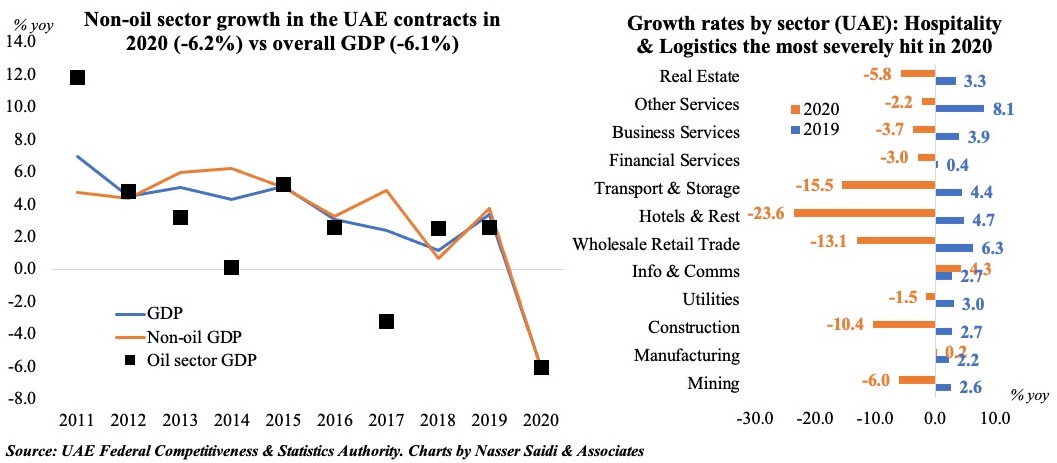
1. UAE’s GDP declined by 6.1% in 2020; hospitality and logistics were the worst affected sectors

  • The UAE’s GDP declined by 6.1% in 2020, according to the FCSA, down from an upwardly revised 3.4% growth in 2019. The slump was driven by both oil and non-oil sector, which fell by 6% & 6.2% respectively.
  • While the share of oil sector to overall GDP remained unchanged at 29.1%, the sectors that posted a slight increase in overall contribution to GDP include manufacturing (8.8% in 2020 from 2019’s 8.3%), communication (3.3% vs 2.9%), finance and insurance (8.2% from 7.9%) and public sector (5.6% from 5.2%).
  • Only a few sectors posted positive growth in 2020; unsurprisingly, the most negatively affected were hospitality (-23.6%), transportation (-15.5%) and trade (-13.1%).

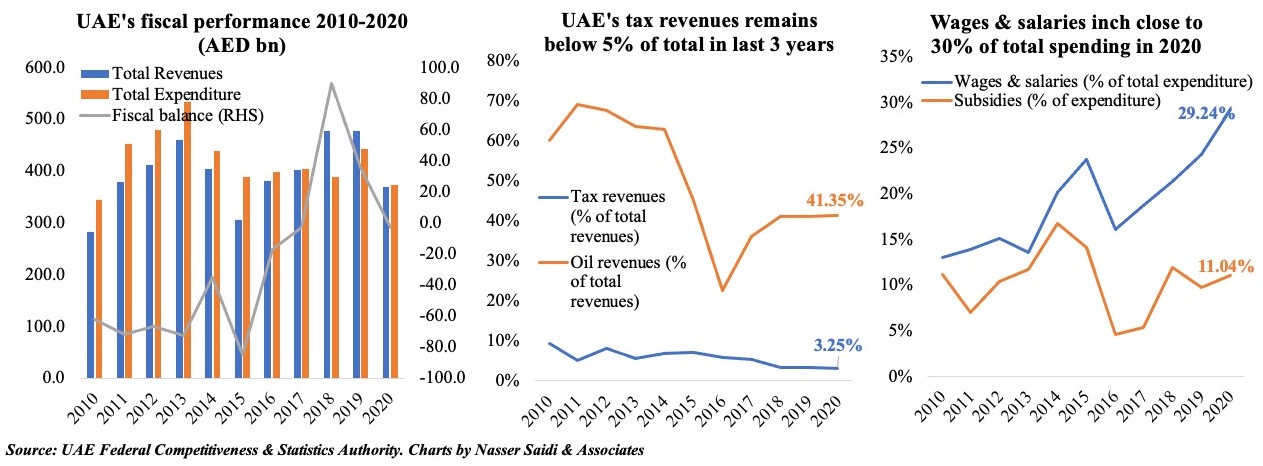
2. UAE fiscal balance moves into deficit in 2020, following two years of surplus

  • Both public revenues and expenditures in the UAE declined in 2020, by 22.7% yoy and 15.8% respectively, thereby moving the balance into a deficit of AED 3.04bn. Oil revenues fell by 22.4% yoy
  • Oil revenues accounted for 41.35% of overall revenues and 42.7% of non-tax revenues in 2020. Though total tax revenues fell by 22.4% yoy in 2020, its share in total revenues continued to be ~3.25% (similar to 2018 & 2019)
  • Wages and salaries continue to represent about 30% of total spending in 2020 but in yoy terms, it declined by 16.7%. Subsidies also fell by 5% yoy, but account for 11% of overall spending
  • Fiscal consolidation should be major policy reform for the UAE in the medium- to long-term to reduce dependence on oil & gas revenue. Subsidy reform and reducing public sector wage bills could be reforms on the spending side while new/ higher taxes can support revenues (e.g. carbon tax, property tax)

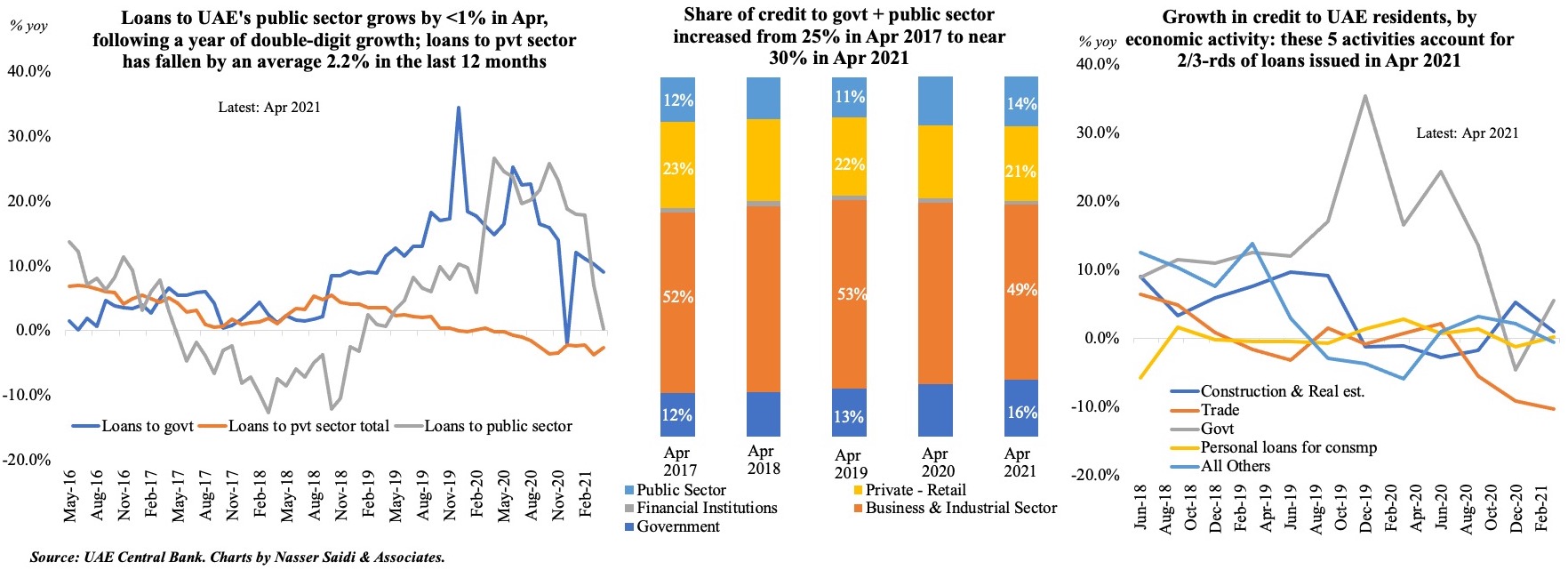
3. Credit to UAE’s private sector continues to decline in 2021; activity-wise differences exist

  • Overall domestic credit disbursed in UAE fell by 0.6% yoy in Apr 2021 though rebounding by a marginal 0.52% mom (Mar: -0.9% mom)
  • April marks the 13th consecutive month of yoy decline in credit to the private sector and 10th consecutive month of yoy decline in lending to the business sector. Loans to the public sector (which includes government-related enterprises) broke the pattern by ticking up just 0.2% in Apr (Mar: 7.0% and following 12 months of double-digit growth)
  • A breakdown of lending by economic activity shows that the major shares with respect to credit by economic activity remain largely unchanged: construction (20.5%), personal loans for consumption (20.4%), government (15%), others (9%) and trade (8.7%) together accounted for 65% of total loans. Sectors with continuous growth for 4 quarters (from Jun 2020) include transport (average 46.7% yoy growth), agriculture (44%) and utilities (29%).

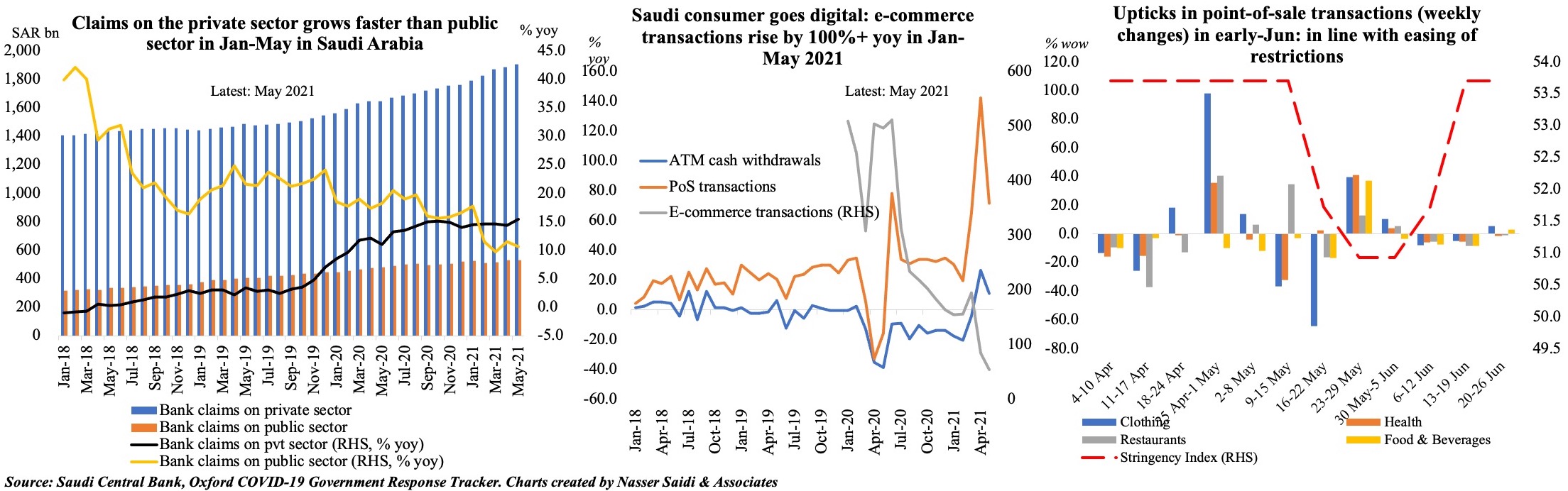
4. Rising credit & changing consumer preference (away from cash) is the story in Saudi Arabia 

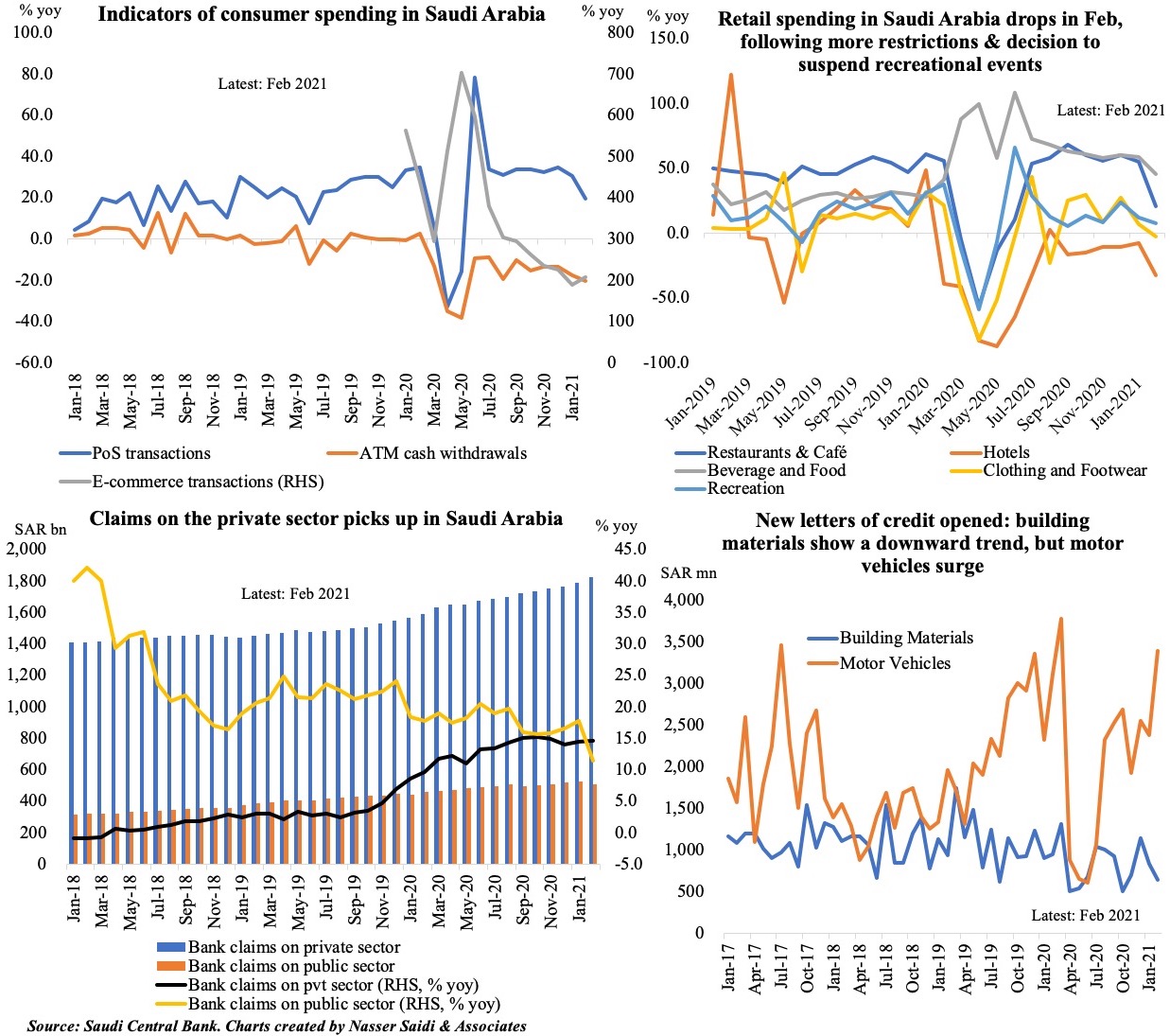
  • Data from the Saudi Central Bank shows claims from the private sector outpacing public sector loans in May 2021 – as seen in most months this year
  • A continued preference for PoS/ e-commerce transactions from a previously preferred “cash is king” position. ATM transactions have dropped by 0.7% in the Jan-May period vs a 65.8% and 125.9% hike in PoS & e-commerce transactions
  • Weekly PoS transactions show an uptick in early Jun: the distinct rise in PoS transactions in clothing, health, restaurants coincides with when restrictions were eased (tracked by the Oxford COVID-19 Government Response Tracker)

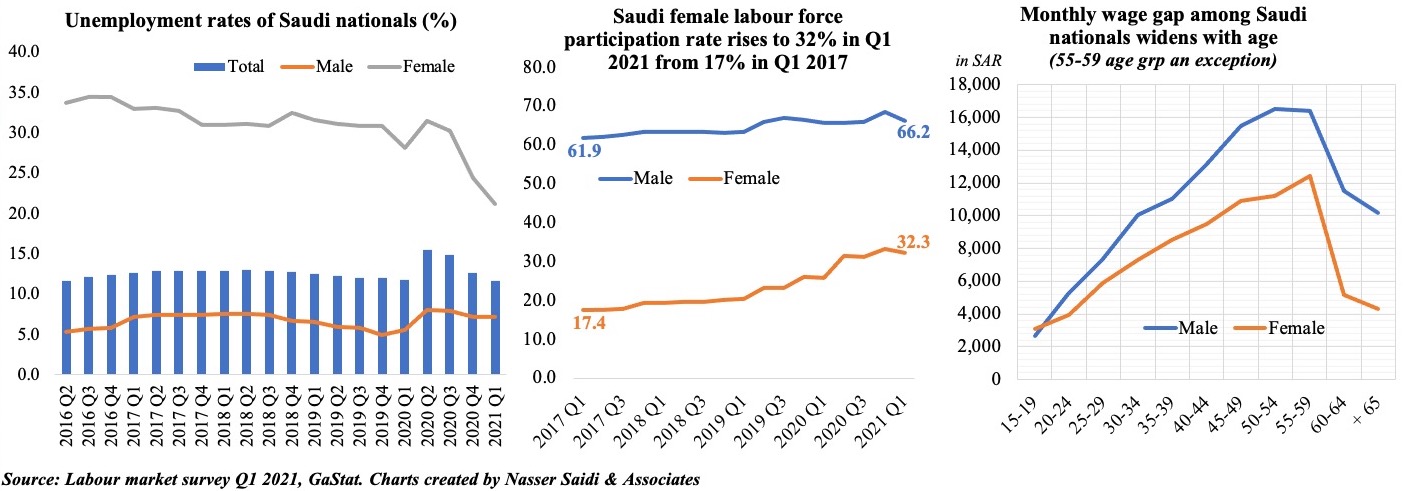
5. Unemployment rate among Saudi nationals (apecially females) dip to a 5 year-low in Q1 2021

  • Overall unemployment rate among Saudi nationals fell to 11.7% in Q1 2021 – a 5-year low; more dramatic was the plunge in unemployment rate for Saudi females – 21% in Q1 2021 vs a high 34% at end-2016. By age group, the rate remained highest among females within 25-29 & 20-24 age group (37.9% and 37% respectively).
  • Meanwhile, female participation in the workforce increased from 19% in 2016 to 32.3% in Q1 2021. However, both male & female labour force participation rates declined slightly compared to Q4 2020. Though women are joining the workforce in large numbers, many of the job opportunities fall in the lower-paid sectors.
  • Women earn slightly more than men in the 15-19 age group, but the pay gap widens after that. On average, in Q1 2021, a Saudi male employee is paid 1.3 times compared to a female national and at the oldest age bracket (65+) it stands at around 2.4 times! The gap has narrowed however compared to previous years.

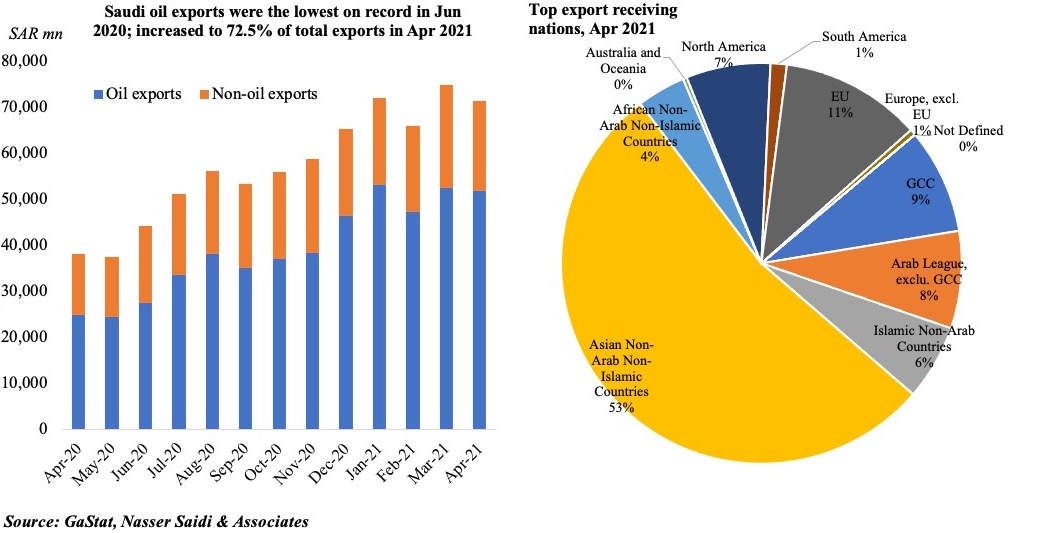
6. Oil exports from Saudi Arabia increase to 72.5% of total exports in Apr; Exports to Asia account for more than half of total exports

  • Oil was trading at USD 75 a barrel yesterday (30 Jun), about 40% higher compared to the start of the year, after a report revealed lower US inventories for a 6th straight week. All eyes are on the OPEC+ (set to meet today), who have already warned of “significant uncertainties” ahead: a modest increase in production is likely amid higher demand for oil (summer travel bookings, anecdotal evidence suggests, are picking up in US & Europe)
  • Oil exports are rising, accounting for 72.5% of total exports in Apr 2021. The top region for Saudi Arabia’s exports is still Asian nations, and much of the exports is oil. Though many nations – India, Japan and Malaysia – continue to struggle with the pandemic, many others have relatively low levels of cases; as restrictions ease, demand will increase and oil exports will pick up faster.

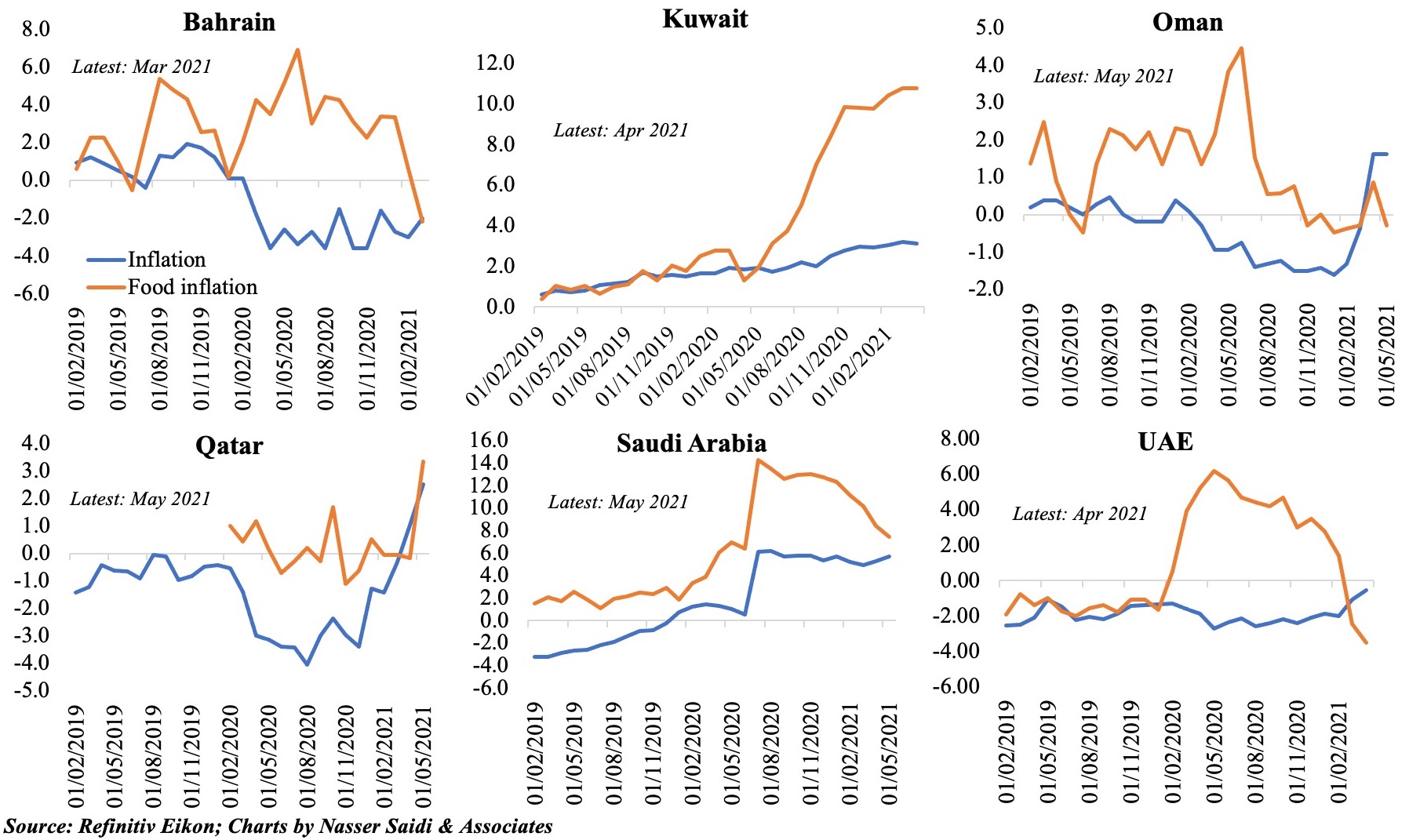
7. GCC inflation (% yoy): Kuwait’s food inflation is running at 10%+; Saudi’s inflation is influenced by the VAT hike last year; May’s month-on-month readings have food inflation rising at a faster pace than headline

Powered by:


Weekly Insights 1 Apr 2021: Reforms ramping up as GCC nations plan recovery in a post-Covid world

Download a PDF copy of this week’s insight piece here.
 
Chart 1. Saudi Arabia’s Shareek investment package to jumpstart the economy

  • The Shareek strategy (SAR 27trn stimulus over the coming decade) aims to jumpstart and shift expenditure patterns post-Covid by emphasizing investment vs consumption spending (incl.govt current spending), while implementing diversification. As proposed, the plan should be strongly supportive of non-oil growth, increase overall productivity growth and lead to job creation. 
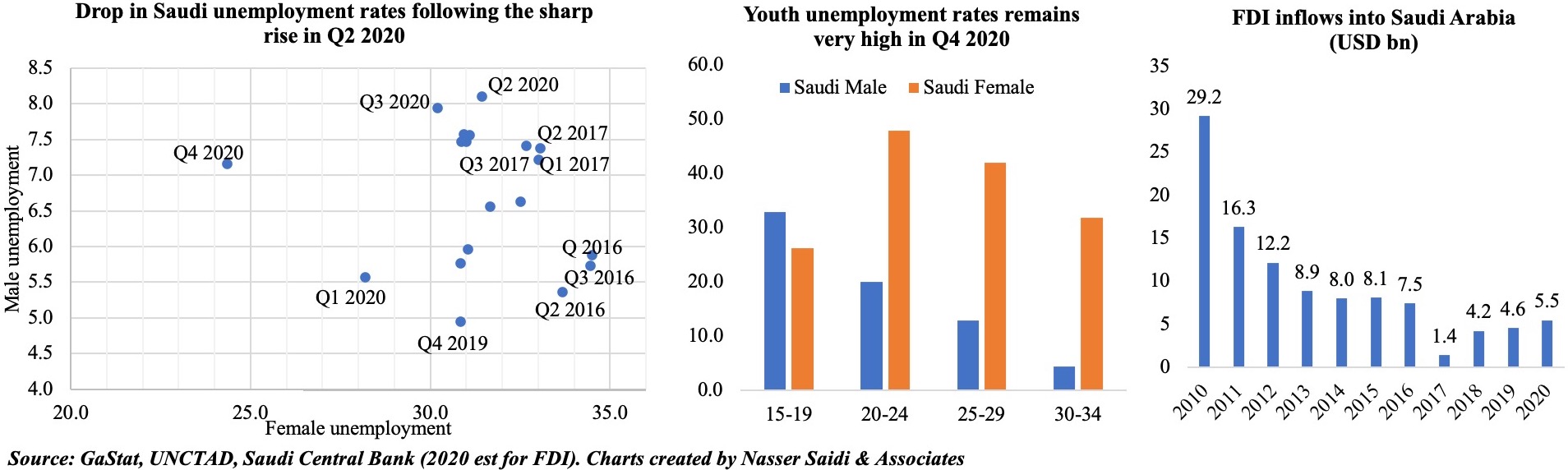
  • Jobs are one of the biggest concerns for the country: female unemployment was running close to 50% for the 20-24 age group in Q3 & close to 20% for males in the same age group. It has come off highs earlier in 2020, but remains one of the highest in the region
  • FDI has improved massively from the fall to USD 1.4bn (0.2% of GDP) in 2017; according to the Saudi Central Bank’s estimates, overall FDI reached USD 5.49bn in 2020 (+20% yoy, still below 1% of GDP).
  • Saudi Arabia has been aggressively courting foreign investors: revamped over half of the 400 FDI regulations, introduced new laws (e.g. bankruptcy, PPP) and recently stated that presence of firms’ regional HQs in Saudi would become a necessary condition to bid for government contracts.
  • FDI inflows would be directed away from oil & gas into more job creating & higher value-added sectors (e.g. renewable energy and clean tech, ‘clean’ petrochemicals, desert agriculture & AgriTech, digital economy).  Potentially, this revival of investment  and a successful program could attract back a fraction of Saudi private wealth held offshore (estimated at 56% of GDP).


Chart 2. Monetary indicators in Saudi Arabia: PoS & e-commerce transactions and claims on the private sector rise in Feb


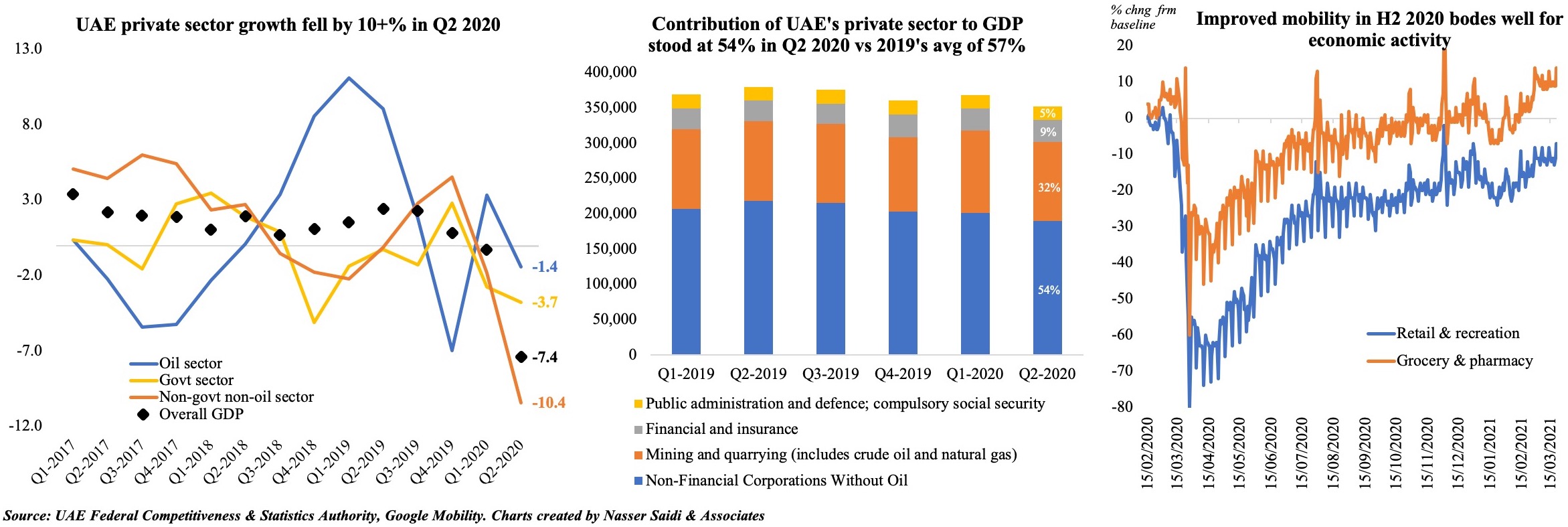
Chart 3. Overall GDP in UAE contracted by 7.4% yoy in Q2 2020; recovery expected in H2

  • New data: Non-oil GDP fell by 9.9% in Q2 2020, following a 1.9% decline in the previous quarter. Finance and insurance was the lone sub-sector to post growth in Q2.
  • Stringency was the highest and mobility lowest in Q2. Mobility data shows improved activity in H2 of 2020, which bodes well for GDP. UAE’s PMI, which averaged 50.2 in H2 2020 (vs 47.1 in Q2 and 47.5 in H1), also indicates a faster recovery in H2. Faster vaccination rollout and the Expo later this year will result in increased consumer and business confidence.
  • With an aim to grow faster in the post-Covid world, the UAE has been proactively announcing reforms: with the latest industrial strategy (“Operation 300bn”), Dubai’s 5-year plan to increase trade to AED 2trn and its 2040 urban development plan alongside various incentives to attract high-skilled professionals (10-year visas, remote working visas, path to citizenship etc.)


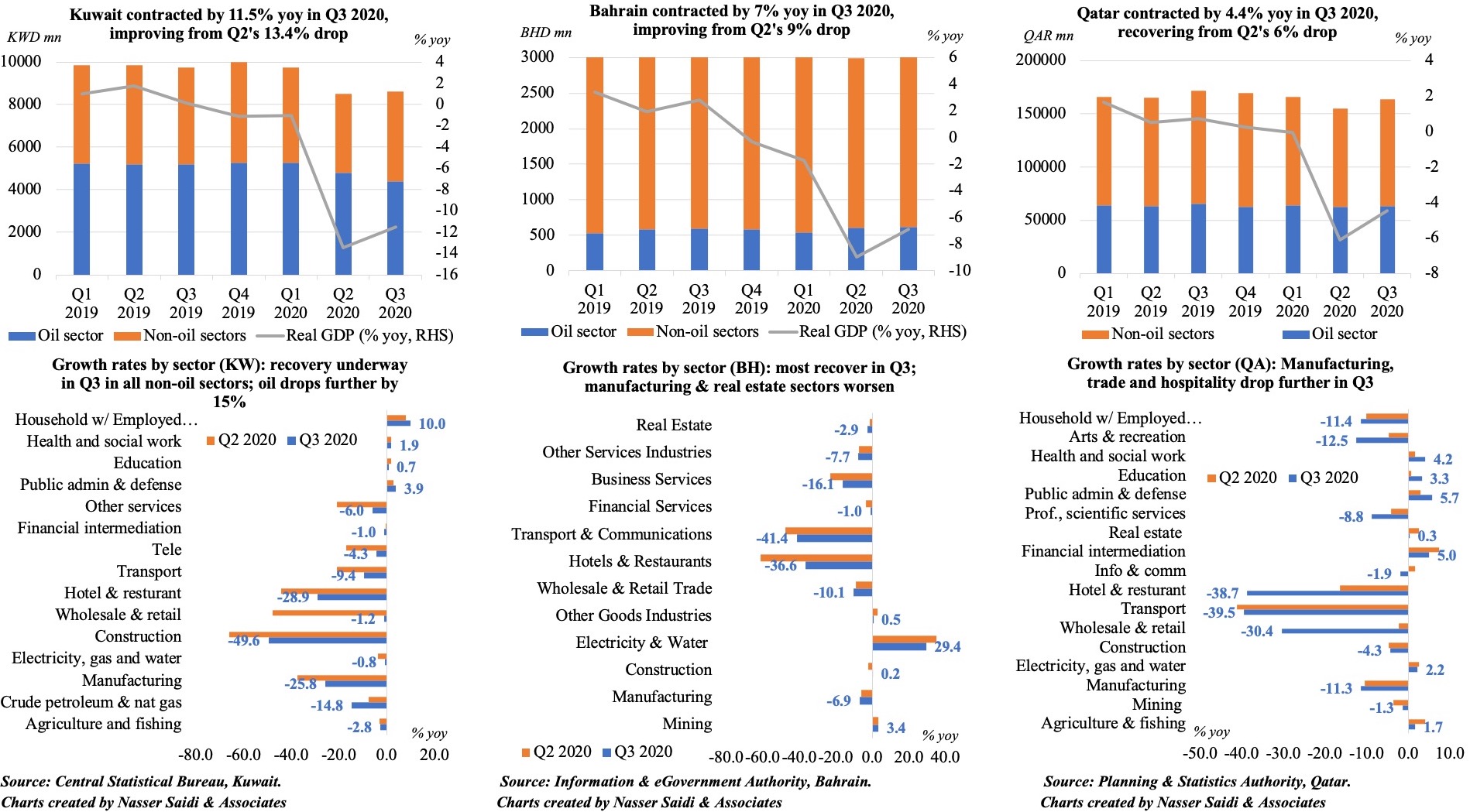
Chart 4. Q3 GDP data from other GCC nations suggest better quarters ahead for the UAE – the least restrictive of all

While overall % yoy GDP improved in Q3, some sectors (including oil, given OPEC+ cuts & others like trade, hospitality) contracted even more

 
Powered by:


"Post-Coronavirus Economy: Trajectories of Global Order": Panelist at Abu Dhabi Strategic Debate, 11 Nov 2020

Dr. Nasser Saidi joined as a panelist in the session titled “Post-Coronavirus Economy: Trajectories of Global Order”, at the Seventh Annual Abu Dhabi Strategic Debate organised by the Emirates Policy Centre on 11th November 2020.
The session discussed two broad questions: How long will COVID-19 continue to affect global economy? How will COVID-19 change the global economy in the future?
Dr. Nasser Saidi, the Founder and President of Nasser Saidi & Associates, stated that the global economy is being hit by higher uncertainty as global production has dropped by 4.5 percent, global labour income is estimated to have declined by 11 percent and direct foreign investments have fallen by 15 percent at a minimum in the first half of 2020.
“It is important to realise that world top technology companies such as Amazon, Apple, and Microsoft have developed into major powers in the global arena. The COVID-19 pandemic has demonstrated the need for bridging the digital gaps between various countries and the need for addressing internal divisions in these countries themselves,” he added.
Watch the full session below:

A summary of the event can be accessed at: https://wam.ae/en/details/1395302885959


Panelist at the IMF’s MENA Conference "Coping With Covid19", 27 Oct 2020

Dr. Nasser Saidi participated as a panelist at the IMF’s event related to the Regional Economic Outlook report for the Middle East and North Africa region held on 27th October, 2020.
The panel discussion was titled “Coping with Covid19: Challenges & Policy Priorities for the MENA region and the Global Economy” and discussed in addition the impact of US elections on the Middle East.
The IMF report can be accessed at https://www.imf.org/en/Publications/REO/MECA/Issues/2020/10/14/regional-economic-outlook-menap-cca
Watch the video of the webinar below:


Weekly Insights 27 Jul 2020: Charts on the spread of Covid19 in the GCC + Global trade

Charts of the Week
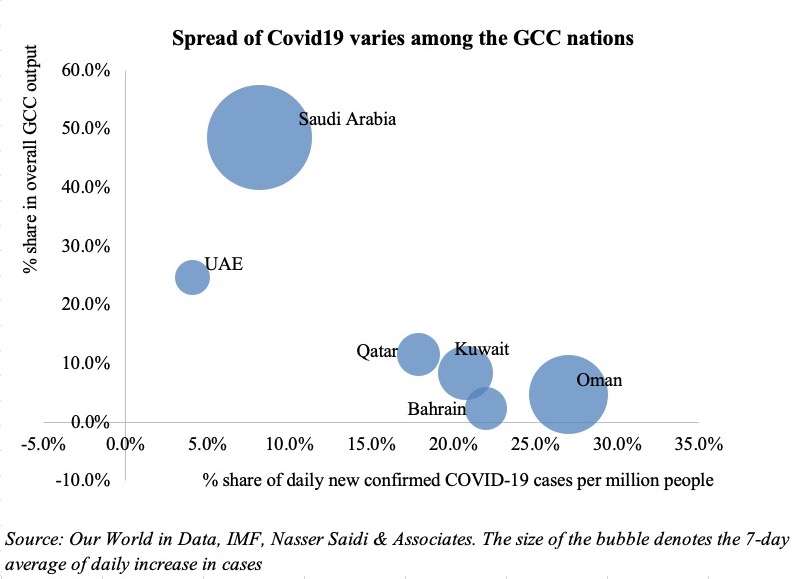
1. Spread of Covid19 in the GCC
Most GCC nations have begun a phased re-opening of their economies after being in partial/ complete lockdown for weeks. Some restrictions still remain (e.g. partial capacity at mosques, restaurants, movie theatres, gyms etc.) in countries that have reopened (like the UAE); where cases are high, partial nighttime curfews and targeted lockdowns are in place. The spread of the outbreak is varied among the GCC nations.
The chart maps the share in total daily increase in confirmed cases per million persons (x-axis) against the share of the country in overall output (y-axis), with the size of the bubble denoting the 7-day average of the daily increase in cases. Among the GCC nations, the UAE seems to be performing better – when it comes to both the 7-day average of daily increase in Covid19 cases as well as the daily confirmed cases per million people.

Saudi Arabia, which accounts for the lion’s share in GCC’s GDP, also has the highest 7-day average of daily increase in Covid19 cases (size of the bubble). This implies a sharper downturn in GDP this year due to the outbreak, but the effects of lower oil prices and the OPEC+ led cut in oil production will worsen the growth outlook. It is then little wonder that the rhetoric has shifted to diversifying revenue base with more privatisations and a hint of the introduction of an income tax in the future.
The GCC nations with the highest share in total daily increase in count (the highest being Oman) are among those with a lower share of overall GDP. For these nations, the worries are multiplied manyfold: not only will growth be affected by both the outbreak and lower oil prices, fiscal constraints and lower credit ratings will restrain their access to borrow from international capital markets. While governments have tightened purse strings, reducing capital and infrastructure spending will be detrimental to economic growth (especially the private sector).
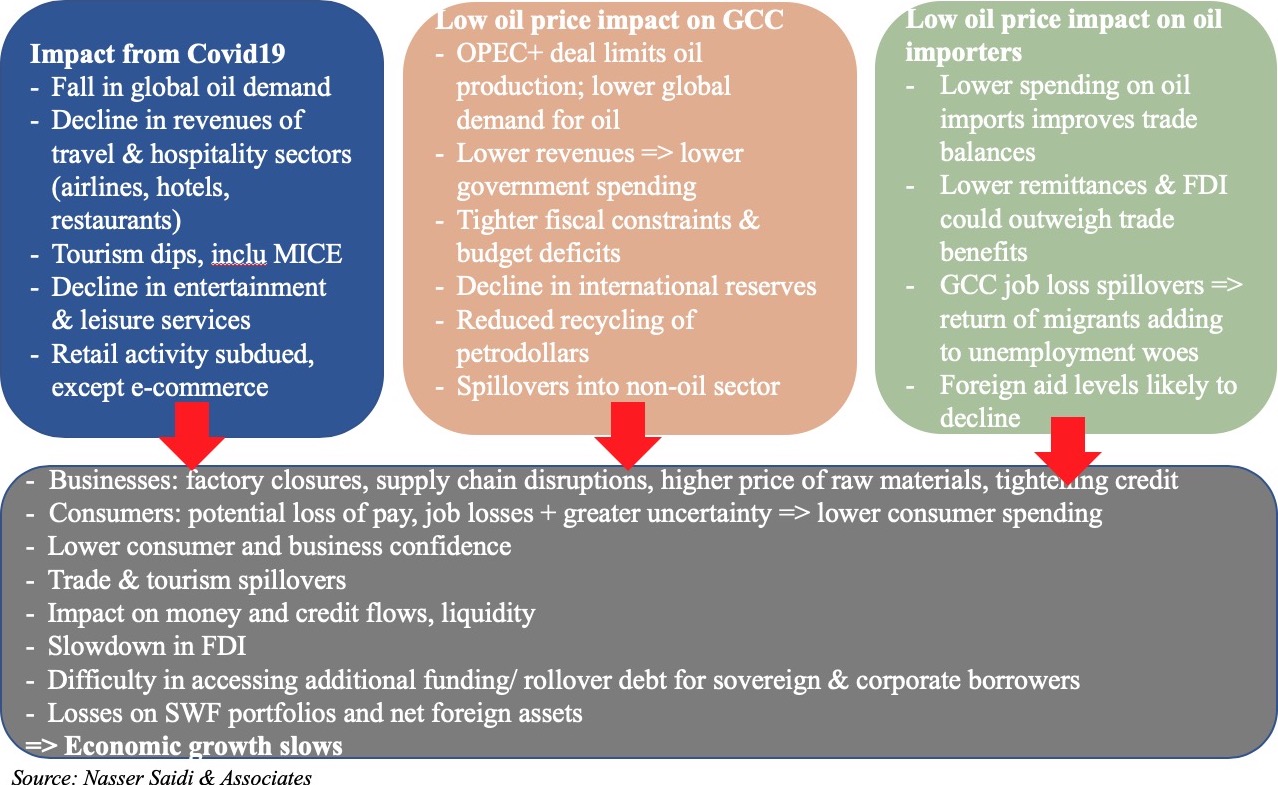
A decline in growth in oil-exporters also has a negative impact on many oil-importing nations: ranging from job losses (& the return of these residents to home countries that already face relatively higher unemployment rates), lower remittances as well as lower foreign aid and investments.
Chart 2. Economic Impact of Covid19 and low oil prices on the Middle East’s oil exporters & importers

 
2. Decline in global trade
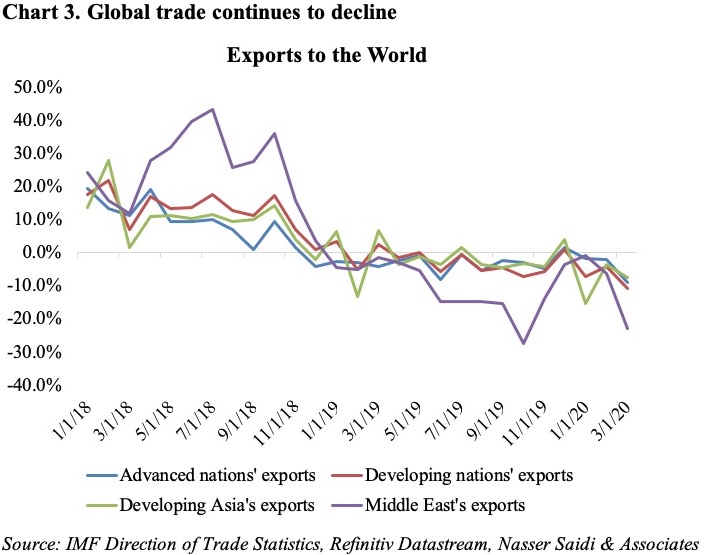
Along with tourism, global trade has been one of the most-hit by the global Covid19 outbreak. Trade growth had been slowing for the past year, and the pandemic has only accelerated its pace. Monthly data from the IMF’s Direction of Trade Statistics reveal that the drop in export growth touched two-digits in Mar, and given lockdown measures and factory shutdowns it can be estimated that data for Apr-May will be far worse.

The WTO estimates that trade will drop by 18.5% in Q2 this year, with a full year dip of between 13% (optimistic) to 32% (pessimistic scenario). For the Middle East, the 13.9% decline in total exports in Mar is a result of both lower oil production and lower demand for oil.
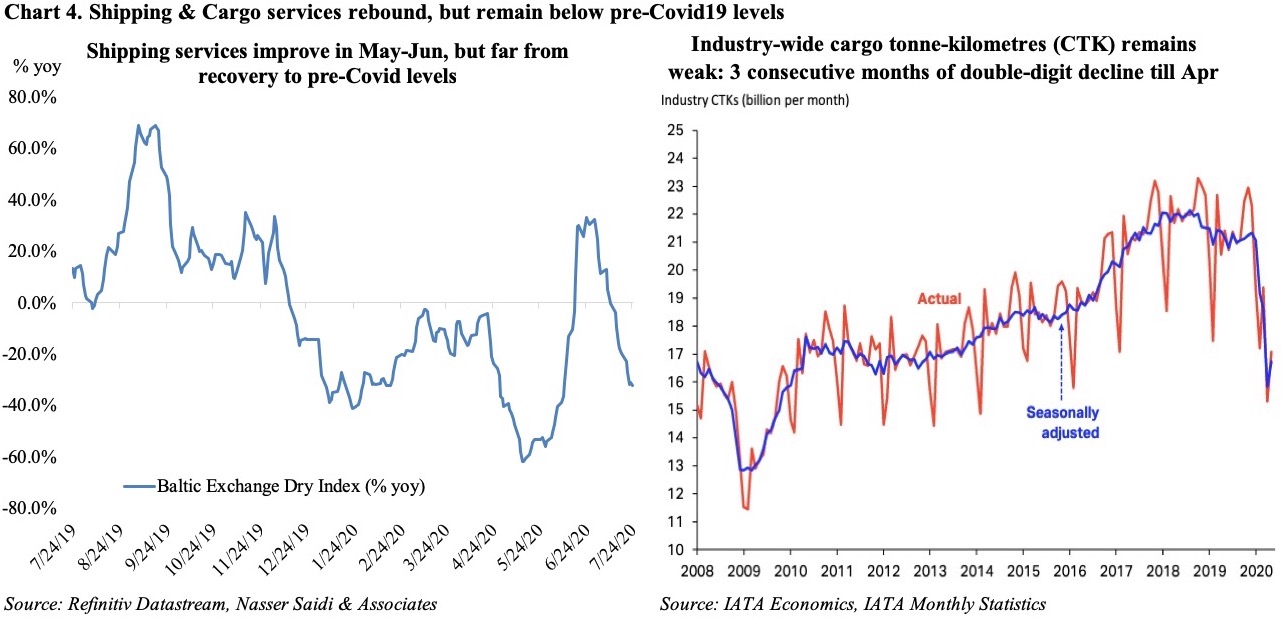
Shipping estimates, denoted by the Baltic Exchange’s sea freight index, touched a 9-month high in early Jul after recovering in Jun: this should translate into an improvement in global trade after May. Air cargo traffic data from IATA also denote that the cargo levels have shown a slight rebound in Apr (the latest available data). However, note that in both cases, there is a long way to recover to their pre-Covid19 levels. Supply chains remain disrupted though there has been a rebound in manufacturing activity across the globe (latest PMI numbers from Europe and Asia).

Powered by:


Panelist at the launch of IMF's MENA Regional Economic Outlook, 27 Apr 2020

Dr. Nasser Saidi participated as a panelist at the IMF’s launch of the Regional Economic Outlook report for the Middle East and North Africa region on 27th April, 2020.
The panel discussion covered the macro outlook for the region given the inter-twined effects of Covid19, fall in oil prices and financial shocks.
The IMF report can be accessed at https://www.imf.org/en/Publications/REO/MECA/Issues/2020/04/15/regional-economic-outlook-middle-east-central-asia-report
Watch the video of the webinar below (link to the IMF: https://www.imf.org/external/mmedia/view.aspx?vid=6152433693001)


Comments on the economic impact from Covid19 in Washington Post, 16 Mar 2020

Dr. Nasser Saidi’s comments appeared an article titled “The Middle East is already wracked by war. Now it must confront the coronavirus, too” that appeared in the Washington Post on 16th Mar 2020.
Comments from the article are posted below. The full article can be accessed here.
Oil producers in the Persian Gulf countries will be forced to cut back spending, and countries elsewhere that depend on remittances from expatriates in the gulf region will also suffer, said Nasser Saidi, a Dubai-based economist and former Lebanese finance minister.
Lebanon is in the throes of a financial crisis that has seen its currency collapse amid widespread street protests. Iraq, which depends on oil for almost all its income, will be badly hit at a time when political protests there have rocked the country.
The region will almost certainly slide into recession, Saidi said.
“It means unemployment will get worse. It means socioeconomic conditions will deteriorate. There will be more distress, more social problems and more political protests,” he said. “It’s not a pretty picture for the Middle East.”


Female work force participation is key to the Middle East's economic development, Article in The National, 3 Mar 2020

This article titled “Female work force participation is key to the Middle East’s economic development” appeared in The National on 3rd March, 2020. The original article can be accessed here.


Female work force participation is key to the Middle East’s economic development

by Aathira Prasad and Dr. Nasser Saidi

Removing legal and regulatory barriers is necessary but not sufficient condition to reduce the yawning gender gap

A young, fast-growing population should have been the cornerstone of growth in the Middle East and North Africa. It is the world’s second youngest region behind Sub-Saharan Africa with close to 60 per cent of the population under 30.
Young, fast growing populations provide a booming labour force and consumption market, fuelling economic growth. Instead, there is low growth and job creation is weak. This has led to rising levels of unemployment underlying the youth disenfranchisement, social and political unrest in 2011 and ongoing anti-government protests from Algeria to Sudan, and from Lebanon to Iraq.
The “demographic dividend” has been a curse instead of a boon. The prospects are daunting: the World Bank estimates the Mena region needs to create more than 300 million jobs by 2050, as the world is preparing for the so-called Fourth Industrial Revolution that harnesses technology and the use of AI. That is likely to impact medium and low skill jobs in the region. So what then are the implications for women and their economic integration?
While the role of women as a mainstay of economic development is not subject to dispute, women in the Mena region have been shackled by a plethora of socio-economic and legal barriers. Though there has been significant progress on legal and regulatory barriers – the World Bank’s Women Business and the Law 2020 edition noted despite enacting the maximum number of reforms, it remains the region with the lowest average score of 49.6 compared with the previous edition’s 44.9.

Removing legal and regulatory barriers is a necessary, but not sufficient, condition for reducing the yawning gender gap. According to the World Economic Forum’s Global Gender Gap 2020 report, gender parity will not be attained in the region for another 140 years.
While formal market labour force participation rates in the Mena region have increased over time, women have largely remained on the sidelines, despite their higher educational attainment and outperformance of men in standardised tests. The female labour force participation rate (FLFPR) has been rising, but still remains around 21.7 per cent for the region, one of the lowest in the world, and when women do participate, they experience higher unemployment rates at an average of around 19.8 per cent and closer to 40 per cent for young women. On average, women earn 70 per cent of men’s wages.
Given the barriers, women’s preference for public sector jobs is not surprising. There is a wide gender gap in self-employment and entrepreneurial activity in the region. On average, self-employed females (sole or micro enterprises) account for 30 per cent of female employment in the region, rising to as high as 63 per cent in Morocco, compared with 12.4 per cent in OECD countries.
However, only one in ten self-employed women are employers, compared to one in four self-employed men and even lower in larger firms. Similarly, women’s representation is lacking even in pre-seeded start-ups, with women accounting for just a quarter of founders, according to findings by venture capital firm Wamda and the STEP conference. A shift in ownership would help women. Female-owned businesses tend to hire more women (25 per cent) than their male counterparts do (22 per cent).
Still, some countries are leading on gender equality. The UAE – despite being ranked only 120th globally – continues to be one of the region’s best-performing countries, having closed 65.5 per cent of their overall gender gap, according to the Global Gender Gap 2020.
Digging deeper into the components, the UAE shines in the educational attainment and health sub-components, where the Emirates is close to parity, but gaps remain. The UAE government has been supportive in raising the profile of women within the government/ public sector. Women comprise 66 per cent of public sector workers. Along with nine women ministers in the UAE Cabinet, women already occupy 44 per cent of leadership roles in federal government entities and Emirati women represent 30 per cent of the UAE’s diplomatic corps.
While public policies supporting female labour force participation are to be applauded, this mindset needs to be embraced by the private sector as well to benefit the economy as a whole.

How can the region progress?

Economic growth and development do not necessarily lead to gender equality and empowerment of women.
What the region needs is affirmative action programmes that actively promote women and reverse marginalisation and discrimination.
Alongside legal and regulatory changes, and reducing the costs of doing business, the region needs to accelerate its economic diversification towards services and a more digitised economy that both tend to favour the employment of women and their economic integration.
Legal reforms allowing for part-time and flexible work arrangements help youth and women. Digital economy participation requires a public-private partnership in strengthening vocational and digital-related training for women, promoting quantitative skills training along with a massive push towards STEM.
Governments should support with public policies like more generous parental leave, greater availability of affordable childcare/childcare subsidies, promotion of work-life balance as well as gender budgeting to promote equality through fiscal policy.
Last but not least, availability of timely data on factors that facilitate and discourage the entry of women into the workforce is necessary to support policymaking at the national level, while also facilitating the private sector in its decision-making.
The bottom line is that investing in institutions and soft and hard infrastructure for greater inclusiveness will gradually lead to a change in ingrained cultural attitudes and to greater empowerment and economic integration of women.