“MENA + Pakistan region faces $420–$510bn climate adaptation funding gap”, Interview with Zawya Projects, 7 Nov 2025

Dr. Nasser Saidi’s interview with Zawya Projects titled “MENA + Pakistan region faces $420–$510bn climate adaptation funding gap: CEBC Chief” was published on 7th Nov 2025.

MENA + Pakistan region faces $420–$510bln climate adaptation funding gap: CEBC Chief

In an exclusive interview with Zawya Projects, Dr. Nasser H. Saidi, Chairman and Founder of the Clean Energy Business Council (CEBC) MENA, explained why the MENA + Pakistan region must more than quadruple climate adaptation investment across infrastructure, and highlighted the GCC’s potential to become a global hub for renewable energy.


The Middle East, North Africa, and Pakistan (MENA+Pakistan) region must significantly increase investments in climate adaptation, particularly for retrofitting infrastructure, to an estimated $420 to $510 billion, the chief of UAE-based Clean Energy Business Council (CEBC) MENA told Zawya Projects.

Dr. Nasser H. Saidi, Chairman and Founder of the ADGM-based non-profit, which represents the clean energy sector pointed out that so far, the MENA+Pakistan region is discussing investments of around $100 to $120 billion in climate adaptation, which involves retrofitting current infrastructure, factories, and housing to be future-ready across the region.

“However, my estimate is that you need around four times that figure—to $420 to $510 billion—because Mother Earth has a mind of her own,” he said.

“Human actions have created climate challenges, and the earth responds. While we are not in charge of that, we must integrate climate models with our economic and planning models to design effective policies.”

And while numbers are still being assessed, the dynamics of climate change can be severe, he noted.

“We have to be preventive and preemptive when addressing climate risks; it concerns all our lives,” he said.

Dismal scenario

Saidi cited the disastrous floods in Libya in September 2023, where two dams collapsed in Derna after Storm Daniel, releasing 30 million cubic metres of water.

“The floods swept entire buildings, with thousands of people still inside them, into the Mediterranean Sea,” he explained. “This is a classic example of why the region needs to raise its investments in climate adaptation across its infrastructure and housing.”

“Climate change is a priority as we are very challenged by desertification, Medicanes, water scarcity, rising temperatures, and growing urbanisation and populations. So far, there have been many commitments and bright promises for net zero at the global level, but many of those pledges have not come through, and there has been dismal performance.”

Key challenges include securing enough financial resources from governments and attracting the private sector. Referencing the success of US railroads and post-war infrastructure development in Europe driven by private investment, Saidi emphasised that “whether we talk about energy, AI, data, or the digital economy, the bottom line is that the private sector will need incentives.”

He stressed the need to account for climate risk and pricing, making room for new, radically different technologies from the private sector.

“Much of the technologies that we inherited from industries like electricity, water, and transport have so far been managed by the public sector. It will have to be a combination of both because we have to plan at the national, regional, and global levels,” said Saidi, who is also the Founder and Head of Nasser Saidi & Associates, a consulting firm.

“All future planning should include the private sector, but with the framework and financing coming from the government and international institutions.”

He noted that the CEBC, which focuses on bringing together governments, regulators, and the private sector around climate finance, e-mobility, and energy efficiency, would be open to developing a climate fund, though its core mission remains as a not-for-profit platform to drive clean energy policy and dialogue.

“I would be open to anyone who says, let us develop a climate fund together,” he said.

Carbon pricing imperative

Regarding innovative funding instruments, Saidi suggested a gradual build-up. “In the end, we have to adopt carbon pricing, which means central banks, regulators, and governments have to introduce carbon pricing in everything—be it energy, water, the way companies perform, the balance sheets of banks, and central banks.”

Following the Great Financial Crisis, international banking regulations introduced measures such as the establishment of capital buffers.

It also saw the implementation of Basel III—a set of enhancements developed in response to the 2008 crisis—and subsequently Basel IV (the finalisation of Basel III), which overhauls global banking capital requirements, which is expected to significantly impact the lending landscape, particularly across Europe and the Nordic region.

“We need something equivalent to that in this area,” said Saidi, a former Lebanese Minister of Economy and Industry and former Vice Governor of the Lebanese Central Bank.

“It is only when you start pricing that people respond—not just good wishes,” he said, stressing that carbon pricing must eventually be integrated into the banking and financial system structure.

“Once you do that, you create opportunities for financing. But then again, you have to think long-term. Then the next question is, how do you control risks for infrastructure projects spread over a period of 15-20 years?”

“This is why pricing is so important. I am a strong believer in markets, so we need to create renewable funds and create markets where you can trade risks, particularly through financial markets,” he added.

The UAE’s Federal Decree on climate change, coming into force this year, mandates monitoring and control of GHG emissions across sectors while encouraging companies to participate in emission trading schemes and carbon credit markets. The country is also introducing carbon compliance regulations for eventual compliance markets.

Following the Great Financial Crisis, the world has also seen the rise of non-banking financial intermediaries, now providing almost 50 percent of the credit. “That creates its own risks. Hence, we have to involve the non-banking private sector, which consists of private credit and private funds, with the organised, regulated banking and finance sector—we have to look at the whole spectrum.”

Global hub for renewable energy

While regional commercial banks do not always have the teams to assess such projects, the MENA region benefits from being awash with sovereign wealth funds and national funds.

“Hence, it would be ideal if they become involved because green and renewable energy is where the GCC, in particular, has a comparative advantage,” he said, arguing that deploying public money makes sound economic sense as part of economic diversification.

“We have accumulated enormous wealth due to high energy prices, and hence, we can deploy that wealth in green, digital, and renewable initiatives, and it can create jobs. So you diversify and develop your economy, and, at the same time, it is critical for the GCC and the region to create jobs. So this is the perfect opportunity for us.”

“This region is already the global hub for oil and gas,” Saidi concluded. “This region also has the potential to be the global hub for renewable energy. No other country or region has that combination.”
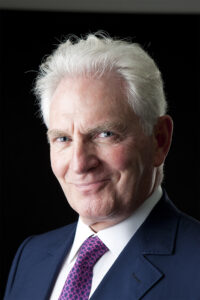


Dr. Nasser Saidi’s interview “Ahead of The Curve” with The Buzz Business on CEBC’s pioneering role in MENA’s clean energy transition, Nov 2024

The interview with Dr. Nasser Saidi, in his capacity as the Chairman of the Clean Energy Business Council (CEBC), appeared as a Buzz Business article in Nov 2024. The focus was on CEBC’s pioneering role in MENA’s clean energy transition. The article titledAhead of the Curveis copied below: 

Ahead of the Curve

CEBC’s pioneering role in MENA’s clean energy transition

As climate change increasingly impacts economies and lives across the globe, the Middle East and North Africa (MENA) region finds itself at a crossroads. Here, in a land rich with fossil fuels but increasingly exposed to climate challenges, the need for a shift towards clean energy and sustainable practices is critical. Leading this charge is Dr. Nasser H. Saidi, founder and chair of the Clean Energy Business Council (CEBC), an organization fostering collaboration between the public and private sectors to catalyze the region’s transition to a cleaner future.

Dr. Nasser’s journey to the helm of CEBC has been as varied as it is impressive. With a career that spans academia, government, central banking, and senior positions in finance, he is no stranger to the complexities of building something from scratch. “I’ve always valued freedom and the ability to think independently,” he says, reflecting on his time contributing to establishing the Dubai International Financial Center, which started with just a few companies and grew into a global hub. This drive to create and innovate independently has become the backbone of his leadership at CEBC—a vision not only for clean energy but also for MENA’s potential to become a global leader in climate solutions.

CEBC was born from an urgent need for more than dialogue; it was a call to action for the region’s leaders to reimagine MENA’s place in the global energy landscape. Dr. Nasser understood that while the region has long been defined by its fossil fuel wealth, it also possesses vast untapped potential for renewable energy, particularly solar. “This part of the world is blessed with some of the highest solar irradiation on Earth,” he explains. “With partners like ACWA Power, ENOC, ENGIE, and ABB at the forefront, we’re already seeing impressive advancements in solar capacity and innovative projects that could one day redefine energy systems globally.”

CEBC’s initiatives are built to tackle a diverse range of challenges, from energy efficiency to hydrogen innovation, e-mobility, and climate finance. Yet, Dr. Nasser emphasizes that the real breakthrough lies in fostering strong, lasting partnerships with both public and private sectors. This commitment to collaboration is evident in CEBC’s Annual Summit, now in its 12th year, which brings together policymakers, industry leaders, and technology innovators to align on regional sustainability goals. This year’s summit, themed “Strategic Levers for Decarbonizing MENA,” will be held at Expo City Dubai, reflecting the growing regional commitment to decarbonization and sustainability. “By bringing government and regulatory bodies to the table, we’re creating the conditions for action,” Dr. Nasser says. “CEBC is not just an organization; it’s a platform for real change in MENA’s energy future.”

The MENA region, he points out, is uniquely positioned in the global fight against climate change, with opportunities that extend beyond renewable energy into areas such as water desalination, desert agriculture, and district cooling. These technologies are critical in a region where temperatures are rising, and water scarcity is a daily reality. “Cooling alone accounts for up to 70% of peak energy demand in the Gulf,” Dr. Nasser notes. “We’ve pioneered district cooling systems that are not only more energy-efficient but can be powered by renewable sources. This technology could become a model for the world.”

As climate disasters continue to reshape economies, MENA countries face both an urgent challenge and a significant opportunity. CEBC is working to help the region balance its reliance on traditional fossil fuels with the need for renewable energy development. According to Dr. Nasser, this transformation will require considerable investment and policy reforms, especially in terms of reducing fossil fuel subsidies and attracting private financing to fill funding gaps. The International Monetary Fund estimates that MENA will need to invest up to 4% of GDP annually to build climate resilience and meet emissions targets—a staggering number, but one Dr. Nasser sees as achievable with the right public-private partnerships. “For every dollar invested in climate adaptation, we see a return of ten in economic benefits,” he says, highlighting how companies across the region can drive these returns by investing in clean energy solutions.

The private sector, he believes, will play a pivotal role, especially with national initiatives like Saudi Arabia’s Vision 2030 laying the groundwork. “The goals set forth in Vision 2030 offer a roadmap for the private sector to contribute to decarbonization through investments in clean energy technologies and sustainable practices. Companies like ACWA Power, ABB, Totalenergies, BEEAH, and other CEBC partners are proving what’s possible with large-scale solar and wind projects that have the power to reshape our entire region.” CEBC, he adds, has been instrumental in creating platforms for private sector leaders to engage directly with policymakers, facilitating cross-border clean energy projects that address regional needs while also setting an example for the world.

Looking to the future, Dr. Nasser sees energy efficiency as a vital component in achieving MENA’s net-zero ambitions, especially in high-energy sectors like construction, transport, and infrastructure. CEBC has recently partnered with the Advancing Net Zero Volunteering Team to launch a white paper focused on retrofitting existing buildings—a crucial step in reducing energy consumption across the region. He believes this focus on efficiency, combined with technological advances like AI-driven energy management and smart grids, will be key to MENA’s sustainable development. But Dr. Nasser stresses that the most critical driver will be awareness, both public and governmental. “We’re at a tipping point where climate adaptation isn’t a choice; it’s a necessity,” he says, echoing the urgent tone that has defined his work and vision.

What are CEBC’s key achievements to date?


“I’d say the most critical achievement is public awareness. Climate and clean energy are now part of our regional discussions, which is something we couldn’t have imagined a decade ago. Today, we have ministers in charge of climate portfolios, notably in the UAE, and I hope other countries follow. Our partnerships are creating regulatory frameworks that involve both government and the private sector in the transition to clean energy.”

How optimistic are you about the region’s clean energy transition?


“I am cautiously optimistic. The region’s leadership has a clear vision of what’s needed, and we’re seeing an unprecedented level of commitment to clean energy and climate adaptation. Yet, challenges remain—subsidies for fossil fuels need to be removed, and people’s perceptions around the ‘cost’ of energy must shift. Still, I am inspired by the strides we’ve made and confident that with ongoing collaboration, we can achieve real, lasting change.”

What advice would you give to companies in the private sector?


“Start with energy efficiency—look at your own operations, from building temperatures to energy sources, and be ready to invest in clean technologies. Long-term success will depend on this. I also advise companies to get involved with CEBC or similar platforms to stay aligned with national goals and regulatory developments. The future will belong to companies who adapt early and invest in sustainable practices.”

Looking ahead, Dr. Nasser’s vision for CEBC reflects both urgency and optimism. As the region grapples with the realities of climate change, CEBC stands as a catalyst, turning MENA’s unique challenges into opportunities. With the right partnerships and a clear focus, CEBC is not just imagining a cleaner future—it’s building one.


“CEBC isn’t just an organization; it’s a platform for real change in MENA’s energy future.”
Dr. Nasser H. Saidi, founder & chair, Clean Energy Business Council (CEBC)


“A New Global Energy Map: On the Road to COP28”, Presentation at the 10th CEBC Annual Summit, 31 Jan 2023

The presentation titled “A New Global Energy Map: On the Road to COP28“, was given by Dr. Nasser Saidi as the opening keynote address at the 10th CEBC Annual Summit held in Dubai on 31st January 2023.

In his speech, Dr. Nasser Saidi, in his capacity as Chairman of the Clean Energy Business Council, spoke about the emergence of a new global energy map, its financing requirements as well as deep-dived into the energy transition in the GCC region & combating climate change.


“Landscape of Low-Carbon Hydrogen Market: a MENA perspective”, Keynote address at the “Canada Advancing Clean Energy” event in Abu Dhabi, 19 Jan 2022

Dr. Nasser Saidi, in his capacity as the Chairman of the Clean Energy Business Council (CEBC), gave an opening keynote titled “Landscape of Low-Carbon Hydrogen Market: a MENA perspective“, at the “Canada Advancing Clean Energy” event held in Abu Dhabi on the 19th of January 2022.

The presentation addresses the nascent state of the hydrogen market as well as exploring the current market for hydrogen projects in the Middle East & North Africa region before summing up with key takeaways (copied below):

  • Global Hydrogen market is still in its infancy: need to build the foundations of a sustainable market
  • Develop strategies & roadmaps on hydrogen’s role in energy systems
  • Hydrogen can become an important component of the energy transition and decarbonisation policies, accounting for 22% of final energy use by 2050
  • Hydrogen in MENA: 47 projects, total investment $55bn, 5.3 mn tons
  • GCC can become major producers and exporters of hydrogen helping to de-risk their fossil fuel assets
  • Renewable/Clean Energy producers should form an alliance/organisation to develop the industry and market


“Clean Energy Market in MENA: Finance, Mobility, Hydrogen, Energy Efficiency”, Keynote presentation at the CEBC-Enterprise Ireland event, 5 Oct 2021

Dr. Nasser Saidi, in his capacity as the Chairman of the Clean Energy Business Council, gave a keynote address at the CEBC-Enterprise Ireland High-Level Seminar & Networking Event held at the Capital Club in Dubai on the 5th of October 2021.

Titled “Clean Energy Market in MENA: Finance, Mobility, Hydrogen, Energy Efficiency“, the presentation discussed:

(a) Clean Energy Ecosystem in the MENA region

(b) New investment in renewable energy, by region & sector

(c) Climate Finance in MENA

(d) E-mobility in MENA

(e) Hydrogen in MENA: an infant, but rapidly developing market

(f) Energy Efficiency in MENA

(g) Green post-Covid19 transformation presents a major diversification opportunity for MENA; How can MENA grow & develop its Clean Energy market?


Clean Energy Challenges & Prospects, Presentation at the CEBC 7th MENA Clean Energy Summit, 20 Nov 2019

The presentation titled “Clean Energy Challenges & Prospects” was given as the opening keynote address at the CEBC 7th MENA Clean Energy Summit held in Dubai on 20th November 2019.
In his speech, Dr. Nasser Saidi, in his capacity as Chairman of the Clean Energy Business Council, provided an oversight on the clean energy and clean technology developments while outlining the major themes for the MENA region’s renewable energy sector.
The focus was on energy efficiency (how it needs to be scaled up), the transformation of transportation (e.g. EVs), energy transition, and financial stability risks rising from climate change risks among others.


Introductory remarks at CEBC’s "ESCO Market in MENA: Challenges vs Opportunities" event, 15 Sep 2019

Dr. Nasser Saidi, in his role as the Chairman of the regional Clean Energy Business Council (CEBC), provided the introductory remarks at the event titled “ESCO Market in MENA: Challenges vs Opportunities” that took place on September 15th in Dubai.
Dr. Saidi’s presentation explored the current energy use in the Middle East region, before highlighting the benefits and challenges of energy efficiency policies and outlining the role of Energy Service Companies (ESCOs) and their regional experience. The presentation finishes touching on the way forward in energy efficiency reforms and the role of theCEBC in this regard (including the working group on energy efficiency).